Dubai is home to some of the world’s most advanced commercial buildings, luxury hotels, shopping malls, hospitals, residential towers, manufacturing facilities, business parks, and mixed-use developments. From Downtown Dubai and Business Bay to Dubai Marina, Jumeirah, Palm Jumeirah, Dubai Hills, Jebel Ali, and Dubai South, every commercial property depends on efficient cooling systems to maintain comfortable indoor environments throughout the year. With temperatures frequently exceeding 45°C during the summer months, air conditioning is no longer considered a luxury but an operational necessity. At the heart of many large HVAC systems is the commercial chiller plant, responsible for delivering chilled water that cools entire buildings efficiently and consistently.
Because chillers operate continuously for long hours under demanding environmental conditions, they experience natural wear and tear. Dust accumulation, scale formation, refrigerant leaks, compressor stress, electrical faults, and reduced heat transfer efficiency can gradually impact performance if regular servicing is neglected. This is why chiller maintenance Dubai has become one of the most important facility management services for commercial property owners, developers, hotel operators, hospitals, educational institutions, industrial facilities, and business complexes across the UAE.
Routine maintenance protects expensive HVAC assets while ensuring energy efficiency, operational reliability, occupant comfort, and regulatory compliance. Businesses that invest in scheduled maintenance experience fewer emergency breakdowns, lower operating costs, improved cooling performance, and significantly longer equipment lifespan. Rather than waiting for an unexpected failure that interrupts operations, preventive servicing helps identify minor issues before they become major repairs.
Why Dubai’s Climate Places Heavy Demands on Commercial Chillers
Dubai’s desert climate creates one of the harshest operating environments for commercial cooling equipment. During the hottest months, cooling systems often run continuously for twelve to twenty-four hours every day. Unlike regions with seasonal cooling requirements, buildings in Dubai rely on air conditioning throughout most of the year, placing continuous stress on compressors, condensers, evaporators, pumps, cooling towers, valves, and electrical components.
High ambient temperatures reduce condenser efficiency, while airborne sand and dust clog air filters, condenser coils, and heat exchange surfaces. Humidity in coastal districts such as Dubai Marina, Jumeirah Beach Residence, Palm Jumeirah, and Bluewaters Island increases corrosion risks for outdoor equipment. Without scheduled inspections and cleaning, these environmental factors gradually reduce system performance and increase electricity consumption.
Commercial properties operating large water cooled chiller systems are particularly dependent on proper water treatment programs. Mineral deposits, biological growth, corrosion, and scale formation inside condensers and evaporators restrict heat transfer, forcing compressors to work harder. Over time this leads to higher energy consumption, reduced cooling capacity, and increased maintenance costs.
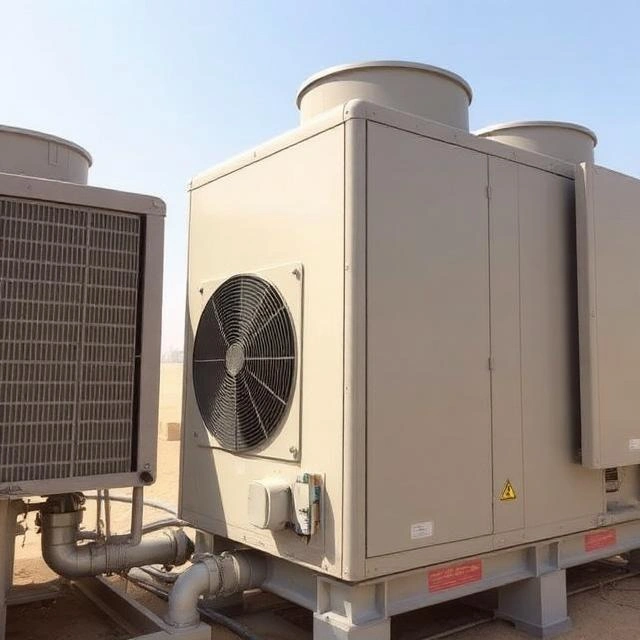
Similarly, air cooled chiller systems installed on rooftops and exposed mechanical areas must withstand direct sunlight, dust storms, and fluctuating temperatures. Dirty condenser coils reduce airflow and heat rejection, causing compressors to operate at higher pressures and shortening equipment life.
These environmental conditions make preventive maintenance essential rather than optional for commercial buildings throughout Dubai.
The Growing Importance of Chiller Maintenance in Business Bay
Protecting Commercial Properties in Downtown Dubai
Downtown Dubai represents one of the UAE’s most prestigious business and tourism destinations. Luxury hotels, premium residential towers, shopping destinations, entertainment venues, and corporate headquarters operate around the clock, relying on sophisticated HVAC infrastructure to maintain indoor comfort.
Because these buildings accommodate thousands of visitors daily, cooling system reliability directly influences customer experience and operational success. Even a temporary chiller failure can disrupt hotel operations, retail businesses, restaurants, conference facilities, and office environments.
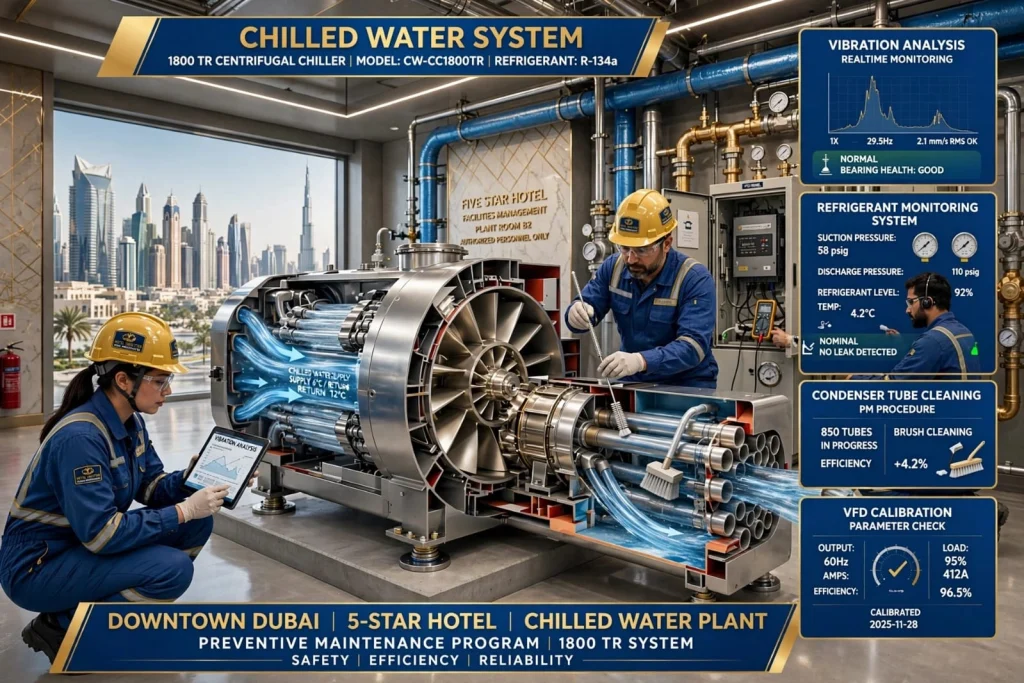
Regular maintenance focuses on maintaining optimal performance across every component of the chilled water system. Engineers inspect compressors for abnormal vibration, monitor refrigerant levels, clean condenser tubes, verify evaporator efficiency, calibrate sensors, inspect VFD operation, and confirm that all safety controls function correctly.
Facilities equipped with centrifugal chillers require specialised attention because these machines serve some of the largest commercial developments in Dubai. Scheduled centrifugal chiller maintenance helps maintain high operating efficiency while reducing the likelihood of compressor surge, bearing wear, lubrication problems, and electrical failures.
Property managers understand that preventive maintenance protects both building operations and long-term asset value.
How Preventive Maintenance Improves Energy Efficiency
Energy represents one of the largest operating expenses for commercial buildings throughout Dubai. HVAC systems often account for nearly half of a building’s total electricity consumption, making efficiency improvements financially significant.
Even small performance losses within a chiller plant can substantially increase monthly utility costs. Dirty condenser coils, fouled heat exchangers, clogged strainers, incorrect refrigerant charges, poor water flow, worn bearings, and improperly calibrated controls force chillers to consume additional power while producing less cooling.
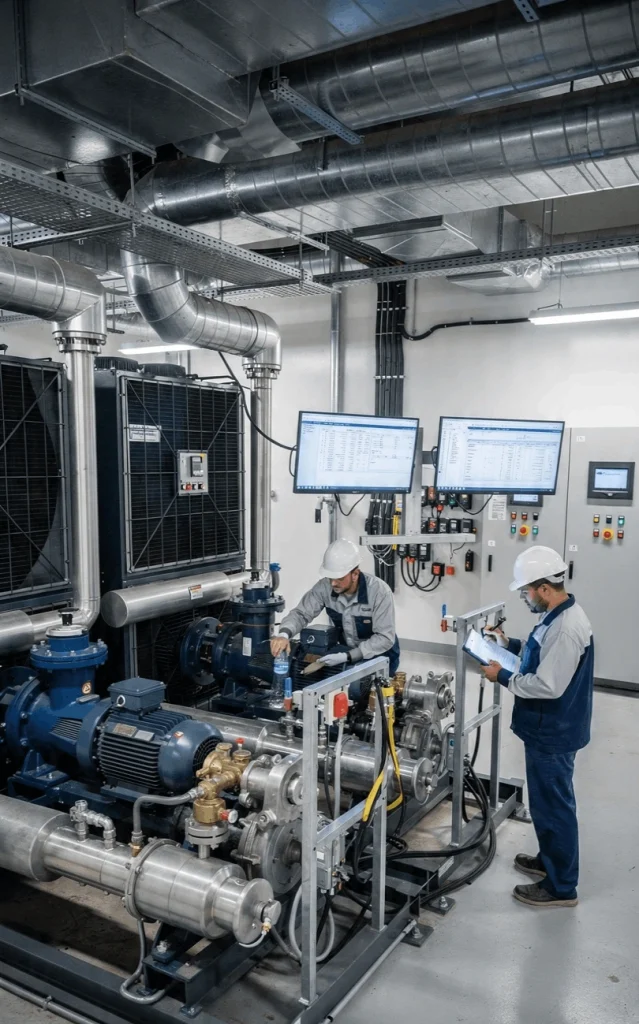
Preventive maintenance restores system efficiency by cleaning heat transfer surfaces, balancing chilled water flow, checking condenser water circulation, optimising refrigerant pressures, lubricating moving components, and verifying control system performance.
Variable Frequency Drives (VFDs) installed on pumps and cooling tower fans also require periodic inspection to maintain efficient operation. Proper sequencing between multiple chillers, pumps, and cooling towers further reduces energy consumption during partial load conditions commonly experienced throughout much of the year.
When maintenance is performed consistently, buildings achieve lower operating costs while reducing carbon emissions and supporting sustainability initiatives aligned with Dubai’s green building objectives.
Supporting Industrial Facilities Across Jebel Ali and Dubai Industrial Areas
Industrial operations have unique cooling requirements that differ significantly from commercial office buildings. Manufacturing plants, food processing facilities, pharmaceutical companies, logistics warehouses, data centres, and production facilities depend on continuous cooling for both manufacturing processes and environmental control.
Unexpected equipment failure can interrupt production schedules, damage temperature-sensitive materials, increase operational costs, and create costly downtime.
Professional industrial chiller maintenance focuses on ensuring reliable operation under demanding production environments where chillers often operate continuously throughout the year.
Facilities located in Jebel Ali Free Zone, Dubai Industrial City, Dubai Investment Park, Al Quoz Industrial Area, Ras Al Khor Industrial Area, and surrounding manufacturing districts depend on experienced engineers capable of maintaining process cooling equipment, screw chillers, centrifugal chillers, packaged chillers, and central chilled water plants.
Businesses operating within these industrial zones increasingly recognise the value of scheduled inspections, vibration analysis, oil testing, refrigerant monitoring, electrical diagnostics, predictive maintenance technologies, and thermal performance evaluations.
For companies seeking long-term reliability and maximum equipment efficiency, investing in industrial chiller maintenance Dubai downtown as part of a broader maintenance strategy helps reduce unexpected failures while supporting uninterrupted commercial and industrial operations.
How Professional Chiller Repair Prevents Costly Business Disruptions
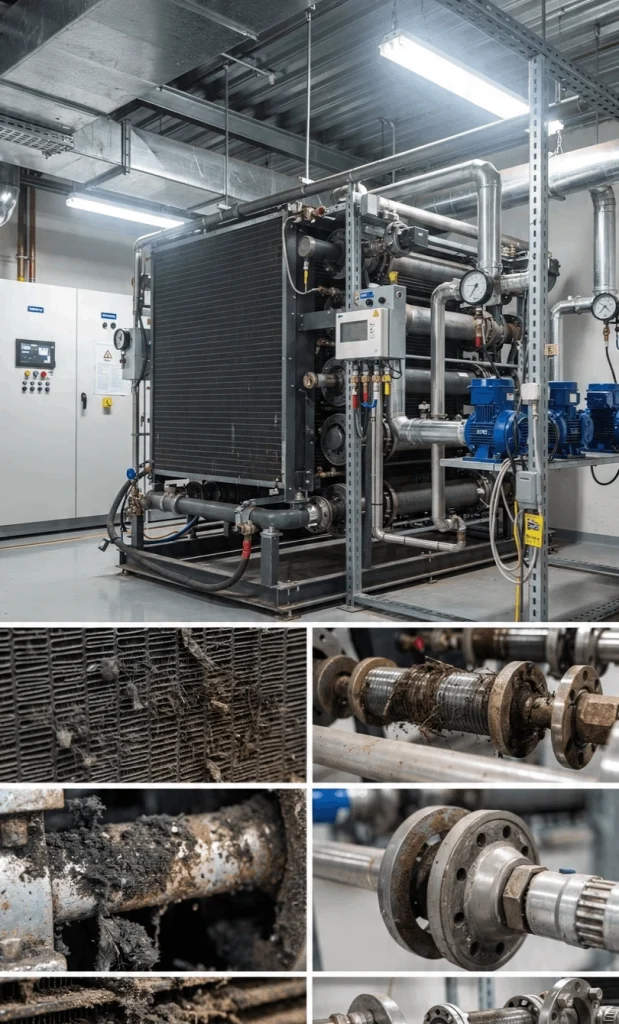
Even with a comprehensive preventive maintenance programme, there are occasions when commercial chillers require immediate attention due to unexpected faults or component failures. In a city like Dubai, where cooling systems operate almost continuously, even a minor mechanical issue can quickly escalate into a major operational problem if left unresolved. This is why businesses across the emirate rely on professional chiller repair Dubai services to restore system performance quickly and minimise downtime.
Commercial buildings, hotels, hospitals, shopping malls, schools, and industrial facilities cannot afford extended interruptions to their HVAC systems. Rising indoor temperatures affect employee productivity, customer comfort, equipment reliability, and business operations. For hospitals and pharmaceutical facilities, inadequate cooling may even compromise sensitive medical equipment and temperature-controlled storage areas.
Professional repair engineers begin by carrying out a complete system diagnosis. Using advanced testing equipment, they inspect compressor performance, refrigerant pressures, condenser efficiency, evaporator temperatures, electrical control panels, sensors, expansion valves, chilled water pumps, condenser water pumps, and Building Management System (BMS) communication. This systematic approach allows technicians to identify the root cause rather than simply treating the symptoms.
Timely repairs not only restore cooling capacity but also prevent additional damage to expensive components, helping property owners avoid complete system replacement.
Water-Cooled Chillers Continue to Power Dubai’s Largest Buildings
Many of Dubai’s most recognisable commercial developments depend on water cooled chiller systems because of their superior efficiency and ability to serve large cooling loads. High-rise office towers, luxury hotels, shopping centres, hospitals, airports, and mixed-use developments often choose water-cooled chillers due to their lower operating costs and excellent performance under continuous operation.
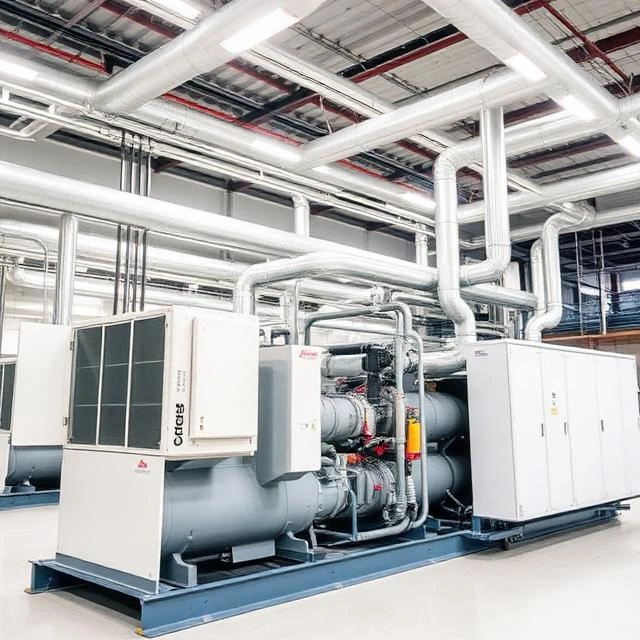
Unlike air-cooled systems, water-cooled chillers reject heat through cooling towers. Heat is transferred from the refrigerant to condenser water before being dissipated into the atmosphere through evaporative cooling. This process enables higher operating efficiency, especially during Dubai’s long summer season.
However, maintaining these systems requires specialised expertise. Condenser tubes must be cleaned regularly to remove scale and sediment. Cooling towers require chemical water treatment to minimise corrosion, biological growth, and mineral deposits. Plate Heat Exchangers, condenser water pumps, primary pumps, secondary pumps, strainers, and control valves also require periodic inspection to maintain proper water circulation throughout the chiller plant.
Without regular servicing, reduced heat transfer efficiency forces compressors to consume more electricity while producing less cooling. This not only increases utility costs but also shortens equipment lifespan.
Air-Cooled Chillers Provide Flexible Cooling Solutions
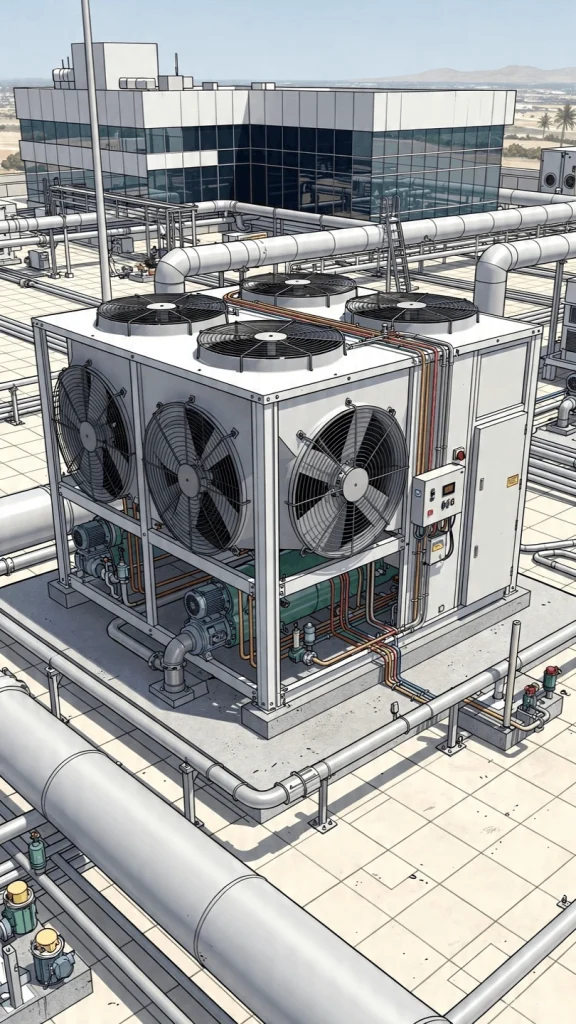
While water-cooled chillers dominate large commercial developments, air cooled chiller systems remain extremely popular across smaller commercial buildings, educational institutions, retail facilities, warehouses, healthcare centres, and industrial workshops throughout Dubai.
These systems reject heat directly through outdoor condenser coils using large axial fans, eliminating the need for cooling towers and condenser water systems. This simplifies installation while reducing water consumption and ongoing maintenance requirements.
Air-cooled chillers are commonly installed in locations such as Dubai Silicon Oasis, Dubai Investment Park, Al Quoz, Dubai South, Motor City, Arabian Ranches, and many commercial compounds where rooftop mechanical space is readily available.
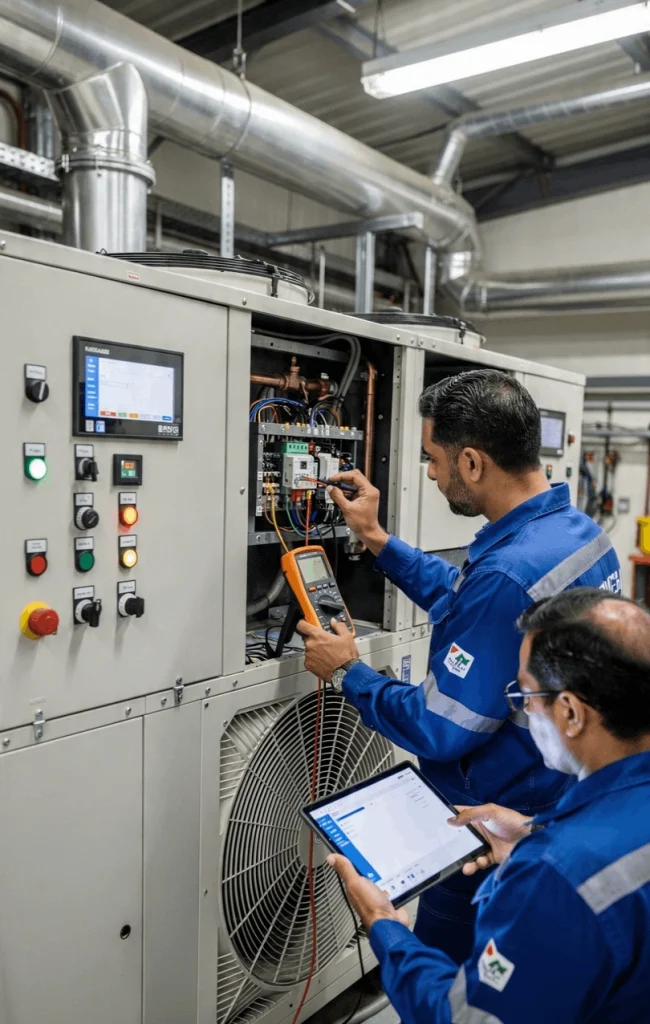
Although simpler than water-cooled systems, air-cooled chillers still require regular maintenance. Dust accumulation on condenser coils restricts airflow, causing elevated discharge pressures and increased compressor workload. Fan motors, electrical components, refrigerant circuits, expansion devices, and control systems must also be inspected periodically to maintain reliable performance.
Professional cleaning, airflow testing, refrigerant verification, and electrical inspections ensure these systems continue operating efficiently despite Dubai’s challenging environmental conditions.
The Importance of Chiller Installation for Long-Term Performance
The long-term reliability of any HVAC system begins with correct chiller installation Dubai practices. Even the highest-quality equipment cannot achieve its expected lifespan if installation standards are compromised.
Proper installation starts with accurate cooling load calculations based on building occupancy, architectural design, glazing systems, insulation, equipment loads, ventilation requirements, and future expansion plans. Selecting a chiller that is either undersized or oversized results in inefficient operation, excessive energy consumption, and unnecessary wear on compressors.
Installation engineers must also consider chilled water piping layouts, condenser water circuits, electrical infrastructure, vibration isolation, pump selection, expansion tanks, balancing valves, insulation quality, and Building Management System integration.
Commissioning is equally important. During commissioning, technicians verify refrigerant charge, water flow rates, temperature differentials, pressure readings, sensor calibration, control logic, safety devices, and overall system sequencing. Proper commissioning ensures every component operates according to manufacturer specifications before the building becomes occupied.
Commercial developments throughout Business Bay, Downtown Dubai, Dubai Hills, Palm Jumeirah, Dubai Marina, and Expo City increasingly rely on experienced HVAC specialists to deliver efficient installations capable of supporting years of reliable operation.
Why Screw Chillers Need Specialised Maintenance
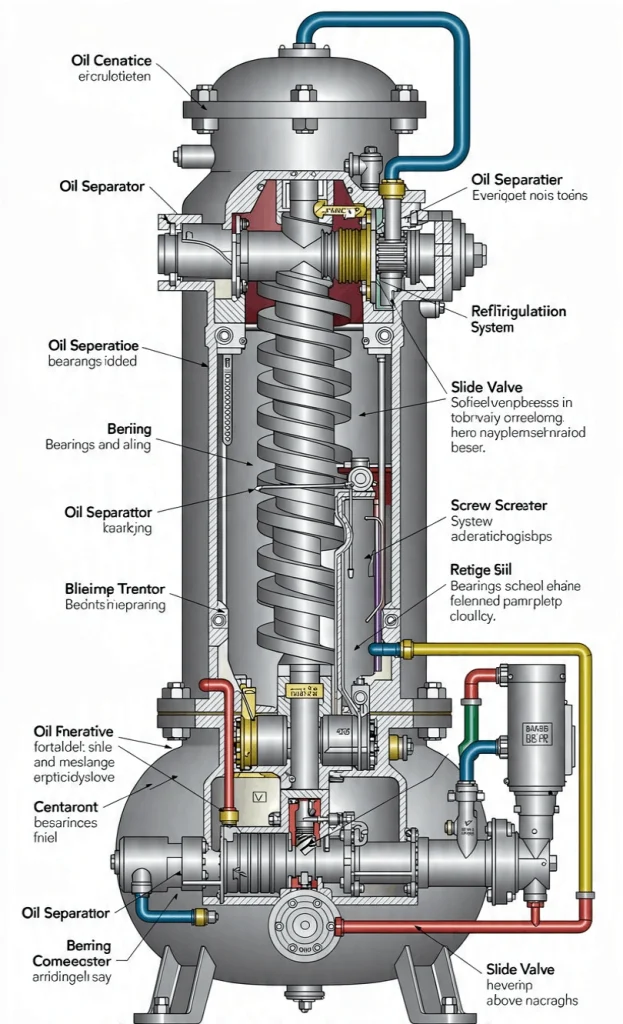
Among the various types of commercial chillers, screw compressors are widely used because of their reliability, high efficiency, and ability to operate continuously under changing cooling loads. They are particularly common in industrial plants, hotels, shopping malls, healthcare facilities, and commercial office buildings.
Although highly durable, these machines require specialised screw chiller repair and maintenance procedures to ensure consistent performance.
Engineers regularly inspect oil quality, oil separators, bearings, slide valves, refrigerant pressures, motor windings, shaft seals, vibration levels, electrical connections, and compressor temperatures. Monitoring these parameters allows maintenance teams to detect abnormal operating conditions before serious failures occur.
Oil analysis has become an important predictive maintenance tool because it reveals early signs of bearing wear, contamination, moisture ingress, and internal compressor deterioration. Combined with vibration analysis and thermal imaging, facility managers gain valuable insight into equipment condition without interrupting normal operation.
Scheduled maintenance significantly extends compressor lifespan while reducing emergency repair costs.
Dubai Marina and Palm Jumeirah Depend on Reliable HVAC Systems
Luxury residential towers, waterfront hotels, serviced apartments, restaurants, retail centres, and entertainment venues throughout Dubai Marina and Palm Jumeirah maintain exceptionally high standards of occupant comfort. Cooling systems operate continuously to provide pleasant indoor temperatures despite the combination of intense summer heat and coastal humidity.
Salt-laden air accelerates corrosion on outdoor HVAC equipment, making routine maintenance even more critical in these locations. Condenser coils, electrical terminals, control panels, structural supports, and exposed metal components require regular inspection and protective treatment.
Facility managers in these prestigious developments increasingly implement predictive maintenance programmes supported by digital monitoring technologies. Sensors continuously measure chilled water temperatures, condenser water flow, compressor efficiency, vibration levels, electrical consumption, and equipment operating hours.
Commercial Chiller Services Support Every Industry in Dubai
Every industry has unique cooling requirements, making customised commercial chiller services essential for maintaining reliable operations throughout Dubai. Hotels require uninterrupted guest comfort, hospitals depend on precise temperature control for medical equipment, shopping malls need consistent indoor environments for visitors, while manufacturing facilities rely on process cooling to maintain production quality.
Office towers in DIFC, Business Bay, Sheikh Zayed Road, and Downtown Dubai operate sophisticated HVAC systems designed to provide comfortable working conditions throughout the year. Meanwhile, logistics centres in Jebel Ali and Dubai South require reliable cooling for warehouses storing temperature-sensitive products.
Professional maintenance programmes are tailored according to operating hours, building occupancy, equipment type, cooling load, and manufacturer recommendations. Engineers inspect every critical component of the chiller plant, including compressors, evaporators, condensers, cooling towers, chilled water pumps, condenser pumps, expansion vessels, strainers, balancing valves, electrical panels, Variable Frequency Drives (VFDs), and Building Management Systems (BMS).
Routine inspections ensure every part of the cooling system operates together efficiently, reducing unnecessary energy consumption while improving occupant comfort.
Smart Building Technology Is Transforming HVAC Chiller Services UAE
The rapid development of smart buildings throughout Dubai has transformed the way engineers maintain commercial HVAC systems. Modern HVAC chiller services UAE increasingly incorporate digital monitoring platforms that provide real-time information about equipment performance.
Instead of waiting for faults to occur, intelligent Building Management Systems continuously monitor chilled water temperatures, condenser water flow rates, compressor loading, electrical consumption, refrigerant pressures, pump performance, and cooling tower operation.
This continuous monitoring enables predictive maintenance rather than reactive repairs. Engineers receive automated alerts whenever operating conditions move outside acceptable limits, allowing corrective action before occupants notice any reduction in cooling performance.
Artificial intelligence, cloud-based monitoring platforms, remote diagnostics, and IoT-enabled sensors are helping facility managers reduce maintenance costs while extending equipment life across commercial buildings throughout Dubai, Abu Dhabi, Sharjah, and the wider UAE.
These technologies also generate valuable operational data that supports energy optimisation programmes, allowing buildings to reduce electricity consumption without compromising occupant comfort.
Maintaining Chiller Plants in Dubai Hills and Modern Communities
New developments such as Dubai Hills, Dubai Creek Harbour, Meydan, City Walk, Dubai Harbour, Bluewaters Island, and Expo City feature highly efficient HVAC infrastructure designed to meet modern sustainability standards.
Many of these developments incorporate sophisticated chiller plants serving residential towers, commercial offices, retail outlets, healthcare centres, and hospitality facilities.
Regular maintenance within these communities focuses not only on equipment reliability but also on achieving maximum energy efficiency. Engineers routinely optimise chilled water temperatures, condenser water flow, pump sequencing, cooling tower operation, and compressor loading to minimise electricity consumption.
Balancing the chilled water system plays a particularly important role. Incorrect flow rates can reduce cooling efficiency, increase pumping energy, and place unnecessary stress on compressors. By maintaining correct hydraulic balance throughout the distribution network, engineers improve both occupant comfort and plant performance.
As Dubai continues investing in sustainable urban development, professionally maintained HVAC systems will remain central to achieving environmental and economic goals.
Energy Efficiency Begins With Preventive Maintenance
One of the greatest advantages of scheduled maintenance is improved energy efficiency. A well-maintained chiller requires significantly less electricity than one operating with dirty heat exchangers, incorrect refrigerant levels, worn bearings, blocked strainers, or fouled condenser tubes.
Even small reductions in efficiency can result in substantial increases in electricity consumption because chillers operate continuously throughout much of the year. Facility managers often discover that routine maintenance pays for itself through lower utility bills alone.
Cleaning condenser tubes restores heat transfer efficiency. Inspecting evaporators improves cooling capacity. Calibrating sensors ensures accurate control. Maintaining VFDs allows pumps and fans to operate only when required. Verifying refrigerant charge prevents unnecessary compressor workload.
Together, these maintenance activities reduce operational costs while extending equipment life and supporting Dubai’s sustainability initiatives.
Choosing the Right Chiller Maintenance Partner
Selecting an experienced HVAC contractor is one of the most important decisions a commercial property owner can make. Effective maintenance requires far more than routine inspections. Engineers must understand refrigeration principles, chilled water hydraulics, electrical systems, Building Management Systems, water treatment, vibration analysis, and manufacturer-specific maintenance procedures.
An experienced maintenance provider develops customised service schedules based on equipment age, operating conditions, cooling loads, and critical business requirements. Detailed inspection reports, performance analysis, preventive maintenance planning, and emergency response capabilities all contribute to long-term system reliability.
Whether maintaining a single air-cooled unit or a complex central chiller plant serving multiple buildings, technical expertise directly influences equipment performance, operating costs, and asset lifespan.
Conclusion
Dubai’s commercial buildings operate in one of the world’s most demanding climates, where uninterrupted cooling is essential for business continuity, occupant comfort, and operational efficiency. From Business Bay and Downtown Dubai to Dubai Marina, Palm Jumeirah, Dubai Hills, Jebel Ali, Dubai South, Al Quoz, and Dubai Silicon Oasis, every commercial property depends on reliable chiller systems to maintain comfortable indoor environments throughout the year.
Regular maintenance is no longer simply a recommended practice—it is a strategic investment that protects valuable HVAC assets, reduces electricity consumption, prevents unexpected breakdowns, and extends equipment lifespan. Whether operating a water cooled chiller, an air cooled chiller, or large centrifugal and screw compressor systems, consistent servicing ensures that every component of the chiller plant performs at maximum efficiency.
Professional maintenance programmes that include inspections of compressors, condensers, evaporators, cooling towers, chilled water systems, Plate Heat Exchangers, AHUs, FCUs, VFDs, pumps, electrical controls, and Building Management Systems enable property owners to reduce lifecycle costs while improving reliability.
As Dubai continues expanding its commercial infrastructure and adopting smart building technologies, preventive maintenance will remain one of the most effective ways to improve energy efficiency, achieve sustainability goals, and deliver uninterrupted cooling for offices, hotels, hospitals, shopping malls, industrial facilities, educational institutions, and mixed-use developments. Investing in regular chiller maintenance today ensures that commercial buildings continue operating efficiently, economically, and reliably for many years to come.