Damaged tiles can make a property look poorly maintained, but replacing every cracked, chipped, loose, or stained tile is not always necessary. In many situations, tile repair can restore the appearance and function of the surface at a lower cost and with less disruption. In other cases, tile replacement is the more reliable long-term solution.
The right choice depends on the type of damage, the condition of the tile, the substrate underneath, moisture levels, grout condition, and where the tile is installed. This is particularly important for homes, apartments, villas, offices, restaurants, retail stores, hotels, and commercial properties across the UAE.
What Is the Difference Between Tile Repair and Tile Replacement?
Tile repair means restoring a damaged tile or repairing the surrounding system without removing the entire tiled area. Depending on the problem, this can include filling chips, repairing minor cracks, fixing grout, re-bonding loose tiles, or correcting localized surface damage.
Tile replacement involves removing the damaged tile and installing a new tile in its place. Replacement is normally considered when the existing tile is badly cracked, broken, structurally compromised, repeatedly coming loose, or affected by a problem underneath.
The decision should not be based only on how the tile looks. A tile that appears slightly damaged may have an underlying problem such as water penetration, poor adhesive coverage, movement in the substrate, or failed waterproofing.

When Is Tile Repair the Better Option?
Tile repair can be suitable when the damage is relatively small and the tile remains structurally stable. A professional may be able to restore the affected area without removing the entire tile.
Small chips are one common example. A tile that has a minor edge chip or small surface defect may not require replacement, particularly when the tile is difficult to match or the damage is mostly cosmetic.
Minor surface cracks can sometimes be repaired when they do not extend through the entire tile and there is no evidence of movement underneath. However, the cause of the crack should still be investigated before deciding on a repair.
Damaged grout is another situation where replacement of the tile may be unnecessary. Crumbling, discoloured, missing, or cracked grout can often be removed and renewed without disturbing otherwise healthy tiles.
When Should a Tile Be Replaced?
Replacement becomes more appropriate when the tile itself has suffered significant structural damage. A tile that is broken into several pieces, has a deep crack running across its surface, or has become severely damaged by impact is generally difficult to restore reliably.
Replacement is also worth considering when a tile is loose and repeatedly moves after previous repairs. Repeated movement can indicate poor adhesive bonding, an unsuitable substrate, moisture, or structural movement.
Water damage is another important warning sign. If tiles in a bathroom, balcony, kitchen, swimming pool area, or wet room are failing because moisture is reaching the substrate, simply replacing the visible tile may not solve the problem.
In these situations, the surrounding installation should be inspected to determine whether the issue involves tile adhesive, grout, waterproofing, drainage, or substrate movement.
How Do You Know If a Tile Is Loose?
A loose tile may move slightly when pressure is applied to it. In some cases, it produces a hollow or different sound when tapped compared with securely bonded tiles around it.
Loose tiles can occur on floors and walls. They may be caused by insufficient adhesive coverage, poor surface preparation, moisture intrusion, thermal movement, substrate movement, or incorrect installation.
A single loose tile does not necessarily mean the entire floor needs replacement. If the surrounding tiles are stable and the underlying surface is sound, localized removal and reinstallation may be possible.
However, if many tiles in the same area are loose, the problem should be investigated more carefully. Multiple failures often indicate a broader installation or substrate issue rather than isolated tile damage.
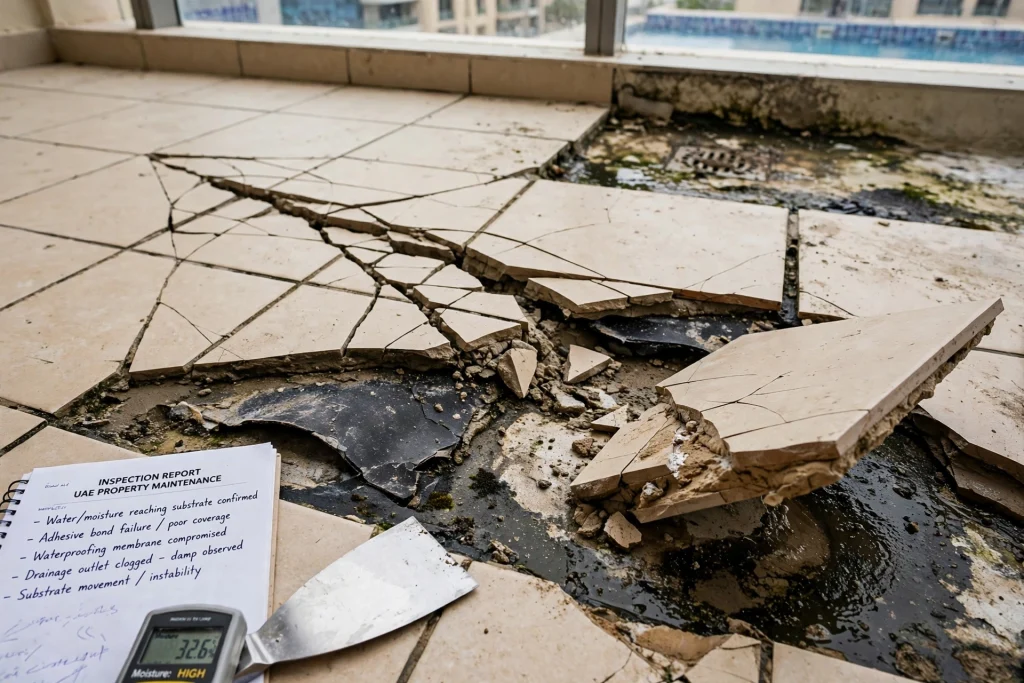
Cracked Tiles: Repair or Replace?
Cracked tiles are one of the most common reasons property owners ask whether they need repair or replacement.
A small cosmetic crack may sometimes be repaired, particularly if the tile is not exposed to heavy traffic or significant moisture. However, repairs can remain visible depending on the tile colour, pattern, finish, and location.
A deep crack is more concerning. If the crack extends through the tile or has developed because of movement underneath, replacing only the tile may provide a temporary improvement while leaving the underlying cause unresolved.
Floor tiles in high-traffic areas such as entrances, corridors, kitchens, restaurants, shopping areas, and commercial buildings need particular attention because repeated loading can worsen existing damage.
What About Chipped Tiles?
Chipped tiles do not always need to be replaced.
A small chip on the surface or corner can often be repaired with an appropriate tile repair compound or colour-matched repair material. This can be useful when the tile is part of an older installation and an identical replacement is no longer available.
For premium marble-look porcelain, patterned ceramic tiles, decorative mosaics, or discontinued designs, finding a matching replacement may be difficult. In such cases, professional repair can sometimes preserve the existing appearance more effectively.
Replacement is generally more practical when the chip is large, exposes the tile body, affects the edge or corner significantly, or creates a safety concern.
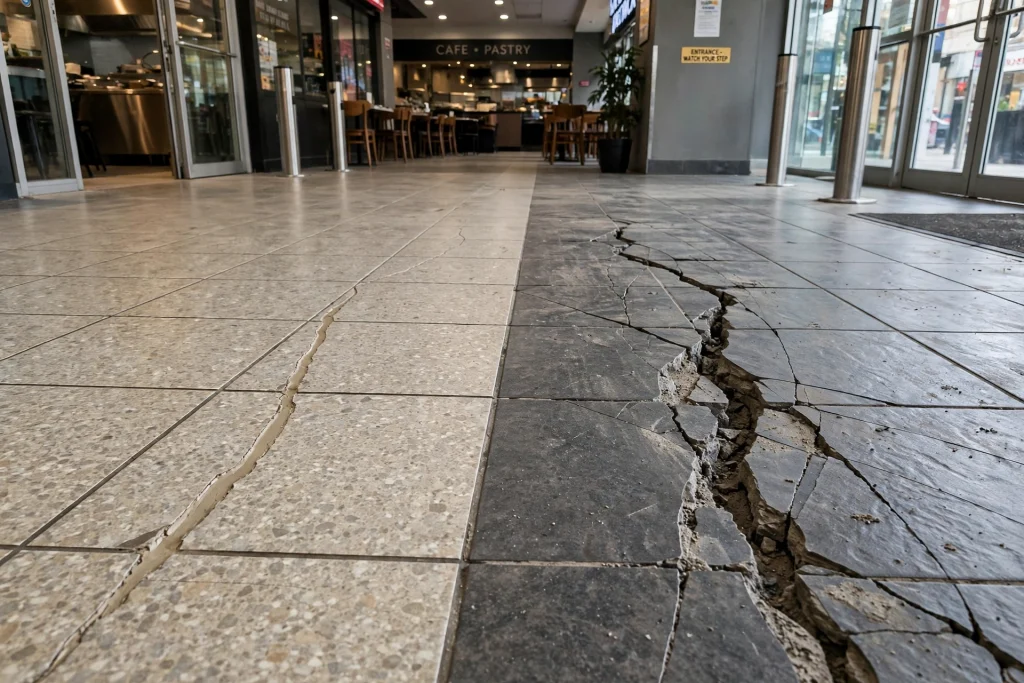
Tile Grout Repair vs Tile Replacement
Grout problems are frequently mistaken for tile problems.
If the tiles are secure but the grout is cracked, missing, stained, or deteriorated, replacing the grout may be all that is required. Grout maintenance is particularly important in bathrooms, kitchens, balconies, shower areas, commercial washrooms, and other locations exposed to moisture.
Damaged grout can allow water to reach areas behind or beneath the tile installation. Over time, this may contribute to staining, mould growth, adhesive deterioration, or substrate damage.
Before replacing tiles because of visible grout failure, inspect the grout joints and surrounding area. A professional can determine whether regrouting is sufficient or whether moisture has already affected the tiled system.
Does a Hollow-Sounding Tile Need Replacement?
Not necessarily.
A hollow sound can indicate inadequate bonding between the tile and substrate, but the sound alone does not automatically mean that the tile must be removed. The size and location of the hollow area, whether the tile moves, and whether cracking or moisture problems are present all matter.
If a tile is firmly stable and shows no other signs of failure, monitoring may sometimes be appropriate. If it is loose, cracked, rocking, or surrounded by other failing tiles, removal and reinstallation may be necessary.
This is why professional inspection is more useful than deciding based on sound alone.
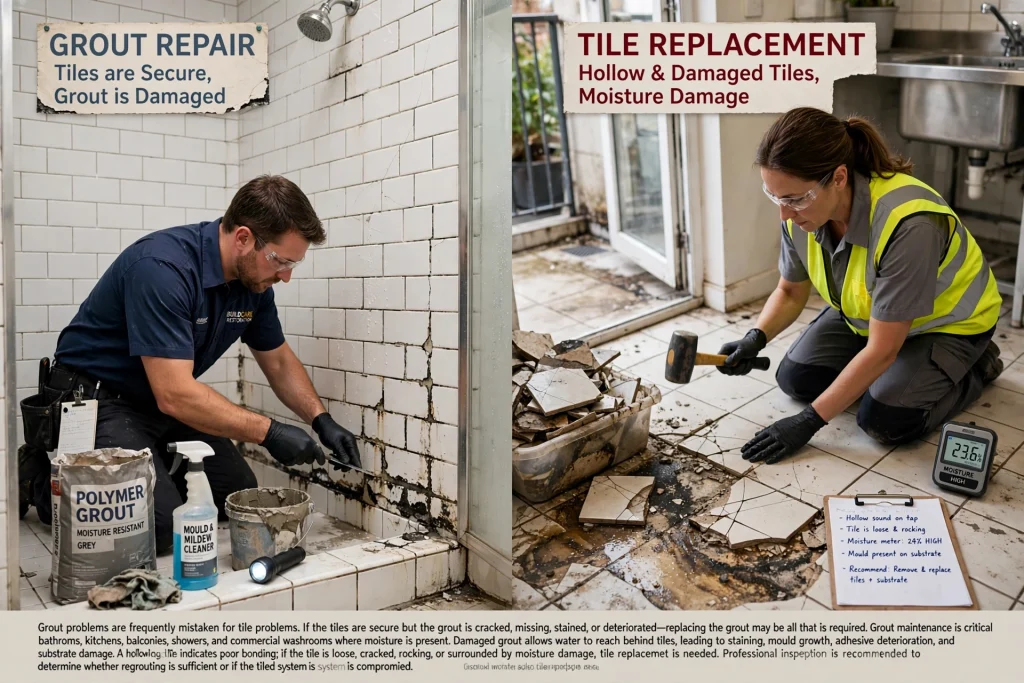
Bathroom Tiles: Repair or Replace?
Bathrooms experience continuous exposure to water, humidity, cleaning products, temperature changes, and regular foot traffic.
A small chip or isolated grout problem may be repairable. However, repeated tile movement, water staining, mould, failed grout, or dampness behind the tile should receive greater attention.
Wall tiles around showers and bathtubs require particular care because water can enter damaged joints. If waterproofing behind the tiled surface has failed, replacing the visible tile without addressing the waterproofing can result in recurring damage.
For Dubai, Abu Dhabi, Sharjah, Ajman, and other UAE properties, bathroom maintenance should therefore consider both the visible tile and the condition of the underlying system.
Kitchen Tile Repair vs Replacement
Kitchen floors and walls are exposed to food spills, grease, moisture, cleaning chemicals, furniture movement, and frequent foot traffic.
A chipped backsplash tile may only need localized repair. Similarly, damaged grout between otherwise secure tiles can often be renewed.
Floor tiles in busy kitchens may require replacement if they have deep cracks or have become unstable. Commercial kitchens can experience even greater wear because of heavy equipment, frequent cleaning, and continuous movement.
When selecting replacement tiles, consider slip resistance, cleaning requirements, water exposure, stain resistance, and compatibility with the existing floor.
Balcony and Outdoor Tile Damage
Outdoor tiled areas in the UAE face demanding environmental conditions. High temperatures, strong sunlight, dust, humidity, occasional heavy rain, and thermal expansion can affect tiled surfaces.
A cracked or loose balcony tile should not automatically be treated as an isolated cosmetic issue.
If several tiles are lifting, cracking, or becoming loose, thermal movement, substrate movement, adhesive failure, drainage problems, or waterproofing may be involved.
This is particularly important for balconies and terraces in villas and apartments because water entering beneath the tiled surface can create more extensive damage.
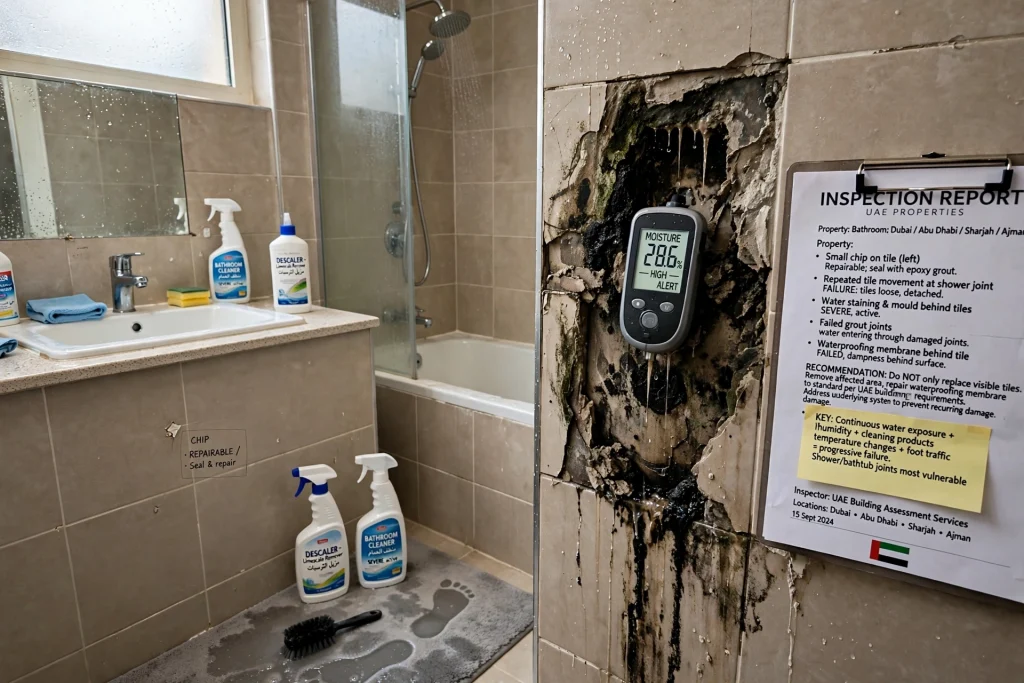
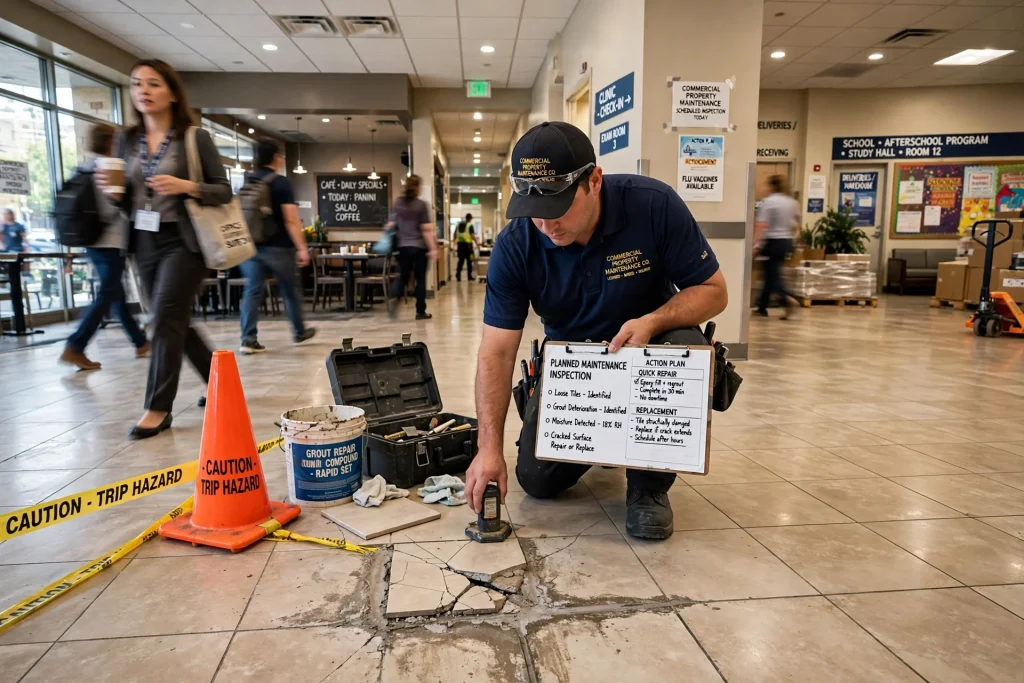
Floor Tiles in Commercial Properties
Commercial floors experience substantially different conditions from lightly used residential areas.
Offices, retail stores, restaurants, hotels, clinics, schools, warehouses, and hospitality properties may have continuous pedestrian traffic. A small tile defect can become a trip hazard or develop into a larger failure.
For commercial properties, repair may be preferred when it can be completed quickly without affecting business operations. Replacement may be necessary when a tile is structurally damaged or creates a safety risk.
A planned maintenance approach can also identify loose tiles, deteriorating grout, cracked surfaces, and moisture problems before they become disruptive repairs.
Businesses can coordinate this work through a professional Commercial Property Maintenance Company that can assess the tiled area alongside other property maintenance requirements.
Does Tile Replacement Always Mean Replacing the Whole Floor?
No.
Tile replacement can be localized. A contractor can remove individual damaged tiles and install compatible replacements while leaving the surrounding surface intact.
The main challenge is finding a suitable replacement. The original tile may have been discontinued, the colour may have changed over time, or a newer production batch may have slight differences in shade and texture.
For this reason, property owners should keep spare tiles after an original installation whenever possible.
If matching tiles are unavailable, the replacement can sometimes be placed in a less visually prominent area, while a similar new tile is used where appearance is more important. The feasibility depends on the layout and the specific property.
Tile Repair Cost vs Tile Replacement Cost
The cheaper option depends on the condition of the surface and the extent of the work.
A minor chip or grout repair can be relatively straightforward. Replacing one tile, however, involves removing the damaged tile, preparing the substrate, applying adhesive, installing the replacement, allowing appropriate curing time, and finishing the grout.
Replacement costs can increase when the tile is difficult to access, requires careful removal, or is part of a large-format or premium installation.
If multiple tiles are failing because of a common underlying problem, repeated individual repairs can become inefficient. In that situation, investigating the root cause may be more economical over the long term.
Why the Underlying Surface Matters
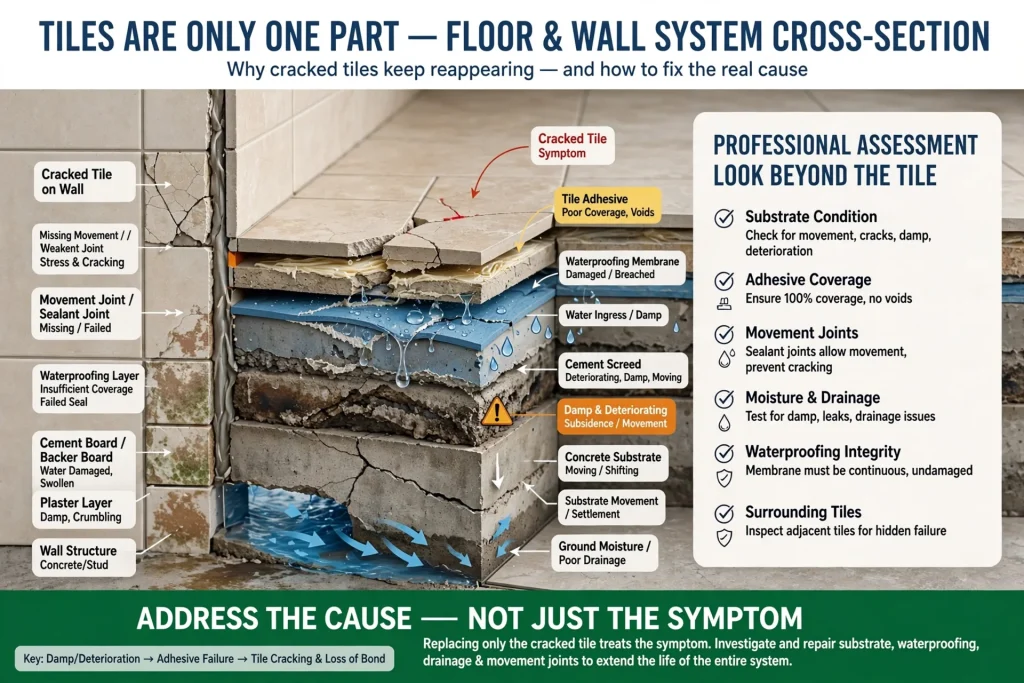
Tiles are only one part of a flooring or wall system.
The substrate underneath may include concrete, screed, cement board, plaster, waterproofing layers, adhesive, or other construction materials. If the substrate moves, becomes damp, or deteriorates, the tile above it can eventually fail.
This is why simply replacing a cracked tile may not always solve recurring problems.
A professional assessment should consider substrate condition, adhesive coverage, movement joints, moisture, drainage, waterproofing, and surrounding tiles.
Addressing the cause rather than repeatedly treating the symptom can help extend the life of the entire installation.
Tile Adhesive and Bonding Problems
Tile adhesive plays an important role in the stability of modern tile installations.
Poor adhesive selection, insufficient coverage, incorrect mixing, inadequate surface preparation, or improper installation can contribute to hollow areas and loose tiles.
Large-format porcelain tiles can require particularly careful installation because the consequences of inadequate support may become more noticeable as the tile size increases.
When replacing tiles, the installer should prepare the substrate correctly and use an adhesive appropriate for the tile type, location, moisture exposure, and substrate.
Porcelain vs Ceramic Tile Repair
Porcelain and ceramic tiles can both be repaired or replaced, but their characteristics differ.
Porcelain is generally dense and has low water absorption, making it widely used for floors, bathrooms, commercial areas, and exterior applications where the product is suitable for those conditions.
Ceramic tiles are available in many colours, patterns, finishes, and formats and are commonly used on walls and floors.
Repair products need to be compatible with the tile material and finish. Replacement should also consider the original tile’s dimensions, thickness, colour, surface texture, and intended application.
Marble and Natural Stone Tiles
Natural stone requires a different approach from standard ceramic or porcelain tiles.
Marble, granite, travertine, limestone, and other natural stones can develop chips, cracks, stains, scratches, and surface wear. Some defects may be repairable through professional stone restoration rather than complete replacement.
Replacing natural stone can be expensive, particularly when the material is custom-selected or difficult to match.
The surrounding stone may also require polishing, honing, sealing, or other finishing work after a repair or replacement.
For luxury villas, hotels, commercial lobbies, and premium interiors in Dubai and Abu Dhabi, maintaining the visual continuity of natural stone is an important consideration.
Signs That You Should Not Delay Tile Repair
Some tile problems should be investigated quickly.
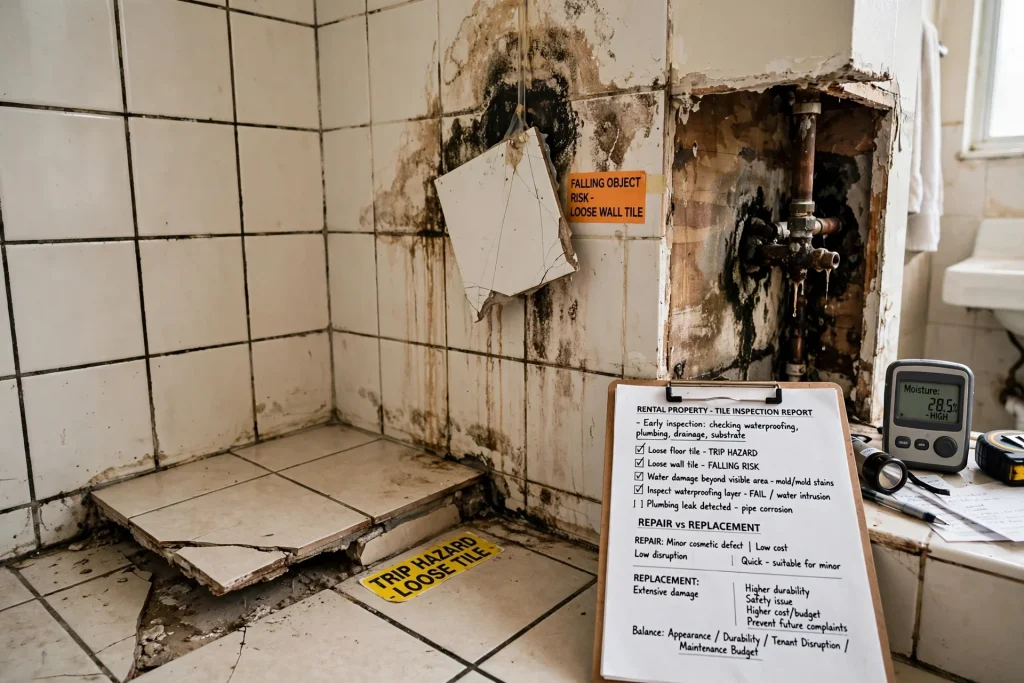
These include rapidly spreading cracks, tiles that move underfoot, repeated tile failure, water staining, dampness, mould around damaged grout, sharp broken edges, and tiles that have lifted from the surface.
A loose floor tile can create a trip hazard, while a loose wall tile can present a falling-object risk.
Water-related damage can also extend beyond the visible tiled surface. Early inspection can help determine whether the problem is limited to the tile or involves waterproofing, plumbing, drainage, or the substrate.
Tile Repair or Replacement for Rental Properties
Landlords and property managers often need to balance appearance, durability, tenant disruption, and maintenance budgets.
For a minor cosmetic defect, repair may provide an efficient solution before a property is rented or handed over.
Replacement may be more appropriate where damage is extensive or where the existing tile presents a safety issue. Matching the original finish is particularly important in visible areas such as entrances, kitchens, bathrooms, and living spaces.
A maintenance inspection before tenant occupancy can identify loose tiles, cracked grout, damaged sealants, and other issues that could become complaints later.
Tile Maintenance in Dubai and Across the UAE
Tile maintenance requirements vary according to the property, location, usage, and exposure.
In Dubai areas such as Downtown Dubai, Business Bay, Dubai Marina, Jumeirah, Palm Jumeirah, and Jumeirah Village Circle, tiled surfaces can be found across apartments, villas, offices, restaurants, hotels, retail properties, and mixed-use developments.
In Abu Dhabi, Sharjah, Ajman, and other Emirates, similar maintenance considerations apply to residential and commercial properties.
Regular inspection is particularly useful in wet areas, balconies, terraces, kitchens, entrances, high-traffic corridors, and commercial spaces.
How to Decide Between Tile Repair and Replacement
A practical decision should consider five questions.
First, how severe is the damage? A minor chip is different from a broken tile.
Second, is the tile stable? Movement or repeated loosening suggests that the problem may be deeper.
Third, is there moisture? Water intrusion can affect the substrate and adhesive.
Fourth, can the tile be matched? If an identical replacement is unavailable, repair may sometimes provide a better visual result.
Finally, what is the long-term use of the area? A heavily used commercial floor may require a more durable solution than a lightly used residential wall.
What Does a Professional Tile Inspection Check?
A professional inspection should look beyond the visible defect.
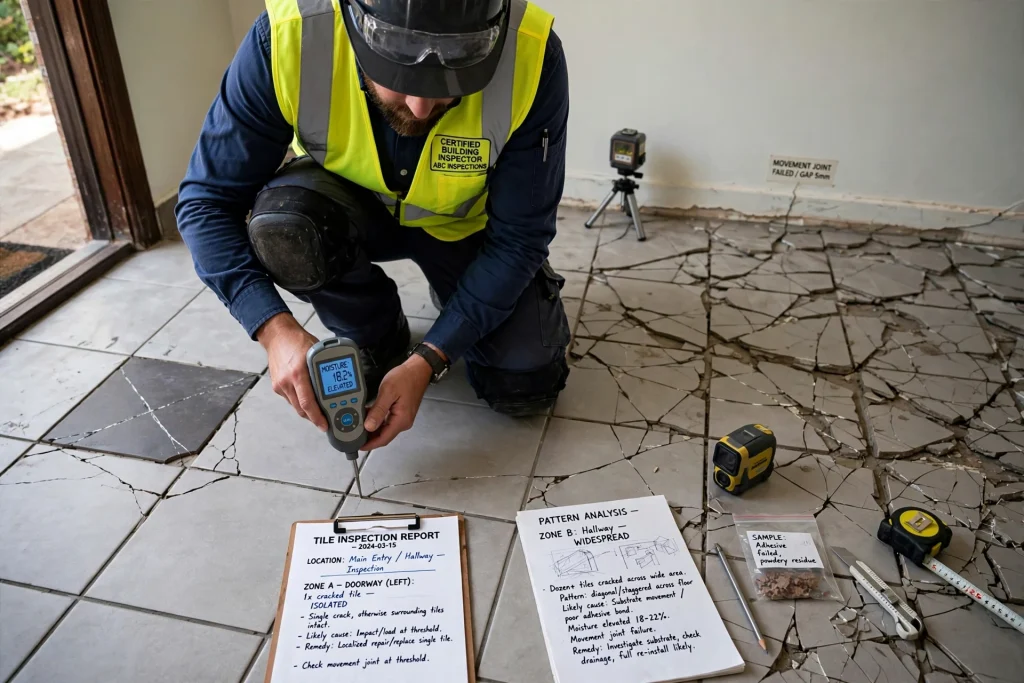
The condition of the tile surface, grout joints, adhesive bond, substrate, moisture exposure, drainage, movement joints, and surrounding tiles can all affect the correct repair strategy.
The inspector may also identify whether damage is isolated or part of a wider pattern.
For example, one cracked tile near a doorway may have a very different cause from dozens of cracked tiles across a floor. The first may require localized work, while the second could indicate substrate movement or installation problems.
Common Mistakes When Repairing Tiles
One common mistake is repairing the visible crack without identifying why it appeared.
Another is installing a replacement tile without properly preparing the substrate. This can lead to another loose or cracked tile.
Using an unsuitable adhesive is another problem. Different tile materials and installation environments can require different adhesive systems.
Ignoring damaged grout can also allow moisture to enter the installation.
Finally, repeatedly repairing individual tiles in an area where many tiles are failing can become a cycle of temporary fixes. A wider inspection is usually more useful when damage keeps returning.
How to Make Tile Replacement Blend With Existing Tiles
A replacement tile will not always look identical to an older tile, even when the product name is the same.
Colour batches, manufacturing variations, surface wear, sunlight exposure, cleaning, and ageing can change the appearance of the original installation.
Before replacement, compare the new tile against surrounding tiles under the property’s normal lighting conditions.
For patterned or natural-look tiles, orientation and pattern positioning can also affect the final appearance.
Keeping spare tiles from the original installation is therefore one of the simplest ways to make future repairs easier.
Final Decision: Repair or Replace?
Tile repair is generally worth considering when the damage is minor, localized, and cosmetic, while the tile and substrate remain stable. Small chips, isolated grout problems, and certain surface defects may not justify removing an otherwise healthy tile.
Tile replacement becomes more appropriate when a tile is badly cracked, broken, unstable, repeatedly failing, or affected by an underlying installation problem.
The most important point is that the visible tile is not always the source of the problem. Moisture, waterproofing, adhesive failure, substrate movement, poor installation, and drainage issues can all contribute to tile damage.
For UAE homes and commercial properties, a proper inspection helps determine whether a localized repair is sufficient or whether replacement and underlying corrective work are required. The goal should not simply be to make the damaged tile look better; it should be to restore a safe, stable, durable tiled surface.