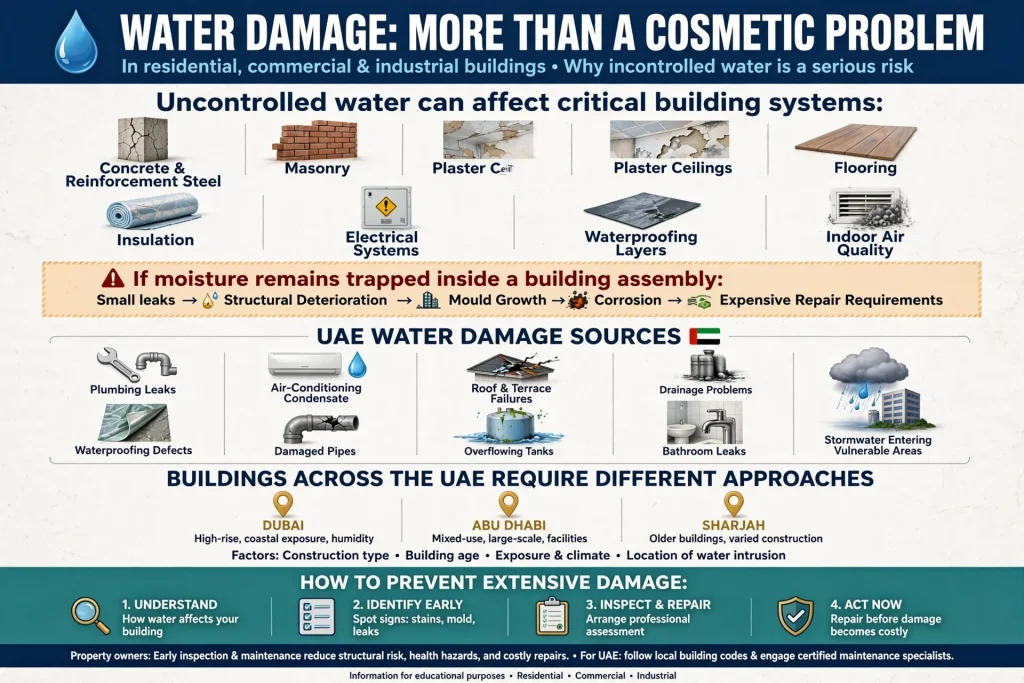
Water damage is more than a cosmetic problem. In residential, commercial, and industrial buildings, uncontrolled water can affect concrete, reinforcement steel, masonry, plaster, ceilings, flooring, insulation, electrical systems, waterproofing layers, and indoor air quality. If moisture remains trapped inside a building assembly, relatively small leaks can develop into structural deterioration, mould growth, corrosion, and expensive repair requirements.
In the UAE, water damage can result from several sources, including plumbing leaks, air-conditioning condensate, roof and terrace failures, waterproofing defects, overflowing tanks, drainage problems, damaged pipes, bathroom leaks, and stormwater entering through vulnerable areas. Buildings in Dubai, Abu Dhabi, Sharjah, and other emirates can therefore require different approaches depending on construction type, age, exposure, and the location of the water intrusion.
Understanding how water affects a building helps property owners identify problems earlier and arrange appropriate inspection and repair before damage becomes more extensive.
What Is Water Damage in a Building?
Water damage occurs when unwanted water or excessive moisture enters parts of a building where it should not be present. The affected area may include walls, floors, ceilings, roofs, foundations, bathrooms, kitchens, mechanical rooms, basements, balconies, or service shafts.
The source can be obvious, such as a burst pipe, or difficult to identify, such as moisture travelling through a wall from a concealed plumbing connection.
Water does not always remain where the original leak occurred. It can move through porous materials, joints, cracks, cavities, insulation, ceiling voids, and construction gaps. This means a water stain appearing on a ceiling may originate from a plumbing line, bathroom, roof, terrace, or mechanical installation located above or several metres away.
Early identification of the source is therefore an important part of protecting the building.
How Water Enters Building Structures
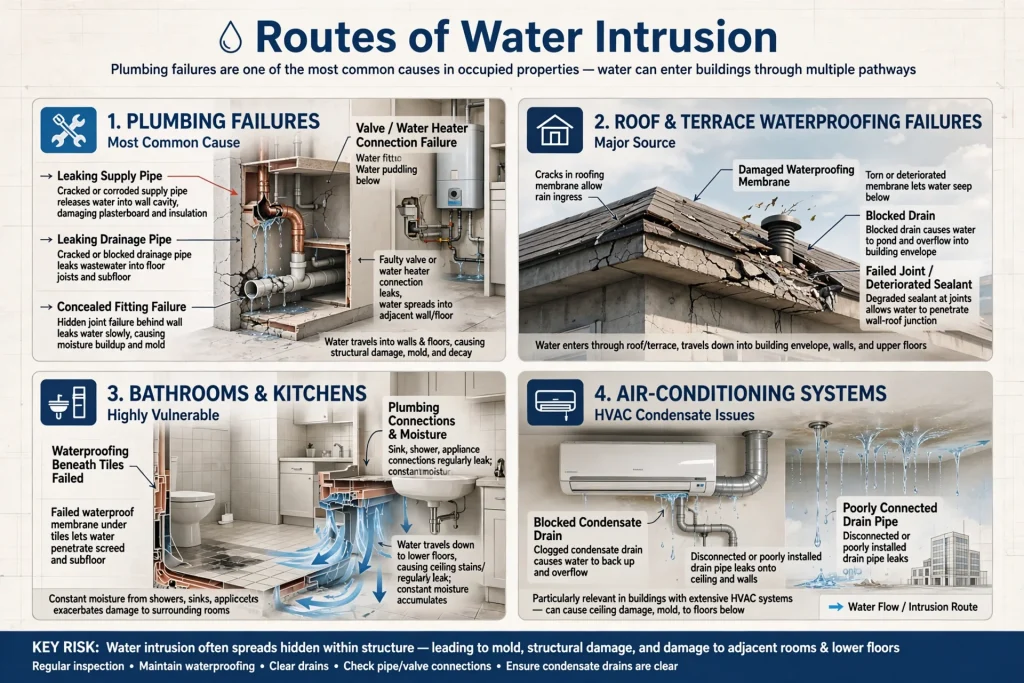
There are many possible routes for water intrusion. Plumbing failures are one of the most common causes in occupied properties. A leaking supply pipe, drainage pipe, valve, water heater connection, or concealed fitting can release water into walls or floors.
Roof and terrace waterproofing failures are another major source. Cracks, damaged membranes, failed joints, blocked drains, and deteriorated sealants can allow water to enter the building envelope.
Bathrooms and kitchens are also vulnerable because they contain plumbing connections and regularly experience moisture. If waterproofing beneath tiles has failed, water can migrate into the screed, wall structure, adjacent rooms, or lower floors.
Air-conditioning systems can create water damage when condensate drains become blocked or poorly connected. This can be particularly relevant in buildings with extensive HVAC systems.
Effects of Water on Concrete
Concrete is often considered a durable construction material, but prolonged moisture exposure can contribute to deterioration under certain conditions.
Water can enter concrete through cracks, pores, construction joints, penetrations, and defective waterproofing. If water reaches embedded reinforcement steel, corrosion can become a concern.
Corrosion of reinforcement can cause the steel to expand. This expansion can create internal pressure within the concrete, eventually contributing to cracking, delamination, and spalling.
The severity of the problem depends on factors such as moisture exposure, concrete quality, reinforcement condition, chloride contamination, carbonation, crack patterns, and the duration of exposure.
A visible crack or concrete stain should therefore not automatically be treated as a simple surface problem. The underlying cause needs to be investigated.
Reinforcement Steel Corrosion
Reinforced concrete depends on steel reinforcement to provide tensile capacity. Under normal conditions, the surrounding concrete provides protection to the reinforcement.
Persistent moisture can contribute to conditions that promote reinforcement corrosion, particularly when other factors such as carbonation or chloride exposure are present.
As reinforcement corrodes, the resulting expansion can place pressure on the surrounding concrete. Over time, this may lead to cracking, rust staining, concrete delamination, and spalling.
For buildings exposed to coastal environments, additional attention may be required because airborne salts and chlorides can contribute to reinforcement corrosion when they reach susceptible areas.
Properties near coastal areas of Dubai and Abu Dhabi should therefore treat persistent concrete moisture and corrosion indicators seriously.
Water Damage to Masonry Walls
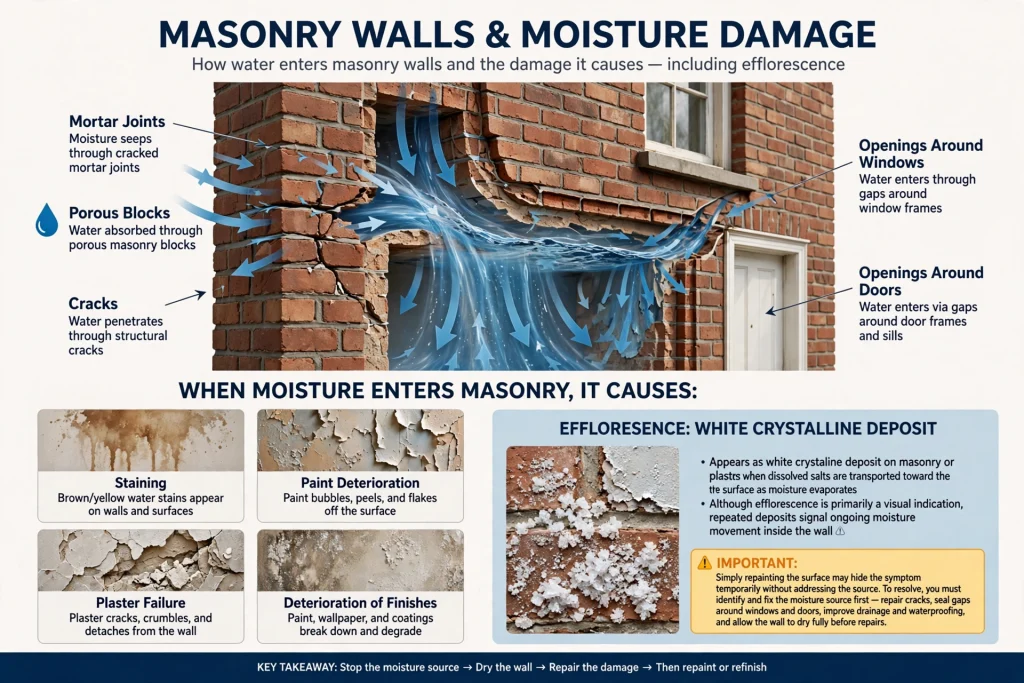
Masonry walls can absorb water through porous blocks, mortar joints, cracks, and openings around windows and doors.
When moisture enters masonry, it can cause staining, paint deterioration, plaster failure, efflorescence, and deterioration of finishes.
Efflorescence appears as a white crystalline deposit on masonry or plaster when dissolved salts are transported toward the surface as moisture evaporates.
Although efflorescence itself may be primarily a visual indication, repeated deposits can signal ongoing moisture movement inside the wall.
Simply repainting the surface may hide the symptom temporarily without addressing the source.
Damage to Plaster, Paint and Wall Finishes
Water often becomes visible first through damage to interior finishes.
Paint may blister, bubble, peel, crack, or discolour. Plaster can soften, detach, or develop stains. Wallpaper and decorative finishes may also become damaged.
These symptoms are important because they can provide clues about the location and duration of moisture exposure.
If a ceiling repeatedly develops a brown or yellow stain, for example, painting over the mark without investigating the source may allow the underlying problem to continue.
The correct approach is generally to identify and stop the source, assess the affected materials, allow appropriate drying, and then repair damaged finishes.
Water Damage to Ceilings
Ceilings are particularly vulnerable to water from upper floors, roof systems, bathrooms, air-conditioning equipment, and plumbing services.
A small ceiling stain may indicate a minor leak, but sagging or soft ceiling materials can indicate more significant moisture accumulation.
Suspended ceilings can also conceal water above the visible surface. Moisture may affect ceiling tiles, metal components, insulation, electrical services, and other building systems.
Where a ceiling is visibly bulging, sagging, or saturated, the area should be assessed promptly and access should be controlled until its condition is understood.
How Water Affects Flooring
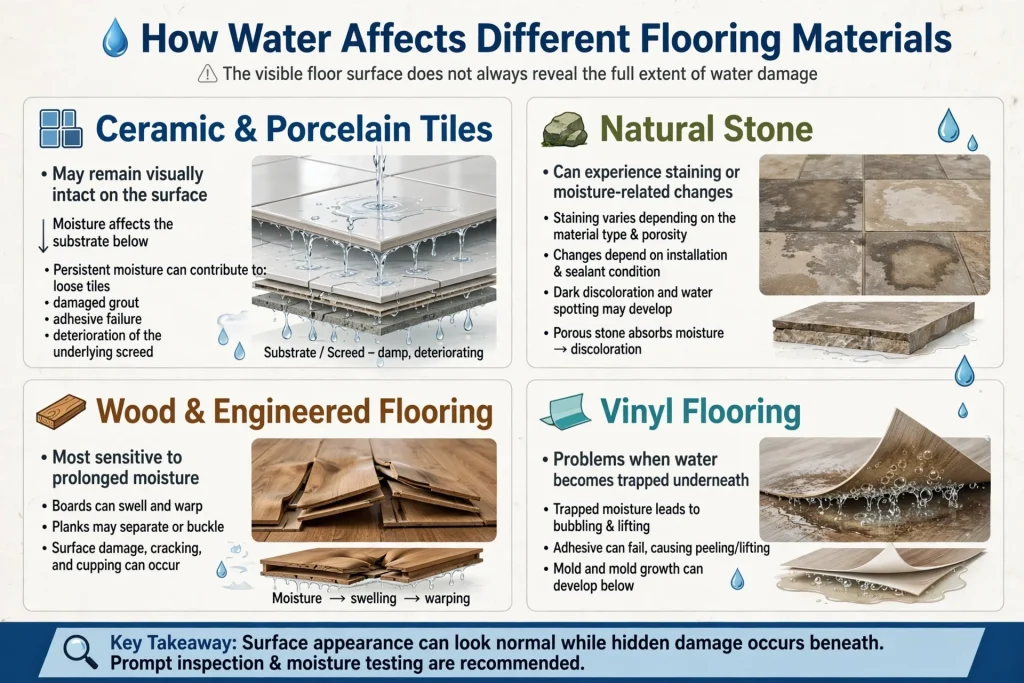
Water can affect different flooring materials in different ways.
Ceramic and porcelain tiles may remain visually intact while moisture affects the substrate below. Persistent moisture can contribute to loose tiles, damaged grout, adhesive failure, or deterioration of the underlying screed.
Natural stone can experience staining or moisture-related changes depending on the material and installation.
Wood and engineered flooring are generally more sensitive to prolonged moisture. Boards can swell, warp, separate, or develop surface damage.
Vinyl flooring may also experience problems when water becomes trapped underneath the installation.
The visible floor surface therefore does not always reveal the full extent of water damage.
Water Damage and Waterproofing Systems
Waterproofing is a critical protective layer in many building areas, including roofs, terraces, balconies, bathrooms, wet rooms, podiums, foundations, planter boxes, swimming pools, and underground structures.
A waterproofing system can fail because of ageing, physical damage, poor installation, movement, failed joints, incompatible materials, inadequate detailing, or penetration by later construction work.
When waterproofing fails, water can migrate into the building assembly.
Repairing the visible interior stain without correcting the waterproofing defect often leads to recurring damage.
For this reason, waterproofing inspection should consider both the visible symptom and the probable source of water entry.
Water Damage in Roofs and Terraces
UAE buildings are exposed to intense sunlight, high temperatures, thermal movement, and occasional heavy rainfall. Roof and terrace systems therefore need appropriate detailing and maintenance.
Water can enter through cracks, membrane defects, failed upstands, drainage problems, expansion joints, pipe penetrations, and damaged sealants.
Blocked roof drains can also cause water to remain on surfaces for longer than intended.
Standing water can increase exposure to waterproofing defects and may eventually find pathways into the building.
Regular roof inspections can help identify damaged membranes, blocked drains, deteriorated sealants, and other potential water entry points.
Plumbing Leaks and Hidden Water Damage
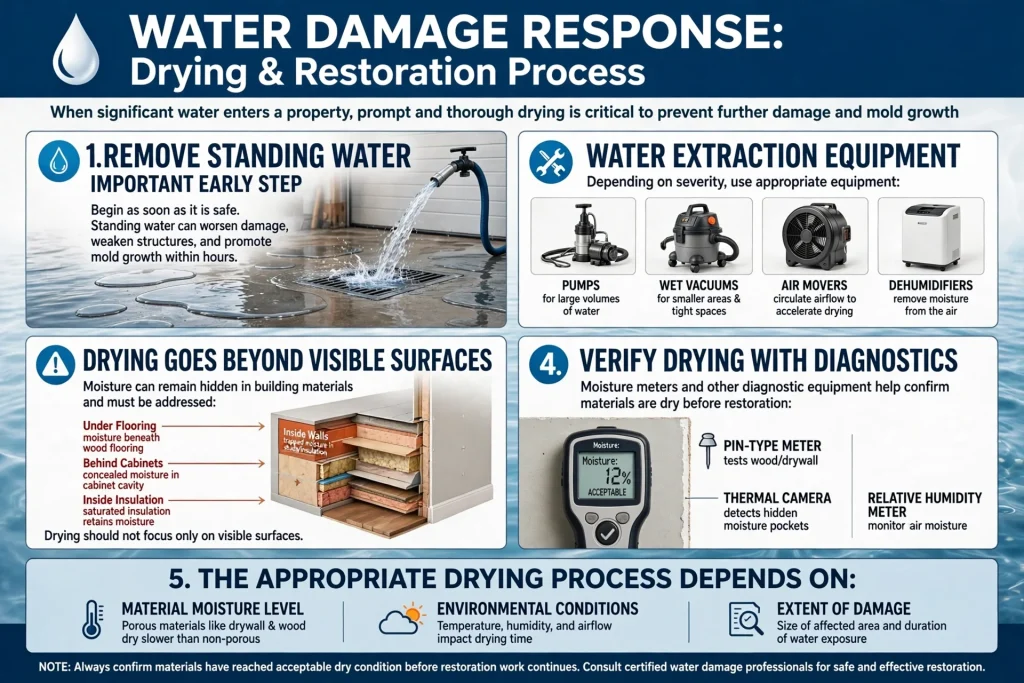
Concealed plumbing leaks can be particularly difficult because the source may not be visible.
A leaking pipe inside a wall or floor can release moisture gradually. Over time, the surrounding materials can remain damp even when the visible water flow is small.
Warning signs can include unexplained damp patches, musty smells, discoloured paint, peeling finishes, unusually high water consumption, bubbling flooring, or recurring mould.
Leak detection methods may include visual inspection, moisture measurement, pressure testing, thermal imaging, acoustic techniques, or other diagnostic methods depending on the system and suspected location.
The objective is to identify the source before unnecessary demolition takes place.
HVAC Condensate and Water Damage
Air-conditioning systems are essential in UAE buildings, but HVAC condensate can become a source of water damage when drainage systems are not functioning correctly.
Blocked condensate drains, damaged drain pans, incorrect slopes, disconnected drain lines, or inadequate maintenance can cause water to overflow.
The resulting moisture may affect ceilings, walls, insulation, electrical components, and equipment spaces.
Commercial buildings with extensive HVAC infrastructure should include condensate drainage inspections as part of preventive maintenance.
This is particularly important for offices, hotels, shopping centres, hospitals, schools, and other properties where HVAC systems operate for long periods.
Electrical Safety Risks
Water and electricity create a serious safety concern.
If water reaches electrical outlets, distribution boards, wiring, lighting equipment, electrical panels, or other energized components, there can be a risk of electric shock, short circuits, equipment failure, or fire.
Electrical systems affected by water should be assessed by appropriately qualified professionals before being returned to service.
Property owners should avoid assuming that equipment is safe simply because it appears dry on the outside. Water may have entered internal components or concealed wiring pathways.
Where water intrusion occurs near electrical infrastructure, electrical safety should be treated as a priority alongside building repairs.
Mould and Indoor Air Quality
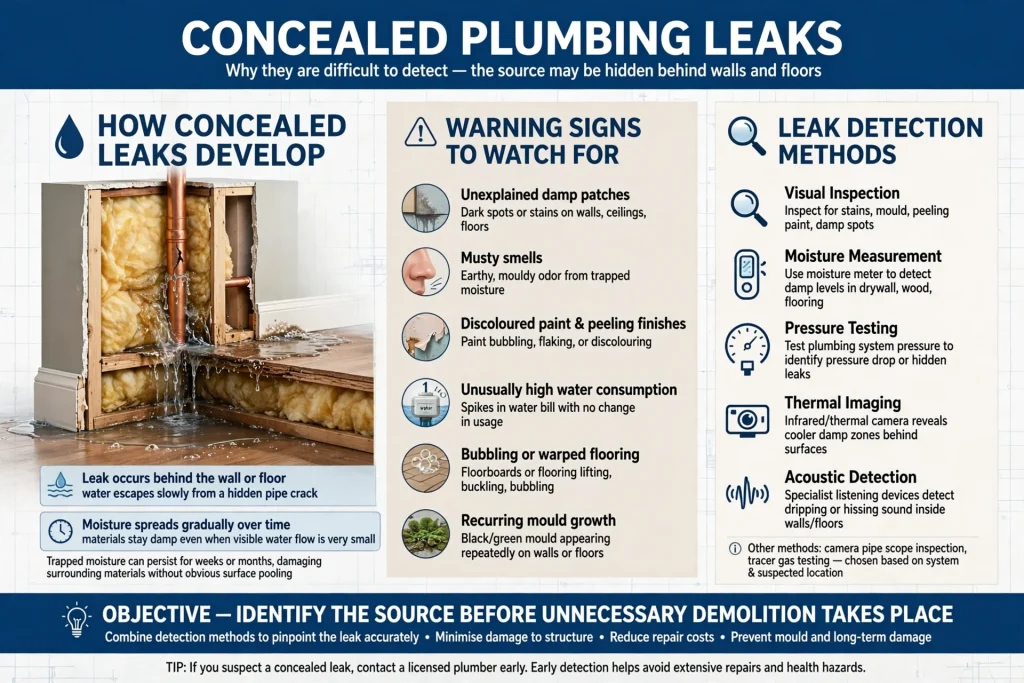
Persistent moisture can create conditions that support mould growth.
Mould can develop on damp drywall, insulation, ceiling materials, timber, wallpaper, fabrics, and other organic or moisture-sensitive materials.
A musty smell may be an early indication of hidden moisture, although odour alone cannot determine the source or extent of the problem.
Moisture control is central to mould prevention. Simply cleaning visible mould without addressing the moisture source can result in recurrence.
Commercial and residential properties should therefore consider both moisture removal and appropriate cleaning or remediation when mould is identified.
Water Damage and Building Safety
Water damage can affect safety in several ways.
Deteriorated ceilings can create falling-material hazards. Slippery floors can increase the risk of falls. Damaged electrical systems can create electrical hazards. Corroded structural reinforcement can contribute to long-term structural deterioration.
Water can also damage fire-rated assemblies, insulation, doors, partitions, and other components that contribute to building performance.
In commercial buildings, water damage can disrupt operations by affecting offices, retail spaces, hotels, warehouses, restaurants, mechanical rooms, and other occupied areas.
A safety assessment should therefore consider the building system as a whole rather than focusing only on visible stains.
Signs That Water Damage Requires Immediate Attention
Certain warning signs should not be ignored.
These can include rapidly spreading damp patches, ceiling sagging, active leaks, standing water, electrical equipment exposed to moisture, severe mould growth, recurring water stains, significant cracks associated with moisture, or visible concrete spalling.
A sudden increase in water consumption can also indicate a concealed plumbing leak.
Where structural movement, major cracking, exposed reinforcement, or significant concrete deterioration is suspected, an appropriate building professional should assess the condition rather than relying only on cosmetic repairs.
Water Damage in Dubai Buildings
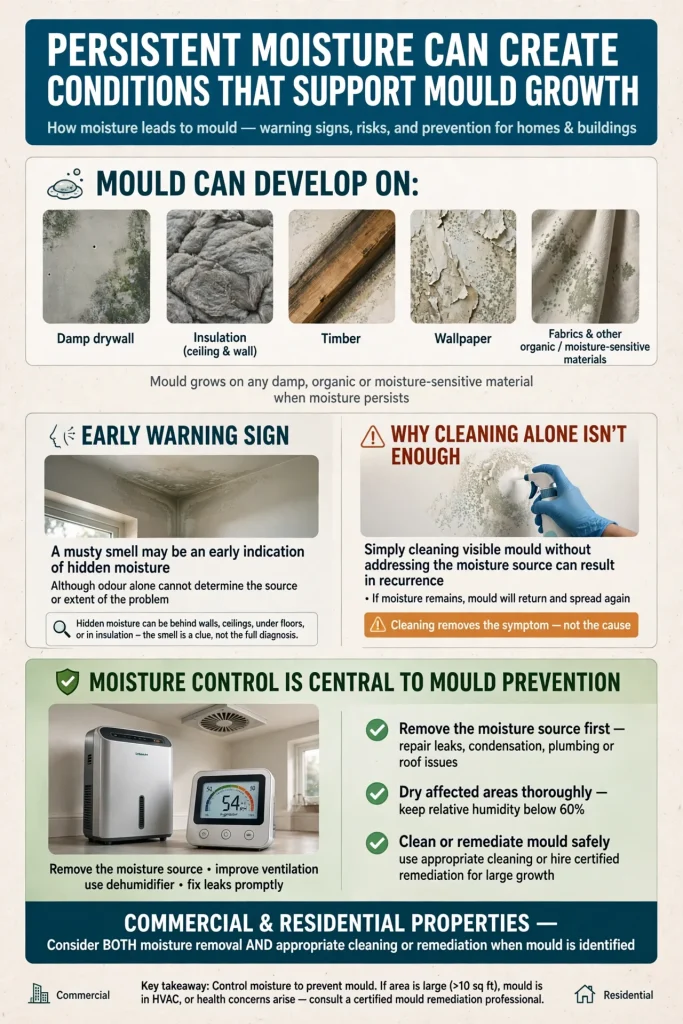
Dubai contains a wide range of residential towers, villas, hotels, commercial offices, shopping centres, warehouses, and mixed-use developments.
Properties in areas such as Downtown Dubai, Business Bay, Dubai Marina, Jumeirah, Palm Jumeirah, Dubai Hills Estate, and Jumeirah Lake Towers can have very different construction characteristics and maintenance requirements.
High-rise buildings may involve complex plumbing risers, HVAC systems, façade interfaces, balconies, terraces, and mechanical floors.
Villa properties may have larger roof areas, landscaped spaces, swimming pools, external waterproofing, bathrooms, and underground service areas.
Water damage investigations should therefore consider the building type and its specific construction details.
Water Damage in Abu Dhabi and Coastal Areas
Abu Dhabi also has extensive residential, commercial, hospitality, and mixed-use developments where moisture control is important.
Buildings in coastal environments can face additional exposure to humidity, salt-laden air, and challenging external conditions.
Areas such as Al Reem Island, Saadiyat Island, Yas Island, and central Abu Dhabi contain properties ranging from high-rise residential buildings to hotels, offices, and large developments.
Waterproofing, façade maintenance, plumbing inspection, roof drainage, and corrosion management can all contribute to long-term building protection.
Why Water Damage Should Be Repaired Quickly
The longer moisture remains inside a building assembly, the more opportunity it has to spread.
A small plumbing leak may initially damage paint and plaster. If it continues, moisture can reach insulation, flooring, electrical services, or structural components.
Similarly, a roof leak may begin as a ceiling stain but become a broader building-envelope problem if water repeatedly enters the structure.
Prompt investigation can help limit the affected area and reduce the possibility of secondary damage.
Professional Water Damage Repair Solutions can involve identifying the source, controlling the leak, removing affected materials where necessary, drying the area, assessing damage, repairing building components, and restoring finishes.
Water Extraction and Drying
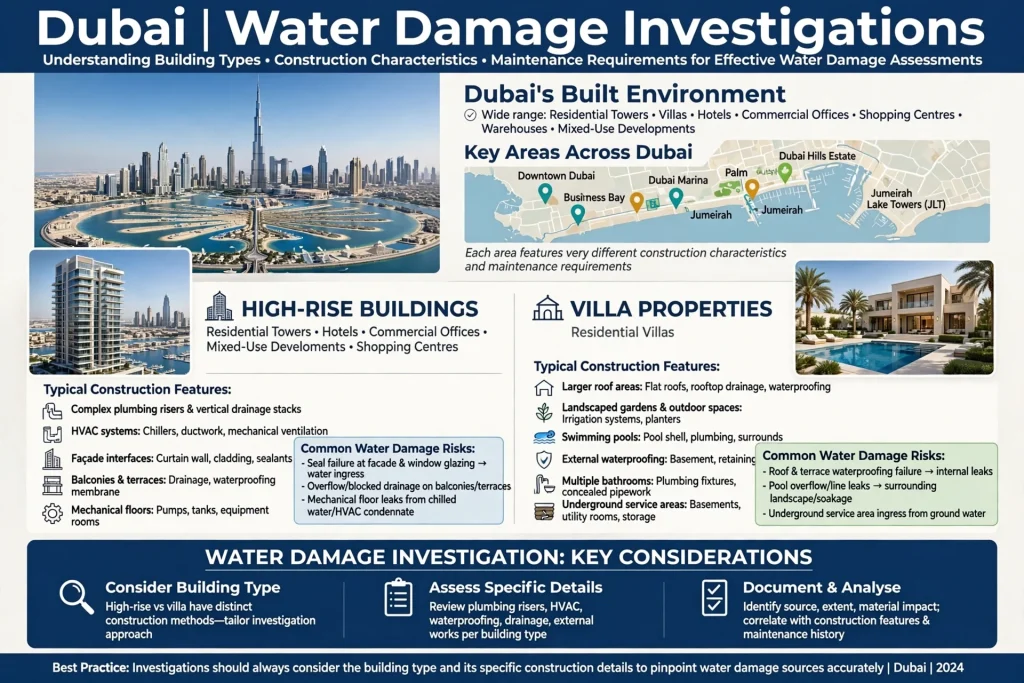
When significant water enters a property, removing standing water is an important early step.
Depending on the severity, water extraction equipment, pumps, wet vacuums, air movers, and dehumidification equipment may be used.
Drying should not focus only on visible surfaces. Moisture can remain inside walls, under flooring, behind cabinets, beneath tiles, or inside insulation.
Moisture meters and other diagnostic equipment can help determine whether materials have reached an acceptable dry condition before restoration work continues.
The appropriate drying process depends on the material, moisture level, environmental conditions, and extent of damage.
Repairing Structural and Building Components
Once the source has been controlled and affected areas assessed, repairs can be planned.
Repairs may involve plaster replacement, ceiling restoration, waterproofing repair, plumbing work, tile replacement, insulation replacement, corrosion treatment, concrete repair, sealant renewal, painting, or electrical remediation.
Structural repairs should be based on an appropriate assessment rather than simply covering damaged areas.
For concrete deterioration, for example, the repair process may require removal of unsound concrete, treatment of affected reinforcement, compatible repair materials, and restoration of the protective concrete cover.
The correct method depends on the nature and severity of the damage.
Preventing Future Water Damage
Prevention is usually less disruptive than repeated emergency repairs.
Property owners can reduce risk through regular plumbing inspections, roof and terrace checks, waterproofing maintenance, AC condensate drain cleaning, drainage maintenance, sealant inspections, bathroom checks, and prompt repair of visible cracks or leaks.
Commercial properties can incorporate these tasks into preventive maintenance schedules.
For villas and apartments, occupants should report recurring dampness, unusual odours, water stains, or plumbing problems quickly.
Building managers should also pay attention to areas that are difficult to inspect, such as service shafts, ceiling voids, plant rooms, roof spaces, and mechanical areas.
Why Professional Inspection Matters
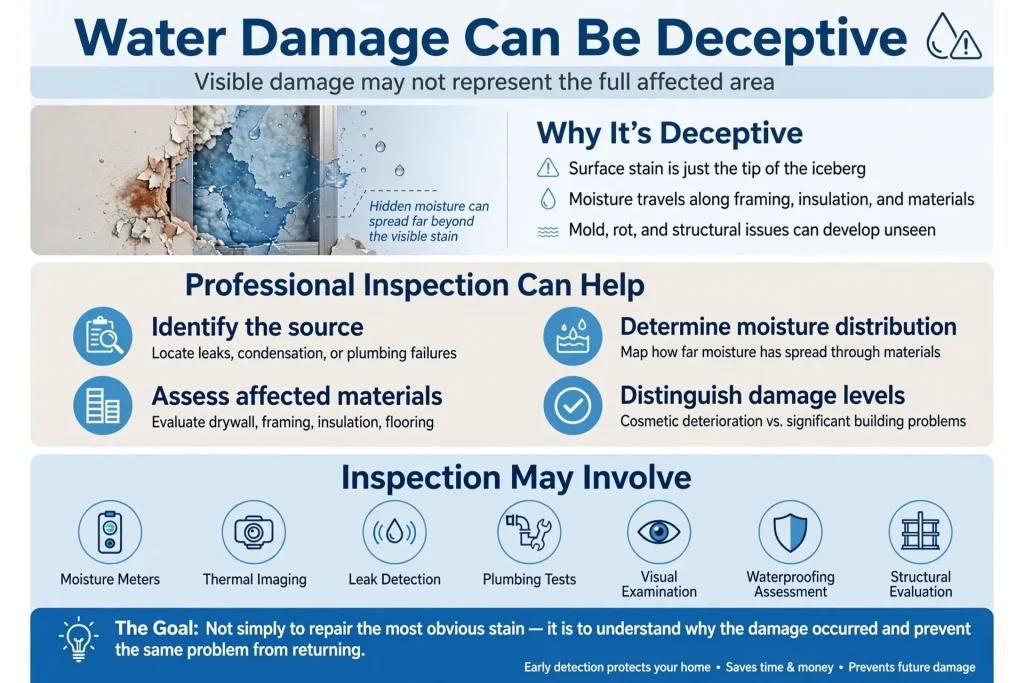
Water damage can be deceptive because the visible damage may not represent the full affected area.
A professional inspection can help identify the source, determine moisture distribution, assess affected materials, and distinguish cosmetic deterioration from more significant building problems.
Depending on the situation, inspection may involve moisture meters, thermal imaging, leak detection, plumbing tests, visual examination, waterproofing assessment, or structural evaluation.
The goal is not simply to repair the most obvious stain. It is to understand why the damage occurred and prevent the same problem from returning.
Conclusion
Water damage can affect much more than the appearance of a building. Persistent moisture can deteriorate plaster, ceilings, flooring, masonry, insulation, waterproofing systems, and other building components. Under certain conditions, it can also contribute to reinforcement corrosion and concrete deterioration.
The safety implications can include electrical hazards, falling ceiling materials, slippery surfaces, mould growth, and long-term structural concerns.
For UAE properties, including villas, apartments, commercial buildings, hotels, offices, warehouses, and high-rise developments in Dubai and Abu Dhabi, early detection is an important part of effective property maintenance.
The most effective approach is to identify the water source, stop further intrusion, assess the affected building materials, remove or dry moisture appropriately, repair damaged components, and restore the area only after the underlying problem has been addressed.
Regular plumbing, HVAC, roof, drainage, and waterproofing inspections can further reduce the risk of serious water-related deterioration and help protect the building’s structure, occupants, finishes, and long-term value.