Floor tiles and wall tiles may look similar in a showroom, but they are designed for different applications and installation conditions. Choosing the right tile involves more than colour, pattern, size, or finish. Factors such as load-bearing capacity, slip resistance, water absorption, adhesive compatibility, substrate preparation, and installation technique determine whether a tiled surface will remain safe and durable.
In Dubai and across the UAE, these considerations are particularly important for villa renovations, apartment upgrades, bathrooms, kitchens, balconies, commercial buildings, and hospitality interiors. High temperatures, humidity, air conditioning, and outdoor exposure can create additional challenges for tile installation.
Understanding the difference between floor tile and wall tile helps homeowners, property managers, interior designers, and contractors select appropriate materials and avoid costly installation failures. This guide explains the main differences, preparation requirements, adhesive selection, waterproofing, grout, and professional installation practices for residential and commercial projects.
What Is the Difference Between Floor Tiles and Wall Tiles?
Floor tiles are designed for horizontal surfaces that experience foot traffic, furniture loads, impacts, and repeated cleaning. Depending on their classification, they may also need to withstand abrasion, moisture, temperature variation, and exposure to outdoor conditions. Porcelain tiles are commonly selected for floors because of their durability and low water absorption, although suitable ceramic floor tiles are also available.
Wall tiles are designed primarily for vertical surfaces, where resistance to foot traffic and floor abrasion is not normally required. Many ceramic wall tiles are lighter, thinner, and easier to cut than heavy-duty floor tiles. Glossy finishes, decorative patterns, textured surfaces, and intricate designs are frequently used on bathroom walls, kitchen backsplashes, and feature walls.
The important distinction is that a tile suitable for a wall is not automatically suitable for a floor. Some floor-rated tiles can be installed on walls if their weight, fixing system, and substrate are appropriate. However, thin or fragile wall tiles should not be used underfoot unless the manufacturer explicitly approves them for floor applications.
Before purchasing tiles, check the manufacturer’s technical specifications for the intended application rather than relying on appearance alone.

Floor Tile vs Wall Tile: Key Differences
The following comparison highlights the main considerations when selecting tiles for a villa, apartment, office, or commercial property.
| Feature | Floor Tiles | Wall Tiles |
|---|---|---|
| Primary purpose | Withstand appropriate foot traffic and floor loads | Provide a decorative and protective vertical finish |
| Strength requirements | Must suit expected loads and impact conditions | Must suit the fixing system and installation location |
| Slip resistance | Important, particularly in wet and outdoor areas | Usually less critical unless the tile is used on a floor |
| Thickness | Varies according to product and application | Often thinner, but not always |
| Weight | Can be relatively heavy, especially large-format tiles | Lightweight options are common |
| Surface finish | Matte, textured, polished, or slip-resistant finishes | Glossy, matte, textured, and decorative finishes |
| Water absorption | Depends on the product; low absorption is often desirable in wet areas | Varies; waterproofing may still be necessary behind tiles |
| Adhesive | Must support the tile, substrate, and service conditions | Must provide suitable adhesion and vertical slip resistance |
| Common locations | Living rooms, bedrooms, kitchens, bathrooms, corridors, terraces | Bathroom walls, kitchen backsplashes, shower walls, feature walls |
| Main installation concerns | Load support, flatness, slip resistance, drainage, movement joints | Substrate stability, tile weight, vertical alignment, adhesive coverage |
These differences are general rather than absolute. Always follow the manufacturer’s stated application, weight, size, and installation requirements.
How to Choose the Right Floor Tiles
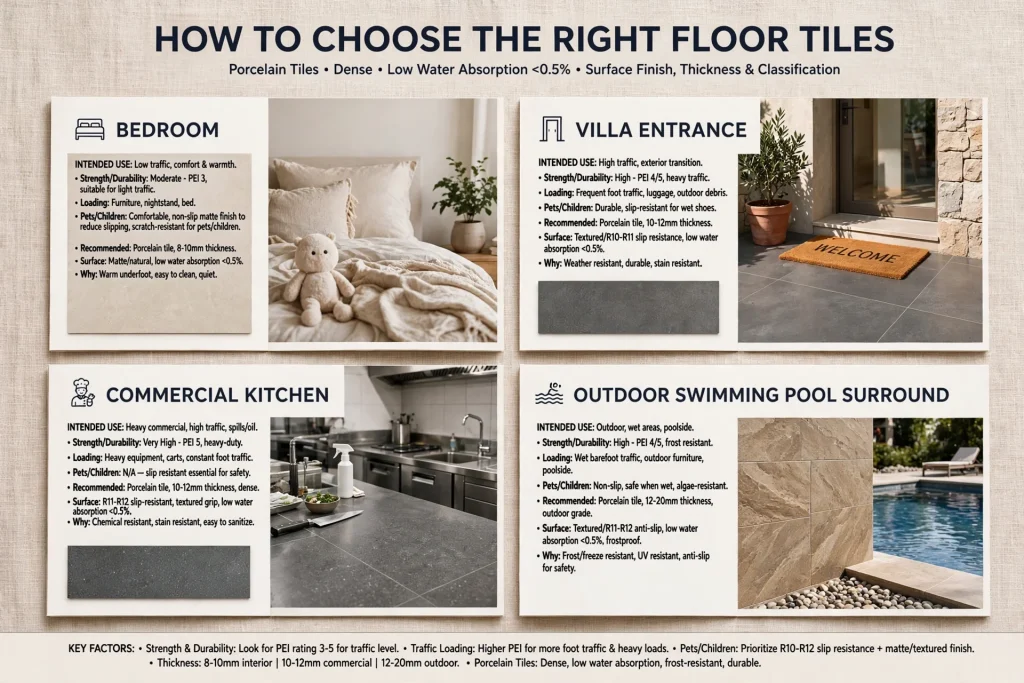
Floor tile selection should begin with the room’s intended use. A bedroom floor has different demands from a busy villa entrance, a commercial kitchen, or an outdoor swimming pool surround.
Strength and durability
Floor tiles must be suitable for expected traffic and loading. In residential properties, consider furniture movement, dropped objects, pets, children, and the amount of daily foot traffic. Commercial areas such as offices, retail shops, restaurants, and hotel corridors may require products with greater resistance to wear and impact.
Porcelain tiles are a common choice because their dense structure and low water absorption make many products suitable for demanding applications. Nevertheless, not every porcelain tile is appropriate for every floor. Surface finish, thickness, product classification, and the manufacturer’s recommendations must also be considered.
Slip resistance
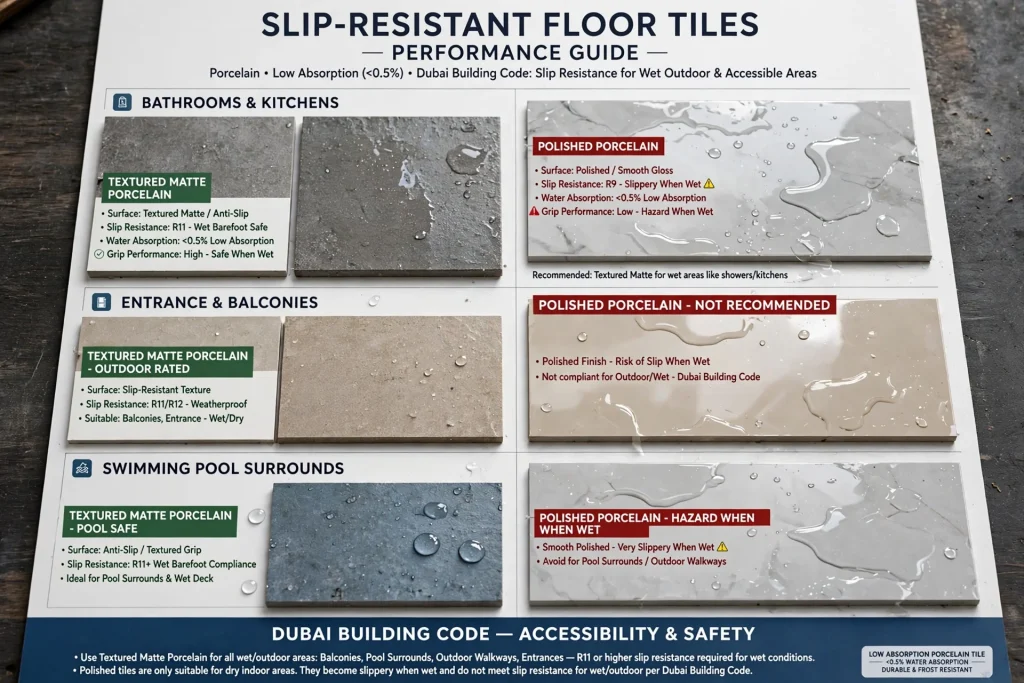
Slip resistance is particularly important in bathrooms, kitchens, entrance areas, balconies, swimming pool surrounds, and outdoor walkways. A highly polished tile may look attractive but can become slippery when wet.
Choose a floor tile with performance characteristics appropriate to the location and users. The required performance may differ between a dry living room, a shower floor, and an exposed terrace. Ask the supplier for relevant test data and verify the project’s applicable requirements. The Dubai Building Code addresses slip resistance for accessible floor surfaces, including wet and outdoor areas.
Water absorption and surface finish
Water absorption affects how a tile responds to moisture, but it does not alone determine whether a surface is safe or waterproof. Porcelain tiles generally have low water absorption, making many of them suitable for kitchens, bathrooms, and outdoor applications when correctly specified.
The surface finish matters as well. Textured or matte finishes may offer better grip than polished surfaces in certain conditions, but the actual performance should be confirmed through product testing rather than assumed from appearance.
How to Choose the Right Wall Tiles
Wall tiles offer flexibility in colour, size, texture, and pattern. The correct selection depends on the wall’s location, the tile’s weight, exposure to moisture, and the type of substrate.
Weight and dimensions
Large-format porcelain wall tiles can create a clean, contemporary appearance in luxury villas and apartments. However, their size and weight place greater demands on the substrate and fixing system.
Before installation, confirm that the wall can support the tile and installation materials. The adhesive must be suitable for the tile dimensions, weight, substrate, and application orientation. Heavy tiles may require specialist fixing methods or additional mechanical support where specified by the project design.
Moisture exposure
Bathroom walls, shower enclosures, and kitchen backsplashes require materials that can tolerate their particular exposure conditions. Ceramic tiles are commonly used on bathroom walls because they are available in many designs and are often easier to cut than porcelain.
However, tile and grout alone do not create a complete waterproofing system. Shower walls and other designated wet areas may require a waterproofing membrane behind the tiles, with compatible primers, adhesives, and joint treatments.
Decorative finishes
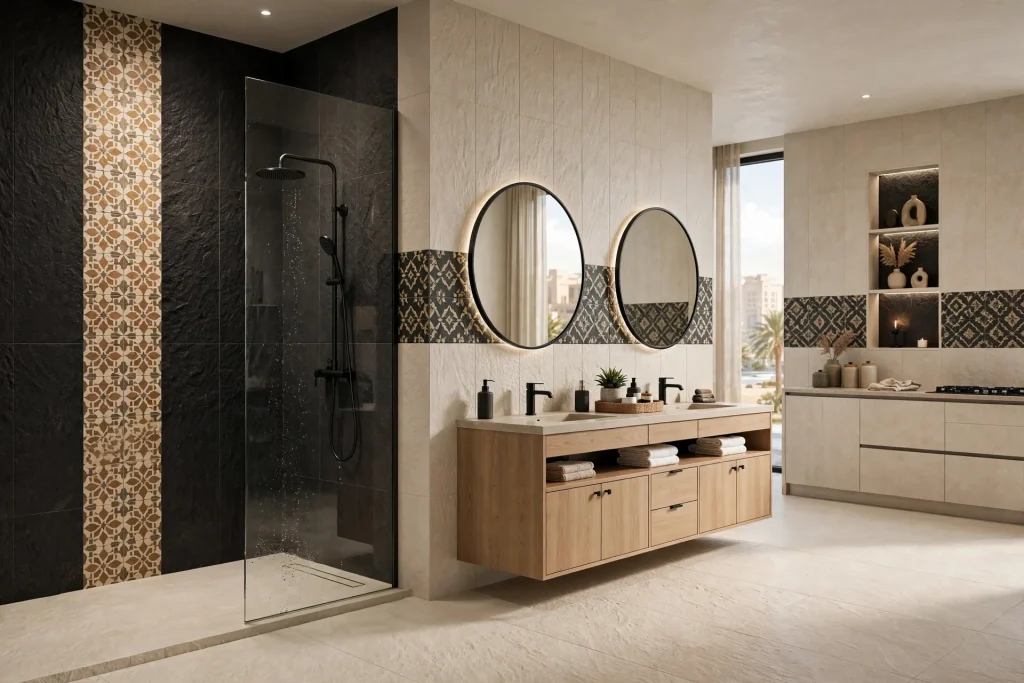
Wall tiles can introduce visual interest through contrasting colours, patterned surfaces, feature strips, textured finishes, and different installation layouts. In Dubai villa interiors, they may be used to highlight shower walls, bathroom vanities, kitchen backsplashes, reception areas, and decorative niches.
A good design should balance appearance with cleaning requirements, lighting, moisture exposure, and ease of maintenance.
Can Floor Tiles Be Used on Walls?
Yes. Many floor-rated ceramic and porcelain tiles can also be installed on walls, provided the manufacturer approves the application and the wall substrate and fixing system can support their weight.
This approach is common in contemporary bathrooms, where the same porcelain tile is used on the floor and walls to create a continuous design. It can also work in living rooms, entrance halls, and other interiors where matching surfaces create a consistent appearance.
However, heavier floor tiles require additional care when installed vertically. The contractor must check the wall’s strength, flatness, adhesive compatibility, and vertical slip resistance. Large-format tiles may need a specialist adhesive designed to prevent tiles from slipping before the material sets.
The installation should also account for cuts around windows, doors, electrical outlets, plumbing fixtures, and wall niches. Proper setting-out reduces narrow cuts and helps maintain balanced grout lines.
Practical rule: Floor tiles may be suitable for walls, but the product specification and wall fixing system must be checked before installation.
Can Wall Tiles Be Used on Floors?
Wall tiles should not be used on floors unless the manufacturer specifically rates them for floor use. Many wall tiles are not designed to withstand regular foot traffic, concentrated loads, abrasion, or impact from furniture and dropped objects.
Using an unsuitable wall tile on a floor may result in cracking, chipping, surface wear, or a slippery walking surface. These problems can create safety concerns and lead to replacement costs.
This is particularly important in bathrooms, kitchens, entrances, and other areas where water or frequent movement is expected. A glossy decorative wall tile may look attractive but could provide inadequate slip resistance underfoot.
Before buying tiles, review the technical data sheet and product packaging. Confirm the approved applications, slip performance where relevant, and any restrictions relating to indoor or outdoor use.
Substrate Preparation for Floor Tile Installation
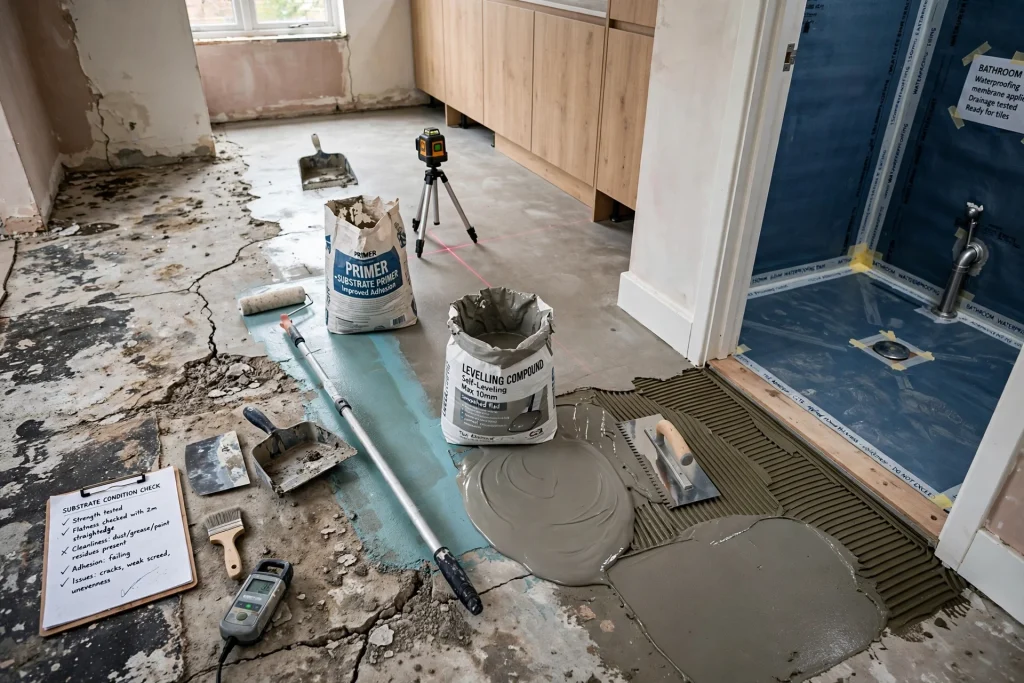
A successful floor installation begins with the condition of the underlying surface. Even high-quality tiles and adhesive can fail when installed over an unstable or poorly prepared substrate.
The floor should be checked for strength, flatness, cleanliness, and suitability for the chosen tiling system. Dust, grease, loose material, paint residues, and other contaminants can interfere with adhesion. Cracks, weak screed, and significant unevenness should be investigated before installation begins.
Where necessary, the contractor may need to repair the substrate, apply a compatible primer, or use an appropriate levelling compound. Standard tile adhesive should not be used beyond its permitted thickness to compensate for an uneven floor.
Floor levels and transitions should also be planned before tiling starts. This is important around doorways, skirting boards, kitchen cabinets, and connections to other flooring materials.
In bathrooms and wet rooms, the substrate preparation must coordinate with waterproofing and drainage requirements. The finished surface should direct water towards the intended drain without creating unwanted low spots.
Substrate Preparation for Wall Tile Installation
Wall preparation requires particular attention to stability, vertical alignment, and the weight of the selected tile. The substrate must be suitable for the installation system and capable of carrying the combined weight of the tile and bonding materials.
Before work begins, inspect the wall for loose plaster, cracks, moisture damage, dust, and uneven areas. Any weak or damaged material should be repaired using a suitable method before tiles are fixed.
The installer should check that the wall is sufficiently flat for the tile size. Large-format tiles are less forgiving of uneven surfaces and may show noticeable lippage if the substrate has not been prepared correctly.
In bathrooms and shower areas, the contractor should confirm that waterproofing is installed according to the specified system. Corners, pipe penetrations, niches, and junctions between walls and floors need particular care because they are common locations for water-related defects.
For heavy wall tiles, verify the maximum permissible tile weight and dimensions for the chosen adhesive and substrate. Mechanical restraint may be required for certain installations under the manufacturer’s instructions or project specification.
Choosing the Correct Tile Adhesive
Floor and wall tiles do not always require the same adhesive. The correct product depends on the tile material, dimensions, substrate, installation location, and environmental conditions.
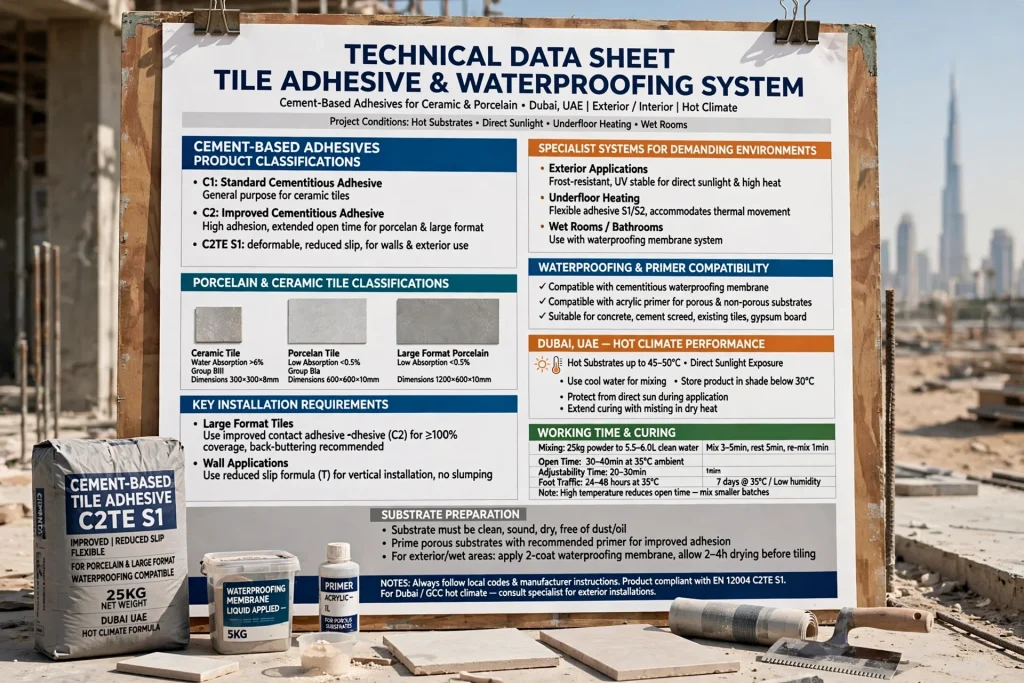
Cement-based tile adhesives are commonly used for ceramic and porcelain installations. Their classifications and performance vary, so the product should be selected according to the manufacturer’s technical data sheet and applicable project requirements.
For porcelain tiles, a compatible adhesive designed for low-absorption surfaces is generally appropriate. Large-format tiles may require an adhesive designed for larger dimensions and improved contact. Wall installations may require reduced-slip properties to prevent tiles from sliding before the adhesive cures.
Exterior tiles, underfloor heating systems, wet rooms, and installations over certain existing surfaces may require specialist products. The adhesive must also be compatible with any waterproofing membrane or primer used beneath the tiles.
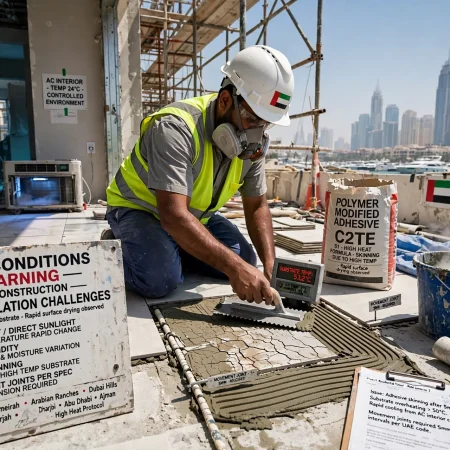
In Dubai and other UAE locations, installers should pay attention to temperature and working time. Hot substrates and direct sunlight can shorten the available time for placing tiles. Follow the manufacturer’s temperature limits, open time, mixing instructions, and curing requirements.
Waterproofing Requirements for Floor and Wall Tiles
Waterproofing is a separate but essential consideration in many tiled installations. Tiles may resist water, but the joints and the materials beneath them can still allow moisture to penetrate if the complete system is not properly designed.
Bathroom floors and shower areas often require a waterproofing membrane beneath the tile finish. The system should include suitable treatment at corners, floor-to-wall junctions, drains, and pipe penetrations.
Balconies and terraces require particular attention because water exposure combines with outdoor temperature changes. Drainage falls, waterproofing, movement joints, and exterior-rated materials should be planned as a coordinated system.
Kitchen backsplashes may need less extensive waterproofing than a shower enclosure, but the wall and joints must still be suitable for the expected exposure. Follow the project specification and the waterproofing manufacturer’s requirements.
Where testing is required, the waterproofing should be inspected and tested at the specified stage before it is covered by tiles. Once installation is complete, defects in the concealed waterproofing layer can be difficult and expensive to repair.
Grout Joints, Movement Joints, and Tile Alignment
Grout joints provide a finished appearance and accommodate the tolerances between individual tiles. Their width should be selected according to the tile dimensions, edge quality, product recommendations, and installation requirements. Even tiles marketed as rectified generally need appropriate joints.
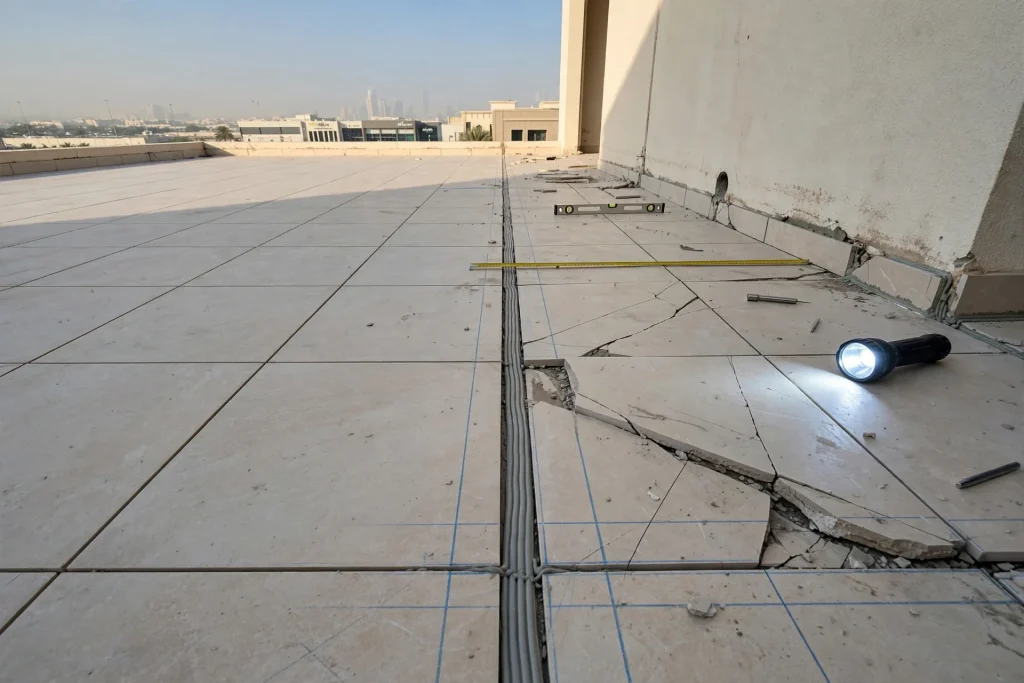
Movement joints serve a different purpose. They accommodate movement caused by temperature changes, structural movement, and other stresses. They may be required at perimeters, changes of plane, transitions, and within larger tiled areas according to the installation design and applicable standards.
This is particularly important in the UAE, where outdoor surfaces can experience substantial temperature variation. Tiling a large terrace without adequate movement accommodation can contribute to cracking, debonding, or tiles lifting from the substrate.
Tile alignment also affects the quality of the finished work. Installers should establish reference lines and plan the layout before fixing tiles. Grout lines should remain consistent, cuts should be balanced where practical, and transitions should be checked before adhesive sets.
For a neat finish, inspect the surface under the lighting conditions in which it will normally be used.
Common Floor and Wall Tile Installation Mistakes
One common mistake is selecting tiles based on appearance alone. A polished tile may suit a feature wall but be unsuitable for a wet floor. Similarly, a wall tile may not withstand foot traffic.
Another problem is applying adhesive over dusty, weak, or uneven surfaces. This can reduce bonding and contribute to hollow-sounding or loose tiles. Installers should prepare the substrate properly and achieve the required adhesive coverage.
Poor waterproofing is another frequent source of defects in bathrooms, showers, and balconies. Replacing grout does not solve a failed waterproofing membrane or an incorrectly detailed drain.
Incorrect tile layout can also create narrow cuts, uneven joints, and poorly aligned patterns. A planned layout helps reduce wastage and improves the finished appearance.
Finally, ignoring movement joints can cause stress to build up in large tiled areas. The installation should accommodate expected movement instead of relying on tile strength alone.
Floor and Wall Tile Installation in Dubai Villas
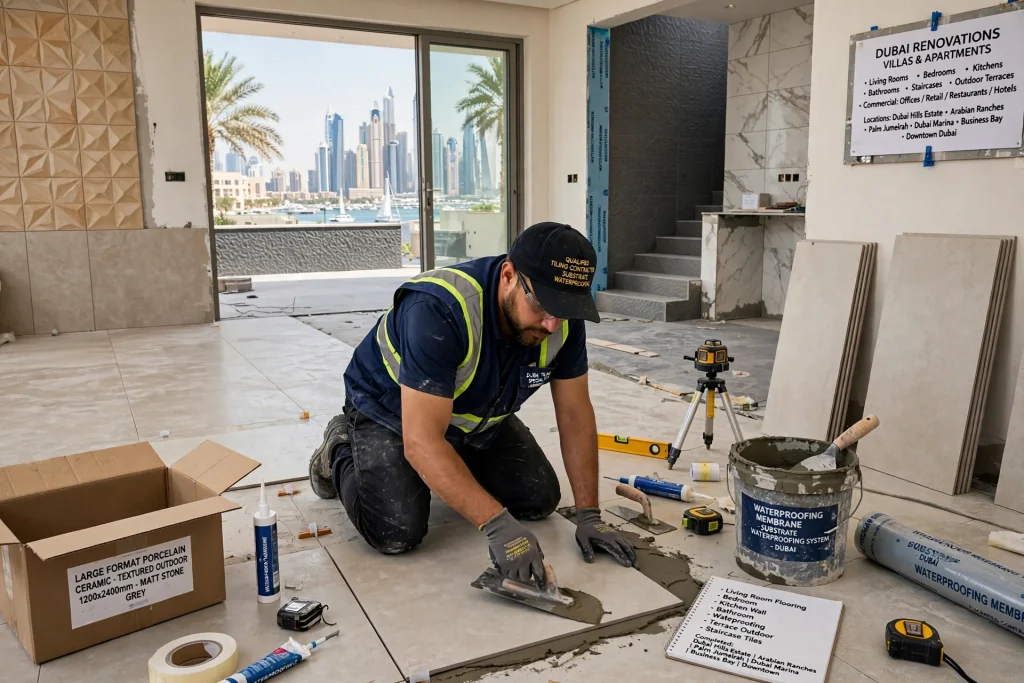
Dubai villa projects often combine several different tiling applications, including living room flooring, bedrooms, kitchens, bathrooms, staircases, outdoor terraces, and decorative wall finishes. Each area may require a different tile specification and installation method.
In communities such as Dubai Hills Estate, Arabian Ranches, Palm Jumeirah, and Jumeirah, homeowners may choose large-format porcelain for living spaces, ceramic tiles for selected wall applications, and textured tiles for outdoor areas. These are design possibilities rather than fixed requirements; the final selection should match the building and installation conditions.
Apartment renovations in Dubai Marina, Business Bay, and Downtown Dubai may involve additional coordination around existing finishes, access restrictions, service penetrations, and floor-level transitions. Commercial projects in offices, retail units, restaurants, and hotels may also require closer attention to traffic, cleaning methods, and project specifications.
A qualified tiling contractor can assess the substrate, recommend suitable products, plan the layout, and coordinate tiling with waterproofing and other renovation work. If you are upgrading a villa, bathroom, kitchen, or commercial interior, explore a Basic to advance tiling service to understand the tiling support available for your project.
The final choice should be based on the intended use of each surface, not simply on selecting one tile design for the entire property.
Frequently Asked Questions
What is the main difference between floor tiles and wall tiles?
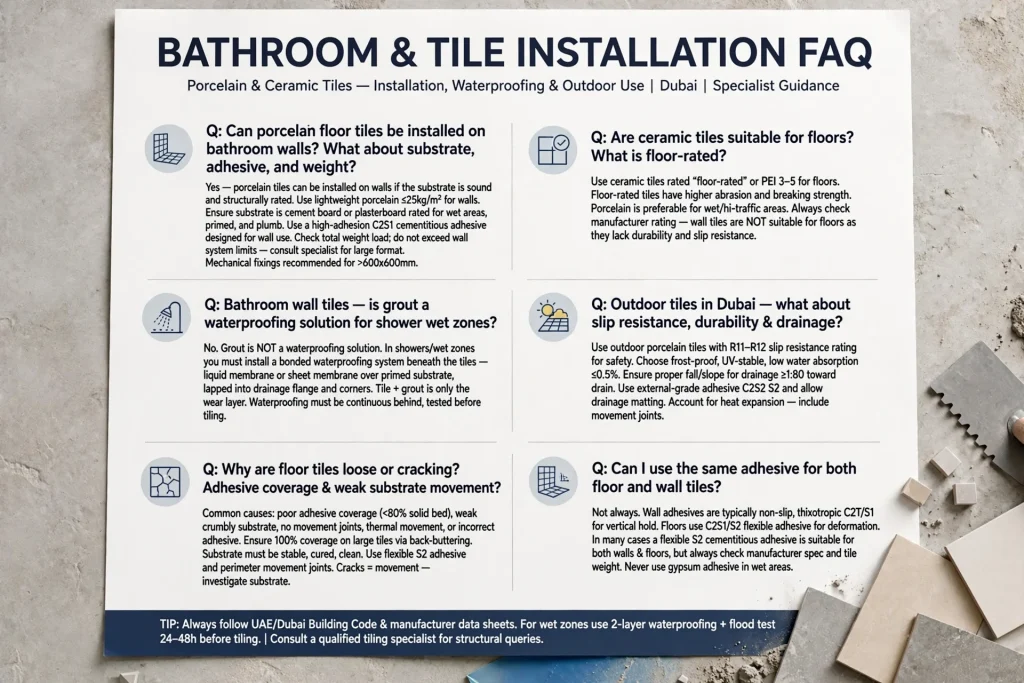
Floor tiles are selected for suitable load-bearing performance, wear resistance, and slip resistance where required. Wall tiles are designed primarily for vertical surfaces and may be lighter or thinner. Always confirm the approved application in the manufacturer’s specifications.
Can porcelain floor tiles be installed on bathroom walls?
Yes, provided the tiles are suitable for wall installation and the substrate and adhesive can support their weight. Large-format porcelain tiles may require specialist adhesive and additional installation precautions.
Are ceramic tiles suitable for floors?
Some ceramic tiles are designed for floors, particularly in residential areas with appropriate traffic levels. However, ceramic wall tiles should not be assumed to be floor-rated. Check the product’s intended application and performance specifications.
Do bathroom wall tiles require waterproofing?
Waterproofing requirements depend on the location and project specification. Shower areas and other designated wet zones commonly require a suitable waterproofing system behind the tiles. Tile and grout alone should not be treated as a complete waterproofing solution.
Which tile is best for outdoor areas in Dubai?
Choose tiles specifically suitable for exterior use, with appropriate slip resistance, durability, and compatibility with the outdoor installation system. Substrate preparation, drainage, waterproofing where required, and movement joints are also important.
Why do floor tiles become loose or crack?
Possible causes include inadequate adhesive coverage, weak substrates, movement, incorrect installation materials, moisture problems, or missing movement joints. The cause should be identified before repair work begins.
Should floor and wall tiles use the same adhesive?
Sometimes, but not always. A product may be rated for both applications, while other installations require different adhesive characteristics. Check tile size, weight, substrate, and the manufacturer’s instructions before selecting the product.
Conclusion
Floor tiles and wall tiles perform different functions, so choosing between them requires attention to more than design and price. Floor tiles must be appropriate for the expected loads, traffic, moisture exposure, and slip-resistance requirements. Wall tiles must be compatible with the substrate and fixing system, particularly when large or heavy tiles are used.
Successful installation also depends on preparing the surface, selecting the correct adhesive, providing appropriate waterproofing, maintaining suitable grout joints, and allowing for movement. These details are especially important in Dubai and across the UAE, where indoor and outdoor conditions can differ considerably.
For a durable result, confirm that each tile is approved for its intended location and ensure the entire installation system is compatible. Careful material selection and professional workmanship can improve safety, appearance, and long-term performance while reducing the risk of avoidable repairs.