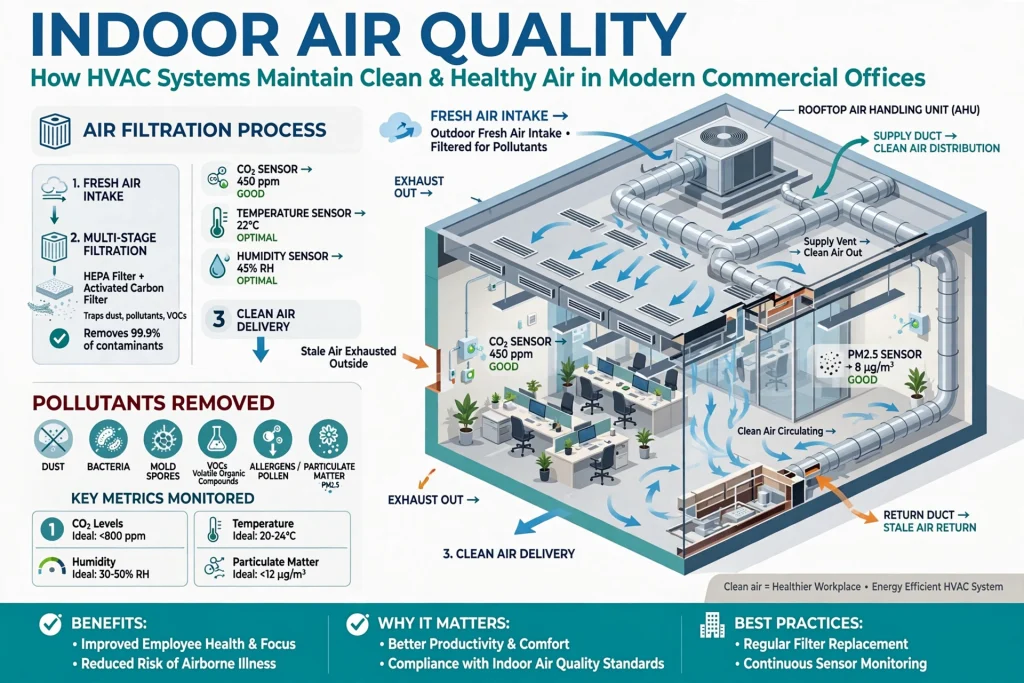
Indoor Air Quality (IAQ) has become one of the most important factors in maintaining healthy, productive, and energy-efficient commercial buildings. In today’s workplaces, employees, customers, tenants, and visitors spend the majority of their time indoors, making the quality of the air they breathe a critical component of overall well-being. Whether it is an office tower, shopping mall, hotel, healthcare facility, educational institution, or industrial building, poor indoor air quality can negatively affect health, productivity, equipment performance, and operational costs.
Dubai’s climate presents unique challenges for commercial buildings. High outdoor temperatures, fine desert dust, humidity fluctuations, continuous air conditioning, and densely occupied workspaces increase the importance of maintaining clean indoor air. HVAC systems operate almost continuously throughout the year, making proper ventilation, air filtration, humidity control, and regular maintenance essential for creating a healthy indoor environment.
Indoor air quality is influenced by numerous factors including ventilation efficiency, HVAC performance, air filtration, building materials, occupant density, cleaning practices, and outdoor environmental conditions. A comprehensive indoor air quality strategy combines preventive HVAC maintenance, professional air duct cleaning, efficient filtration systems, balanced airflow, and smart building management to ensure healthy indoor environments.

Understanding Indoor Air Quality
Indoor Air Quality refers to the condition of the air inside buildings and its impact on occupant health, comfort, and productivity. Good indoor air contains adequate oxygen levels, balanced humidity, proper ventilation, and minimal concentrations of pollutants such as dust, bacteria, mold spores, volatile organic compounds (VOCs), carbon dioxide (CO₂), allergens, and particulate matter.
Commercial buildings depend heavily on mechanical ventilation because windows often remain closed to maintain cooling efficiency. As a result, HVAC systems become responsible for continuously circulating, filtering, cooling, and refreshing indoor air.
A properly functioning HVAC system supplies clean conditioned air while removing stale air, excess moisture, airborne contaminants, and indoor pollutants. Without effective ventilation and filtration, contaminants gradually accumulate inside occupied spaces, reducing overall air quality.
Modern commercial buildings increasingly monitor indoor air quality through intelligent sensors that measure carbon dioxide levels, humidity, temperature, particulate matter, and ventilation performance. These systems allow facility managers to make real-time adjustments that improve occupant comfort and operational efficiency.
Why Indoor Air Quality Is Essential for Commercial Buildings
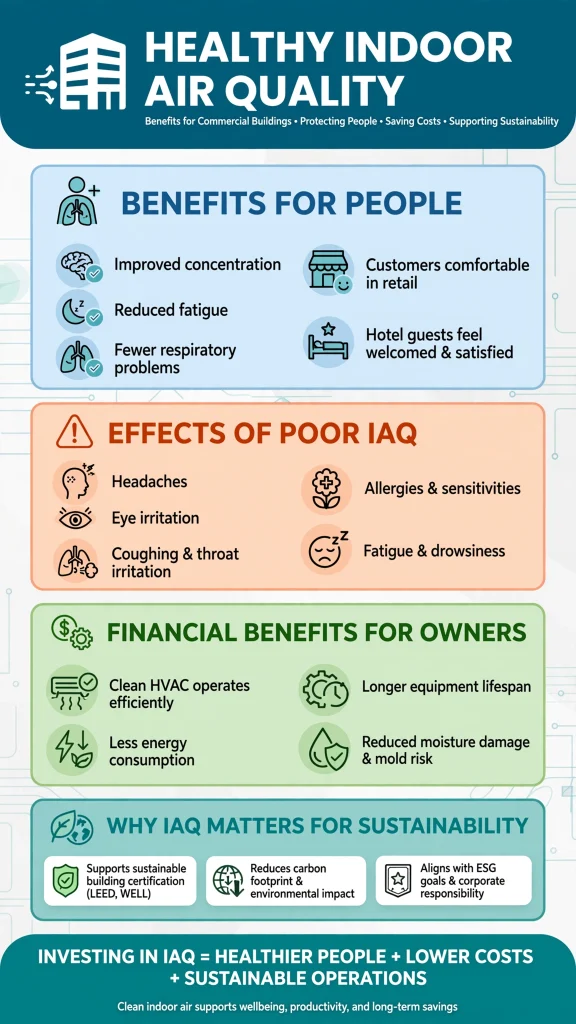
Healthy indoor air directly affects the performance of both people and buildings. Employees working in environments with clean air generally experience fewer respiratory problems, improved concentration, reduced fatigue, and higher productivity. Customers are more comfortable in clean retail environments, while hotel guests and healthcare patients benefit from improved comfort and hygiene.
Poor indoor air quality can contribute to headaches, eye irritation, coughing, allergies, fatigue, respiratory discomfort, and reduced cognitive performance. In commercial environments where hundreds or thousands of people occupy the same building daily, these issues can significantly affect workplace efficiency.
Building owners also benefit financially from improved indoor air quality. Clean HVAC systems operate more efficiently, consume less energy, require fewer repairs, and experience longer equipment lifespans. Improved ventilation also reduces moisture-related problems that may damage interior finishes and building materials.
Indoor air quality has become an important consideration in sustainable building certifications, employee wellness programs, and facility management strategies because healthier workplaces contribute to long-term operational success.
Commercial HVAC Cleaning Services Dubai provide professional cleaning of air ducts, Air Handling Units (AHUs), Fan Coil Units (FCUs), filters, and ventilation systems to improve indoor air quality, enhance energy efficiency, and ensure reliable HVAC performance for commercial buildings.
Common Indoor Air Pollutants in Commercial Buildings
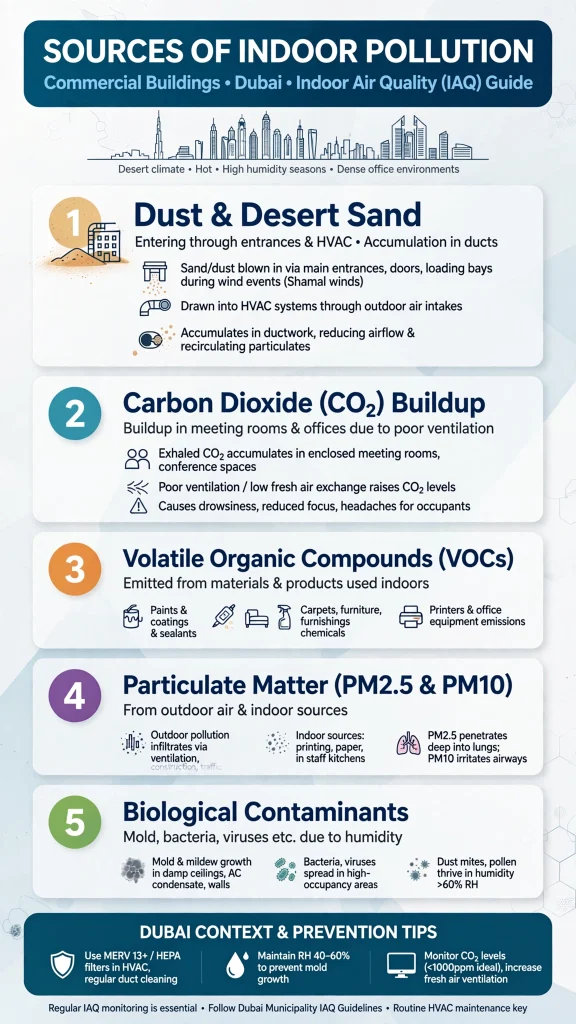
Commercial buildings contain numerous sources of indoor pollution. Understanding these contaminants helps facility managers develop effective maintenance strategies.
Dust remains one of the most common pollutants in Dubai. Fine desert sand enters buildings through entrances, ventilation systems, construction activities, and occupant movement. Over time, dust accumulates inside ductwork, air handling units, ceilings, furniture, carpets, and ventilation systems.
Carbon dioxide levels increase when ventilation is inadequate. High occupancy in meeting rooms, classrooms, conference facilities, and offices can rapidly elevate CO₂ concentrations, resulting in fatigue and reduced concentration.
Volatile Organic Compounds (VOCs) originate from paints, adhesives, carpets, office furniture, cleaning chemicals, printers, and building materials. Excessive VOC exposure may contribute to headaches, eye irritation, and unpleasant odors.
Particulate matter, including PM2.5 and PM10 particles, can enter commercial buildings from outdoor air or be generated indoors. These microscopic particles remain suspended in the air and may affect respiratory health.
Biological contaminants such as mold, mildew, bacteria, viruses, pollen, and dust mites also reduce indoor air quality, particularly when humidity levels are not properly controlled.
The Role of HVAC Systems in Indoor Air Quality
HVAC systems are the primary mechanism responsible for maintaining healthy indoor air in commercial buildings. They regulate temperature, humidity, airflow, ventilation, and filtration while continuously circulating conditioned air throughout occupied spaces.
Several components contribute to indoor air quality.
Air Handling Units (AHUs) distribute conditioned air through duct networks while incorporating filtration systems that remove airborne contaminants.
Fan Coil Units (FCUs) provide localized temperature control in hotels, offices, and residential towers while supporting centralized cooling systems.
Air filters capture dust, pollen, bacteria, and particulate matter before air enters occupied spaces. High-efficiency filters significantly improve indoor air quality while protecting HVAC equipment.
Fresh air ventilation introduces outdoor air while exhausting stale indoor air, reducing carbon dioxide concentrations and improving oxygen levels.
Humidity control prevents excessive moisture that encourages mold growth while maintaining comfortable indoor conditions.
When HVAC systems receive regular maintenance, they continuously provide healthy, comfortable indoor environments while supporting energy-efficient operation.
Indoor Air Quality in Business Bay Commercial Offices
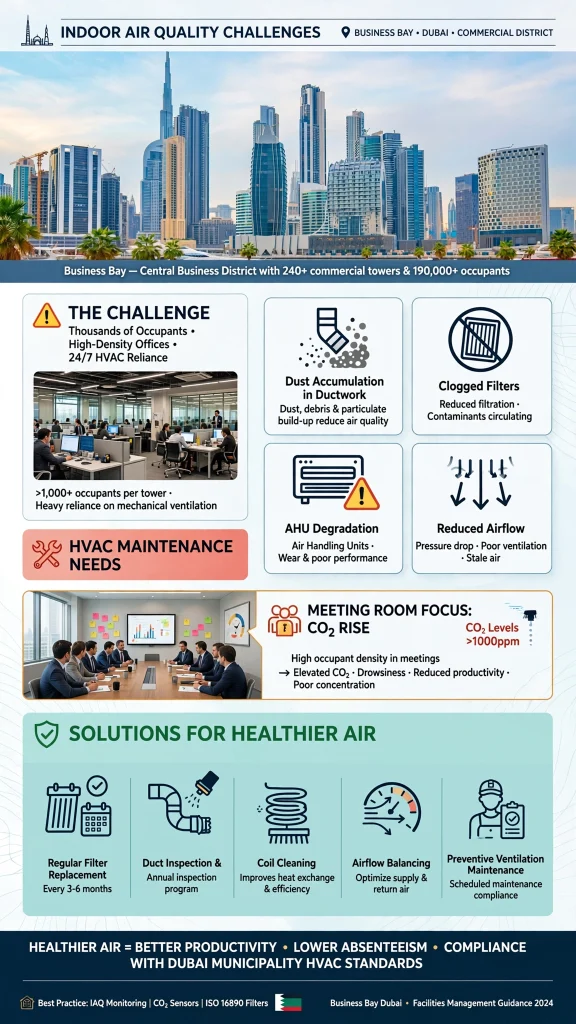
Business Bay is one of Dubai’s busiest commercial districts, containing office towers, hotels, restaurants, retail outlets, and mixed-use developments. Buildings here accommodate thousands of occupants every day, making indoor air quality a priority for facility managers.
Office workers spend long hours indoors, relying entirely on mechanical ventilation systems to provide clean, conditioned air. Without proper HVAC maintenance, dust accumulation inside ductwork, filters, and air handling units gradually reduces airflow while circulating contaminants throughout the building.
Regular filter replacement, duct inspection, coil cleaning, airflow balancing, and ventilation maintenance help maintain healthy working environments while reducing energy consumption.
Meeting rooms require particular attention because high occupant density can rapidly increase carbon dioxide levels if ventilation is inadequate.
Maintaining Healthy Air in Downtown Dubai Buildings
Downtown Dubai features luxury hotels, commercial towers, shopping destinations, and premium office developments that depend on advanced HVAC systems to maintain occupant comfort.
High visitor traffic increases the amount of dust, allergens, and airborne particles entering these buildings. Effective indoor air quality management therefore requires continuous filtration, fresh air ventilation, humidity control, and preventive HVAC maintenance.
Facility managers increasingly integrate indoor air quality monitoring with Building Management Systems (BMS), allowing real-time adjustment of ventilation rates according to occupancy levels.
Modern filtration systems, HEPA filters, ultraviolet air purification technologies, and demand-controlled ventilation further improve indoor air quality while reducing unnecessary energy consumption.
Proper maintenance not only supports occupant health but also extends the lifespan of valuable HVAC equipment, reducing long-term operational costs.
Indoor Air Quality for Corporate Offices in DIFC
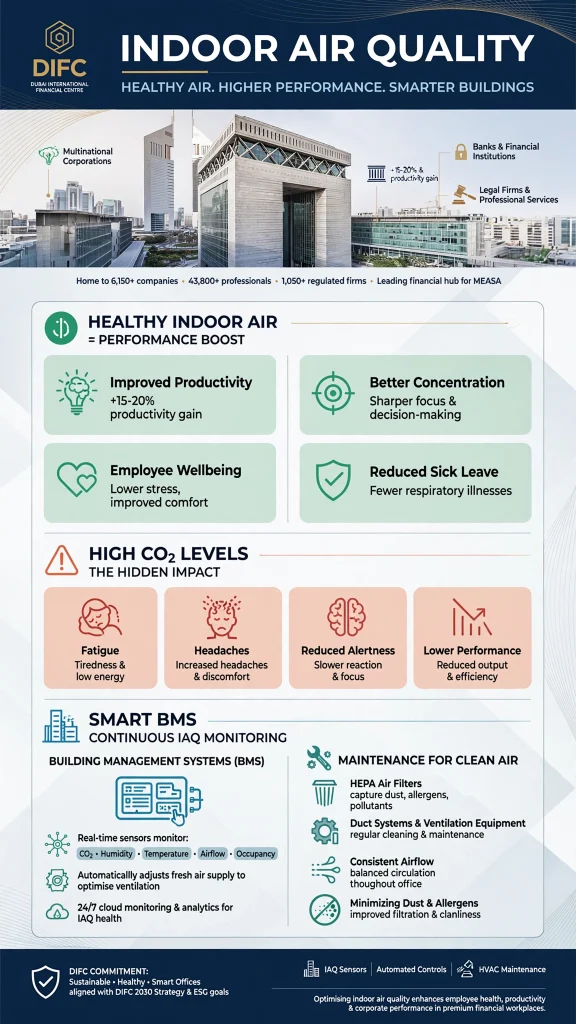
Dubai International Financial Centre (DIFC) accommodates multinational corporations, banks, legal firms, and financial institutions where employees spend long hours inside climate-controlled environments.
Healthy indoor air directly contributes to employee productivity and concentration. High levels of carbon dioxide caused by inadequate ventilation may result in fatigue, headaches, reduced alertness, and lower workplace performance.
Modern office buildings increasingly use smart Building Management Systems (BMS) to monitor indoor air quality continuously. Sensors measure carbon dioxide levels, humidity, temperature, airflow, and occupancy, allowing ventilation systems to automatically adjust fresh air supply according to real-time conditions.
Regular maintenance of ventilation equipment, duct systems, and air filters ensures consistent airflow while minimizing the circulation of dust and allergens throughout office spaces.
Indoor Air Quality in Jumeirah Lake Towers (JLT)
Jumeirah Lake Towers (JLT) consists of numerous mixed-use towers housing offices, retail stores, restaurants, medical clinics, and residential apartments.
Because different businesses occupy the same buildings, HVAC systems must maintain consistent indoor air quality despite varying occupancy levels and operational requirements.
Medical clinics require higher filtration standards than retail stores, while restaurants generate additional airborne grease particles and odors requiring specialized kitchen exhaust systems.
Proper zoning, ventilation balancing, and filtration help maintain healthy environments for every tenant.
Facility managers also schedule routine inspections of ductwork, air diffusers, return air systems, and mechanical ventilation equipment to ensure optimal indoor conditions throughout the building.
Indoor Air Quality for Hotels in Palm Jumeirah
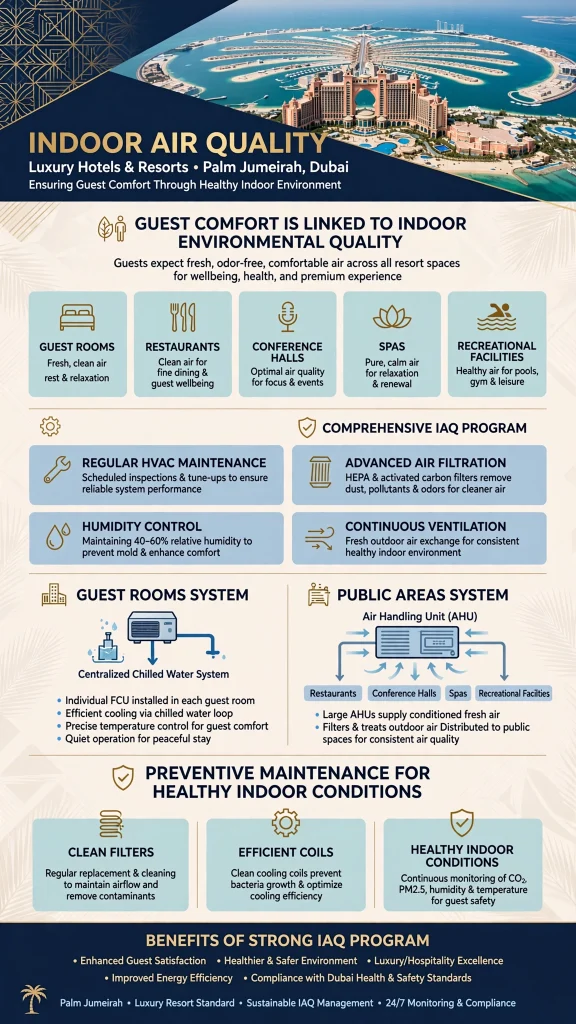
Palm Jumeirah contains luxury hotels and resorts where guest comfort is directly linked to indoor environmental quality.
Guests expect fresh, odor-free, and comfortable indoor air immediately upon entering hotel rooms, restaurants, conference halls, spas, and recreational facilities.
Hotels therefore implement comprehensive indoor air quality programs involving regular HVAC maintenance, advanced air filtration, humidity control, and continuous ventilation.
Guest rooms typically utilize Fan Coil Units connected to centralized chilled water systems, while public areas rely on large Air Handling Units capable of supplying conditioned fresh air throughout the property.
Preventive maintenance ensures filters remain clean, coils operate efficiently, and ventilation systems maintain healthy indoor conditions for guests and staff.
Understanding Sick Building Syndrome
One of the most recognized indoor environmental problems affecting commercial buildings is Sick Building Syndrome (SBS).
Sick Building Syndrome refers to situations where building occupants experience symptoms such as headaches, fatigue, dizziness, eye irritation, throat discomfort, allergies, or respiratory issues that appear to be linked to time spent inside the building.
Although individual causes may vary, poor ventilation, excessive carbon dioxide, airborne dust, mold growth, volatile organic compounds (VOCs), humidity imbalance, and inadequate HVAC maintenance commonly contribute to these symptoms.
Employees often notice improvements after leaving the building, indicating that indoor environmental conditions require attention.
Proper ventilation, clean HVAC systems, effective filtration, and regular maintenance significantly reduce the likelihood of Sick Building Syndrome.
The Importance of Ventilation
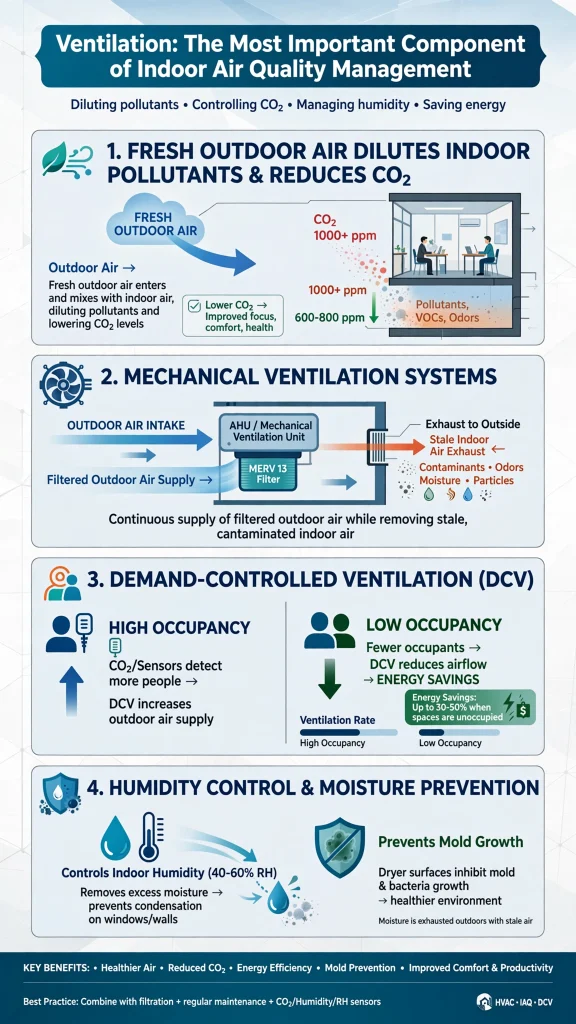
Ventilation is one of the most important components of indoor air quality management.
Fresh outdoor air dilutes indoor pollutants while reducing carbon dioxide concentrations generated by occupants.
Mechanical ventilation systems continuously introduce filtered outdoor air while exhausting stale indoor air containing contaminants, odors, moisture, and airborne particles.
Demand-Controlled Ventilation (DCV) improves efficiency by adjusting outdoor air supply according to occupancy levels. Buildings with fewer occupants receive less ventilation while maintaining healthy indoor conditions, reducing unnecessary energy consumption.
Proper ventilation also supports humidity control and helps prevent condensation that may encourage mold growth.
Air Filtration Technologies
Air filtration is another essential element of commercial indoor air quality.
Standard HVAC filters capture larger dust particles while protecting mechanical equipment.
Higher-efficiency MERV filters remove finer particles including pollen, mold spores, bacteria, and microscopic dust.
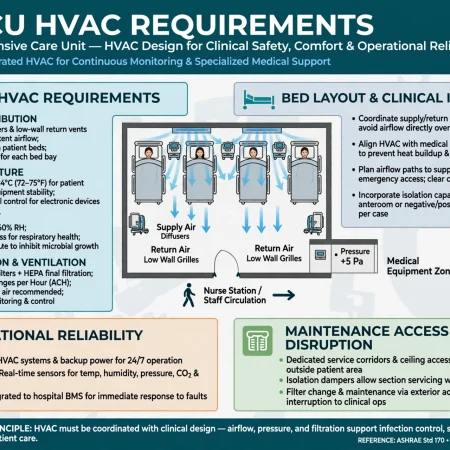
HEPA filters provide even greater filtration performance by removing extremely small airborne contaminants, making them suitable for hospitals, laboratories, pharmaceutical facilities, and healthcare environments.
Some commercial buildings also incorporate activated carbon filters that remove odors and gaseous pollutants generated by cleaning products, furniture, office equipment, and construction materials.
Selecting appropriate filtration depends on building type, occupancy, and indoor environmental requirements.
Humidity Control in Commercial Buildings
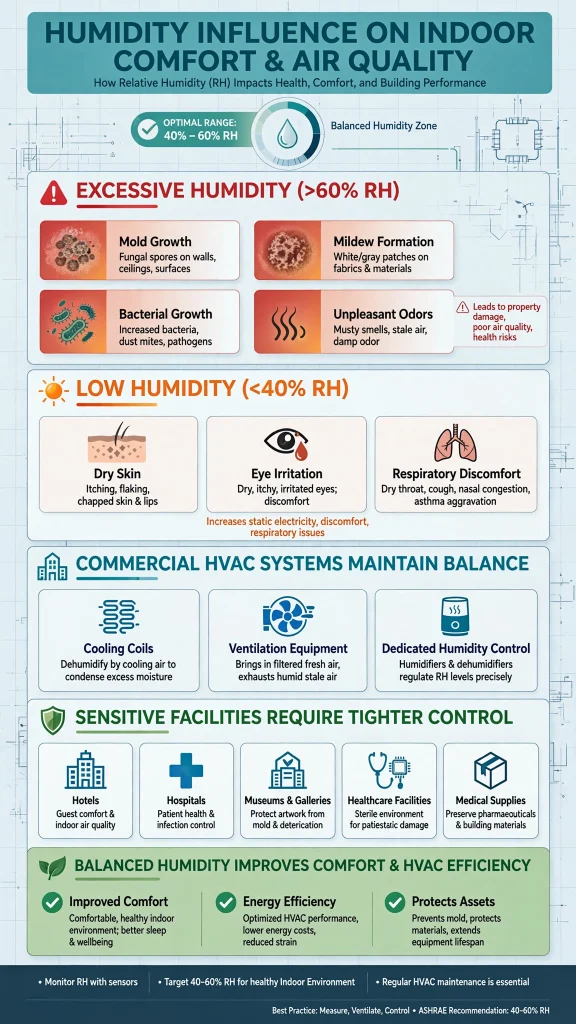
Humidity significantly influences indoor comfort and air quality.
Excessive humidity encourages mold, mildew, bacterial growth, and unpleasant odors, while extremely low humidity may cause dry skin, eye irritation, and respiratory discomfort.
Commercial HVAC systems maintain humidity within recommended ranges through cooling coils, ventilation equipment, and dedicated humidity control devices.
Hotels, hospitals, museums, and healthcare facilities often require tighter humidity control because sensitive equipment, artwork, medical supplies, and building materials can be affected by moisture fluctuations.
Balanced humidity also improves occupant comfort while supporting efficient HVAC operation.
Preventing Mold Growth
Mold represents one of the most serious indoor air quality concerns.
Water leaks, roof damage, plumbing failures, blocked condensate drains, and excessive humidity create favorable conditions for mold growth.
Once mold develops inside ceilings, walls, insulation, or ductwork, spores can circulate throughout occupied spaces via HVAC systems.
Preventing mold requires prompt repair of water leaks, effective drainage, proper ventilation, humidity control, and routine HVAC maintenance.
Facility managers should also inspect cooling coils, condensate trays, insulation, and duct systems for signs of moisture accumulation.
Early intervention prevents widespread contamination while reducing repair costs.
Indoor Air Quality Standards
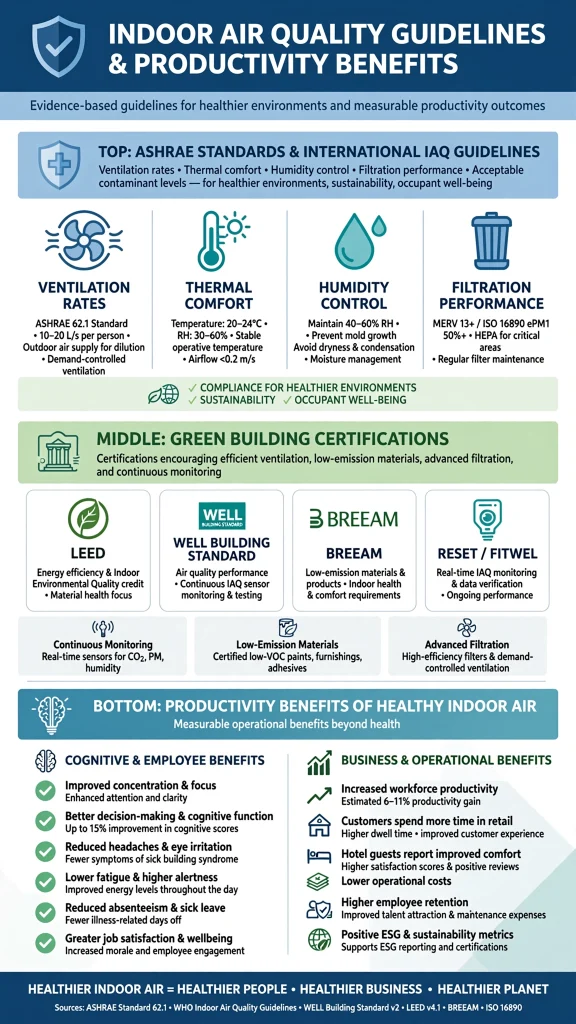
Many commercial buildings follow internationally recognized indoor air quality guidelines established by organizations such as ASHRAE.
These standards provide recommendations regarding ventilation rates, thermal comfort, humidity control, filtration performance, and acceptable indoor contaminant levels.
Compliance helps building owners provide healthier environments while supporting sustainability objectives and occupant well-being.
Green building certifications also encourage implementation of efficient ventilation systems, low-emission materials, advanced filtration, and continuous indoor environmental monitoring.
Productivity Benefits of Healthy Indoor Air
Indoor air quality directly affects employee performance.
Numerous workplace studies have shown that cleaner indoor air improves concentration, decision-making, cognitive function, and overall productivity.
Employees working in well-ventilated environments report fewer headaches, lower fatigue, reduced absenteeism, and greater workplace satisfaction.
Customers also spend more time in comfortable retail environments, while hotel guests enjoy improved comfort and better overall experiences.
Investing in indoor air quality therefore provides measurable operational benefits beyond health alone.
Indoor Air Quality in Al Quoz Industrial Facilities
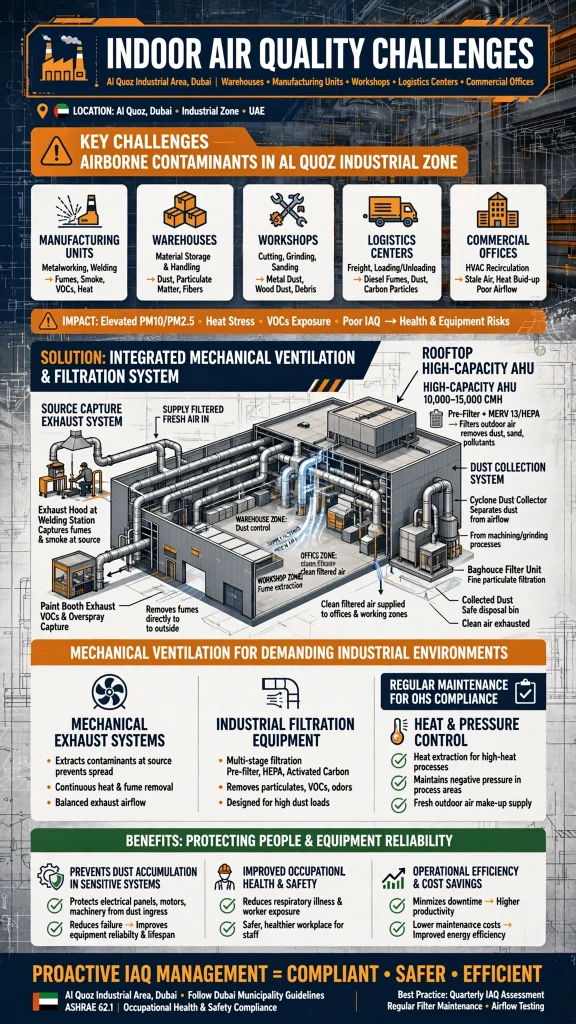
Al Quoz contains warehouses, manufacturing units, workshops, logistics centers, and commercial offices that present unique indoor air quality challenges.
Industrial processes often generate additional airborne particles, fumes, dust, and heat that require specialized ventilation systems. Mechanical exhaust systems remove contaminants at their source while supplying filtered outdoor air to occupied workspaces.
Industrial HVAC systems frequently incorporate high-capacity Air Handling Units (AHUs), industrial filtration equipment, dust collection systems, and mechanical ventilation designed specifically for demanding environments.
Regular cleaning of filters, ductwork, ventilation equipment, and exhaust systems helps maintain compliance with occupational health and safety requirements while protecting employee health.
Proper indoor air quality management also improves equipment reliability by preventing excessive dust accumulation inside sensitive mechanical and electrical systems.
The Relationship Between Indoor Air Quality and Energy Efficiency
Many building owners assume that improving indoor air quality always increases energy consumption. In reality, properly maintained HVAC systems often improve both indoor air quality and energy efficiency simultaneously.
Dirty air filters, clogged evaporator coils, blocked ductwork, and poorly balanced airflow force HVAC equipment to work harder to maintain comfortable temperatures. This increased workload results in higher electricity consumption and greater mechanical wear.
When ventilation systems operate efficiently, conditioned air flows freely throughout the building, reducing unnecessary strain on compressors, fans, and pumps.
Modern Building Management Systems (BMS) continuously optimize ventilation rates based on occupancy, carbon dioxide levels, humidity, and outdoor weather conditions. This intelligent operation maintains healthy indoor air while minimizing energy waste.
Energy-efficient HVAC systems therefore support both sustainability objectives and long-term operational savings.
The Importance of Preventive HVAC Maintenance
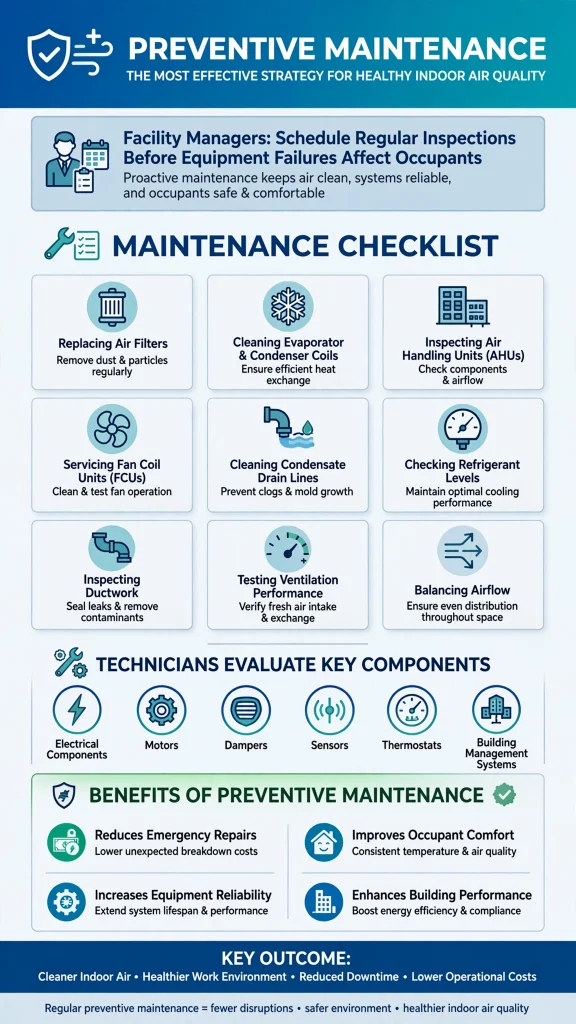
Preventive maintenance remains one of the most effective strategies for maintaining healthy indoor air quality.
Rather than waiting for equipment failures, facility managers schedule regular inspections that identify developing problems before they affect building occupants.
Maintenance typically includes replacing air filters, cleaning evaporator and condenser coils, inspecting Air Handling Units (AHUs), servicing Fan Coil Units (FCUs), cleaning condensate drain lines, checking refrigerant levels, inspecting ductwork, testing ventilation performance, and balancing airflow.
Technicians also evaluate electrical components, motors, dampers, sensors, thermostats, and Building Management Systems to ensure reliable operation.
Consistent maintenance reduces emergency repairs while improving indoor comfort, equipment reliability, and overall building performance.
Professional Air Duct Cleaning
Air ducts serve as the distribution network that delivers conditioned air throughout commercial buildings.
Over time, dust, pollen, construction debris, bacteria, mold spores, and airborne contaminants accumulate inside ductwork. As HVAC systems continue operating, these contaminants may circulate throughout occupied spaces.
Professional air duct cleaning removes accumulated debris using specialized inspection cameras, rotary brushing equipment, negative pressure vacuum systems, and HEPA filtration.
Clean ductwork improves airflow, supports HVAC efficiency, reduces airborne contaminants, and contributes to healthier indoor environments.
Duct cleaning also helps reduce unpleasant odors while extending the operational life of air handling equipment.
For commercial buildings with high occupancy, periodic duct inspection and cleaning form an important part of comprehensive indoor air quality management.
Smart Technologies Improving Indoor Air Quality
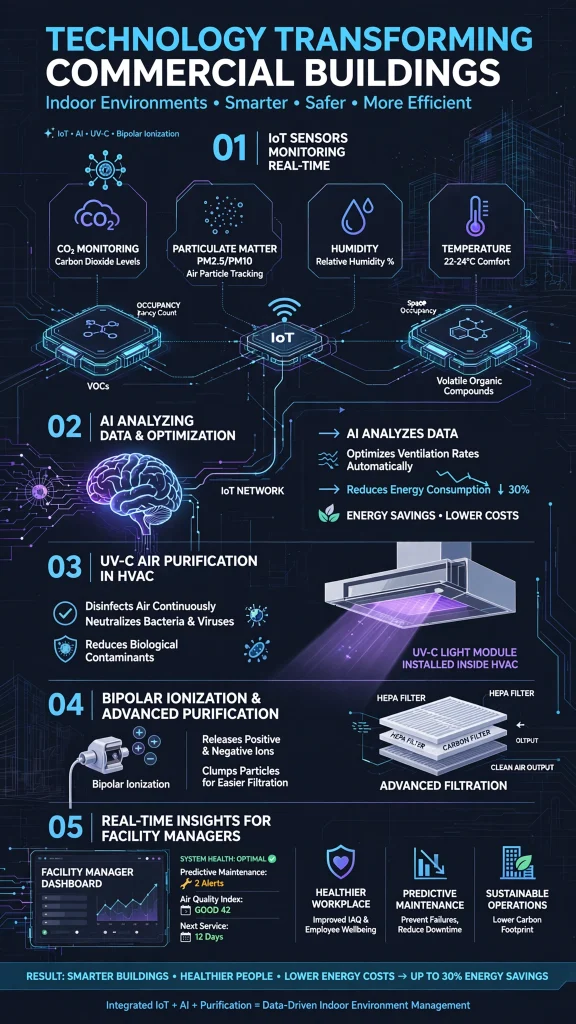
Technology continues transforming the way commercial buildings manage indoor environments.
Internet of Things (IoT) sensors continuously monitor carbon dioxide concentrations, particulate matter, humidity, temperature, occupancy, and volatile organic compounds.
Artificial intelligence analyzes this data to optimize ventilation rates automatically while reducing unnecessary energy consumption.
Ultraviolet-C (UV-C) air purification systems installed inside HVAC equipment help reduce biological contaminants by disinfecting air as it circulates through the system.
Some buildings also utilize bipolar ionization technologies and advanced air purification equipment designed to improve indoor air quality further.
These innovations provide facility managers with real-time information that supports predictive maintenance and healthier workplaces.
Sustainable Indoor Air Quality Strategies
Sustainability has become an important consideration for commercial building owners across Dubai.
Green building initiatives encourage the use of environmentally responsible construction materials, energy-efficient HVAC systems, low-emission finishes, water-saving technologies, and improved indoor environmental quality.
Buildings pursuing sustainability certifications often incorporate Energy Recovery Ventilators (ERVs), demand-controlled ventilation, high-efficiency filtration, daylight optimization, and advanced Building Management Systems.
These technologies improve occupant health while reducing environmental impact and operating expenses.
Sustainable indoor air quality strategies also support employee wellness initiatives, helping organizations create healthier and more productive workplaces.
Choosing the Right Indoor Air Quality Partner
Maintaining healthy indoor air requires expertise, specialized equipment, and a proactive maintenance approach.
Professional HVAC contractors begin by evaluating building design, occupancy levels, ventilation performance, filtration systems, humidity control, and existing HVAC equipment.
Indoor air quality assessments may include airflow measurements, duct inspections, filter evaluations, carbon dioxide monitoring, particulate testing, and humidity analysis.
Based on these findings, contractors recommend maintenance schedules, equipment upgrades, filtration improvements, ventilation optimization, and cleaning services tailored to the building’s operational requirements.
Working with experienced professionals ensures that indoor air quality improvements support both occupant health and long-term building performance.
Long-Term Benefits for Commercial Buildings
Investing in indoor air quality produces long-term benefits that extend well beyond occupant comfort.
Healthier indoor environments contribute to lower employee absenteeism, improved productivity, increased tenant satisfaction, and enhanced customer experiences.
Efficient HVAC systems consume less energy, reducing utility costs while minimizing equipment wear.
Preventive maintenance extends the lifespan of mechanical systems, lowering long-term repair and replacement expenses.
Improved indoor environmental quality also supports sustainability goals, regulatory compliance, and modern workplace wellness initiatives.
Commercial buildings that prioritize indoor air quality often experience stronger tenant retention and greater operational efficiency, making IAQ an essential component of successful facility management.
Conclusion
Indoor Air Quality is no longer just a maintenance concern, it is a critical factor influencing employee health, customer satisfaction, operational efficiency, and building performance. In Dubai’s demanding climate, where commercial buildings depend heavily on HVAC systems throughout the year, maintaining clean, healthy indoor air requires a comprehensive approach that combines proper ventilation, effective filtration, humidity control, preventive maintenance, and professional HVAC care.
From corporate offices in Business Bay and DIFC to hotels in Dubai Marina and Palm Jumeirah, healthcare facilities in Dubai Hills, and industrial properties in Al Quoz, every commercial building benefits from a well-managed indoor air quality program.
Regular HVAC inspections, clean air ducts, properly maintained Air Handling Units (AHUs), efficient Fan Coil Units (FCUs), advanced filtration systems, and smart Building Management Systems work together to create healthier, more comfortable, and energy-efficient indoor environments.
As businesses increasingly focus on employee wellness, sustainability, and operational excellence, investing in indoor air quality is no longer optional. It is a long-term strategy that protects people, improves productivity, extends HVAC equipment life, reduces operating costs, and enhances the overall value of commercial properties.