Palm Jumeirah is one of Dubai’s most recognizable residential destinations, known for waterfront villas, premium apartments, private pools, landscaped terraces, expansive balconies, and high-value interiors. Properties in this environment combine sophisticated architecture with constant exposure to moisture, humidity, salt-laden air, intense sunlight, air-conditioning, and occasional heavy rainfall.
For luxury property owners, waterproofing is therefore much more than a construction detail. It is an important part of protecting the building envelope, interior finishes, structural components, landscaping, and long-term property value.
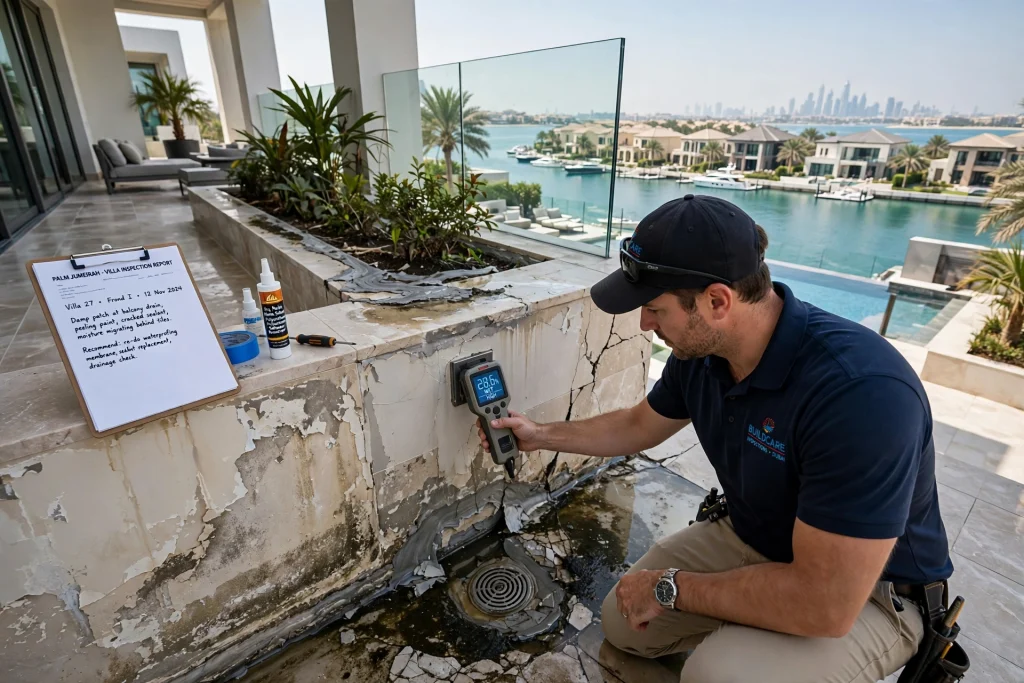
A waterproofing failure may begin as something that appears minor, such as a damp patch, peeling paint, cracked sealant, or water collecting around a balcony drain. If moisture continues entering the building, however, it can migrate behind tiles, into wall assemblies, beneath flooring, around windows, or into concrete elements.
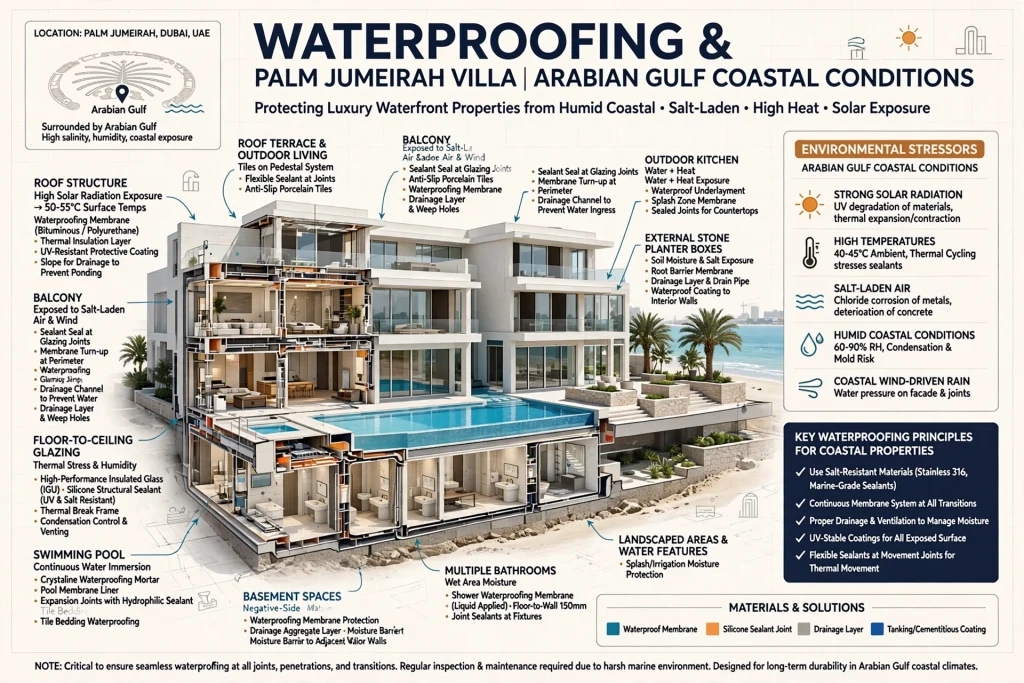
The challenge in Palm Jumeirah is that many luxury properties contain multiple areas where water must be controlled. Roof terraces, podiums, balconies, swimming pools, bathrooms, kitchens, basement areas, planter boxes, façades, retaining structures, and waterfront-facing elements all require appropriate detailing.
Effective waterproofing is therefore best understood as a complete moisture-management strategy rather than a single coating applied to a surface.
Why Waterproofing Is Especially Important in Palm Jumeirah
Waterproofing is important for any building, but waterfront properties have particular environmental considerations.
Palm Jumeirah is surrounded by the Arabian Gulf, meaning properties can experience humid coastal conditions and exposure to salt-containing air. Exterior materials are also subjected to strong solar radiation and high temperatures for significant portions of the year.
These conditions can place stress on sealants, coatings, membranes, joints, tiles, and other exposed building components.
Luxury properties also tend to have more complex architectural features.
A typical premium villa may include:
- Large terraces
- Swimming pools
- Balconies
- Outdoor kitchens
- Water features
- Landscaped areas
- Basement spaces
- Floor-to-ceiling glazing
- External stone
- Planter boxes
- Multiple bathrooms
- Roof structures
Each interface creates another location where water must be properly directed and controlled.
Waterproofing Protects the Building Envelope
The building envelope separates the conditioned interior from the external environment.
It can include roofs, walls, façades, windows, doors, balconies, terraces, and associated joints.
A properly designed waterproofing system helps prevent unwanted water from entering these assemblies.
This is particularly important for luxury properties because interior finishes can be expensive.
Natural stone, engineered wood, premium wallpaper, custom cabinetry, decorative plaster, gypsum ceilings, and specialist finishes can all be damaged by prolonged moisture.
The cost of repairing the visible water damage may therefore be considerably higher than repairing the original waterproofing defect.
Protecting Luxury Villa Roofs and Terraces
Roof terraces are exposed directly to weather.
A roof system may contain a structural slab, screed, insulation, waterproofing membrane, protection layer, tiles or other finishes, drainage outlets, movement joints, and service penetrations.
Every layer has a role.
Waterproofing prevents moisture from reaching sensitive underlying components, while proper falls direct water toward drainage outlets.
A membrane can perform well only when the surrounding detailing is also correct.
Problems around pipe penetrations, parapets, drains, expansion joints, door thresholds, and equipment supports can create pathways for water.
For this reason, roof waterproofing should be inspected as a complete system rather than treating isolated cracks as independent problems.
Waterproofing Around Swimming Pools
Swimming pools are among the most water-intensive features found in luxury Palm Jumeirah properties.
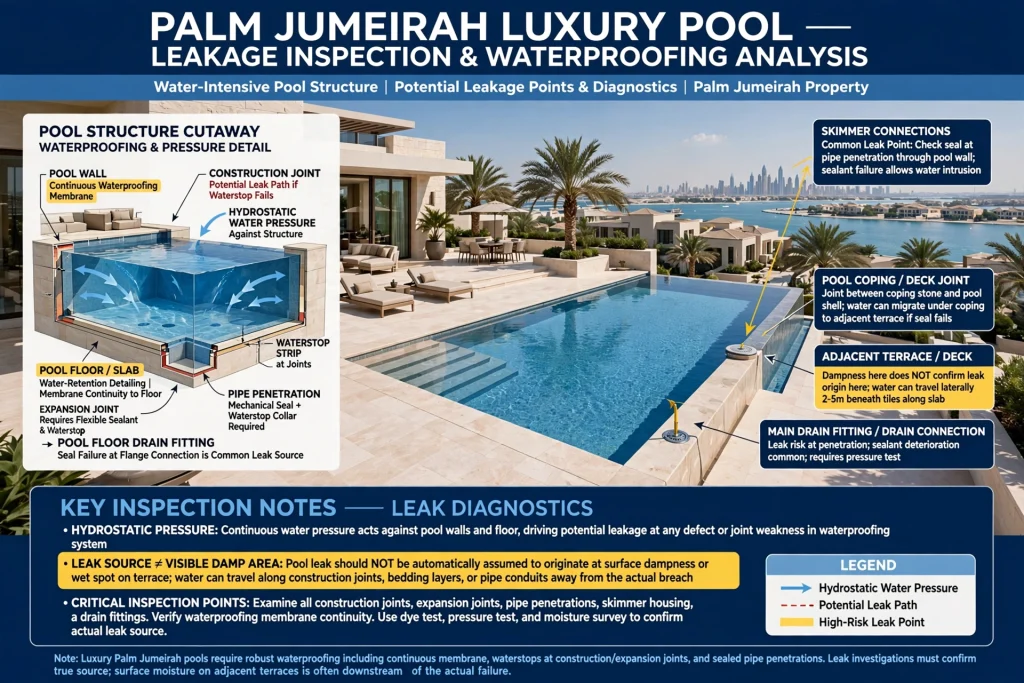
Pool structures require appropriate waterproofing and water-retention detailing because water pressure can act continuously against the surrounding structure.
Potential leakage points include:
- Pool walls
- Pool floor
- Construction joints
- Expansion joints
- Pipe penetrations
- Skimmer connections
- Drain fittings
- Overflow channels
- Pool coping
- Adjacent terraces
A pool leak should not automatically be assumed to originate from the visible pool surface.
Water can travel through surrounding structures and appear in another location.
Professional investigation is therefore important when unexplained dampness develops around a swimming pool.
Balcony Waterproofing for Waterfront Villas
Balconies combine several waterproofing challenges.
They have exposed horizontal surfaces, drainage requirements, door thresholds, railing penetrations, façade connections, and frequently tiled finishes.
A balcony must be designed so water does not remain against doors or walls.
Drainage outlets should remain clear, and the finished surface should maintain appropriate falls.
Failed grout alone is not necessarily the root cause of a leak.
If the waterproofing membrane beneath the tile system has failed, replacing grout may only provide a temporary cosmetic improvement.
This is why balcony leakage should be investigated below the finished surface when necessary.
Bathroom Waterproofing in Luxury Homes
Luxury Palm Jumeirah villas often contain multiple bathrooms, guest washrooms, spa-style bathrooms, steam rooms, and wet areas.
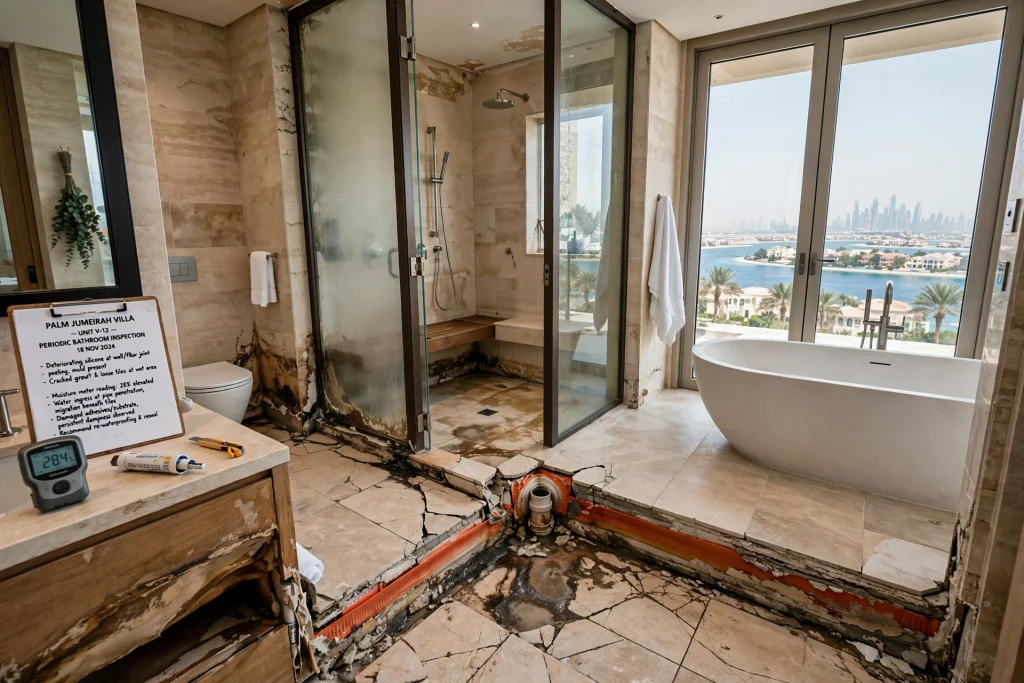
These spaces require careful waterproofing around showers, bathtubs, floor drains, sanitary fixtures, wall-floor junctions, and pipe penetrations.
Water can enter small gaps and migrate beneath tiles.
Once moisture enters a concealed area, it can damage adhesives, substrates, cabinetry, ceilings, and adjacent finishes.
A properly installed wet-area waterproofing system creates a continuous moisture barrier behind the finished surfaces.
Bathrooms should also be inspected periodically for deteriorating silicone, damaged grout, loose tiles, cracked joints, and persistent dampness.
Waterproofing Protects Expensive Interior Finishes
The value of a luxury property is not determined only by its structure.
Interior finishes can represent a significant investment.
Consider a waterfront villa with imported marble flooring, custom joinery, designer wall finishes, hardwood elements, and bespoke furniture.
A hidden leak behind a bathroom wall could eventually affect multiple materials.
Moisture may travel into the floor assembly, damage adjacent cabinetry, and produce staining on the ceiling below.
Preventive waterproofing can therefore protect both the physical building and the investment in its interior design.
Protecting Marble and Natural Stone
Natural stone is widely used in premium properties.
Marble, limestone, granite, travertine, and other stone products can be sensitive to moisture conditions depending on their composition, installation method, sealers, and surrounding substrate.
Water entering behind stone cladding can create staining, deterioration, efflorescence, or adhesion problems.
External stone applications require particular attention to drainage and moisture management.
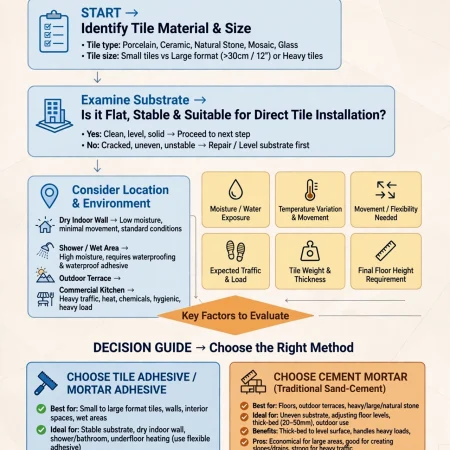
Waterproofing should work together with appropriate substrate preparation, adhesives, joints, sealants, and drainage details.
A waterproofing strategy should therefore be coordinated with the complete finishing system.
Waterproofing and Façade Protection
Luxury waterfront properties often feature large glazed façades, stone cladding, metal elements, balconies, and architectural projections.
The junctions between these materials can become vulnerable to water penetration.
Sealants around windows and façade joints can deteriorate over time.
Thermal movement can cause joints to expand and contract repeatedly.
A small opening may become a pathway for rainwater.
When water appears around an internal window reveal, the source may be an external façade joint rather than an internal plumbing system.
This is why façade inspection should be considered when internal dampness occurs near exterior walls.
Waterproofing and Window Sealing
Large windows provide natural light and views but also create important weatherproofing interfaces.
Window frames require appropriate perimeter sealing and drainage.
A failed sealant joint can allow rainwater to enter behind the frame.
Water may then travel along the wall assembly before appearing at the interior.
Regular inspection of external sealants is therefore valuable.
Signs of deterioration include cracking, gaps, separation from the substrate, discoloration, or loss of elasticity.
Replacing a deteriorated sealant joint before significant water intrusion develops can be considerably easier than repairing the resulting interior damage.
Waterproofing for Planter Boxes and Landscaped Areas
Luxury villas often include extensive landscaping, planter boxes, green walls, and rooftop gardens.
These areas require careful waterproofing because they remain exposed to irrigation water.
Planter boxes are particularly important because soil and irrigation can keep moisture against the surrounding structure for extended periods.
A suitable system should account for waterproofing, drainage, root protection, protection boards, and appropriate detailing at outlets and penetrations.
Simply applying a waterproof coating without considering drainage and root protection is unlikely to provide a comprehensive solution.
Waterproofing in Basements and Underground Areas
Some luxury properties include basements, underground garages, storage rooms, plant rooms, and service areas.
These spaces can experience water ingress from surrounding soil, groundwater, drainage problems, or defective joints.
Waterproofing strategies for below-ground structures can differ significantly from roof or bathroom systems.
Possible approaches include external waterproofing, internal waterproofing, drainage systems, waterstops, injection systems, and structural crack repair, depending on the construction and source of moisture.
Basement waterproofing should therefore be assessed according to the actual water pressure and building condition.
The Role of Drainage in Waterproofing
Waterproofing and drainage are closely connected.
A waterproof membrane is not intended to replace proper drainage.
If water remains on a terrace because the drain is blocked or the surface has inadequate falls, the waterproofing system is subjected to prolonged exposure.
Effective water management requires water to be collected and discharged efficiently.
Drainage components include:
- Floor drains
- Roof outlets
- Scuppers
- Channel drains
- Balcony drains
- Overflow outlets
- Downpipes
- Surface drainage systems
Drainage outlets should be kept clear and inspected regularly.
Waterproofing and Plumbing Are Connected
A building can have excellent waterproofing and still experience water leakage if plumbing systems fail.
Water supply pipes, drainage pipes, valves, flexible connections, sanitary fixtures, pumps, and air-conditioning condensate lines can all become sources of unwanted water.
This is why waterproofing inspections should not automatically assume that every damp patch is a membrane failure.
For Palm Jumeirah properties experiencing unexplained water damage, a coordinated approach involving both waterproofing and plumbing assessment can provide a more accurate diagnosis.
Where required, a professional Plumbing service in Palm Jumeirah can help investigate pipework, drainage connections, water pressure, concealed leaks, and other plumbing-related causes alongside waterproofing specialists.
How Coastal Conditions Affect Building Maintenance
Palm Jumeirah’s coastal environment creates specific maintenance considerations.
Salt-containing air can contribute to corrosion of exposed metal components.
High humidity can increase moisture-related concerns.
Strong sunlight and temperature fluctuations can affect sealants and external coatings.
These conditions do not mean that waterproofing systems will automatically fail. Rather, they highlight why material selection, installation quality, inspection, and preventive maintenance matter.
A high-quality waterproofing system still requires maintenance.
Waterproofing and Building Movement
Buildings naturally experience movement.
Temperature changes, structural movement, settlement, and expansion can affect joints and interfaces.
A rigid material installed in a movement-sensitive location may crack or separate.
Movement joints therefore require appropriate detailing.
Expansion joints, construction joints, façade interfaces, balcony connections, and transitions between different materials should be designed to accommodate expected movement.
This is especially important in large luxury villas with extensive external areas.
Common Signs of Waterproofing Failure
Property owners should watch for early warning signs.
These can include damp patches, peeling paint, bubbling finishes, recurring ceiling stains, mold-like growth, efflorescence, loose tiles, cracked sealants, deteriorated grout, musty odors, water around windows, and persistent moisture after rainfall.
A recurring stain is particularly important.
If the same area becomes damp after rain, pool use, irrigation, or showering, the timing can help identify the likely source.
Early investigation can prevent a small defect from becoming a major repair project.
Why Repainting Is Not a Waterproofing Solution
One of the most common mistakes is treating water damage as a paint problem.
Repainting can improve appearance but does not stop water entering the building.
If moisture remains behind the surface, the paint may eventually bubble, peel, stain, or develop other defects.
The underlying moisture source must be identified and corrected first.
Only after the affected materials have dried appropriately and the source has been addressed should decorative restoration take place.
Waterproofing Inspection for Palm Jumeirah Properties
A professional inspection should examine the building according to its construction and water-exposure points.
This may include roofs, terraces, balconies, bathrooms, pools, planter boxes, façades, windows, basements, drainage outlets, and plumbing interfaces.
Moisture meters can help identify areas with elevated moisture.
Thermal imaging may assist in identifying temperature differences associated with moisture, although it should be interpreted by a trained professional and not treated as proof by itself.
Controlled water testing can also be useful when investigating specific areas such as windows, balconies, or wet rooms.
The purpose is to identify the source before selecting a repair method.
Choosing Waterproofing Materials for Luxury Properties
There is no single waterproofing material suitable for every application.
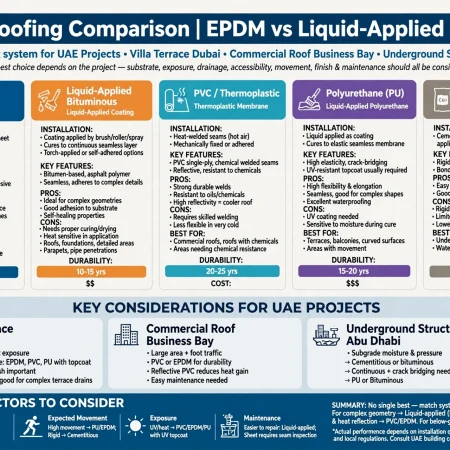
Depending on the location and construction system, projects may use cementitious waterproofing, liquid-applied membranes, bituminous membranes, polyurethane systems, acrylic coatings, sheet membranes, crystalline waterproofing, sealants, or specialized joint systems.
The correct choice depends on factors such as:
Substrate: Concrete, masonry, screed, metal, stone, or another material.
Exposure: Internal wet area, external terrace, underground structure, or roof.
Movement: Whether the area experiences expansion or structural movement.
Water pressure: Whether the system deals with occasional moisture or continuous hydrostatic pressure.
Finish: Whether tiles, stone, paint, or another surface will be installed above the waterproofing.
Maintenance: How accessible the system will be after installation.
Product selection should follow project specifications and manufacturer requirements rather than relying on a generic waterproofing product.
Waterproofing During Villa Renovation
Renovation is often an excellent opportunity to inspect concealed waterproofing.
If a Palm Jumeirah villa is already undergoing bathroom renovation, terrace refurbishment, pool renovation, or landscaping work, property owners can investigate the underlying waterproofing before installing new finishes.
This is particularly valuable because accessing waterproofing after new marble or tiles have been installed can be expensive.
A renovation should therefore consider the complete assembly rather than focusing only on visible finishes.
Preventive Waterproofing Maintenance
The most effective waterproofing strategy is preventive.
Roof drains should be checked.
Balcony drainage should remain clear.
Sealants should be inspected.
Bathroom joints should be monitored.
Pool areas should be checked for unexplained moisture.
Planter boxes should be inspected for drainage and waterproofing problems.
External façade interfaces should be monitored.
Any recurring water stain should be investigated early.
Preventive maintenance allows property owners to address small defects before they affect expensive finishes or larger building components.
Waterproofing and Property Value
Water damage can influence the perceived condition of a luxury property.
Visible staining, damaged ceilings, deteriorated stone, mold-like growth, or recurring leaks can raise concerns for prospective buyers and tenants.
Conversely, documented preventive maintenance can demonstrate that the property has been properly managed.
For high-value real estate in Palm Jumeirah, maintaining the building envelope and moisture-control systems is therefore part of broader property asset management.
Why Professional Waterproofing Matters
Waterproofing is one of those building systems where installation quality is as important as material selection.
A premium membrane can fail if the substrate is poorly prepared.
A good sealant can fail if the joint is incorrectly sized.
A drainage system can underperform if falls are inadequate.
A balcony can leak if penetrations are not properly detailed.
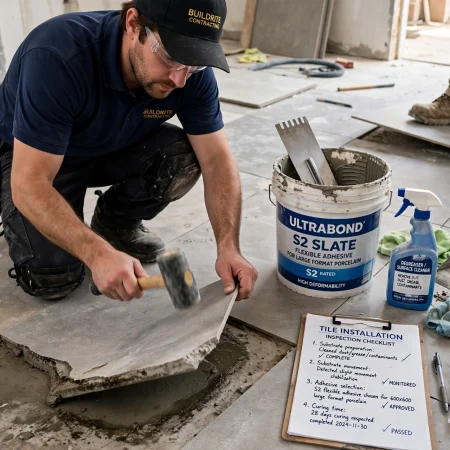
Professional installation should therefore consider substrate preparation, primer requirements, membrane thickness, overlaps, corners, upstands, penetrations, drains, movement joints, protection layers, and compatibility with subsequent finishes.
Testing and inspection should also be incorporated into the project.
Waterproofing in Other Premium Dubai Areas
The same principles apply beyond Palm Jumeirah.
Luxury properties in Emirates Hills, Dubai Hills Estate, Jumeirah, Umm Suqeim, Al Barsha, Arabian Ranches, Downtown Dubai, and Dubai Marina can also benefit from systematic waterproofing maintenance.
However, the building type and environmental exposure differ.
A high-rise apartment may have façade and balcony interfaces that require attention, while a villa may have extensive landscaping, pools, terraces, and underground spaces.
Waterproofing should therefore always be customized to the property.
The Difference Between Waterproofing and Water-Resistant Finishes
A water-resistant surface is not necessarily a complete waterproofing system.
Tiles, grout, stone, paint, and sealants can resist moisture to varying degrees, but they should not automatically be considered substitutes for properly designed waterproofing.
A wet area requires a system that prevents water from reaching vulnerable building components.
The distinction becomes particularly important in bathrooms, pools, balconies, terraces, and planter boxes.
Understanding this difference helps property owners avoid relying on surface finishes to perform a structural waterproofing function.
Long-Term Waterproofing Strategy for Palm Jumeirah Villas
For a luxury waterfront property, waterproofing should be treated as part of the building’s lifecycle management.
A long-term strategy can include scheduled inspections, drainage cleaning, sealant checks, roof assessments, balcony inspections, bathroom maintenance, pool monitoring, façade checks, and documentation of previous repairs.
The objective is to identify deterioration before water enters the building.
When waterproofing, plumbing, drainage, HVAC condensate, landscaping irrigation, and façade systems are considered together, the property can be managed much more effectively.
Conclusion
Waterproofing plays a critical role in protecting luxury properties throughout Palm Jumeirah.
The value of waterproofing extends far beyond preventing a wet wall. A properly designed and maintained system helps protect concrete structures, roofs, terraces, balconies, swimming pools, bathrooms, façades, windows, basements, landscaping systems, marble, flooring, cabinetry, ceilings, and other high-value finishes from unwanted moisture.
Palm Jumeirah properties have particularly diverse water-management requirements because of their coastal environment, premium architecture, extensive outdoor spaces, swimming pools, landscaping, and sophisticated building systems.
The most effective approach is proactive rather than reactive.
Property owners should inspect vulnerable areas regularly, keep drainage systems clear, monitor sealants and joints, investigate unexplained moisture quickly, and ensure that repairs address the actual source of water.
Most importantly, waterproofing should never be viewed as a one-time application. It is a building system that requires appropriate design, compatible materials, skilled installation, testing, and ongoing maintenance.
For luxury homeowners in Palm Jumeirah, protecting the property from water intrusion is ultimately an investment in durability, comfort, appearance, safety, and long-term property value.