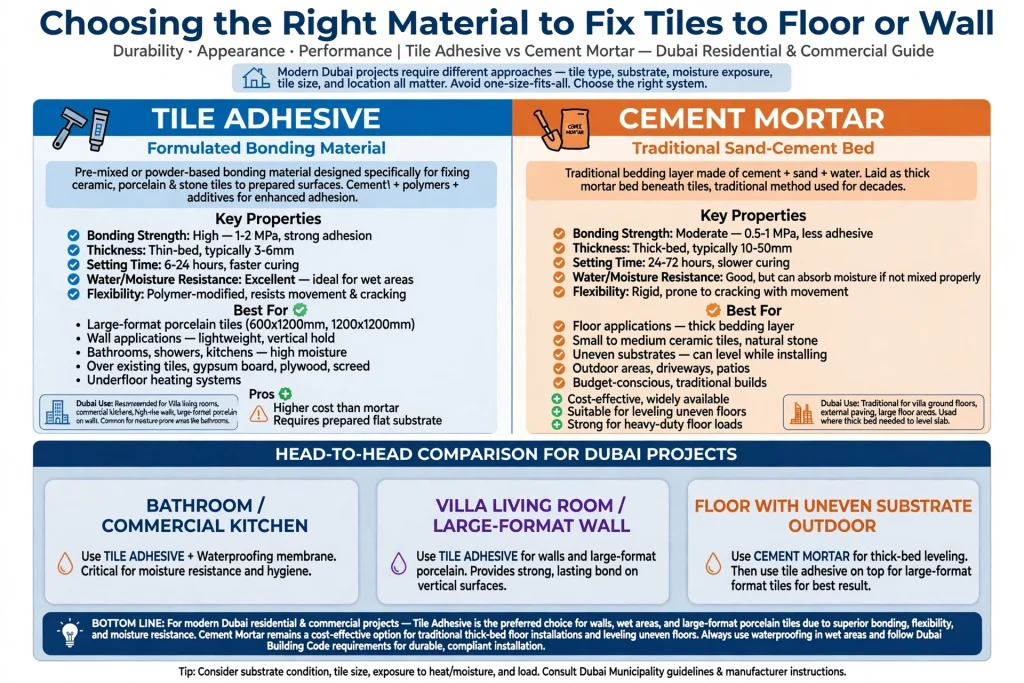
Choosing the right material to fix tiles to a floor or wall can have a major effect on the durability, appearance and performance of a tiled surface. Two traditional options are commonly discussed: tile adhesive and cement mortar. While both can be used to install tiles, they work differently and are suitable for different installation conditions.
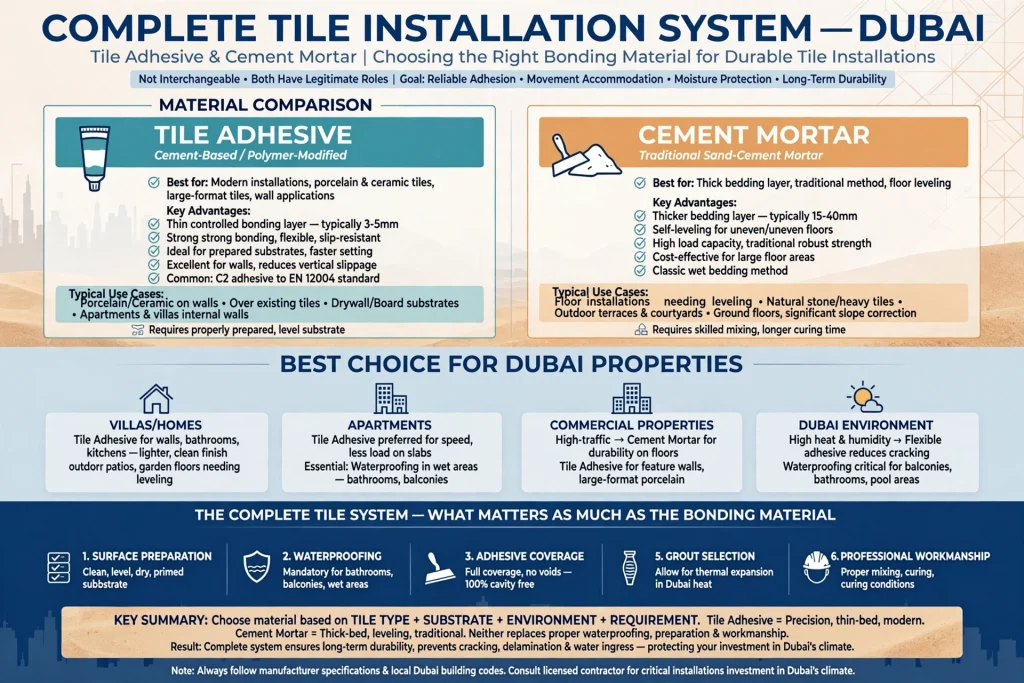
Tile adhesive is a formulated bonding material designed specifically for fixing ceramic, porcelain, stone and other tiles to prepared surfaces. Cement mortar, sometimes called a sand-cement bed or traditional tile mortar, uses cement, sand and water to create a bedding layer beneath the tiles.
For modern residential and commercial projects in Dubai, the choice should depend on the tile type, substrate, location, moisture exposure, tile size and installation method. A bathroom floor, Dubai villa living room, commercial kitchen and large-format porcelain wall can all require different approaches.
Understanding the difference between tile adhesive and cement mortar can help property owners, contractors and renovation teams choose a suitable installation system instead of relying on a one-size-fits-all method.
What Is Tile Adhesive?
Tile adhesive is a specially formulated bonding compound manufactured for tile installation. Depending on the product, it may be cement-based, polymer-modified, ready-mixed or designed for particular applications.
Cementitious tile adhesives are commonly supplied as dry powder that is mixed with water before application. Polymer modification can improve adhesion, flexibility, water resistance and performance on certain substrates.
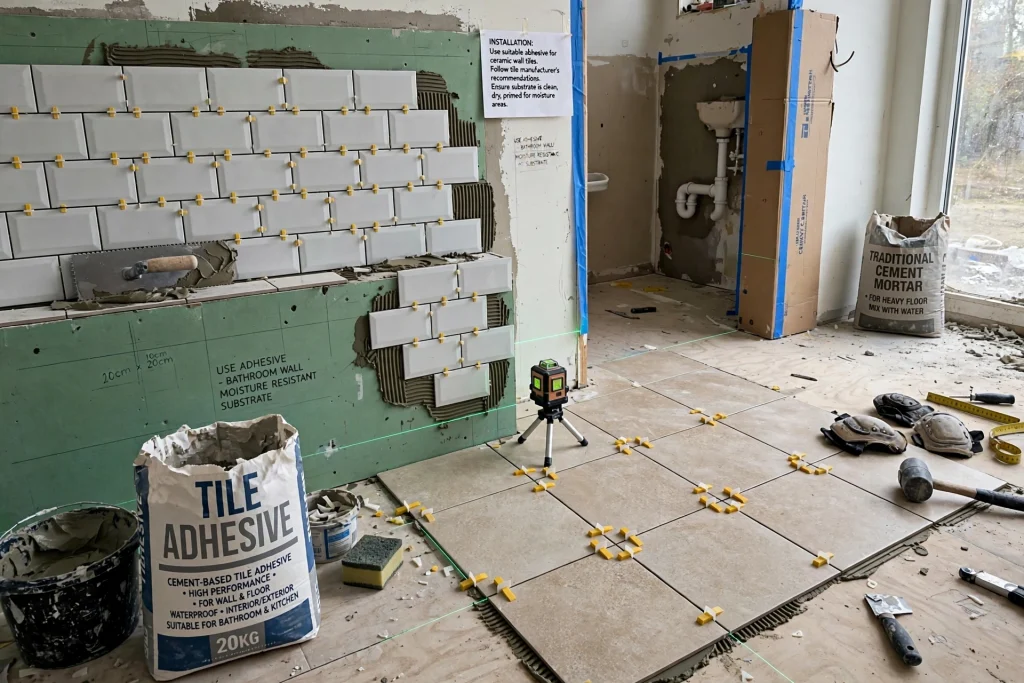
Tile adhesive is normally applied using a notched trowel. The grooves create a controlled layer of adhesive, allowing the tile to bond to the prepared surface while maintaining relatively consistent coverage.
Different adhesive classes are designed for different requirements. Some products are intended for standard ceramic tiles, while others are formulated for porcelain tiles, large-format tiles, natural stone, wet areas or demanding commercial applications.
What Is Cement Mortar?
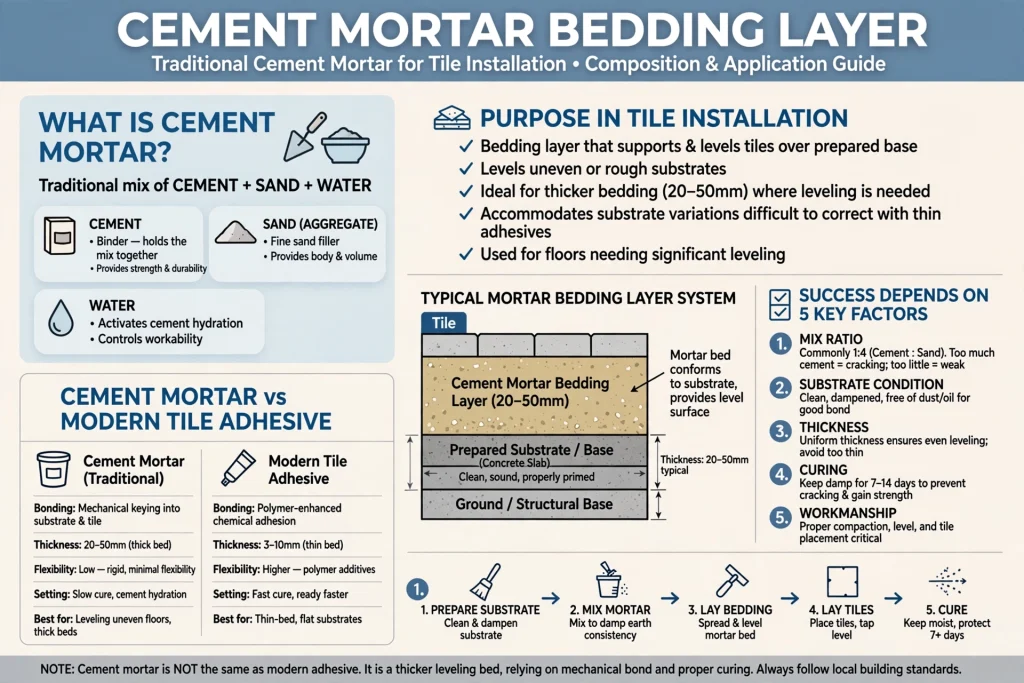
Cement mortar traditionally consists of cement, sand and water. In tile installation, it can be used as a bedding material that supports and levels tiles over a prepared base.
Traditional mortar installation has been used for many years, particularly where floors need to be levelled or where thicker bedding is required. The mortar bed can accommodate certain variations in the substrate that would be difficult to correct using a thin layer of adhesive.
However, cement mortar is not simply the same product as modern tile adhesive. Its bonding mechanism, flexibility, thickness and application characteristics are different.
The success of a mortar installation depends heavily on the mix ratio, substrate condition, thickness, curing and workmanship.
Tile Adhesive vs Cement Mortar: The Main Difference
The main difference is that tile adhesive is engineered specifically for bonding tiles, while cement mortar is primarily a cement-and-sand bedding system.
Tile adhesive is generally applied in a relatively thin and controlled layer. Cement mortar can be installed at a considerably greater thickness when the project requires a traditional bedding layer.
Adhesive can also provide stronger and more predictable bonding for many modern tile products, particularly when the correct product is selected and applied according to manufacturer instructions.
Mortar remains useful where substantial levelling or traditional installation methods are required. The correct choice therefore depends on the project rather than a simple assumption that one material is always better.
Which Is Better for Porcelain Tiles?
Porcelain tiles have a very low water absorption rate and a dense body. This makes them more demanding to bond than some traditional ceramic tiles.
For many porcelain tile applications, a suitable porcelain-rated tile adhesive is preferred because it is formulated to provide reliable adhesion to dense tile surfaces.
Large porcelain tiles also require attention to adhesive coverage. Voids beneath a large-format tile can increase the risk of cracking, movement or hollow areas.
A suitable adhesive combined with correct substrate preparation, trowel selection and back-buttering where required can provide better contact between the tile and substrate.
Which Is Better for Ceramic Tiles?
Ceramic tiles can be installed using suitable tile adhesive or traditional mortar depending on the application.
For modern wall and floor installations, adhesive is commonly selected because it provides a controlled bonding layer and can simplify installation.
Ceramic wall tiles in bathrooms, kitchens and residential interiors can benefit from an adhesive system appropriate for the substrate and moisture conditions.
Traditional cement mortar may still be used in certain construction methods, but the installation system should be selected according to the tile manufacturer’s recommendations and project requirements.
Tile Adhesive for Bathroom Floors
Bathrooms require special attention because floors and walls are exposed to water, humidity, cleaning products and frequent temperature changes.
Tile adhesive can be used over suitable waterproofed substrates, but the adhesive itself should not be considered a replacement for waterproofing.
A bathroom floor may require a complete system consisting of substrate preparation, waterproofing, suitable adhesive, tiles and grout.
The floor should also have the correct falls toward the drain. If the substrate does not have the appropriate slope, changing the adhesive will not solve standing-water problems.
Cement Mortar for Floor Levelling
One of the major advantages of cement mortar is its ability to create a thicker bedding layer. This can be useful when a floor requires levelling before tiles are installed.
For example, an older property may have uneven concrete or a floor requiring significant correction. A properly designed mortar bed can help establish a suitable level before the final tile surface is installed.
However, excessive thickness, poor mixing, insufficient curing or weak substrate conditions can create problems. Floor preparation should therefore be carried out carefully rather than using mortar simply to hide major structural or substrate defects.
Large-Format Tile Installation
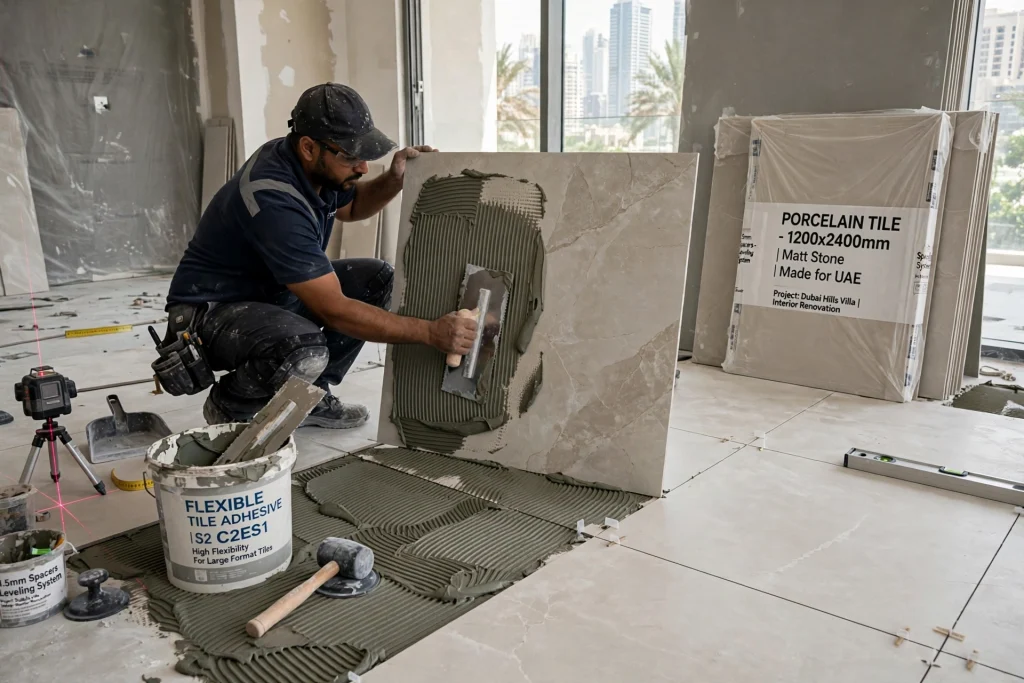
Large-format porcelain tiles have become increasingly popular in Dubai villas, apartments, hotels and commercial interiors. These tiles create fewer visible grout lines and can produce a clean contemporary appearance.
However, large tiles require careful installation. The substrate must be sufficiently flat because even small variations can result in lippage or poor contact.
A suitable flexible adhesive may be more appropriate than traditional mortar for many large-format applications. The installer may also use a larger notched trowel and back-buttering to improve coverage.
The objective is to achieve strong, consistent contact between the tile and substrate.
Tile Adhesive and Substrate Preparation
Even the highest-quality adhesive cannot compensate for a badly prepared surface.
The substrate should be structurally sound, sufficiently clean and free from contaminants such as dust, grease, loose particles and other materials that interfere with bonding.
Depending on the surface, preparation may include cleaning, priming, repairing cracks, removing weak material or correcting uneven areas.
Concrete, cement screed, plasterboard, cement board and existing tile surfaces can each have different preparation requirements. The adhesive selected should be compatible with the substrate.
Cement Mortar and Substrate Preparation
Traditional mortar installation also depends on the condition of the base. A weak or unstable substrate can lead to movement and cracking regardless of the tile installation method.
The mortar mix must be appropriate for the application. Excessive water can affect strength, while an incorrect cement-to-sand ratio can produce an inconsistent bedding layer.
The base should also be prepared to allow the mortar system to perform as intended.
Good workmanship is particularly important with traditional methods because the installer has greater control over the final bedding thickness and consistency.
Which Option Is Better for Dubai Homes?
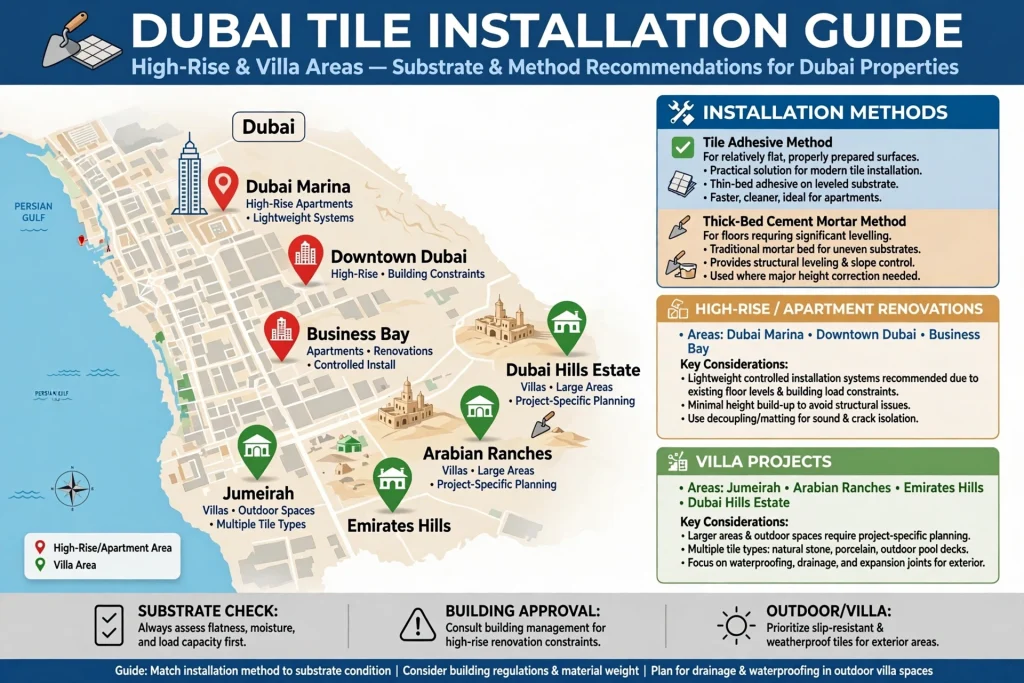
Dubai properties include high-rise apartments, villas, townhouses and renovated older buildings. Each can present different substrate and installation conditions.
For a relatively flat and properly prepared surface, tile adhesive is often a practical solution for modern tile installation.
For a floor requiring significant levelling or a traditional thick-bed installation, cement mortar may have a role.
In areas such as Dubai Marina, Downtown Dubai and Business Bay, apartment renovations may require lightweight and controlled installation systems because of existing floor levels and building constraints.
Villa projects in Jumeirah, Arabian Ranches, Emirates Hills and Dubai Hills Estate may involve larger areas, outdoor spaces and multiple tile types, making project-specific planning important.
Tile Adhesive for Kitchen Walls and Floors
Kitchens experience moisture, heat, grease and regular cleaning. Wall tiles behind countertops and cooking areas need reliable adhesion and a surface that can tolerate the conditions.
A suitable tile adhesive can provide a controlled installation layer for ceramic or porcelain kitchen tiles.
Floor tiles require additional consideration because they are exposed to foot traffic, furniture loads and spills. The adhesive should therefore be selected according to the tile and expected service conditions.
Grout selection is also important because joints need to resist staining and moisture.
Cement Mortar for Outdoor Tile Installation
Outdoor tile installation requires careful consideration of temperature changes, moisture and substrate movement.
In Dubai, external areas such as terraces, balconies, patios and villa entrances can experience intense sunlight and high surface temperatures. These conditions can contribute to thermal movement.
A suitable exterior-rated adhesive system may provide flexibility and bonding performance where required. Traditional mortar may also be appropriate for specific thick-bed applications when properly designed.
The important point is that outdoor installation should not automatically use the same system as an indoor living room.
What About Natural Stone?
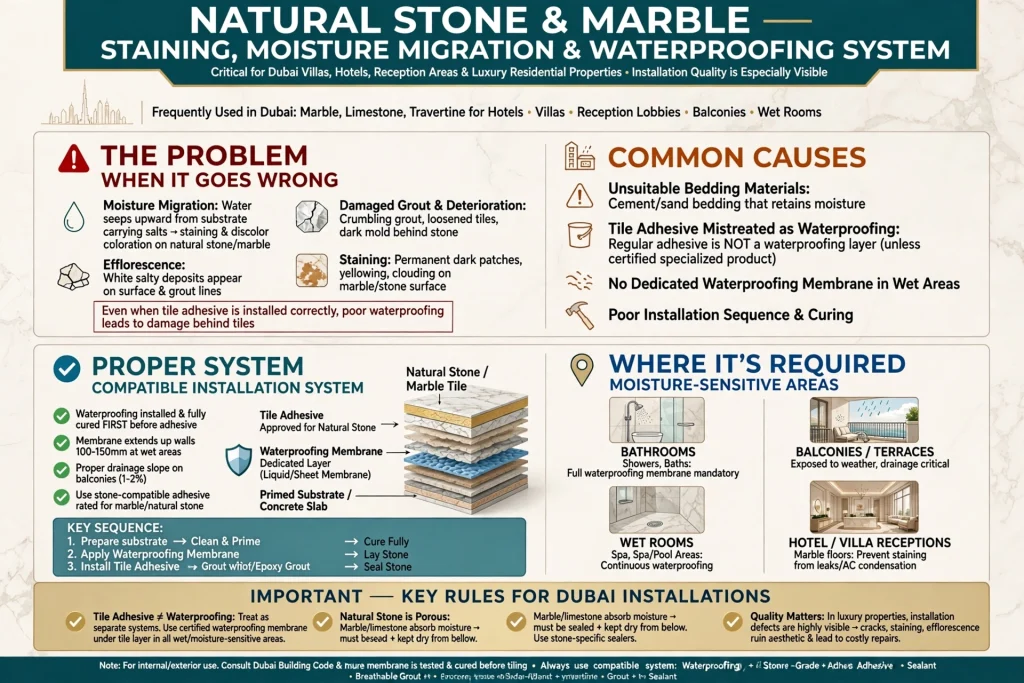
Natural stone such as marble, limestone, travertine and granite can have different installation requirements from ceramic or porcelain tiles.
The stone’s porosity, weight, dimensions and sensitivity to moisture should be considered before choosing an adhesive or mortar system.
Some natural stones can be affected by staining or moisture migration from unsuitable bedding materials. A compatible installation system is therefore important.
Dubai interiors frequently use marble and other stone materials in villas, hotels, reception areas and luxury residential properties, where installation quality is especially visible.
Tile Adhesive and Waterproofing
Waterproofing is a separate part of the tiled surface system. Tile adhesive should not be treated as the primary waterproofing layer unless a specific product has been designed and certified for that purpose.
Bathrooms, balconies, wet rooms and other moisture-sensitive areas may require a dedicated waterproofing membrane beneath the tile system.
The sequence is important. Waterproofing must be properly installed and cured before the tile adhesive is applied.
Poor waterproofing can lead to dampness, efflorescence, damaged grout and deterioration behind tiles even when the adhesive itself was installed correctly.
Grout Works With Both Systems
The choice between adhesive and mortar does not eliminate the need for suitable grout.
Grout fills the joints between tiles and helps create a finished, hygienic and visually consistent surface. Depending on the application, cementitious grout or epoxy grout may be selected.
Bathrooms, commercial kitchens, swimming pool areas and other demanding environments may require more specialized grout systems.
For properties requiring highly resistant jointing systems, professional Epoxy tiling Sercives in Dubai can be considered where the application and substrate make epoxy suitable.
Epoxy Grout vs Cement Grout
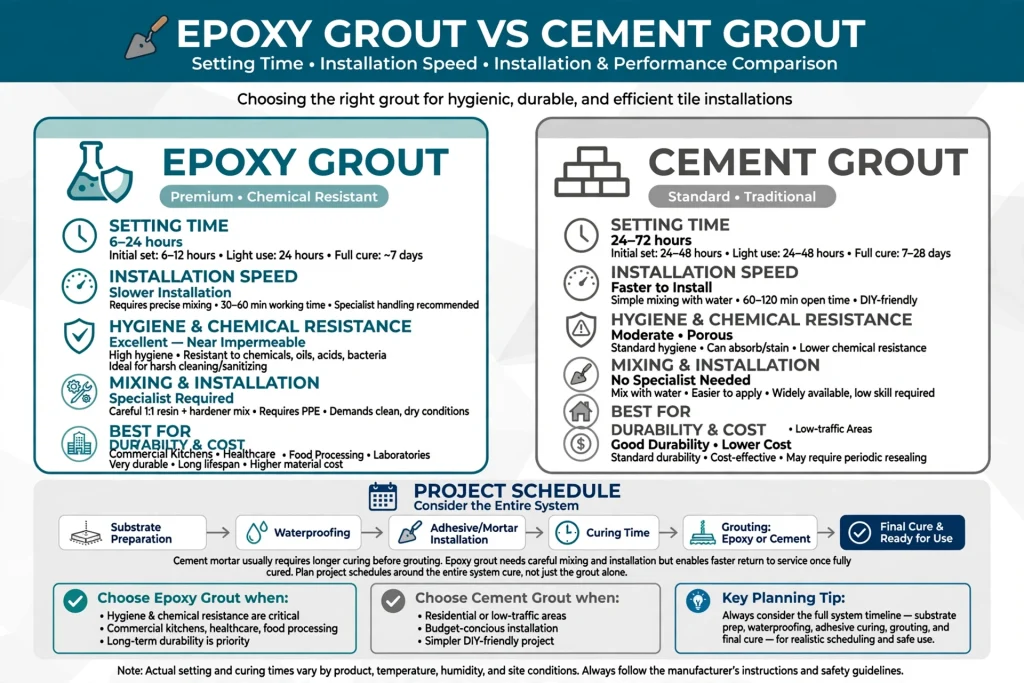
Epoxy grout differs from conventional cement-based grout because it uses resin and hardener components. It can provide strong resistance to staining, chemicals and moisture in suitable applications.
This makes epoxy grout useful in areas such as commercial kitchens, healthcare environments and other spaces where hygiene and chemical resistance are important.
However, epoxy materials require careful mixing and installation. They are not simply a premium version of standard cement grout that can be installed without specialist workmanship.
Setting Time and Installation Speed
Tile adhesive can offer practical advantages during installation because many modern products are engineered for predictable working and setting characteristics.
Some products are designed for rapid-setting applications, while others provide longer open times to help installers position tiles.
Cement mortar can require more time for proper curing and may involve a different sequence of floor preparation and tile installation.
Project schedules should therefore consider the entire system, including substrate preparation, waterproofing, adhesive or mortar curing, grouting and final use of the area.
Thickness and Floor Levels
Floor levels can become a major issue during renovation projects. Adding a thick mortar bed can increase the finished floor height, which may affect doors, thresholds, stairs and transitions between rooms.
Tile adhesive normally creates a thinner installation layer. This can be useful when the available floor build-up is limited.
However, adhesive should not be used as a substitute for proper floor levelling. If the substrate has major variations, the correct levelling or screeding method should be completed before tile installation.
Common Problems With Tile Adhesive
Tile adhesive can fail when the wrong product is selected or when installation conditions are poor.
Common problems include hollow-sounding tiles, loose tiles, cracked grout, poor adhesion, tile movement and lippage.
These issues can result from insufficient adhesive coverage, contaminated substrates, incorrect mixing, expired materials, unsuitable adhesive selection or movement within the substrate.
Following manufacturer instructions and using the appropriate trowel technique can significantly reduce installation problems.
Common Problems With Cement Mortar
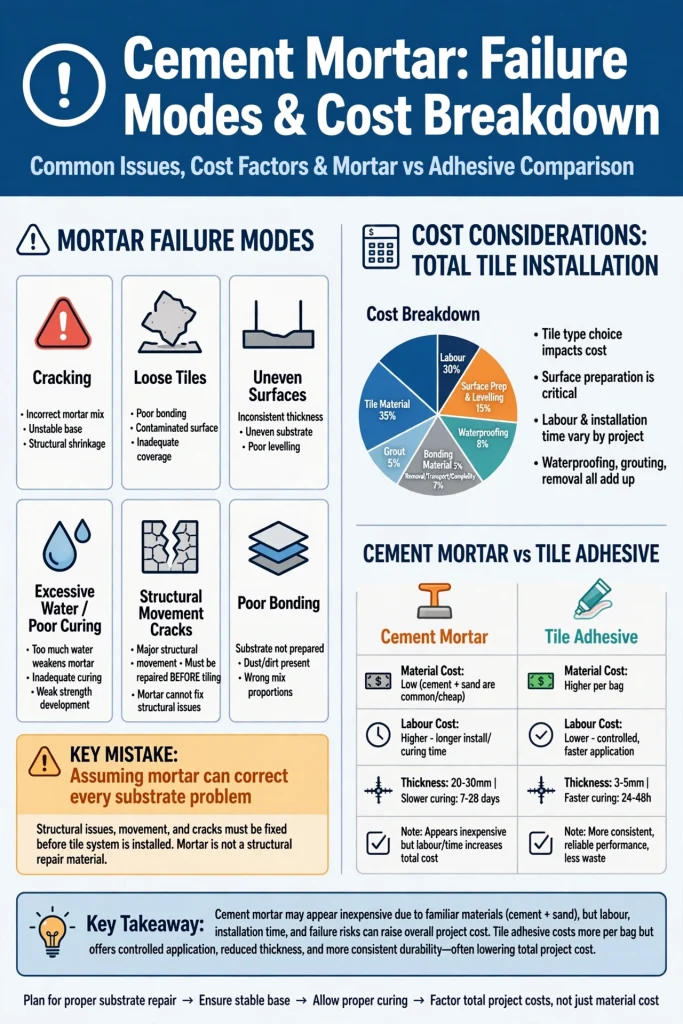
Cement mortar installations can also experience failures. Cracking, loose tiles, uneven surfaces and poor bonding can occur when the mortar mix is incorrect or the base is unstable.
Excessive water, inadequate curing and inconsistent thickness can affect performance.
Another issue is assuming that mortar can correct every substrate problem. Major structural movement or cracks need to be addressed before the tile system is installed.
Cost Considerations
The total cost of tile installation includes more than the bonding material.
Tile type, surface preparation, labour, waterproofing, grout, floor levelling, tile removal, transportation and project complexity can all influence the final price.
Cement mortar may appear inexpensive because cement and sand are familiar construction materials. However, labour and installation time can affect the overall project cost.
Tile adhesive may have a higher material price per bag but can offer controlled application and reduced installation thickness.
The most economical solution should therefore be evaluated based on the complete installation system rather than material price alone.
Tile Installation in Dubai Apartments
Apartment renovation projects in areas such as Dubai Marina, Jumeirah Lake Towers, Downtown Dubai, Business Bay and Dubai Hills Estate often involve existing floors and walls.
Before selecting an installation method, contractors should check the existing substrate, floor height, waterproofing condition and building requirements.
Large-format porcelain tiles, bathroom renovations and kitchen upgrades may each require different adhesive and preparation methods.
Apartment projects also need to consider access, material movement, working hours and protection of common areas.
Tile Installation for Dubai Villas
Villas often provide greater flexibility for renovation, but they can also involve larger tiled surfaces.
Living rooms, kitchens, bathrooms, terraces, pool surrounds and outdoor areas may all require different tile systems.
A single villa renovation could therefore use cement screed or mortar for one area, flexible adhesive for porcelain tiles and specialized materials for wet areas.
The correct approach is to select each system according to the location and tile application rather than specifying one material for the entire property.
Commercial Tile Installation
Commercial properties experience higher foot traffic and often require more durable flooring systems.
Hotels, restaurants, offices, retail stores, clinics and shopping environments may use porcelain, ceramic, stone or specialized tiles.
Commercial projects also have stricter requirements for cleaning, maintenance, slip resistance and durability.
The adhesive, grout and substrate preparation should therefore be selected as part of a complete flooring specification.
How to Choose Between Tile Adhesive and Cement Mortar
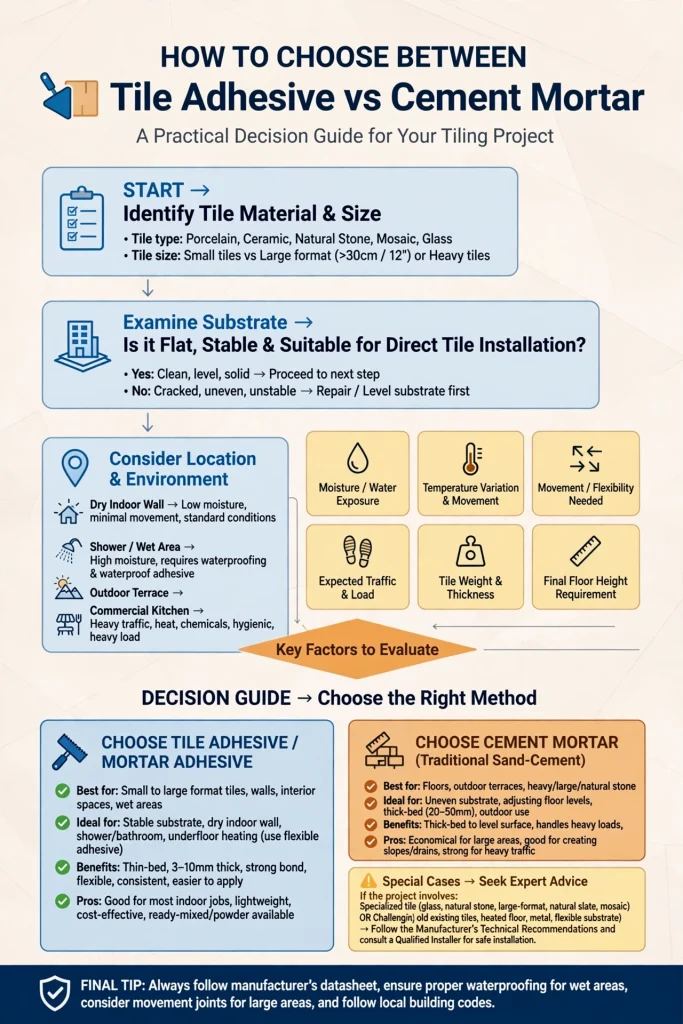
Start by identifying the tile material and size. Next, examine the substrate and determine whether it is flat, stable and suitable for direct tile installation.
Then consider the location. A dry indoor wall has different requirements from a shower floor, outdoor terrace or commercial kitchen.
Moisture, temperature variation, movement, expected traffic, tile weight and final floor height should all be considered.
If the project involves a specialized tile or challenging substrate, the manufacturer’s technical recommendations and a qualified installer should guide the final material selection.
Can You Mix the Two Installation Methods?
Different installation systems should not be combined casually. For example, using an unsuitable mortar layer underneath an adhesive system can create compatibility and bonding problems.
However, a project can legitimately contain different installation methods in different areas. A levelling screed may be used to prepare a floor, followed by tile adhesive for the final tile installation.
The key is ensuring that every layer is compatible and installed according to its intended application.
Final Thoughts
Tile adhesive and cement mortar both have legitimate roles in tile installation, but they are not interchangeable materials.
Tile adhesive is generally well suited to modern tile installations where the substrate is properly prepared and a controlled bonding layer is required. It can be particularly useful for porcelain, ceramic, large-format tiles and many wall applications.
Cement mortar remains valuable where a thicker bedding layer, traditional installation method or significant floor levelling is required.
For Dubai homes, villas, apartments and commercial properties, the best choice depends on the tile, substrate, environment and installation requirements. Proper surface preparation, waterproofing, adhesive coverage, grout selection and professional workmanship are just as important as the bonding material itself.
The goal should always be a complete tile installation system that provides reliable adhesion, appropriate movement accommodation, moisture protection and long-term durability.
Frequently Asked Questions
Is tile adhesive stronger than cement mortar?
Tile adhesive is specifically engineered for bonding tiles and can provide reliable adhesion when the correct product is selected. Cement mortar serves a different purpose and can work effectively as a bedding system. Performance depends on the application, substrate and installation quality.
Can I use cement mortar instead of tile adhesive?
In some applications, cement mortar can be used, but it should not automatically replace tile adhesive. Tile type, substrate, thickness, location and manufacturer’s recommendations should be considered first.
Is tile adhesive better for porcelain tiles?
A suitable porcelain-rated adhesive is commonly preferred for many porcelain tile installations because porcelain is dense and has low water absorption. Large-format porcelain also requires careful attention to adhesive coverage.
Can tile adhesive be used in bathrooms?
Yes, suitable tile adhesive can be used in bathrooms. However, waterproofing should be treated as a separate part of the installation system where required.
Which is better for large-format tiles?
A suitable large-format tile adhesive is commonly used because it can provide controlled bonding and accommodate the installation requirements of large porcelain tiles. Substrate flatness and adhesive coverage are particularly important.
Does cement mortar level an uneven floor?
A properly designed mortar bed can help establish levels in certain installations. However, serious substrate defects should be corrected using an appropriate preparation or levelling method rather than relying on tile mortar to hide them.
Is epoxy grout the same as tile adhesive?
No. Epoxy grout is primarily used to fill tile joints, while tile adhesive bonds tiles to the substrate. They perform different functions within the tile installation system.
Which option is better for Dubai villas?
There is no single solution for every villa. Tile type, substrate, room, outdoor exposure, moisture and floor-level requirements should determine the installation system.
Can tile adhesive be used outdoors?
Certain adhesives are specifically designed for exterior applications. The product should be rated for outdoor use and suitable for the tile, substrate, temperature changes and moisture conditions.
How do I prevent tiles from becoming loose?
Use a compatible adhesive or mortar system, prepare the substrate correctly, achieve adequate adhesive coverage, follow mixing instructions and allow the installation to cure properly. Waterproofing and movement joints should also be considered where required.