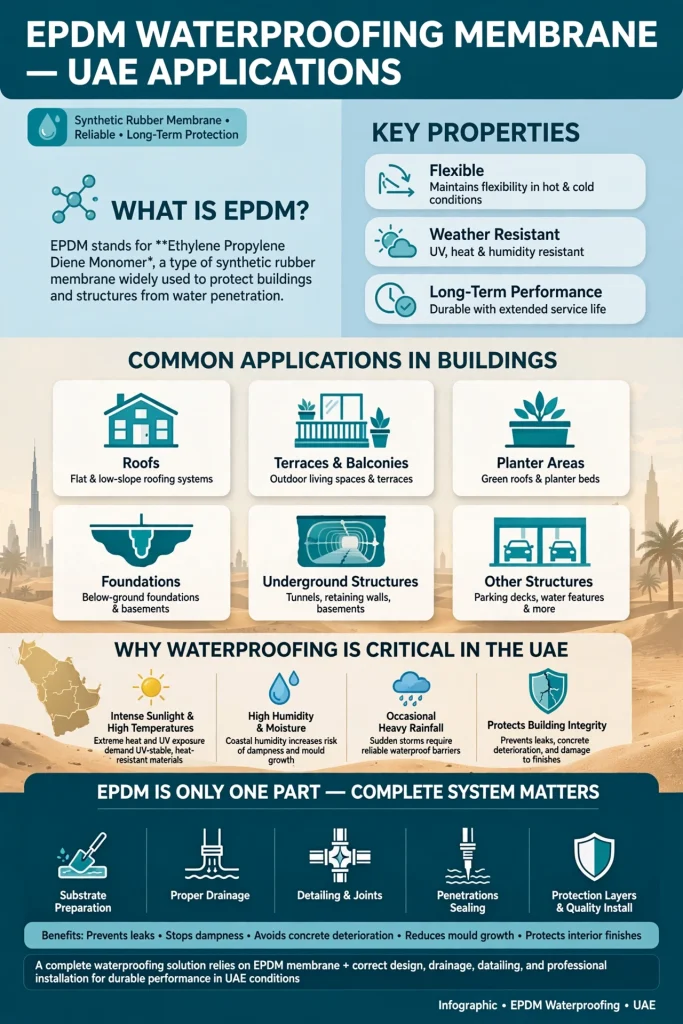
EPDM waterproofing membrane is a synthetic rubber membrane widely used to protect buildings and structures from water penetration. EPDM stands for ethylene propylene diene monomer, a type of synthetic rubber known for flexibility, weather resistance, and long-term performance. It can be used on roofs, terraces, balconies, underground structures, foundations, planter areas, and other locations where reliable waterproofing is required.
In the UAE, waterproofing is particularly important because buildings are exposed to intense sunlight, high temperatures, humidity, occasional heavy rainfall, and demanding outdoor conditions. A suitable waterproofing system can help prevent leaks, dampness, concrete deterioration, mould growth, and damage to interior finishes. However, EPDM is only one part of a complete waterproofing solution. The substrate, drainage, detailing, joints, penetrations, protection layers, and installation quality all influence the final result.
What Is an EPDM Waterproofing Membrane?
EPDM waterproofing membrane is a flexible sheet made from synthetic rubber. It is manufactured as a continuous membrane that can be installed over suitable substrates to create a water-resistant barrier. Unlike rigid waterproofing materials, EPDM can accommodate a degree of movement caused by thermal expansion, contraction, and building movement.
The membrane is commonly supplied in rolls and installed over prepared surfaces. Depending on the project, it may be mechanically fastened, adhered, ballasted, or incorporated into another waterproofing assembly. Seams and penetrations require appropriate detailing because even a high-quality membrane can fail if water is allowed to enter through joints or poorly treated service penetrations.
EPDM has been used extensively in roofing and waterproofing applications because of its resistance to weathering and its ability to remain flexible over a wide range of temperatures. Its actual service life depends on membrane quality, thickness, installation method, exposure, maintenance, and the complete system design.
Why Is EPDM Used for Waterproofing?
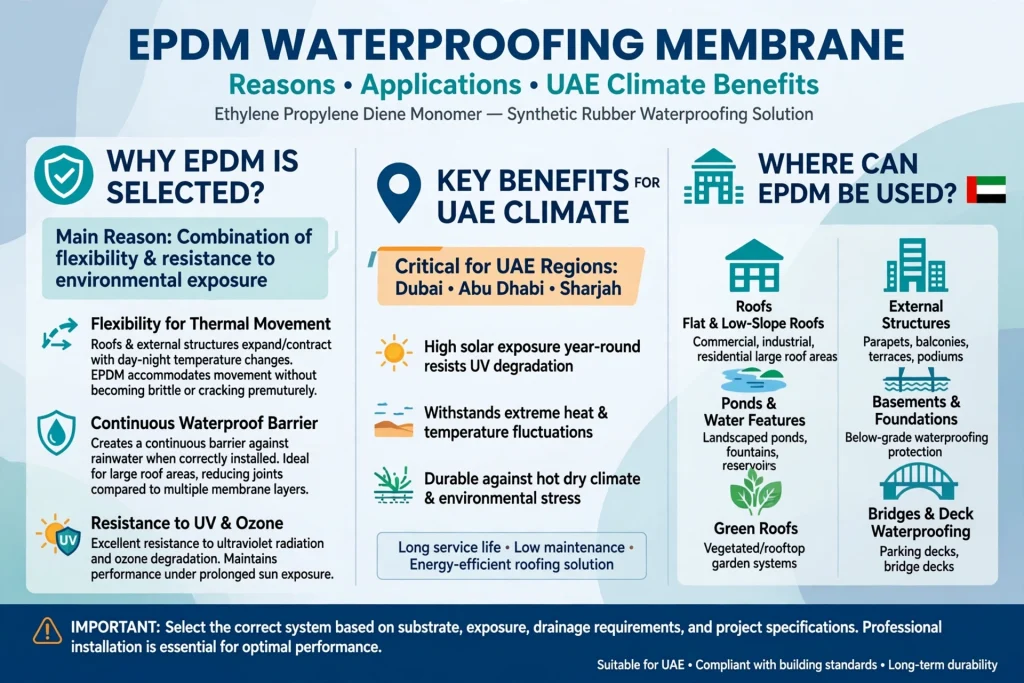
The main reason EPDM is selected is its combination of flexibility and resistance to environmental exposure. Roofs and external structures can expand during the day and contract as temperatures change. A waterproofing membrane needs to accommodate this movement rather than becoming brittle or cracking prematurely.
EPDM also provides a continuous barrier against rainwater when correctly installed. This makes it suitable for large roof areas where multiple layers of conventional waterproofing may create additional joints.
Another important characteristic is resistance to ultraviolet radiation and ozone. This can be valuable in regions such as Dubai, Abu Dhabi, Sharjah, and other parts of the UAE where waterproofing systems can experience strong solar exposure for much of the year.
Where Can EPDM Waterproofing Membrane Be Used?
EPDM membrane can be considered for several building applications, although the correct system should always be selected according to the substrate, exposure, drainage requirements, and project specifications.
Roof Waterproofing
Flat and low-slope roofs are common applications for membrane waterproofing. EPDM can provide a continuous waterproof layer across a roof while allowing the system to accommodate normal thermal movement.
Roof areas should have properly designed falls and drainage points. A waterproof membrane does not replace drainage. Standing water can increase the demands placed on a waterproofing system, so roof outlets, gutters, scuppers, and drainage channels should be properly designed and maintained.
Commercial buildings, warehouses, villas, residential buildings, and industrial structures may all require roof waterproofing depending on their construction.
Terrace and Balcony Waterproofing
Terraces and balconies are exposed to rainwater, cleaning water, temperature changes, and surface movement. Waterproofing below tiles or protective finishes helps reduce the risk of water reaching the concrete structure or rooms below.
For tiled areas, the membrane system needs careful detailing around floor drains, corners, thresholds, parapets, and pipe penetrations. The membrane may also need a protection layer before subsequent finishes are installed.
Foundations and Below-Ground Structures
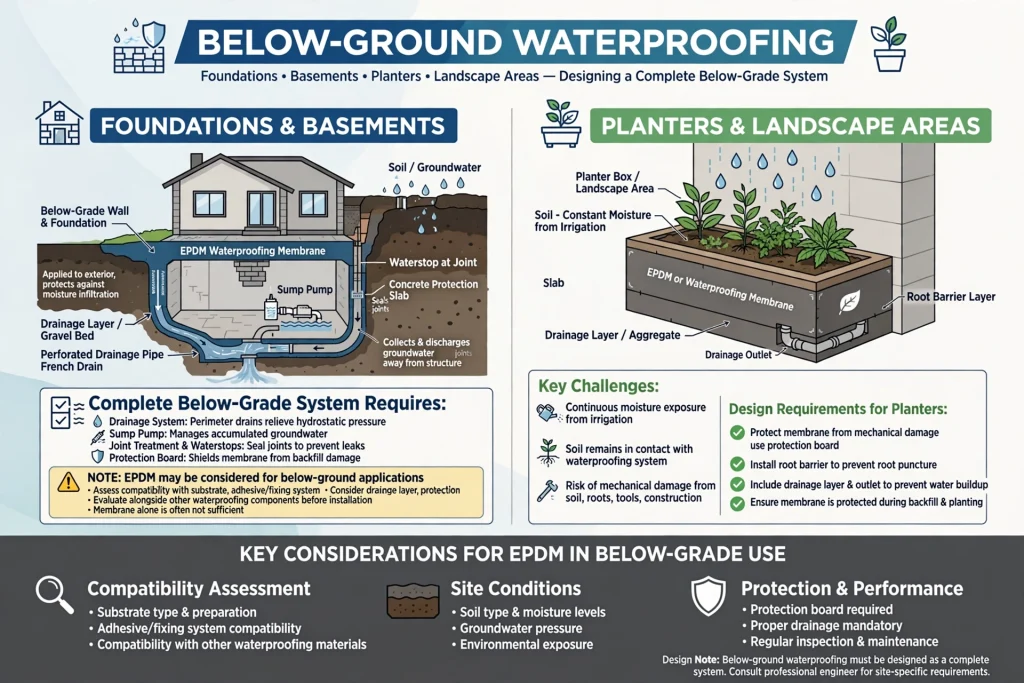
Below-ground walls and foundations can be exposed to soil moisture and groundwater. Waterproofing in these locations must be designed as part of a complete below-grade system.
EPDM may be considered for certain below-ground applications, but compatibility with the substrate, adhesive or fixing system, drainage layer, protection board, soil conditions, and other waterproofing components must be assessed before installation.
Basements and underground structures often require more than a membrane alone. Drainage systems, sump pumps, joint treatment, waterstops, and concrete protection may form part of the overall waterproofing design.
Planters and Landscape Areas
Planter boxes and landscaped areas can create significant waterproofing challenges because soil remains in contact with the waterproofing system. Irrigation water can continuously expose the structure to moisture.
Where EPDM or another membrane is used in a planter, it should be protected against mechanical damage from soil, roots, tools, and subsequent construction work. Drainage and root protection should also be considered.
How Does EPDM Waterproofing Work?
The membrane works by creating a continuous water-resistant layer between the source of moisture and the protected structure. When installed correctly, water cannot readily pass through the membrane itself.
The most important part of the system is continuity. A membrane may be highly resistant to water, but its performance can be compromised by unsealed joints, punctures, open seams, damaged areas, or poorly treated penetrations.
This is why professional waterproofing involves more than simply placing a sheet over a surface. Installers need to prepare the substrate, plan membrane layouts, treat overlaps and seams, seal penetrations, detail corners, and protect the finished membrane from damage.
EPDM Waterproofing Installation Process
The installation process varies according to the project, but several stages are common.
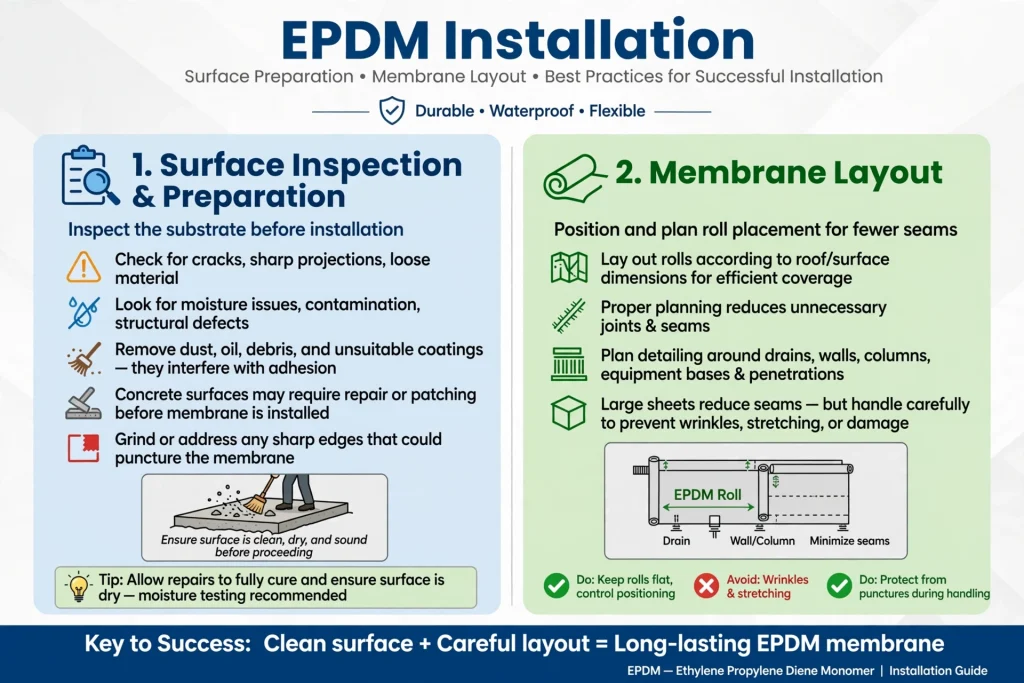
Surface Inspection and Preparation
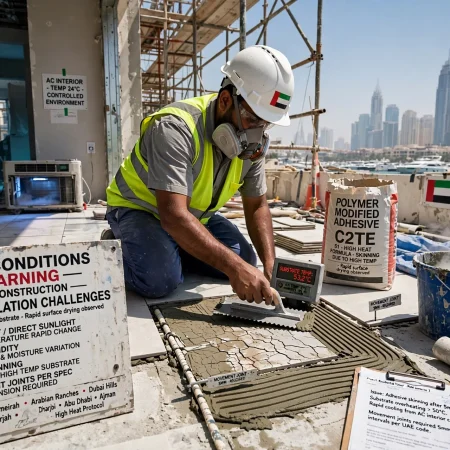
The substrate should first be inspected for cracks, sharp projections, loose material, contamination, moisture issues, and structural defects. Dust, oil, debris, and unsuitable coatings can interfere with adhesion or other installation methods.
Concrete surfaces may require repair or preparation before the membrane is installed. Any sharp edges that could puncture the membrane should be addressed.
Membrane Layout
Rolls are positioned according to the roof or surface dimensions. Proper planning can reduce unnecessary joints and make detailing around drains, walls, columns, equipment bases, and other penetrations easier.
Large sheets can reduce the number of seams, but handling and positioning must still be controlled carefully to prevent wrinkles, stretching, or accidental damage.
Adhesive or Fixing System
Depending on the approved system, EPDM can be fully adhered, mechanically fastened, or installed using another specified method.
The choice depends on factors such as wind exposure, substrate type, building design, accessibility, and manufacturer requirements. Adhesives should be compatible with both the membrane and substrate.
Seam Treatment
Seams are a critical part of EPDM installation. Depending on the membrane system, seams may be formed using adhesive, seam tape, or other manufacturer-approved techniques.
The installer should follow the manufacturer’s preparation and curing requirements. Poor seam preparation can create pathways for water even when the main membrane remains intact.
Detailing Around Penetrations
Pipes, drains, vents, equipment supports, roof edges, parapets, and other penetrations require careful detailing. These are common locations for waterproofing failures because the membrane must transition from a large flat area to a complicated junction.
Compatible flashing and detailing components should be used rather than relying on improvised sealants.
Protection and Final Inspection
Where the membrane will be covered by tiles, screed, paving, insulation, soil, or another finish, an appropriate protection layer may be required.
Before covering the membrane, the installation should be inspected for visible defects, damaged areas, incomplete seams, and detailing issues. Waterproofing tests may also be appropriate depending on the application and project specifications.
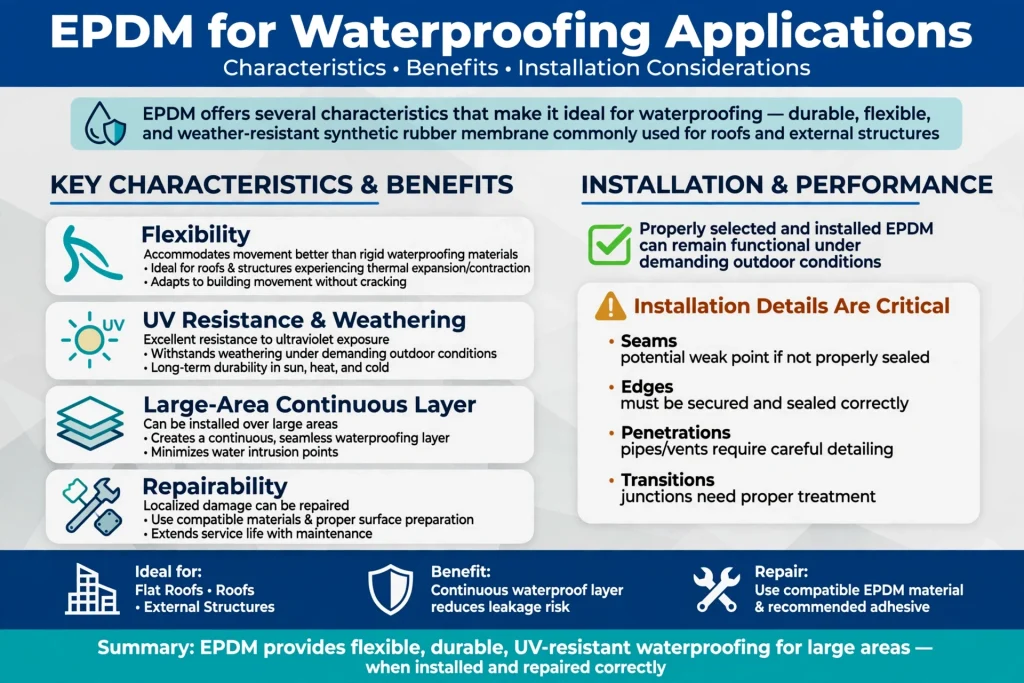
What Are the Advantages of EPDM Waterproofing?
EPDM offers several characteristics that make it useful for waterproofing applications.
Its flexibility allows it to accommodate movement better than many rigid waterproofing materials. This is particularly useful on roofs and external structures that experience thermal changes.
Its resistance to ultraviolet exposure and weathering is another reason it is used in roofing applications. Properly selected and installed EPDM can remain functional under demanding outdoor conditions.
EPDM can also be installed over relatively large areas, which can help create a continuous waterproofing layer. However, installation details remain important because seams, edges, penetrations, and transitions are potential weak points.
Another benefit is that EPDM systems can be repaired when localized damage occurs, provided the repair is performed using compatible materials and appropriate preparation.
What Are the Limitations of EPDM?
No waterproofing material is suitable for every building condition. EPDM has limitations that should be considered during specification.
Compatibility is particularly important. Certain chemicals, oils, solvents, and other materials may affect rubber membranes. The surrounding construction materials and expected exposure should therefore be reviewed before installation.
Mechanical damage is another concern. A membrane can be punctured by sharp objects, construction tools, foot traffic, or later work carried out by other trades. Protection is especially important where the membrane will be covered by landscaping, paving, or other construction.
Installation quality also has a major effect on performance. Incorrect seams, inadequate substrate preparation, poor drainage, and improperly treated penetrations can cause leaks regardless of the membrane’s inherent properties.
EPDM vs Other Waterproofing Systems
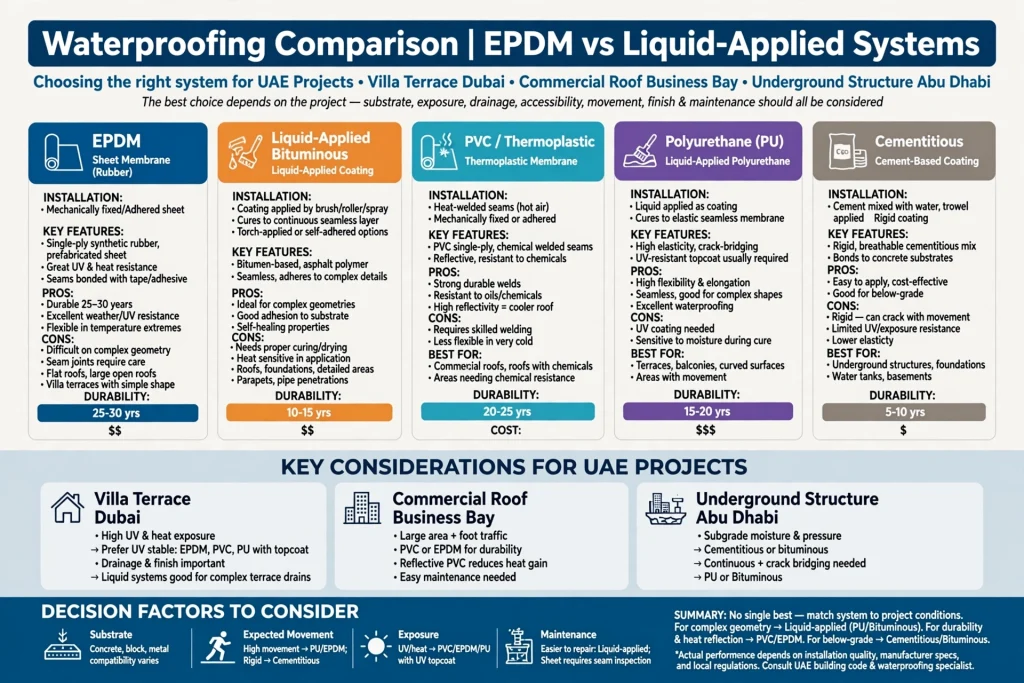
Property owners often compare EPDM with liquid-applied membranes, bituminous membranes, polyurethane systems, PVC membranes, and cementitious waterproofing.
EPDM is a sheet membrane, while liquid-applied systems are installed as a coating that cures to form a continuous layer. Liquid systems can be useful where complicated geometries make sheet installation difficult.
Bituminous membranes are also widely used in building waterproofing, particularly on roofs and foundations. They are typically torch-applied or self-adhered depending on the system.
PVC and other thermoplastic membranes can provide different chemical, welding, and installation characteristics. The best choice depends on the project rather than simply the name of the material.
For a villa terrace in Dubai, a commercial roof in Business Bay, or an underground structure in Abu Dhabi, the appropriate waterproofing system can differ considerably. The substrate, exposure, drainage, accessibility, expected movement, finish, and maintenance requirements should all be considered.
EPDM Waterproofing in Dubai and the UAE
UAE buildings experience environmental conditions that make waterproofing a significant part of property maintenance. High solar exposure can accelerate deterioration of poorly selected external materials, while seasonal rainfall can expose existing weaknesses in roof drainage and waterproofing.
In Dubai, waterproofing may be required for villas, apartment buildings, hotels, commercial properties, warehouses, terraces, podium decks, balconies, and plant areas. Areas such as Downtown Dubai, Business Bay, Dubai Marina, Jumeirah, Al Barsha, Dubai Hills Estate, and Jumeirah Village Circle contain different building types with different waterproofing requirements.
Abu Dhabi, Sharjah, Ajman, and Ras Al Khaimah also have residential and commercial properties where roof, terrace, basement, and wet-area waterproofing can be important.
A local waterproofing contractor should consider the actual site rather than applying the same membrane specification to every project.
Common EPDM Waterproofing Problems
A leaking membrane does not always mean that the membrane itself is defective. Water can travel beneath waterproofing layers before appearing at an interior ceiling or wall, meaning the visible leak may be located some distance from the actual entry point.
Common problems include damaged membrane areas, failed seams, inadequate flashing, blocked drains, poor edge detailing, punctures, movement at joints, and damage caused by later construction work.
Drainage problems should also be investigated. A roof with blocked outlets or insufficient falls can experience prolonged water exposure.
When investigating a leak, professionals should examine the entire waterproofing assembly rather than applying sealant only where water becomes visible indoors.
How Long Does EPDM Waterproofing Last?
The service life of an EPDM waterproofing system depends on membrane quality, thickness, installation, exposure, detailing, maintenance, and the surrounding construction.
A well-designed system can provide long-term service, but no membrane should be considered maintenance-free. Roof inspections, drain cleaning, checking flashings, monitoring seams, and repairing damage early can help protect the waterproofing system.
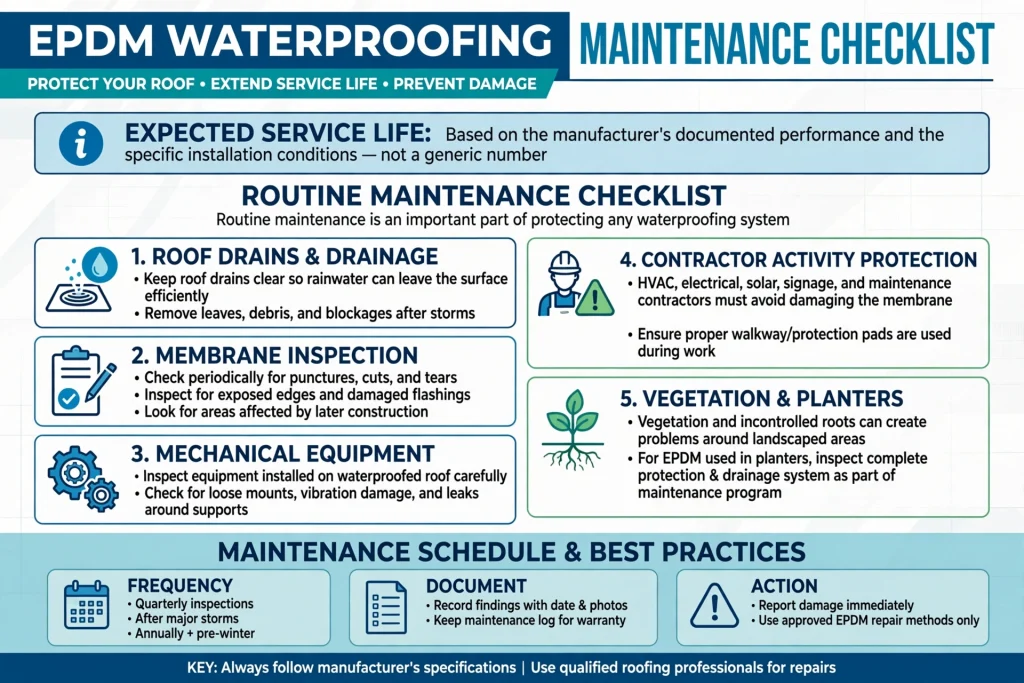
The expected service life should be based on the manufacturer’s documented performance and the specific installation conditions rather than a generic number.
EPDM Waterproofing Maintenance
Routine maintenance is an important part of protecting any waterproofing system.
Roof drains should remain clear so that rainwater can leave the surface efficiently. The membrane should be checked periodically for punctures, cuts, exposed edges, damaged flashings, and areas affected by later construction.
Mechanical equipment installed on a waterproofed roof should be inspected carefully. Contractors carrying out HVAC, electrical, solar, signage, or maintenance work should avoid damaging the membrane.
Vegetation and uncontrolled roots can also create problems around landscaped areas. Where EPDM is used in planters, the complete protection and drainage system should be inspected as part of the maintenance program.
When Should You Repair or Replace EPDM Waterproofing?
Localized damage does not necessarily mean the entire waterproofing system needs replacement. If the membrane is generally sound and the problem is limited to a specific area, a compatible repair may be possible.
Replacement becomes more relevant when there are widespread defects, extensive deterioration, repeated leakage, failed detailing, or an outdated waterproofing assembly that no longer meets the building’s requirements.
Before deciding, a waterproofing professional should inspect the roof or structure and identify the actual cause of water penetration.
Choosing an EPDM Waterproofing Contractor
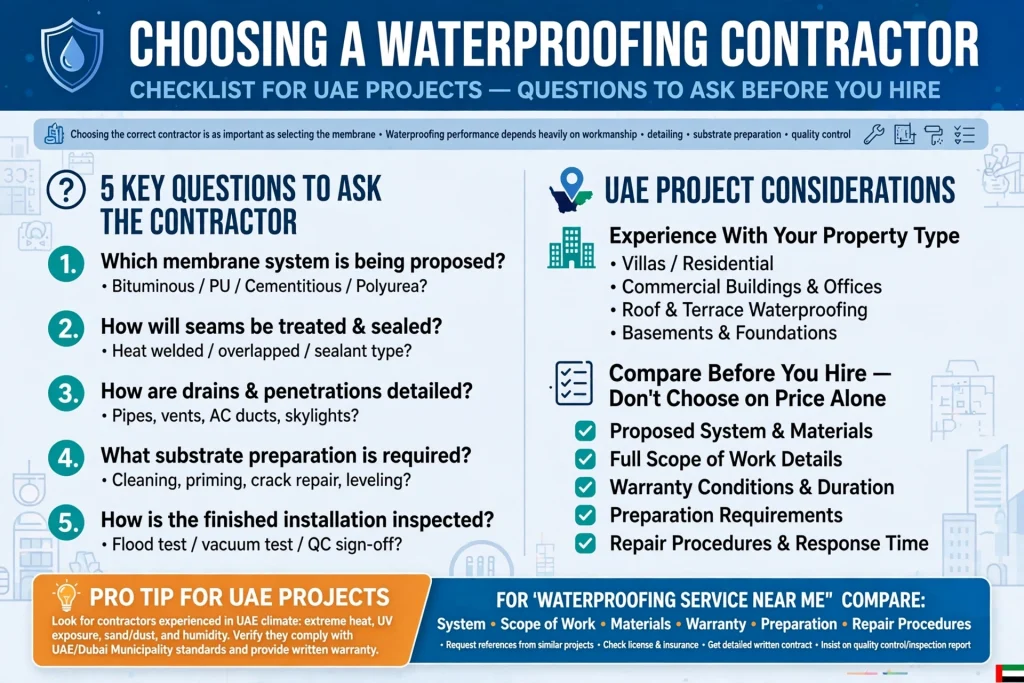
Choosing the correct contractor is as important as selecting the membrane. Waterproofing performance depends heavily on workmanship, detailing, substrate preparation, and quality control.
Ask the contractor which membrane system is being proposed, how seams will be treated, how drains and penetrations will be detailed, what substrate preparation is required, and how the finished installation will be inspected.
For UAE projects, it is also useful to consider the contractor’s experience with villas, commercial buildings, roofs, terraces, basements, and other property types similar to your project.
If you are searching for a Waterproofing service near me, compare the proposed system, scope of work, materials, warranty conditions, preparation requirements, and repair procedures rather than selecting a contractor based only on the initial price.
What Should Be Included in a Waterproofing Quote?
A professional quotation should clearly explain what is included. It may cover surface preparation, crack or joint repairs, primer where required, membrane installation, seam treatment, flashing, drainage detailing, protection layers, testing, and final inspection.
The quotation should also identify the membrane type and relevant manufacturer documentation. If additional concrete repairs or drainage improvements are necessary, these should be identified separately.
A clear scope helps property owners understand whether they are comparing equivalent waterproofing systems or simply comparing different prices for different levels of work.
EPDM Waterproofing for Commercial and Residential Buildings
EPDM can be suitable for both residential and commercial applications when the system is correctly designed.
For villas, common applications include roof slabs, terraces, balconies, planter areas, and extensions. Commercial properties may have larger roofs, plant rooms, service areas, loading zones, and equipment penetrations that require more detailed waterproofing coordination.
Hotels, schools, warehouses, offices, retail buildings, and industrial facilities may also have different requirements based on occupancy, roof access, equipment, drainage, and maintenance schedules.
In every case, the waterproofing system should be treated as part of the building envelope rather than as an isolated layer.
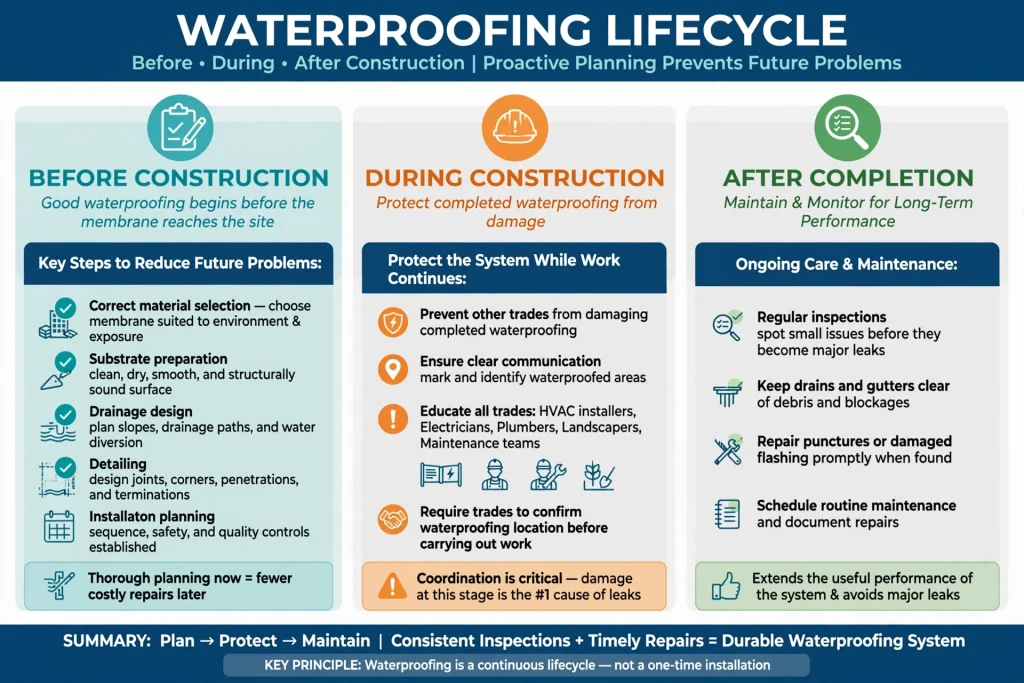
How Can You Prevent EPDM Waterproofing Failure?
Good waterproofing begins before the membrane reaches the site. Correct material selection, substrate preparation, drainage design, detailing, and installation planning can reduce future problems.
During construction, other trades should be prevented from damaging completed waterproofing. HVAC installers, electricians, plumbers, landscapers, and maintenance teams should understand where waterproofing has been installed before carrying out work.
After completion, regular inspections can identify small problems before they become major leaks. Keeping drains clear and repairing punctures or damaged flashing promptly can extend the useful performance of the system.
Final Considerations for EPDM Waterproofing
EPDM waterproofing membrane provides a flexible, weather-resistant option for many roof and building waterproofing applications. Its performance comes from the complete system: membrane quality, correct installation, reliable seams, drainage, flashing, penetrations, protection, and ongoing maintenance all matter.
For UAE properties, the waterproofing design should account for local weather exposure, building movement, roof configuration, drainage, accessibility, and the intended surface finish. Whether the project involves a Dubai villa, a commercial building in Business Bay, a terrace in Jumeirah, or a larger facility in Abu Dhabi, the right waterproofing approach should be selected according to actual site conditions.
A professional inspection before installation can identify substrate defects, drainage issues, existing moisture, and detailing requirements. This helps ensure that the EPDM membrane is not simply installed over an unresolved problem but forms part of a properly planned waterproofing system.