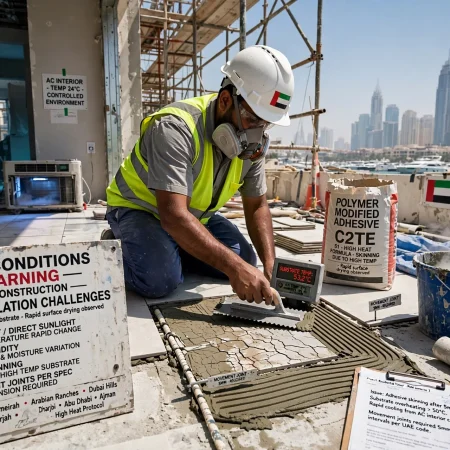
Floor tiles and wall tiles can look similar, but they are not always designed for the same purpose. Their strength, thickness, surface finish, weight, slip resistance, water resistance and installation requirements can differ depending on the product. Choosing the wrong tile for a particular application can lead to cracking, poor adhesion, staining or premature wear.
For homeowners, landlords, developers and commercial property owners in Dubai, understanding the difference between floor and wall tiling is important when planning a new property, renovation or interior fit-out. The right choice depends on the location, expected traffic, moisture exposure, substrate and overall design.
What Is the Difference Between Floor Tiling and Wall Tiling?
The main difference is the performance requirement. Floor tiles are generally designed to withstand weight, foot traffic, impact and repeated use. Wall tiles are primarily designed as vertical surface finishes and may focus more heavily on appearance, water resistance and ease of cleaning.
A floor surface experiences constant mechanical stress. People walk across it, furniture may be placed on it and equipment can create additional loads. As a result, flooring materials need appropriate strength and surface characteristics.
Wall tiles do not normally experience the same type of loading. They can therefore be manufactured in lighter formats and with finishes intended specifically for vertical applications.
However, the distinction is not always absolute. Some tiles are suitable for both floors and walls, while others are specifically rated for one application. Always check the manufacturer’s technical information before installation.
Can Floor Tiles Be Used on Walls?
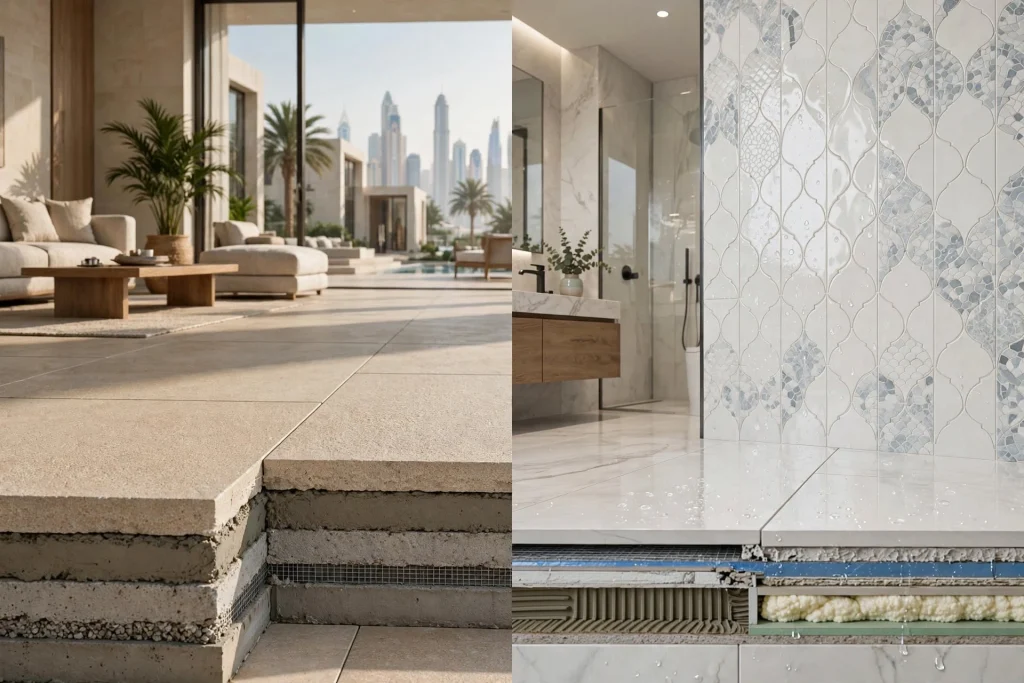
In many situations, yes. A tile designed for flooring can often be installed on a wall if the substrate, adhesive and tile weight are appropriate.
Porcelain floor tiles, for example, are commonly used on feature walls, bathroom walls and other vertical surfaces. Large-format porcelain can create a seamless luxury appearance in modern Dubai interiors.
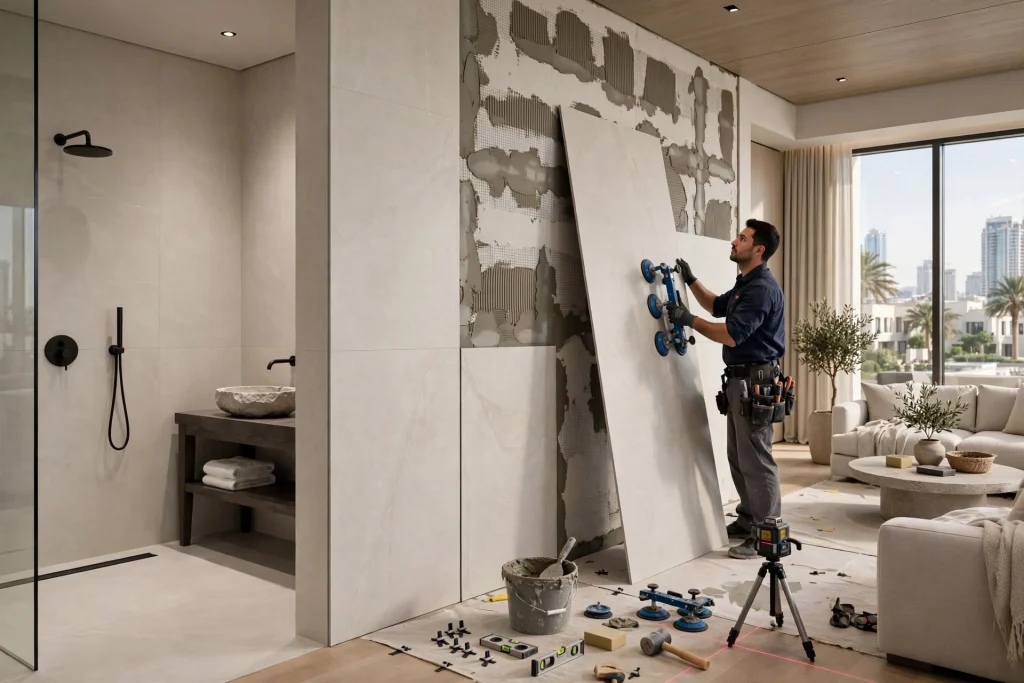
The installer must consider the tile’s weight and size, especially when working with large slabs. The wall substrate needs to be sufficiently strong and properly prepared, while the adhesive must be suitable for the specific tile and application.
Using a floor tile on a wall can therefore provide additional design flexibility, but it should not be treated as automatically suitable for every wall.
Can Wall Tiles Be Used on Floors?
This is more complicated. A wall tile should not automatically be installed on a floor simply because it looks attractive.
Many wall tiles are not designed to withstand regular foot traffic, furniture loads or the mechanical stresses associated with flooring. They may be thinner, less durable or have a surface finish that is inappropriate for walking areas.
A decorative ceramic wall tile may work perfectly in a bathroom or kitchen backsplash but may become damaged quickly when installed on a busy floor.
Before using any wall tile on a floor, check the manufacturer’s application rating and technical specifications. If the product is not approved for floor use, choose a tile specifically designed for flooring.
Why Are Floor Tiles Usually Stronger?
Floor tiles need to tolerate repeated physical loading. Every day, people walk across floors, move furniture and sometimes drag equipment or objects across the surface.
Porcelain is particularly popular for flooring because of its density and durability. Ceramic flooring products can also be suitable when the product has been manufactured and rated for floor applications.
Strength is only one consideration, however. The surface finish, slip resistance, water absorption and intended environment also matter.
A residential bedroom has different requirements from a hotel lobby, shopping centre, restaurant or commercial corridor. Professional tile selection should therefore consider the expected traffic level rather than choosing a material based only on appearance.
What Is the Difference Between Porcelain and Ceramic Tiles?
Porcelain and ceramic tiles are both widely used in Dubai residential and commercial interiors, but their properties can differ.
Porcelain tiles are generally denser and have lower water absorption than many standard ceramic products. They are frequently selected for high-use floors, bathrooms, kitchens, living areas and commercial applications.
Ceramic tiles are available in a very broad range of colours, patterns, textures and finishes. They are commonly used for walls, backsplashes and suitable flooring applications.
The correct choice depends on the manufacturer’s specifications and the intended application. There is no universal rule that porcelain is always better because the best material depends on the environment, budget, design and performance requirements.
Floor Tile Surface Finishes
Floor tiles need a surface finish that is appropriate for walking.
Polished tiles can create an elegant appearance and are popular in luxury interiors, but the suitability of a polished surface depends on where it is installed and its slip characteristics.
Matt and textured finishes are often considered for bathrooms, kitchens, entrances and other areas where additional surface grip may be important.
Outdoor flooring has additional requirements because surfaces may be exposed to water, dust, sand and temperature changes. Exterior tiles should be selected specifically for outdoor use.

Wall Tile Surface Finishes
Wall tiles offer extensive decorative possibilities.
Glossy ceramic tiles are frequently used in bathrooms and kitchens because they can reflect light and are relatively easy to clean. Matt finishes can create a softer contemporary appearance.
Textured tiles, stone-effect surfaces, decorative mosaics and three-dimensional wall tiles can also be used to create feature walls.
In Dubai villas and apartments, designers may combine large-format wall tiles with contrasting floor tiles to create visual separation between different surfaces.
Floor Tiling in Dubai Homes
Floor tiling is widely used throughout Dubai residential properties because tiles are durable, easy to maintain and available in many styles.
Living rooms, dining rooms, kitchens, corridors, bedrooms, bathrooms and entrances can all use different flooring solutions depending on the design requirements.
Large-format porcelain tiles are often selected for contemporary villas and apartments because they can create a clean appearance with fewer grout lines.
Properties in Jumeirah, Dubai Hills Estate, Arabian Ranches, Emirates Hills, Palm Jumeirah and Downtown Dubai may have very different design requirements, but the same principle applies: the flooring material should be selected according to the room’s use and expected traffic.
Wall Tiling in Dubai Bathrooms
Bathroom walls are one of the most common applications for wall tiles.
Tiles provide a washable surface that can help protect walls from water and humidity. They are available in numerous colours, patterns and textures, allowing homeowners to create anything from minimalist bathrooms to luxury spa-inspired interiors.
The wall substrate and waterproofing system are important. Tiles themselves should not be treated as the complete waterproofing system. Wet areas may require appropriate waterproofing behind the finished surface.
Shower areas also require careful detailing around corners, penetrations, niches and drainage zones.
Kitchen Floor vs Kitchen Wall Tiles
Kitchens often require both floor and wall tiling, but the performance requirements are different.
Kitchen floors need to withstand foot traffic, furniture, spills and regular cleaning. A suitable floor tile should provide the required durability and surface characteristics for the space.
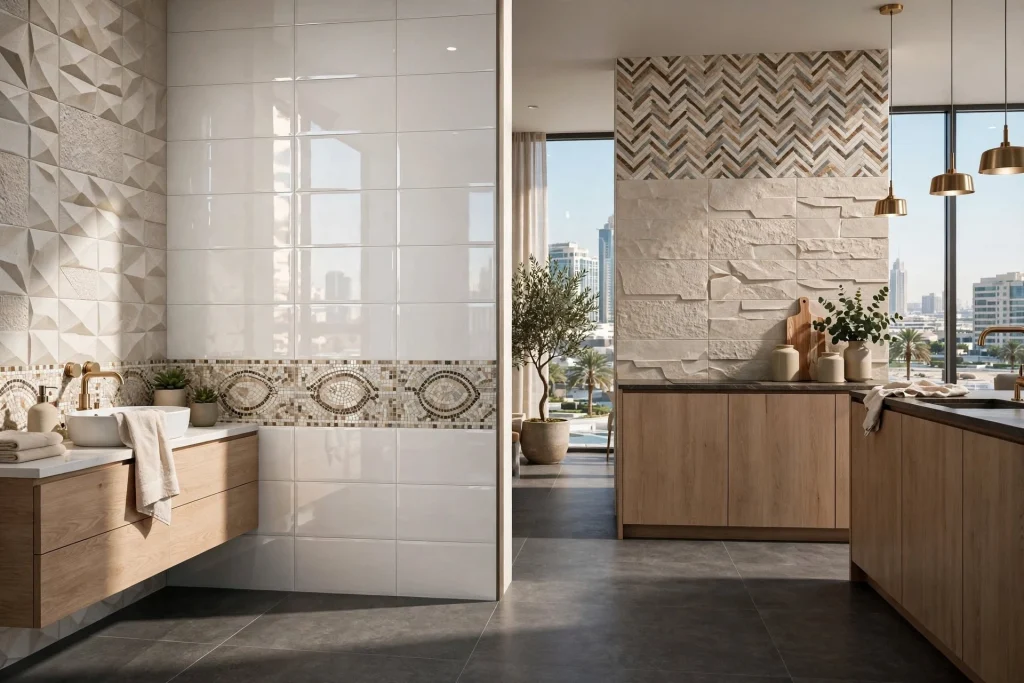
Kitchen walls and backsplashes may use decorative ceramic, porcelain, mosaic or other suitable materials. Because walls do not experience foot traffic, designers have greater flexibility with decorative finishes.
A coordinated combination can make the kitchen feel larger and more cohesive without requiring identical tiles on every surface.
Bathroom Floor vs Bathroom Wall Tiles
Bathrooms demonstrate the difference particularly well.
Bathroom floor tiles need to provide suitable slip resistance and withstand repeated use. The floor also needs to accommodate drainage and should be installed correctly to avoid water pooling.
Bathroom wall tiles focus more on moisture exposure, cleanability and appearance. They may be thinner or lighter than floor products.
Some porcelain tiles can be used on both surfaces, allowing designers to create a continuous visual effect between the floor and walls. However, the product must be approved for both applications.
What About Shower Floor Tiles?
Shower floors require special consideration.
The surface is frequently exposed to water, soap and cleaning products, and users walk on it while the surface is wet. Tile selection should therefore take slip resistance and the size of the installation area into account.
Smaller-format tiles and mosaics can sometimes be useful in shower floors because the additional grout joints can help accommodate the required slope and provide more surface segmentation.
The waterproofing layer, drainage design and tile installation are equally important. A visually attractive tile cannot compensate for poor waterproofing or incorrect falls.
Large-Format Floor and Wall Tiles
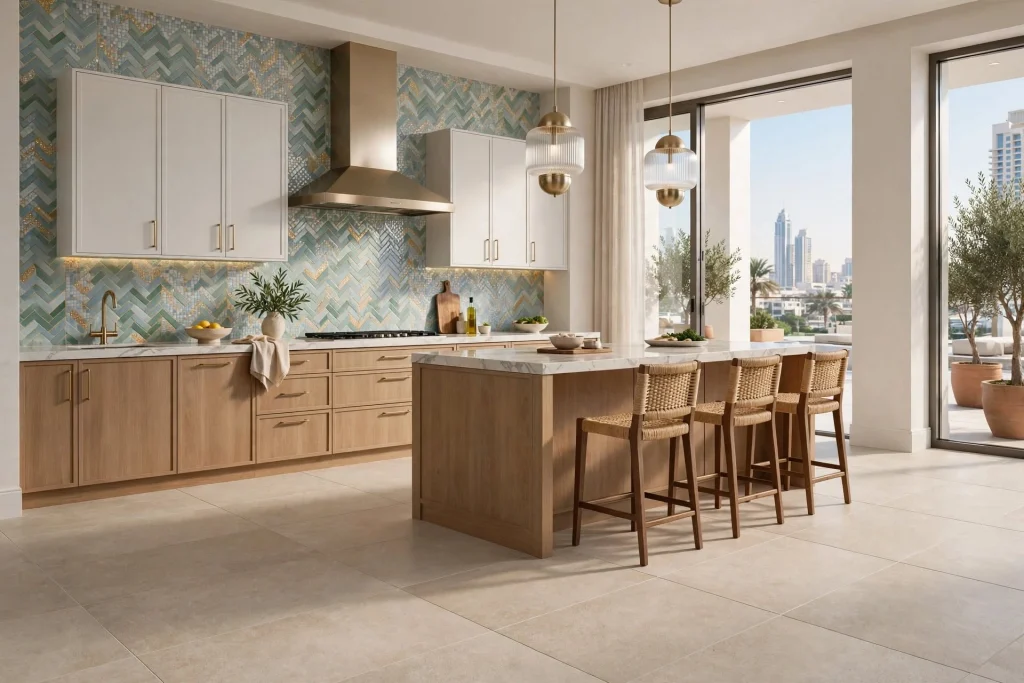
Large-format tiles are increasingly popular in contemporary Dubai interiors.
They can create a luxurious appearance by reducing the number of visible grout joints. Large porcelain tiles can be used across floors, walls, bathrooms, living areas and feature surfaces when the substrate and installation system are appropriate.
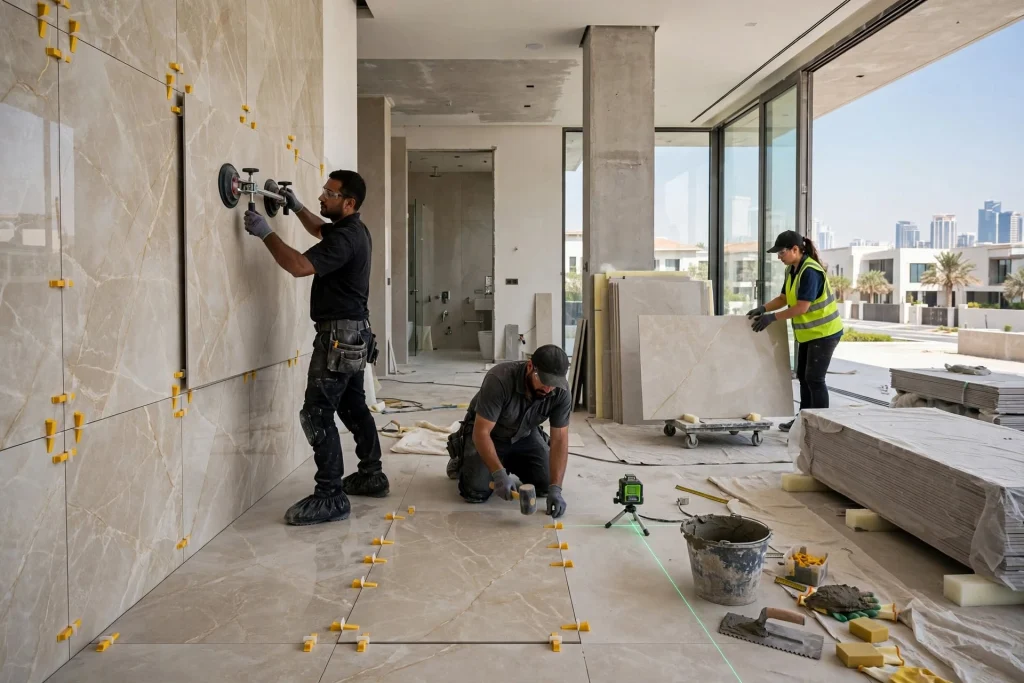
However, large tiles require careful handling and accurate substrate preparation. Uneven surfaces can make large-format installation particularly difficult and can result in lippage.
Professional installers may use appropriate levelling systems, suitable adhesives and planned joint layouts to achieve a consistent finish.
Tile Adhesive Requirements
Tile adhesive is not simply a universal product.
Different tile materials, tile sizes, substrates and installation environments may require different adhesive characteristics. Large porcelain tiles, natural stone, wet areas and vertical installations should be assessed according to the manufacturer’s recommendations.
The adhesive needs to create an appropriate bond between the tile and substrate. Incorrect adhesive selection or inadequate coverage can contribute to loose tiles, hollow areas or cracking.
This is one reason professional installation is important for large-format and specialist tile projects.
Grout Differences Between Floors and Walls
Grout fills the joints between tiles and contributes to the appearance and performance of the finished surface.
Floor grout needs to tolerate regular cleaning, foot traffic and mechanical stress. Bathroom and kitchen grout may also face moisture, stains and cleaning chemicals.
Wall grout has different loading conditions, but it still needs to be suitable for the tile material and environmental conditions.
In wet areas, selecting the appropriate grout and sealant system can help maintain the appearance of the installation. The grout colour can also influence the overall visual effect. Matching grout creates a more continuous appearance, while contrasting grout makes the tile pattern more noticeable.
Floor Tiling for Commercial Buildings
Commercial flooring normally experiences more traffic than residential flooring.
Offices, retail stores, restaurants, hotels, clinics, shopping centres and public facilities need flooring materials selected according to expected usage.
A busy entrance may require a more durable and slip-resistant solution than a private office. Restaurants may need surfaces that are easy to clean, while hotels may prioritise a combination of durability, luxury appearance and guest comfort.
Commercial tile installation also requires coordination with other building trades, including electrical, plumbing, HVAC and interior fit-out teams.
Wall Tiling for Commercial Interiors
Wall tiles can play an important role in commercial interior design.
Restaurants may use decorative tiles around counters and dining areas. Hotels can use premium porcelain or stone-effect tiles in bathrooms and reception features. Retail stores may incorporate branded tile finishes into feature walls.
Healthcare and hospitality environments may have additional hygiene and cleaning requirements, making material selection particularly important.
The design should balance visual identity with practical maintenance requirements.
Floor and Wall Tiles for Dubai’s Climate
Dubai’s hot climate and high use of air-conditioned indoor environments make practical material selection important.
Interior floors can experience dust, sand and heavy foot traffic, particularly around entrances. Exterior surfaces face additional exposure to heat, sunlight, moisture and environmental conditions.
For balconies, terraces, entrances and outdoor areas, tiles should be selected specifically for exterior applications. Indoor tiles should not automatically be used outdoors.
Local conditions in Dubai, Abu Dhabi, Sharjah and other UAE locations can influence material selection, especially for exposed external areas.
Does Tile Colour Matter?
Tile colour can influence both appearance and maintenance.
Light-coloured tiles can make a small room appear brighter and more spacious, although dust and certain stains may become more visible.
Dark tiles can create a sophisticated appearance but may show dust, water marks or residue more clearly depending on the finish.
For Dubai villas and apartments, designers often combine neutral porcelain or stone-effect floor tiles with decorative wall surfaces to create a balanced interior.
The final decision should consider lighting, room size, furniture, maintenance expectations and the property’s overall interior design.

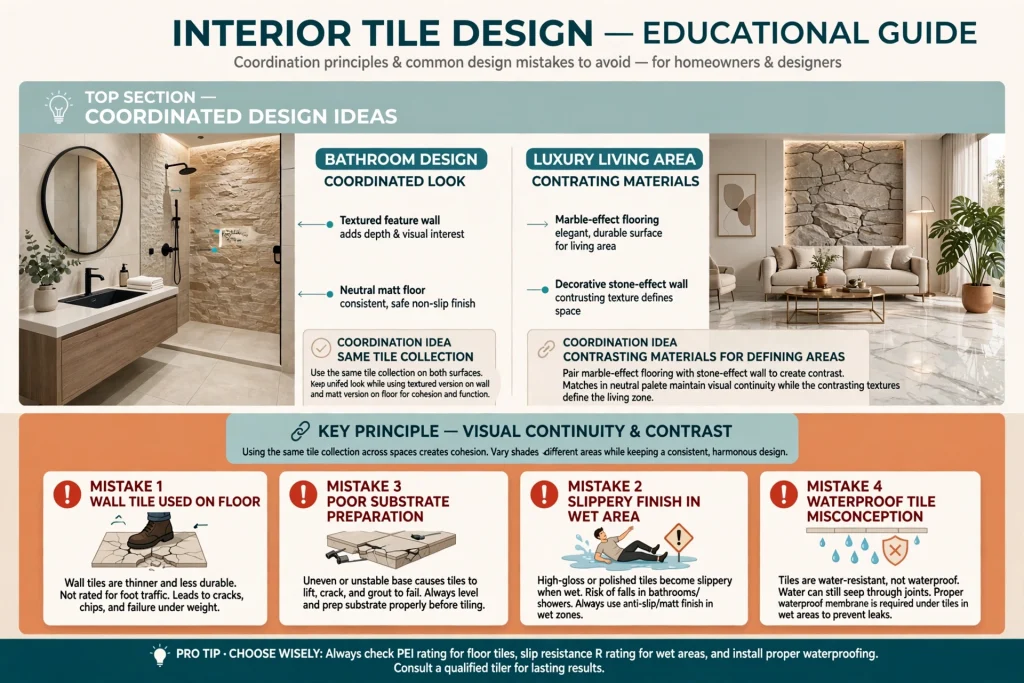
Should Floor and Wall Tiles Match?
They do not have to match.
A coordinated design can use the same tile on both surfaces, different shades from the same collection or completely contrasting materials.
For example, a bathroom may use a textured feature wall with a neutral matt floor. A luxury living area may combine marble-effect flooring with a decorative stone-effect wall.
Matching tiles can create visual continuity, while contrasting materials can help define different areas.
The best approach depends on the property’s architecture and interior design concept.
Common Mistakes When Choosing Floor and Wall Tiles
One common mistake is selecting tiles based entirely on appearance without checking the application rating.
Another is using a wall tile on a floor without confirming whether it is suitable for foot traffic. Choosing a slippery finish for a wet area can also create safety concerns.
Poor substrate preparation is another frequent problem. Even a high-quality tile can fail if it is installed over an unsuitable surface.
Homeowners should also avoid assuming that waterproof tiles alone make a bathroom waterproof. The complete wet-area construction system needs appropriate detailing.
How a Professional Tiling Company Helps
Professional tile installation involves more than placing individual tiles.
An experienced installer can assess the substrate, recommend suitable installation methods, plan layouts, manage tile cuts, apply appropriate adhesive, maintain consistent joints and complete grout and finishing work.
A professional Floor Tiling Company can also help property owners understand which products are appropriate for different rooms and applications, particularly when a project includes multiple tile types.
This becomes especially useful for villa renovations, large apartments and commercial projects where different floor and wall surfaces need to work together.
Floor Tiling vs Wall Tiling: Quick Comparison
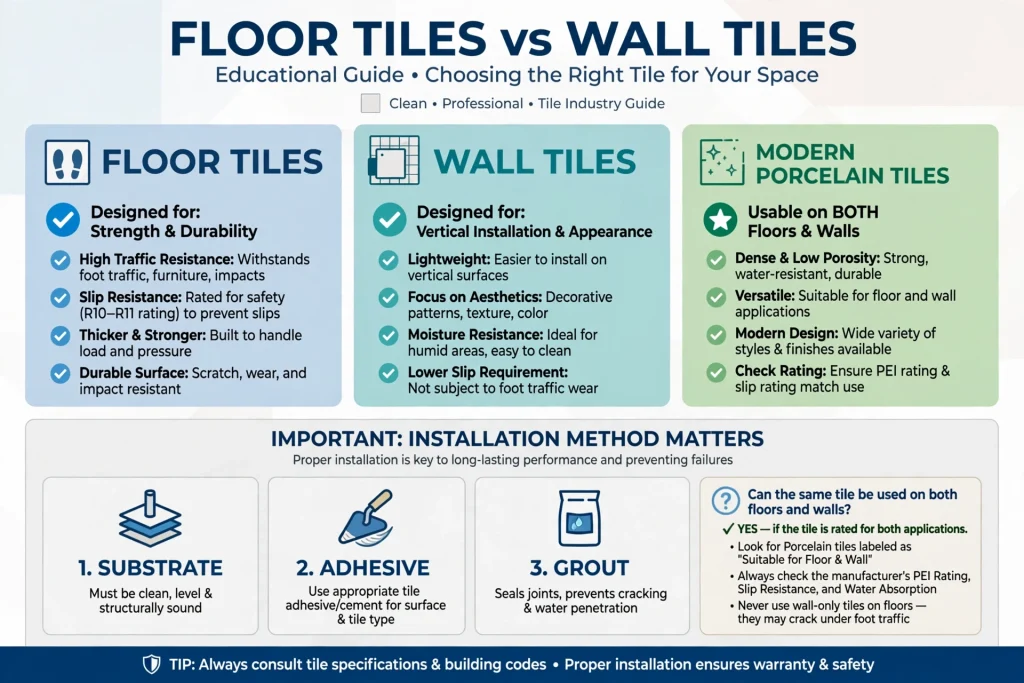
Floor tiles are generally selected for strength, durability, traffic resistance and appropriate slip characteristics. Wall tiles place greater emphasis on vertical installation, appearance, moisture exposure and ease of maintenance.
However, many modern porcelain products can be used successfully on both floors and walls. The manufacturer’s technical specifications should always determine whether a particular product is suitable.
The installation method also matters. A suitable tile can still perform poorly if the substrate, adhesive, grout or waterproofing system is incorrect.
Frequently Asked Questions
Can the same tile be used on floors and walls?
Yes, some tiles are specifically designed for both applications. Porcelain tiles are commonly used this way, but the product’s application rating should always be checked.
Are floor tiles thicker than wall tiles?
Floor tiles are often manufactured to withstand greater mechanical loads, but thickness varies between products. Thickness alone should not determine whether a tile is suitable for a particular application.
Are porcelain tiles good for Dubai floors?
Porcelain can be an excellent flooring option when the selected product is appropriate for the intended environment. It is widely available in designs suitable for residential and commercial interiors.
Are glossy tiles suitable for bathroom floors?
Not necessarily. The slip characteristics of the specific product should be checked before using a glossy tile on a wet floor.
Can large tiles be installed on walls?
Yes, provided the wall substrate, tile weight, adhesive and installation system are suitable for the application.
Are wall tiles cheaper than floor tiles?
Not always. Price depends on material, size, finish, brand, design and quality. Installation complexity can also influence the overall project cost.
Final Thoughts
The difference between floor tiling and wall tiling comes down primarily to performance, application and installation requirements. Floors must handle foot traffic, impact and everyday loads, while walls provide greater opportunities for decorative finishes and lighter materials.
In Dubai, choosing the right tile also means considering the property’s use, whether it is a villa, apartment, hotel, office, restaurant or retail space. Bathrooms, kitchens, balconies and outdoor areas each have different requirements.
The best result comes from selecting the appropriate tile for each surface and installing it over a properly prepared substrate using suitable adhesive, grout and waterproofing systems. A well-planned tiling project can improve the appearance, durability and long-term maintenance of a Dubai property while creating a cohesive interior design.