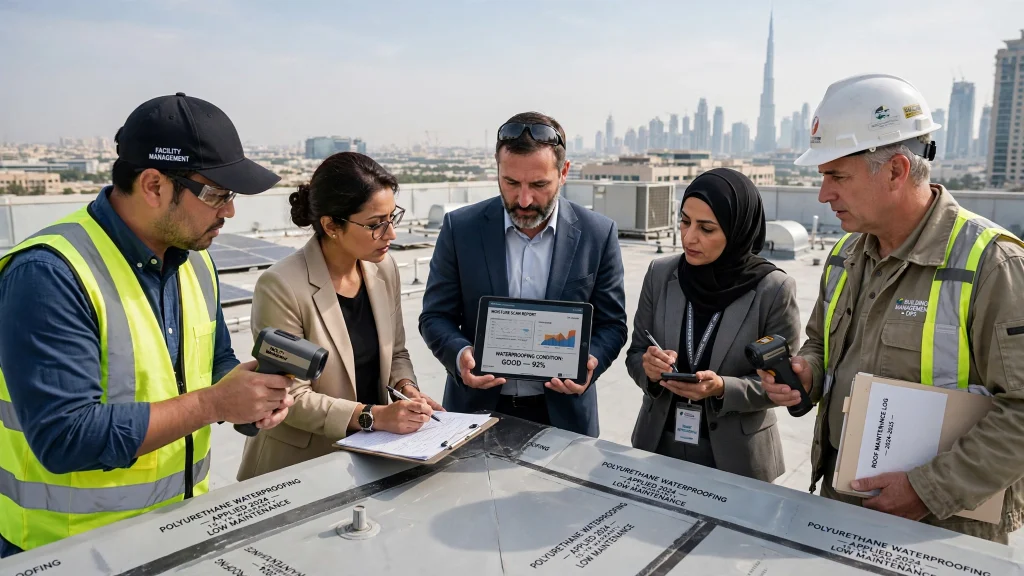
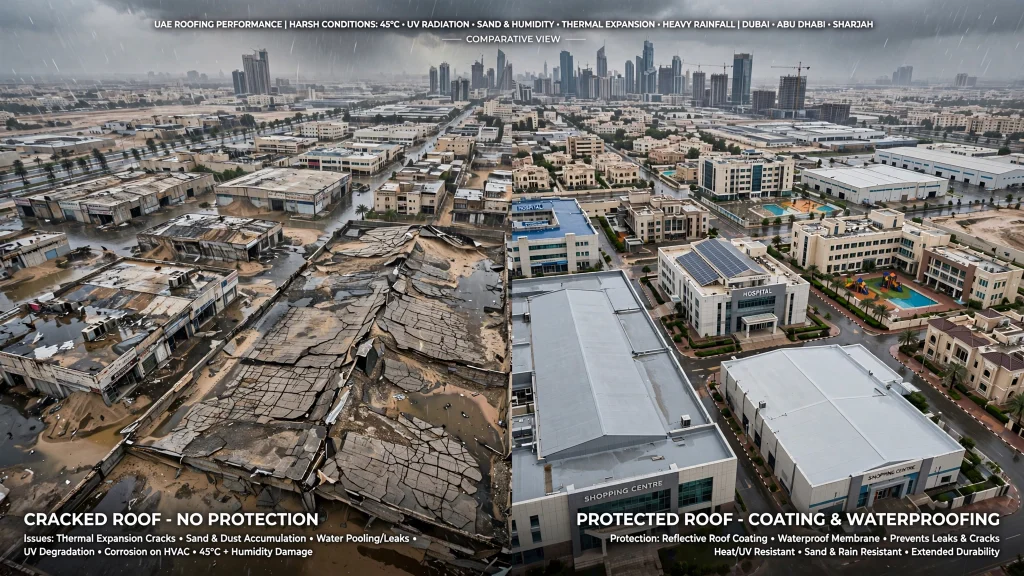
Roofs are constantly exposed to harsh environmental conditions, making them one of the most vulnerable parts of any building. In the UAE, where temperatures regularly exceed 45°C, roofs experience continuous exposure to intense ultraviolet (UV) radiation, thermal expansion and contraction, wind-driven sand, humidity, and occasional heavy rainfall. Over time, these conditions can weaken roofing materials, leading to cracks, water infiltration, structural deterioration, and increased maintenance costs.
Property owners often consider two popular solutions to protect their roofs: roof coating and roof waterproofing. Although these terms are sometimes used interchangeably, they serve different purposes and deliver different levels of protection. Understanding how each system works helps building owners make informed decisions based on their property’s condition, roof type, and long-term maintenance objectives.
Commercial buildings, residential villas, warehouses, hotels, hospitals, shopping centres, educational institutions, and industrial facilities across Dubai, Abu Dhabi, Sharjah, and the wider UAE increasingly invest in professional roofing solutions to extend roof lifespan and reduce repair costs.
Understanding Roof Coating
Roof coating is a protective layer applied to the surface of an existing roof to improve durability, weather resistance, and energy efficiency. Unlike structural waterproofing systems, roof coatings primarily protect the outer roofing surface against sunlight, heat, moisture, and gradual deterioration.
Modern roof coatings are available in several formulations, including:
- Acrylic roof coatings
- Silicone roof coatings
- Polyurethane (PU) coatings
- Elastomeric coatings
- Reflective roof coatings
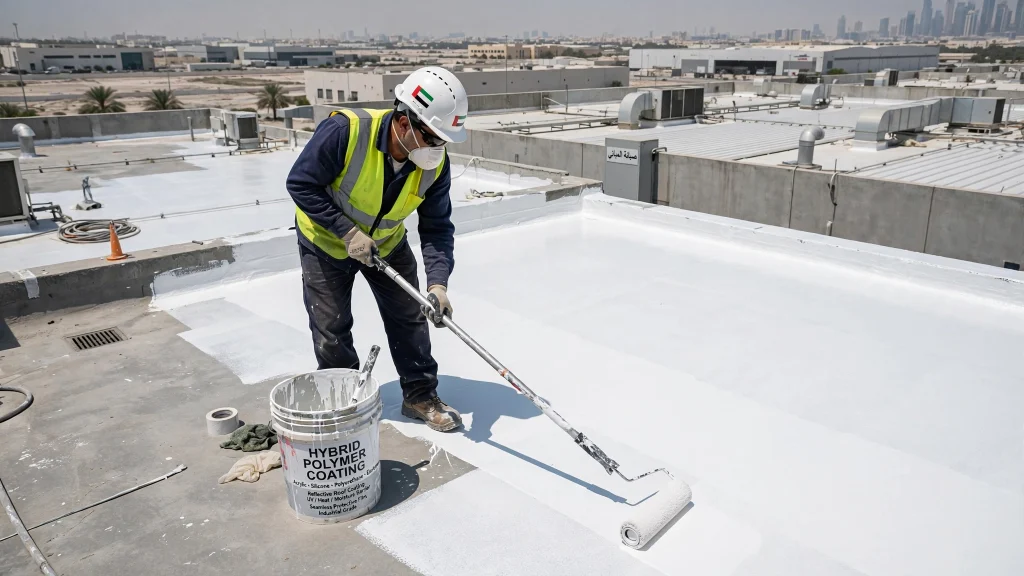
- Hybrid polymer coatings
These coatings create a seamless protective film that shields the roof from UV exposure, reduces heat absorption, and improves the overall appearance of the building.
Roof coatings are commonly applied to concrete roofs, metal roofs, industrial roofing systems, warehouses, factories, commercial buildings, and residential properties.
Understanding Roof Waterproofing
Roof waterproofing is a complete moisture protection system designed to prevent water penetration into the building structure. Instead of simply protecting the surface, waterproofing creates a durable barrier that stops water from entering concrete slabs, structural elements, and occupied spaces.
Professional roof waterproofing systems may include:
- Polyurethane liquid membranes
- Polyurea waterproofing
- Bituminous waterproofing membranes
- APP modified bitumen membranes
- SBS modified bitumen membranes
- Cementitious waterproofing
- EPDM rubber membranes
- PVC waterproofing membranes
- TPO roofing membranes
- Torch-on membrane systems
- Liquid-applied waterproof membranes
Each system is selected according to roof design, structural movement, drainage conditions, exposure to sunlight, and building usage.
Proper waterproofing protects structural concrete, reinforcement steel, insulation layers, ceilings, and interior finishes from long-term moisture damage.
The Main Difference Between Roof Coating and Roof Waterproofing
Although both systems protect roofs, their primary objectives differ.
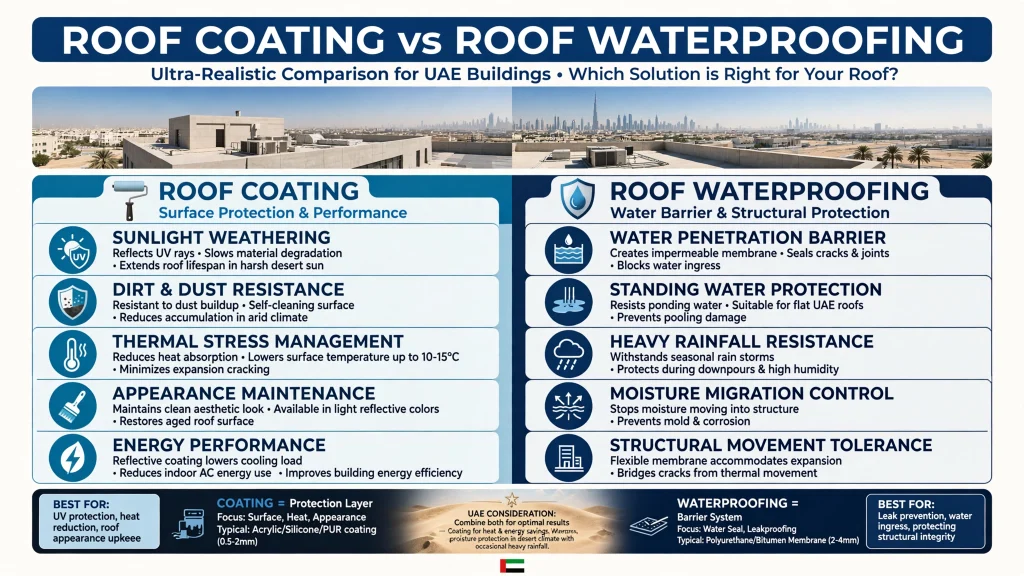
Roof coating focuses on surface protection. It improves resistance against sunlight, weathering, dirt accumulation, and thermal stress while enhancing the roof’s appearance and energy performance.
Roof waterproofing focuses on preventing water penetration into the building. It creates a waterproof barrier capable of resisting standing water, heavy rainfall, moisture migration, and structural movement.
A roof coating alone may not solve active leakage problems, whereas a professionally installed waterproofing system addresses the root cause of water ingress.
Selecting the correct solution depends on the current condition of the roof, the level of protection required, and future maintenance plans.
Why Roof Protection Is Critical in Dubai
Dubai’s climate places exceptional demands on roofing systems.
Commercial and residential buildings experience:
- Intense UV radiation
- High ambient temperatures
- Thermal expansion and contraction
- Dust accumulation
- Sandstorms
- High humidity near coastal areas
- Seasonal rainfall
- Airborne pollutants
These environmental factors accelerate ageing of roofing materials if proper protection is not installed.
Buildings located in Palm Jumeirah, Dubai Marina, Jumeirah, Business Bay, Downtown Dubai, Dubai Hills, Arabian Ranches, Al Barsha, Mirdif, and Dubai Creek Harbour all require roofing systems capable of performing under demanding climate conditions.
Roof Coatings Improve Thermal Performance
One major advantage of reflective roof coatings is their ability to reduce solar heat absorption.
Cool roof coatings reflect a significant portion of incoming solar radiation instead of absorbing heat. Lower roof temperatures reduce heat transfer into the building, allowing HVAC systems to operate more efficiently.
Commercial office towers, shopping centres, warehouses, schools, and industrial facilities often use reflective coatings to reduce cooling loads and improve energy efficiency.
In hot climates such as Dubai, reducing roof surface temperatures contributes to lower electricity consumption while improving indoor comfort.
Roof Waterproofing Protects Structural Integrity
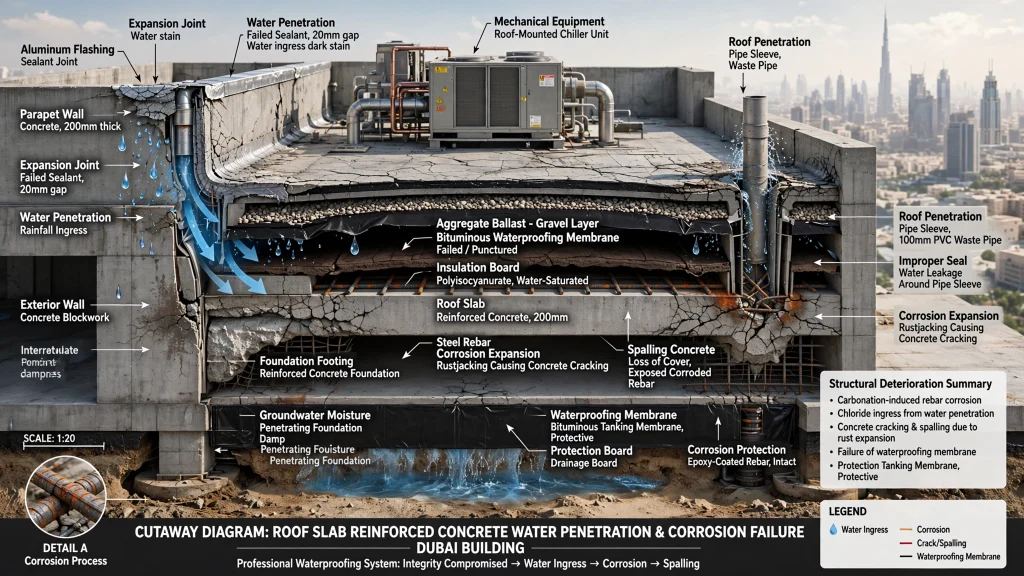
Water penetration can gradually damage reinforced concrete structures.
When moisture enters roof slabs through cracks or failed joints, it can reach reinforcing steel bars, initiating corrosion.
Corroded reinforcement expands, causing concrete cracking, spalling, and structural deterioration.
Professional waterproofing systems protect:
- Roof slabs
- Reinforced concrete
- Expansion joints
- Flashings
- Parapet walls
- Roof penetrations
- Pipe sleeves
- Mechanical equipment foundations
Long-term waterproofing preserves building integrity while reducing expensive structural repair costs.
Common Causes of Roof Leaks
Roof leaks rarely occur without warning.
Typical causes include:
- Cracked concrete slabs
- Failed waterproof membranes
- Blocked roof drainage systems
- Poor construction workmanship
- Damaged flashings
- Open expansion joints
- UV degradation
- Mechanical damage
- Ponding water
- Ageing roofing materials
Professional inspections identify these problems before significant water damage occurs.
Early intervention significantly reduces repair expenses.
Choosing the Right Waterproofing Membrane
Modern waterproofing systems offer different performance characteristics.
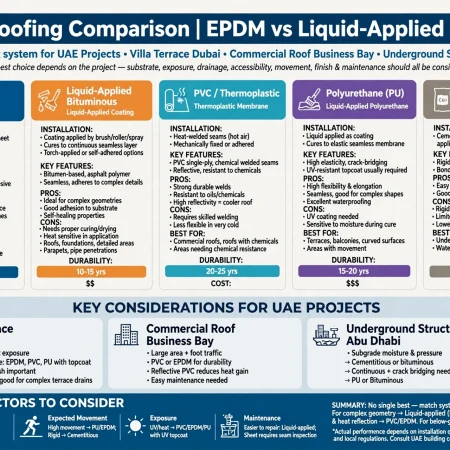
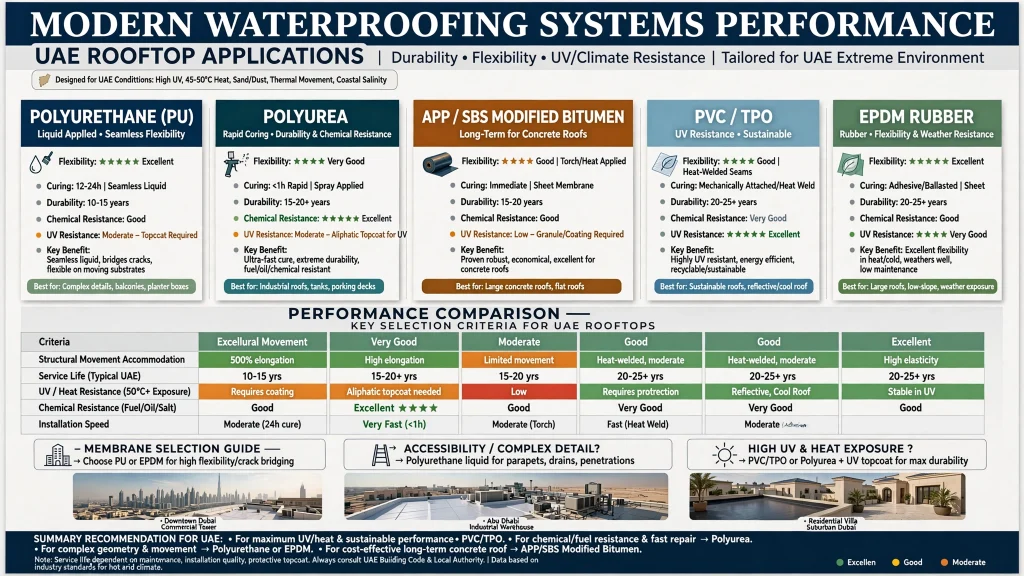
Polyurethane liquid membranes provide seamless protection with excellent flexibility.
Polyurea systems offer rapid curing, high durability, and exceptional chemical resistance.
APP and SBS modified bitumen membranes provide proven long-term waterproof performance for concrete roofs.
PVC and TPO membranes deliver excellent UV resistance while supporting sustainable roofing systems.
EPDM rubber membranes provide outstanding flexibility and weather resistance.
Selecting the appropriate membrane depends on structural movement, roof accessibility, exposure conditions, and expected service life.
Importance of Proper Roof Drainage
Even the best waterproofing system requires efficient roof drainage.
Poor drainage allows water to accumulate on roof surfaces, increasing hydrostatic pressure and accelerating membrane deterioration.
Professional roofing specialists evaluate:
- Roof slopes
- Drain locations
- Overflow systems
- Rainwater outlets
- Gutters
- Downpipes
- Drainage capacity
Proper drainage significantly extends the service life of roofing systems.
Commercial buildings throughout DIFC, Dubai South, Jebel Ali, and Dubai Silicon Oasis often undergo drainage assessments as part of comprehensive roof maintenance programmes.
Roof Insulation and Waterproofing Work Together
Roof insulation improves thermal efficiency, while waterproofing protects the structure against moisture.
Many modern roofing systems combine:
- Thermal insulation boards
- Vapour barriers
- Waterproof membranes
- Protective screeds
- Reflective coatings
This layered approach improves energy performance while protecting the building envelope from environmental damage.
Proper integration of insulation and waterproofing supports lower cooling costs and longer roof life.
Commercial Buildings Require Long-Term Roofing Solutions
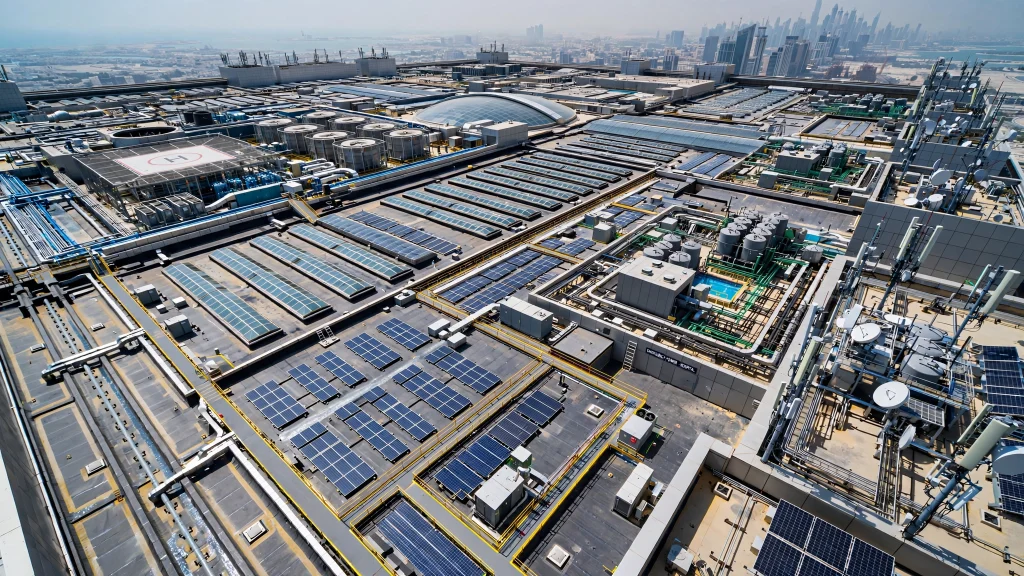
Large commercial buildings typically have complex roof layouts containing HVAC equipment, solar panels, drainage systems, service walkways, skylights, communication equipment, and mechanical installations.
Roofing systems must accommodate these features while maintaining complete waterproof protection.
Hotels, hospitals, shopping malls, manufacturing facilities, educational campuses, airports, logistics centres, and office towers require durable roofing solutions capable of supporting continuous building operations.
Professional roofing consultants evaluate structural movement, equipment loads, maintenance access, and future expansion requirements before recommending suitable roof protection systems.
Roof Inspection Before Selecting Any Solution
Every roofing project should begin with a detailed condition assessment.
Professional inspections evaluate:
- Existing waterproof membrane condition
- Concrete surface integrity
- Structural movement
- Moisture penetration
- Ponding water
- UV deterioration
- Membrane adhesion
- Surface contamination
- Cracking patterns
- Drainage performance
- Sealant condition
- Flashing connections
Moisture meters, infrared thermal imaging, electronic leak detection, and visual inspections help identify hidden defects that may not be visible from the surface.
Accurate diagnosis allows roofing professionals to recommend the most suitable long-term solution rather than temporary repairs.
Waterproofing Supports the Entire Building Envelope
The roof forms one of the most important parts of a building envelope.
A properly waterproofed roof protects structural concrete, insulation systems, ceilings, interior finishes, electrical installations, HVAC equipment, and valuable business assets from water damage.
Moisture intrusion can lead to:
- Ceiling damage
- Paint deterioration
- Mould growth
- Corrosion of reinforcement steel
- Damaged electrical systems
- Interior water stains
- Structural weakening
- Reduced indoor air quality
Protecting the roof therefore protects the entire building investment.
Commercial developments throughout Downtown Dubai, Dubai Marina, Business Bay, Palm Jumeirah, Dubai Hills, Jumeirah, and Abu Dhabi increasingly prioritise high-performance waterproofing systems because they minimise long-term maintenance risks.
Waterproofing Improves Property Value
A professionally waterproofed roof contributes positively to property value.
Potential buyers, tenants, facility managers, and investors often evaluate roof condition before purchasing or leasing commercial buildings.
Buildings with reliable waterproofing systems typically experience:
- Lower maintenance costs
- Better structural condition
- Longer roof lifespan
- Reduced insurance claims
- Improved tenant satisfaction
- Higher investment confidence
Well-maintained roofing systems demonstrate responsible building management while reducing future capital expenditure.
Sustainability Benefits of Modern Roofing Systems
Sustainability has become an important consideration within the UAE construction industry.
Modern roofing technologies support environmental performance by improving thermal efficiency and reducing overall energy consumption.
Reflective roof coatings reduce solar heat gain, allowing HVAC systems to operate more efficiently.
Waterproof membranes protect insulation materials from moisture, ensuring they continue performing at their designed thermal resistance.
Many roofing materials now offer:
- Low VOC formulations
- Recyclable components
- Long service life
- Reduced maintenance requirements
- UV-resistant materials
- Environmentally responsible manufacturing
These features contribute to sustainable commercial developments and green building initiatives across the UAE.
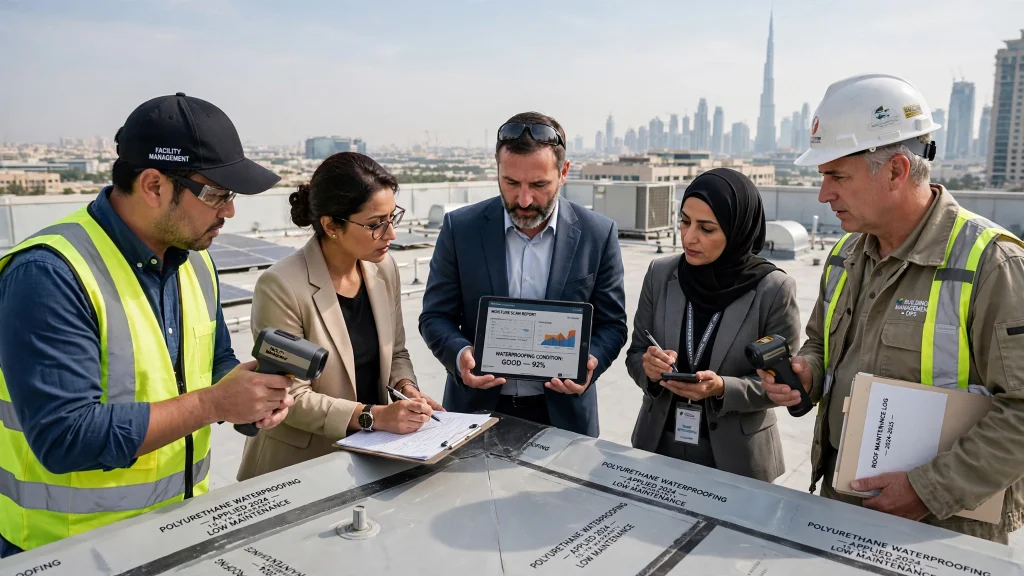
Importance of Professional Installation
Even premium roofing materials cannot deliver maximum performance without proper installation.
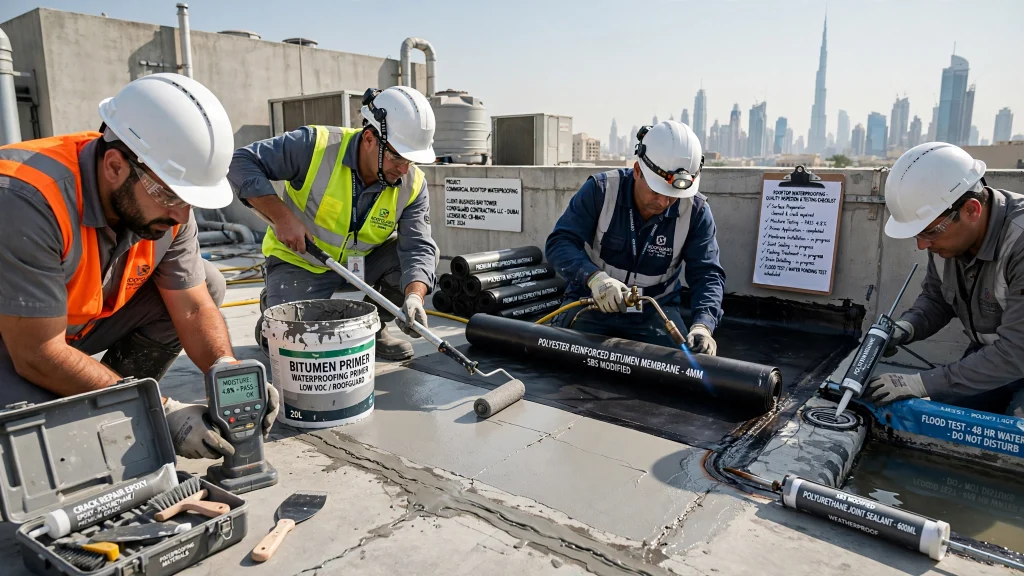
Professional roofing contractors follow strict installation procedures that include:
- Surface preparation
- Crack repairs
- Moisture testing
- Primer application
- Membrane installation
- Joint sealing
- Flashing treatment
- Drain detailing
- Quality inspections
- Flood testing where applicable
Attention to detail during installation significantly influences long-term waterproofing performance.
Incorrect installation can result in premature membrane failure, water leakage, blistering, poor adhesion, and reduced service life.
Regular Roof Maintenance Extends System Life
Roof protection should not end after installation.
Scheduled maintenance programmes help identify small defects before they develop into expensive repairs.
Routine maintenance typically includes:
- Roof cleaning
- Drain clearing
- Sealant inspection
- Flashing inspection
- Membrane assessment
- Surface cleaning
- Crack monitoring
- Joint inspection
- Water testing
- Preventive repairs
Commercial property owners who invest in regular inspections often extend roof lifespan while reducing emergency maintenance costs.
Facilities located in coastal environments such as Dubai Marina and Palm Jumeirah particularly benefit from periodic inspections due to increased humidity and salt exposure.
Roof Coating vs Roof Waterproofing: Which Is Better?
There is no universal answer because both solutions serve different purposes.
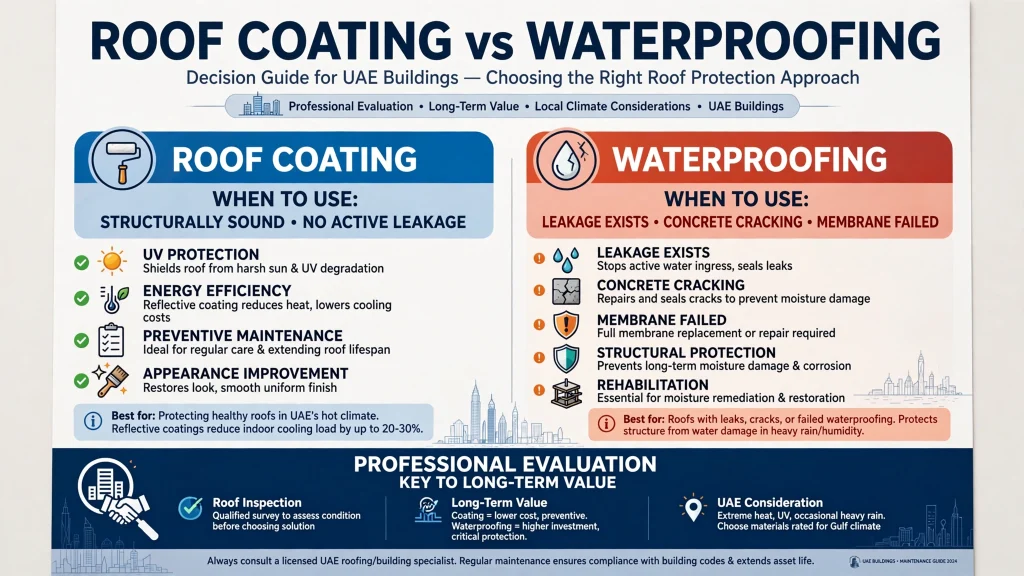
Roof coating is generally recommended when:
- The roof is structurally sound.
- No active water leakage exists.
- UV protection is the primary objective.
- Energy efficiency improvements are required.
- Preventive maintenance is being performed.
- Roof appearance needs improvement.
Roof waterproofing is generally recommended when:
- Water leakage already exists.
- Concrete cracking is present.
- Waterproof membranes have failed.
- Structural protection is required.
- Long-term moisture resistance is necessary.
- Roof rehabilitation is being undertaken.
Professional roof evaluations help determine which solution provides the greatest long-term value for each specific property.
Choosing the Right Roofing Partner
Selecting experienced roofing professionals is essential for achieving reliable results.
Qualified specialists understand building structures, waterproofing chemistry, membrane technology, roof drainage, thermal insulation, expansion joint detailing, and local environmental conditions.
Experienced Roof Waterproofing Contractors Dubai evaluate every aspect of the roofing system before recommending the most appropriate solution, ensuring long-lasting protection rather than temporary repairs.
Comprehensive planning, quality workmanship, and premium materials together create roofing systems capable of withstanding Dubai’s demanding climate.
Future Trends in Roof Protection
Roofing technology continues evolving as sustainability and building performance become increasingly important.
Emerging trends include:
- Smart leak detection systems
- Drone roof inspections
- Infrared thermal scanning
- Self-healing waterproof membranes
- Nano-technology roof coatings
- High-reflectivity cool roof systems
- Green roof installations
- Solar-ready roofing systems
- Advanced polyurethane membranes
- AI-assisted preventive maintenance
These innovations help property owners improve building durability while reducing operational costs and environmental impact.
Conclusion
Roof coating and roof waterproofing both play valuable roles in protecting commercial and residential buildings, but they are designed to solve different challenges. Roof coatings primarily protect surfaces from ultraviolet radiation, weathering, and heat while improving energy efficiency. Roof waterproofing creates a complete moisture barrier that safeguards structural concrete, insulation, and interior spaces from water penetration.
For buildings with sound roof structures that require preventive protection, roof coatings can provide an economical and effective solution. However, when active leaks, cracked concrete, failed membranes, or long-term moisture problems are present, professional waterproofing offers the highest level of protection.
Whether managing an office tower in Business Bay, a luxury villa in Emirates Hills, a shopping centre in Downtown Dubai, a warehouse in Jebel Ali, or a residential property in Dubai Hills, selecting the correct roofing solution helps preserve structural integrity, reduce maintenance costs, improve energy efficiency, and extend the service life of the entire building. Investing in professional roofing expertise today ensures reliable protection for many years to come.