Polyurethane waterproofing is a widely used method for protecting buildings and structures from water penetration, moisture damage, and weather exposure. Its flexibility, strong adhesion, seamless application, and ability to form a continuous waterproof membrane make it suitable for many residential, commercial, and industrial projects.
In the UAE, waterproofing is particularly important because buildings are exposed to intense solar radiation, high temperatures, humidity, occasional heavy rainfall, and demanding construction conditions. Poor waterproofing can allow water to penetrate roofs, terraces, balconies, bathrooms, basements, podiums, and other building elements.
A properly selected and professionally applied polyurethane membrane can help protect the underlying structure while extending the service life of surfaces and reducing the likelihood of recurring water-related problems.
What Is Polyurethane Waterproofing?
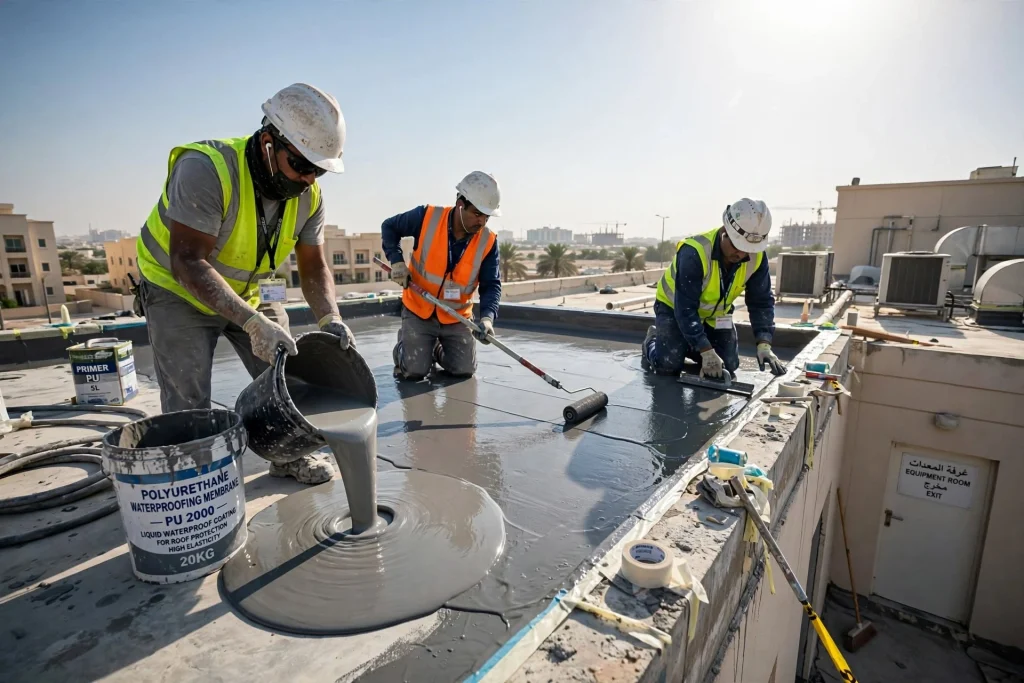
Polyurethane waterproofing is a liquid-applied waterproofing system based on polyurethane polymers. When applied to a prepared surface, the material cures to create a continuous elastic membrane.
Unlike traditional waterproofing methods that rely on multiple overlapping sheets or joints, liquid polyurethane can create a largely seamless surface when correctly installed.
The membrane can accommodate certain levels of substrate movement and thermal expansion, making it useful for areas exposed to changing temperatures.
Depending on the product and application, polyurethane waterproofing systems may be formulated as:
- One-component coatings
- Two-component systems
- Moisture-cured polyurethane
- Solvent-based polyurethane
- Water-based polyurethane
- Aromatic polyurethane
- Aliphatic polyurethane
The appropriate system depends on the substrate, exposure conditions, project requirements, and manufacturer’s technical specifications.
Why Waterproofing Is Important for Buildings
Water is one of the most damaging elements affecting buildings.
When moisture enters a structure, it can contribute to:
Concrete deterioration, corrosion of reinforcement, mould growth, damaged finishes, staining, efflorescence, unpleasant odours, electrical risks, and reduced durability.
Water penetration can begin through very small defects.
Cracks, construction joints, pipe penetrations, drainage points, failed sealants, and poorly detailed edges can become pathways for water.
Waterproofing therefore needs to be considered as part of the building envelope and not simply as a surface coating.
How Polyurethane Waterproofing Works
The basic principle is straightforward.
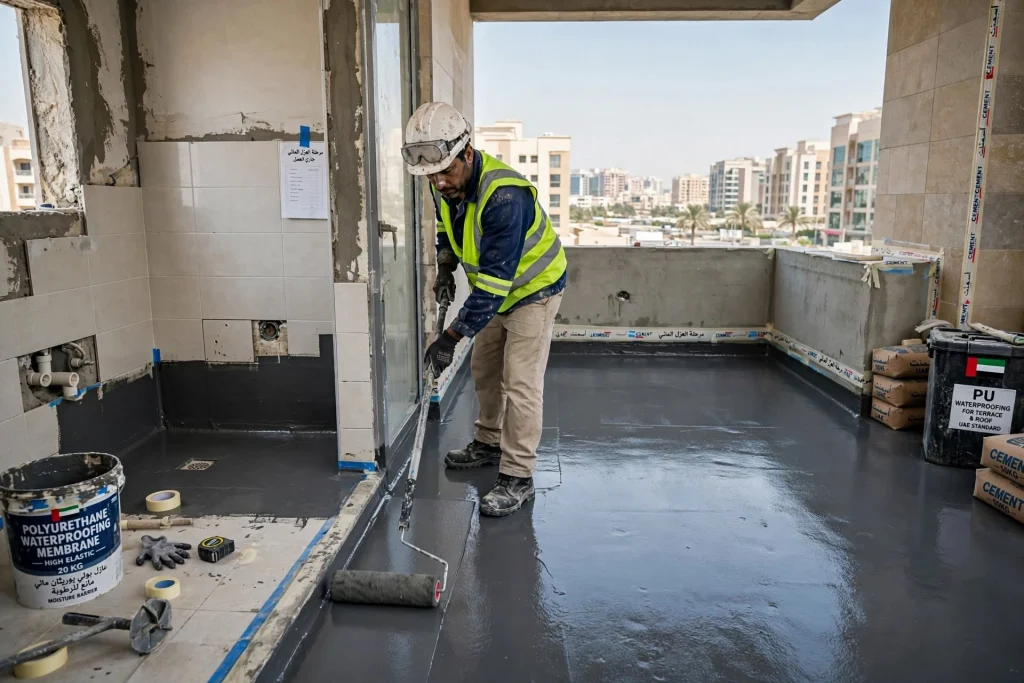
The polyurethane material is applied to a properly prepared substrate. It spreads across the surface and forms a continuous layer.
After curing, the membrane provides a barrier that restricts water from passing through the protected surface.
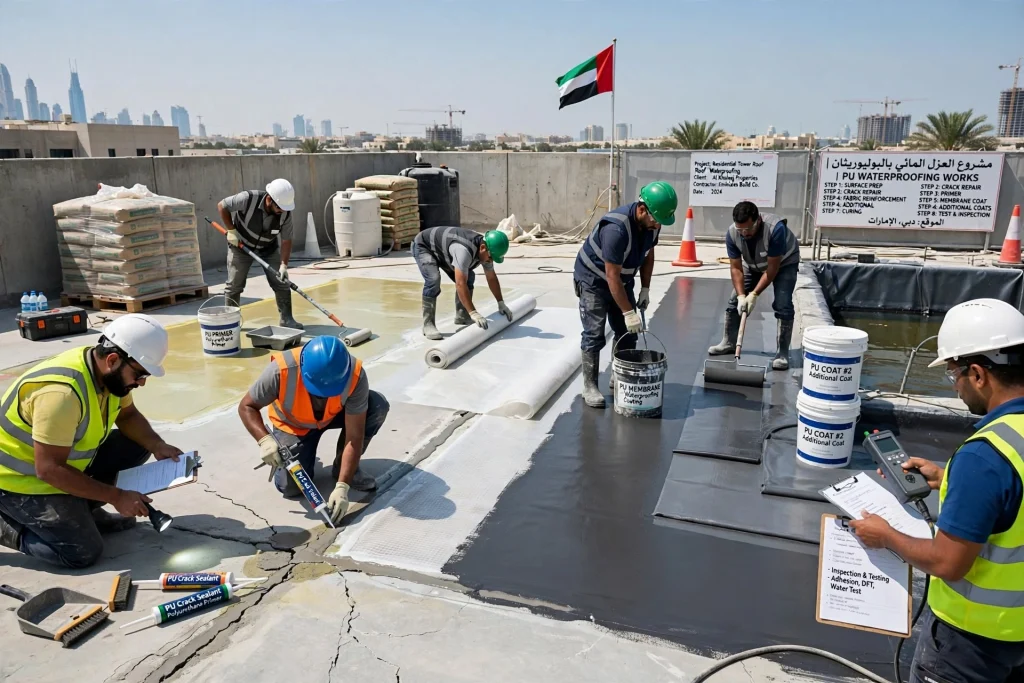
A typical application may involve:
Surface inspection → substrate preparation → crack and joint treatment → primer application → polyurethane membrane application → reinforcement where required → additional coats → curing → inspection and testing.
The exact process varies according to the manufacturer’s system and project specifications.
Seamless Waterproofing Membrane
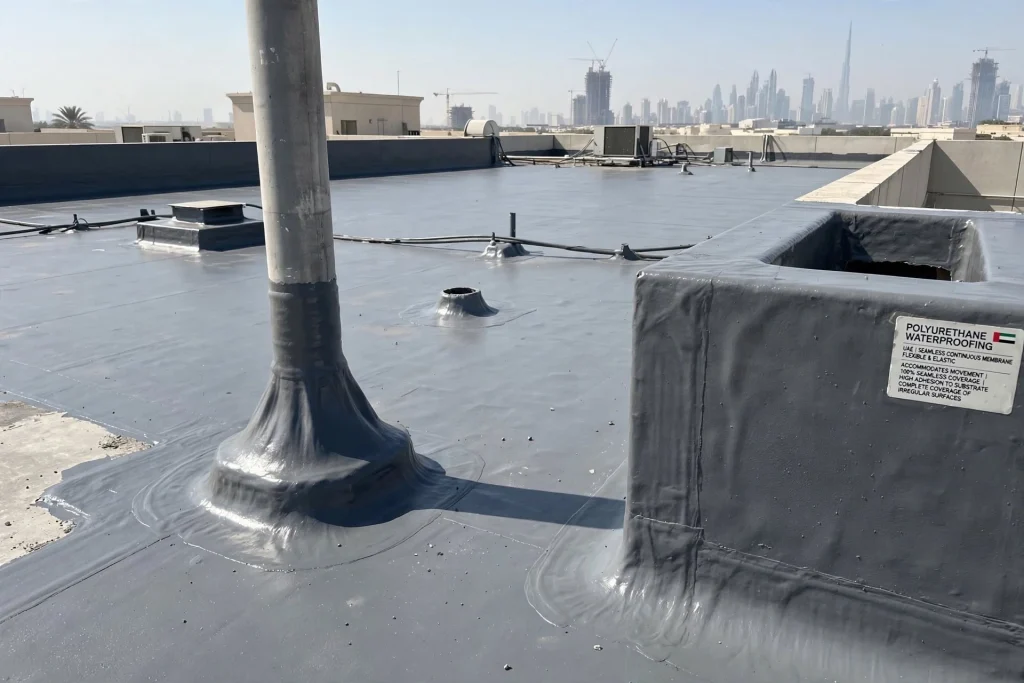
One of the biggest advantages of liquid polyurethane is its ability to form a seamless membrane.
Sheet membranes contain joints and overlaps that require careful detailing.
Liquid-applied systems can cover irregular surfaces and complicated geometries with fewer visible joints.
This is useful around:
Upstands, drains, corners, penetrations, pipes, equipment bases, parapets, and other difficult details.
However, “seamless” does not mean installation can be careless. Every penetration, termination, joint, and transition still needs proper detailing.
Flexibility and Crack Bridging
Buildings naturally experience movement.
Temperature changes, settlement, vibration, structural movement, and substrate expansion can produce small cracks or changes in dimensions.
A flexible polyurethane membrane can accommodate certain movements without immediately losing continuity.
Its crack-bridging performance depends on:
Product formulation, membrane thickness, substrate condition, temperature, crack size, reinforcement, and installation quality.
For larger structural cracks, waterproofing alone may not be sufficient. The underlying structural problem may need separate investigation and repair.
Strong Adhesion to Substrates
Polyurethane waterproofing can adhere to several properly prepared substrates.
Depending on the selected system, applications may include:
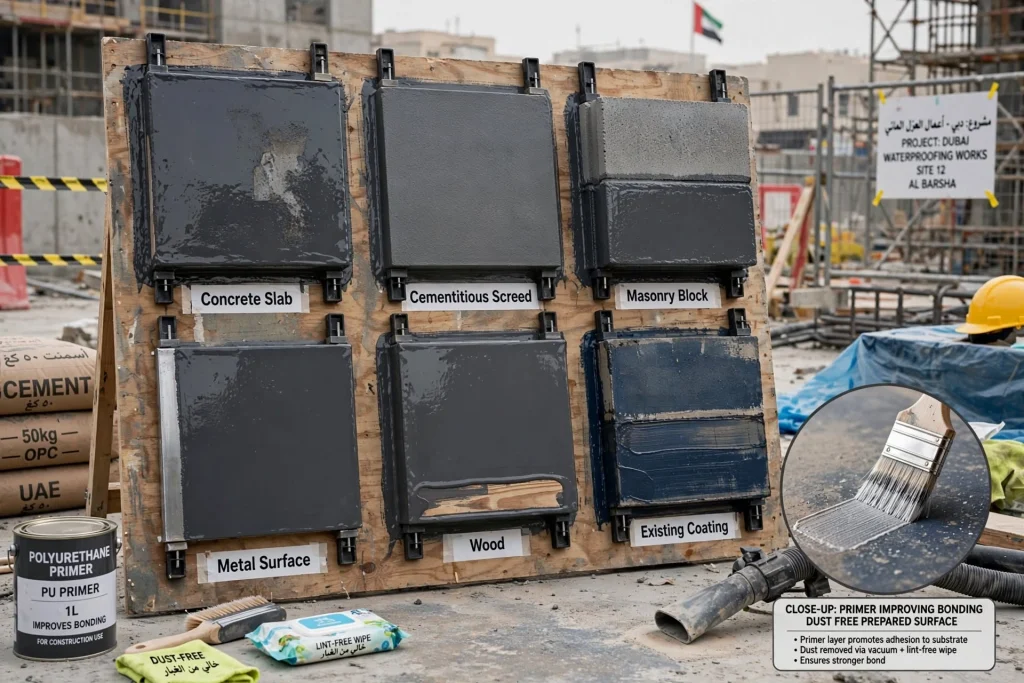
Concrete, cementitious screeds, masonry, metal, wood, and certain existing coatings.
Surface preparation remains critical.
Dust, oil, grease, laitance, loose concrete, moisture, and contaminants can reduce adhesion.
A technically compatible primer may be required to improve bonding.
Resistance to Weather Conditions
Exterior waterproofing systems must withstand environmental exposure.
In the UAE, roof and terrace membranes can experience high surface temperatures and intense sunlight.
Polyurethane systems designed for external exposure can provide resistance to:
Water, temperature changes, UV exposure, and weathering.
Not every polyurethane product is intended for direct UV exposure. Some systems require a protective topcoat.
The product’s technical data sheet should always be consulted before selecting a membrane for exposed applications.
Polyurethane Waterproofing for Roofs
Roofs are among the most important areas requiring waterproofing.
Flat roofs can experience standing water when drainage is inadequate.
Polyurethane waterproofing can be used on suitable roof substrates to create a continuous protective layer.
A roof waterproofing system should consider:
Drainage slopes, outlets, parapets, expansion joints, penetrations, equipment supports, surface condition, membrane thickness, and UV exposure.
Waterproofing cannot compensate for fundamentally inadequate drainage.
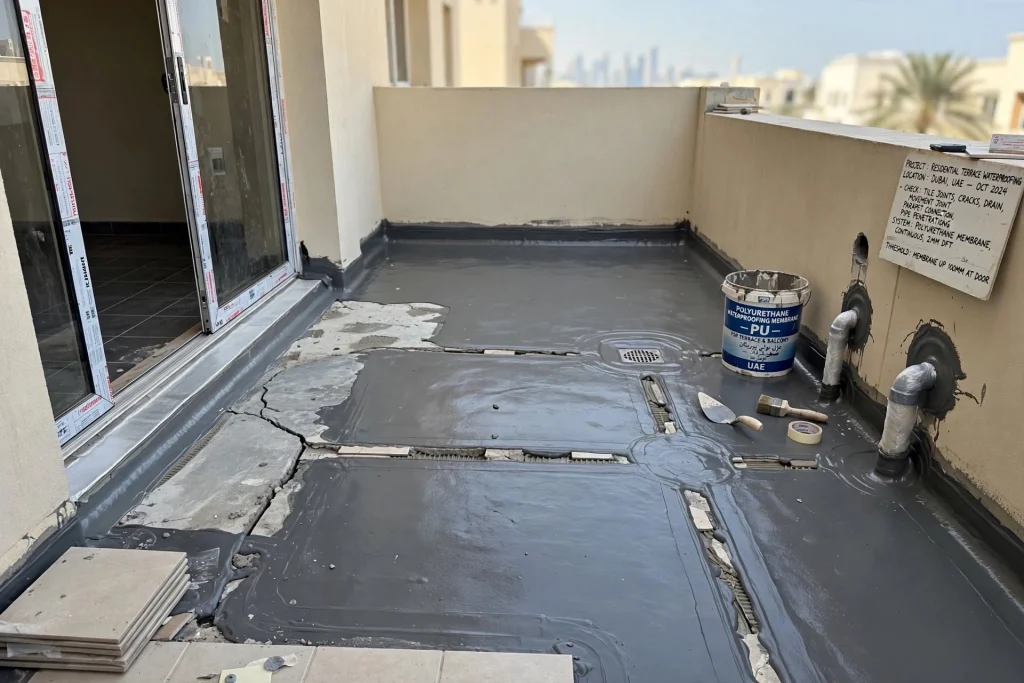
Terrace and Balcony Waterproofing
Terraces and balconies are exposed to both rainfall and temperature fluctuations.
Water can enter through:
Tile joints, cracks, drainage areas, movement joints, parapet connections, and poorly sealed penetrations.
A polyurethane membrane can provide a continuous waterproofing layer beneath an appropriate protective finish where the system is designed for that application.
Balcony waterproofing should also consider the relationship between the membrane and door thresholds.
Bathroom Waterproofing
Bathrooms are constantly exposed to water.
Waterproofing is important beneath:
Shower areas, bathroom floors, wet walls, bathtub surrounds, plumbing penetrations, and other wet zones.
Polyurethane systems can be used as part of a bathroom waterproofing assembly when compatible with the substrate and subsequent finishes.
Proper treatment around floor drains and pipe penetrations is particularly important.
Basement Waterproofing
Basements are vulnerable to groundwater and moisture pressure.
Water can enter through:
Concrete walls, construction joints, floor slabs, cracks, pipe penetrations, and wall-floor junctions.
Polyurethane waterproofing may be used in appropriate basement applications, but the waterproofing strategy must consider whether water pressure is coming from the positive or negative side.
Where groundwater pressure is significant, drainage and structural waterproofing design should be addressed together.
Podium and Parking Deck Waterproofing
Podiums and parking structures can be exposed to water, vehicle traffic, chemicals, and mechanical wear.
Waterproofing systems used in these areas may need additional protection.
The complete system can involve:
Primer, waterproofing membrane, reinforcement, protective layer, screed, wearing course, or traffic-rated coating.
The appropriate configuration depends on the expected loading and use of the area.
Waterproofing Around Expansion Joints
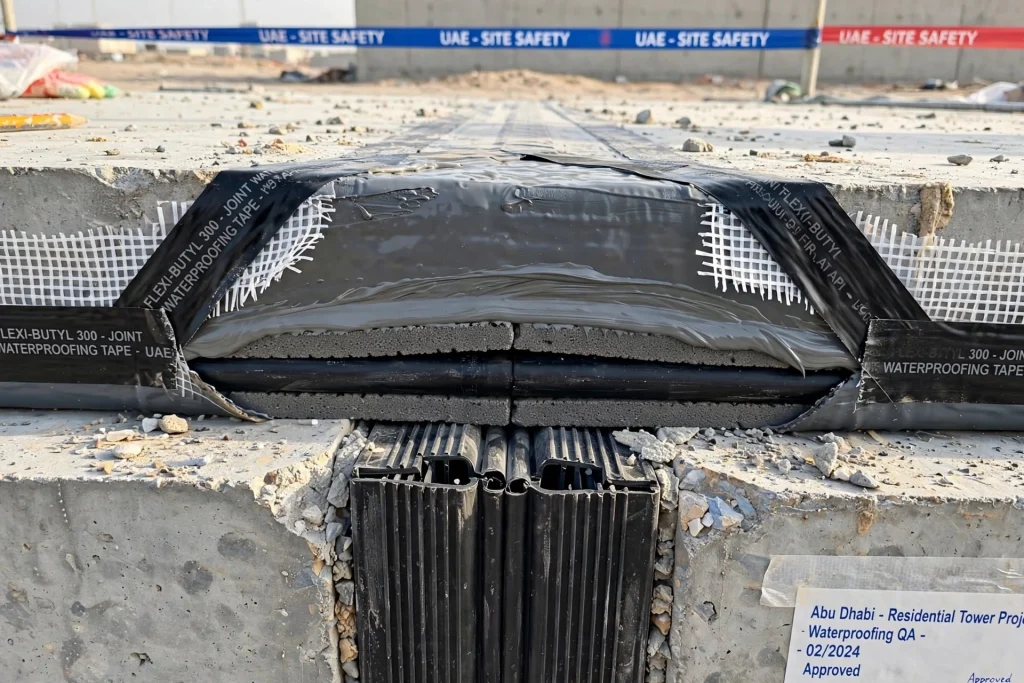
Expansion and movement joints are particularly vulnerable to water penetration.
A waterproofing membrane should not simply be applied across a movement joint without appropriate detailing.
Specialized solutions can include:
Joint sealants, flexible tapes, reinforcement fabrics, waterstops, and movement-compatible membrane details.
The waterproofing system should allow the joint to perform its intended movement function.
Waterproofing Around Pipe Penetrations
Pipes passing through roofs, bathrooms, tanks, and other waterproofed surfaces create potential weak points.
The membrane needs to connect properly to the pipe or penetration detail.
Poor detailing can result in localized leaks even when the surrounding waterproofing is intact.
Experienced waterproofing contractors pay particular attention to these transitions.
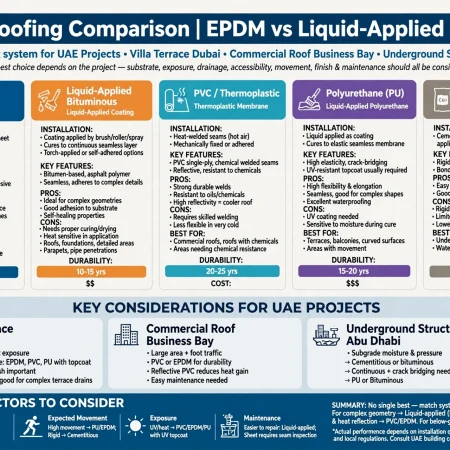
Polyurethane vs Bituminous Waterproofing
Polyurethane and bituminous systems have different characteristics.
Bituminous membranes are commonly supplied as sheets or liquid systems based on asphaltic materials.
Polyurethane is typically a liquid-applied polymer membrane.
Polyurethane may be preferred where:
Flexibility, seamless application, complicated geometries, and adhesion to suitable substrates
are important.
Bituminous systems may be preferred in other situations because of their established use, robustness, and suitability for specific below-grade or roof assemblies.
The correct choice should be based on project conditions rather than assuming one technology is universally better.
Polyurethane vs Cementitious Waterproofing
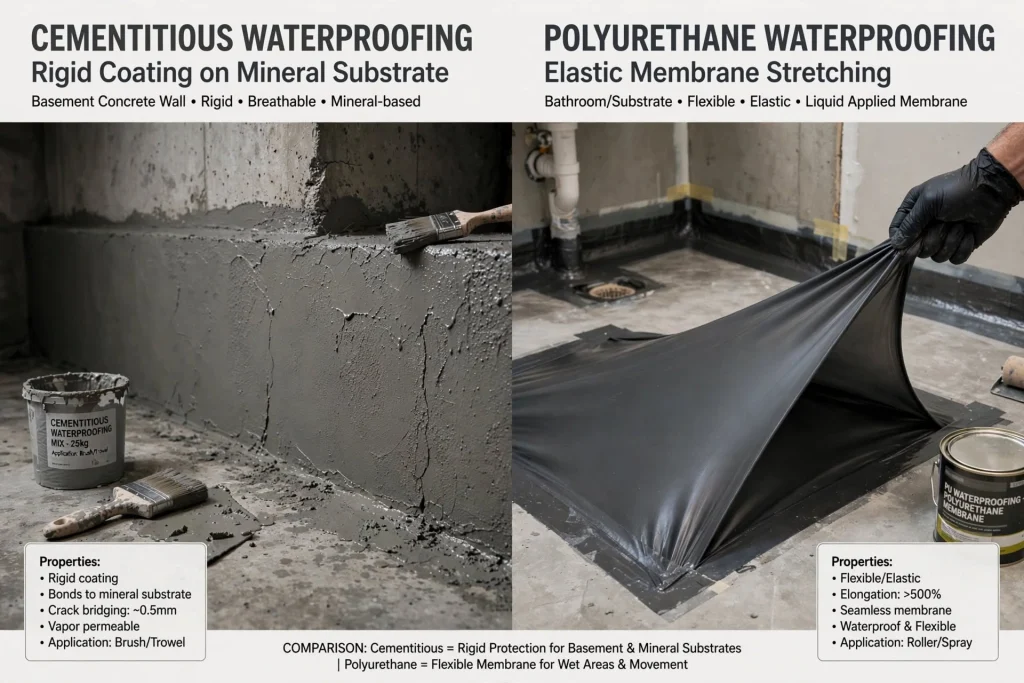
Cementitious waterproofing systems are commonly used on concrete and masonry.
They can be useful for:
Basements, water-retaining structures, bathrooms, concrete surfaces, and other mineral substrates.
Polyurethane generally provides greater elasticity than conventional cementitious coatings.
However, cementitious systems may be more appropriate for particular substrates or moisture conditions.
The design should consider movement, water pressure, exposure, finish requirements, and substrate condition.
Polyurethane vs EPDM Waterproofing
EPDM is a synthetic rubber membrane widely used for certain roofing applications.
It is supplied as a sheet membrane rather than a liquid coating.
Polyurethane offers the advantage of being liquid-applied and capable of conforming to complex geometries.
EPDM can provide strong weather resistance and long-term performance when correctly installed.
The appropriate option depends on the roof design, detailing, installation requirements, access, and project specifications.
Importance of Surface Preparation
Surface preparation is one of the most important stages of polyurethane waterproofing.
Before application, the substrate may need to be:
Clean, dry or within the manufacturer’s permitted moisture range, sound, stable, and free from contaminants.
Preparation methods can include:
Mechanical grinding, shot blasting, pressure cleaning, crack repair, removal of loose material, dust extraction, and localized concrete repair.
Applying waterproofing over a contaminated or unstable surface can cause blistering, peeling, or premature failure.
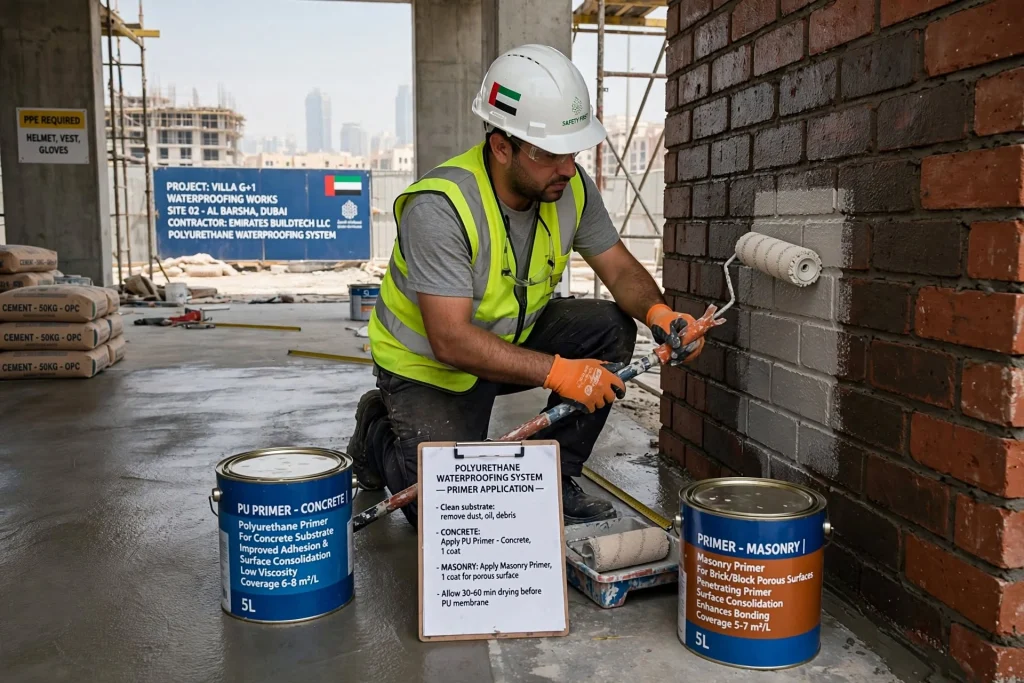
Primer Application
Primers are used in many polyurethane waterproofing systems.
A primer can improve:
Adhesion, substrate compatibility, surface consolidation, and membrane performance.
The correct primer must be compatible with both the substrate and polyurethane membrane.
Primer selection should not be based solely on appearance or availability.
Manufacturers generally specify which primer should be used for each substrate condition.
Membrane Thickness
Waterproofing performance depends partly on achieving the specified dry-film thickness.
Applying too little material can compromise durability and waterproofing performance.
Therefore, professional application should control:
Wet-film thickness, number of coats, coverage rate, curing time, and final membrane thickness.
The required thickness depends on the product and project specification.
More material is not automatically better if it creates curing problems or exceeds the manufacturer’s application limits.
Reinforcement in Polyurethane Systems
Some waterproofing systems incorporate reinforcement fabric in vulnerable areas.
Reinforcement may be used around:
Corners, cracks, joints, drains, penetrations, upstands, and transitions.
The purpose is to improve the system’s ability to manage localized movement and stress.
The reinforcement type and installation method should follow the waterproofing manufacturer’s system requirements.
Drainage and Waterproofing
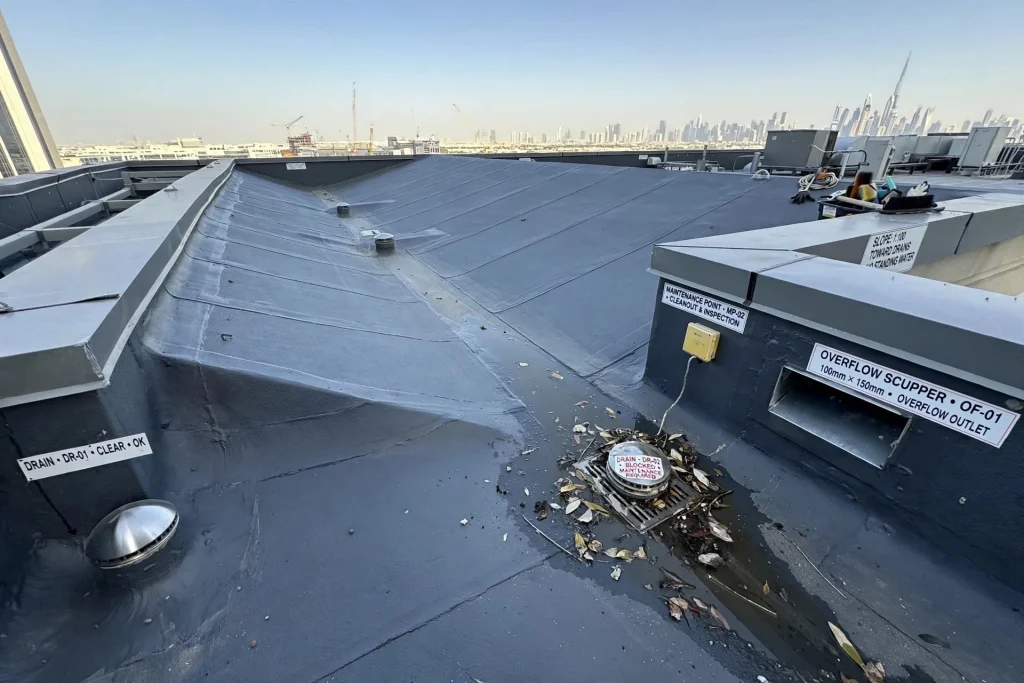
Waterproofing and drainage should always be considered together.
A membrane may prevent water penetration, but standing water can increase long-term exposure and place additional demands on the system.
Roof drainage should therefore include:
Adequate slopes, correctly positioned drains, clear outlets, overflow provisions, and accessible maintenance points.
Blocked drains can create avoidable waterproofing problems.
Polyurethane Waterproofing in Dubai
Dubai’s construction environment creates specific waterproofing requirements.
Roof surfaces, terraces, balconies, podiums, bathrooms, swimming-pool areas, and service spaces can all be exposed to moisture.
Areas such as Downtown Dubai, Dubai Marina, Business Bay, Jumeirah, Palm Jumeirah, Dubai Hills Estate, Arabian Ranches, and Emirates Hills contain a wide variety of residential and commercial properties requiring different waterproofing strategies.
The local climate makes UV exposure and high surface temperatures important considerations for exposed waterproofing systems.
Polyurethane Waterproofing in Abu Dhabi
Abu Dhabi properties can also require waterproofing for:
Villas, commercial buildings, hotels, apartment towers, industrial facilities, roofs, basements, balconies, podiums, and wet areas.
Locations including Al Reem Island, Saadiyat Island, Yas Island, Khalifa City, Al Raha Beach, and Abu Dhabi city contain different building types and construction conditions.
Waterproofing specifications should be adapted to the individual structure.
Polyurethane Waterproofing in Sharjah
Sharjah’s residential, commercial, and industrial properties also require protection from moisture intrusion.
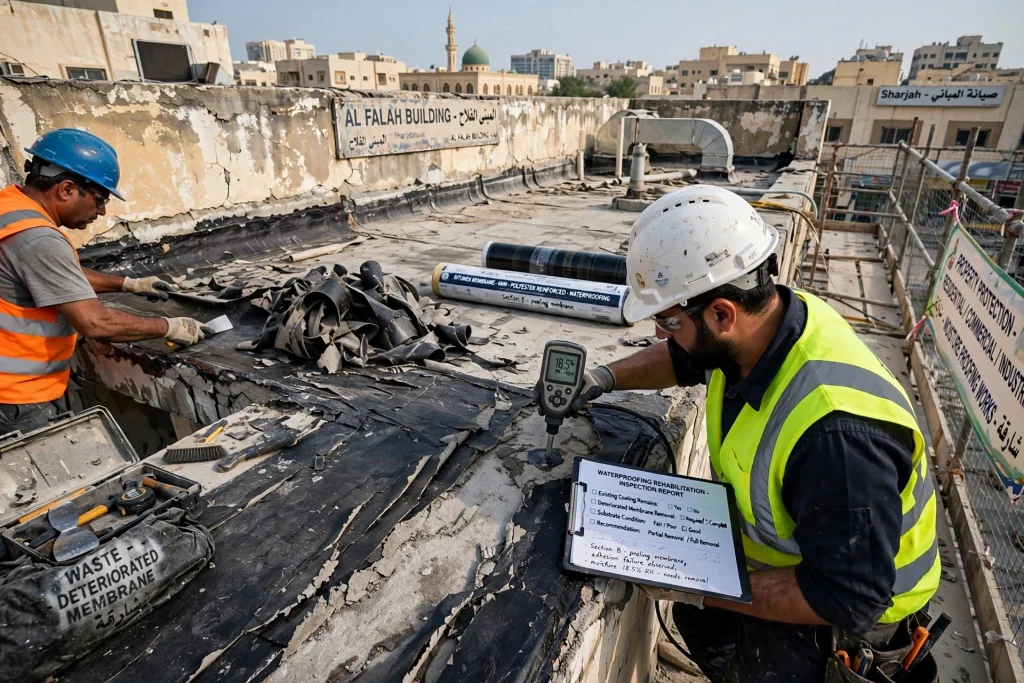
Older buildings may require waterproofing rehabilitation where existing membranes have deteriorated.
Before applying a new system, contractors should determine whether the existing coating can remain or needs complete removal.
Applications in Commercial Buildings
Commercial properties can have extensive waterproofing requirements.
Applications may include:
Office roofs, shopping centres, hotels, restaurants, podiums, parking decks, plant rooms, bathrooms, balconies, terraces, and service areas.
Commercial waterproofing should account for access, maintenance, operational disruption, and long-term durability.
For occupied buildings, project planning is particularly important.
Applications in Residential Properties
Residential waterproofing can range from a single bathroom to an entire villa roof.
Common areas include:
Roof slabs, terraces, balconies, bathrooms, kitchens, planter boxes, basement walls, swimming-pool surroundings, and external decks.
A localized leak should not automatically result in coating the entire property.
A proper inspection can help identify the actual source and extent of the problem.
Polyurethane Waterproofing for Industrial Facilities
Industrial buildings often experience demanding conditions.
Waterproofing may be required for:
Factories, warehouses, production areas, loading zones, roofs, tanks, plant rooms, and service structures.
Industrial systems may need to resist mechanical traffic, chemicals, heat, and frequent maintenance activity.
The selected waterproofing system should therefore be matched to the operational environment.
Common Polyurethane Waterproofing Problems
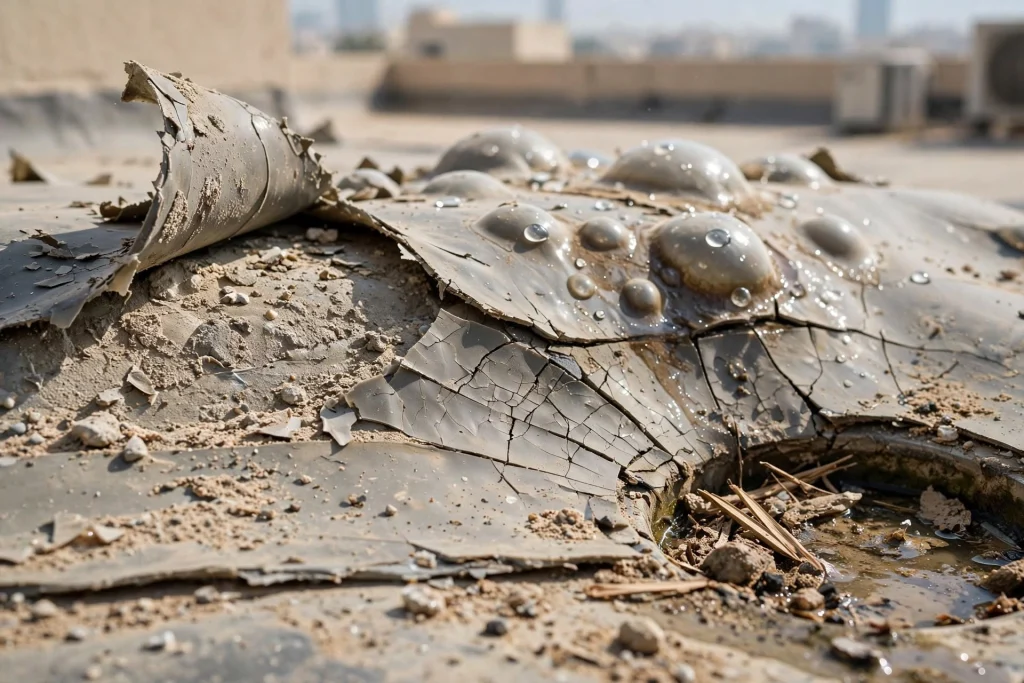
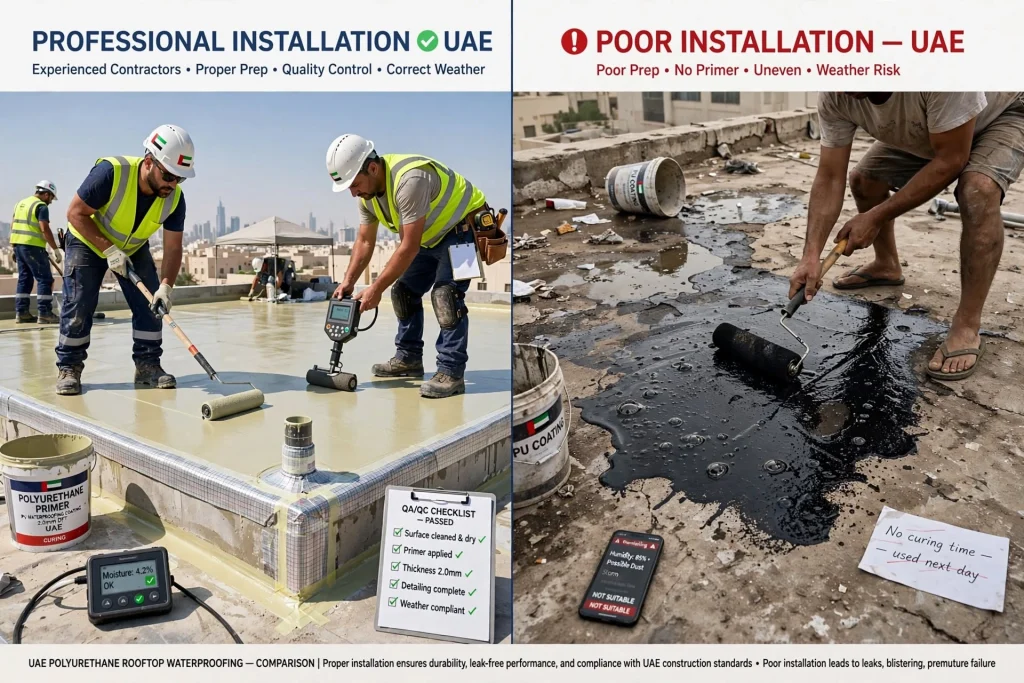
Even high-quality waterproofing products can fail when installation conditions are poor.
Common problems include:
Poor surface preparation, incorrect primer, insufficient membrane thickness, application during unsuitable weather, trapped moisture, inadequate curing, poor detailing, blocked drainage, and incompatible topcoats.
Blistering can occur when moisture becomes trapped beneath the membrane.
Peeling can result from poor adhesion.
Cracking can occur when substrate movement exceeds the system’s capabilities.
Why Professional Installation Matters
Waterproofing is a technical trade.
The visible membrane is only one part of the complete system.
A professional contractor should understand:
Substrate preparation, moisture conditions, primers, membrane application, detailing, reinforcement, curing, drainage, protection, and quality control.
Using an experienced team can reduce the likelihood of premature waterproofing failure.
For specialist residential and commercial projects, professional Polyurethane Waterproofing Services can provide a structured approach to substrate assessment, membrane application, detailing, and waterproofing maintenance.
Waterproofing Inspection and Quality Control
Quality control should continue throughout the project.
Inspection may involve checking:
Substrate condition, primer coverage, membrane continuity, thickness, detailing, curing, penetrations, drains, terminations, and protective layers.
Depending on the project, additional testing may be appropriate.
For example, roof areas may undergo controlled water testing after sufficient curing.
The exact test method should follow the project specification and manufacturer’s recommendations.
Maintenance After Waterproofing
Waterproofing does not eliminate the need for maintenance.
Building owners should periodically inspect:
Drains, sealants, membrane surfaces, joints, penetrations, parapets, protective coatings, and areas around mechanical equipment.
Debris should be removed from roof drainage systems.
Damaged finishes should be repaired before water reaches the underlying membrane.
Early intervention is usually easier than repairing extensive water damage.
Benefits of Polyurethane Waterproofing
When correctly selected and installed, polyurethane waterproofing can provide several advantages.
Seamless Protection
Liquid application can create a continuous membrane across large surfaces and complex details.
Flexibility
Elastic properties can allow the membrane to accommodate certain levels of substrate movement.
Strong Adhesion
Compatible polyurethane systems can bond effectively to properly prepared substrates.
Complex Surface Coverage
Liquid membranes can follow irregular shapes and difficult architectural details.
Versatile Applications
The technology can be used for suitable roofs, terraces, balconies, bathrooms, basements, podiums, and other areas.
Easy Localized Repairs
Some systems can be repaired or recoated without completely replacing the existing waterproofing, provided the substrate and existing membrane are compatible.
Frequently Asked Questions
How long does polyurethane waterproofing last?
Service life depends on product quality, membrane thickness, substrate condition, UV exposure, traffic, drainage, maintenance, and installation quality. The manufacturer’s tested service-life information should be used for a specific system.
Can polyurethane waterproofing be applied over concrete?
Yes, many polyurethane systems are designed for concrete, but the substrate must meet the manufacturer’s requirements for cleanliness, strength, moisture, preparation, and compatibility.
Is polyurethane waterproofing suitable for roofs?
Yes, appropriate polyurethane roofing systems can be used on suitable roof substrates. Exposed roofs may require a UV-resistant polyurethane or compatible protective topcoat.
Can polyurethane waterproofing stop existing leaks?
It can help stop water penetration when the waterproofing system is correctly designed and the actual source of the leak is addressed. However, leaks can originate from plumbing, drainage, structural cracks, joints, or other locations.
Does polyurethane waterproofing require maintenance?
Yes. Regular inspection of drainage, joints, penetrations, membrane condition, and protective coatings can help maintain waterproofing performance.
Is polyurethane better than bituminous waterproofing?
Neither system is universally better. The correct choice depends on the substrate, exposure, movement, water pressure, traffic, detailing, budget, and required service life.
Conclusion
Polyurethane waterproofing provides a versatile approach to protecting buildings against water penetration. Its liquid application, strong adhesion, flexibility, and ability to create continuous membranes make it suitable for many residential, commercial, hospitality, and industrial applications.
In the UAE, waterproofing requires careful consideration of Dubai’s and Abu Dhabi’s high temperatures, intense solar exposure, humidity, rainfall events, building movement, drainage, and construction conditions.
However, the performance of a polyurethane system depends on more than the material itself. Proper substrate preparation, primer selection, membrane thickness, reinforcement, detailing, curing, drainage, inspection, and maintenance all influence long-term results.
For roofs, terraces, balconies, bathrooms, basements, podiums, parking structures, and industrial facilities, waterproofing should be designed as a complete system rather than treated as a simple coating.
When correctly specified and professionally installed, polyurethane waterproofing can provide durable protection while helping property owners reduce moisture-related deterioration, maintenance problems, and costly water damage.