The hospitality industry depends heavily on creating comfortable, healthy, and memorable experiences for guests. While luxury interiors, premium services, and exceptional customer care contribute to guest satisfaction, one of the most important factors often remains unnoticed, the performance of the HVAC system.
Heating, Ventilation, and Air Conditioning systems are the backbone of hotel comfort because they regulate indoor temperature, control humidity, maintain air quality, and ensure a pleasant environment throughout guest rooms, restaurants, conference halls, lobbies, kitchens, spas, and recreational areas.
In regions like the UAE, where temperatures remain extremely high for significant parts of the year, reliable HVAC performance is not simply a convenience but a necessity. Hotels across Dubai Marina, Downtown Dubai, Palm Jumeirah, Business Bay, Jumeirah, Dubai Creek, Dubai Hills, Dubai South, Abu Dhabi Corniche, Yas Island, Saadiyat Island, and Al Maryah Island require advanced cooling systems capable of operating continuously while maintaining energy efficiency.
A poorly designed or inefficient HVAC system can negatively affect guest reviews, increase operational expenses, create indoor air quality problems, and reduce the lifespan of expensive mechanical equipment. On the other hand, a professionally designed HVAC solution improves guest comfort, reduces energy consumption, supports sustainability goals, and strengthens hotel operations.
The Role of HVAC Systems in Hotel Guest Experience
Guest comfort is directly connected to the ability of an HVAC system to maintain stable indoor conditions. Hotel visitors expect their rooms, restaurants, meeting spaces, and public areas to provide consistent temperatures regardless of outdoor weather conditions.
Unlike residential buildings, hotels experience constantly changing occupancy patterns. Guest rooms may be occupied at different times throughout the day, conference halls may suddenly require increased cooling capacity, restaurants generate additional heat from cooking equipment, and lobbies experience continuous movement of people entering and leaving the building.
A properly engineered HVAC system must respond to these changing conditions while maintaining thermal comfort.
Modern hotel HVAC solutions combine advanced cooling equipment, intelligent controls, air distribution systems, and energy management technologies to create environments where guests feel comfortable without noticing the mechanical systems operating in the background.
Chiller Systems: The Foundation of Large Hotel Cooling
Large hotels commonly rely on central chiller systems because they provide efficient cooling for extensive spaces with varying requirements.
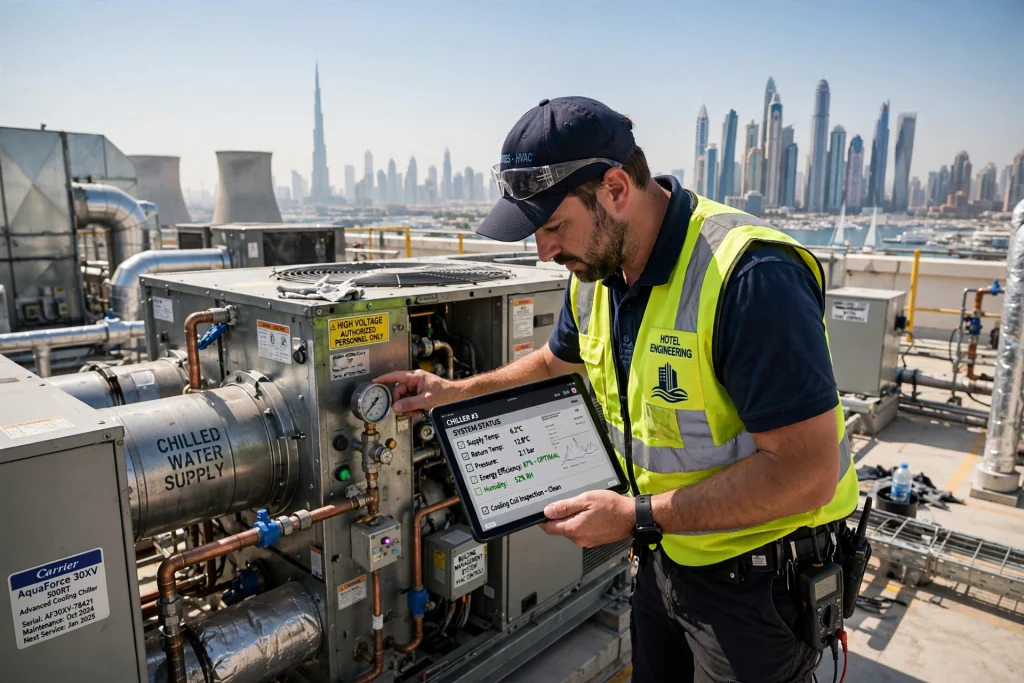
A chiller plant typically consists of major components including chillers, compressors, condensers, evaporators, pumps, cooling towers, control systems, and chilled water distribution networks.
Water cooled chillers are widely used in large hospitality projects because they offer high efficiency and reliable performance for buildings with significant cooling demand. These systems transfer heat from indoor spaces through chilled water loops and reject unwanted heat through cooling towers.
Air cooled chillers may also be selected for hotels where space limitations, maintenance requirements, or project conditions make them more suitable.
The efficiency of a hotel chiller plant depends on proper equipment selection, accurate load calculations, regular maintenance, and optimized controls. Poorly maintained chillers can experience reduced cooling capacity, increased energy consumption, compressor stress, and higher operating costs.
Professional HVAC specialists evaluate cooling requirements based on guest room numbers, building orientation, occupancy levels, kitchen loads, lighting heat gain, and seasonal conditions before designing an appropriate chiller solution.

Air Handling Units and Indoor Air Quality Management
Guest comfort is not only about temperature. Indoor air quality plays an equally important role in creating a healthy hotel environment.
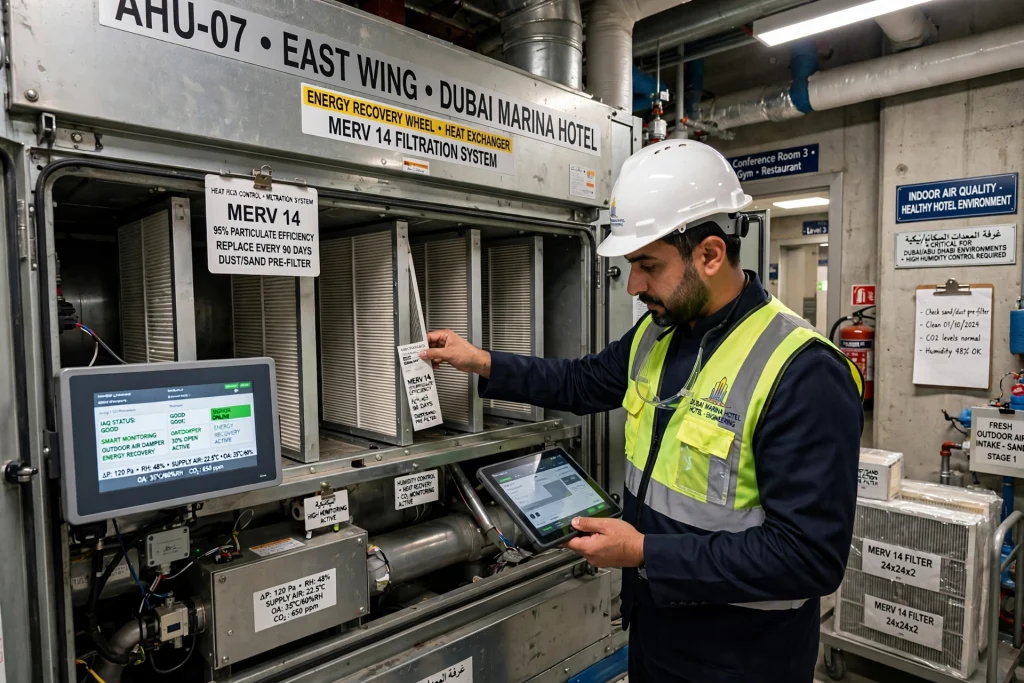
Air Handling Units (AHUs) are responsible for conditioning and distributing air throughout hotel spaces. They regulate temperature, control humidity, filter airborne particles, and introduce fresh outdoor air into occupied areas.
Modern AHU systems include advanced filtration technologies, energy recovery systems, humidity control mechanisms, and smart monitoring features to maintain healthy indoor environments.
Hotels located in cities such as Dubai and Abu Dhabi face challenges including dust, sand particles, outdoor pollutants, and high humidity levels. Without proper filtration and ventilation, these factors can negatively affect indoor air quality.
High-performance air filtration systems, including MERV-rated filters, help capture dust, allergens, and airborne contaminants. Proper ventilation also prevents stale air conditions in high-occupancy spaces such as conference rooms, restaurants, gyms, and hotel lobbies.
Fan Coil Units for Guest Room Comfort
Fan Coil Units (FCUs) are commonly installed in individual hotel rooms and smaller zones where independent temperature control is required.
Each guest room typically requires personalized climate control because different visitors have different comfort preferences. FCUs allow guests to adjust room temperatures according to their individual requirements through thermostats or smart room controls.
A well-designed FCU system provides:
- Quiet operation
- Accurate temperature control
- Efficient cooling performance
- Improved guest satisfaction
- Reduced energy consumption
Noise control is especially important in hotels. Guests expect peaceful sleeping environments, meaning HVAC equipment must be properly selected, installed, and maintained to prevent excessive vibration or operational noise.
Poorly balanced fans, dirty filters, damaged bearings, or improper installation can create unwanted sounds that negatively affect guest experiences.
VRF and VRV Systems in Modern Hospitality Projects
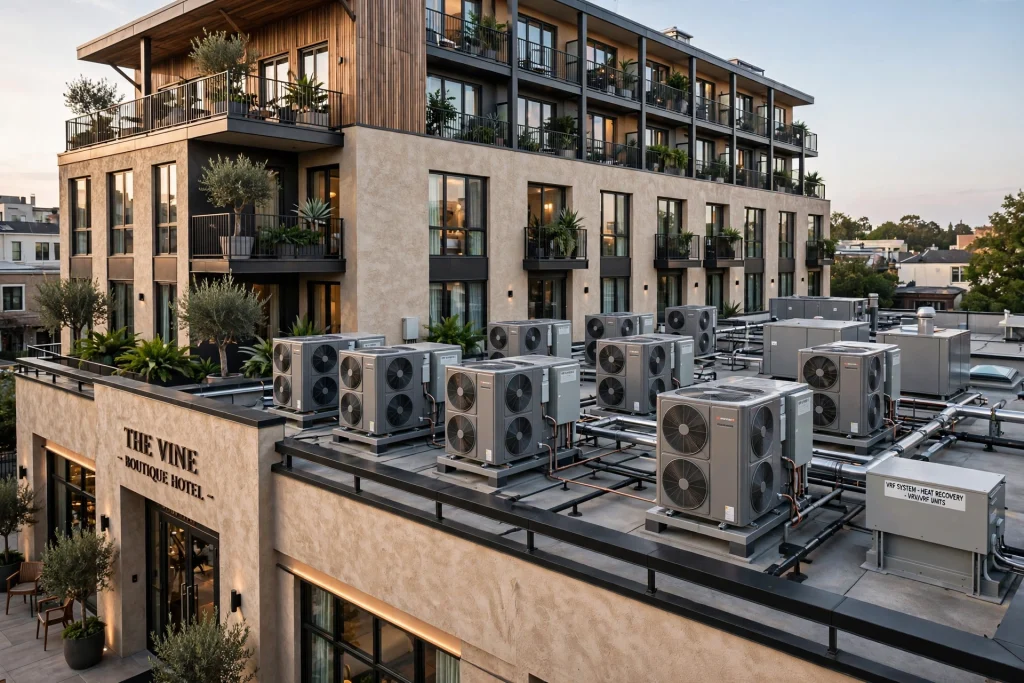
Variable Refrigerant Flow (VRF) and Variable Refrigerant Volume (VRV) systems have become popular solutions for hotels because they provide flexible zoning and energy-efficient operation.
Unlike traditional systems that deliver the same cooling output across multiple areas, VRF technology adjusts refrigerant flow according to the specific demand of each zone.
This makes VRF systems suitable for:
- Boutique hotels
- Smaller hospitality developments
- Villas converted into luxury accommodations
- Hotel extensions
- Mixed-use developments
VRF systems allow different areas of the same building to operate independently. For example, guest rooms may require cooling while conference areas or restaurants have different temperature requirements.
Advanced VRF systems also support heat recovery technology, allowing simultaneous cooling and heating in different zones when required.
Building Management Systems for Hotel HVAC Control
Modern hotels increasingly depend on Building Management Systems (BMS) to monitor and control HVAC operations.
A BMS integrates HVAC equipment including chillers, AHUs, FCUs, pumps, sensors, thermostats, and ventilation systems into one centralized platform.
Through intelligent automation, hotel operators can monitor:
- Temperature levels
- Humidity conditions
- Equipment performance
- Energy consumption
- Maintenance alerts
- Operating schedules
Smart HVAC controls improve efficiency by automatically adjusting cooling based on occupancy levels, outdoor conditions, and operational requirements.
For example, guest rooms can reduce cooling output when unoccupied, while conference halls can increase capacity before large events begin.
This level of automation helps hotels reduce energy costs while maintaining consistent guest comfort.
Energy Efficiency and Sustainability in Hotel HVAC Systems
Energy consumption is one of the largest operational expenses for hotels, and HVAC systems typically represent a significant portion of total building energy usage. Because hotels operate continuously throughout the year, even small improvements in HVAC efficiency can create substantial cost savings.
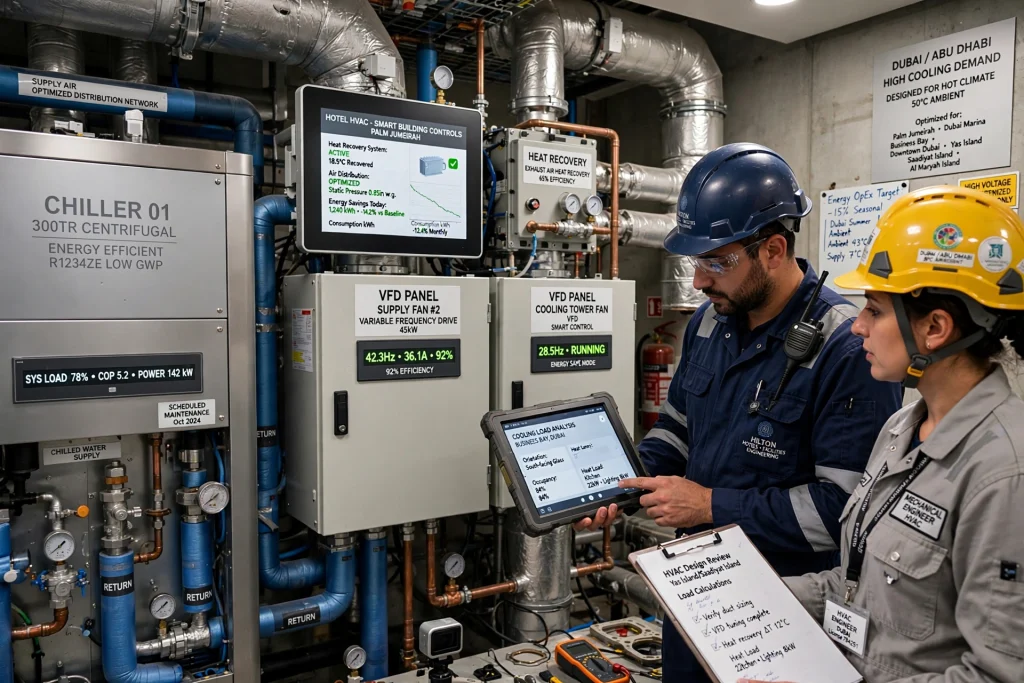
Modern hospitality projects increasingly focus on sustainable HVAC solutions that reduce energy consumption while maintaining excellent guest comfort. Energy-efficient chillers, variable frequency drives (VFDs), smart controls, heat recovery systems, and optimized air distribution networks allow hotels to achieve better performance with lower operating costs.
In Dubai and Abu Dhabi, where cooling demand remains high for most of the year, selecting efficient HVAC equipment is essential. Hotels in areas such as Palm Jumeirah, Dubai Marina, Business Bay, Downtown Dubai, Yas Island, Saadiyat Island, and Al Maryah Island require systems designed specifically for hot climate conditions.
Energy-efficient HVAC design begins with accurate cooling load calculations, proper equipment sizing, efficient ductwork design, and intelligent automation. Oversized or poorly configured systems often consume excessive energy because they frequently cycle on and off or operate at inefficient capacity levels.
Professional HVAC engineers analyze building orientation, occupancy patterns, glass exposure, lighting loads, kitchen heat generation, and ventilation requirements to create systems that deliver maximum efficiency.
Importance of Proper Ventilation in Hotels
Ventilation is a critical part of hotel HVAC design because it directly affects indoor air quality, guest health, and overall comfort.
Hotels contain many areas with different ventilation requirements, including guest rooms, restaurants, kitchens, bathrooms, gyms, spas, conference rooms, and public spaces. Each area requires carefully designed airflow management to maintain fresh air levels while controlling humidity and preventing unpleasant odours.
Fresh Air Handling Units (FAHUs) introduce conditioned outdoor air into the building while removing stale indoor air. These systems often work together with AHUs, exhaust fans, filtration systems, and energy recovery equipment.
Hotel kitchens require specialized ventilation systems because cooking activities generate heat, smoke, grease particles, and airborne contaminants. Proper exhaust systems protect indoor air quality while maintaining comfortable temperatures in surrounding dining areas.
Bathrooms, laundry areas, and spa facilities also require effective ventilation to control moisture levels and prevent mould growth.
Poor ventilation can lead to humidity problems, condensation, unpleasant smells, and reduced guest satisfaction. A professionally designed ventilation system ensures healthier indoor environments throughout the hotel.
Humidity Control for Guest Comfort
Dubai and other UAE cities experience high humidity levels, especially during summer months. Controlling indoor humidity is essential because excessive moisture affects both guest comfort and building performance.
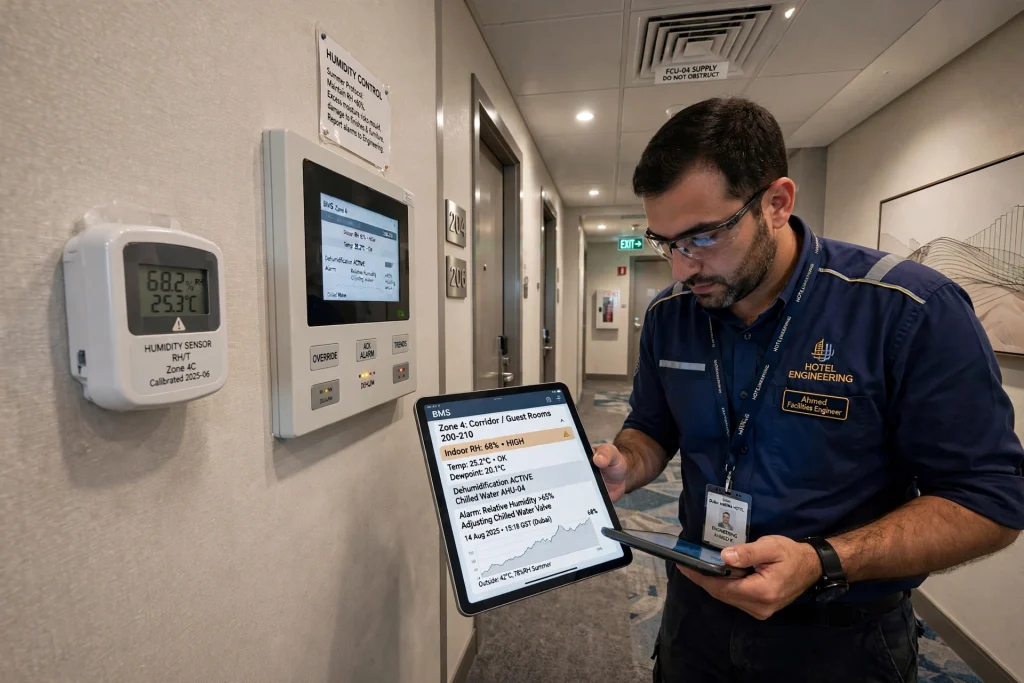
High indoor humidity can create uncomfortable conditions even when temperature levels appear acceptable. Guests may experience a feeling of stuffiness, while excessive moisture can encourage mould growth, damage interior finishes, and affect furniture materials.
Hotel HVAC systems manage humidity through properly designed cooling coils, dehumidification processes, ventilation control, and intelligent sensors.
Chilled water systems, AHUs, and FCUs must operate at correct conditions to remove moisture effectively from indoor air. Incorrect equipment selection or poor maintenance may reduce dehumidification performance, creating uncomfortable environments.
Humidity sensors integrated with Building Management Systems allow facility teams to monitor conditions continuously and make adjustments before problems develop.
Preventive HVAC Maintenance Improves Hotel Reliability
Hotels cannot afford unexpected HVAC failures because guest comfort directly affects reputation and revenue. A malfunctioning cooling system during peak seasons can result in complaints, negative reviews, and operational challenges.
Preventive HVAC maintenance ensures that mechanical systems continue operating efficiently and reliably.
Regular maintenance activities include inspection and cleaning of:
- Chiller components
- Cooling towers
- Condenser coils
- Evaporator systems
- AHU filters
- FCU coils
- Ductwork
- Pumps
- Motors
- VFD systems
- Thermostats
- Refrigerant circuits
Chiller maintenance is particularly important because the chiller plant is often the largest mechanical system within a hotel.
Routine inspections help identify refrigerant issues, compressor problems, pump inefficiencies, scale buildup, dirty coils, abnormal vibration, and electrical faults before they become major failures.
Preventive maintenance also improves energy efficiency because dirty filters, blocked coils, and poorly operating components force HVAC systems to work harder to achieve the required cooling output.
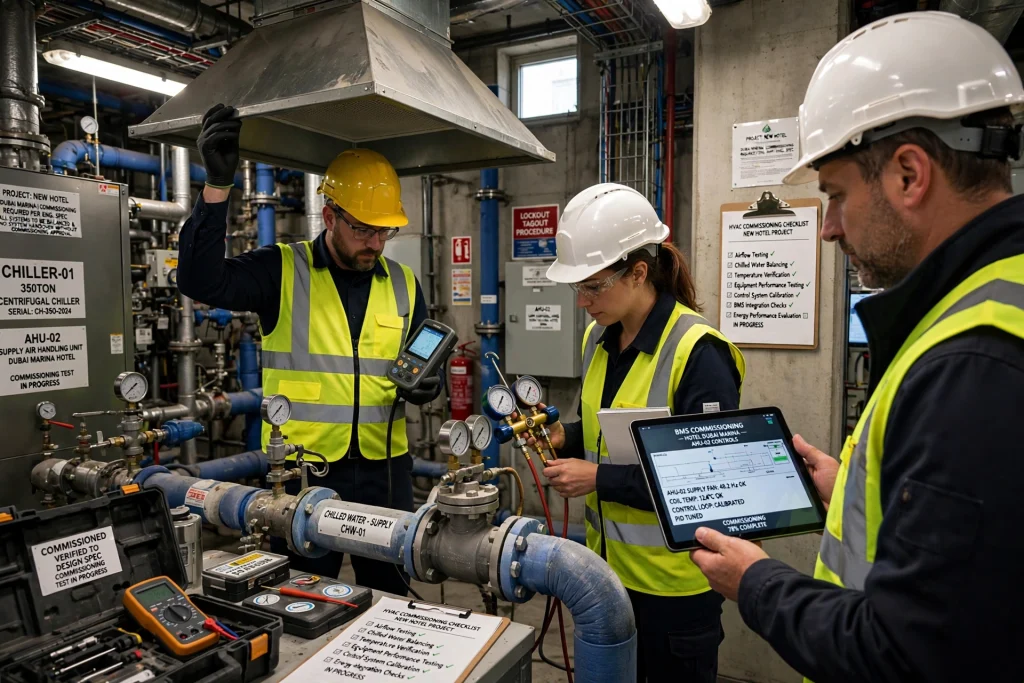
HVAC Commissioning for New Hotel Projects
HVAC commissioning plays an essential role in ensuring newly constructed hotels operate according to their original design requirements.
During commissioning, HVAC specialists verify that all mechanical systems have been installed correctly, tested properly, and balanced according to engineering specifications.
The commissioning process includes:
- Airflow testing
- Chilled water balancing
- Temperature verification
- Equipment performance testing
- Control system calibration
- BMS integration checks
- Energy performance evaluation
Proper commissioning ensures that chillers, AHUs, FCUs, pumps, ductwork systems, and control equipment work together efficiently.
Without proper commissioning, even high-quality HVAC equipment may fail to achieve expected performance due to incorrect settings, poor balancing, or control system errors.
For new hotels in Dubai Marina, Downtown Dubai, Dubai South, Business Bay, Abu Dhabi, and Sharjah, professional HVAC commissioning protects the investment made in mechanical infrastructure.
Choosing the Right HVAC Partner for Hospitality Projects
Hotel HVAC systems require specialized engineering knowledge because hospitality buildings have unique cooling requirements compared with residential or standard commercial properties.
A qualified HVAC partner understands the complexity of hotel environments, including guest comfort expectations, energy management goals, indoor air quality requirements, operational schedules, and maintenance challenges.
Professional HVAC contractors provide complete solutions including system design, equipment selection, installation, testing, commissioning, preventive maintenance, and emergency support.
When selecting an HVAC provider, hotel owners and developers should consider experience with large-scale hospitality projects, technical expertise, knowledge of international standards, and the ability to manage complex mechanical systems.
Working with an experienced HVAC Contractor for Hotels ensures that cooling systems are designed and maintained according to hospitality requirements while delivering long-term reliability and energy efficiency.
Future of Hotel HVAC Technology
The future of hospitality HVAC systems is moving toward smarter, more sustainable, and more automated solutions.
Artificial intelligence, IoT sensors, predictive maintenance platforms, smart thermostats, advanced analytics, and cloud-based monitoring are transforming how hotels manage their mechanical systems.
Predictive maintenance technologies can analyze equipment performance data and identify potential failures before breakdowns occur. Smart controls can automatically optimize energy usage based on occupancy, weather conditions, and operational requirements.
Future hotel developments across Dubai, Abu Dhabi, and the wider UAE will increasingly incorporate sustainable HVAC technologies to meet environmental goals while improving guest experiences.
Conclusion
HVAC systems are one of the most important components of modern hotels because they directly influence guest comfort, indoor air quality, energy efficiency, and operational reliability.
From central chiller plants and cooling towers to AHUs, FCUs, VRF systems, ventilation equipment, and intelligent BMS controls, every component must work together to create a comfortable environment for guests.
In the challenging UAE climate, professionally designed and maintained HVAC systems allow hotels in Dubai Marina, Palm Jumeirah, Business Bay, Downtown Dubai, Jumeirah, Dubai Hills, Yas Island, Saadiyat Island, and Abu Dhabi to deliver exceptional comfort throughout the year.
Investing in advanced HVAC solutions, preventive maintenance, and experienced technical support helps hotels reduce operating costs, improve sustainability, protect valuable equipment, and provide the consistent comfort that modern guests expect.