Heating, ventilation, and air conditioning (HVAC) systems are among the largest energy consumers in commercial buildings. In cities like Dubai, where cooling systems operate for extended periods due to high temperatures, improving HVAC efficiency has become a major priority for building owners, facility managers, hotels, shopping centres, offices, hospitals, and industrial facilities.
One of the most effective technologies for reducing HVAC energy consumption and improving system performance is the Variable Frequency Drive (VFD). Also known as a Variable Speed Drive (VSD), a VFD controls the speed of electric motors by adjusting the frequency and voltage supplied to the motor. Instead of operating HVAC equipment at a constant speed regardless of demand, VFD technology allows systems to automatically adjust their output according to real-time cooling requirements.
Modern commercial buildings across Dubai, including Business Bay towers, Downtown Dubai developments, Dubai Marina residences, hotels along Sheikh Zayed Road, and industrial facilities in Jebel Ali, increasingly rely on VFD-controlled HVAC systems to achieve better energy management, improved comfort, and lower operational costs.
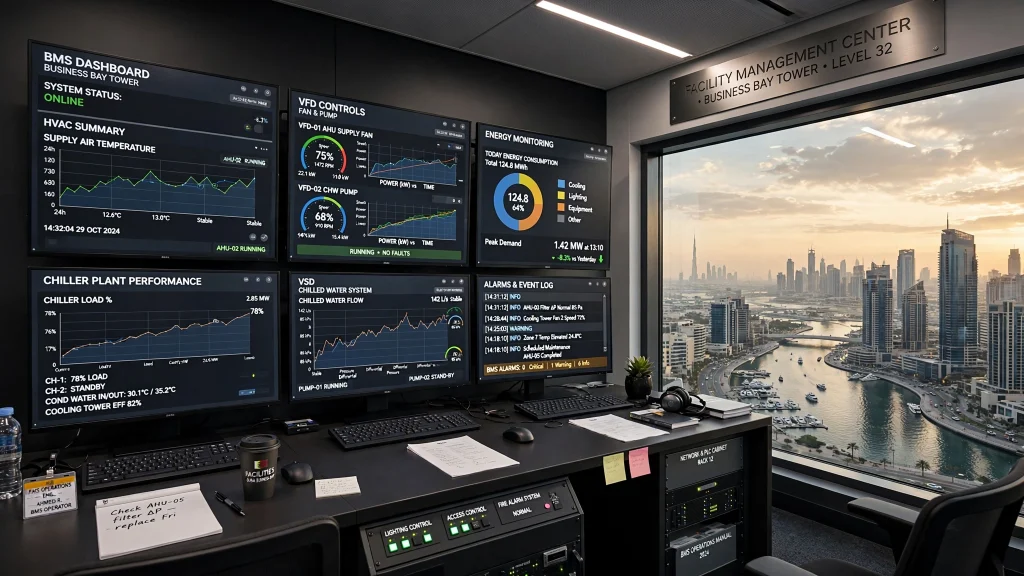
Understanding Variable Frequency Drives in HVAC Systems
A Variable Frequency Drive is an electronic device that regulates the operating speed of AC motors used in HVAC equipment. Traditional HVAC motors typically run at a fixed speed, meaning they consume nearly the same amount of energy even when the building requires less cooling.
A VFD changes this operation by controlling motor speed based on system demand. When cooling requirements decrease, the VFD reduces motor speed, lowering energy consumption. When demand increases, the VFD increases motor speed to maintain the required performance.
In HVAC applications, VFDs are commonly installed on:
- Chilled water pumps
- Condenser water pumps
- Air handling unit (AHU) fans
- Fan coil unit (FCU) systems
- Cooling tower fans
- Exhaust fans
- Fresh air handling systems
- Variable air volume (VAV) systems
- Large ventilation equipment
By matching equipment operation with actual building requirements, VFD technology eliminates unnecessary energy usage and improves overall HVAC system efficiency.
Why HVAC Systems Need Variable Speed Control
Most HVAC systems experience changing loads throughout the day. A commercial building does not require the same cooling capacity at 8 AM, midday, evening, or during weekends.
For example, an office tower in DIFC may have maximum cooling demand during working hours when thousands of employees occupy the building. However, during evenings or holidays, cooling requirements decrease significantly.
Without VFD technology, pumps and fans continue operating at full speed, wasting energy. With variable speed control, HVAC equipment automatically adjusts according to occupancy levels, indoor temperature, humidity conditions, and system pressure requirements.
This demand-based operation creates a more intelligent HVAC environment while reducing unnecessary mechanical stress.
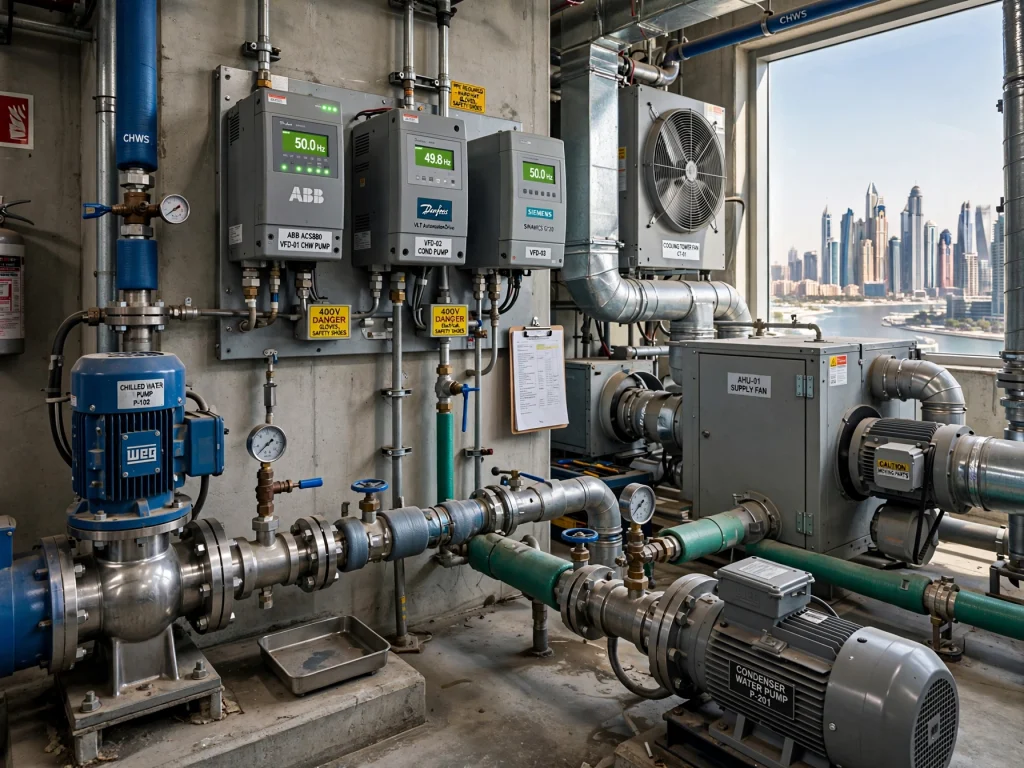
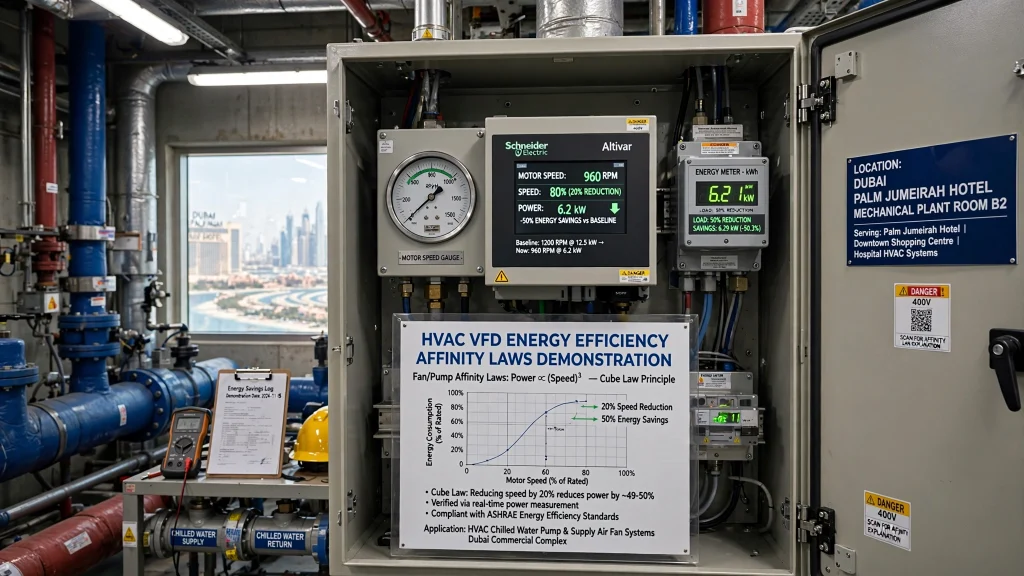
Energy Savings Through VFD Technology
The biggest advantage of Variable Frequency Drives is energy efficiency.
HVAC fans and pumps follow the affinity laws, which show that energy consumption changes dramatically with motor speed adjustments. A small reduction in motor speed can result in significant energy savings.
For example, reducing a fan or pump speed by 20% can reduce energy consumption by approximately 50% because power consumption is related to the cube of speed.
This makes VFD installation especially valuable in large commercial buildings where HVAC equipment operates continuously.
Hotels in Palm Jumeirah, shopping centres in Downtown Dubai, hospitals, universities, and manufacturing facilities in Dubai Industrial City can achieve substantial reductions in electricity consumption by integrating VFD systems into their HVAC infrastructure.
Improving Chiller Plant Efficiency
Chiller plants are among the most energy-intensive components in large commercial buildings.
A typical chilled water system includes:
- Chillers
- Compressors
- Evaporators
- Condensers
- Primary chilled water pumps
- Secondary chilled water pumps
- Condenser water pumps
- Cooling towers
- Air handling units
VFD technology improves chiller plant performance by controlling pump speeds and cooling tower fan operation according to actual cooling demand.
For example, during periods of lower cooling requirements, chilled water pumps can operate at reduced speeds instead of running at maximum capacity. This reduces electrical consumption while maintaining stable chilled water flow.
Large developments in areas such as Dubai Marina, Dubai Creek Harbour, and Business Bay often utilise advanced chilled water systems integrated with VFD controls to optimise building cooling performance.
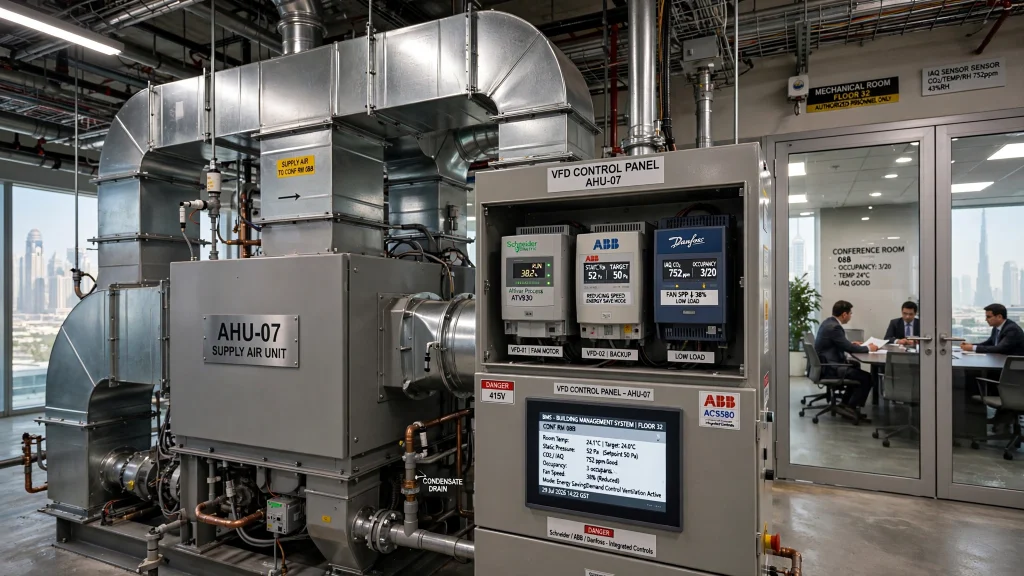
Enhancing Air Handling Unit Performance
Air Handling Units (AHUs) distribute conditioned air throughout commercial buildings.
Traditional AHU fan motors operate at constant speeds, even when airflow requirements change. This can result in excessive energy consumption and unstable indoor conditions.
Installing VFDs on AHU fan motors allows airflow adjustment based on:
- Temperature sensors
- Occupancy levels
- Static pressure requirements
- Indoor air quality measurements
- Building automation signals
For example, when fewer occupants are present in a conference area or office floor, the VFD reduces fan speed while maintaining comfortable conditions.
This approach improves energy efficiency while extending fan motor lifespan.
Supporting Building Management Systems (BMS)
Modern buildings increasingly depend on Building Management Systems (BMS) to monitor and control mechanical systems.
VFDs integrate seamlessly with BMS platforms through communication protocols such as:
- BACnet
- Modbus
- LonWorks
- Ethernet/IP
Through BMS integration, facility managers can monitor:
- Motor speed
- Energy consumption
- Operating hours
- Fault conditions
- Pressure levels
- Temperature data
Smart automation allows HVAC systems to respond automatically to changing conditions without constant manual adjustments.
Commercial buildings throughout Dubai, including high-rise towers in Downtown Dubai and mixed-use developments in Dubai Hills, benefit from BMS-connected VFD solutions for improved energy management.
Improving Indoor Comfort and Temperature Stability
Energy efficiency is important, but HVAC performance is also measured by occupant comfort.
Systems operating at fixed speeds often create temperature fluctuations because they cannot respond quickly to changing conditions.
VFD-controlled HVAC systems provide smoother operation by continuously adjusting output according to demand.
This helps maintain:
- Stable indoor temperatures
- Balanced airflow
- Improved humidity control
- Better ventilation performance
- Reduced hot and cold spots
In luxury hotels, residential towers, offices, and retail environments across Dubai, maintaining consistent indoor comfort directly influences customer satisfaction and occupant productivity.
Reducing Mechanical Wear and Maintenance Costs
Frequent starting and stopping of HVAC motors creates mechanical stress.
Traditional motors experience high electrical and mechanical loads during startup, which can reduce equipment lifespan.
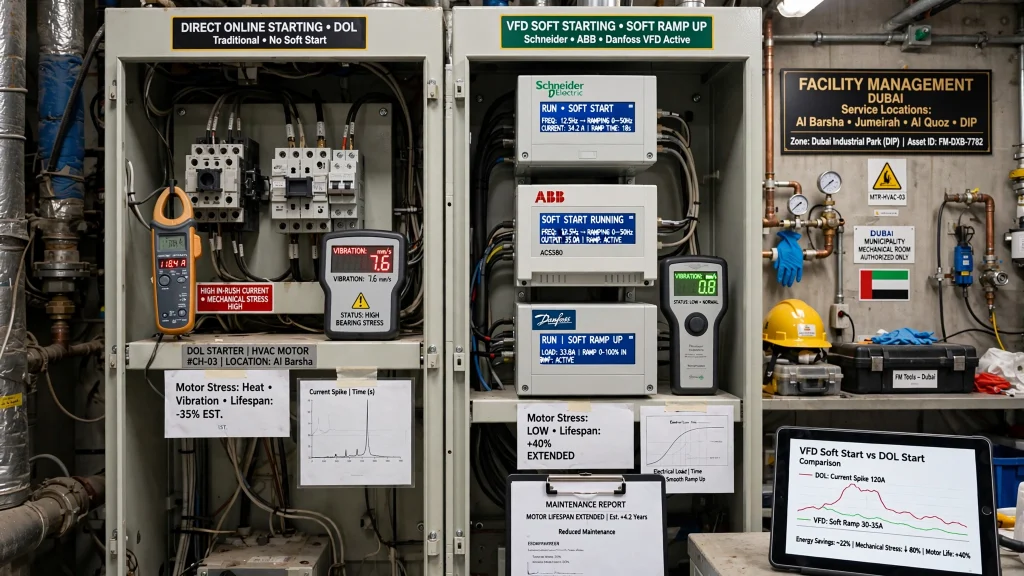
VFDs provide soft starting capabilities by gradually increasing motor speed instead of immediately applying full power.
Benefits include:
- Reduced motor stress
- Lower vibration
- Extended equipment lifespan
- Reduced maintenance requirements
- Improved operational reliability
For facility managers responsible for large buildings in areas such as Al Barsha, Jumeirah, Al Quoz, and Dubai Investment Park (DIP), reducing unexpected HVAC failures is essential for maintaining uninterrupted operations.
Applications of VFDs in Commercial Buildings
Variable Frequency Drives are suitable for a wide range of HVAC environments, including:
Office Buildings
Corporate towers require efficient cooling systems because occupancy levels change throughout the day. VFD-controlled AHUs and chilled water pumps improve energy management while maintaining employee comfort.
Hotels and Resorts
Hotels operate continuously and require precise climate control. VFD technology helps manage cooling demand in guest rooms, restaurants, lobbies, meeting spaces, and recreational facilities.
Shopping Malls
Large retail centres require powerful HVAC systems. VFD-controlled ventilation and cooling equipment help reduce operational expenses while maintaining comfortable shopping environments.
Industrial Facilities
Warehouses and manufacturing facilities in Jebel Ali and Dubai South require reliable ventilation and temperature control. VFDs improve motor efficiency and reduce energy costs.
Residential Towers
High-rise communities in Dubai Marina, Business Bay, and Dubai Hills use VFD solutions to improve central cooling system performance and reduce electricity consumption.
Role of Professional HVAC Specialists in VFD Installation
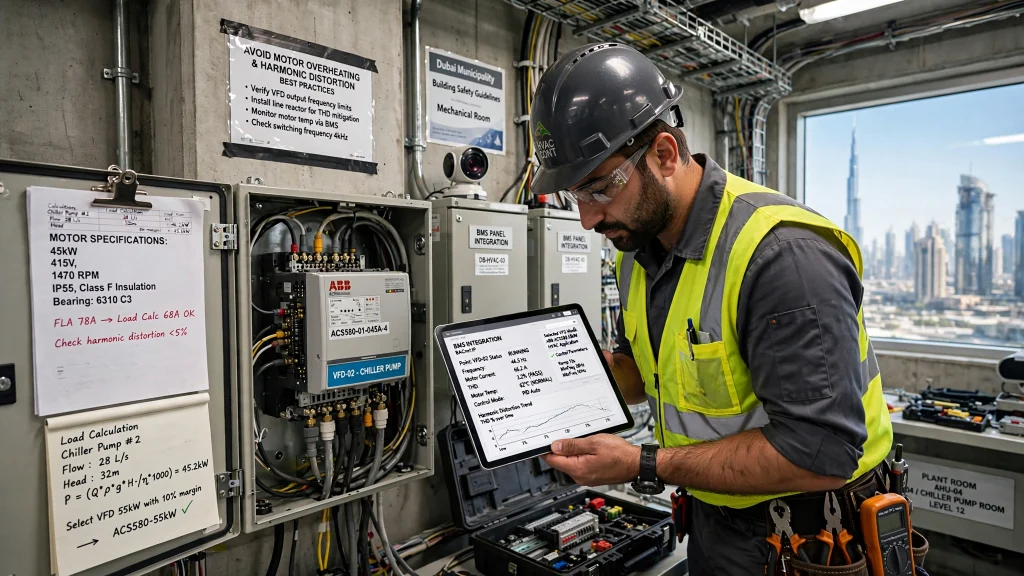
Proper VFD installation requires technical knowledge of HVAC design, electrical systems, motor specifications, control systems, and building requirements.
Professional HVAC contractors in Dubai evaluate existing HVAC equipment, calculate load requirements, select suitable VFD models, configure control parameters, and integrate systems with BMS platforms.
Incorrect VFD selection or installation can result in performance issues such as motor overheating, harmonic distortion, poor airflow, or inefficient operation.
Experienced HVAC professionals ensure that VFD systems are correctly sized and programmed according to equipment specifications and building requirements.
VFDs Improve Variable Air Volume (VAV) Systems
Variable Air Volume (VAV) systems are widely used in modern commercial buildings because they provide efficient airflow control.
Traditional Constant Air Volume (CAV) systems supply a fixed amount of air regardless of occupancy or room requirements. This can lead to energy waste because ventilation demand changes throughout the day.
VAV systems combined with VFD-controlled AHU fans allow buildings to adjust airflow based on actual requirements.
For example, an office building in Business Bay may have fully occupied meeting rooms during daytime hours but partially occupied areas in the evening. Sensors detect changing conditions and signal the VFD to adjust fan speed accordingly.
This creates:
- Improved energy efficiency
- Better temperature control
- Reduced fan energy consumption
- Improved indoor air quality
- Greater occupant comfort
Modern smart buildings across Dubai increasingly integrate VAV systems with Building Management Systems (BMS) to achieve automated HVAC control.
VFDs and Indoor Air Quality Management
Indoor air quality has become a major consideration for commercial buildings, especially offices, healthcare facilities, educational institutions, and hospitality projects.
HVAC systems must balance fresh air requirements with energy efficiency. Running ventilation fans continuously at maximum speed can waste energy, while insufficient ventilation can affect indoor comfort.
VFD technology allows ventilation systems to adjust airflow based on:
- Carbon dioxide (CO₂) sensors
- Occupancy monitoring
- Indoor air quality sensors
- Humidity levels
- Building schedules
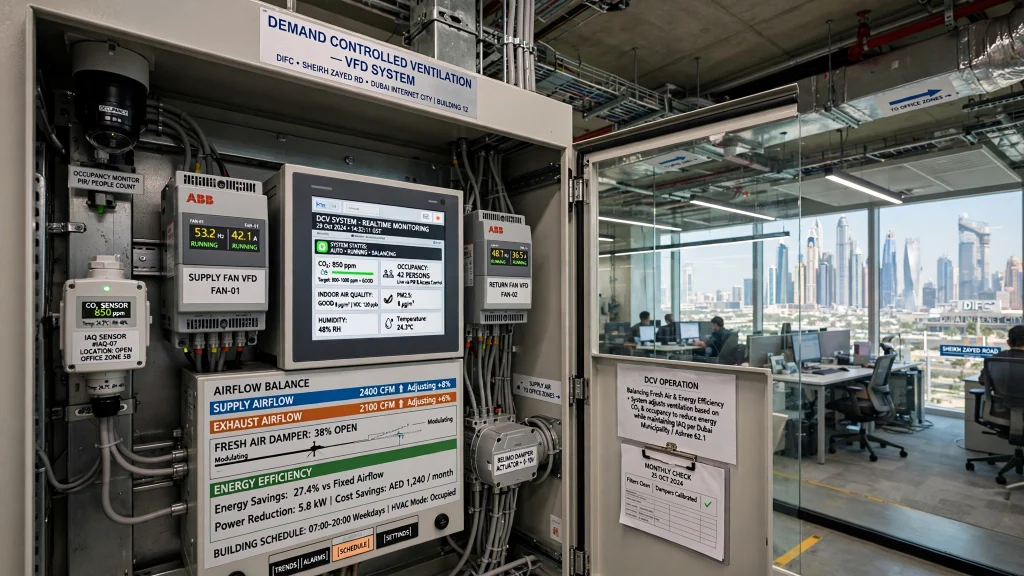
Demand-controlled ventilation systems reduce unnecessary airflow when occupancy is low while increasing ventilation when more fresh air is required.
This technology is particularly valuable in Dubai’s high-density commercial areas such as DIFC, Sheikh Zayed Road, Downtown Dubai, and Dubai Internet City, where maintaining healthy indoor environments is essential.
VFD Compared With Traditional Motor Control Systems
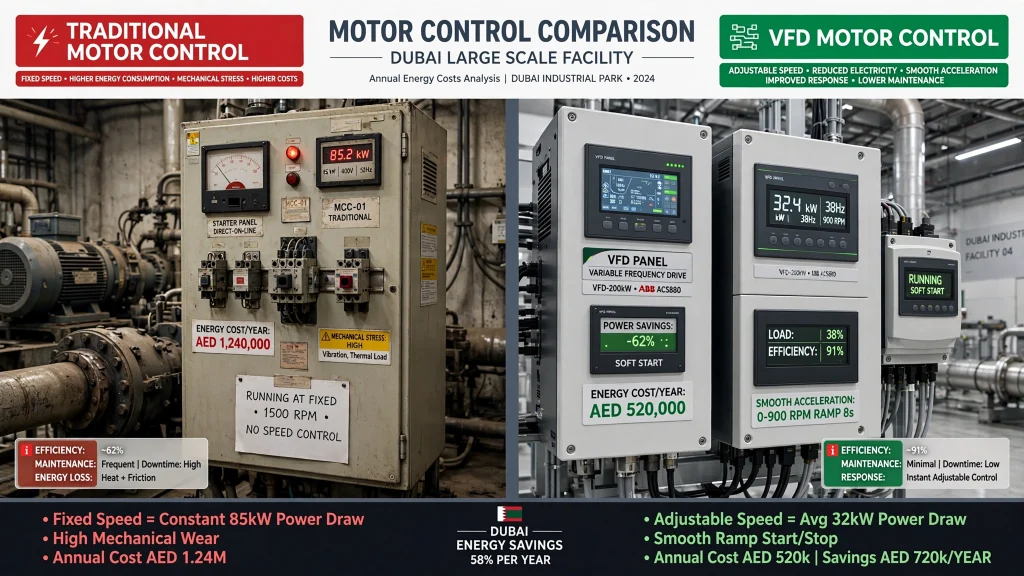
Traditional HVAC motors commonly use direct-on-line starters or fixed-speed controls. These systems provide limited flexibility because motors operate either fully on or fully off.
VFD technology provides intelligent speed control, allowing HVAC equipment to operate according to demand.
Traditional Motor Control:
- Fixed operating speed
- Higher energy consumption
- Increased mechanical stress during startup
- Limited system adjustment
- Higher operational costs
VFD Motor Control:
- Adjustable motor speed
- Reduced electricity consumption
- Smooth motor acceleration
- Improved system response
- Lower maintenance requirements
For large-scale facilities, the difference between these two technologies can significantly impact annual energy costs.
Managing Electrical Harmonics in VFD Systems
Although VFDs provide major energy benefits, proper electrical design is important because they can introduce harmonic distortion into electrical systems.
A VFD converts incoming AC power into DC power and then recreates controlled AC output for the motor. This switching process can create electrical harmonics that may affect sensitive equipment if not properly managed.
Professional HVAC and electrical specialists may use:
- Harmonic filters
- Line reactors
- Passive filters
- Active harmonic correction systems
- Proper grounding techniques
Correct installation ensures reliable operation and protects other building systems.
Large commercial facilities such as hospitals, data centres, hotels, and industrial buildings require careful harmonic management because electrical stability is critical.
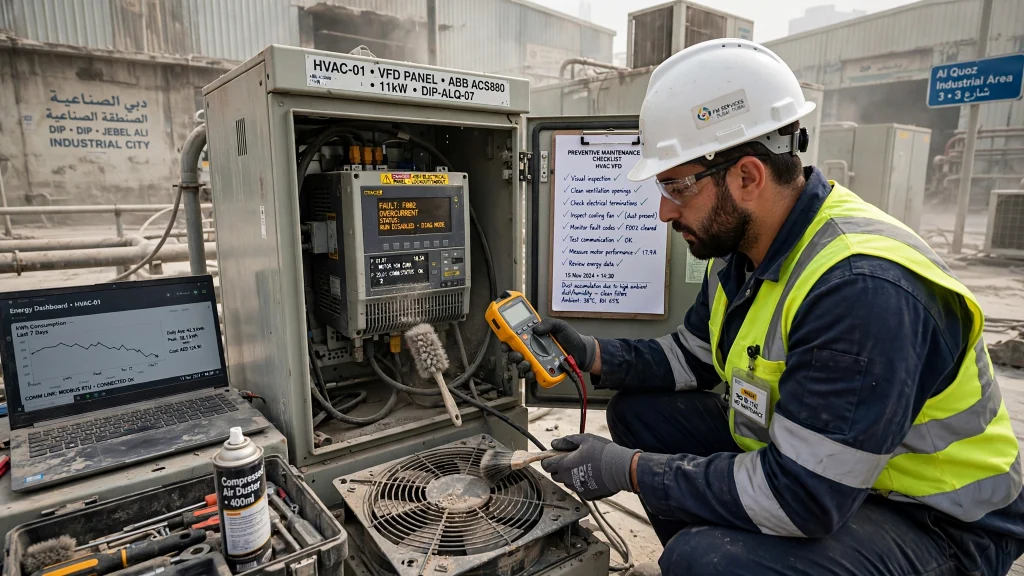
VFD Maintenance and Performance Monitoring
Like all HVAC equipment, VFD systems require regular inspection and maintenance to maintain maximum efficiency.
Preventive maintenance typically includes:
- Checking electrical connections
- Inspecting cooling fans
- Monitoring fault codes
- Cleaning ventilation openings
- Testing communication systems
- Checking parameter settings
- Measuring motor performance
- Reviewing energy consumption data
Dust, heat, and humidity can affect electronic components, making regular inspection especially important in Dubai’s climate.
Facilities located in industrial areas such as Al Quoz, Jebel Ali, Dubai Industrial City, and Dubai Investment Park require scheduled maintenance because HVAC systems often operate under demanding conditions.
Integration of VFDs With Smart Building Automation
The future of HVAC efficiency depends heavily on automation and intelligent control systems.
VFDs are becoming a central component of smart buildings because they allow HVAC equipment to communicate with advanced automation platforms.
When connected with:
- Building Management Systems (BMS)
- Internet of Things (IoT) sensors
- Energy Management Systems (EMS)
- Artificial intelligence platforms
- Cloud-based monitoring solutions
VFDs enable predictive operation and advanced energy optimisation.
For example, an intelligent building system can analyse occupancy patterns, weather conditions, and historical energy data to automatically adjust HVAC performance.
New developments in Dubai South, Expo City Dubai, Dubai Creek Harbour, and Dubai Hills are increasingly adopting smart building technologies that combine automation with energy-efficient HVAC solutions.
Financial Benefits of Installing VFD Systems
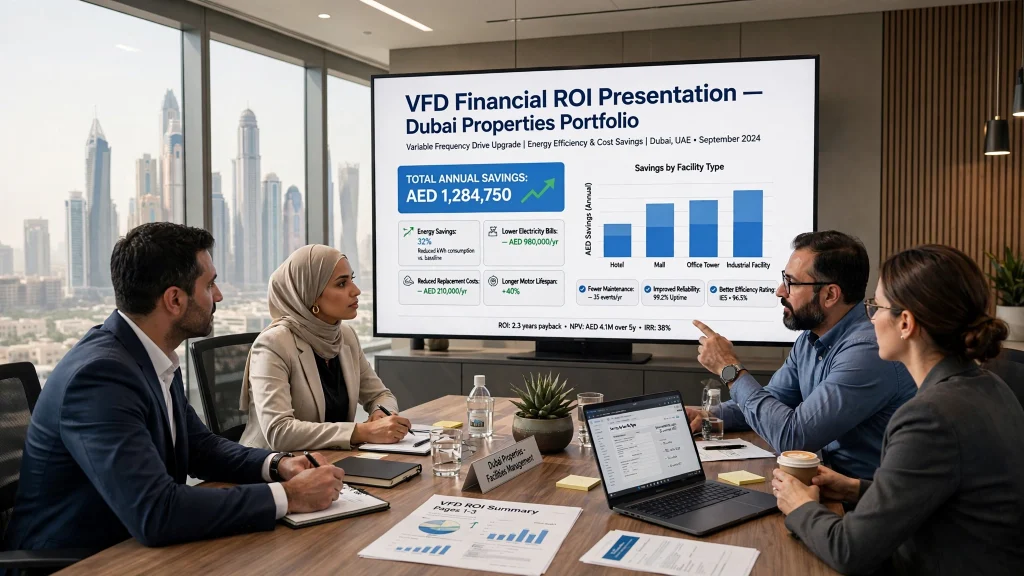
Although VFD installation requires an initial investment, the long-term financial benefits are significant.
Energy savings are one of the biggest advantages. Since HVAC systems represent a major portion of building electricity consumption, reducing motor speed during low-demand periods can create substantial savings.
Additional financial benefits include:
- Lower electricity bills
- Reduced equipment replacement costs
- Longer motor lifespan
- Fewer maintenance requirements
- Improved system reliability
- Better building efficiency ratings
For hotels, malls, office towers, and industrial facilities, VFD technology can provide a strong return on investment over the operational life of the HVAC system.
Importance of Correct VFD Selection
Not every HVAC system requires the same VFD solution. Proper selection depends on several factors, including:
- Motor power rating
- Voltage requirements
- Operating conditions
- Load characteristics
- Communication requirements
- Environmental conditions
- Application type
For example, a VFD used for a chilled water pump may require different programming compared to a VFD controlling an exhaust fan or cooling tower motor.
Incorrect sizing can reduce efficiency and create operational problems.
Professional HVAC engineers evaluate system requirements before selecting and configuring suitable VFD equipment.
Future of VFD Technology in HVAC Systems
As buildings become smarter and sustainability requirements become stricter, VFD technology will continue playing an important role in HVAC efficiency.
Future developments will include:
- Artificial intelligence-based motor control
- Advanced energy analytics
- Wireless monitoring
- Self-adjusting HVAC systems
- Improved motor efficiency
- Integration with renewable energy systems
- Predictive maintenance technology
The combination of VFDs, smart sensors, automation systems, and efficient HVAC equipment will help buildings achieve better performance while reducing environmental impact.
Conclusion
Variable Frequency Drives have transformed the way modern HVAC systems operate. By controlling motor speed according to actual demand, VFD technology improves energy efficiency, enhances comfort, reduces maintenance costs, and extends equipment lifespan.
From chilled water pumps and cooling towers to AHU fans and ventilation systems, VFDs provide intelligent control that helps commercial buildings operate more efficiently.
In Dubai’s challenging climate, where air conditioning systems are essential throughout much of the year, adopting energy-efficient HVAC technologies is becoming increasingly important for businesses, property developers, and facility managers.
Whether managing a luxury hotel in Palm Jumeirah, an office tower in Downtown Dubai, a residential building in Dubai Marina, or an industrial facility in Jebel Ali, properly designed VFD solutions help create reliable, cost-effective, and sustainable HVAC systems.
As the demand for smart buildings and energy-efficient infrastructure continues growing, Variable Frequency Drives will remain a key technology in improving HVAC performance across Dubai and the wider UAE.