Large commercial and industrial developments require far more than a standard air conditioning installation. Whether constructing a high-rise office tower, luxury hotel, shopping mall, hospital, manufacturing facility, airport terminal, or mixed-use development, the cooling system becomes one of the most important engineering assets within the building. A properly designed commercial chiller system provides stable indoor temperatures, improves energy efficiency, protects valuable equipment, and ensures uninterrupted business operations throughout the year.
Choosing the right chiller contractor is therefore one of the most critical decisions during any construction or renovation project. While many companies offer HVAC installation services, only experienced commercial chiller specialists possess the engineering expertise needed to design, install, commission, and maintain complex chilled water systems. Every stage of the project, from initial planning and cooling load calculations to equipment selection and system optimization, directly affects long-term operating costs and overall building performance.
In the UAE, where cooling systems operate under extreme environmental conditions for much of the year, selecting a qualified contractor becomes even more important. High ambient temperatures, humidity, and continuous building occupancy place enormous demands on commercial HVAC equipment. Contractors must not only understand advanced mechanical engineering principles but also have practical experience delivering reliable cooling solutions across different commercial sectors.
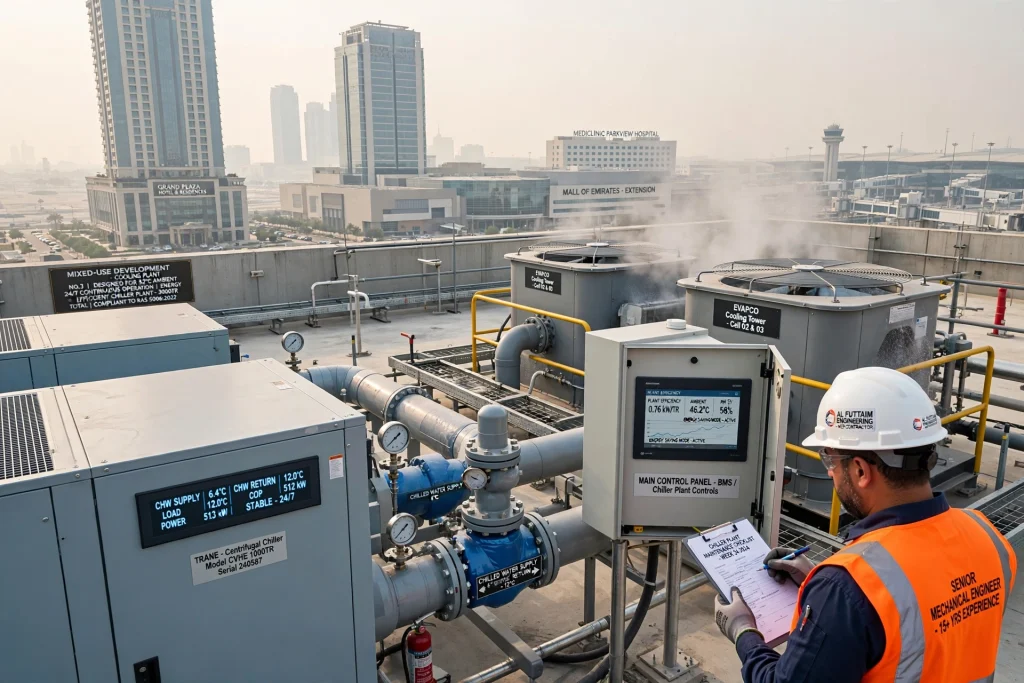
Understanding the Importance of Commercial Chiller Systems
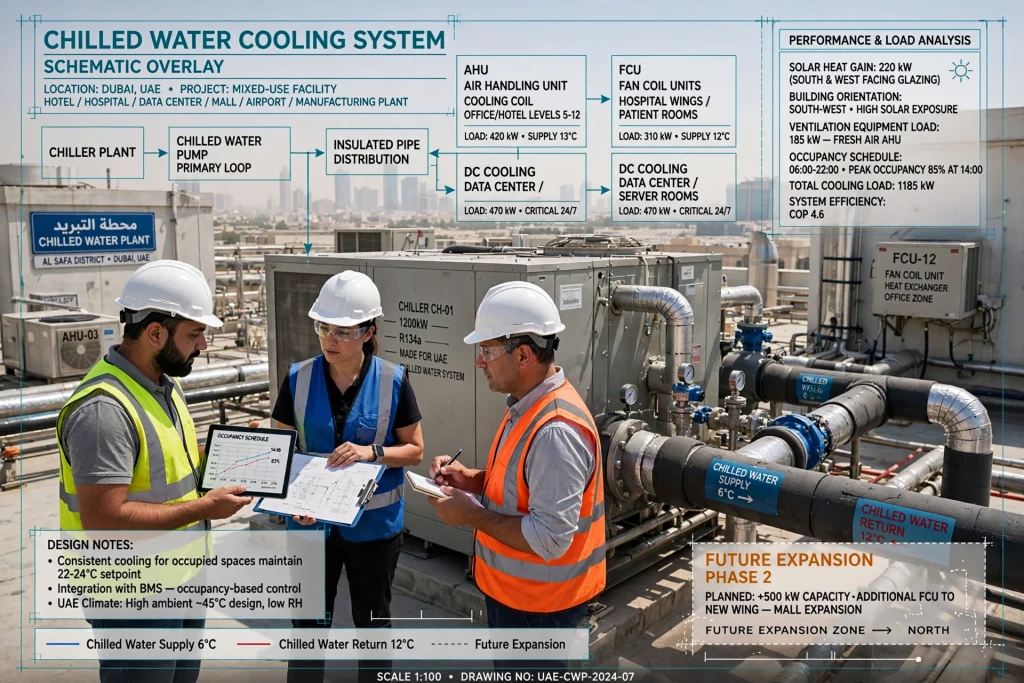
Commercial chillers are designed to remove heat from buildings by producing chilled water that circulates through an extensive network of insulated pipes. This chilled water is delivered to Air Handling Units (AHUs), Fan Coil Units (FCUs), and heat exchangers located throughout the property, providing consistent cooling for occupied spaces. Unlike individual air conditioning units, centralized chilled water systems are capable of serving large buildings with significantly greater efficiency and operational reliability.
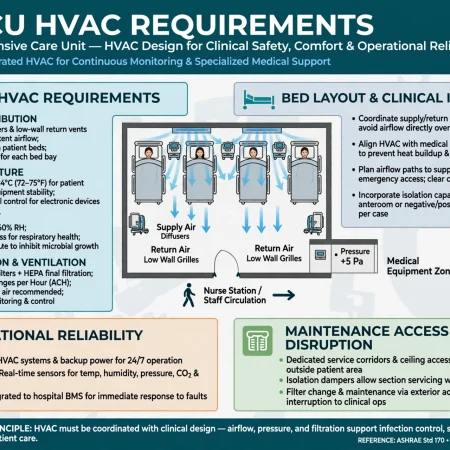
Every commercial facility has unique cooling requirements. Hotels require continuous operation to maintain guest comfort around the clock, hospitals depend on stable temperatures for patient care and medical equipment, while manufacturing plants often require process cooling alongside comfort cooling. Data centers, educational institutions, shopping malls, airports, and corporate headquarters all present different operational challenges that influence system design.
Because these buildings rely heavily on uninterrupted cooling, contractors must evaluate much more than equipment capacity. They consider occupancy levels, operating schedules, solar heat gain, lighting systems, building orientation, ventilation rates, internal equipment loads, and future expansion plans before recommending a suitable cooling solution. This engineering approach ensures the system performs efficiently throughout its operational life rather than simply meeting immediate cooling requirements.
Why Contractor Selection Influences Project Success
The quality of a commercial chiller installation depends largely on the experience and technical capability of the contractor responsible for the project. Even the most advanced chiller cannot deliver reliable performance if it has been incorrectly selected, poorly installed, or inadequately commissioned.
Experienced contractors begin by conducting a detailed assessment of the building. Cooling load calculations determine the amount of heat that must be removed under peak operating conditions, allowing engineers to specify equipment with the correct capacity. Oversized chillers consume unnecessary electricity and experience excessive compressor cycling, while undersized systems struggle to maintain comfortable temperatures during the hottest months of the year.
Beyond sizing the equipment, contractors design the complete chilled water network. This includes chilled water pumps, condenser water pumps, cooling towers, expansion tanks, insulated pipework, balancing valves, plate heat exchangers, Variable Frequency Drives (VFDs), and intelligent Building Management Systems (BMS). Each component must operate together as part of an integrated mechanical system, making proper engineering coordination essential.
Contractors also collaborate with architects, structural engineers, electrical consultants, plumbing specialists, and project managers throughout the construction process. Their ability to coordinate with multiple disciplines reduces installation conflicts and helps maintain project schedules without compromising system quality.
Evaluating Technical Experience
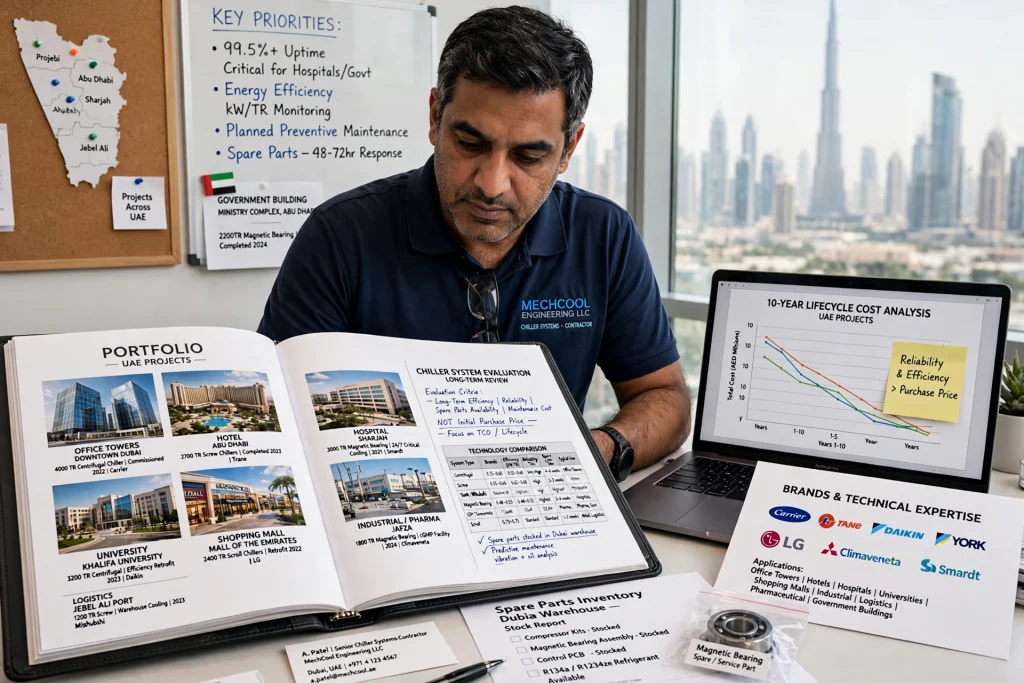
Experience should always be one of the first factors considered when selecting a contractor for a large commercial project. Companies that regularly complete commercial chiller installations develop practical knowledge that cannot be gained through theory alone. They understand how different building types affect cooling demand and are familiar with the operational challenges associated with various industries.
A contractor with experience in office towers may also have completed projects involving hotels, hospitals, universities, shopping malls, industrial facilities, logistics centers, pharmaceutical plants, and government buildings. This diverse background allows engineers to adapt system designs according to the specific operational requirements of each facility.
Technical expertise also extends to familiarity with internationally recognized manufacturers such as Carrier, Trane, Daikin, York, Mitsubishi Electric, LG, Climaveneta, and Smardt. Experienced contractors understand the advantages of screw chillers, centrifugal chillers, scroll compressors, magnetic bearing technology, and modern refrigerant systems. Rather than recommending equipment based solely on purchase price, they evaluate long-term efficiency, reliability, spare parts availability, and maintenance requirements before making recommendations.
Accurate Cooling Load Calculations Are Essential
One of the defining characteristics of professional chiller contractors is their commitment to engineering accuracy. Cooling load calculations form the foundation of every successful HVAC project and should never be based on assumptions or simplified estimates.
Engineers evaluate numerous variables, including floor area, ceiling height, building orientation, insulation quality, glass façade design, occupancy density, lighting systems, electrical equipment, fresh air requirements, and local climate conditions. These calculations establish the building’s peak cooling demand and help determine the most appropriate equipment configuration.
Large commercial developments often include multiple occupancy types within the same property. A mixed-use development may combine retail outlets, restaurants, office spaces, residential apartments, and entertainment facilities, each with different cooling requirements. Professional contractors account for these variations to ensure the chilled water system performs efficiently under changing operating conditions.
Buildings located in Business Bay, DIFC, Downtown Dubai, Dubai Hills, Palm Jumeirah, Dubai Marina, Dubai Silicon Oasis, Al Quoz, and Jebel Ali also experience different occupancy patterns and operational demands. Contractors with local experience understand how these factors influence equipment selection and system design.
Choosing the Right Chiller Technology
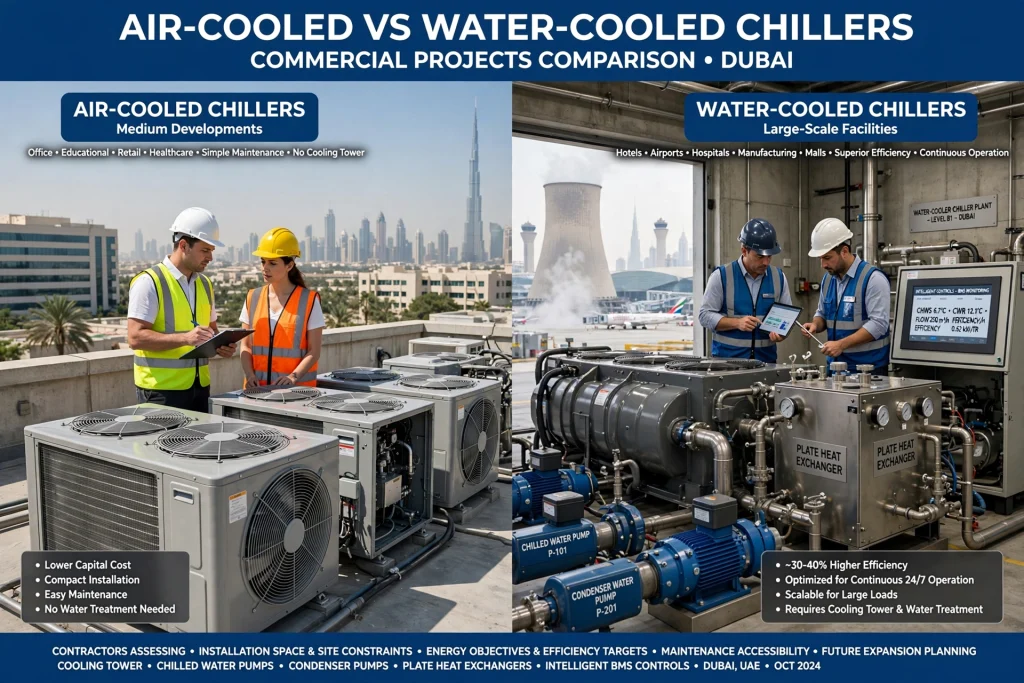
Commercial projects require careful evaluation before selecting between air-cooled and water-cooled chillers. Air-cooled systems are often preferred for medium-sized developments where installation simplicity and reduced maintenance are important considerations. These systems eliminate the need for cooling towers while providing dependable performance for office buildings, educational institutions, retail centers, and healthcare facilities.
Water-cooled chillers, however, are generally selected for larger commercial developments where maximum energy efficiency and greater cooling capacity justify the additional infrastructure. Hotels, airports, hospitals, manufacturing facilities, and large shopping malls frequently benefit from water-cooled technology because of its superior performance during continuous operation.
Professional contractors assess available installation space, energy objectives, maintenance accessibility, operating schedules, and future expansion plans before recommending the most appropriate system. They also evaluate supporting equipment such as cooling towers, chilled water pumps, condenser water pumps, plate heat exchangers, and intelligent control systems to ensure every component contributes to long-term operational efficiency.
Installation Quality Determines Long-Term Performance
Once the engineering design has been finalized and the equipment has been selected, the focus shifts to installation. This stage has a direct influence on the efficiency, reliability, and lifespan of the entire cooling system. Even the highest-quality commercial chiller cannot deliver its full performance if supporting components are installed incorrectly or if commissioning procedures are overlooked.
Professional contractors begin by preparing the installation site and verifying that the structural foundation can safely support the weight of the chiller, pumps, piping, and auxiliary equipment. Proper positioning is equally important because commercial chillers require adequate airflow, maintenance clearance, and sufficient space for future servicing. During large developments in areas such as Business Bay, Downtown Dubai, and Dubai Hills, contractors often coordinate with architects and structural consultants to ensure mechanical equipment integrates smoothly with the building design.
After positioning the equipment, engineers install insulated chilled water piping, condenser water lines, expansion vessels, balancing valves, isolation valves, strainers, and pressure monitoring devices. Every pipe connection is pressure-tested before insulation is applied to eliminate leaks that could affect long-term system performance. Electrical connections, control panels, sensors, and communication cables are then connected to the Building Management System (BMS), enabling facility managers to monitor operating conditions from a centralized platform.
Throughout the installation process, strict quality control procedures ensure that compressors, condensers, evaporators, chilled water pumps, cooling towers, Variable Frequency Drives (VFDs), and plate heat exchangers operate as a fully integrated system rather than as separate pieces of equipment.
Why Commissioning Is Critical for Large Commercial Projects
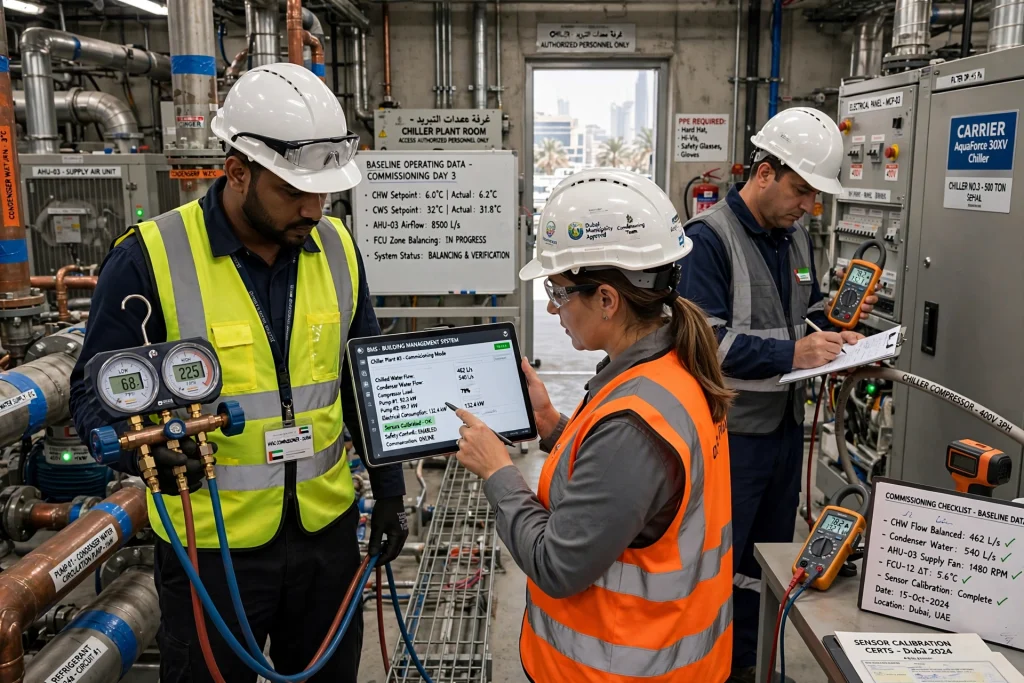
Many building owners underestimate the importance of commissioning, yet it is one of the most valuable stages of a commercial HVAC project. Commissioning confirms that every component performs according to the original engineering design before the building becomes fully operational.
During this process, engineers verify refrigerant pressures, chilled water flow rates, condenser water circulation, compressor loading, pump performance, electrical consumption, sensor calibration, and safety controls. They also test communication between the chiller plant and the Building Management System to ensure operating data is accurately transmitted and recorded.
System balancing is another important aspect of commissioning. Engineers adjust water flow through different sections of the chilled water network so that every Air Handling Unit (AHU) and Fan Coil Unit (FCU) receives the correct amount of chilled water. Without proper balancing, certain areas of the building may experience uneven cooling while the chiller consumes additional energy trying to compensate for system inefficiencies.
Comprehensive commissioning also establishes baseline operating data that can be used during future maintenance inspections. Facility managers are able to compare current performance against original commissioning values, making it easier to identify gradual changes before they become major mechanical failures.
Preventive Maintenance Is an Investment, Not an Expense
Commercial chillers are expected to operate continuously for many years, often under demanding environmental conditions. Preventive maintenance protects this investment by maintaining peak operating efficiency while reducing the likelihood of unexpected breakdowns.
Rather than waiting for equipment to fail, experienced contractors schedule routine inspections throughout the year. During these visits, engineers examine compressor performance, refrigerant levels, condenser cleanliness, evaporator efficiency, electrical components, chilled water pumps, expansion tanks, and cooling tower operation. Every inspection provides valuable information about the overall health of the system.
Water treatment also plays a significant role in maintaining commercial cooling systems. Water-cooled chillers depend on clean condenser water to transfer heat efficiently. Without proper chemical treatment, mineral deposits, corrosion, algae, and biological contamination gradually reduce heat transfer, forcing compressors to work harder and increasing electricity consumption.
Facilities located in industrial areas such as Jebel Ali, Dubai Investment Park, and Al Quoz often require more frequent inspections because airborne dust and industrial contaminants accelerate equipment wear. Contractors familiar with these environments understand how local operating conditions influence maintenance schedules and system performance.
Energy Efficiency Should Be Part of Every Project
Reducing electricity consumption has become a major objective for commercial property owners throughout the UAE. Since HVAC systems account for a significant portion of a building’s energy usage, improving chiller efficiency can produce substantial financial savings over the equipment’s lifetime.
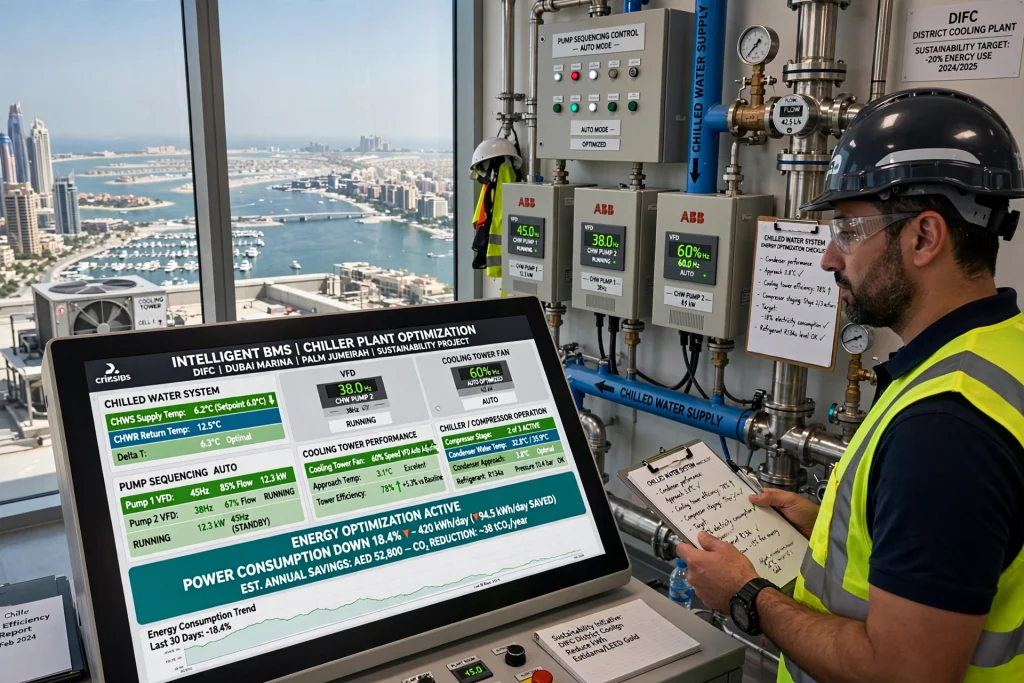
Professional contractors evaluate the complete chilled water system rather than focusing exclusively on the chiller itself. Engineers assess chilled water temperatures, condenser performance, cooling tower efficiency, refrigerant operation, water flow rates, and pump sequencing to identify opportunities for optimization.
Variable Frequency Drives allow pumps and cooling tower fans to adjust motor speed according to actual cooling demand instead of operating continuously at full capacity. This technology reduces unnecessary electricity consumption while extending equipment life.
Intelligent Building Management Systems further improve efficiency by continuously monitoring operating conditions and automatically adjusting compressor staging, chilled water temperatures, condenser water flow, and equipment scheduling. These automated controls ensure the system delivers only the cooling required at any given time, minimizing wasted energy without sacrificing occupant comfort.
Many newly constructed commercial developments across DIFC, Dubai Marina, Palm Jumeirah, Dubai South, and Dubai Silicon Oasis now incorporate these advanced technologies as part of broader sustainability initiatives aimed at reducing operational costs and improving environmental performance.
Warning Signs of an Inexperienced Contractor
Not every company advertising commercial HVAC services possesses the expertise required for large-scale chiller projects. Businesses should carefully evaluate technical capability before awarding a contract.
Contractors who provide quotations without conducting detailed site assessments or cooling load calculations may be relying on assumptions rather than engineering analysis. Similarly, recommendations based solely on equipment price instead of lifecycle performance often result in higher operating costs over time.
Another warning sign is limited after-sales support. Commercial chillers require regular inspections, emergency response capabilities, software updates, spare parts availability, and experienced service engineers. Contractors lacking dedicated maintenance teams may struggle to provide timely support when technical issues arise.
Companies with genuine commercial experience are typically willing to discuss previous projects, explain engineering decisions, describe commissioning procedures, and outline long-term maintenance strategies. Their focus extends beyond installation because they understand that reliable cooling depends on continuous system optimization throughout the equipment’s operational life.
Future Trends in Commercial Chiller Systems
The commercial HVAC industry is continuously evolving as businesses demand more efficient, reliable, and environmentally responsible cooling solutions. Large commercial projects are no longer focused only on installing equipment with sufficient cooling capacity. Modern developments require intelligent systems that can reduce energy consumption, provide real-time performance data, and adapt automatically to changing operational conditions.
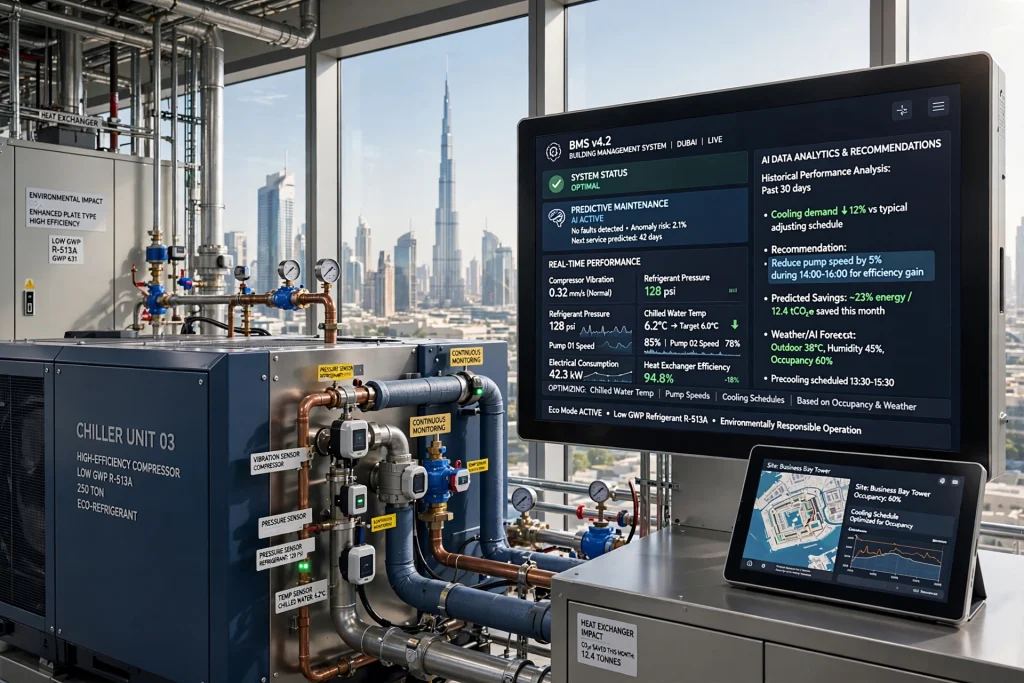
One of the biggest advancements in commercial cooling technology is the integration of smart monitoring and predictive maintenance systems. Traditional maintenance methods relied mainly on scheduled inspections, but modern chillers can now continuously analyze operating conditions through advanced sensors and digital platforms. Data related to compressor vibration, refrigerant pressure, chilled water temperature, electrical consumption, and pump performance can be monitored in real time, allowing engineers to identify potential issues before they result in unexpected failures.
Artificial intelligence and data analytics are also becoming increasingly important in large HVAC projects. Smart systems can analyze historical performance data and recommend operational adjustments that improve efficiency. For example, a Building Management System can automatically optimize chilled water temperatures, adjust pump speeds, and modify cooling schedules according to occupancy levels and outdoor weather conditions.
Another important trend is the development of environmentally friendly refrigerants and high-efficiency equipment. Manufacturers are introducing advanced compressors, improved heat exchanger designs, and low-global-warming-potential refrigerants that reduce environmental impact while maintaining strong cooling performance. These technologies are especially valuable for large commercial developments where even small efficiency improvements can result in significant cost savings over many years.
Selecting a Contractor for Complex Commercial Projects
Large-scale HVAC projects require a contractor that can provide complete engineering support rather than only equipment installation. The ideal contractor should have experience handling complex commercial environments and understand how different industries depend on reliable cooling performance.
When evaluating potential contractors, businesses should consider their technical capabilities, previous project experience, engineering resources, and maintenance support structure. A company with experience in high-rise buildings, hotels, hospitals, industrial facilities, and mixed-use developments will generally have a stronger understanding of the challenges involved in large chiller installations.
Project references are also valuable because they demonstrate practical experience. Reviewing previous installations helps businesses understand the contractor’s ability to manage complex projects, coordinate with other engineering teams, and deliver systems that perform efficiently after completion.
Another important factor is the contractor’s approach to long-term system performance. A reliable HVAC partner does not simply complete installation and leave the site. They provide ongoing support through preventive maintenance programs, performance monitoring, emergency repair services, and energy optimization recommendations.
For commercial developments requiring specialized cooling solutions, working with an experienced Chiller Contractor in Dubai Marina can provide valuable technical expertise for projects where reliability, efficiency, and professional system management are essential.
The Importance of Local Knowledge in UAE Projects
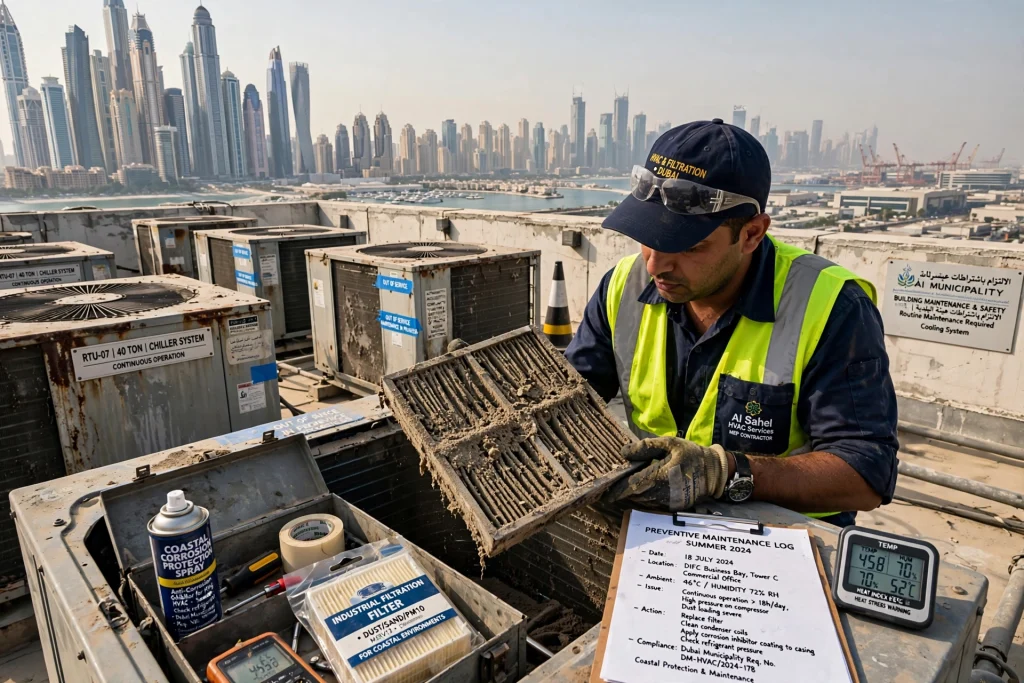
The UAE’s climate creates unique challenges for commercial cooling systems. High summer temperatures, humidity, dust conditions, and continuous operation place significant pressure on HVAC equipment. Contractors with local experience understand these conditions and can design systems that perform reliably throughout the year.
Dubai’s commercial landscape includes a wide range of developments, from luxury hotels and residential towers in Dubai Marina and Palm Jumeirah to corporate offices in DIFC and Business Bay, industrial facilities in Jebel Ali, and technology-focused developments in Dubai Silicon Oasis. Each location has different cooling requirements based on building design, occupancy patterns, and operational needs.
Local contractors are also familiar with regional construction practices, authority requirements, equipment availability, and maintenance challenges. This knowledge helps improve project coordination and reduces potential delays during installation and commissioning.
A contractor’s understanding of local conditions can also influence equipment selection. For example, systems installed in coastal areas may require additional protection against corrosion, while industrial facilities may need enhanced filtration and maintenance strategies due to environmental conditions. These practical considerations contribute significantly to long-term system reliability.
Conclusion
Choosing the right chiller contractor for a large project requires careful evaluation of technical expertise, engineering capability, and long-term service commitment. Commercial cooling systems are complex investments that influence building comfort, energy consumption, operational reliability, and maintenance costs for many years.
A professional contractor begins with accurate cooling load calculations, selects suitable equipment, designs an efficient chilled water system, manages quality installation, performs detailed commissioning, and provides ongoing maintenance support. Every stage of the process contributes to the final performance of the system.
Businesses should avoid selecting contractors based only on initial pricing. The true value of a commercial chiller project comes from reliable operation, reduced energy consumption, fewer breakdowns, and longer equipment lifespan. A contractor with proven experience, skilled engineers, and a commitment to quality can help ensure the cooling system continues performing efficiently throughout its service life.
As commercial development continues expanding across Dubai, Abu Dhabi, Sharjah, and other Emirates, the demand for advanced HVAC solutions will continue to increase. Companies that invest in professional engineering and reliable maintenance partnerships will benefit from improved comfort, lower operating expenses, and greater confidence in their building infrastructure.
A well-designed and professionally managed chiller system is not simply a cooling solution—it is a critical component that supports business continuity, sustainability, and long-term operational success.