Water damage can escalate quickly when a roof, terrace, bathroom, basement, balcony, swimming-pool area, or building envelope develops a leak. In Dubai, intense summer heat, occasional heavy rainfall, humidity, aging waterproofing membranes, blocked drainage systems, and building movement can all contribute to water intrusion.
A small damp patch may initially appear harmless, but continued water penetration can damage plaster, paint, ceilings, insulation, flooring, electrical components, cabinetry, and concrete. In more serious situations, moisture can contribute to corrosion of reinforcement or deterioration of construction materials.
This is why emergency waterproofing is different from routine waterproofing. The immediate objective is to control active water penetration, identify the likely source, protect the property from further damage, and plan a permanent waterproofing repair.
For property owners, landlords, facility managers, hotels, offices, retail spaces, warehouses, and residential communities across Dubai, understanding when emergency waterproofing is necessary can help prevent a localized leak from becoming a major building problem.
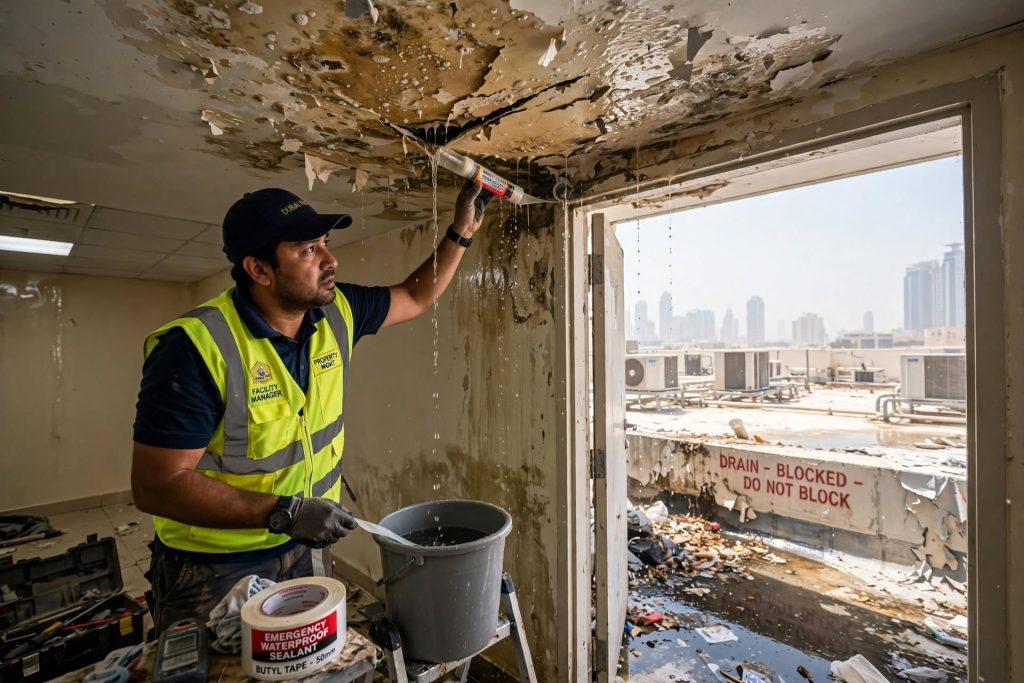
What Is Emergency Waterproofing?
Emergency waterproofing refers to urgent measures taken when unexpected water penetration threatens a building or structure.
It may involve:
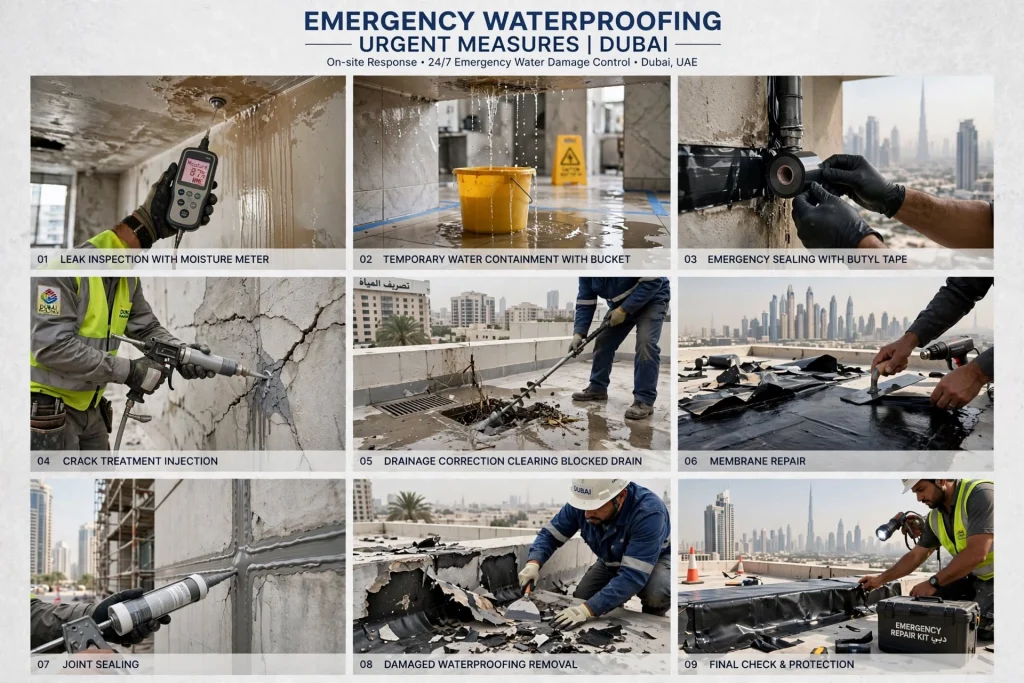
Leak inspection, temporary water containment, emergency sealing, crack treatment, drainage correction, membrane repair, joint sealing, damaged waterproofing removal, and permanent waterproofing restoration.
Emergency work is generally focused on stopping or reducing active water intrusion as quickly as practical.
It should not be confused with simply covering a wet surface with a waterproof coating.
A professional assessment is important because visible water damage does not always indicate the actual location where water entered.
Why Water Leaks Require Immediate Attention
Water can travel through construction materials before becoming visible.
A roof leak, for example, may enter through a small defect and travel along:
Concrete slabs, insulation, ceiling voids, pipes, electrical conduits, joints, and structural elements.
The visible stain may therefore appear several metres away from the actual waterproofing failure.
Delaying inspection can allow moisture to spread.
Over time, this may lead to:
Peeling paint, damaged plaster, mould growth, corrosion, unpleasant odours, ceiling deterioration, electrical hazards, and expensive repair work.
Early intervention can limit the affected area.
Common Signs of a Waterproofing Emergency
Not every damp mark requires emergency waterproofing, but certain signs deserve immediate investigation.
These include:
Active dripping, rapidly spreading ceiling stains, water pooling indoors, water entering through walls, leaking roof slabs, sudden basement seepage, wet electrical areas, damaged ceilings, and significant water accumulation after rainfall.
Other warning signs include bubbling paint, swollen materials, persistent dampness, and unexplained moisture around windows or doors.
The severity depends on the source, volume of water, location, building materials, and whether the leak is still active.
Roof Leaks in Dubai
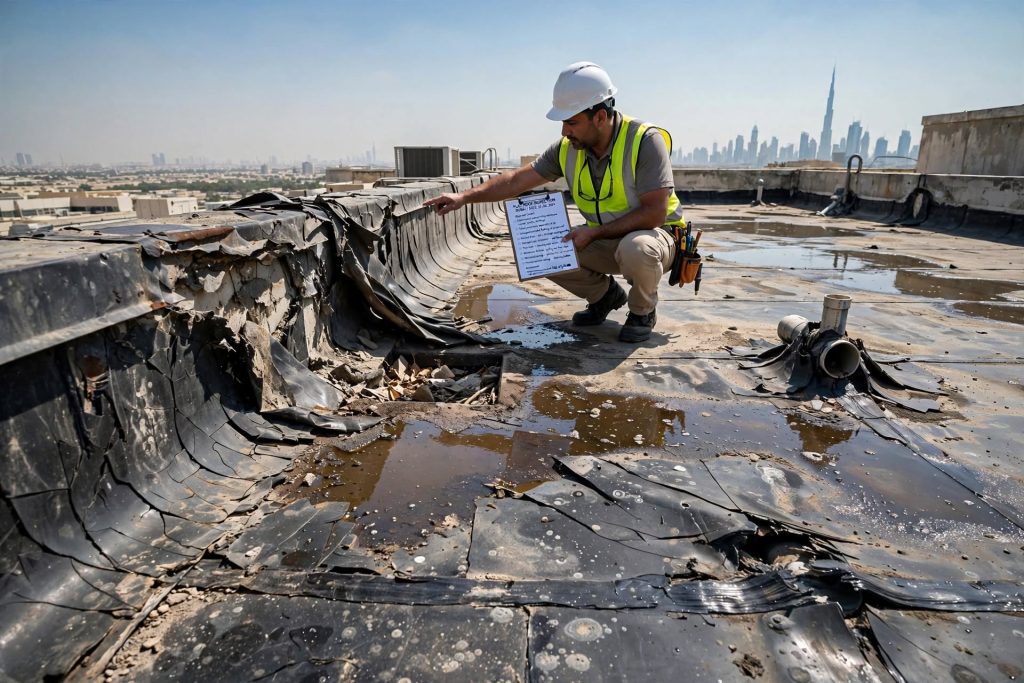
Roof leaks are among the most common reasons property owners seek urgent waterproofing assistance.
Flat roofs can be particularly vulnerable because water may remain on the surface when drainage is inadequate.
Potential causes include:
Deteriorated waterproofing membranes, cracks, failed joints, damaged flashing, blocked drains, damaged pipe penetrations, poor slopes, membrane shrinkage, and mechanical damage.
Dubai’s high temperatures can also expose roofing materials to repeated thermal expansion and contraction.
A professional inspection should determine whether the issue is localized or whether the existing waterproofing system has reached the end of its service life.
Emergency Roof Waterproofing
Emergency roof work may begin with controlling the immediate water entry.
Depending on the situation, temporary measures can include:
Local sealing, crack treatment, drain clearance, temporary protective coverings, joint repair, or localized membrane repair.
A permanent solution may subsequently require:
Surface preparation, removal of failed material, primer application, membrane installation, protective coating, drainage correction, or complete roof waterproofing replacement.
The correct solution depends on the roof’s condition.
Water Leaks After Heavy Rain
Although Dubai has a generally dry climate, periods of heavy rainfall can expose weaknesses in roofs and drainage systems.
A building may perform adequately during normal conditions but experience leakage when rainfall intensity increases.
Common contributing factors include:
Blocked roof drains, insufficient drainage capacity, deteriorated sealants, cracks, low spots, damaged membranes, and poorly sealed penetrations.
After significant rainfall, facility managers should inspect roofs, terraces, balconies, parking structures, and basement areas for signs of water intrusion.
Blocked Drainage and Waterproofing Problems
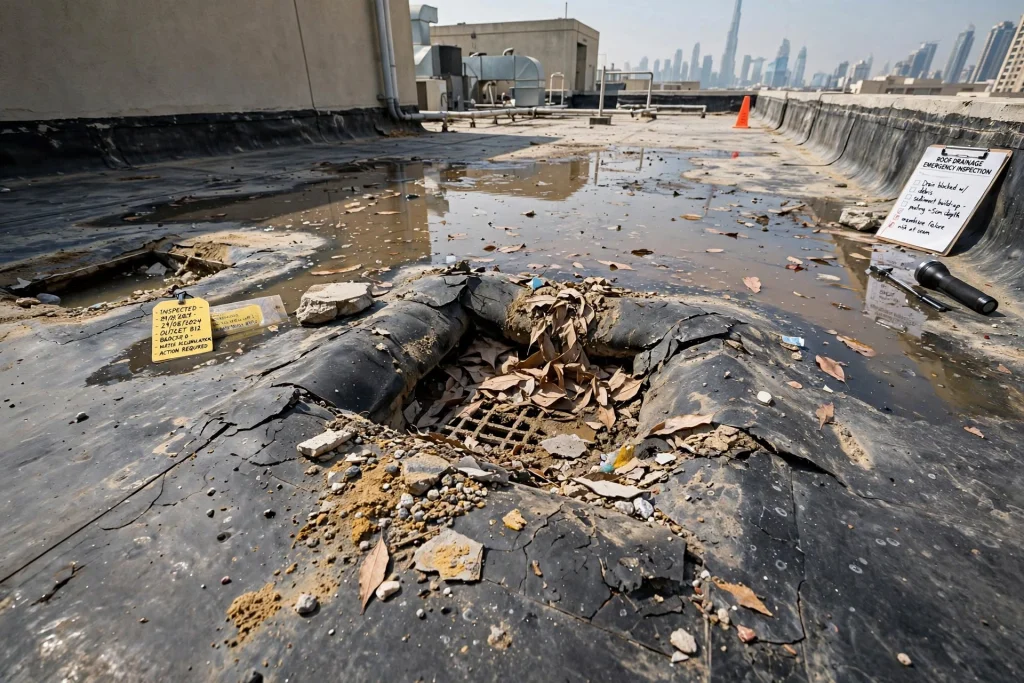
Waterproofing and drainage work together.
A waterproof membrane is not intended to compensate for permanently blocked drainage.
When drains become blocked with:
Leaves, dust, construction debris, sediment, or other materials,
water may accumulate on the roof.
Standing water increases exposure to the waterproofing system and may eventually find weak points.
Emergency waterproofing inspections should therefore include drainage outlets where appropriate.
Ceiling Water Damage
A water-stained ceiling can indicate leakage from:
Roof slabs, bathrooms, plumbing pipes, air-conditioning drainage, terraces, upper-floor wet areas, or building services.
It is important not to assume that every ceiling stain is a waterproofing problem.
A specialist should determine whether the source is:
Plumbing, condensation, waterproofing failure, drainage, or another building service.
Applying waterproofing to the ceiling itself without addressing the source is unlikely to provide a permanent solution.
Bathroom Waterproofing Emergencies
Bathrooms can develop leaks around:
Shower areas, floor drains, pipe penetrations, wall-floor junctions, bathtubs, toilets, and damaged tile or grout systems.
Water can migrate through tile joints and construction layers.
If a bathroom leak is affecting the ceiling below, immediate investigation is advisable.
The repair may involve plumbing inspection, localized waterproofing repair, joint sealing, or replacement of the affected waterproofing system.
Balcony and Terrace Leaks
Balconies and terraces are exposed to weather and drainage conditions.
Common waterproofing failure points include:
Floor-wall junctions, balcony edges, movement joints, door thresholds, drainage outlets, cracks, and penetrations.
A leak may initially appear as a small interior stain.
However, repeated moisture exposure can damage finishes and underlying materials.
Emergency repair should focus on identifying the water path and preventing further penetration.
Basement Water Seepage
Basements can experience water intrusion due to groundwater, hydrostatic pressure, cracks, construction joints, or drainage failures.
Warning signs include:
Wet basement walls, floor seepage, damp patches, puddles, efflorescence, musty smells, and water entering through construction joints.
Basement waterproofing requires particular attention because water pressure can force moisture through small defects.
In some cases, waterproofing must be combined with:
Drainage systems, sump pumps, crack injection, joint treatment, or structural repairs.
Swimming Pool Waterproofing Emergencies
Swimming pools contain large volumes of water and require specialized waterproofing.
Leakage may occur around:
Pool walls, floor slabs, pipe penetrations, expansion joints, skimmers, drains, lights, and equipment connections.
A sudden drop in water level does not automatically prove that the waterproofing membrane has failed.
Pool plumbing should also be inspected.
Accurate diagnosis can prevent unnecessary demolition.
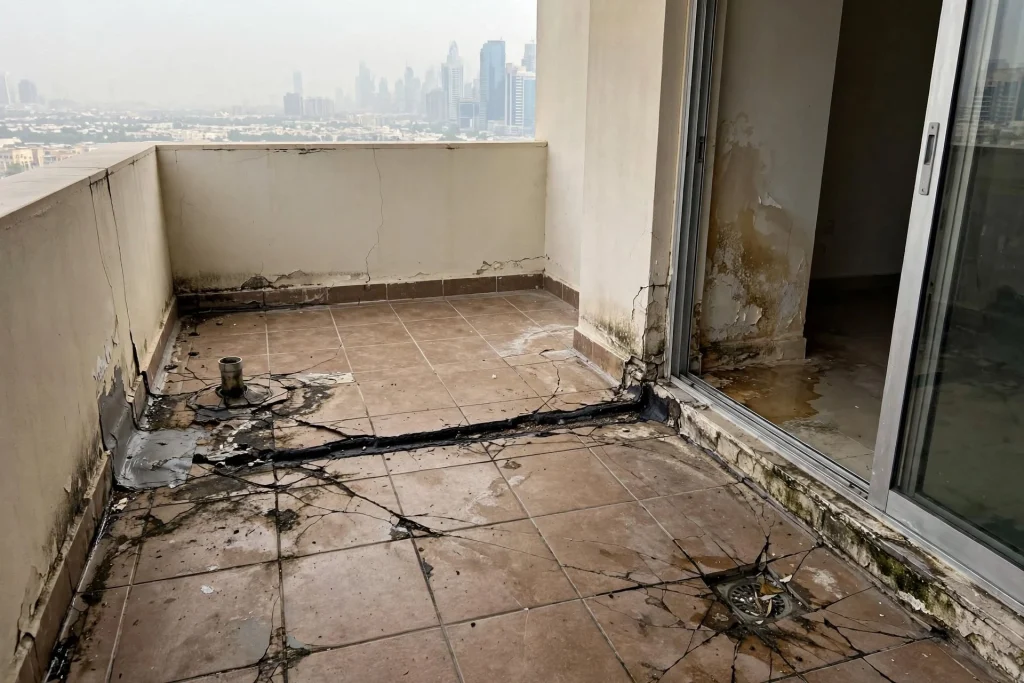
Water Tank Waterproofing Problems
Water tanks require specialized waterproofing systems suitable for their intended use.
Potential problems include:
Cracks, joint failures, coating deterioration, leakage around penetrations, and structural movement.
Where water is intended for human consumption, materials must also meet applicable suitability requirements.
Emergency tank repairs should therefore use products and procedures specifically appropriate for the application.
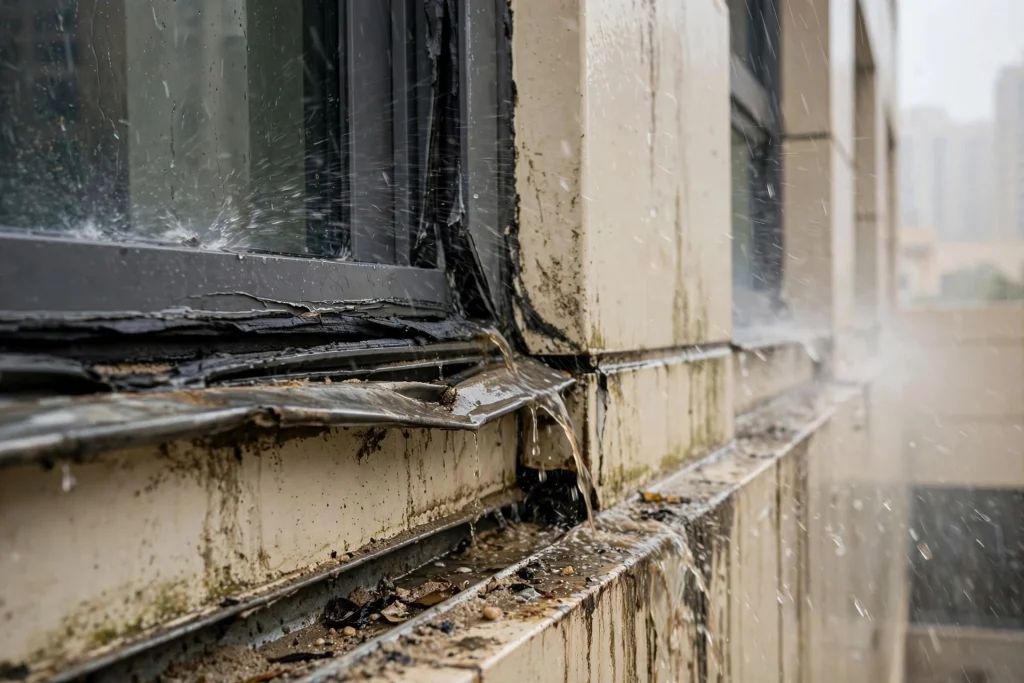
Waterproofing Around Windows
Water can sometimes enter through windows rather than through the main wall structure.
Potential causes include:
Failed sealants, damaged flashing, gaps around frames, blocked drainage channels, and poor interface detailing.
Wind-driven rain can make these weaknesses more noticeable.
A waterproofing inspection should evaluate the complete window-to-wall interface rather than simply sealing the visible interior stain.
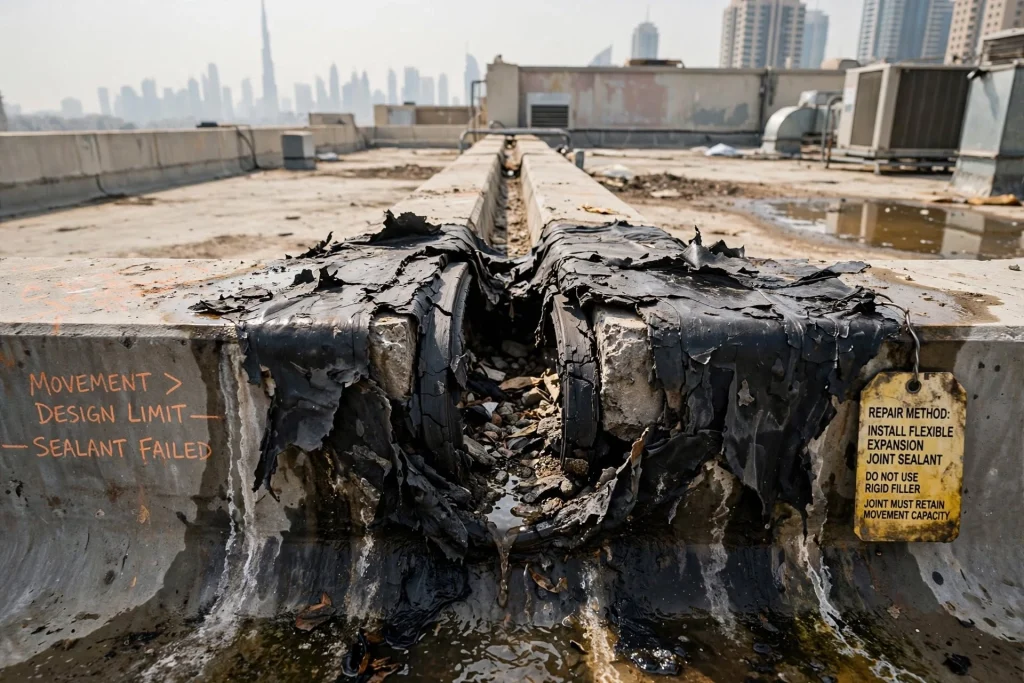
Expansion Joint Leaks
Expansion joints are designed to accommodate building movement.
They can become vulnerable when:
Joint sealants deteriorate, waterproofing membranes fail, movement exceeds system capability, or joint details are damaged.
Because movement joints are functional components, repairs need to maintain their ability to move.
Simply filling a joint with rigid material can create additional problems.
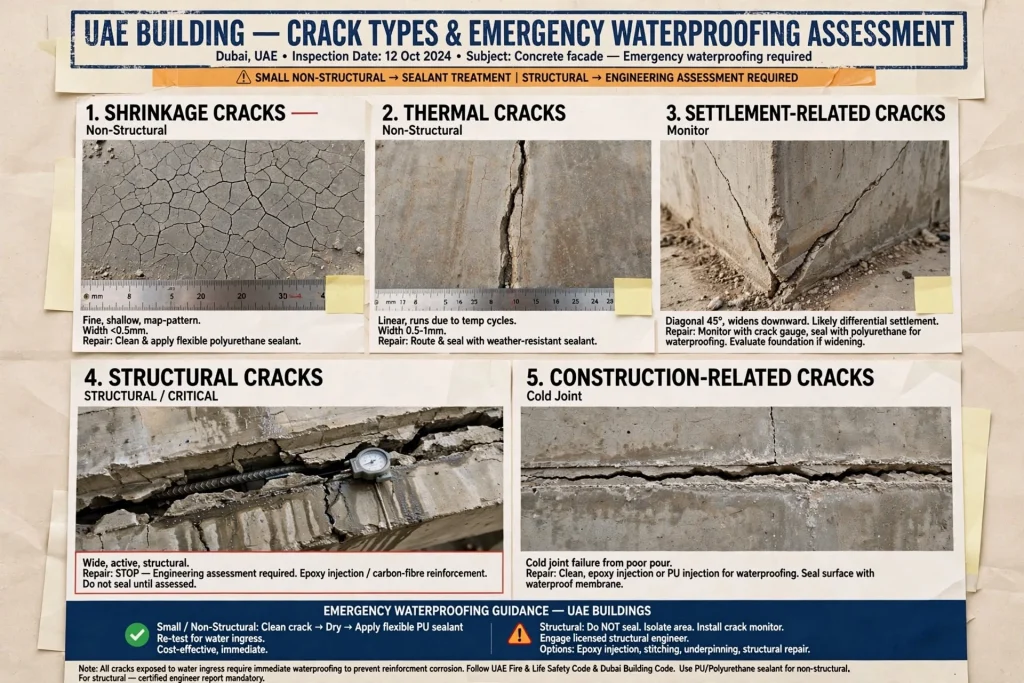
Cracks and Water Intrusion
Cracks in concrete and masonry can provide pathways for water.
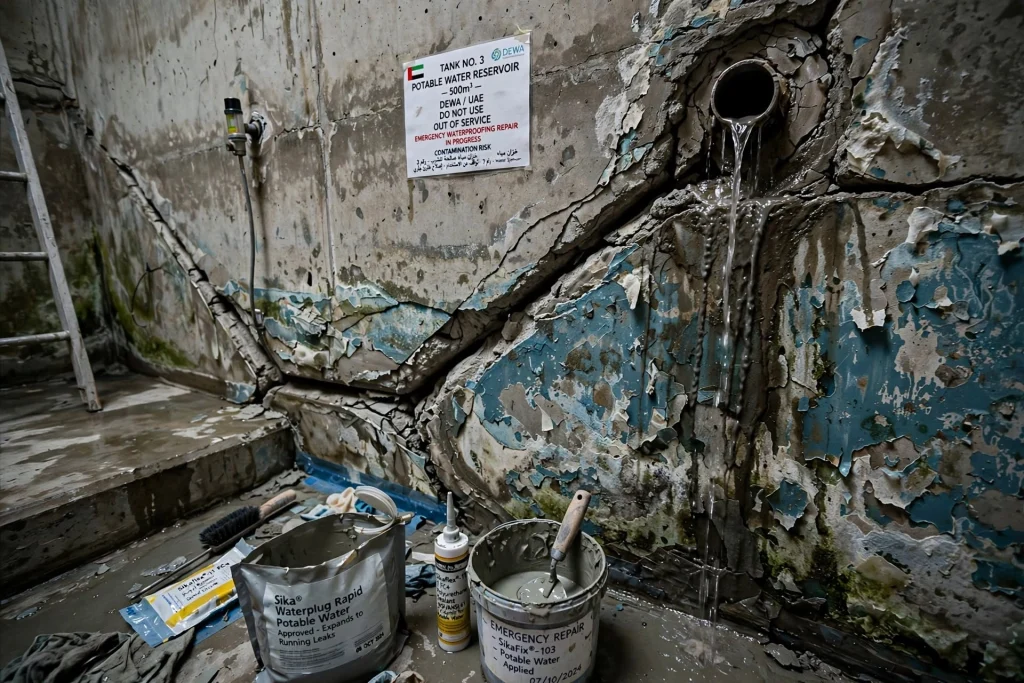
Not all cracks are the same.
They may be:
Shrinkage cracks, thermal cracks, settlement-related cracks, structural cracks, or construction-related cracks.
The repair method should correspond to the type and cause.
Small non-structural cracks may sometimes be treated through appropriate sealants or waterproofing systems.
Structural cracks require engineering assessment.
Emergency Waterproofing for Commercial Buildings
Commercial properties can face significant operational consequences when water enters the building.
Affected areas may include:
Offices, retail stores, hotels, restaurants, warehouses, factories, parking structures, plant rooms, and shopping centres.
Water damage can disrupt operations, damage inventory, create safety concerns, and affect customers or employees.
For this reason, facility managers should have procedures for responding to water intrusion.
Emergency Waterproofing for Hotels
Hotels need rapid response because leaks can affect guest rooms, corridors, restaurants, kitchens, pools, terraces, and service areas.
A water leak can quickly become a guest-experience issue.
Emergency waterproofing should therefore be coordinated with:
Hotel engineering teams, housekeeping, facility management, plumbing contractors, electrical teams, and building management.
The response should aim to isolate the problem while minimizing disruption to guests.
Emergency Waterproofing for Warehouses
Warehouse roofs can cover very large areas.
A localized roof failure can potentially expose:
Stock, packaging, machinery, electrical systems, and storage areas
to water.
Facility managers should inspect roof drainage and waterproofing systems regularly.
When a leak occurs, immediate protection of vulnerable inventory should happen alongside professional inspection.
Emergency Waterproofing for Villas
Dubai villas commonly contain multiple waterproofing-sensitive areas.
These may include:
Roof terraces, balconies, bathrooms, swimming pools, planter boxes, external walls, underground areas, and water tanks.
A villa leak should be investigated according to the complete building layout.
For example, a ground-floor ceiling stain may originate from a first-floor bathroom, balcony, roof, or concealed pipe.
Emergency Waterproofing in Dubai Areas
Waterproofing problems can occur across Dubai regardless of property age or location.
Properties in areas such as Jumeirah, Dubai Marina, Downtown Dubai, Business Bay, Dubai Hills Estate, Arabian Ranches, Emirates Hills, Palm Jumeirah, Al Barari, and Jumeirah Village Circle contain different building types and waterproofing requirements.
High-rise towers may require specialized access and coordination with building management.
Villas may involve more extensive roof, terrace, pool, and landscaping interfaces.
Commercial properties may require repairs to large roof areas or podium structures.
How Emergency Waterproofing Inspection Works
A professional inspection typically starts with identifying the visible symptoms.
The contractor may examine:
Roof surfaces, membranes, cracks, drainage, joints, pipe penetrations, parapets, walls, ceilings, wet areas, and adjacent construction.
Depending on the situation, additional diagnostic techniques may be appropriate.
The objective is to establish:
Where water is entering, how it is travelling, why the waterproofing failed, and what repair method is appropriate.
Temporary Repair vs Permanent Waterproofing
One of the most important distinctions in emergency waterproofing is between temporary containment and permanent repair.
A temporary measure may stop or reduce water entry while a permanent repair is planned.
For example, emergency sealing may be useful when:
Rain is expected, access is temporarily restricted, the affected area requires drying, or a complete repair cannot be performed immediately.
However, temporary sealing should not be presented as a permanent waterproofing solution.
A durable repair requires addressing the underlying cause.
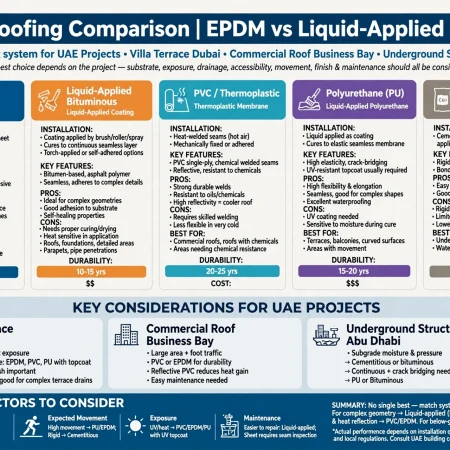
Emergency Waterproofing Materials
Different problems require different materials.
Common waterproofing technologies include:
Polyurethane membranes, cementitious coatings, bituminous membranes, acrylic coatings, epoxy systems, sealants, waterproofing tapes, injection materials, and protective coatings.
The material should be selected according to:
Substrate, water pressure, movement, exposure, UV radiation, temperature, traffic, chemical conditions, and intended finish.
Using an inappropriate material can lead to premature failure.
Polyurethane Waterproofing for Emergency Repairs
Polyurethane waterproofing is useful for certain repair and restoration applications because liquid membranes can conform to irregular surfaces.
They can provide:
Flexible protection, strong adhesion to compatible substrates, and continuous membrane coverage.
However, the substrate must be properly prepared and the product must be suitable for the specific conditions.
Moisture levels, curing requirements, temperature, and compatibility should be considered before application.
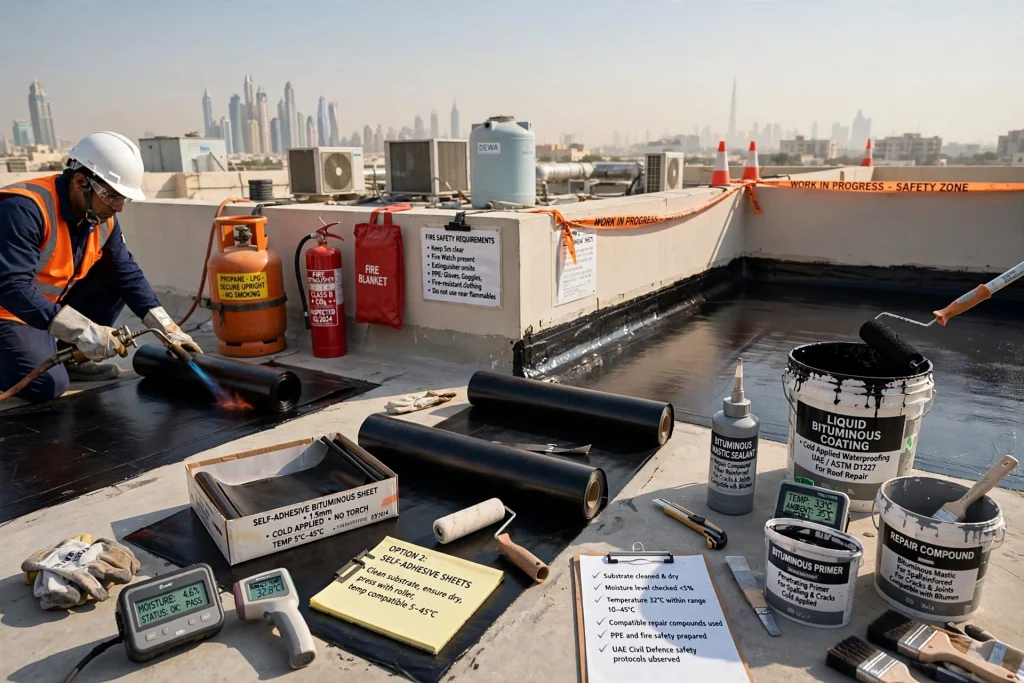
Bituminous Waterproofing Repairs
Bituminous systems are widely used for certain roof and below-grade applications.
Depending on the system, repair options may include:
Torch-applied membranes, self-adhesive sheets, liquid bituminous coatings, and compatible repair compounds.
Fire safety requirements must be considered when torch-applied materials are used.
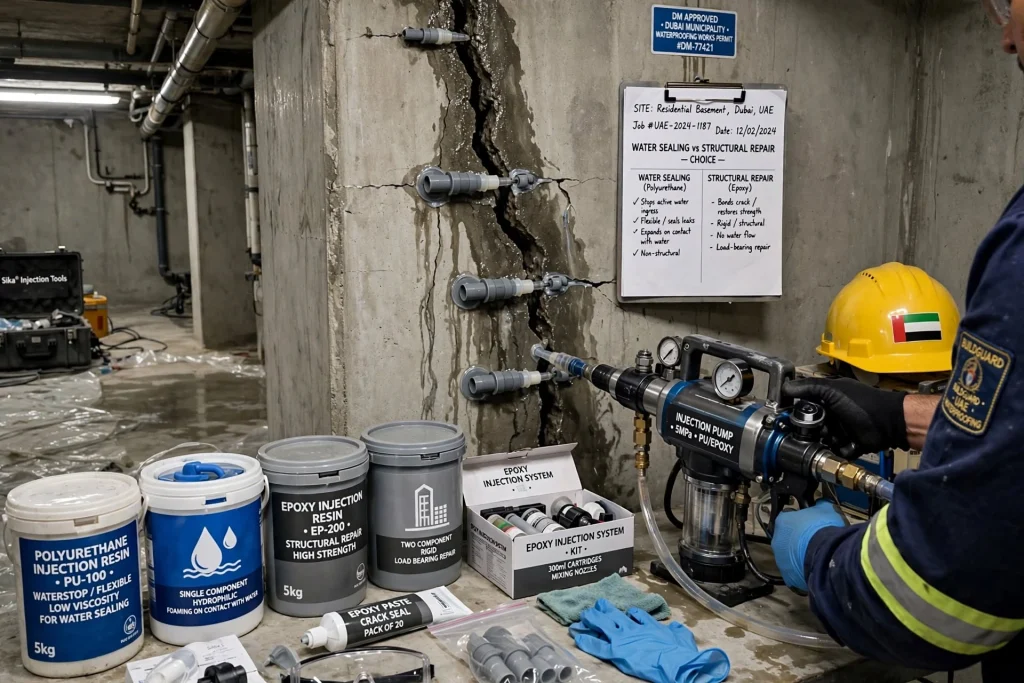
Waterproofing Crack Injection
Some water leaks occur through concrete cracks.
Injection systems can be used in suitable situations to address water pathways within concrete.
Depending on the problem, materials may include:
Polyurethane injection resins, epoxy injection systems, or other specialized injection materials.
The choice depends on whether the objective is primarily water sealing, structural repair, or both.
The Role of Professional Diagnosis
The most important part of emergency waterproofing is often diagnosis.
A contractor should avoid immediately recommending complete replacement without first understanding the problem.
A professional assessment can determine whether the issue involves:
Localized membrane damage, drainage failure, plumbing leakage, structural cracking, failed sealants, condensation, or widespread waterproofing deterioration.
This can help property owners avoid unnecessary repair costs.
How to Reduce Further Water Damage
When active water intrusion occurs, property owners can take sensible immediate steps while arranging professional assistance.
Where safe, they should:
Protect furniture and belongings, move vulnerable electrical equipment away from water, place containers beneath active drips, keep people away from unsafe areas, and report significant building leaks to the responsible facility team.
If water is near electrical equipment, electrical safety should take priority.
Property owners should not attempt risky roof or electrical repairs during wet conditions.
Why Waterproofing Maintenance Matters
Emergency waterproofing is easier to avoid when preventive inspections are performed.
Maintenance should include checking:
Roof membranes, drains, sealants, expansion joints, parapets, balconies, terraces, wet areas, pipe penetrations, and visible cracks.
Regular maintenance can identify deterioration before it becomes an active leak.
This is especially valuable for large commercial properties where repair costs can increase significantly when water damage spreads.
Waterproofing Inspection After Repair
Once an emergency repair is completed, the repaired area should be inspected.
Depending on the application, quality control may involve:
Visual inspection, membrane thickness checks, adhesion assessment, drainage inspection, controlled water testing, or other appropriate tests.
The testing method should be compatible with the waterproofing system.
Documentation can also help property owners maintain a record of repairs.
How to Choose an Emergency Waterproofing Contractor in Dubai
When selecting a waterproofing contractor, property owners should consider:
Experience, technical knowledge, response capability, waterproofing systems offered, safety procedures, project references, inspection methods, warranty terms, and ability to perform permanent repairs.
A contractor should be able to explain the likely cause of the problem instead of simply applying a coating over visible damage.
For commercial and complex buildings, experience with different waterproofing systems is particularly valuable.
Why Emergency Waterproofing Should Not Be Delayed
A small leak can become a larger repair when moisture continues entering the structure.
Delays may result in:
More extensive ceiling damage, deteriorated finishes, damaged insulation, mould growth, corrosion, damaged furnishings, business disruption, and higher restoration costs.
The exact consequences depend on the building and severity of the leak, but early investigation is generally the safer approach.
Frequently Asked Questions
When should I call an emergency waterproofing contractor?
Contact a professional when you have active roof leakage, significant water intrusion, rapidly spreading dampness, basement seepage, serious terrace leakage, or water entering areas containing electrical equipment.
Can emergency waterproofing stop a roof leak immediately?
A temporary repair may reduce or stop active water entry, but the appropriate permanent solution depends on identifying the source and condition of the existing waterproofing system.
Is every ceiling leak caused by waterproofing?
No. Ceiling leaks can also originate from plumbing, HVAC condensate, drainage systems, bathrooms, or other building services. Diagnosis is essential.
Can waterproofing be repaired during rain?
Some emergency measures may be possible, but many waterproofing materials require specific substrate and weather conditions for proper application. The manufacturer’s requirements should always be followed.
How can I prevent roof waterproofing emergencies?
Regular roof inspections, drain cleaning, sealant maintenance, membrane inspections, crack repairs, and early treatment of damaged areas can reduce the likelihood of serious leaks.
Is polyurethane suitable for emergency waterproofing?
Certain polyurethane systems can be suitable for emergency or restoration applications, but product selection depends on substrate condition, moisture, exposure, movement, and the manufacturer’s application requirements.
Does a waterproofing repair always require removing the existing membrane?
No. If the existing membrane is sound and compatible, a repair or overlay may sometimes be possible. Severely deteriorated or poorly bonded systems may require removal.
Conclusion
Water intrusion should never be ignored, particularly when it is active or rapidly worsening. In Dubai’s demanding climate, roofs, terraces, balconies, bathrooms, basements, swimming pools, podiums, and other exposed building areas require effective waterproofing and regular inspection.
Emergency waterproofing focuses first on controlling the immediate problem and protecting the building, followed by identifying the underlying cause and implementing a durable repair.
Whether the issue is a failed roof membrane, blocked drainage, cracked concrete, deteriorated sealant, leaking terrace, basement seepage, or bathroom waterproofing failure, the correct solution depends on accurate diagnosis.
Property owners and facility managers should also remember that waterproofing is a complete system. Surface preparation, drainage, membrane selection, joints, penetrations, curing, protection, and maintenance all influence long-term performance.
For urgent water intrusion across Dubai, professional Emergency Waterproofing Services Dubai can help assess the affected area, identify potential causes, implement appropriate emergency measures, and plan a permanent waterproofing solution.