Modern businesses depend on data centres to support cloud computing, banking, healthcare, telecommunications, government services, artificial intelligence, and enterprise applications. Every email sent, online purchase completed, financial transaction processed, or business application accessed relies on servers operating continuously inside carefully controlled environments. Unlike conventional commercial buildings, data centres generate extremely high heat loads every hour of the day, making cooling one of the most important components of facility design.
A well-designed HVAC system does much more than lower room temperature. It manages airflow, humidity, pressure, energy efficiency, equipment redundancy, and thermal stability to ensure servers operate within recommended environmental conditions. Even a brief cooling failure can cause equipment overheating, service interruptions, hardware damage, and significant financial losses.
In the UAE, where outdoor temperatures frequently exceed 45°C during the summer, designing reliable cooling systems becomes even more critical. Data centres in Dubai Internet City, Dubai Silicon Oasis, Business Bay, Abu Dhabi, and Jebel Ali require mission-critical HVAC solutions capable of delivering continuous performance regardless of external weather conditions.
This guide explains the HVAC best practices that help modern data centres achieve maximum reliability, operational efficiency, and long-term sustainability.
Why Cooling Is Critical in Modern Data Centres
Every server converts electrical energy into heat while processing information. As server density continues increasing, thermal loads rise significantly within equipment racks. Without efficient cooling, temperatures can quickly exceed recommended operating limits, reducing hardware reliability and shortening equipment lifespan.
Unlike office buildings where occupants can tolerate minor temperature fluctuations, data centres require precise environmental control around the clock. Servers, storage arrays, networking equipment, UPS systems, and communication hardware all perform best within narrow temperature and humidity ranges recommended by organisations such as ASHRAE.
Maintaining stable environmental conditions protects sensitive electronics, improves system availability, reduces downtime, and supports continuous business operations. Effective cooling also contributes to lower maintenance costs and greater long-term equipment reliability.
Understanding Heat Loads Inside Server Rooms
Heat generation inside a data centre is significantly different from that of traditional commercial buildings. Nearly every piece of IT equipment continuously produces heat, creating concentrated thermal loads that must be removed efficiently.
Modern server racks often contain high-performance processors, graphics processing units (GPUs), storage devices, networking switches, and power supplies operating simultaneously. Artificial intelligence, cloud computing, and virtualisation technologies have further increased rack power densities, making advanced thermal management more important than ever.
In addition to IT equipment, UPS systems, batteries, lighting, electrical distribution equipment, and occupancy also contribute to internal heat gain. Engineers therefore perform detailed thermal load calculations before selecting precision cooling equipment, ensuring sufficient cooling capacity under both current and future operational requirements.
Precision Cooling Is Different from Traditional Air Conditioning
Many people assume that ordinary commercial air conditioning can cool a server room effectively. In reality, data centres require specialised precision cooling systems designed specifically for mission-critical environments.
Traditional comfort cooling systems are designed primarily for human occupants and operate with wider temperature tolerances. Precision HVAC systems maintain consistent airflow, tighter temperature control, and accurate humidity regulation regardless of changing equipment loads.
Computer Room Air Conditioning (CRAC) units and Computer Room Air Handler (CRAH) systems continuously monitor environmental conditions while delivering conditioned air exactly where it is required. These systems respond rapidly to load changes, ensuring servers remain within recommended operating parameters at all times.
Precision cooling also improves equipment reliability while reducing unnecessary energy consumption.
Computer Room Air Conditioning (CRAC) Systems
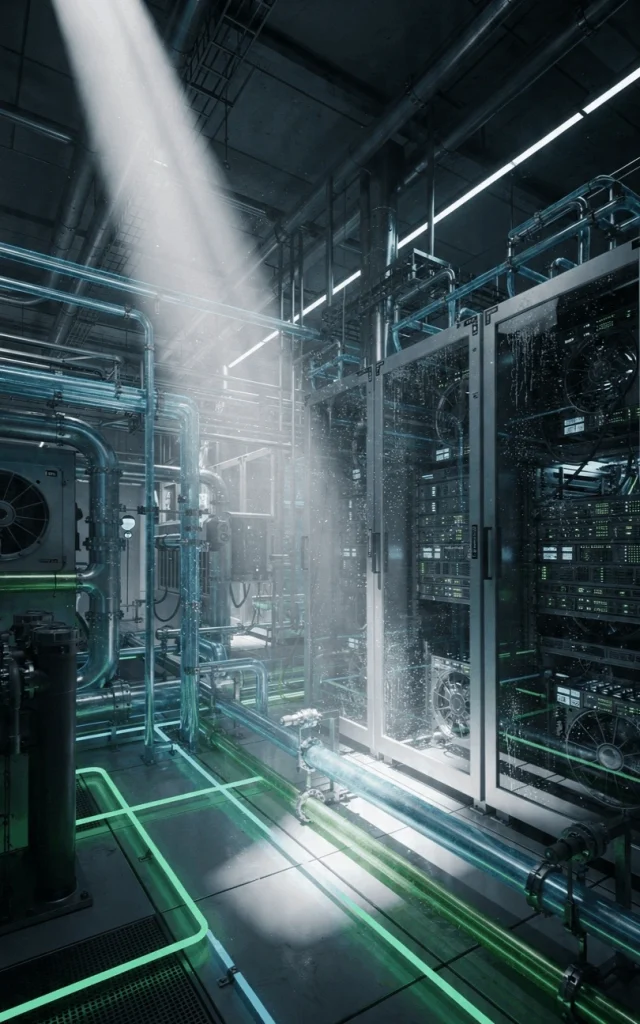
CRAC units are among the most widely used cooling technologies in modern data centres. They operate similarly to conventional direct expansion (DX) air conditioning systems but are specifically engineered for continuous operation and precise environmental control.
A CRAC system removes heat generated by server equipment while maintaining stable room temperatures throughout the facility. Advanced control systems continuously adjust compressor operation, airflow, and cooling output according to changing thermal loads.
CRAC units are commonly used in small and medium-sized server rooms where direct expansion cooling offers practical installation advantages.
Because these systems operate continuously, preventive maintenance plays an essential role in ensuring long-term reliability.
Computer Room Air Handler (CRAH) Systems
Larger enterprise data centres often utilise Computer Room Air Handler systems connected to chilled water networks.
Instead of using refrigerant within each cooling unit, CRAH systems circulate chilled water through cooling coils where heat is removed from the supply air before being delivered to server racks.
These systems are commonly integrated with central chilled water plants that include water-cooled chillers, cooling towers, pumps, and heat exchangers.
CRAH technology provides excellent energy efficiency while supporting larger cooling capacities suitable for high-density computing environments.
The ability to integrate with sophisticated Building Management Systems also allows operators to optimise performance while reducing operating costs.
Chilled Water Cooling Systems
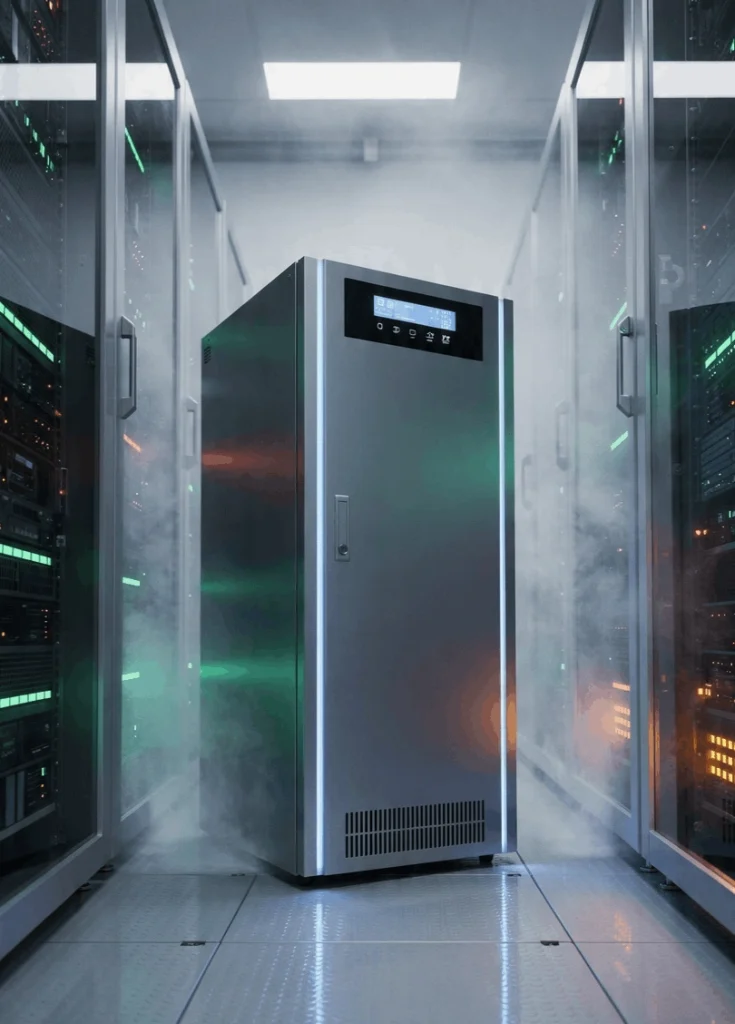
Many enterprise facilities rely on chilled water systems because they provide efficient and scalable cooling for mission-critical environments.
A central chiller plant produces chilled water that circulates throughout the building via insulated piping networks. Air Handling Units, CRAH units, and other cooling equipment transfer heat from server rooms into the chilled water before returning it to the plant for recooling.
Chilled water systems offer excellent flexibility because additional cooling capacity can often be added without replacing the entire infrastructure.
These systems are particularly suitable for large campuses, hyperscale facilities, and Tier III or Tier IV data centres requiring continuous high-capacity cooling.
Air-Cooled and Water-Cooled Chillers
Selecting between air-cooled and water-cooled chillers depends on facility size, available infrastructure, operational priorities, and long-term efficiency goals.
Air-cooled chillers reject heat directly to the outdoor environment using condenser fans. They generally require less water infrastructure and are easier to install, making them suitable for many medium-sized facilities.
Water-cooled chillers utilise cooling towers to remove heat more efficiently, making them ideal for large data centres with continuous cooling demands.
Although water-cooled systems involve greater installation complexity, they often provide higher energy efficiency under heavy operational loads, particularly in facilities operating throughout the year.
Airflow Management Is Just as Important as Cooling Capacity
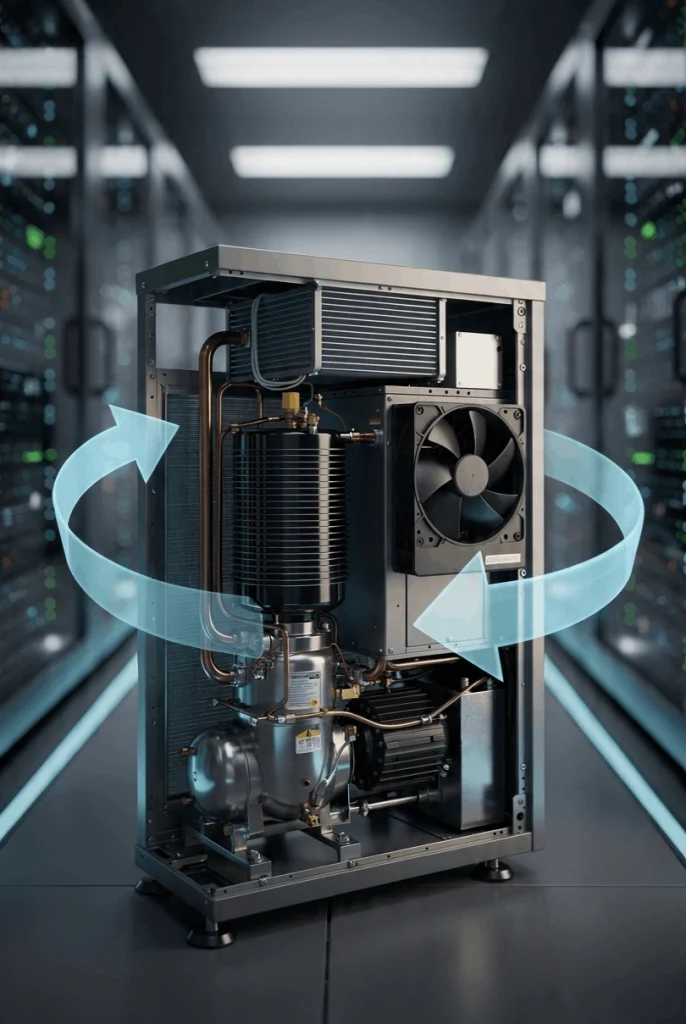
Providing sufficient cooling capacity alone does not guarantee efficient data centre operation. Proper airflow management ensures conditioned air reaches server equipment before mixing with hot exhaust air.
Poor airflow design allows hot and cold air streams to mix together, reducing cooling efficiency while increasing energy consumption. This phenomenon often creates localised hot spots capable of damaging critical IT equipment.
Engineers carefully design airflow pathways using perforated floor tiles, overhead supply systems, containment structures, and rack positioning strategies that maximise cooling effectiveness.
Effective airflow management allows cooling systems to operate more efficiently while maintaining stable temperatures across the entire data hall.
Hot Aisle and Cold Aisle Containment
One of the most effective methods of improving thermal efficiency is aisle containment.
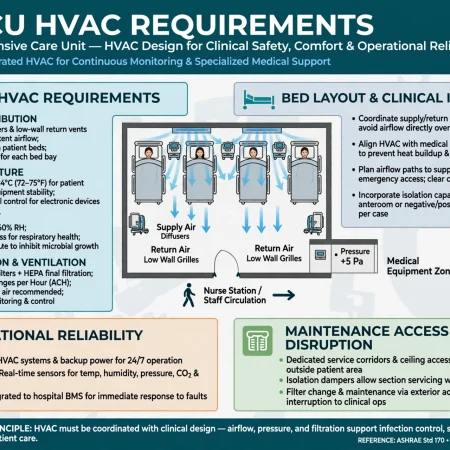
Cold aisle containment separates cooled supply air from warm exhaust air by directing conditioned airflow exclusively toward the front of server racks. Hot air discharged from the rear remains isolated until it returns to the cooling equipment.
Hot aisle containment applies the opposite principle by enclosing hot exhaust air before returning it directly to cooling units.
Both approaches reduce air mixing, improve cooling efficiency, lower fan energy consumption, and support higher rack densities.
Containment strategies have become standard practice within modern enterprise data centres because they significantly improve thermal management without increasing cooling capacity.
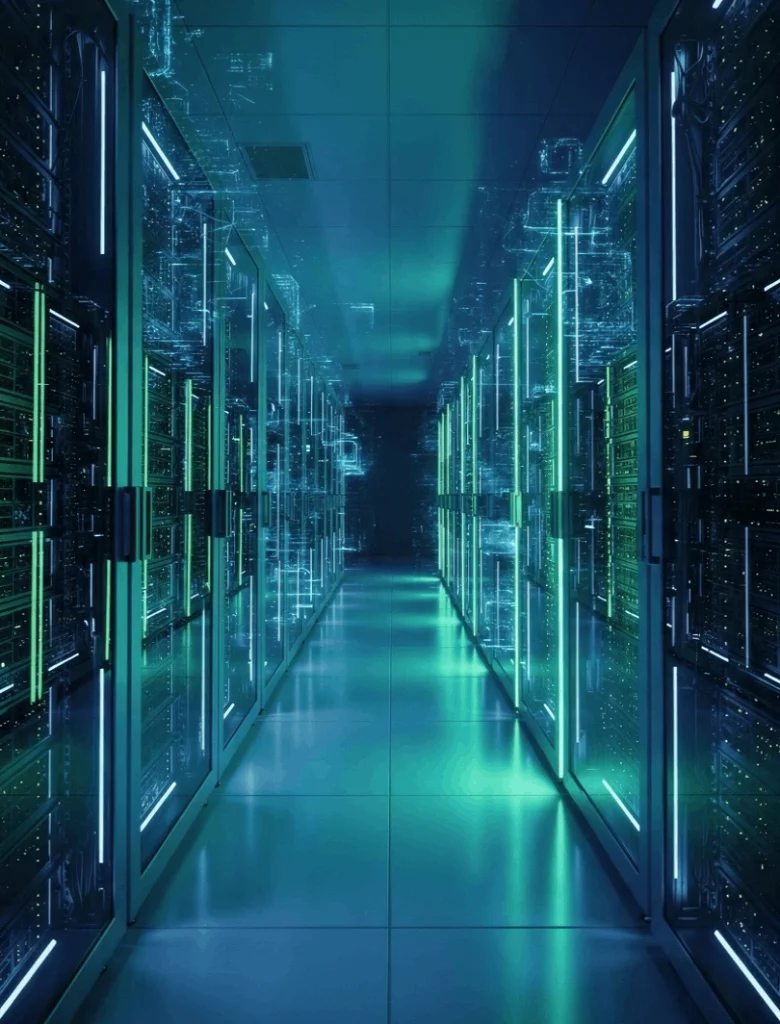
Data Centre Cooling in Dubai Internet City
Dubai Internet City serves as one of the UAE’s leading technology hubs, accommodating multinational technology companies, cloud service providers, telecommunications firms, and digital enterprises.
Facilities operating within this environment require resilient HVAC infrastructure capable of supporting mission-critical computing twenty-four hours a day. Engineers increasingly combine precision cooling equipment, intelligent Building Management Systems, advanced monitoring platforms, and energy-efficient chilled water systems to maximise operational reliability while reducing energy consumption.
Organisations seeking experienced HVAC Professional Contractors in Dubai should prioritise companies with expertise in precision cooling, airflow management, redundancy planning, commissioning, and long-term preventive maintenance, ensuring data centre infrastructure remains reliable, efficient, and prepared for future technological growth.
Data Centre Cooling Strategies in Dubai Silicon Oasis
Dubai Silicon Oasis has developed into one of the UAE’s leading technology and innovation districts, attracting software companies, research organisations, cloud service providers, and digital businesses that depend on reliable IT infrastructure. As computing requirements continue to grow, data centres within this area require HVAC systems capable of maintaining precise environmental conditions throughout the year. High outdoor temperatures place additional pressure on cooling equipment, making energy-efficient thermal management essential. Engineers frequently design cooling systems that combine precision air conditioning, chilled water plants, intelligent airflow management, and automated control systems to ensure uninterrupted server performance while minimising operational costs.
Mission-Critical Cooling in Business Bay
Business Bay hosts numerous corporate headquarters, financial institutions, and commercial office towers that rely on dedicated server rooms and enterprise data centres to support daily operations. Unlike traditional office cooling, mission-critical HVAC systems must operate continuously without interruption, even during maintenance or unexpected equipment failures. Reliability therefore becomes just as important as cooling capacity. Engineers carefully evaluate server density, power consumption, future expansion plans, and redundancy requirements before selecting precision cooling equipment. Proper planning allows businesses to maintain operational continuity while protecting valuable digital infrastructure against overheating and unexpected downtime.
Data Centre Cooling Solutions in Abu Dhabi
Abu Dhabi continues expanding its digital infrastructure through government initiatives, financial institutions, healthcare organisations, and cloud computing providers. These facilities require advanced HVAC solutions capable of supporting critical applications where uninterrupted operation is essential. Precision cooling systems maintain stable temperatures and humidity levels while protecting servers, storage devices, networking equipment, and communication hardware from thermal stress. Modern facilities increasingly integrate Building Management Systems (BMS) and Data Centre Infrastructure Management (DCIM) platforms that provide continuous monitoring of environmental conditions, enabling facility teams to optimise performance and identify potential issues before they affect business operations.
Humidity Control in Data Centres
Temperature is only one aspect of environmental management inside a data centre. Humidity control is equally important because excessive moisture or overly dry conditions can damage sensitive electronic equipment. High humidity increases the risk of condensation forming on electronic components, while extremely low humidity encourages electrostatic discharge that may damage circuit boards and processors. Precision HVAC systems continuously regulate both temperature and relative humidity to maintain conditions recommended by ASHRAE thermal guidelines. Advanced sensors monitor environmental changes in real time, allowing humidification and dehumidification equipment to respond automatically and maintain stable operating conditions throughout the facility.
Cooling Redundancy for Business Continuity
Business continuity depends on reliable cooling infrastructure. For this reason, modern data centres are designed with redundancy to eliminate single points of failure. If one cooling unit experiences a fault or requires maintenance, additional equipment immediately assumes the cooling load without interrupting operations. N+1 redundancy provides one additional cooling unit beyond the minimum requirement, while 2N redundancy duplicates the entire cooling system to maximise reliability. These design strategies are commonly implemented in Tier III and Tier IV data centres where continuous availability is essential. Redundant pumps, chillers, cooling towers, power supplies, and control systems all contribute to maintaining uninterrupted environmental control.
Airflow Optimisation and Rack Cooling
Effective airflow management remains one of the most cost-effective methods of improving cooling efficiency. Modern server racks continue increasing in power density, making targeted airflow more important than ever. Engineers carefully position precision cooling units, perforated floor panels, ceiling diffusers, and return air pathways to deliver conditioned air directly to equipment inlets while preventing hot exhaust air from recirculating. Computational Fluid Dynamics (CFD) modelling is frequently used during design to visualise airflow patterns and identify potential hot spots before construction begins. Proper airflow optimisation improves equipment reliability while reducing unnecessary energy consumption.
Building Management Systems and Intelligent Monitoring
Building Management Systems have become essential components of mission-critical HVAC infrastructure. Rather than operating as independent equipment, chillers, CRAH units, CRAC systems, pumps, cooling towers, sensors, and ventilation equipment communicate through a centralised automation platform. Facility operators can monitor temperature, humidity, airflow, pressure differentials, equipment status, and energy consumption from a single interface. Real-time alarms allow maintenance teams to respond immediately to abnormal operating conditions before they develop into critical failures. Predictive analytics also help identify declining equipment performance, enabling maintenance to be scheduled before unexpected breakdowns occur.
Improving Energy Efficiency and Power Usage Effectiveness
Energy efficiency is one of the primary objectives of modern data centre design because cooling systems represent a significant portion of total electricity consumption. Facility managers commonly evaluate performance using Power Usage Effectiveness (PUE), a recognised metric that compares total facility energy consumption with the energy used directly by IT equipment. Lower PUE values indicate more efficient operation. Improving airflow management, optimising chilled water temperatures, installing Variable Frequency Drives (VFDs), using high-efficiency chillers, and implementing intelligent control strategies all contribute to reducing cooling energy requirements. Continuous monitoring also allows operators to identify opportunities for further optimisation while maintaining equipment reliability.
Emerging Cooling Technologies
The rapid growth of artificial intelligence, high-performance computing, and cloud infrastructure has increased server rack densities beyond the capabilities of some traditional air-cooling systems. As a result, new cooling technologies are becoming increasingly common within advanced data centres. Direct-to-chip liquid cooling removes heat directly from processors using specially designed cooling plates, allowing much higher computing densities while improving energy efficiency. Immersion cooling places servers within specially engineered dielectric fluids that absorb heat far more effectively than air. Rear door heat exchangers and in-row cooling units also provide targeted thermal management for high-density racks, helping facilities accommodate future technology without significantly increasing overall cooling capacity.
Preventive Maintenance for Reliable Operation
Continuous operation places considerable demands on data centre HVAC equipment, making preventive maintenance essential for long-term reliability. Routine inspections include cleaning heat exchanger coils, replacing filters, checking refrigerant charge, inspecting chilled water circuits, verifying sensor calibration, testing electrical components, examining pumps and valves, and confirming proper airflow throughout the facility. Cooling towers, expansion tanks, water treatment systems, and backup cooling equipment also require scheduled maintenance to ensure dependable operation. Comprehensive maintenance programmes reduce the likelihood of unexpected failures while extending equipment life and maintaining energy-efficient performance.
The Future of Data Centre HVAC Systems
As digital transformation accelerates across every industry, cooling technologies continue evolving to support higher computing densities and improved sustainability. Artificial intelligence is increasingly being used to analyse environmental data, automatically adjusting cooling equipment according to real-time server loads and occupancy patterns. Digital twins allow engineers to simulate cooling performance before implementing physical changes, while cloud-based monitoring platforms provide continuous visibility across multiple facilities. Renewable energy integration, free cooling technologies, modular cooling infrastructure, and advanced liquid cooling solutions will continue shaping the future of mission-critical HVAC engineering. These innovations help organisations reduce operating costs while supporting long-term environmental goals.
Conclusion
Data centre cooling systems are among the most specialised applications within the HVAC industry because they protect the digital infrastructure that powers modern businesses, governments, healthcare providers, financial institutions, and communication networks. Effective thermal management requires far more than conventional air conditioning. Precision cooling, airflow optimisation, humidity control, redundancy planning, intelligent monitoring, and preventive maintenance all work together to maintain reliable operating conditions for mission-critical equipment.
Across Dubai Internet City, Dubai Silicon Oasis, Business Bay, Abu Dhabi, Jebel Ali, Dubai South, Al Quoz, Sharjah, and other technology hubs throughout the UAE, organisations continue investing in advanced HVAC solutions that improve operational resilience while reducing energy consumption. By applying recognised engineering best practices and selecting experienced HVAC Professional Contractors in Dubai, businesses can develop cooling infrastructure capable of supporting future growth, protecting valuable IT assets, and maintaining uninterrupted performance in an increasingly digital world.