Commercial cooling systems play a critical role in the operation of modern buildings across Dubai. Whether it is a luxury hotel in Downtown Dubai, a corporate office in Business Bay, a logistics warehouse in Jebel Ali, or a healthcare facility in Dubai Healthcare City, every commercial property depends on a reliable chiller system to maintain comfortable indoor temperatures. Unlike residential air conditioning units, commercial chillers are designed to handle large cooling loads continuously while operating efficiently in one of the world’s hottest climates.
Choosing the right commercial chiller contractor is not simply about finding a company that can install equipment. It involves selecting an experienced engineering partner capable of designing, installing, commissioning, maintaining, and optimizing an entire chilled water system. A properly designed system improves occupant comfort, reduces electricity consumption, extends equipment lifespan, and minimizes unexpected breakdowns that can disrupt business operations.
Because commercial cooling systems represent a significant long-term investment, understanding what separates an experienced contractor from an average service provider is essential. This guide explains the technical, operational, and practical factors every facility owner and property manager should consider before making that decision.
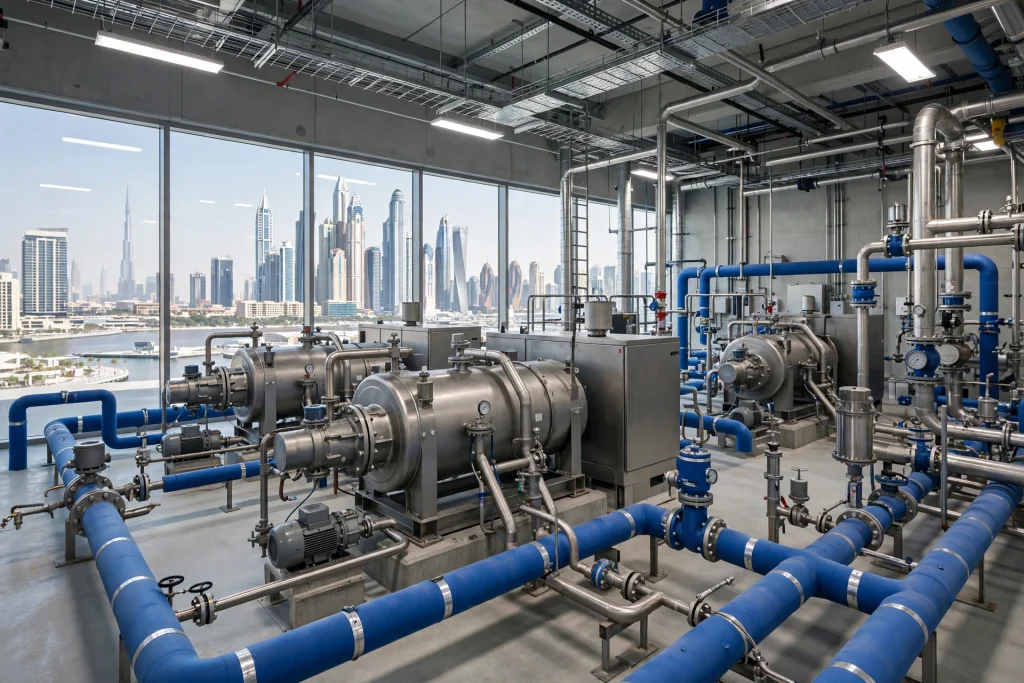
Why Commercial Chiller Systems Are Essential in Dubai
Dubai’s climate presents unique challenges for commercial buildings. Summer temperatures regularly exceed 45°C, while high humidity increases the cooling demand on HVAC systems. Large commercial properties also generate significant internal heat from occupants, lighting, computer equipment, manufacturing processes, elevators, kitchens, and electrical installations. Without an efficient chilled water system, maintaining a comfortable indoor environment becomes extremely difficult.
Commercial chillers remove heat from water and distribute chilled water throughout the building using insulated pipework. This chilled water circulates through Air Handling Units (AHUs), Fan Coil Units (FCUs), and heat exchangers to provide consistent cooling across multiple floors and occupied spaces. The process allows large buildings to maintain stable indoor temperatures while operating far more efficiently than using hundreds of independent air conditioning units.
Across Dubai, commercial chillers are commonly installed in office towers, shopping malls, hotels, hospitals, universities, airports, factories, warehouses, pharmaceutical facilities, and data centers. Each of these buildings has different cooling requirements, occupancy patterns, and operational schedules, which means every chiller system must be carefully engineered rather than installed using a one-size-fits-all approach.
Understanding the Role of a Commercial Chiller Contractor
Many property owners believe that a contractor’s responsibility ends once the equipment is installed. In reality, experienced commercial chiller contractors manage every stage of a project’s lifecycle, from the earliest planning phase through years of ongoing maintenance.
Before any equipment is selected, engineers perform detailed cooling load calculations to determine how much heat must be removed from the building during peak operating conditions. These calculations consider the building orientation, glazing area, insulation levels, occupancy density, lighting systems, fresh air requirements, and equipment-generated heat. Selecting a chiller without these calculations often results in oversized or undersized equipment, both of which reduce efficiency and increase operating costs.
Once the system capacity has been established, contractors design the complete chilled water network, including pumps, piping, valves, expansion tanks, control systems, and cooling towers where required. The installation process also involves electrical integration, refrigerant charging, pressure testing, insulation, water balancing, commissioning, and performance verification to ensure every component functions together as a complete system.
Professional contractors continue supporting the system long after installation by providing preventive maintenance, emergency repairs, energy optimization, water treatment coordination, and periodic performance assessments. This ongoing support helps commercial buildings maintain reliable cooling throughout Dubai’s demanding climate.
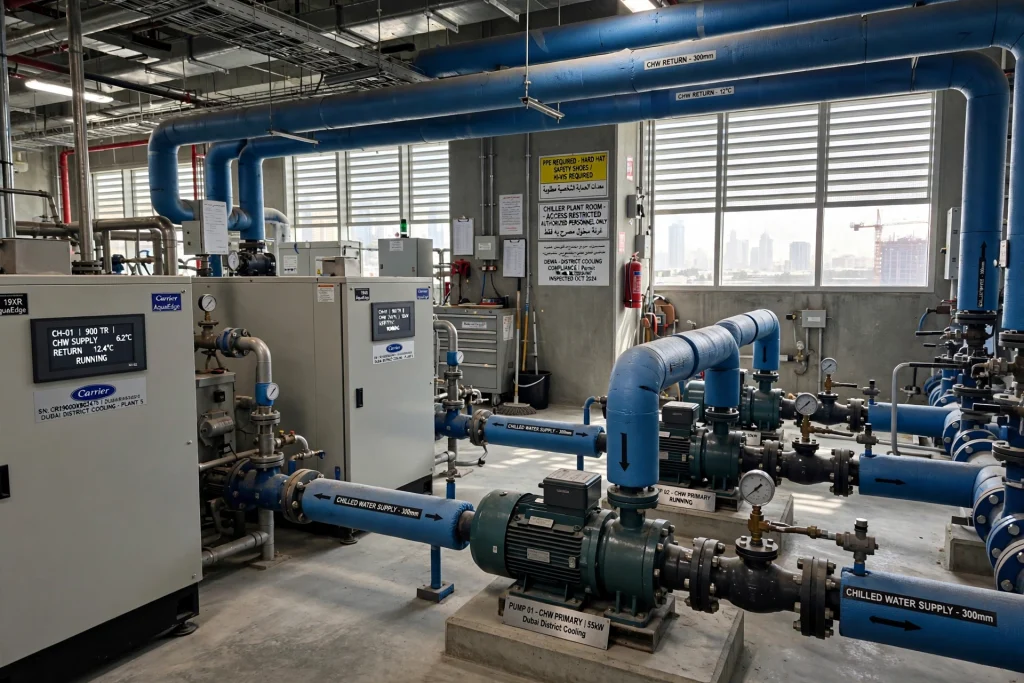
Why Experience Matters More Than Price
When comparing contractors, many businesses focus primarily on obtaining the lowest quotation. While cost is naturally an important consideration, choosing a contractor based solely on price often leads to higher expenses over the life of the system.
Experienced contractors understand how different building types influence cooling performance. A five-star hotel operating twenty-four hours a day has very different cooling requirements than a logistics warehouse or a manufacturing plant. Engineers with commercial HVAC experience evaluate occupancy schedules, future expansion plans, equipment redundancy, maintenance accessibility, and energy consumption before recommending a solution.
They are also familiar with internationally recognized manufacturers such as Carrier, Trane, York, Daikin, Mitsubishi Electric, LG, Climaveneta, and Smardt. Rather than recommending equipment based only on initial cost, they assess long-term reliability, spare parts availability, efficiency ratings, and compatibility with Building Management Systems (BMS).
For businesses operating in areas such as Dubai Marina, DIFC, Dubai Hills, Al Quoz, Dubai Silicon Oasis, and Dubai Investment Park, experienced contractors understand the local infrastructure, utility requirements, and operational demands that influence system performance. This practical knowledge reduces installation risks and ensures the cooling system performs efficiently throughout its service life.
Choosing the Right Chiller Technology
Selecting the appropriate chiller technology is one of the most important decisions during a commercial HVAC project. The choice depends on building size, cooling capacity, available installation space, energy objectives, and operating conditions.
Air-cooled chillers are often selected for medium-sized commercial buildings because they require less supporting infrastructure and are generally easier to install. Water-cooled chillers, on the other hand, are preferred for large commercial developments where higher efficiency and greater cooling capacity justify the additional investment in cooling towers and condenser water systems.
The contractor must also determine whether screw compressors, scroll compressors, or centrifugal compressors provide the most suitable solution. Each technology offers different advantages in terms of efficiency, maintenance requirements, part-load performance, and operating costs. An experienced engineering team evaluates these factors carefully to ensure the selected equipment aligns with the building’s operational needs rather than simply recommending the most familiar option.
Beyond the chiller itself, contractors consider supporting components such as Variable Frequency Drives (VFDs), plate heat exchangers, chilled water pumps, condenser water pumps, expansion vessels, balancing valves, and intelligent control systems. These components work together to maximize system efficiency, reduce electricity consumption, and improve long-term reliability.
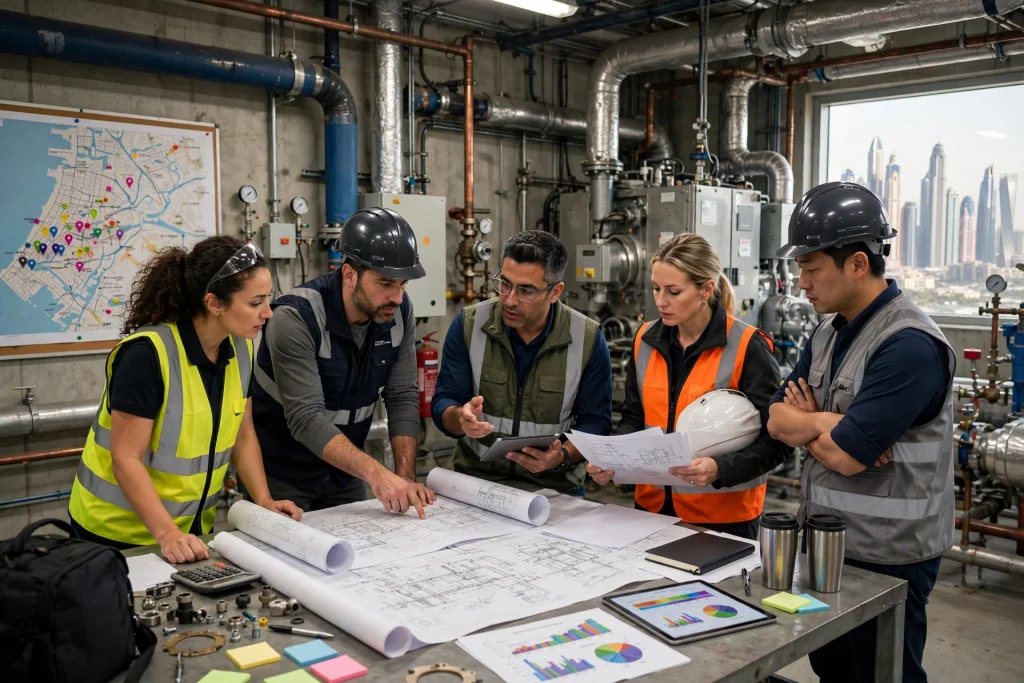
Professional Installation Makes the Difference
The performance of a commercial chiller depends just as much on the installation process as it does on the quality of the equipment itself. Even a premium chiller can experience frequent breakdowns, excessive energy consumption, and reduced service life if it is installed incorrectly. Professional contractors follow a structured engineering process that ensures every component works together as a complete cooling system rather than as individual pieces of equipment.
Installation begins with preparing the site and verifying that the foundation can safely support the weight of the chiller, pumps, and associated equipment. Proper positioning is equally important because commercial chillers require sufficient airflow, adequate maintenance access, and clear service spaces around major components. In many commercial developments across Business Bay, Downtown Dubai, and Dubai Marina, contractors must carefully coordinate equipment placement with architects, structural engineers, and MEP consultants to avoid conflicts with other building services.
After positioning the equipment, contractors install insulated chilled water piping, condenser water piping for water-cooled systems, isolation valves, expansion tanks, strainers, pressure gauges, and balancing valves. Every pipe joint undergoes pressure testing before insulation is applied to ensure there are no leaks that could affect long-term system performance. Electrical connections, control wiring, and communication cables are then integrated with the Building Management System (BMS), allowing facility managers to monitor temperatures, operating pressures, alarms, and equipment status from a centralized interface.
Commissioning is the final and one of the most important stages of installation. During this phase, engineers verify refrigerant pressures, chilled water flow rates, pump performance, compressor operation, sensor calibration, electrical loads, and system safety controls. They also confirm that the chiller operates efficiently under different load conditions and that every connected Air Handling Unit (AHU) and Fan Coil Unit (FCU) receives the correct chilled water supply. A properly commissioned system provides reliable cooling from the first day of operation while reducing the likelihood of costly operational issues later.
Preventive Maintenance Protects Long-Term Performance
Commercial chillers operate for thousands of hours every year, often under demanding environmental conditions. Dust, high ambient temperatures, humidity, and continuous operation place significant stress on compressors, condensers, pumps, cooling towers, and electrical components. Without regular maintenance, even a well-designed system gradually loses efficiency and becomes more vulnerable to unexpected failures.
Professional maintenance focuses on identifying small issues before they develop into major repairs. Engineers inspect refrigerant levels, compressor oil condition, condenser cleanliness, evaporator performance, electrical connections, and chilled water quality during scheduled service visits. Water treatment is particularly important for water-cooled chillers because mineral deposits, corrosion, and biological growth inside condenser tubes can significantly reduce heat transfer efficiency.
Modern maintenance programs also include vibration analysis, thermal imaging, electrical testing, and computerized performance monitoring. These diagnostic techniques allow technicians to detect abnormal operating conditions before equipment fails. Instead of waiting for an emergency breakdown during the hottest months of the year, facility managers can schedule repairs during planned maintenance periods, minimizing disruption to building operations.
Buildings located in industrial areas such as Jebel Ali and Dubai Investment Park often experience additional airborne dust and environmental contaminants. These conditions require more frequent inspection of condensers, cooling towers, filters, and ventilation equipment to maintain consistent cooling performance throughout the year.
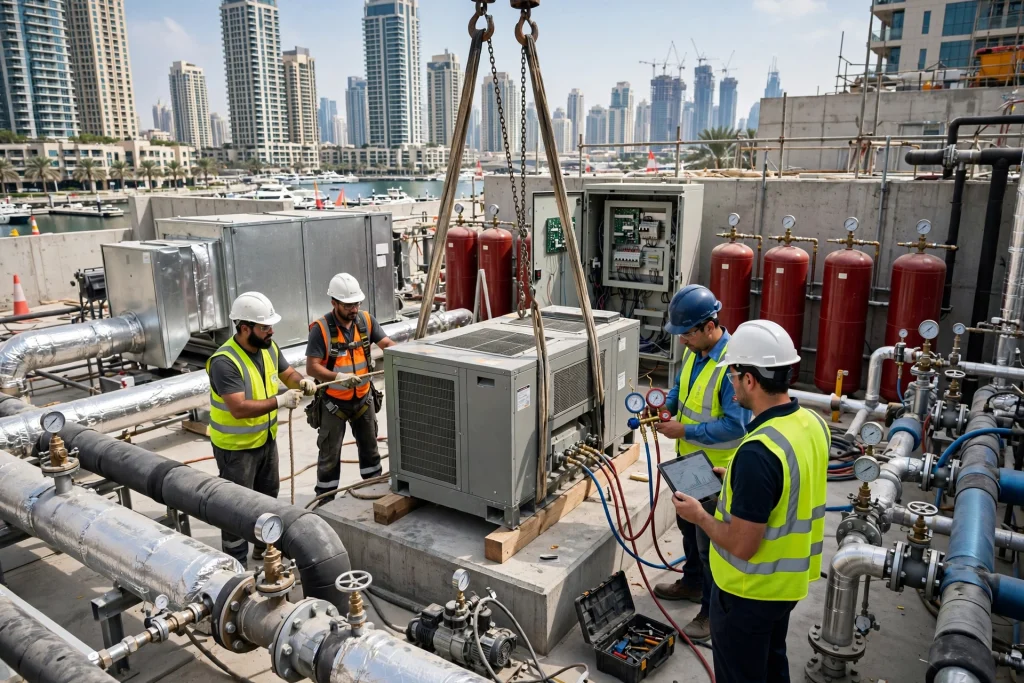
Improving Energy Efficiency Through Smart Engineering
Energy efficiency has become a major priority for commercial property owners across the UAE. Cooling systems represent one of the largest consumers of electricity in office buildings, hotels, hospitals, shopping malls, and industrial facilities. Even small improvements in chiller performance can produce substantial savings over the lifespan of the equipment.
Experienced contractors evaluate the entire chilled water system instead of focusing only on the chiller itself. They assess chilled water temperatures, condenser water temperatures, pump efficiency, cooling tower operation, refrigerant performance, and control sequences to identify opportunities for optimization. Variable Frequency Drives (VFDs) installed on pumps and cooling tower fans automatically adjust motor speeds according to cooling demand, reducing unnecessary electricity consumption during periods of partial load.
Building Management Systems further enhance efficiency by continuously monitoring equipment performance and adjusting operating conditions in real time. Intelligent controls can optimize pump sequencing, compressor staging, chilled water reset temperatures, and cooling tower fan operation based on changing weather conditions and occupancy levels. These automated adjustments improve system stability while reducing overall energy consumption.
Many modern commercial developments in Dubai are also pursuing sustainable building practices that prioritize lower operating costs and reduced environmental impact. High-efficiency chillers, environmentally responsible refrigerants, and advanced monitoring technologies contribute to improved building performance while supporting compliance with local energy efficiency initiatives.
Why Local Experience Matters
Every commercial project presents unique engineering challenges, and contractors with extensive experience in Dubai understand how local conditions influence HVAC performance. High-rise developments require careful consideration of pumping pressures and vertical pipe distribution, while manufacturing facilities often demand continuous process cooling that differs significantly from comfort cooling applications.
Commercial buildings in areas such as Dubai Silicon Oasis, Al Quoz, Dubai Healthcare City, and Dubai South each have distinct operational requirements. Hospitals require uninterrupted cooling for sensitive medical equipment, hotels must maintain guest comfort around the clock, and data centers depend on precise temperature control to protect critical IT infrastructure. Contractors familiar with these sectors can recommend solutions that match the operational needs of each facility rather than applying a standard design to every project.
Local knowledge also helps contractors coordinate effectively with consultants, utility authorities, and project stakeholders throughout the construction process. Understanding regional regulations, climate conditions, maintenance practices, and equipment availability enables projects to progress more efficiently while reducing delays and long-term operational risks.
For businesses seeking dependable cooling solutions, partnering with experienced Commercial Chiller Contractors in Dubai provides access to specialized engineering expertise throughout every stage of the project. From system design and equipment selection to commissioning and long-term maintenance, professional contractors help ensure commercial cooling systems operate efficiently, reliably, and economically for many years.
Common Mistakes to Avoid When Hiring a Chiller Contractor
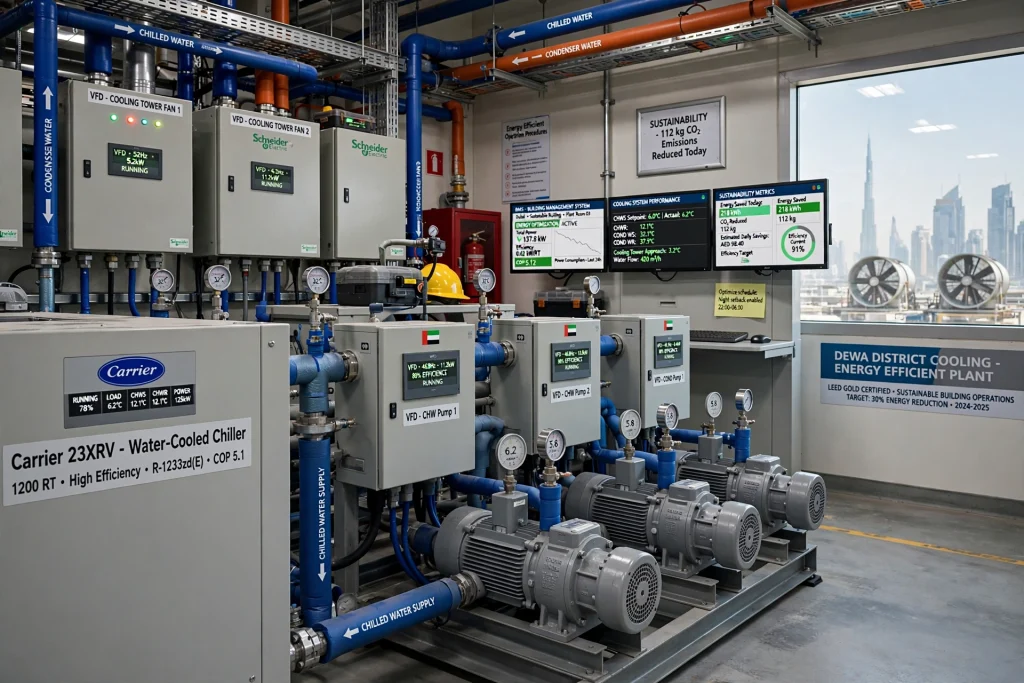
Investing in a commercial chiller is a long-term decision, yet many businesses focus only on the initial installation cost. While a lower quotation may seem attractive, it often overlooks important engineering considerations that directly affect system performance. Poor planning, incorrect equipment selection, and inadequate commissioning can lead to higher operating costs throughout the life of the system.
One of the most common mistakes is selecting equipment without a proper cooling load assessment. Every commercial building has unique requirements based on occupancy, operating hours, building orientation, insulation, and internal heat generated by lighting and equipment. Installing a chiller that is too small results in continuous operation and poor cooling performance, while an oversized unit cycles on and off frequently, wasting electricity and increasing wear on the compressor.
Another frequent issue is ignoring the quality of supporting components. A commercial chiller performs as part of an integrated chilled water system that includes pumps, valves, expansion vessels, insulated piping, control panels, and water treatment equipment. If any of these components are incorrectly installed or poorly maintained, the efficiency of the entire HVAC system declines regardless of the chiller’s quality.
Businesses should also consider the contractor’s ability to provide long-term technical support. Commercial cooling equipment requires periodic inspections, software updates for control systems, refrigerant monitoring, and performance testing. A contractor with a dedicated maintenance team ensures problems are identified early before they develop into expensive emergency repairs.
The Importance of System Commissioning
Many building owners underestimate the value of professional commissioning. Once installation is complete, every component must be tested together under real operating conditions to confirm that the system performs exactly as designed.
During commissioning, engineers verify chilled water flow rates, refrigerant pressures, compressor performance, electrical loads, sensor accuracy, and control sequences. The Building Management System (BMS) is configured to communicate with the chiller, pumps, Air Handling Units (AHUs), and Fan Coil Units (FCUs), allowing facility managers to monitor system performance from a centralized platform.
Performance testing also identifies hidden issues that may not be visible during installation. Incorrect water balancing, improper refrigerant charge, loose electrical connections, or inaccurate temperature sensors can significantly reduce cooling efficiency if left uncorrected. By resolving these issues before the building becomes fully operational, contractors help avoid unnecessary maintenance costs and improve overall system reliability.
Commissioning reports provide valuable documentation for future maintenance activities. They establish baseline operating conditions that technicians can compare against during annual inspections, making it easier to identify gradual performance changes over time.
Future Trends in Commercial Chiller Technology
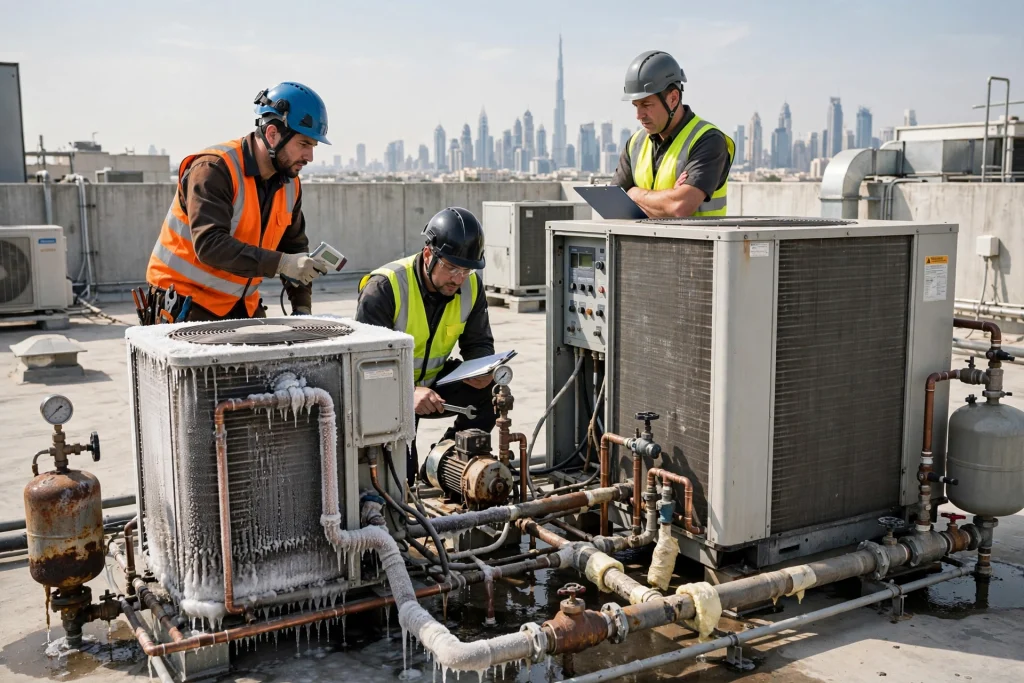
Commercial cooling technology continues to evolve as businesses seek greater energy efficiency and sustainability. Modern chillers are becoming smarter, more reliable, and better connected through digital monitoring systems that provide real-time operating data.
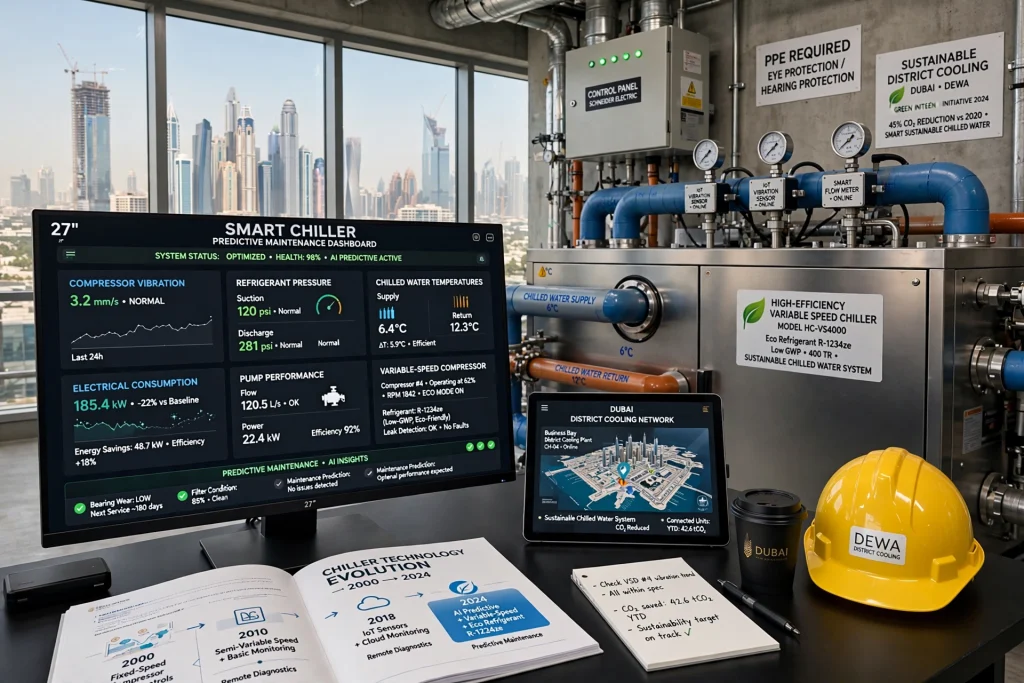
Many new commercial developments are adopting intelligent predictive maintenance solutions that continuously monitor compressor vibration, refrigerant pressure, water temperatures, electrical consumption, and pump performance. These systems use data analytics to detect early signs of equipment deterioration, allowing maintenance teams to schedule repairs before failures occur.
Manufacturers are also introducing high-efficiency compressors, environmentally friendly refrigerants, and advanced heat exchanger designs that reduce electricity consumption while maintaining excellent cooling capacity. Variable-speed compressors and intelligent control algorithms automatically adjust system output according to changing cooling demands, improving part-load efficiency throughout the day.
As Dubai continues expanding its commercial infrastructure with new business districts, mixed-use developments, hotels, hospitals, and industrial facilities, the demand for sustainable and energy-efficient chilled water systems will continue to grow. Businesses that invest in modern HVAC technologies today are better positioned to reduce operating expenses while supporting long-term environmental goals.
Conclusion
Selecting the right commercial chiller contractor is about much more than completing an installation. It involves partnering with experienced professionals who understand the engineering principles behind chilled water systems and can deliver reliable performance throughout the equipment’s entire lifecycle.
From accurate cooling load calculations and careful equipment selection to professional commissioning and ongoing preventive maintenance, every stage of the project influences system efficiency, operating costs, and long-term reliability. Commercial buildings across Dubai face demanding environmental conditions, making high-quality engineering and regular maintenance essential for uninterrupted cooling.
Whether the project involves an office tower, hotel, shopping mall, healthcare facility, educational campus, logistics center, or industrial plant, working with an experienced contractor ensures the cooling system operates safely, efficiently, and economically. A well-designed commercial chiller system not only enhances occupant comfort but also reduces energy consumption, protects valuable equipment, and supports the long-term success of the business.