Modern commercial buildings depend heavily on reliable cooling systems to maintain comfortable indoor environments and support daily operations. Behind every efficient commercial cooling system is a team of specialized professionals responsible for designing, installing, maintaining, and optimizing the equipment. Among these professionals, the chiller contractor plays one of the most important roles in ensuring that large-scale HVAC systems operate efficiently.
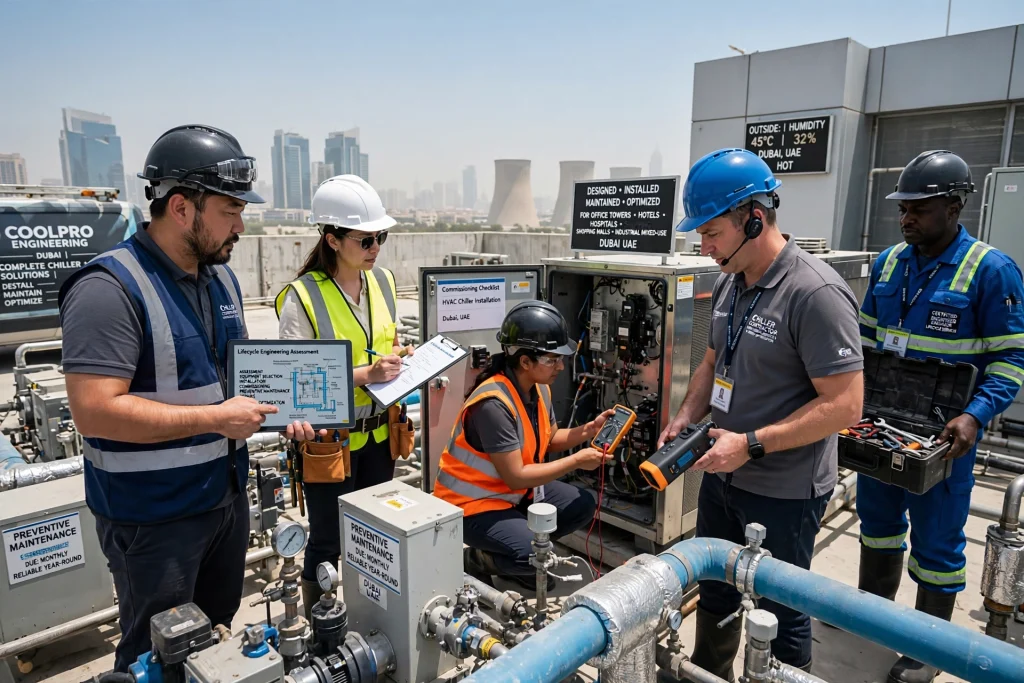
Many people assume that a chiller contractor only installs cooling equipment, but their responsibilities extend far beyond installation. A professional contractor manages the complete lifecycle of a commercial chiller system, beginning with engineering assessments and equipment selection and continuing through installation, commissioning, preventive maintenance, repairs, and energy optimization.
In Dubai and across the UAE, where temperatures can exceed 45°C during summer, commercial cooling systems operate under extremely demanding conditions. Office towers, hotels, hospitals, shopping malls, industrial facilities, and mixed-use developments require carefully engineered chilled water systems that can deliver reliable performance throughout the year.
Understanding what a chiller contractor actually does helps building owners, facility managers, and project developers make better decisions when planning new HVAC installations or upgrading existing cooling infrastructure.
Understanding the Role of a Chiller Contractor in Commercial HVAC
A chiller contractor is a specialized HVAC professional responsible for managing large-scale cooling systems used in commercial and industrial buildings. Unlike standard air conditioning technicians who typically work with smaller systems, chiller contractors handle complex mechanical systems designed to cool entire buildings or facilities.
Their work involves mechanical engineering, HVAC design, equipment installation, system testing, and long-term maintenance. They ensure that all components within a cooling system work together correctly, including chillers, pumps, cooling towers, air handling units, control systems, and water distribution networks.
A commercial chiller does not operate as a standalone machine. It works as part of a complete chilled water system where chilled water is produced inside the chiller plant and circulated through insulated pipes to different areas of the building. Air Handling Units (AHUs) and Fan Coil Units (FCUs) then use this chilled water to cool and distribute conditioned air throughout occupied spaces.
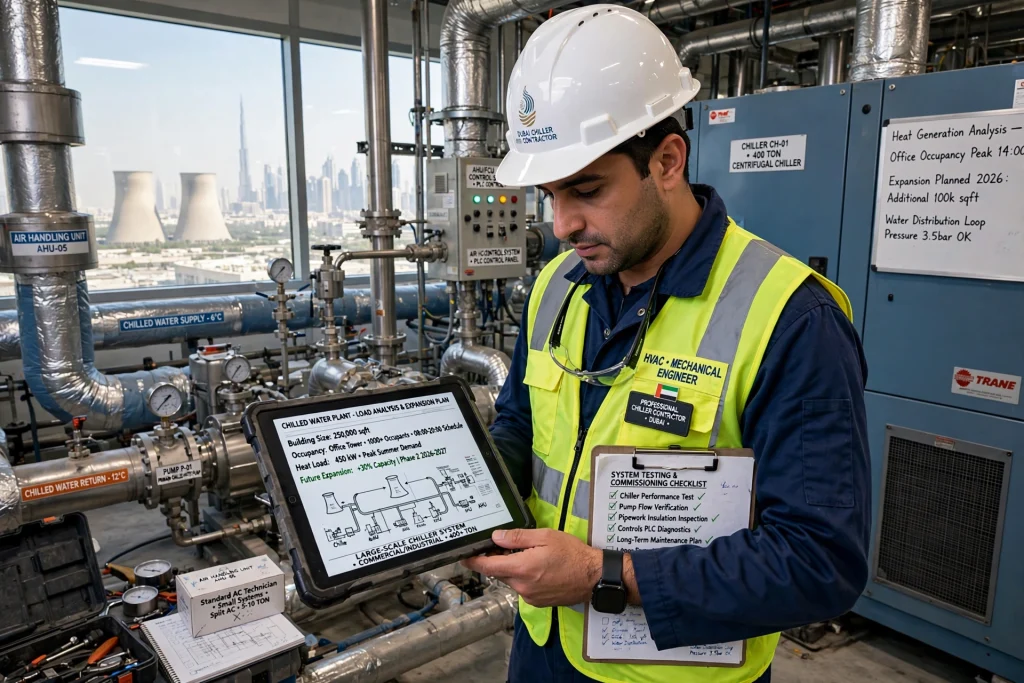
Because every building has different requirements, contractors must carefully evaluate factors such as building size, occupancy levels, operating schedules, heat generation, and future expansion plans before designing the cooling solution.
For businesses looking for reliable HVAC solutions, working with a Professional Chiller Contractor Dubai ensures that every stage of the cooling project is handled by experienced specialists who understand both technical requirements and local operating conditions.
Initial Assessment and Cooling System Planning
One of the first responsibilities of a chiller contractor is understanding the cooling requirements of the building. Before selecting equipment, experienced engineers perform detailed assessments to determine the required cooling capacity.
This process involves studying the building layout, architectural drawings, insulation quality, glass façade exposure, occupancy density, lighting systems, electrical equipment, ventilation requirements, and heat-generating machinery. These factors determine how much heat enters the building and how much cooling capacity is required to maintain comfortable indoor temperatures.
Accurate cooling load calculations are extremely important because incorrect sizing creates long-term problems. A chiller that is too small may struggle to maintain temperatures during peak summer conditions, forcing compressors to operate continuously. This increases energy consumption and places additional stress on mechanical components.
On the other hand, an oversized chiller can also create efficiency problems. Large equipment that frequently cycles on and off experiences unnecessary mechanical wear while consuming more electricity than required.
Professional contractors use engineering calculations and industry standards to select the correct equipment capacity. This ensures the cooling system operates efficiently while providing reliable performance throughout the building’s lifecycle.
Selecting the Right Chiller Equipment
Another major responsibility of a chiller contractor is selecting the appropriate type of chiller technology for the project. Different buildings require different solutions depending on their size, cooling demand, available space, and operational requirements.
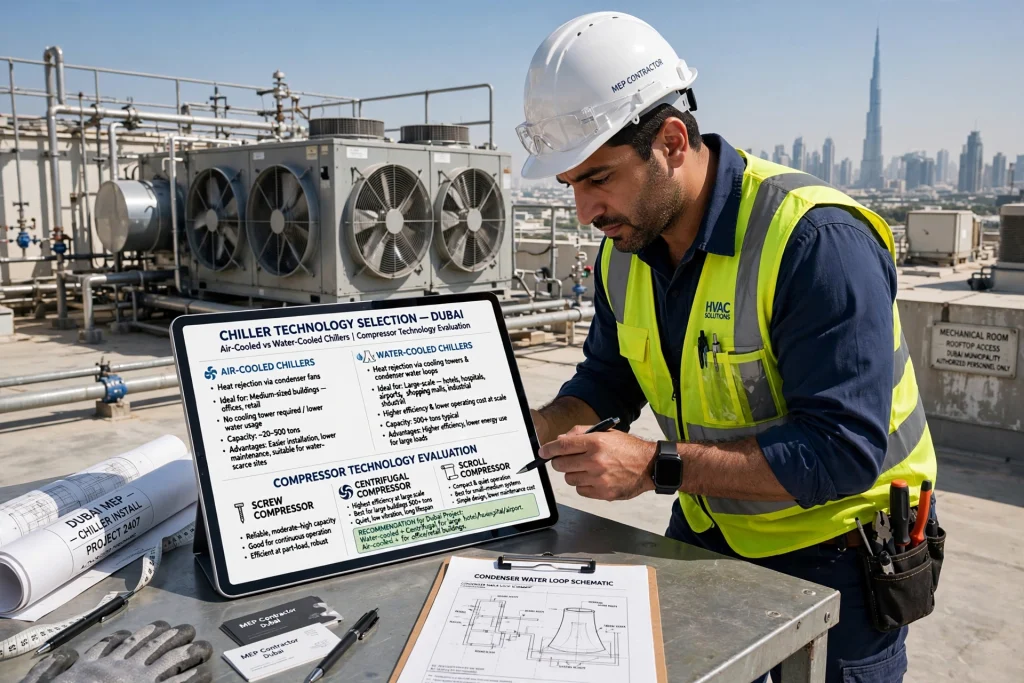
Commercial chillers generally fall into two major categories: air-cooled chillers and water-cooled chillers.
Air-cooled chillers reject heat using condenser fans and are commonly used where space availability or water consumption is a concern. They are often suitable for medium-sized commercial buildings, offices, retail facilities, and smaller developments.
Water-cooled chillers use cooling towers and condenser water loops to remove heat more efficiently. These systems are commonly installed in large-scale developments such as hotels, hospitals, airports, shopping malls, and industrial facilities because they provide excellent efficiency under continuous operating conditions.
Contractors also evaluate compressor technology when selecting equipment. Screw compressors, centrifugal compressors, and scroll compressors each offer different advantages depending on the application. Large commercial buildings may benefit from centrifugal chillers because of their high efficiency at large capacities, while smaller facilities may require different solutions.
The contractor also considers supporting equipment, including chilled water pumps, condenser pumps, expansion tanks, plate heat exchangers, valves, piping systems, and control equipment. Every component must be properly matched to create an efficient and reliable cooling system.
Designing the Complete Chilled Water System
A chiller contractor’s responsibility is not limited to choosing the chiller unit itself. The entire chilled water network must be carefully designed to ensure efficient heat transfer and stable operation.
The chilled water system includes multiple interconnected components that work together. The evaporator inside the chiller removes heat from the water, creating chilled water that is circulated through the building. Pumps move this chilled water through insulated piping to AHUs and FCUs, where cooling is transferred into indoor spaces.
After absorbing heat from the building, the warmer return water travels back to the chiller where the cooling cycle begins again.
For water-cooled systems, contractors also design condenser water loops connected to cooling towers. The cooling tower removes heat from the condenser water before it returns to the chiller. Proper sizing and installation of cooling towers, pumps, and piping are essential because poor design can significantly reduce overall system efficiency.
Modern projects also include Variable Frequency Drives (VFDs) and Building Management Systems (BMS) to improve control and energy efficiency. VFDs allow pumps and fans to adjust their speed according to actual cooling demand, while BMS platforms provide centralized monitoring and automated control of the entire HVAC system.
Importance of Professional Installation
Once the system design is finalized, the chiller contractor manages the installation process. This stage requires careful coordination because commercial HVAC projects involve heavy equipment, complex piping networks, electrical connections, and integration with other building services.
Installation begins with preparing the mechanical area where the chiller plant will be located. Contractors ensure proper foundations, vibration isolation, ventilation, and maintenance access before placing the equipment.
After installation, engineers connect chilled water pipes, condenser water lines, pumps, control panels, sensors, and electrical systems. All connections are tested to verify there are no leaks or operational issues.
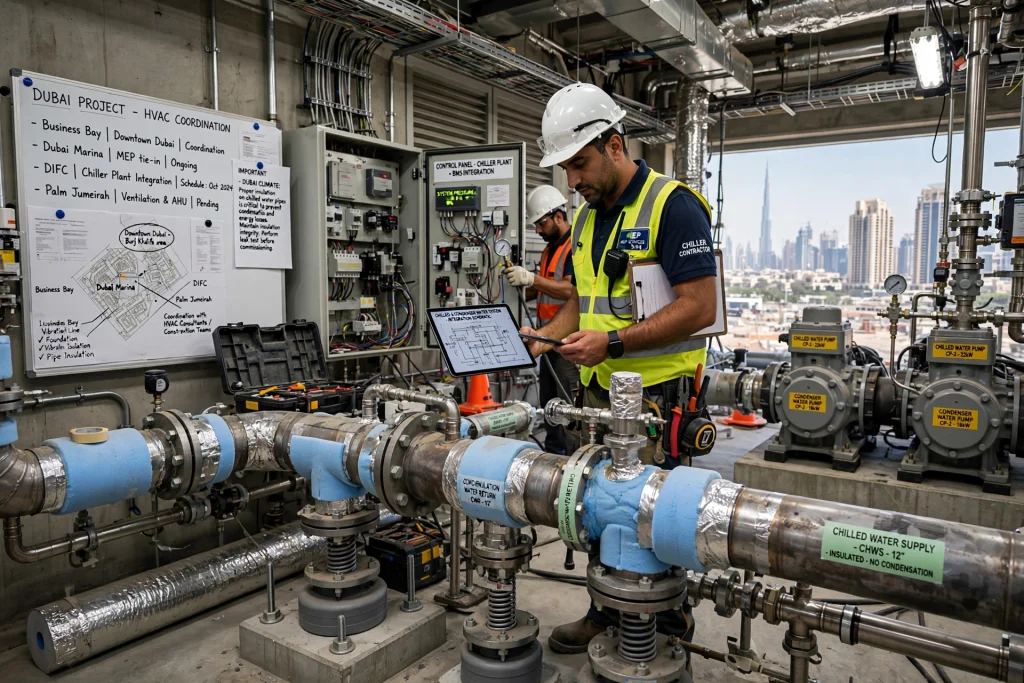
Proper insulation of chilled water pipes is particularly important in Dubai’s climate. Poor insulation can lead to condensation problems, energy losses, and reduced cooling efficiency. Experienced contractors ensure insulation materials are correctly installed to maintain system performance.
Large developments in areas such as Business Bay, Downtown Dubai, Dubai Marina, DIFC, and Palm Jumeirah often require extensive coordination between HVAC contractors, consultants, and construction teams to ensure successful project completion.
Chiller Commissioning and Performance Testing
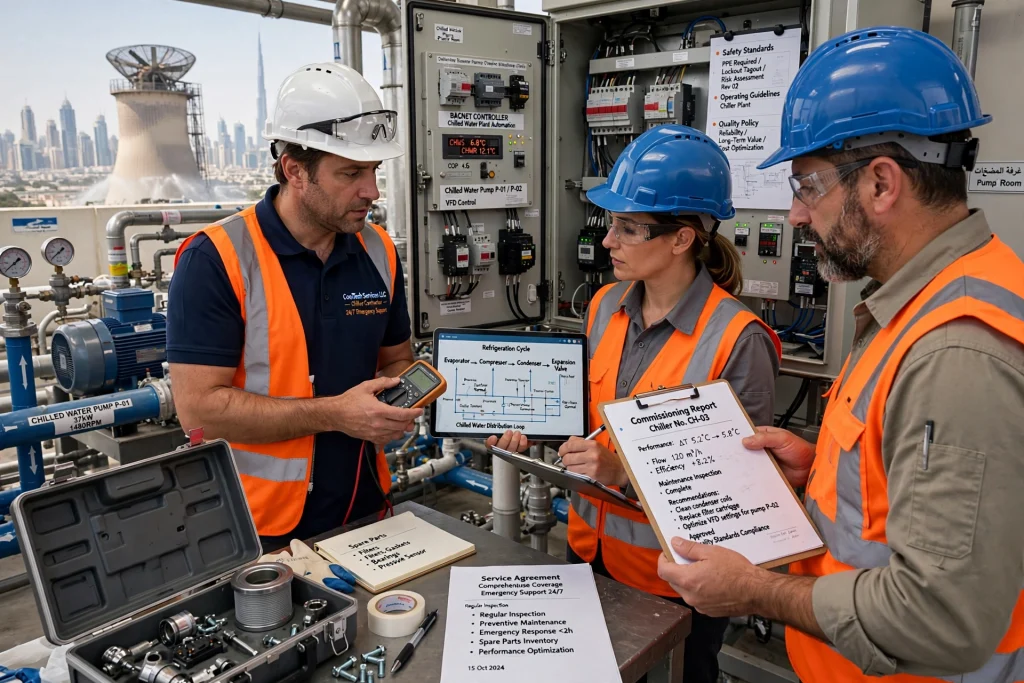
After installation is completed, one of the most important responsibilities of a chiller contractor is commissioning. This process confirms that the entire cooling system has been installed correctly and is operating according to the original engineering design.
Commissioning is not simply turning the equipment on. It involves detailed testing of every major component within the chilled water system. Engineers check refrigerant pressures, chilled water temperatures, condenser water flow, compressor operation, pump performance, electrical readings, safety controls, and communication between different HVAC components.
During this stage, contractors verify that the evaporator is producing the required chilled water temperature and that the condenser is effectively rejecting heat. They also inspect the operation of cooling towers, chilled water pumps, condenser pumps, and control systems to ensure the complete system is balanced.
Water balancing is another essential part of commissioning. In large commercial buildings, chilled water must reach different AHUs and FCUs at the correct flow rates. If some areas receive insufficient water flow while others receive excessive flow, the building may experience uneven cooling and increased energy consumption.
Professional contractors also test the Building Management System (BMS) integration. Modern commercial buildings rely on automation to monitor equipment performance, control operating schedules, and identify system alarms. Proper BMS configuration allows facility managers to track important parameters such as supply water temperature, return water temperature, compressor status, pump operation, and energy usage.
A properly commissioned chiller system provides better efficiency, fewer operational problems, and a longer service life. It also creates a performance baseline that can be used during future maintenance inspections.
Preventive Maintenance and Long-Term System Care
A major part of a chiller contractor’s responsibility begins after installation. Commercial cooling systems operate continuously for long periods, especially in the UAE where air conditioning demand remains high throughout much of the year. Without regular maintenance, even advanced chiller systems gradually lose efficiency.
Preventive maintenance focuses on identifying potential problems before they develop into major failures. Contractors regularly inspect critical components including compressors, condensers, evaporators, pumps, cooling towers, electrical panels, sensors, and control systems.
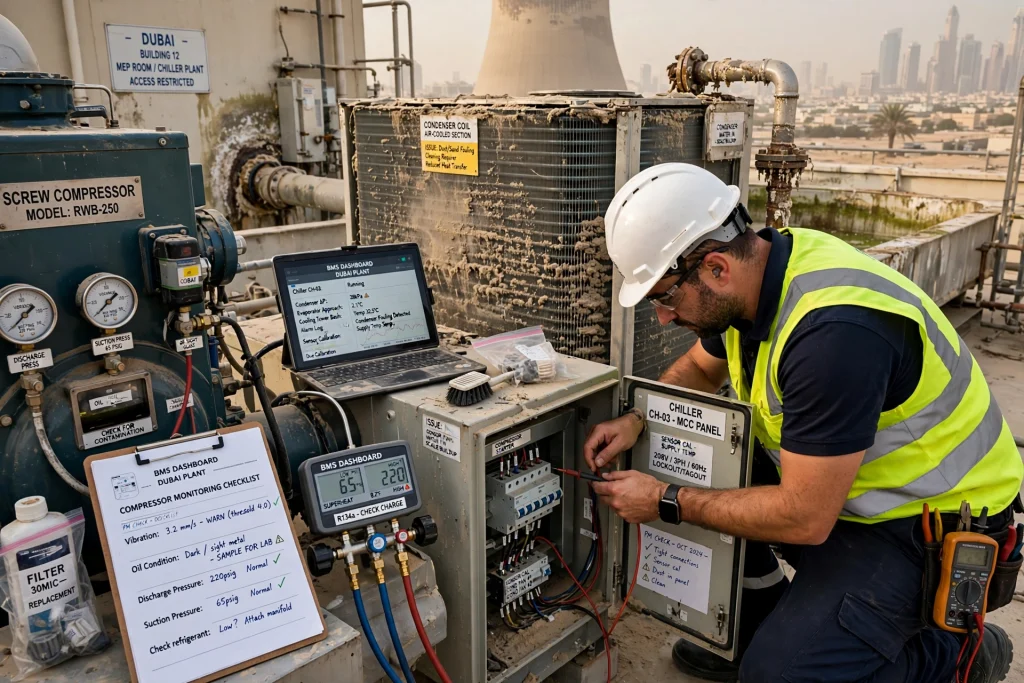
The compressor is one of the most important parts of a chiller because it controls the refrigerant circulation process. Engineers monitor compressor performance, vibration levels, oil condition, and operating pressures to detect early warning signs of mechanical problems.
Condensers also require regular attention because dust, scale, and contamination can reduce heat transfer efficiency. In Dubai’s environment, airborne dust and sand particles can accumulate on equipment, forcing the system to work harder to achieve the required cooling output.
For water-cooled chillers, cooling tower maintenance is especially important. Poor water quality can cause mineral buildup, corrosion, and biological growth inside condenser tubes. These issues reduce heat rejection efficiency and increase electricity consumption. Professional contractors coordinate water treatment, cleaning, and inspection procedures to maintain optimal performance.
Regular maintenance also includes checking refrigerant levels, cleaning filters, tightening electrical connections, calibrating sensors, and reviewing BMS performance data. These activities help prevent unexpected breakdowns and reduce expensive emergency repair requirements.
Chiller Repair and Troubleshooting Services
Even with proper maintenance, commercial chillers may experience technical problems due to equipment age, operating conditions, or unexpected failures. A skilled chiller contractor provides diagnostic and repair services to restore system performance as quickly as possible.
Common chiller issues include compressor failure, refrigerant leaks, low cooling capacity, abnormal pressure readings, pump failures, sensor faults, and electrical problems. Identifying the actual cause of a problem requires technical knowledge because many symptoms can have multiple causes.
For example, reduced cooling performance may not always indicate a compressor issue. It could result from dirty condenser tubes, incorrect water flow, refrigerant imbalance, faulty sensors, or problems with the cooling tower. Experienced engineers perform systematic troubleshooting instead of replacing components unnecessarily.
Advanced diagnostic tools such as vibration analysis equipment, thermal imaging cameras, pressure monitoring devices, and computerized testing systems help contractors identify problems accurately. This approach reduces repair time and prevents unnecessary replacement of expensive components.
Fast response is especially important for commercial properties where cooling failure can affect business operations. Hotels, hospitals, data centers, and manufacturing facilities cannot afford extended downtime, making reliable technical support a critical part of professional chiller services.
Improving Energy Efficiency Through System Optimization
Energy efficiency has become a major concern for commercial property owners throughout Dubai and the UAE. Cooling systems represent one of the largest sources of electricity consumption in large buildings, which means improving chiller performance can create significant financial benefits.
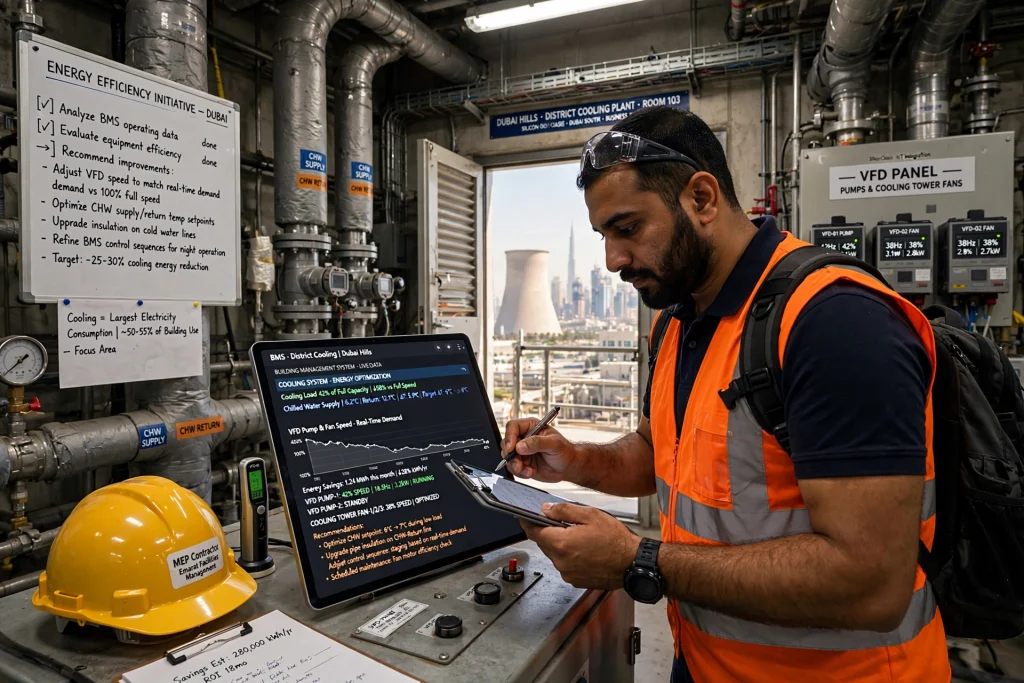
A professional contractor does not only repair problems; they also analyze system performance and identify opportunities for optimization. Engineers review operating data from the BMS, evaluate equipment efficiency, and recommend improvements that reduce unnecessary energy usage.
One common optimization method is implementing Variable Frequency Drives (VFDs) on pumps and cooling tower fans. Traditional motors often operate at full speed regardless of actual cooling demand. VFD technology allows equipment speed to adjust according to real-time requirements, reducing electricity consumption during lower-load periods.
Another important strategy is optimizing chilled water temperature settings. Adjusting supply and return water temperatures according to building demand can improve efficiency without affecting occupant comfort.
Contractors may also recommend upgrading outdated equipment, improving insulation, replacing inefficient pumps, or enhancing control sequences within the BMS. These improvements help buildings achieve better performance while reducing operational expenses.
Many modern commercial developments in areas such as Dubai Hills, Dubai Silicon Oasis, Dubai South, and Business Bay now prioritize energy-efficient HVAC systems as part of sustainable building strategies.
Integration With Building Management Systems
Modern commercial chillers are increasingly connected with intelligent Building Management Systems. A chiller contractor plays an important role in integrating cooling equipment with these automated platforms.
The BMS acts as the central control point for building services, allowing operators to monitor and manage HVAC equipment, lighting, electrical systems, and other mechanical services. Through proper integration, facility teams can observe real-time chiller performance and quickly identify abnormal operating conditions.
A well-integrated BMS can automatically adjust cooling output based on occupancy schedules, outdoor temperature, and actual building requirements. For example, a commercial office building may require maximum cooling during working hours but significantly less cooling during evenings and weekends. Automated controls prevent unnecessary operation and improve energy efficiency.
Contractors configure communication between chillers, pumps, sensors, AHUs, FCUs, and control panels to ensure accurate data exchange. They also test alarm systems so facility managers receive immediate notifications when issues occur.
This level of automation is particularly valuable for large properties such as hotels in Downtown Dubai, commercial towers in DIFC, and industrial facilities in Jebel Ali, where maintaining consistent cooling performance is essential.
How to Choose the Right Chiller Contractor
Selecting a chiller contractor for a commercial project requires careful evaluation because the quality of the contractor directly affects the long-term performance of the cooling system. A reliable contractor should demonstrate strong engineering knowledge, practical experience, and the ability to manage complex HVAC projects.
One of the first factors to consider is previous project experience. Contractors who have completed large commercial installations understand the challenges involved with equipment selection, system coordination, commissioning, and maintenance. They should be able to demonstrate experience across different building types and explain how they approached previous projects.
Technical capability is equally important. A professional contractor should have engineers who understand refrigeration cycles, chilled water distribution, pump systems, cooling towers, electrical controls, and automation systems. They should be capable of diagnosing problems, optimizing performance, and recommending improvements throughout the system’s lifecycle.
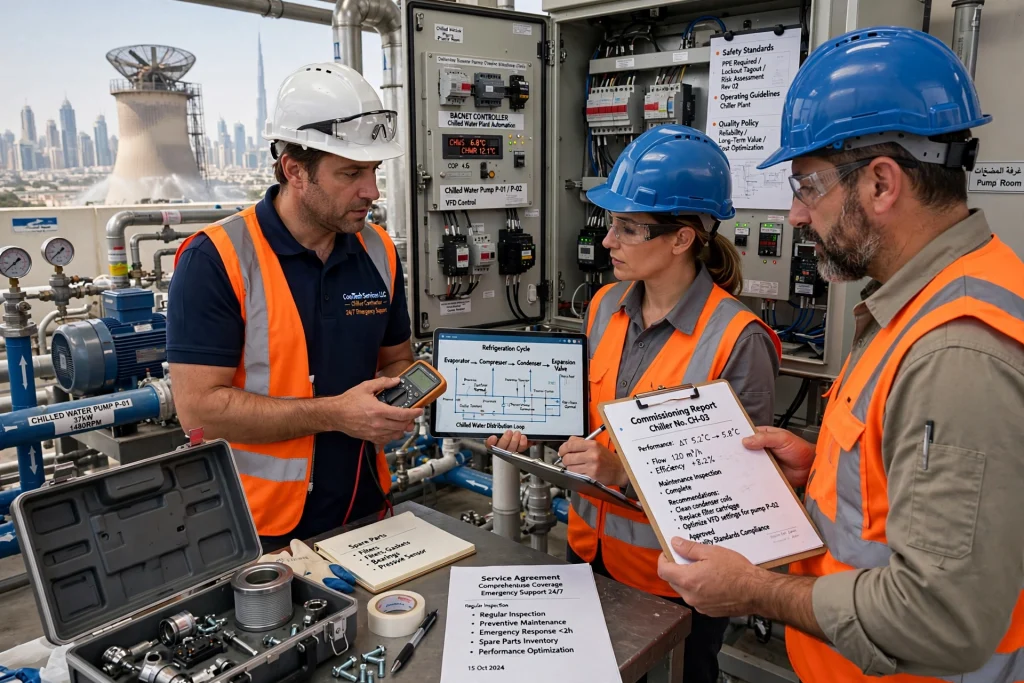
Another important consideration is maintenance support. Commercial chillers are long-term investments, and proper maintenance is necessary to protect equipment performance. Contractors offering comprehensive service agreements, emergency support, spare parts availability, and regular inspection programs provide greater value compared with companies that only focus on installation.
Quality standards should also influence contractor selection. Professional companies follow proper engineering procedures, use reliable materials, maintain safety standards, and provide detailed documentation after project completion. This includes commissioning reports, equipment records, maintenance recommendations, and operating guidelines.
Cost should always be considered, but it should not be the only deciding factor. A lower initial price may result in higher operating expenses if the system is inefficient, poorly installed, or difficult to maintain. The best contractor provides a balance between installation cost, system efficiency, reliability, and long-term value.
The Importance of Local UAE Experience
Working conditions in the UAE create unique challenges for commercial cooling systems. High temperatures, humidity, dust, and continuous operation require contractors who understand local environmental conditions.
A contractor with UAE experience knows how climate conditions affect equipment performance. For example, cooling towers require careful monitoring because high ambient temperatures can reduce heat rejection efficiency. Outdoor equipment may require additional protection against corrosion, while filtration systems may need more frequent maintenance due to dust exposure.
Local experience also helps contractors understand regional construction practices and authority requirements. Large developments often involve coordination with consultants, developers, facility management companies, and government regulations. Familiarity with these processes helps ensure smoother project execution.
Dubai’s rapidly expanding commercial landscape includes diverse developments such as luxury hotels, residential towers, industrial parks, shopping centers, and corporate headquarters. Each project presents different engineering challenges, making local knowledge a valuable advantage.
Contractors who have worked across locations such as Dubai Marina, Business Bay, DIFC, Jebel Ali, Dubai Hills, Palm Jumeirah, and Dubai Investment Park bring practical experience that improves system design, installation quality, and long-term performance.
The Future Role of Chiller Contractors
The responsibilities of chiller contractors are continuing to expand as HVAC technology becomes more advanced. In the past, contractors mainly focused on installation and repairs, but modern professionals now play a much larger role in energy management, sustainability, automation, and system optimization.
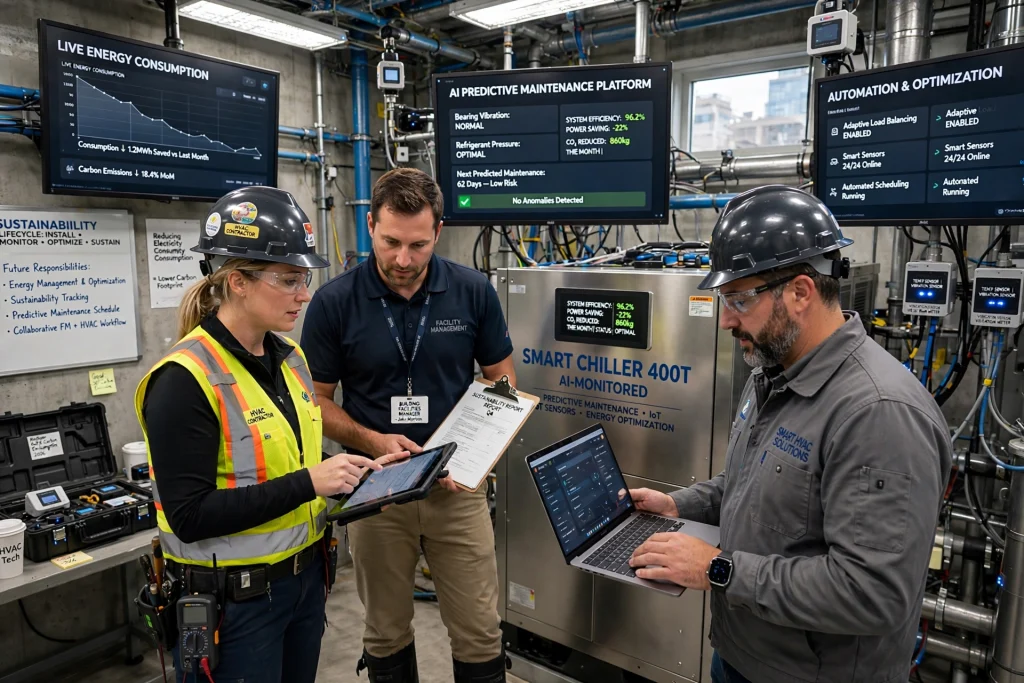
Future commercial cooling projects will increasingly rely on smart chillers, artificial intelligence-based monitoring, advanced sensors, and predictive maintenance platforms. Contractors will need to understand digital technologies alongside traditional mechanical engineering principles.
Sustainability will also become a major focus. Building owners are looking for ways to reduce electricity consumption, lower carbon emissions, and improve operational efficiency. Chiller contractors will support these goals by recommending high-efficiency equipment, optimizing system performance, and upgrading older installations.
As buildings become smarter, the relationship between HVAC contractors and facility management teams will become more collaborative. Contractors will continue providing technical insights that help buildings operate efficiently throughout their entire lifecycle.
Conclusion
A chiller contractor does much more than install cooling equipment. They are responsible for designing, managing, maintaining, and optimizing some of the most important mechanical systems within commercial buildings.
From initial cooling load calculations and equipment selection to installation, commissioning, preventive maintenance, repairs, and energy optimization, every responsibility contributes to the reliability and efficiency of the cooling system. Professional contractors ensure that chillers, pumps, cooling towers, AHUs, FCUs, BMS systems, and other components operate together as one integrated solution.
For businesses, choosing the right contractor means investing in long-term performance rather than simply completing an installation. An experienced HVAC partner helps reduce energy costs, prevent unexpected failures, extend equipment lifespan, and maintain comfortable indoor environments.
As commercial development continues across Dubai and the wider UAE, the demand for skilled chiller specialists will continue to grow. Buildings that rely on expert engineering and professional maintenance support will be better prepared to handle future cooling demands while achieving greater efficiency and reliability.
A properly designed and professionally managed chiller system is not just a mechanical installation—it is an essential investment that supports business operations, occupant comfort, sustainability goals, and the long-term success of any commercial property.