Warehouses and industrial facilities require specialized HVAC solutions because their operational requirements are significantly different from residential buildings and standard commercial offices. Large open spaces, high ceilings, heavy machinery, heat-generating equipment, continuous operations, storage requirements, and strict environmental conditions make industrial HVAC design a complex engineering challenge.
A properly designed HVAC system does much more than provide cooling. It protects stored products, maintains worker comfort, improves indoor air quality, controls humidity levels, removes airborne contaminants, and supports efficient industrial operations.
In the UAE, where extreme temperatures can create challenging working conditions, reliable industrial cooling systems are essential. Warehouses and manufacturing facilities located in Abu Dhabi, Mussafah Industrial Area, Industrial City of Abu Dhabi (ICAD), Khalifa Industrial Zone Abu Dhabi (KIZAD), Dubai Industrial City, Jebel Ali Free Zone (JAFZA), Dubai Investment Park (DIP), Ras Al Khor Industrial Area, Al Quoz Industrial Area, Sharjah Industrial Area, and Ajman Industrial Area require HVAC systems specifically engineered for hot climate conditions.
Choosing the correct HVAC solution requires a detailed understanding of building structure, operational requirements, heat loads, ventilation needs, equipment performance, and energy efficiency goals. A poorly designed industrial HVAC system can lead to excessive energy costs, uncomfortable working conditions, equipment failures, and reduced productivity.
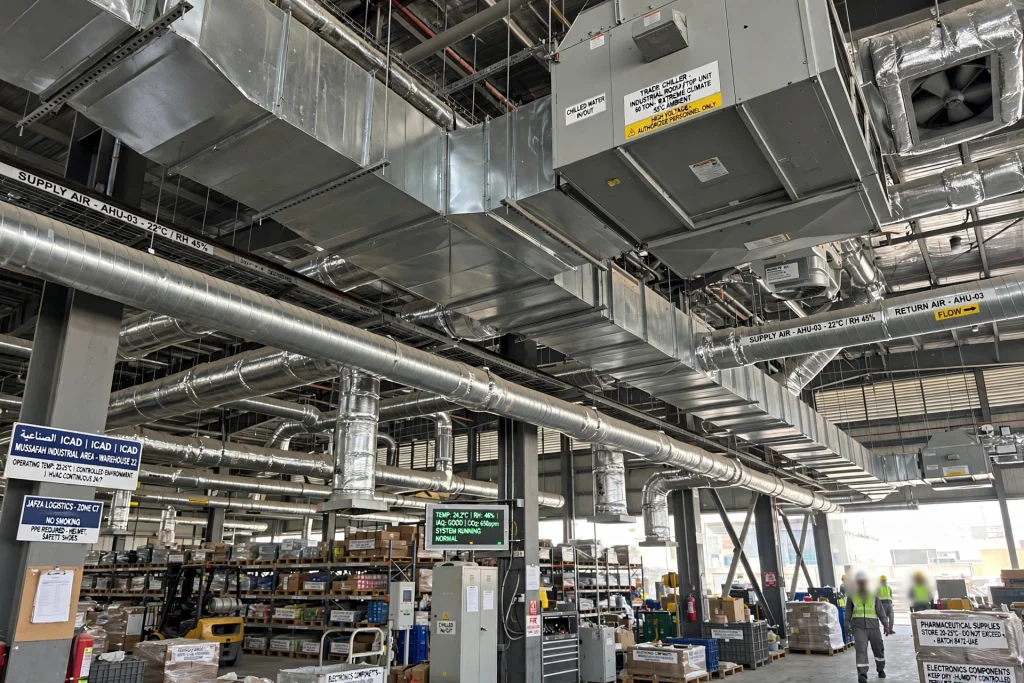
Understanding Industrial HVAC Requirements
Industrial facilities have unique environmental requirements compared with traditional buildings. Warehouses often contain large open areas with high ceilings where maintaining consistent temperatures can be challenging. Manufacturing facilities may generate additional heat through machinery, production processes, electrical equipment, and industrial operations.
An industrial HVAC system must consider multiple factors, including:
- Building size and layout
- Ceiling height
- Occupancy levels
- Equipment heat generation
- Storage requirements
- Ventilation needs
- Dust and pollutant levels
- Humidity control requirements
- Working hours and operational schedules
For example, a logistics warehouse storing general goods requires a different cooling approach compared with a pharmaceutical facility requiring strict temperature stability. Similarly, food storage facilities need precise humidity and temperature management to protect product quality.
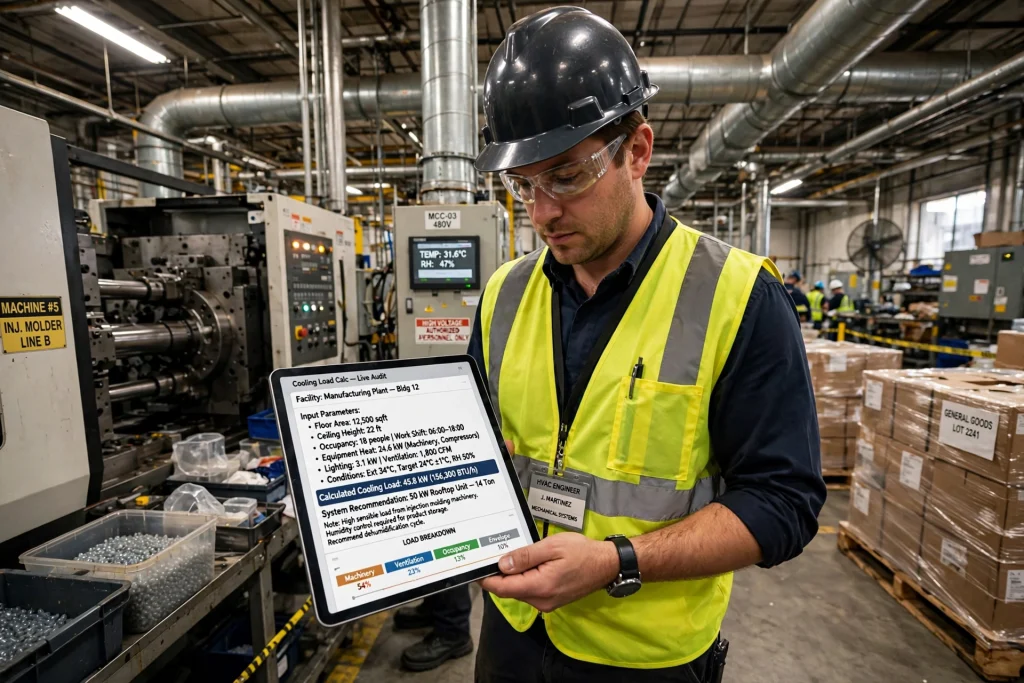
Professional HVAC engineers perform detailed cooling load calculations to determine the required system capacity before selecting equipment.
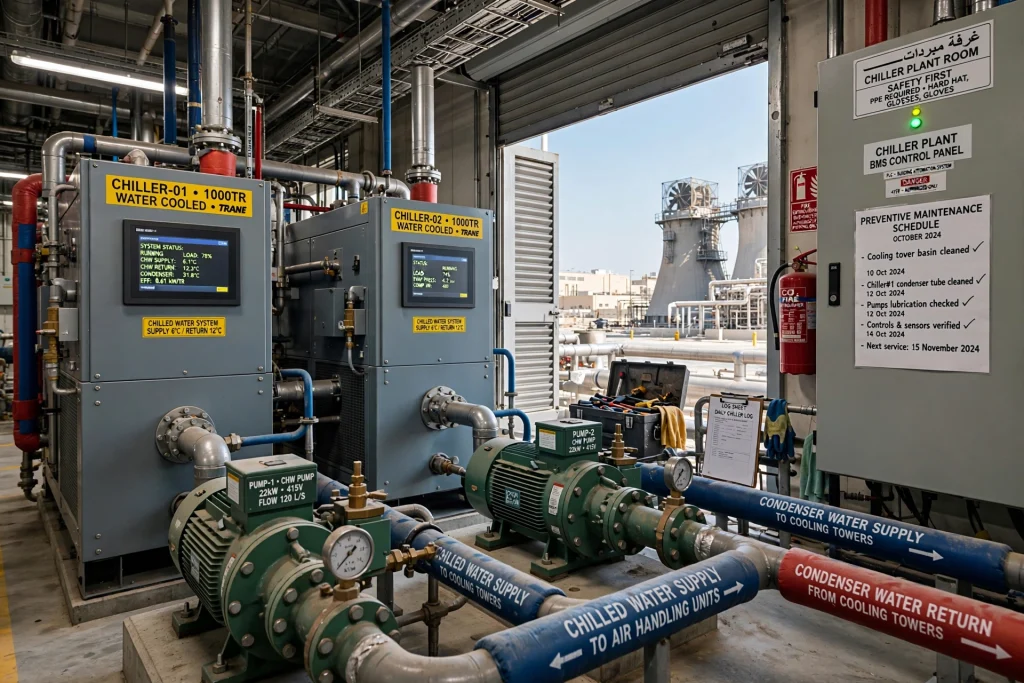
Chiller Systems for Large Industrial Facilities
Central chiller systems are among the most effective HVAC solutions for large warehouses and industrial buildings with significant cooling demands.
A chiller plant uses chilled water to remove heat from indoor spaces through a network of pumps, air handling units, and cooling coils. The major components include chillers, compressors, condensers, evaporators, pumps, cooling towers, and control systems.
Water cooled chillers are commonly used in large industrial projects because they provide excellent energy efficiency when properly maintained. These systems use cooling towers to reject heat and maintain efficient operation.
Air cooled chillers are also widely used where water availability, maintenance requirements, or project conditions make them more suitable.
Industrial facilities in Abu Dhabi and Dubai often operate continuously, meaning HVAC systems must deliver reliable cooling throughout the year. Proper chiller selection, commissioning, and preventive maintenance are essential to prevent unexpected downtime.
A well-designed chiller system provides:
- Stable temperature control
- Lower operating costs
- Improved energy efficiency
- Reliable long-term performance
- Better environmental control
Warehouse Cooling Solutions for Large Open Spaces
Cooling warehouses presents unique challenges because of their large volume and high ceiling structures.
Unlike offices where occupants are located close to conditioned air outlets, warehouse workers may operate across thousands of square meters with different temperature zones.
Traditional air conditioning approaches may become inefficient because cooled air naturally rises while warmer air accumulates near the roof level.
Industrial HVAC designers use specialized solutions such as high-volume low-speed (HVLS) fans, destratification systems, rooftop package units, ducted air distribution systems, and strategically positioned air handling units to improve cooling effectiveness.
Proper air distribution ensures that conditioned air reaches occupied working areas rather than being wasted in unused upper spaces.
Warehouses storing temperature-sensitive products require additional consideration. Pharmaceuticals, electronics, chemicals, food products, and other sensitive materials may require controlled environments with precise temperature and humidity monitoring.
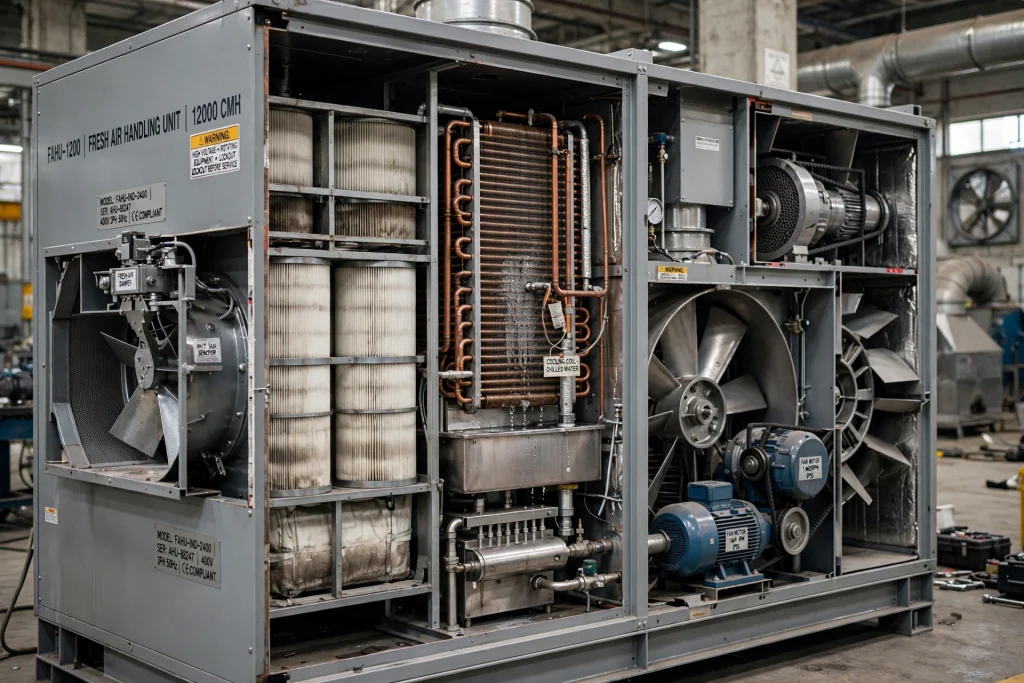
Air Handling Units and Industrial Ventilation
Air Handling Units (AHUs) play a critical role in industrial HVAC systems by conditioning and distributing air throughout large facilities.
An AHU typically contains components such as:
- Cooling coils
- Air filters
- Fans
- Dampers
- Humidity control equipment
- Fresh air intake systems
Industrial environments often require stronger ventilation compared with standard buildings because of dust, fumes, chemicals, heat generation, and manufacturing processes.
Fresh Air Handling Units (FAHUs) introduce clean outdoor air while removing stale indoor air. They help maintain acceptable indoor air quality and prevent the accumulation of pollutants.
Manufacturing facilities may require additional ventilation solutions such as:
- Exhaust fan systems
- Industrial extraction systems
- Dust collection systems
- Air filtration units
- Heat recovery ventilation systems
Effective ventilation protects workers while maintaining compliance with occupational health and safety requirements.
Temperature and Humidity Control in Industrial Facilities
Temperature control is not only about comfort. Many industrial operations require strict environmental conditions to protect products, machinery, and production processes.
Excessive humidity can create problems including:
- Corrosion of machinery
- Product deterioration
- Condensation issues
- Mould growth
- Reduced equipment lifespan
Industries such as pharmaceuticals, electronics manufacturing, food processing, and chemical storage require precise humidity management.
Industrial HVAC systems use dehumidification equipment, humidity sensors, chilled water systems, and smart control systems to maintain stable environmental conditions.
Building Management Systems (BMS) allow facility operators to monitor temperature, humidity, equipment performance, and energy consumption from a centralized platform.
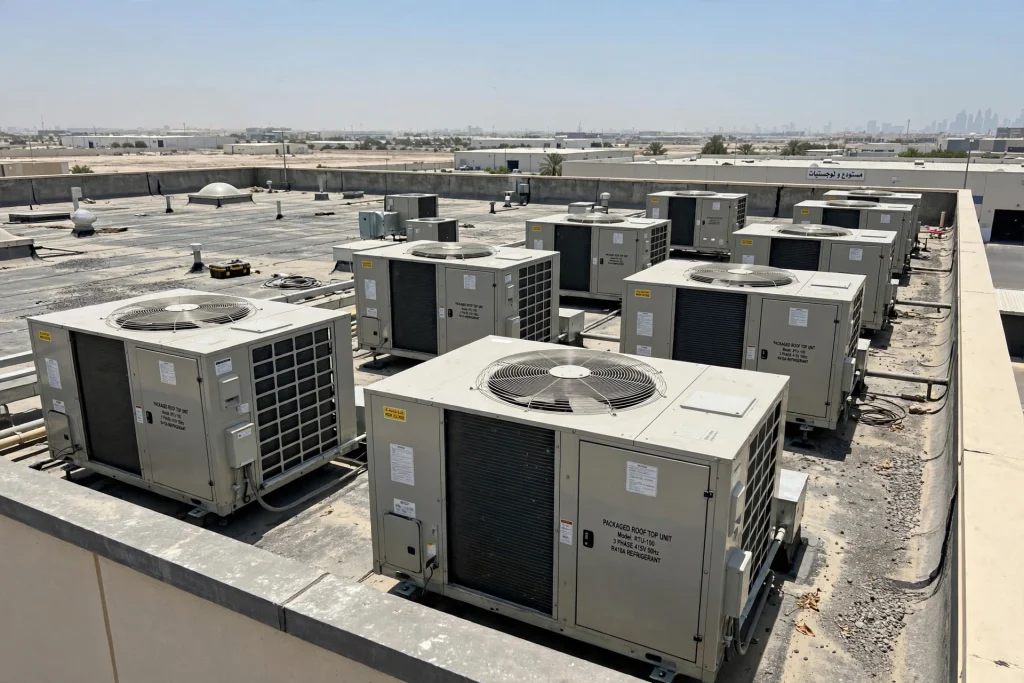
Rooftop Package Units for Warehouses
Rooftop package units are another popular HVAC solution for warehouses and industrial buildings, particularly where decentralized cooling is preferred.
These systems combine cooling components including compressors, condensers, evaporators, and fans into a single packaged unit installed on the roof.
Advantages of rooftop package units include:
- Space-saving installation
- Easy maintenance access
- Flexible zoning
- Reduced indoor equipment requirements
- Suitable cooling for large spaces
They are commonly used in warehouses, workshops, distribution centres, retail storage facilities, and industrial buildings where separate cooling zones are required.
Proper sizing and installation are critical because oversized units may cause inefficient operation while undersized systems may fail to maintain required temperatures during UAE summer conditions.
Energy Efficiency in Industrial HVAC Systems
Energy consumption is one of the biggest operational expenses for warehouses and industrial facilities. Because these buildings often operate for extended hours, inefficient HVAC systems can significantly increase electricity costs while reducing overall operational efficiency.
Modern industrial HVAC solutions focus on reducing energy consumption through advanced technologies such as Variable Frequency Drives (VFDs), smart controls, high-efficiency compressors, optimized air distribution, and energy management systems.
Variable Frequency Drives allow motors in pumps, fans, and air handling units to adjust their speed according to actual demand. Instead of operating continuously at maximum capacity, HVAC equipment automatically reduces output when cooling requirements decrease.
For large facilities in Abu Dhabi, Dubai, and Sharjah, this technology can create substantial energy savings because cooling demand changes throughout the day depending on occupancy, production activities, outdoor temperature, and operational schedules.
Energy-efficient HVAC design also involves selecting the correct equipment capacity. Oversized systems often experience frequent cycling, while undersized systems operate continuously under stress. Both situations increase energy consumption and reduce equipment lifespan.
Professional HVAC engineers evaluate building heat loads, operational requirements, insulation levels, equipment performance, and future expansion plans before designing the most efficient solution.
Industrial Ventilation Systems Improve Workplace Safety
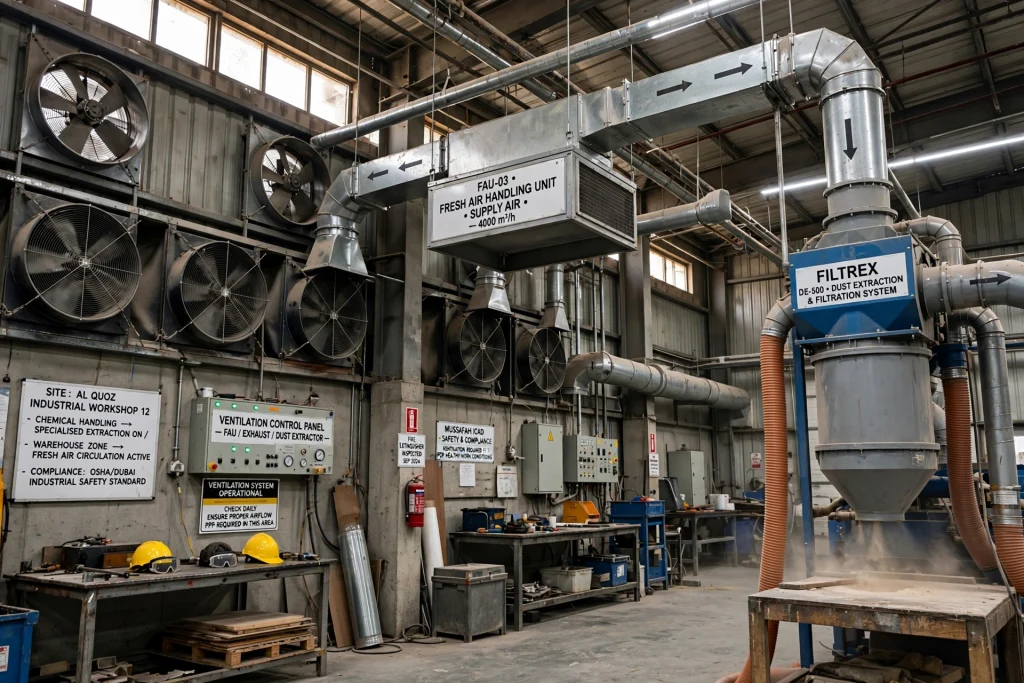
Ventilation is a critical component of industrial HVAC design because many industrial environments generate heat, dust, fumes, vapours, and airborne particles.
Manufacturing facilities, workshops, warehouses, and production areas require effective air movement to maintain healthy working conditions. Without proper ventilation, pollutants can accumulate, creating uncomfortable and potentially unsafe environments for employees.
Industrial ventilation systems may include:
- Exhaust fans
- Fresh air handling units
- Industrial air filtration systems
- Dust extraction systems
- Smoke extraction systems
- Heat recovery ventilation units
Facilities operating in industrial zones such as Mussafah Industrial Area, ICAD, KIZAD, JAFZA, Dubai Industrial City, and Al Quoz Industrial Area often require customized ventilation solutions based on their specific activities.
For example, manufacturing facilities handling chemicals may require specialized extraction systems, while warehouses storing general products may require fresh air circulation and temperature control.
A properly designed ventilation system improves worker comfort, protects equipment, and supports compliance with industrial safety standards.
HVAC Systems for Manufacturing Facilities
Manufacturing environments create unique HVAC challenges because production equipment often generates significant heat loads.
Machinery motors, industrial ovens, electrical panels, production lines, and processing equipment can increase indoor temperatures considerably. Without adequate cooling, workers may experience discomfort while machinery performance may be affected.
Industrial HVAC engineers analyze internal heat sources and design systems capable of removing excess heat efficiently.
Depending on the facility requirements, solutions may include:
- Central chiller systems
- Industrial AHUs
- Rooftop package units
- Evaporative cooling systems
- Exhaust ventilation
- Precision temperature control systems
Industries such as electronics manufacturing, automotive production, food processing, pharmaceutical manufacturing, and logistics require different levels of temperature and humidity control.
A customized HVAC approach ensures the system matches operational requirements rather than relying on a standard commercial solution.
HVAC Solutions for Cold Storage and Temperature-Sensitive Warehouses
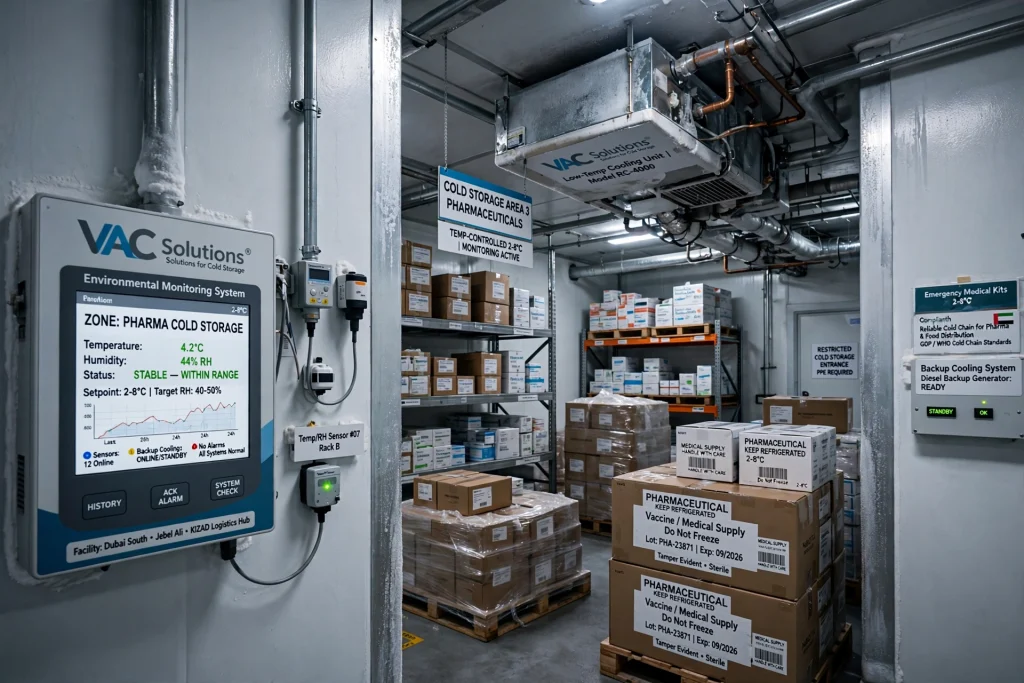
Certain warehouses require precise environmental control because stored products can be damaged by temperature fluctuations or excessive humidity.
Cold storage facilities, pharmaceutical warehouses, food distribution centres, and medical supply storage areas require specialized HVAC and refrigeration systems designed for strict temperature stability.
These facilities may use:
- Refrigeration systems
- Low-temperature cooling equipment
- Humidity control systems
- Temperature monitoring sensors
- Backup cooling solutions
- Automated control systems
Maintaining stable conditions is essential because temperature variations can affect product quality, safety, and compliance requirements.
Advanced monitoring systems continuously track environmental conditions and alert facility managers if temperatures move outside acceptable ranges.
In UAE logistics hubs such as Dubai South, Jebel Ali, and KIZAD, reliable temperature control plays a major role in supporting supply chain operations.
Smart HVAC Controls and Building Management Systems
Industrial facilities are increasingly adopting smart HVAC control technologies to improve efficiency and operational visibility.
Building Management Systems (BMS) integrate HVAC equipment, sensors, meters, and control devices into a centralized platform. Facility managers can monitor system performance, adjust settings, identify faults, and optimize energy usage.
A modern industrial BMS can monitor:
- Temperature levels
- Humidity conditions
- Air quality
- Chiller performance
- AHU operation
- Fan speeds
- Pump efficiency
- Energy consumption
Smart controls allow HVAC systems to respond automatically to changing conditions. For example, cooling output can be reduced in unused warehouse areas while increasing airflow in active production zones.
Predictive maintenance systems can also analyze equipment data to identify potential failures before breakdowns occur.
For large industrial facilities, smart HVAC management improves reliability while reducing unnecessary operating costs.
Preventive Maintenance Extends HVAC Equipment Life
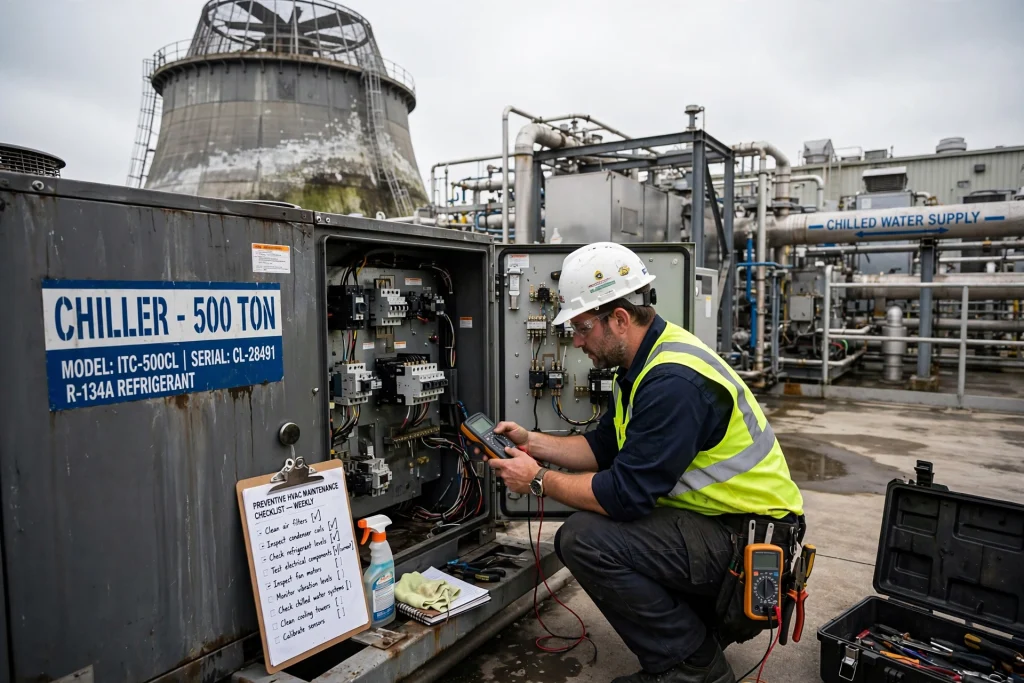
Industrial HVAC systems represent a significant investment, and regular maintenance is essential to protect this investment.
Without proper maintenance, components such as compressors, condenser coils, evaporators, filters, pumps, motors, and fans gradually lose efficiency.
Common maintenance requirements include:
- Cleaning air filters
- Inspecting coils
- Checking refrigerant levels
- Testing electrical components
- Inspecting fan motors
- Monitoring vibration levels
- Checking chilled water systems
- Cleaning cooling towers
- Calibrating sensors
Cooling towers require special attention because mineral deposits, biological growth, and scaling can reduce heat rejection efficiency.
Chiller maintenance is equally important because poor performance can increase energy consumption and create unexpected operational interruptions.
Industrial facilities that implement preventive HVAC maintenance programs experience fewer breakdowns, lower energy costs, and longer equipment lifespan.
Choosing the Right Industrial HVAC Contractor
Industrial HVAC projects require specialized technical knowledge because every facility has unique operational requirements.
A professional HVAC contractor should understand industrial cooling loads, ventilation requirements, energy efficiency strategies, equipment selection, installation standards, and maintenance planning.
The right contractor should provide complete HVAC solutions including:
- Engineering design
- Cooling load calculations
- Equipment selection
- Installation
- Testing and commissioning
- BMS integration
- Preventive maintenance
- Emergency support
Industrial property owners searching for reliable HVAC Contractor in abu dhabi should choose experienced specialists capable of managing complex industrial environments and delivering solutions suitable for UAE climate conditions.
A knowledgeable HVAC partner ensures that warehouses and industrial facilities receive efficient, reliable, and long-lasting mechanical systems.
Future Trends in Industrial HVAC Technology
The future of industrial HVAC is moving toward greater automation, sustainability, and intelligent energy management.
Artificial intelligence, IoT sensors, predictive analytics, and advanced control systems are changing how industrial facilities manage their cooling infrastructure.
Future HVAC systems will increasingly focus on:
- Automated energy optimization
- Predictive equipment maintenance
- Remote monitoring
- Carbon reduction
- Smart ventilation management
- Renewable energy integration
As industrial development continues across Abu Dhabi, Dubai, and the wider UAE, advanced HVAC technology will become increasingly important for improving operational efficiency and supporting sustainable growth.
Conclusion
HVAC systems are essential for maintaining productive, safe, and efficient industrial environments. Warehouses and industrial facilities require carefully designed solutions that address cooling demands, ventilation requirements, humidity control, energy efficiency, and operational reliability.
From large-scale chiller plants and AHUs to rooftop package units, industrial ventilation systems, BMS controls, and smart energy management solutions, every component plays an important role in maintaining performance.
Across Mussafah Industrial Area, ICAD, KIZAD, Dubai Industrial City, JAFZA, Dubai Investment Park, Ras Al Khor, Al Quoz, Sharjah Industrial Area, and other UAE industrial zones, professionally designed HVAC systems help businesses protect equipment, improve worker comfort, reduce operational costs, and maintain efficient production environments.
Investing in the right industrial HVAC solution and partnering with experienced professionals ensures long-term reliability, better energy performance, and a safer workplace for years to come.