Commercial buildings across the UAE rely on advanced cooling systems to maintain comfortable indoor environments throughout the year. From corporate headquarters and luxury hotels to hospitals, shopping malls, industrial plants, and educational institutions, every facility depends on reliable HVAC infrastructure to operate efficiently. At the center of these cooling systems is the commercial chiller, a sophisticated piece of equipment designed to remove heat and circulate chilled water throughout large buildings.
Selecting the right contractor for a commercial chiller project is one of the most important decisions a property owner or facility manager can make. A professional contractor does far more than install machinery. They assess cooling requirements, design chilled water systems, select suitable equipment, oversee installation, integrate intelligent controls, perform commissioning, and provide long-term maintenance. Every stage of the project directly influences system efficiency, energy consumption, operating costs, and equipment lifespan.
Because commercial chillers operate continuously under demanding environmental conditions, businesses require contractors with proven engineering knowledge, practical experience, and a thorough understanding of UAE building standards. Whether the project involves a new commercial development or the modernization of an existing HVAC system, choosing an experienced contractor ensures dependable performance for many years.
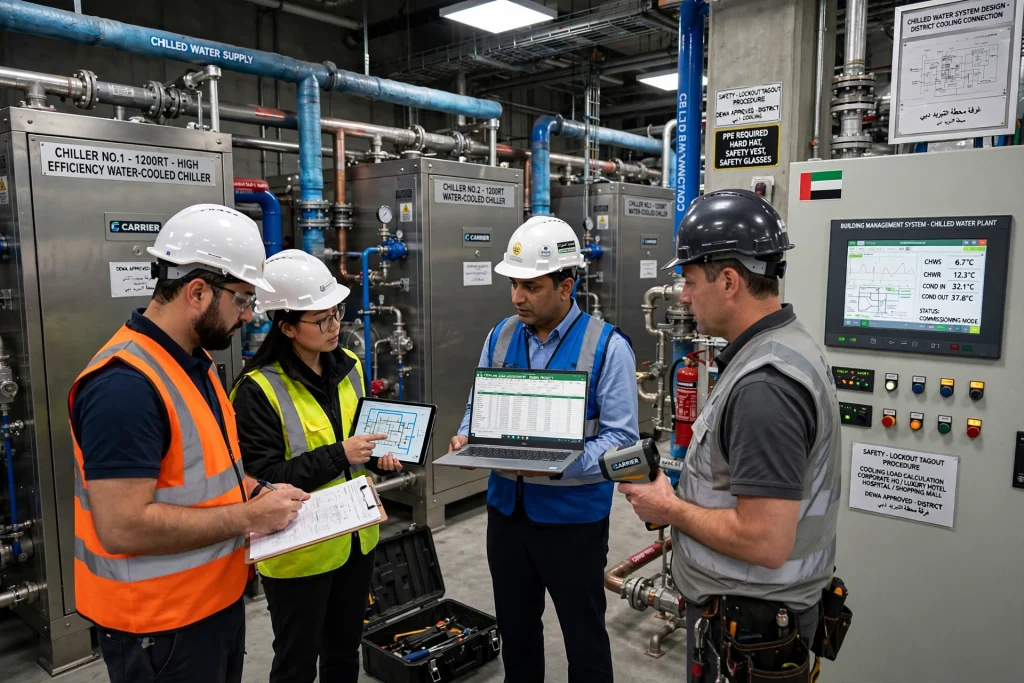
Why Commercial Buildings Require Specialized Chiller Contractors
Unlike residential air conditioning systems, commercial chillers are designed to cool thousands of square meters while supporting large numbers of occupants and heat-generating equipment. Office towers contain hundreds of employees, hotels operate twenty-four hours a day, hospitals require strict temperature control for medical equipment, and manufacturing facilities generate significant process heat. Each environment demands a carefully engineered cooling solution rather than a standard HVAC installation.
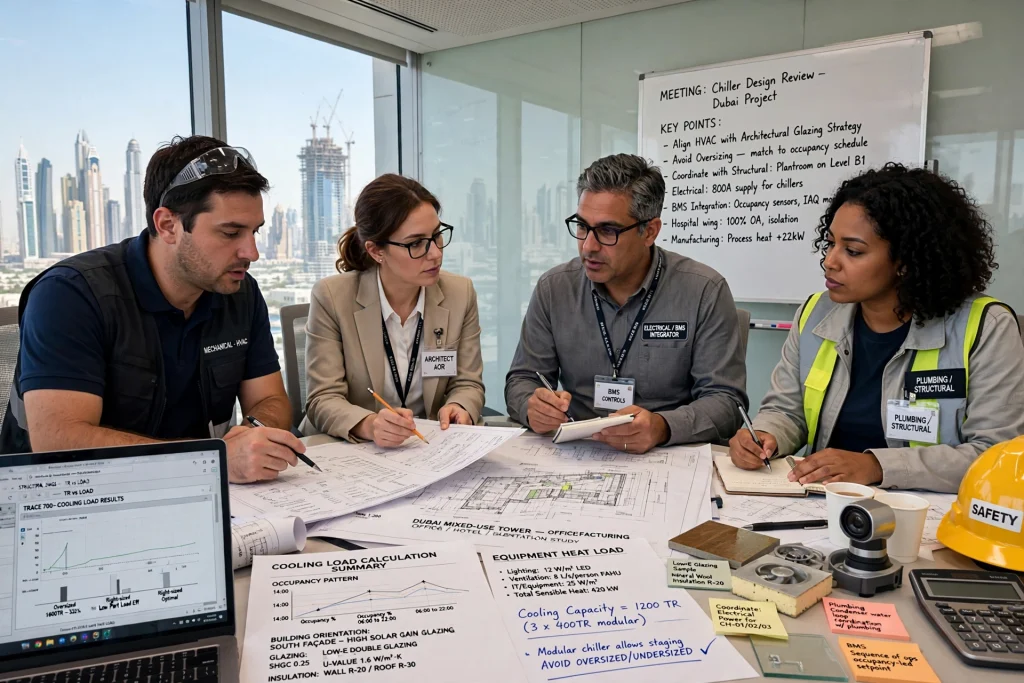
Professional chiller contractors begin every project by understanding how the building will operate. Engineers evaluate occupancy patterns, operating schedules, building orientation, glazing, insulation, lighting systems, ventilation requirements, and equipment-generated heat before recommending a cooling solution. These calculations help determine the correct cooling capacity while avoiding oversized or undersized equipment that can reduce efficiency and increase operating expenses.
Commercial projects also require close coordination with architects, structural consultants, electrical engineers, plumbing specialists, and Building Management System (BMS) integrators. Every component must function together to achieve reliable cooling performance without compromising energy efficiency. Contractors with extensive commercial experience understand these interdisciplinary requirements and ensure that each stage of the installation meets both technical and operational objectives.
Understanding Commercial Chiller Systems
A commercial chiller is only one part of a complete chilled water system. Its purpose is to remove heat from water, which is then distributed throughout the building to Air Handling Units (AHUs) and Fan Coil Units (FCUs). These units transfer cool air into occupied spaces before the warmed water returns to the chiller to repeat the cooling cycle.
Within this process, several critical components work together to maintain stable temperatures and efficient operation. Compressors circulate refrigerant through the system, condensers reject unwanted heat, evaporators absorb heat from the chilled water, and expansion valves regulate refrigerant flow. Chilled water pumps, condenser water pumps, cooling towers, plate heat exchangers, insulated piping, balancing valves, and Variable Frequency Drives (VFDs) all contribute to the overall efficiency of the system.
Modern commercial chillers are also integrated with intelligent Building Management Systems that continuously monitor operating temperatures, pump performance, compressor status, electrical consumption, and system alarms. These automated controls allow facility managers to optimize energy usage while responding quickly to any developing issues.
When all these components are properly designed, installed, and commissioned, the result is a cooling system capable of operating efficiently despite the UAE’s challenging climate.
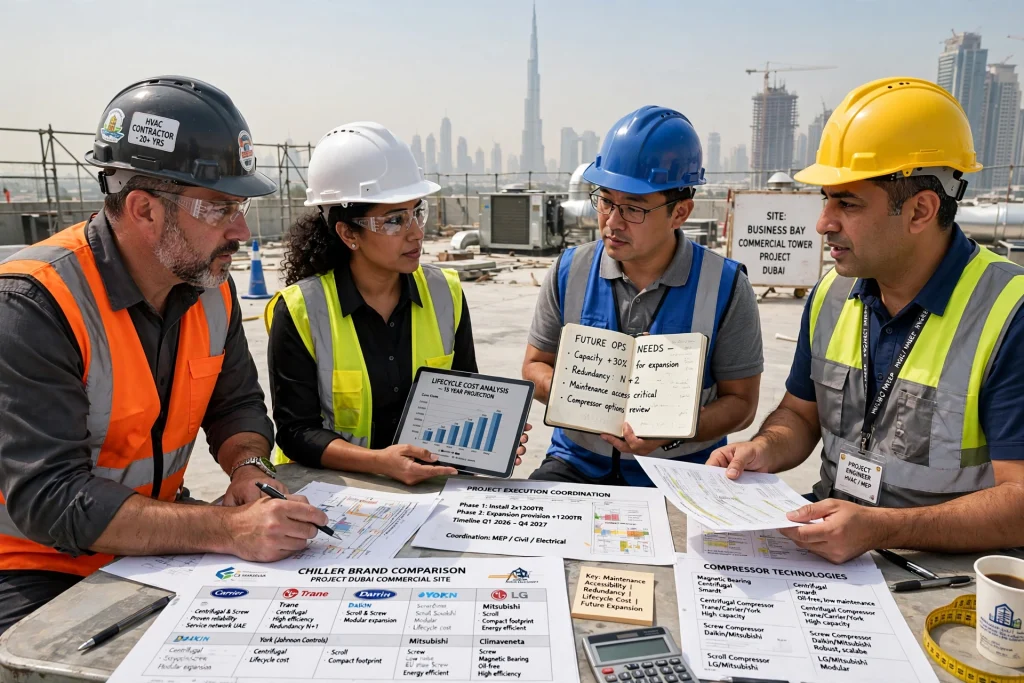
Experience Makes a Significant Difference
Commercial HVAC projects involve considerable financial investment, making contractor selection an important long-term business decision. Experienced contractors understand that successful installations begin long before equipment arrives on site.
Instead of recommending equipment based solely on capacity or price, experienced engineers evaluate the building’s future operational needs, maintenance accessibility, expansion possibilities, equipment redundancy, and long-term operating costs. This approach helps businesses avoid expensive modifications after construction has been completed.
Contractors with extensive commercial experience are also familiar with internationally recognized manufacturers including Carrier, Trane, Daikin, York, Mitsubishi Electric, LG, Climaveneta, and Smardt. They understand the advantages of different compressor technologies, refrigerant options, heat exchanger designs, and control systems, allowing them to recommend equipment that delivers the best balance between reliability, efficiency, and lifecycle cost.
Practical experience also improves project execution. Skilled contractors anticipate installation challenges, coordinate effectively with other construction teams, and resolve technical issues before they affect project schedules. This level of expertise minimizes delays while ensuring the cooling system performs as intended from the first day of operation.
Commercial Cooling Requirements Across Dubai
Dubai contains one of the most diverse collections of commercial buildings in the Middle East, and every district presents different cooling requirements. High-rise office towers in DIFC and Business Bay require centralized chilled water systems capable of serving multiple floors while maintaining consistent indoor temperatures throughout the day. Hotels in Downtown Dubai and Palm Jumeirah demand uninterrupted cooling to provide comfortable guest experiences regardless of seasonal weather conditions.
Industrial facilities in Jebel Ali and Dubai Investment Park often depend on process cooling that operates continuously alongside manufacturing equipment. Data centers located in Dubai Silicon Oasis require highly accurate temperature control to protect servers and networking equipment from overheating. Meanwhile, hospitals in Dubai Healthcare City depend on stable cooling conditions to support sensitive medical environments where reliability is essential.
Contractors with local experience understand these differences and adapt system designs accordingly. Instead of applying identical engineering solutions to every project, they evaluate each facility individually, ensuring the cooling system matches the operational requirements of the building while maintaining high energy efficiency.
The Importance of Accurate Cooling Load Calculations
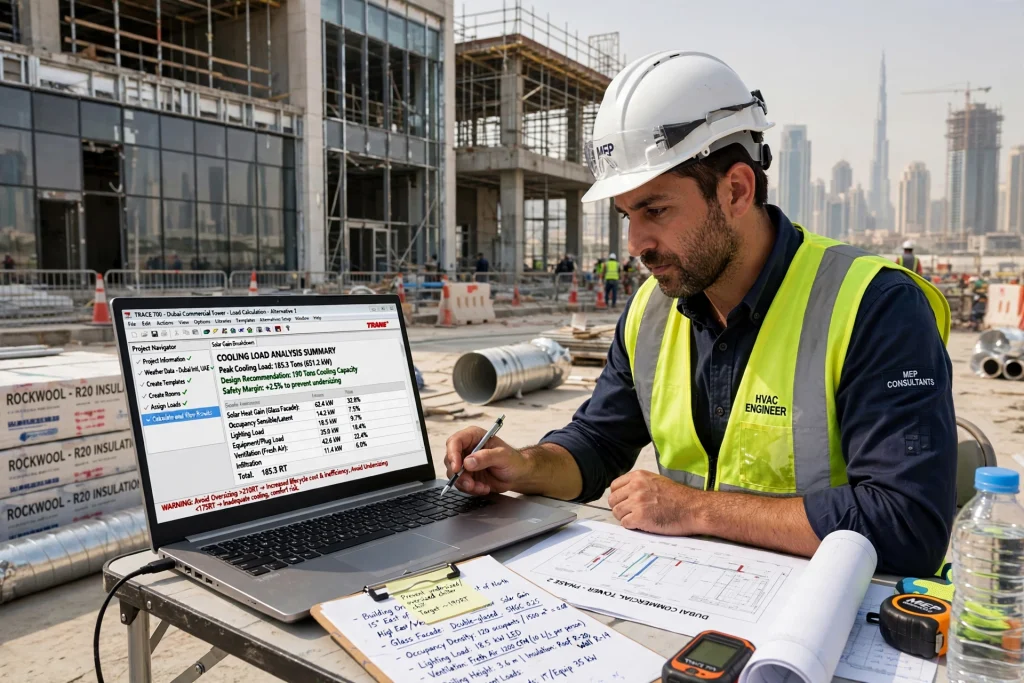
One of the most important responsibilities of a commercial chiller contractor is determining the building’s actual cooling demand. This process involves much more than estimating floor area or selecting equipment based on previous projects.
Engineers analyze factors such as building orientation, solar heat gain, occupancy density, glass façade design, lighting systems, ventilation rates, ceiling height, insulation quality, fresh air requirements, and internal equipment loads. These variables influence how much heat enters the building throughout the day and determine the cooling capacity required during peak operating conditions.
Accurate calculations prevent two common problems. Undersized chillers struggle to maintain comfortable temperatures during summer, forcing compressors to operate continuously and increasing energy consumption. Oversized systems, on the other hand, cycle on and off too frequently, creating unnecessary wear while reducing operating efficiency.
By carefully matching equipment capacity to the building’s actual cooling requirements, professional contractors help businesses achieve reliable performance, lower operating costs, and longer equipment life.
Choosing Between Air-Cooled and Water-Cooled Chillers
Selecting the appropriate chiller type depends on several engineering and operational considerations. Air-cooled chillers are commonly used in medium-sized commercial buildings because they require less supporting infrastructure and can often be installed more quickly. Their simplified design reduces maintenance requirements while providing reliable cooling for offices, educational facilities, retail developments, and healthcare clinics.
Water-cooled chillers are generally preferred for larger commercial developments where higher efficiency and greater cooling capacity justify the additional investment in cooling towers and condenser water systems. Hotels, airports, shopping malls, industrial plants, and high-rise office complexes frequently benefit from water-cooled technology because of its superior performance under continuous heavy loads.
Rather than recommending one technology for every project, experienced contractors evaluate installation space, building size, maintenance requirements, energy objectives, and operational schedules before selecting the most appropriate solution.
Preventive Maintenance Extends Equipment Life
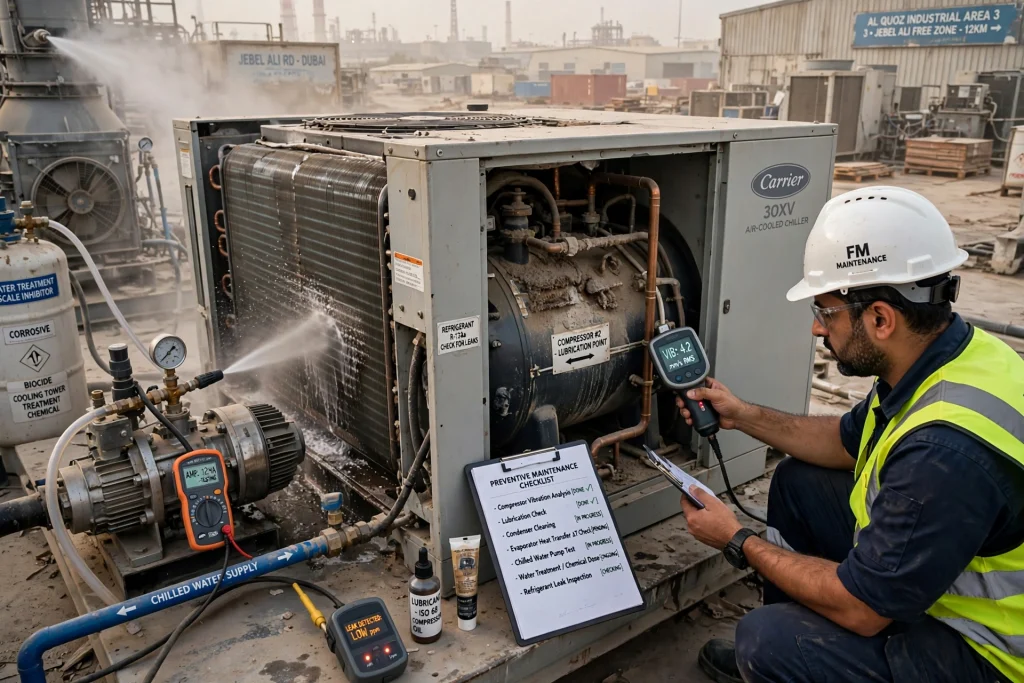
Commercial chillers represent a significant investment, and proper maintenance is the key to protecting that investment. Even the most advanced equipment gradually loses efficiency if regular inspections are ignored. Dust accumulation, scale formation, refrigerant leaks, electrical faults, and worn mechanical components all reduce cooling capacity while increasing energy consumption.
Experienced contractors follow preventive maintenance schedules that focus on maintaining every major component within the chilled water system. Compressors are inspected for vibration and lubrication quality, condensers are cleaned to improve heat rejection, evaporators are checked for efficient heat transfer, and chilled water pumps are tested to ensure proper circulation throughout the building. Electrical panels, safety controls, sensors, and communication systems are also inspected to verify that the Building Management System receives accurate operating information.
Water treatment is another important part of commercial chiller maintenance. In water-cooled systems, untreated water can lead to corrosion, mineral deposits, and biological growth inside condenser tubes and cooling towers. These conditions reduce heat transfer efficiency and force compressors to work harder, increasing electricity consumption. Proper chemical treatment and routine cleaning help preserve system performance while extending equipment life.
Businesses operating in industrial districts such as Al Quoz, Jebel Ali, and Dubai Investment Park often require more frequent maintenance because airborne dust and harsh environmental conditions accelerate equipment wear. Contractors familiar with these locations understand the additional preventive measures necessary to maintain reliable cooling throughout the year.
Energy Efficiency Is a Major Business Priority
Electricity costs represent one of the largest operational expenses for commercial buildings in the UAE. Since cooling systems account for a substantial portion of overall energy consumption, improving chiller efficiency has a direct impact on operating budgets.
Professional contractors approach energy efficiency by evaluating the entire HVAC system rather than focusing only on the chiller itself. They examine chilled water temperatures, condenser water performance, cooling tower efficiency, pump operation, refrigerant pressures, and airflow throughout the building. Small improvements across multiple components often produce significant reductions in electricity consumption.
Variable Frequency Drives (VFDs) have become an important part of modern commercial cooling systems. By automatically adjusting the speed of pumps and cooling tower fans according to demand, VFDs eliminate unnecessary energy usage during periods of partial occupancy. Intelligent Building Management Systems further enhance efficiency by monitoring equipment performance in real time and adjusting operating sequences based on weather conditions and cooling demand.
Many commercial developments in Business Bay, DIFC, Dubai Hills, and Dubai Marina have adopted these energy-saving technologies to reduce operating costs while supporting sustainable building objectives. High-efficiency chillers, environmentally friendly refrigerants, and smart control systems enable businesses to achieve lower utility bills without compromising indoor comfort.
Choosing a Contractor with Local Experience
Commercial HVAC projects require more than technical knowledge. Contractors must also understand the construction practices, environmental conditions, and operational challenges unique to the UAE. Local experience allows engineering teams to anticipate project requirements, coordinate effectively with consultants, and deliver systems that perform reliably under regional conditions.
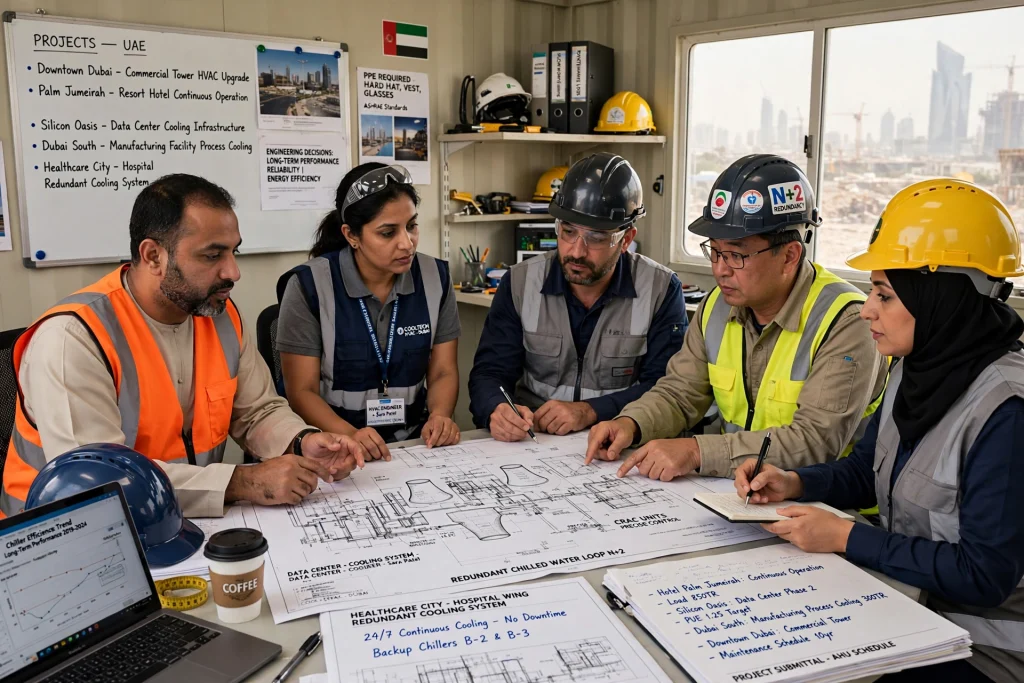
Different commercial sectors require specialized cooling solutions. Hotels demand continuous operation with minimal downtime, hospitals require redundant cooling systems to protect critical services, manufacturing facilities often need process cooling in addition to comfort cooling, and data centers depend on precise temperature and humidity control to safeguard sensitive equipment.
Contractors who have completed projects across Dubai gain valuable practical knowledge from working in diverse environments such as Downtown Dubai, Palm Jumeirah, Dubai Silicon Oasis, Dubai South, and Dubai Healthcare City. This experience helps them recommend equipment configurations, maintenance strategies, and energy optimization solutions that match the specific needs of each building rather than relying on standardized designs.
The most successful commercial cooling projects are those where engineering decisions are based on long-term performance rather than short-term installation costs. By combining technical expertise, quality workmanship, preventive maintenance, and continuous performance monitoring, experienced contractors help businesses achieve reliable cooling, lower operating expenses, and greater confidence in their HVAC investment.
Common Mistakes Businesses Make When Selecting a Chiller Contractor
Choosing a commercial chiller contractor is a decision that affects the performance of a building for many years. While most businesses compare quotations before awarding a project, the lowest price does not always provide the best value. A contractor may reduce costs by using lower-quality materials, skipping important commissioning procedures, or installing equipment that is not properly matched to the building’s cooling requirements. These shortcuts often lead to higher electricity bills, frequent repairs, and shorter equipment life.
Another common mistake is overlooking the contractor’s experience with similar commercial projects. Installing a cooling system for a high-rise office tower is very different from designing HVAC solutions for a hospital, shopping mall, manufacturing facility, or data center. Every building has unique operational demands, occupancy levels, and cooling loads that require specialized engineering knowledge. Contractors with proven experience across different commercial sectors are better equipped to recommend solutions that remain efficient under real operating conditions.
Many businesses also fail to consider long-term service support before awarding a contract. Commercial chillers require regular inspections, software updates, refrigerant monitoring, and periodic performance testing. Without access to experienced maintenance engineers and readily available spare parts, even minor technical issues can develop into major operational disruptions. Selecting a contractor that offers comprehensive after-sales support provides greater peace of mind and helps protect the investment throughout the equipment’s service life.
The Future of Commercial Chiller Technology
The commercial HVAC industry continues to evolve as businesses seek more sustainable, energy-efficient, and intelligent cooling solutions. Today’s commercial chillers are significantly more advanced than previous generations, incorporating digital technologies that improve reliability while reducing operating costs.
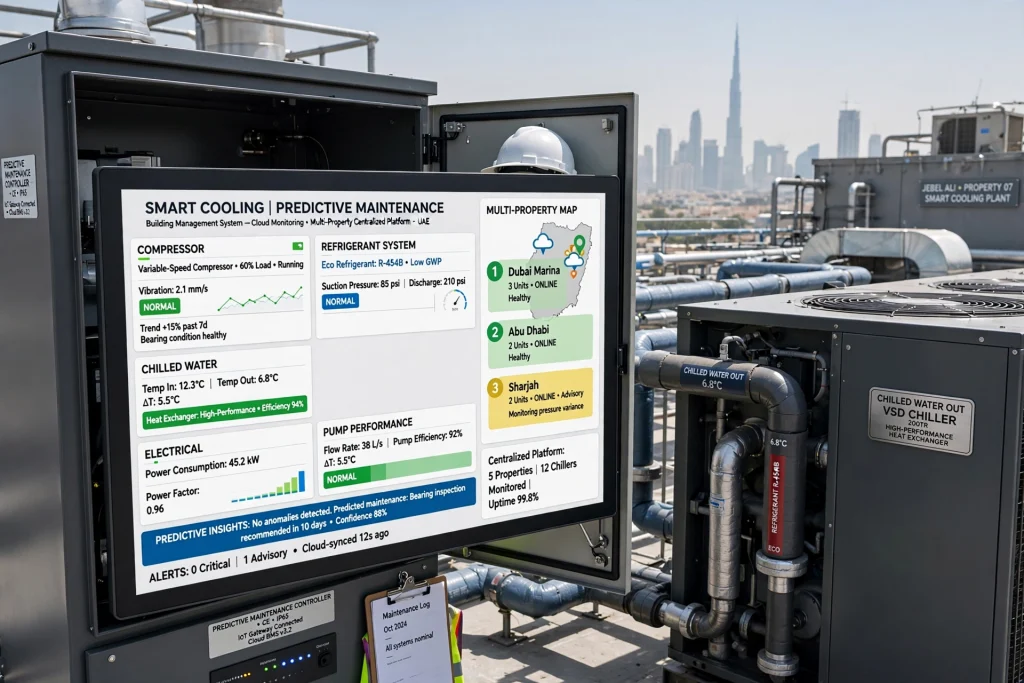
Modern systems are increasingly equipped with predictive maintenance capabilities that continuously monitor compressor vibration, refrigerant pressure, chilled water temperatures, electrical consumption, and pump performance. Instead of relying solely on scheduled maintenance intervals, intelligent monitoring systems identify abnormal operating conditions before they develop into equipment failures. This proactive approach reduces unexpected downtime and allows maintenance activities to be planned more effectively.
Advancements in compressor technology have also improved overall system efficiency. Variable-speed compressors automatically adjust cooling output to match building demand, eliminating unnecessary energy consumption during periods of partial occupancy. High-performance heat exchangers, environmentally responsible refrigerants, and improved control algorithms further contribute to lower electricity usage while maintaining excellent cooling capacity.
Digital Building Management Systems are becoming even more sophisticated, allowing facility managers to monitor multiple properties from centralized control platforms. Real-time analytics, cloud-based monitoring, and automated reporting provide valuable insights that help optimize equipment performance and support better maintenance decisions.
As commercial construction continues to expand across the UAE, smart cooling technologies will play an increasingly important role in reducing operational costs while supporting sustainable building development.
Why Quality Engineering Delivers Better Long-Term Results
Commercial cooling systems are designed to operate continuously for many years, making engineering quality one of the most important factors influencing overall performance. A well-designed chilled water system delivers stable temperatures, lower electricity consumption, reduced maintenance costs, and greater equipment reliability throughout its operational life.
Quality engineering begins with accurate planning and continues through installation, commissioning, preventive maintenance, and periodic optimization. Every component—from the compressor and condenser to the chilled water pumps, cooling tower, expansion vessel, and Building Management System—must operate together as an integrated system. Even small installation errors can reduce efficiency and place unnecessary stress on major equipment.
Professional contractors also understand that building requirements evolve over time. Occupancy levels may increase, operating schedules can change, and future expansions may require additional cooling capacity. Designing flexible HVAC infrastructure allows businesses to adapt to future growth without requiring complete system replacement.
For organizations planning new commercial developments or upgrading existing cooling infrastructure, working with experienced Chiller Contractors in UAE provides access to specialized engineering expertise, professional project management, and long-term technical support. This partnership helps ensure every cooling system delivers dependable performance while maximizing energy efficiency and minimizing lifecycle costs.
Conclusion
Commercial chillers form the backbone of modern cooling systems used in office towers, hotels, hospitals, shopping malls, industrial facilities, airports, educational institutions, and mixed-use developments throughout the UAE. Their performance directly affects occupant comfort, operational efficiency, and energy consumption, making contractor selection one of the most important decisions in any commercial HVAC project.
The best contractors combine engineering knowledge with practical field experience, allowing them to design cooling systems that match the specific needs of each building. From accurate cooling load calculations and equipment selection to professional installation, intelligent controls, and preventive maintenance, every stage contributes to long-term system reliability and efficiency.
Businesses should evaluate contractors based on technical expertise, commercial project experience, maintenance capabilities, commissioning procedures, and commitment to quality rather than focusing solely on installation cost. A properly designed and professionally maintained chiller system not only reduces operating expenses but also improves equipment lifespan, minimizes downtime, and supports sustainable building performance.
As commercial developments continue to expand across Dubai, Abu Dhabi, Sharjah, Ajman, Ras Al Khaimah, Fujairah, Umm Al Quwain, and Al Ain, demand for reliable, energy-efficient cooling solutions will continue to grow. Partnering with experienced HVAC professionals ensures that commercial buildings remain comfortable, productive, and prepared for the future while achieving the highest return on their cooling system investment.