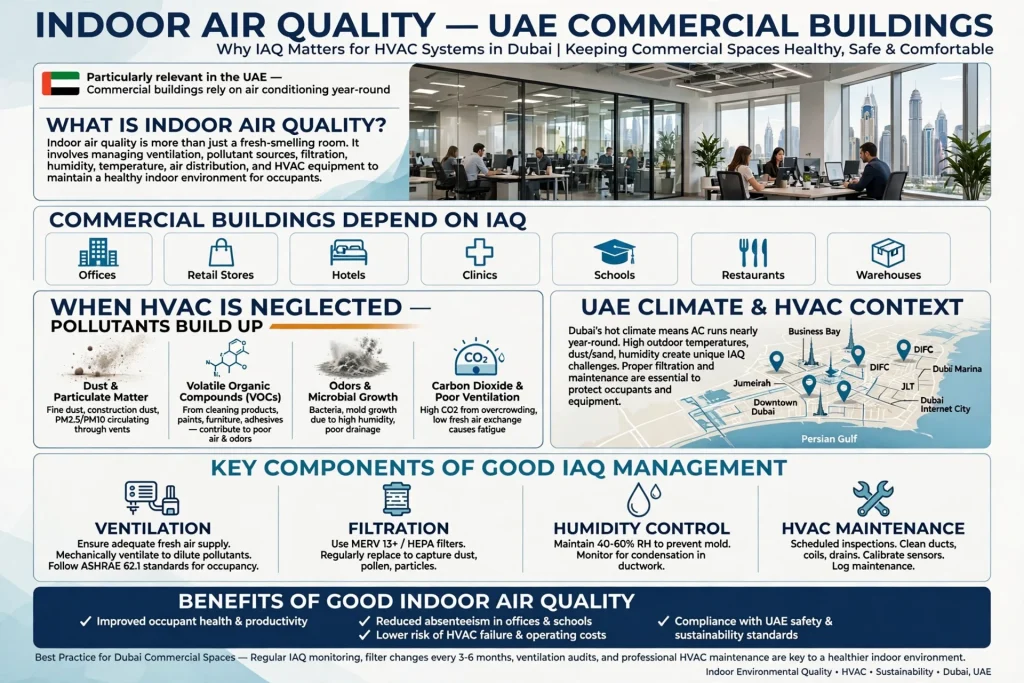
Indoor air quality is an important part of how commercial buildings perform. Offices, retail stores, hotels, clinics, schools, restaurants, warehouses and other workplaces depend on HVAC systems to maintain comfortable indoor conditions while supplying and circulating air. When ventilation, filtration, humidity control or HVAC maintenance is neglected, indoor air can become affected by dust, particulate matter, odors, volatile organic compounds and other pollutants.
This is particularly relevant in the UAE, where commercial buildings rely heavily on air conditioning for much of the year. In Dubai, areas such as Business Bay, Downtown Dubai, DIFC, Dubai Marina, Jumeirah, JLT and Dubai Internet City contain large numbers of air-conditioned commercial spaces where indoor environmental quality directly affects occupants and daily operations.
Good indoor air quality is not simply about making a room smell fresh. It involves managing ventilation, pollutant sources, filtration, humidity, temperature, air distribution and HVAC equipment so that the indoor environment remains suitable for the people using the building.
What Is Indoor Air Quality?
Indoor air quality, commonly called IAQ, describes the condition of the air inside a building and the presence of pollutants or environmental factors that can affect occupants’ comfort and wellbeing. Commercial IAQ can be influenced by outdoor air entering the building, indoor activities, building materials, cleaning products, furniture, occupants and HVAC operation.
ASHRAE identifies source control, ventilation and air cleaning as important approaches to improving indoor air quality. Its guidance also connects IAQ with building design, construction, commissioning, operation and HVAC maintenance.
A commercial building can therefore have modern air conditioning equipment and still experience IAQ problems if outdoor-air ventilation is inadequate, filters are poorly maintained, ducts are contaminated, moisture is uncontrolled or pollutants are being generated inside occupied spaces.
Why IAQ Is Especially Important in UAE Commercial Buildings
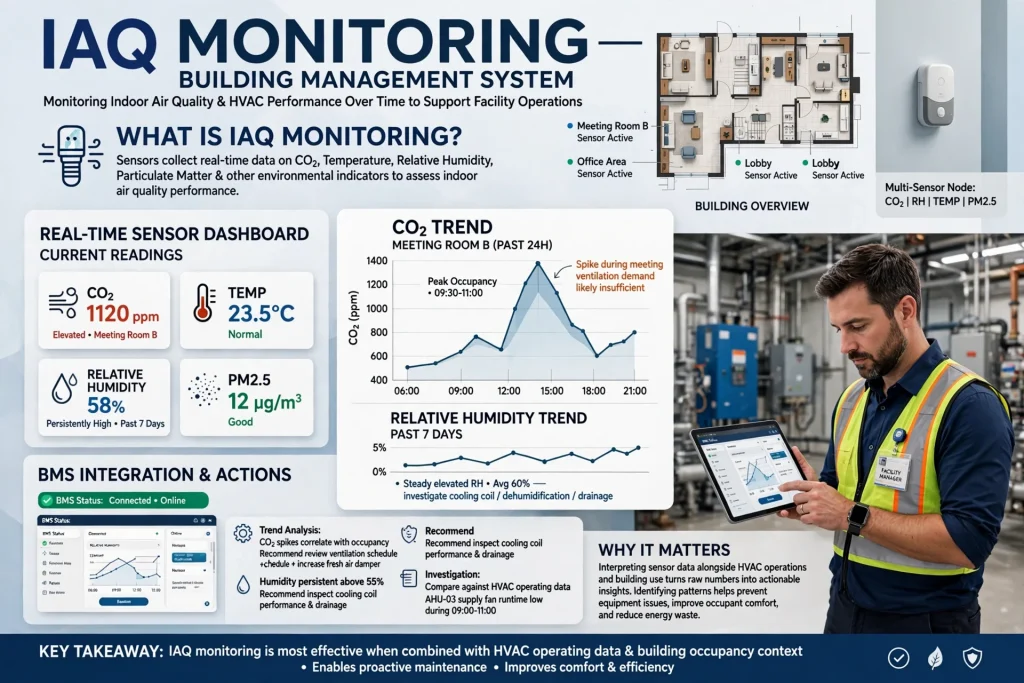
The UAE presents particular challenges for commercial indoor environments. High outdoor temperatures, seasonal humidity, dust and frequent use of mechanical cooling mean that buildings are often operated with closed windows and centrally controlled HVAC systems.
In Dubai, a typical office tower may depend on chilled-water systems, air handling units (AHUs), fan coil units (FCUs), fresh-air systems and ductwork to condition and distribute air. Retail centres, hotels and large commercial facilities can have even more complex mechanical systems.
This makes HVAC performance closely connected with indoor environmental quality. If an AHU is not properly maintained, filters are heavily loaded, coils are dirty or ventilation controls are not operating correctly, the problem can affect large occupied areas rather than just one room.
Dubai Municipality also identifies indoor air quality as an area subject to inspection and control within the built environment, including inhabited buildings and public health establishments.
How HVAC Systems Affect Indoor Air Quality
The HVAC system is one of the main mechanisms controlling commercial indoor air. It can introduce outdoor air, filter airborne particles, remove heat and moisture, distribute conditioned air and return air from occupied spaces.
A properly designed and maintained HVAC system can support acceptable thermal comfort and air quality. However, HVAC equipment can also contribute to IAQ problems when maintenance is inadequate.
Important components include air handling units, filters, cooling coils, supply ducts, return-air ducts, diffusers, grilles, dampers, fresh-air systems and control sensors.
For example, a blocked filter can restrict airflow and increase pressure across the filtration system. A dirty cooling coil can reduce heat-transfer performance and may contribute to moisture-related problems. Poorly balanced air distribution can create rooms with inadequate airflow even when the central HVAC system appears to be operating normally.
ASHRAE notes that acceptable IAQ depends on several factors, including pollutant control, acceptable air supply, pollutant removal, building operation and proper HVAC construction, operation and maintenance.
Ventilation and Fresh Outdoor Air
Ventilation is one of the most important parts of commercial IAQ. Occupied rooms require an appropriate supply of outdoor air to help dilute indoor-generated pollutants and maintain acceptable conditions.
Modern commercial buildings generally rely on mechanical ventilation rather than open windows. This means outdoor-air dampers, ventilation fans, air-handling equipment and control systems need to operate as intended.
Office occupants, printers, cleaning activities, furnishings, construction materials and other sources can introduce pollutants into indoor spaces. Without appropriate ventilation, concentrations can increase over time.
However, simply increasing outdoor air is not always the complete solution. In Dubai’s hot and humid climate, outdoor air must be appropriately conditioned before entering occupied areas. Poorly controlled ventilation can increase cooling loads, humidity and energy consumption.
The correct approach is to balance ventilation, filtration, air distribution, humidity control and energy performance according to the building design and applicable requirements.
Carbon Dioxide as a Ventilation Indicator
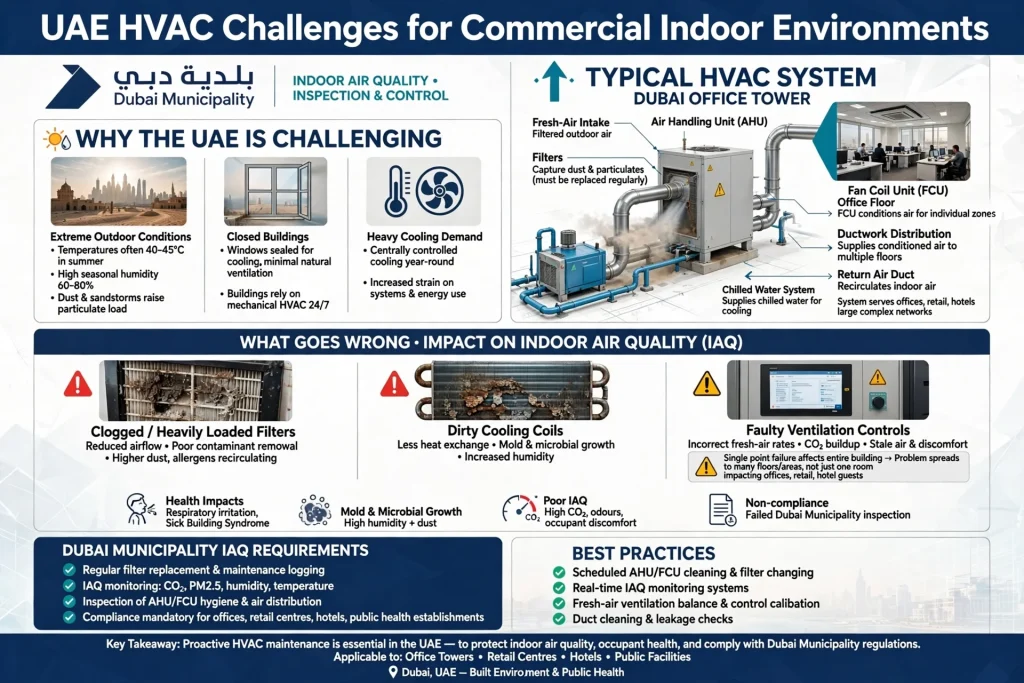
Carbon dioxide, or CO₂, is commonly monitored in commercial buildings because its concentration can provide useful information about occupancy and ventilation conditions.
CO₂ is produced by people during respiration, so levels can rise in densely occupied meeting rooms, classrooms, conference rooms and offices when outdoor-air ventilation is insufficient relative to occupancy.
However, CO₂ should not be treated as a universal standalone measure of overall IAQ. A building can have an acceptable CO₂ reading while still having problems from particulate matter, VOCs, odors, moisture or other contaminants.
ASHRAE specifically addresses the relationship between indoor CO₂, ventilation and IAQ, making it useful to consider CO₂ monitoring as one part of a broader indoor environmental assessment.
Dust, PM2.5 and PM10 in Commercial Buildings
Particulate matter is another important IAQ consideration. PM2.5 refers to very small particles, while PM10 includes larger inhalable particles within the relevant size range.
Dust can enter commercial buildings from outdoor air, construction activity, loading areas, entrances and nearby roads. In Dubai and other UAE locations, dust management can be particularly important because buildings may be surrounded by busy roads, construction projects and highly developed urban environments.
Poorly maintained filters can allow more particles to remain in circulation. Renovation work can also temporarily generate substantial amounts of dust.
Commercial properties should therefore consider filtration performance, filter replacement schedules, construction containment, housekeeping and HVAC inspection as interconnected parts of IAQ management.
Volatile Organic Compounds and Indoor Pollutants
Not every IAQ problem is visible. Volatile organic compounds, commonly called VOCs, can originate from paints, adhesives, sealants, flooring materials, furniture, cleaning products and other building products.
This is particularly relevant after commercial fit-outs and renovations. A newly renovated office in Business Bay, DIFC or Downtown Dubai may look clean and modern while still requiring appropriate ventilation and source management.
Other indoor pollutants can include odors, combustion-related contaminants, biological contaminants and particles generated by specific activities.
Source control is therefore important. Removing or reducing the source of a pollutant can sometimes be more effective than relying entirely on filtration or ventilation to deal with it.
Humidity and Moisture Control
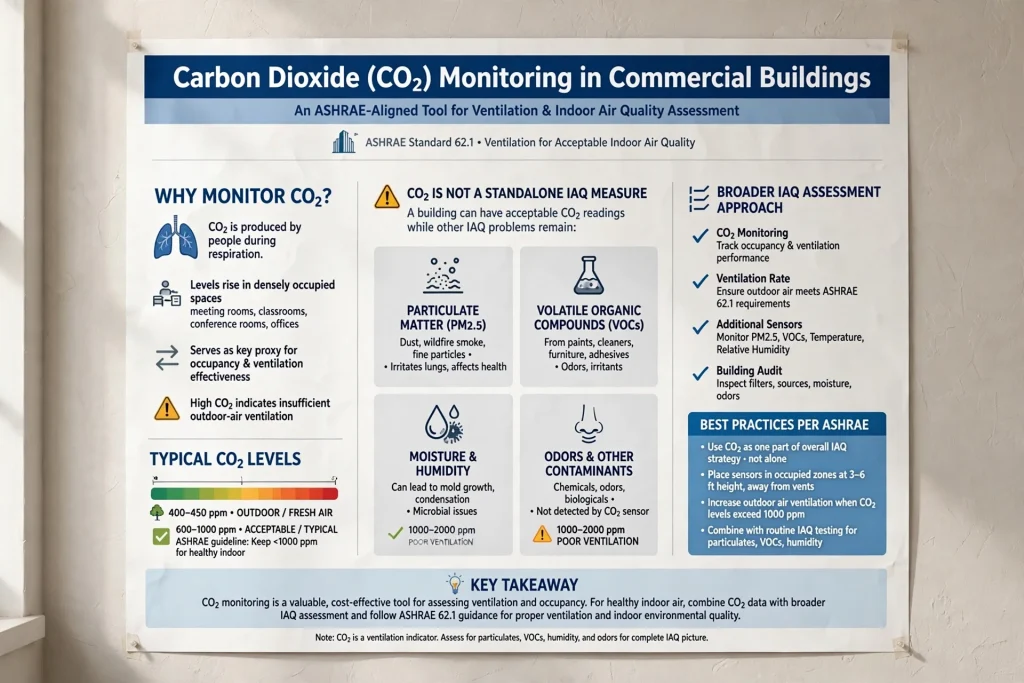
Humidity is another major part of commercial IAQ. Excess moisture can contribute to condensation and create conditions favourable to microbial growth when building materials or HVAC components remain damp.
This is especially important in humid UAE coastal environments, including Dubai and Abu Dhabi.
Commercial HVAC systems should therefore be evaluated not only for temperature control but also for moisture management. Cooling coils, drain pans, condensate drains, insulation and air-handling equipment should be inspected as part of regular maintenance.
Water leaks, blocked condensate drains and damaged insulation can create localized moisture problems that may eventually affect air quality.
Why Dirty Air Ducts Can Affect Commercial Buildings
Air ducts distribute conditioned air throughout a building. Over time, dust and other materials can accumulate in ductwork, particularly when filtration, housekeeping or HVAC maintenance is inadequate.
However, duct cleaning should not automatically be treated as the solution to every IAQ problem. A professional assessment should identify the source of the problem first.
For example, if dust repeatedly accumulates because of damaged filters, poor construction sealing or an unaddressed return-air problem, cleaning the ducts alone will not prevent recurrence.
Commercial ductwork, AHUs, grilles, diffusers, filters and related components should be considered as part of one air-distribution system.
Filtration and Air Cleaning
Filtration is an important method for controlling airborne particles. Commercial HVAC systems can use different filter types and efficiency levels depending on system design, space requirements and the pollutants being targeted.
MERV ratings are commonly used to describe the performance of certain general ventilation air-cleaning filters. HEPA filtration may be appropriate for specific applications, but it should not simply be added to an existing HVAC system without checking pressure drop, airflow and equipment capacity.
Air-cleaning technologies can also include activated carbon for certain gaseous contaminants and other specialized systems. Their suitability depends on the actual pollutant, building type and system design.
The objective should always be to select filtration and air-cleaning equipment that works effectively with the existing HVAC system rather than installing a technology without considering airflow and maintenance requirements.
Indoor Air Quality Monitoring
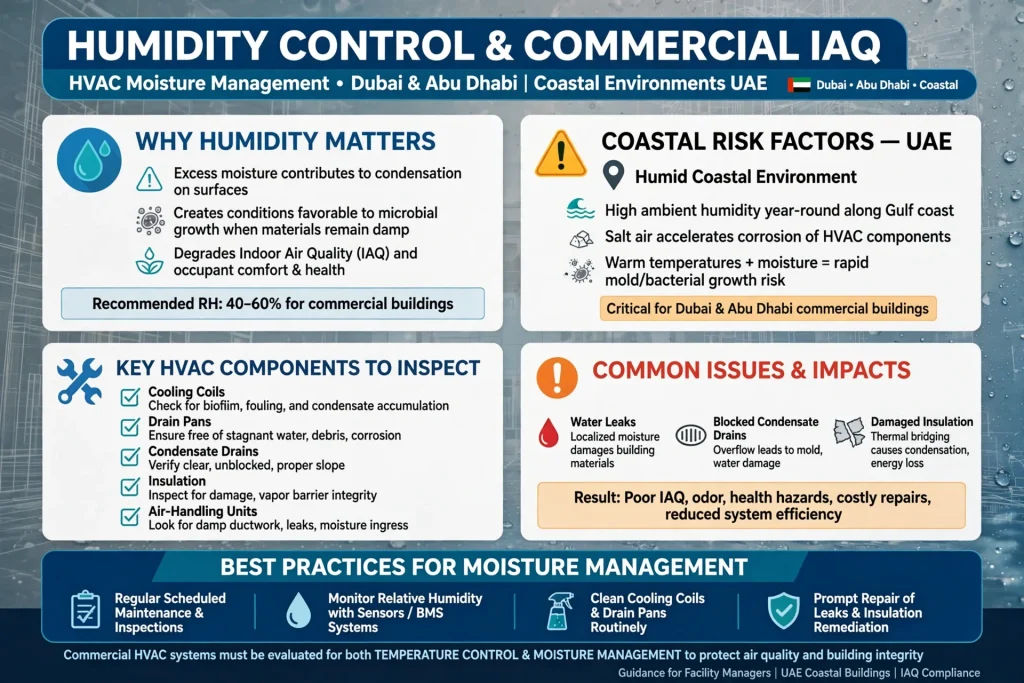
IAQ monitoring can help facility managers understand how a building is performing over time. Depending on the project, sensors may monitor parameters such as CO₂, temperature, relative humidity, particulate matter and other environmental indicators.
Modern commercial buildings can connect sensors to a Building Management System (BMS), allowing facility teams to identify trends and investigate abnormal conditions.
For example, a meeting room may repeatedly show elevated CO₂ during peak occupancy. A sensor trend can help identify whether ventilation needs to be investigated.
Similarly, persistent humidity readings can indicate the need to examine cooling performance, fresh-air treatment, condensation or drainage.
Monitoring is most useful when measurements are interpreted alongside HVAC operating conditions and building use rather than viewed as isolated numbers.
IAQ and Employee Comfort in Offices
Employees spend many hours inside commercial workplaces. Poor indoor conditions can contribute to complaints about stuffiness, odors, excessive dust, uncomfortable temperature or inconsistent airflow.
A room can technically be cooled while still feeling uncomfortable if air movement, humidity, ventilation or temperature distribution is poor.
This is why commercial facility managers should consider indoor environmental quality as a complete system. HVAC temperature control is only one part of the occupant experience.
In large Dubai office developments such as DIFC, Business Bay, Dubai Internet City and Dubai Media City, different tenants may have different occupancy levels and fit-out layouts. HVAC systems need to accommodate these operational realities.
IAQ in Retail Stores, Hotels and Restaurants
Indoor air quality is not limited to offices. Retail stores, hotels, restaurants and entertainment facilities have their own IAQ challenges.
Restaurants may generate cooking odors, heat and grease-related contaminants. Hotels have guest rooms, kitchens, laundry areas, meeting spaces and public areas with different ventilation requirements.
Retail stores can experience high occupancy during busy periods, while shopping centres depend on large centralized HVAC systems serving extensive public spaces.
In these environments, air distribution, filtration, exhaust systems, ventilation, maintenance and building pressure need to be considered according to the specific use of each space.
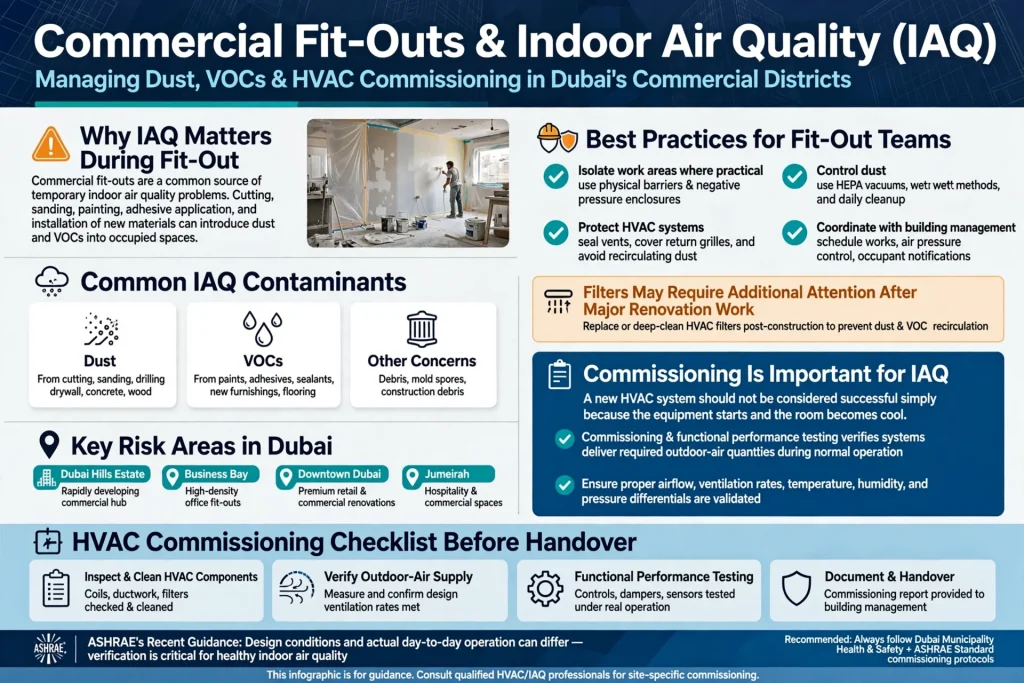
IAQ During Commercial Fit-Outs and Renovations
Commercial fit-outs are a common source of temporary indoor air quality problems. Cutting, sanding, painting, adhesive application and installation of new materials can introduce dust and VOCs.
This is especially important in rapidly developing commercial areas such as Dubai Hills Estate, Business Bay, Downtown Dubai and Jumeirah.
Construction and fit-out teams should isolate work areas where practical, protect HVAC systems, control dust and coordinate with building management. Filters may require additional attention after major renovation work.
Before handing over a renovated space, HVAC systems should be inspected and commissioned appropriately so that the building is ready for normal occupancy.
Commissioning Is Important for IAQ
A new HVAC system should not be considered successful simply because the equipment starts and the room becomes cool.
Commissioning and functional performance testing can help verify whether ventilation systems actually deliver the required outdoor-air quantities during normal operation. ASHRAE’s recent guidance emphasizes that design conditions and actual day-to-day operation can differ, making verification important.
Testing, adjusting and balancing (TAB), airflow measurements, control verification and commissioning can identify problems that may otherwise remain hidden.
This is particularly valuable in large commercial projects where HVAC systems serve multiple zones with different occupancy patterns.
Preventive HVAC Maintenance and IAQ
Preventive maintenance is one of the most practical ways to support good commercial IAQ.
Maintenance programs may include filter inspection and replacement, AHU inspection, cooling coil cleaning, condensate drain checks, ductwork assessment, ventilation damper checks, sensor calibration and BMS review.
The correct maintenance frequency depends on the building, occupancy, HVAC system, outdoor environment and operating conditions.
A busy commercial building near a major road or construction area may require different attention from a lightly occupied office with controlled surroundings.
Facility managers should maintain records of inspections, filter changes, cleaning activities, complaints, sensor readings and corrective actions. This creates a more reliable history of building performance.
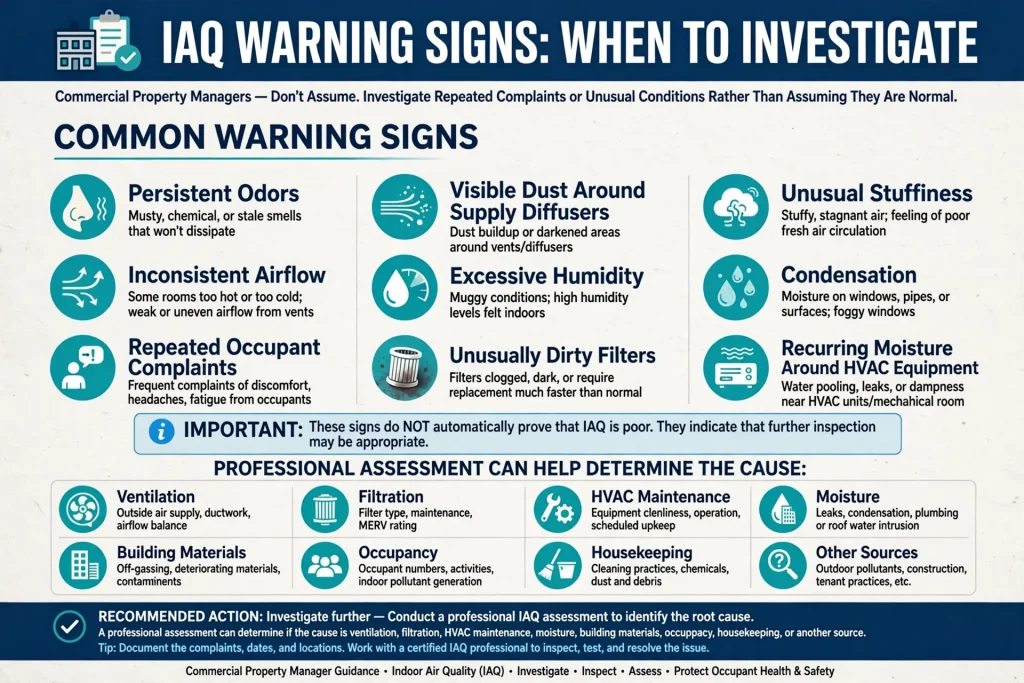
Common Signs of Poor Indoor Air Quality
Commercial property managers should investigate repeated complaints or unusual conditions rather than assuming they are normal.
Common warning signs can include persistent odors, visible dust around supply diffusers, unusual stuffiness, inconsistent airflow, excessive humidity, condensation, repeated occupant complaints, unusually dirty filters or recurring moisture around HVAC equipment.
These signs do not automatically prove that IAQ is poor. They indicate that further inspection may be appropriate.
A professional assessment can help determine whether the cause is ventilation, filtration, HVAC maintenance, moisture, building materials, occupancy, housekeeping or another source.
Improving Indoor Air Quality in Commercial Buildings
A practical IAQ strategy normally starts with identifying pollution sources and understanding how the building operates.
Building owners and facility managers can review outdoor-air ventilation, filtration, HVAC maintenance, humidity control, ductwork condition and air distribution. IAQ sensors can provide additional operational information where appropriate.
For commercial properties requiring professional inspection, cleaning or HVAC-related air-quality support, an HVAC Air Quality Service can be incorporated into the building’s broader maintenance strategy.
The important point is to address the underlying cause. Cleaning a visible diffuser, for example, may improve its appearance but will not solve a ventilation or filtration problem elsewhere in the system.
IAQ Considerations for Dubai Commercial Properties
Dubai’s commercial environment includes high-rise offices, shopping centres, hotels, healthcare facilities, restaurants, warehouses and mixed-use developments. Each building type has different ventilation and occupancy requirements.
Areas such as Downtown Dubai, Business Bay, DIFC, Dubai Marina, JLT, Dubai Internet City, Dubai Media City, Dubai Healthcare City, Dubai Silicon Oasis and Al Quoz contain diverse commercial properties where HVAC systems operate under demanding conditions.
For larger buildings, IAQ management should be coordinated with facility management, HVAC contractors, building operators and, where necessary, specialist environmental professionals.
Local requirements should always be checked for the specific building type and project. Dubai Municipality has an established role in inspection and control related to IAQ within the built environment.
How to Choose a Commercial IAQ and HVAC Service Provider
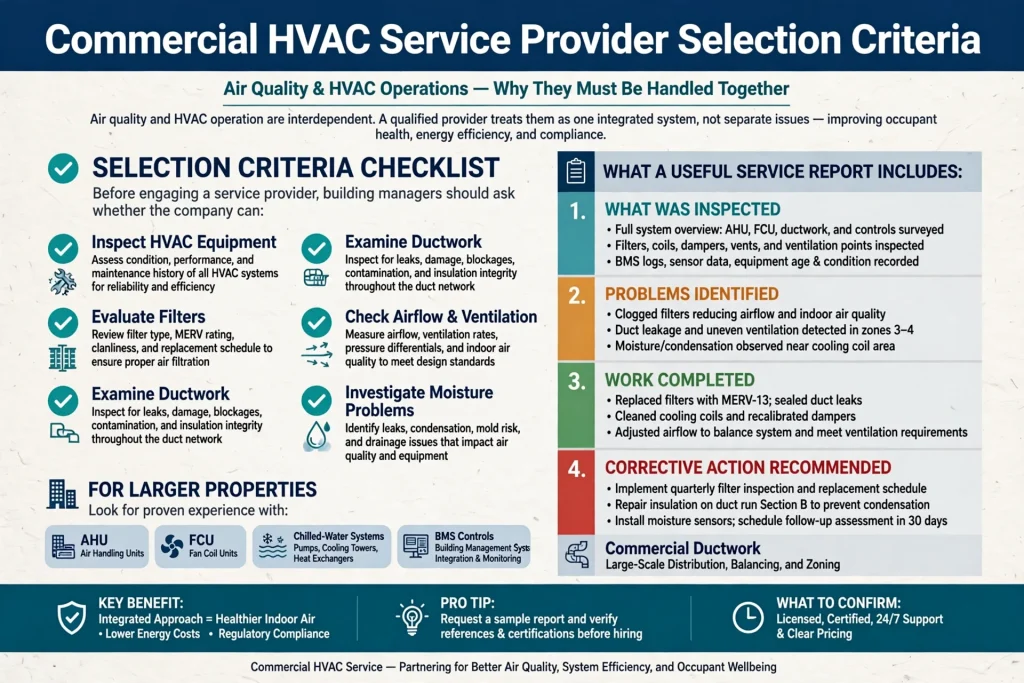
Commercial buildings need a provider that understands the relationship between air quality and HVAC operation rather than treating them as completely separate issues.
Before engaging a service provider, building managers can ask whether the company can inspect HVAC equipment, evaluate filters, examine ductwork, check airflow and ventilation, investigate moisture problems and provide clear service documentation.
For larger properties, experience with AHUs, FCUs, chilled-water systems, BMS controls and commercial ductwork can also be important.
A useful service report should explain what was inspected, what problems were identified, what work was completed and whether additional corrective action is recommended.
Frequently Asked Questions
Why is indoor air quality important in commercial buildings?
Indoor air quality affects the comfort and indoor environment experienced by employees, customers, visitors and other occupants. Good IAQ requires appropriate ventilation, pollutant control, filtration, humidity management and HVAC maintenance.
Does a good HVAC system guarantee good indoor air quality?
No. HVAC equipment is an important part of IAQ management, but building materials, occupancy, cleaning products, ventilation, filtration, moisture and pollutant sources can also affect indoor air.
Is CO₂ a direct measurement of indoor air quality?
CO₂ is useful as an indicator of occupancy and ventilation conditions, but it does not represent every aspect of IAQ. A complete assessment may also consider particulate matter, humidity, VOCs, odors and other factors.
How often should commercial HVAC systems be inspected?
There is no single frequency suitable for every building. Inspection and maintenance schedules should reflect HVAC design, occupancy, operating hours, outdoor conditions, filter loading and the building’s specific requirements.
Can duct cleaning improve indoor air quality?
Duct cleaning can be useful when ductwork or associated HVAC components contain significant contamination. However, the underlying source should also be identified so that contamination does not quickly return.
What is the role of a BMS in indoor air quality?
A Building Management System can monitor and control HVAC equipment, ventilation, temperature, humidity and other building parameters. When connected to suitable sensors, it can help facility teams identify abnormal operating conditions.
Final Thoughts
Indoor air quality should be treated as an essential part of commercial building management rather than an occasional cleaning concern. Ventilation, filtration, HVAC maintenance, humidity control, ductwork, air distribution, pollutant sources and monitoring all influence the indoor environment.
For UAE commercial buildings, this becomes particularly important because air-conditioned environments are used extensively throughout the year. A structured IAQ strategy can help facility managers identify problems earlier, maintain better occupant comfort and keep HVAC systems operating as intended.
Whether the property is an office in DIFC, a retail unit in Downtown Dubai, a hotel in Dubai Marina, a clinic in Dubai Healthcare City or an industrial facility in Al Quoz, indoor air quality should be considered throughout the building’s design, operation, maintenance and renovation lifecycle.