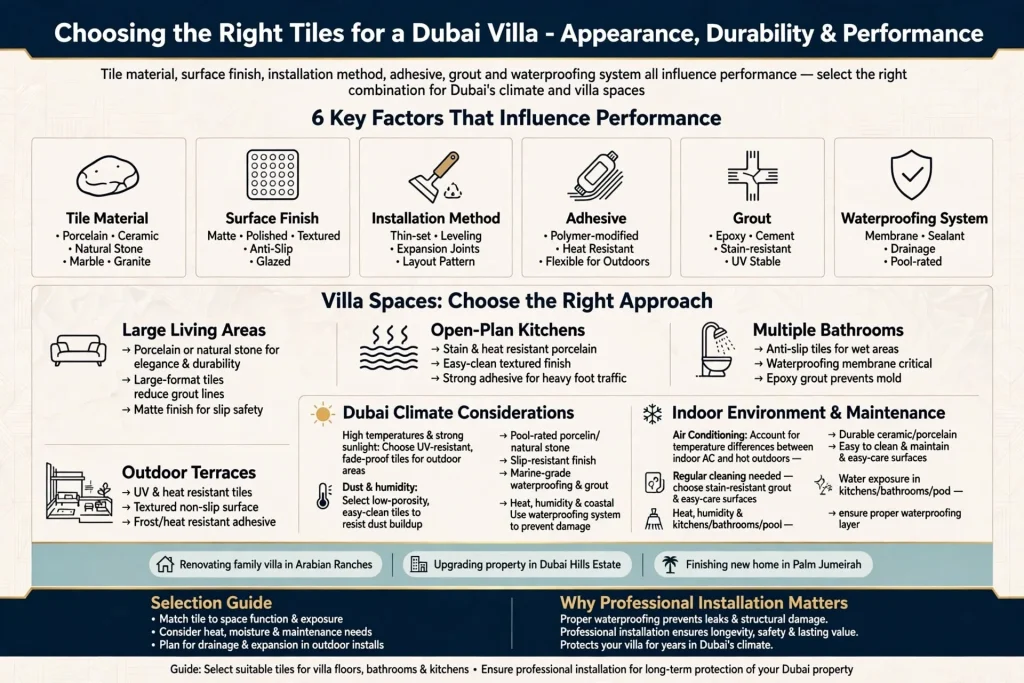
Choosing the right tiles for a Dubai villa involves more than selecting an attractive colour or pattern. The tile material, surface finish, installation method, adhesive, grout and waterproofing system all influence how well the finished surface performs. A villa may have large living areas, open-plan kitchens, multiple bathrooms, outdoor terraces, swimming pool surroundings and service spaces, each requiring a different tiling approach.
Dubai’s climate also makes material selection important. High outdoor temperatures, dust, humidity and strong sunlight can affect exposed surfaces and the materials used during installation. Inside the property, air conditioning, regular cleaning, water exposure and temperature differences create their own maintenance requirements.
Whether renovating a family villa in Arabian Ranches, upgrading a property in Dubai Hills Estate or finishing a new home in Palm Jumeirah, homeowners need a tiling solution that combines appearance, durability and practical performance.
This guide explains how to select suitable tiles for villa floors, bathrooms and kitchens, what to consider during installation and how professional tiling work can help protect the long-term condition of a Dubai property.
Understanding Tiling Requirements for Dubai Villas
Every villa has different tiling requirements depending on its layout, construction, lifestyle and architectural design. A contemporary villa with open-plan interiors may benefit from large-format porcelain tiles, while a traditional home may use marble-effect finishes, textured surfaces or decorative ceramic patterns.
The most important consideration is matching the tile to its intended environment. A tile suitable for a bedroom floor may not be appropriate for a wet shower area or an outdoor terrace exposed to direct sunlight.
Homeowners should consider water absorption, slip resistance, surface hardness, stain resistance, cleaning requirements and compatibility with the installation substrate. These factors matter just as much as colour and appearance.
A well-planned tiling project should also consider transitions between rooms, skirting details, door clearances, floor levels, drainage and movement joints. Addressing these details before installation helps create a consistent finish throughout the villa.
Best Floor Tiles for Dubai Villa Interiors
Flooring covers a large proportion of a villa’s interior, so the material has a significant influence on the overall appearance and maintenance requirements. Living rooms, bedrooms, hallways and dining spaces may all have different practical needs.
Porcelain Tiles for Living Rooms and Hallways
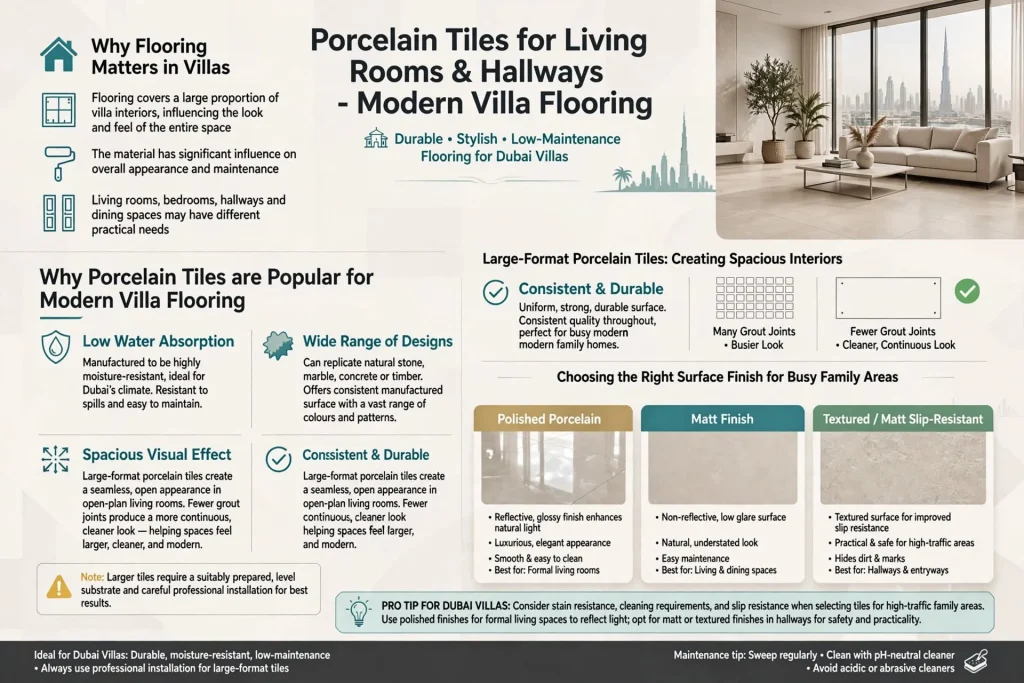
Porcelain tiles are a popular choice for modern villa flooring because they are manufactured to have low water absorption and are available in a wide range of designs. They can replicate natural stone, marble, concrete and timber while offering a consistent manufactured surface.
Large-format porcelain tiles can create a spacious appearance in open-plan living rooms. Fewer grout joints also produce a more continuous visual effect, although larger tiles require a suitably prepared substrate and careful installation.
For busy family areas, homeowners should consider the tile’s surface finish, stain resistance and cleaning requirements. Polished porcelain can provide a reflective appearance, while matt and textured finishes may be more practical in areas where glare or slip resistance is a concern.
Marble Tiles for Luxury Villa Interiors
Natural marble is often selected for luxury villas because of its distinctive veining, natural colour variations and premium appearance. It can work particularly well in entrance halls, formal living rooms, staircases and selected feature areas.
However, marble requires more maintenance than many porcelain alternatives. It is porous and can be sensitive to acidic substances, including certain household cleaners, lemon juice and vinegar. Appropriate sealing and stone-safe cleaning products help protect its appearance.
Natural marble also varies from slab to slab. Homeowners should inspect samples and, where possible, approve the actual material before installation to ensure the colour and vein pattern suit the interior design.
Ceramic Tiles for Selected Residential Areas
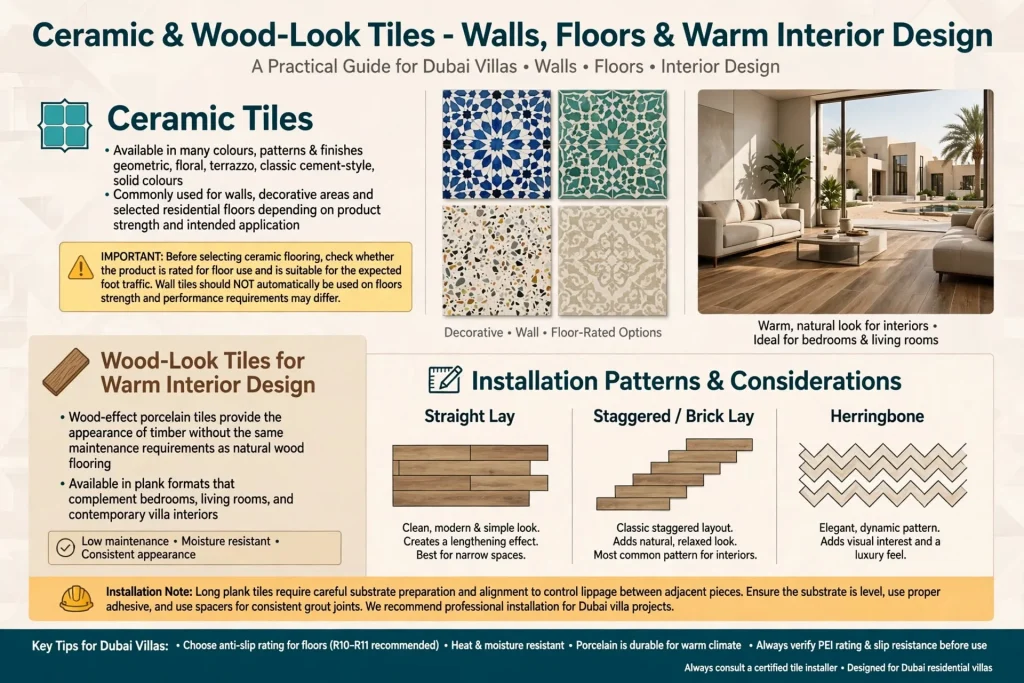
Ceramic tiles are available in many colours, patterns and finishes. They are commonly used for walls, decorative areas and selected residential floors, depending on the product’s strength and intended application.
Before selecting ceramic flooring, check whether the product is rated for floor use and whether it is suitable for the expected foot traffic. Wall tiles should not automatically be used on floors because their strength and performance requirements may differ.
Wood-Look Tiles for a Warm Interior Design
Wood-effect porcelain tiles provide the appearance of timber without the same maintenance requirements as natural wood flooring. They are available in plank formats that can complement bedrooms, living rooms and contemporary villa interiors.
Installation patterns such as straight lay, staggered layouts and herringbone can create different visual effects. However, long plank tiles require careful substrate preparation and alignment to control lippage between adjacent pieces.
Choosing Bathroom Tiles for Dubai Villas
Bathrooms require a more specialised tiling approach because the surfaces experience regular contact with water, humidity and cleaning products. A suitable bathroom installation must combine water-resistant finishes with effective waterproofing beneath the tiles.
Slip-Resistant Bathroom Floor Tiles
Bathroom floors should be selected with wet conditions in mind. A highly polished surface may look attractive, but it can become slippery when water, soap or shampoo is present.
Matt, textured and suitably rated anti-slip tiles may provide better traction in wet areas. Homeowners should check the manufacturer’s slip-resistance information and consider the intended use of the space, especially around showers and bathtubs.
Smaller floor tiles can also provide more grout joints, which may influence underfoot grip, but grout alone should never be treated as a substitute for selecting an appropriate tile finish.
Shower Wall and Floor Tiling
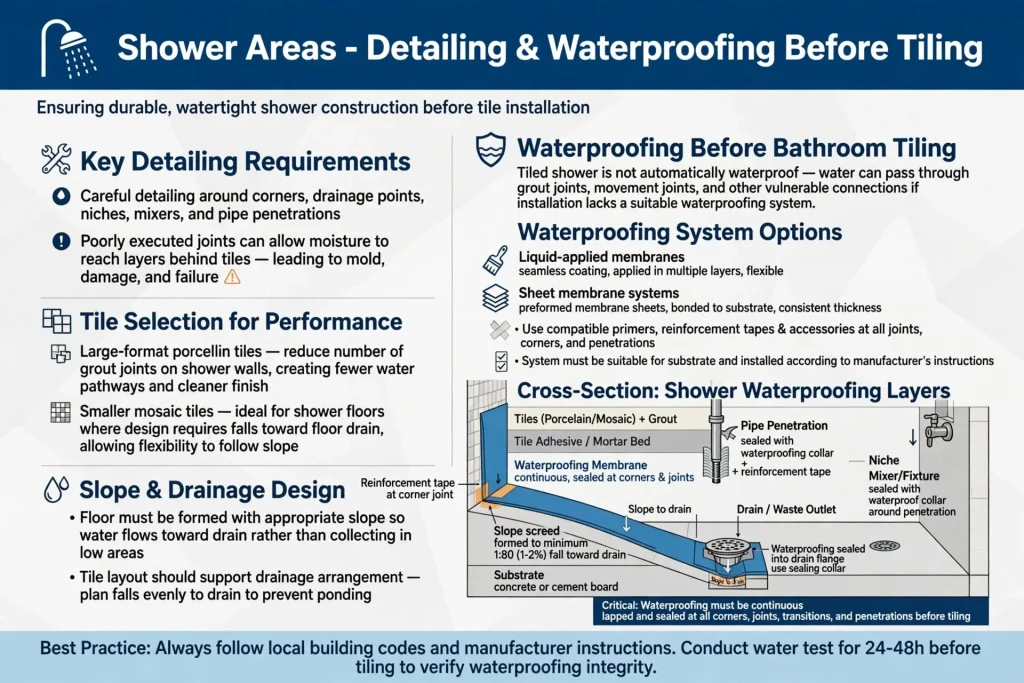
Shower areas require careful detailing around corners, drainage points, niches, mixers and pipe penetrations. These locations are particularly important because poorly executed joints can allow moisture to reach the layers behind the tiles.
Large-format porcelain tiles can reduce the number of grout joints on shower walls, while smaller mosaic tiles may be useful for shower floors where the design requires falls towards a floor drain.
The floor must be formed with an appropriate slope so water flows towards the drain rather than collecting in low areas. The tile layout should support this drainage arrangement.
Waterproofing Before Bathroom Tiling
A tiled shower is not automatically waterproof. Water can pass through grout joints, movement joints and other vulnerable connections if the installation does not have a suitable waterproofing system.
Depending on the design, waterproofing may involve liquid-applied membranes or sheet membrane systems, together with compatible primers, reinforcement tapes and accessories. The system must be suitable for the substrate and installed according to the manufacturer’s instructions.
Pay particular attention to wall-to-floor junctions, internal corners, pipe penetrations, shower niches and drain connections. Waterproofing should be completed and inspected before tiling begins.
For villas in areas such as Jumeirah, Dubai Hills Estate and Emirates Hills, correct bathroom waterproofing is important for protecting not only the bathroom but also adjacent rooms and lower floors.
Kitchen Tiling Solutions for Dubai Villas
Kitchen tiles need to handle regular cleaning, food spills, grease, water splashes and daily movement. The right combination of floor and wall tiles can make the kitchen easier to maintain while supporting the overall interior design.
Practical Kitchen Floor Tiles
Porcelain tiles are often suitable for kitchen floors because many products offer low water absorption and good resistance to everyday wear. A matt or textured finish may be preferable in busy cooking areas where small spills are common.
The tile should also be easy to clean without requiring aggressive chemicals. Homeowners should check the manufacturer’s cleaning guidance, particularly for textured finishes and decorative surfaces.
Large-format tiles can create a modern, continuous floor appearance in open-plan kitchens. However, the installer must ensure that the substrate is level and that the adhesive provides the required coverage.
Kitchen Backsplash Tiles
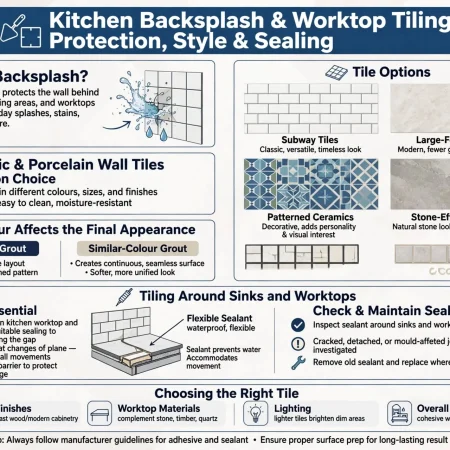
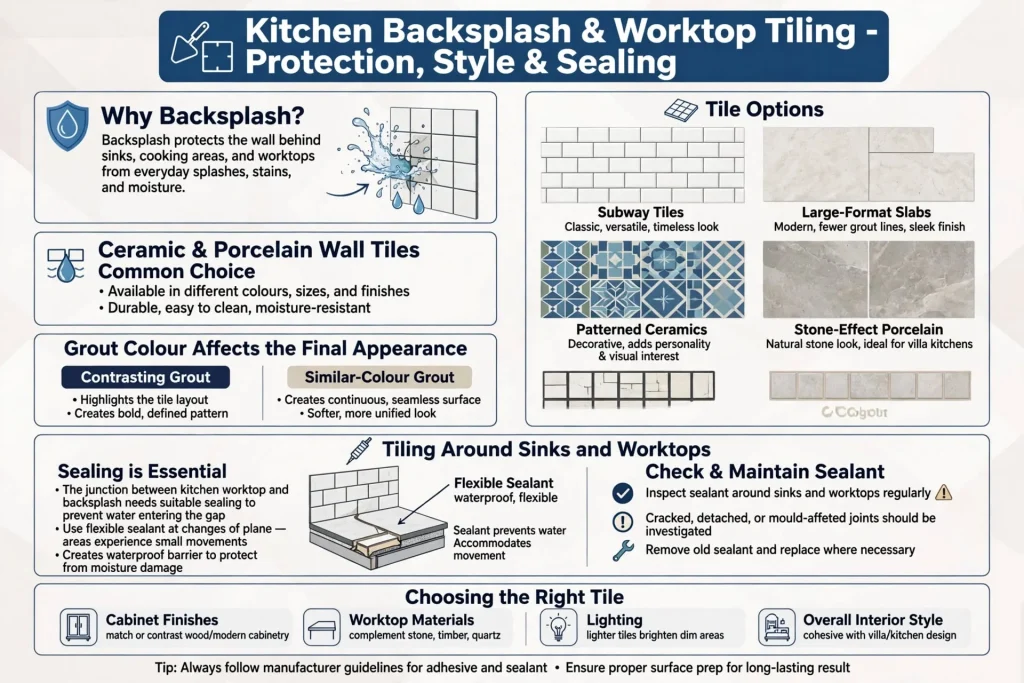
A backsplash protects the wall behind sinks, cooking areas and worktops from everyday splashes. Ceramic and porcelain wall tiles are common options because they are available in different colours, sizes and finishes.
Subway tiles, large-format slabs, patterned ceramics and stone-effect porcelain can all work in villa kitchens. The right choice depends on cabinet finishes, worktop materials, lighting and the overall interior style.
Grout colour also affects the final appearance. A contrasting grout can highlight the tile layout, while a similar colour creates a more continuous surface.
Tiling Around Sinks and Worktops
The junction between a kitchen worktop and backsplash needs suitable sealing to help prevent water from entering the gap. Flexible sealant is generally used at appropriate changes of plane because these locations may experience small movements.
Check the condition of existing sealant around sinks and worktops. Cracked, detached or mould-affected joints should be investigated and replaced where necessary.
Outdoor Tiling for Dubai Villa Terraces and Balconies
Outdoor tiling requires materials that are suitable for exposure to sunlight, heat, dust, rain and moisture. A tile that performs well inside an air-conditioned living room may not be appropriate for an exposed terrace or garden walkway.
Porcelain Paving for Outdoor Areas
Outdoor-rated porcelain paving is available in finishes designed for terraces, patios and selected garden areas. Textured surfaces may provide better grip under wet conditions than polished indoor tiles.
Check that the product is specifically approved for the intended external application. Thickness, installation system, slip resistance and exposure conditions should all be considered.
Correct Drainage and Falls
Outdoor tiled surfaces must drain water effectively. If the floor has insufficient slope, water can collect near doors, walls or corners. Standing water may contribute to staining, algae growth and deterioration of surrounding joints.
The installation should include suitable falls towards designated drainage points. Thresholds, balcony outlets and connections to external waterproofing systems require careful detailing.
Managing Heat and Direct Sunlight
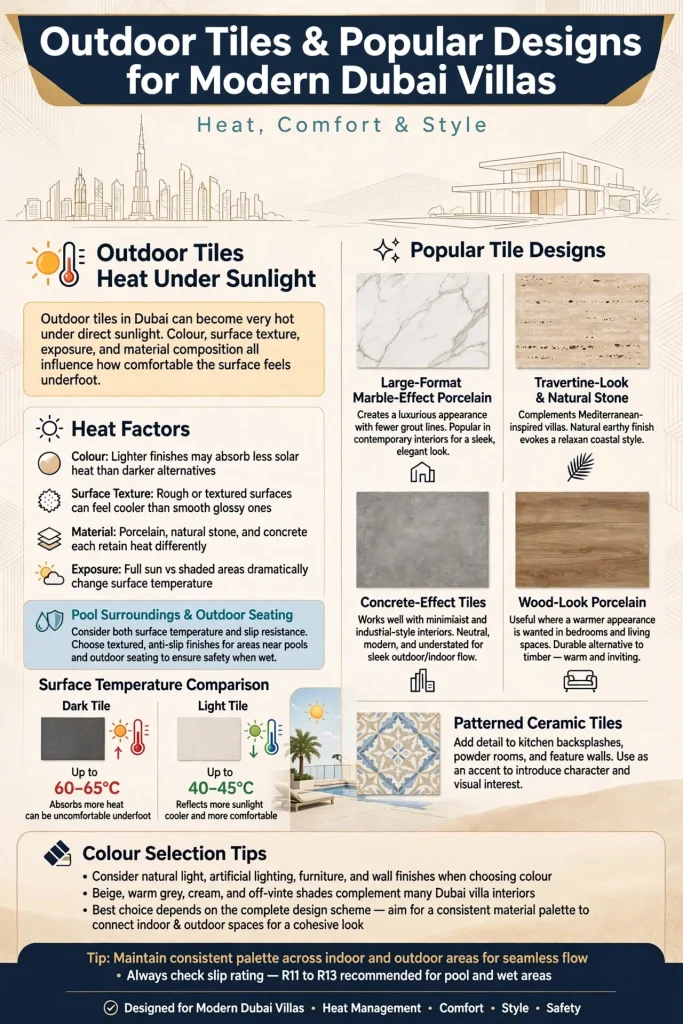
Outdoor tiles in Dubai can become very hot under direct sunlight. Colour, surface texture, exposure and material composition all influence how comfortable the surface feels underfoot.
Lighter finishes may absorb less solar heat than some darker alternatives, although actual surface temperatures depend on several factors. For pool surroundings and outdoor seating areas, homeowners should consider both surface temperature and slip resistance.
Popular Tile Designs for Modern Dubai Villas
Tile selection is closely connected to the villa’s interior design. A consistent material palette can make different rooms feel connected, while selected feature surfaces help introduce character.
Large-format marble-effect porcelain is popular in contemporary interiors because it creates a luxurious appearance with fewer grout lines. Travertine-look finishes and natural stone designs can complement Mediterranean-inspired villas, while concrete-effect tiles work well with minimalist and industrial-style interiors.
Wood-look porcelain is useful where homeowners want a warmer appearance in bedrooms or living spaces. Patterned ceramic tiles can add detail to kitchen backsplashes, powder rooms and selected feature walls.
Colour selection should also consider natural light, artificial lighting, furniture and wall finishes. Beige, warm grey, cream and off-white shades can complement many Dubai villa interiors, but the best choice depends on the complete design scheme.
Before ordering materials, inspect physical samples under the actual lighting conditions of the property. A tile can look different in a showroom compared with a room receiving strong natural daylight or warm artificial lighting.
Important Technical Factors Before Installing Villa Tiles
A successful tiling project depends on more than the tile itself. The installation layers must work together to support the finished surface.
Substrate Preparation and Floor Levelling
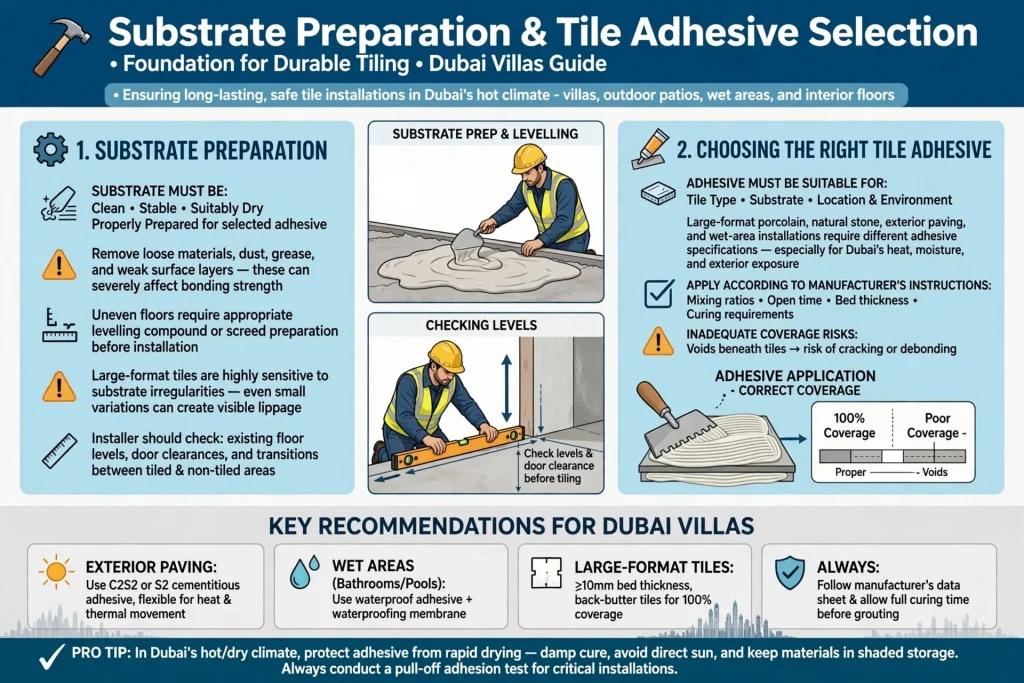
The substrate should be clean, stable, suitably dry and prepared for the selected adhesive. Loose materials, dust, grease and weak surface layers can affect bonding.
Uneven floors may require an appropriate levelling compound or screed preparation before installation. Large-format tiles are particularly sensitive to substrate irregularities because even small variations can create visible lippage.
The installer should also check existing floor levels, door clearances and transitions between tiled and non-tiled areas.
Choosing the Right Tile Adhesive
Tile adhesive must be suitable for the tile type, substrate, location and environmental conditions. Large-format porcelain, natural stone, exterior paving and wet-area installations may require different adhesive specifications.
The adhesive should be applied according to its manufacturer’s instructions, including mixing ratios, open time, bed thickness and curing requirements. Inadequate coverage can leave voids beneath tiles and increase the risk of cracking or debonding.
Grout Selection and Joint Width
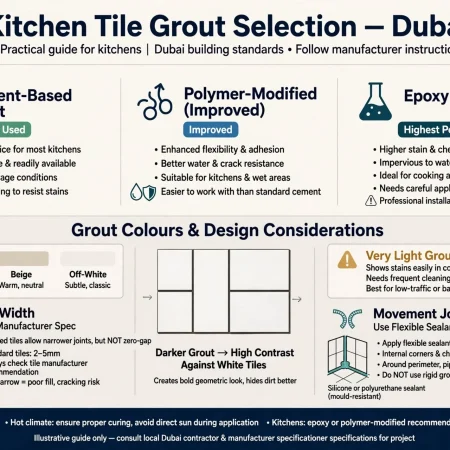
Grout fills the joints between tiles and contributes to the finished appearance. Cement-based grout is widely used, while other grout types may be appropriate for specific applications depending on chemical exposure, maintenance requirements and the manufacturer’s recommendations.
Joint width should reflect the tile’s dimensions, manufacturing tolerances and installation conditions. Very narrow joints should not be specified without checking whether the selected tile is suitable for that layout.
Movement Joints and Expansion Details
Buildings and tiled surfaces experience movement caused by temperature changes, structural movement and other factors. Movement joints help accommodate this movement and reduce stress within the tiled installation.
Perimeter joints and movement joints should be included where required by the project design and relevant installation guidance. Rigid grout should not be used in locations where a flexible movement joint is required.
Common Tiling Problems in Dubai Villas
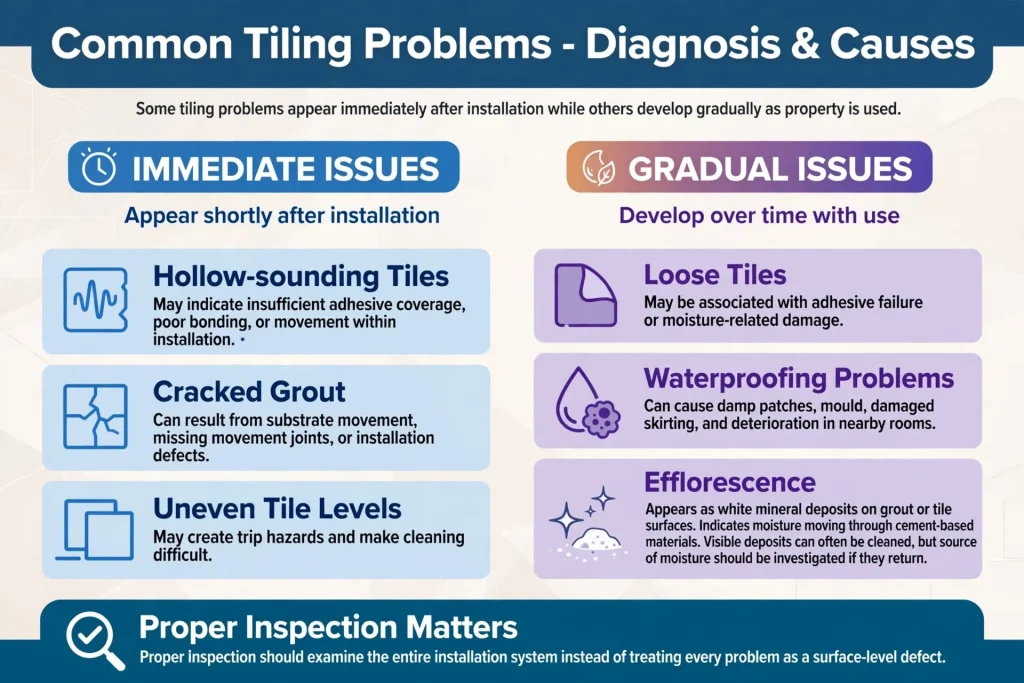
Some tiling problems appear immediately after installation, while others develop gradually as the property is used.
Hollow-sounding tiles may indicate insufficient adhesive coverage, poor bonding or movement within the installation. Cracked grout can result from substrate movement, missing movement joints or installation defects. Loose tiles may be associated with adhesive failure or moisture-related damage.
Waterproofing problems can cause damp patches, mould, damaged skirting and deterioration in nearby rooms. Uneven tile levels may create trip hazards and make cleaning more difficult.
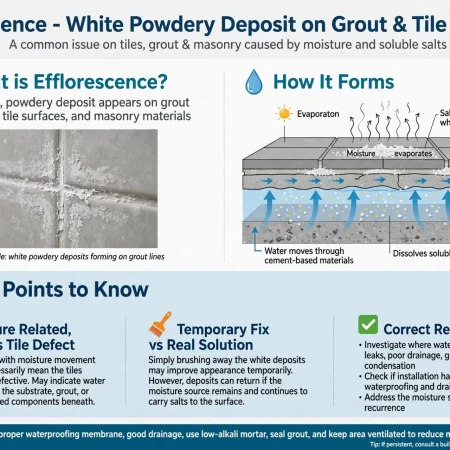
Efflorescence, which appears as white mineral deposits on grout or tile surfaces, may indicate moisture movement through cement-based materials. The visible deposits can often be cleaned, but the source of moisture should be investigated if they return.
A proper inspection should examine the entire installation system instead of treating every problem as a surface-level defect.
How to Plan a Villa Tiling Renovation in Dubai
Planning should begin with an inspection of the existing floors, walls and wet areas. The contractor should identify damaged tiles, uneven substrates, moisture problems, existing waterproofing conditions and any areas requiring plumbing or drainage work.
The next step is selecting tiles according to room use, design preferences and maintenance requirements. Confirm tile dimensions, quantity, shade variation, batch consistency, trims, skirting and transition details before ordering.
A clear installation plan should include surface preparation, adhesive selection, waterproofing where required, tile layout, grout colour, movement joints and curing times. This is particularly important when several rooms are being renovated together.
For occupied villas, work sequencing also matters. The contractor should plan access, furniture protection, waste removal and room handover to minimise disruption to residents.
A final inspection should check alignment, lippage, grout consistency, sealant joints, drainage and the condition of the finished surfaces.
Why Professional Tiling Matters for Dubai Villa Projects
Professional tiling requires coordination between material selection, substrate preparation, waterproofing, installation and finishing. A visually attractive tile can still fail if the underlying installation is poorly executed.
Experienced tiling contractors understand how to handle large-format porcelain, natural stone, bathroom waterproofing, floor levelling, tile cutting, edge profiles and movement joints. They can also coordinate with plumbers, electricians, interior designers and other renovation specialists when the project involves multiple trades.
For homeowners planning a new installation or upgrading an existing property, choosing a contractor who can assess the complete tiling system is more useful than selecting a service based only on the tile-laying price.
Homeowners seeking Tiling Solutions for Dubai Villas Service should look for a clear scope of work covering the affected rooms, material specifications, preparation, installation method, finishing details and handover requirements.
Whether the project involves a complete villa renovation in Arabian Ranches, bathroom upgrades in Jumeirah, kitchen flooring in Mirdif or outdoor tiling in Dubai Hills Estate, the installation should be planned around the property’s actual requirements.
Maintaining Villa Tiles After Installation
Regular maintenance helps preserve the appearance and performance of tiled surfaces. Sweep or vacuum floors to remove sand and grit that could scratch certain finishes, especially polished natural stone.
Use cleaning products suitable for the selected tile and grout. Avoid acidic cleaners on marble, limestone and other acid-sensitive stone surfaces. For porcelain and ceramic tiles, follow the manufacturer’s guidance and avoid leaving cleaning chemicals on the surface longer than recommended.
Inspect bathroom grout and silicone joints regularly. Repair damaged sealant, investigate recurring damp patches and address plumbing leaks promptly. Outdoor terraces should also be checked for blocked drains, standing water and damaged joints.
In busy family villas, regular cleaning and early maintenance can prevent minor defects from becoming larger repair problems.
Creating Durable and Attractive Tiled Spaces in Dubai Villas
The best tiling solution for a Dubai villa balances design, practical performance and correct installation. Porcelain may suit busy living areas, marble can create a premium interior finish, textured tiles may be more appropriate for wet areas and outdoor-rated products can support terraces and garden spaces.
Bathrooms and kitchens require particular attention to waterproofing, drainage, grout, sealant and plumbing connections. Outdoor areas need suitable materials and effective water management to handle exposure to the elements.
By selecting tiles according to their intended use and working with a contractor who understands the complete installation process, homeowners can create attractive surfaces that are easier to maintain and built for long-term residential use.