Chillers are a critical part of many commercial and industrial cooling systems in Dubai. Hotels, hospitals, shopping centres, office towers, residential developments, warehouses, schools, and large villas often depend on chilled-water air conditioning to maintain comfortable indoor temperatures throughout the year. Because Dubai experiences long periods of high temperatures, a chiller cannot be treated as equipment that only needs attention when it stops working.
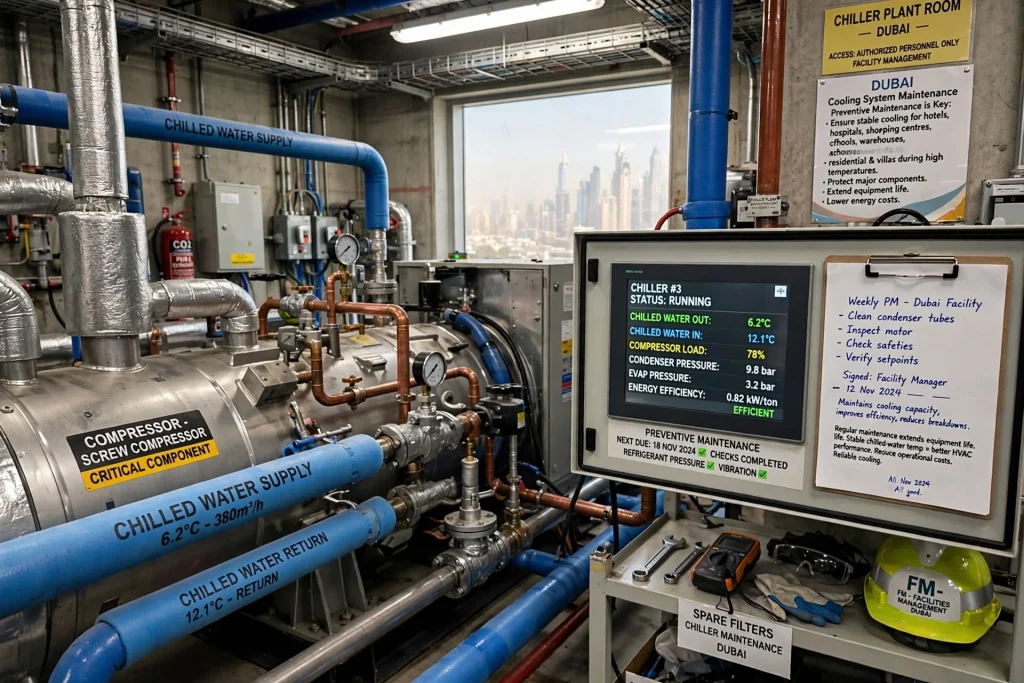
Regular chiller maintenance helps maintain cooling capacity, improve energy efficiency, reduce unexpected breakdowns, protect major components, and extend equipment life. A properly maintained system can also support more stable chilled-water temperatures and better HVAC performance across the building. For property owners and facility managers, preventive maintenance is therefore an important part of managing operational costs and maintaining reliable cooling.
Why Chiller Maintenance Is Important in Dubai
Dubai’s hot climate places considerable demand on air conditioning systems. During periods of high outdoor temperature, chillers may operate for extended hours while serving offices, hotels, retail spaces, residential buildings, and industrial facilities. Continuous operation increases the importance of proper inspection and maintenance.
Dust, airborne particles, humidity, water-quality issues, scale, corrosion, and heavy operating schedules can all affect HVAC equipment. A small performance problem may initially go unnoticed but gradually increase energy consumption or reduce cooling output.
Regular inspections allow facility teams to identify developing problems before they become major failures. Maintenance can include checking compressors, condenser and evaporator systems, chilled-water circuits, pumps, cooling towers, electrical components, sensors, controls, and safety devices.
How a Chilled-Water System Works
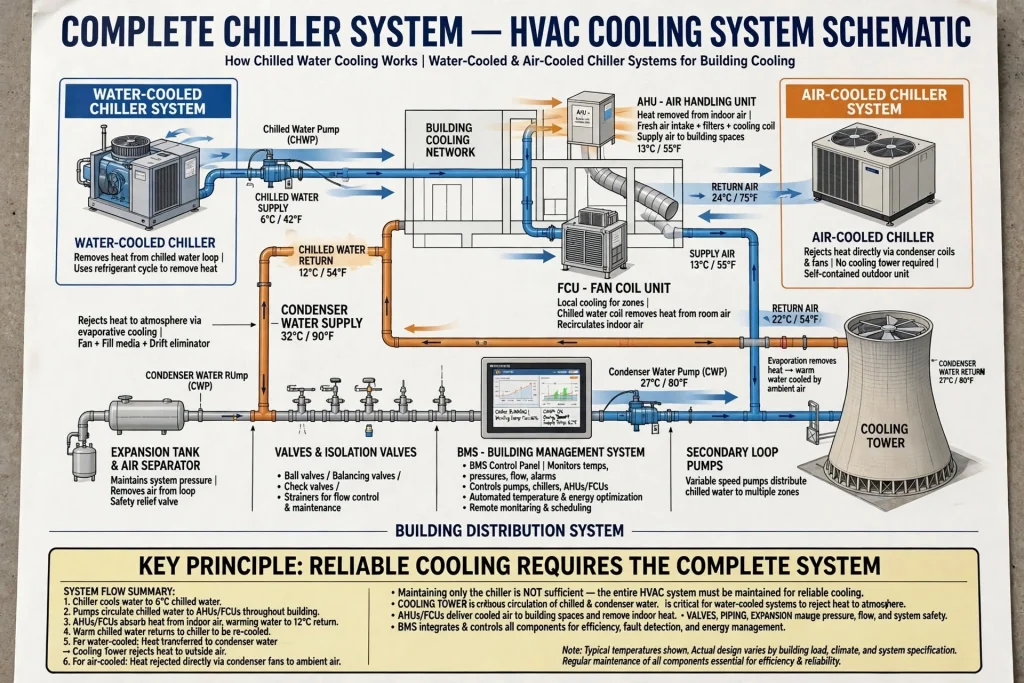
A chiller removes heat from water and produces chilled water that is circulated through a building’s cooling network. The chilled water typically travels to air handling units (AHUs) or fan coil units (FCUs), where heat is removed from indoor air.
In a water-cooled chiller system, heat is transferred to condenser water and rejected through a cooling tower. Air-cooled chillers instead reject heat directly through condenser coils and fans.
The complete system can therefore include chillers, pumps, cooling towers, AHUs, FCUs, valves, piping, expansion systems, control equipment, and a Building Management System (BMS). Maintaining only the chiller itself is not enough. Reliable cooling depends on the performance of the complete HVAC system.
Preventive Maintenance Helps Maintain Cooling Capacity
One of the main benefits of regular maintenance is maintaining the chiller’s ability to deliver its required cooling capacity. Dirt, fouling, poor water flow, damaged components, incorrect settings, and deteriorating heat-transfer surfaces can gradually reduce performance.
A chiller may continue running even when its efficiency has deteriorated. This can make the problem difficult to identify because occupants may still receive some cooling while the equipment consumes more electricity.
Preventive inspections help identify these conditions early. Maintenance teams can compare operating temperatures, pressures, flow conditions, electrical readings, and other available performance indicators with expected operating conditions.
Maintaining cooling capacity is especially important for buildings with high occupancy or critical cooling requirements, where insufficient capacity can quickly create comfort or operational problems.
Condenser Cleaning Improves Heat Transfer
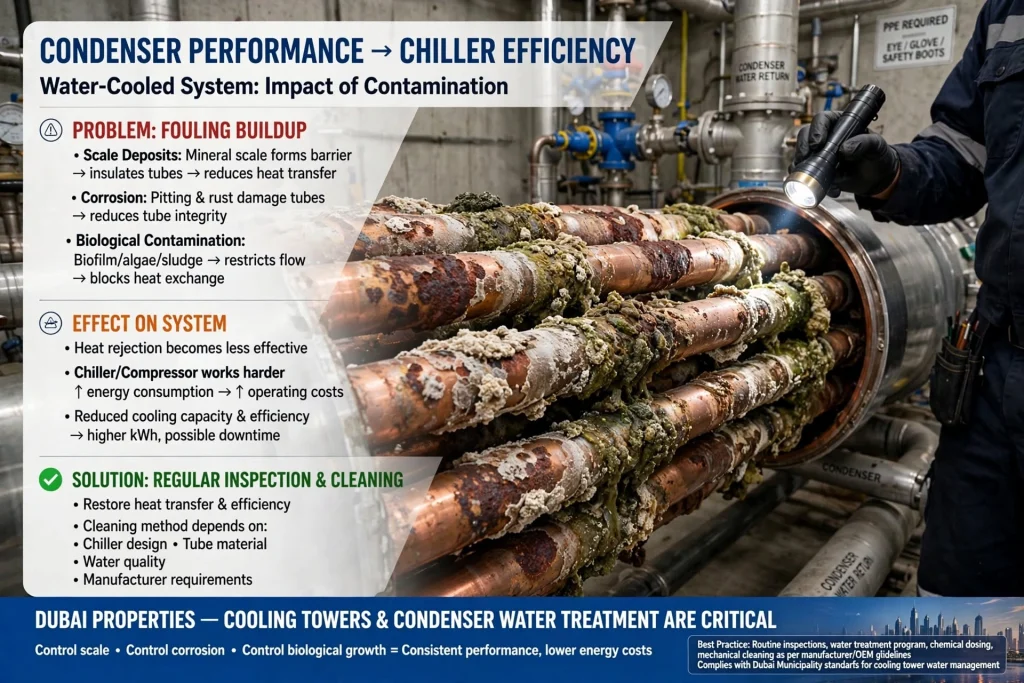
Condenser performance has a major influence on chiller efficiency. In water-cooled systems, condenser tubes can accumulate scale, deposits, corrosion products, or biological contamination.
These deposits act as a barrier to heat transfer. As heat rejection becomes less effective, the refrigeration system may need to work harder to achieve the required cooling conditions.
Regular condenser inspection and cleaning can help restore heat-transfer performance when fouling is present. The appropriate cleaning method depends on the chiller design, tube material, water quality, manufacturer requirements, and condition of the equipment.
For Dubai properties using cooling towers, condenser-water treatment is also important. Proper water treatment can help control scale, corrosion, and biological growth and support more consistent system performance.
Cooling Tower Maintenance Supports Chiller Efficiency
A water-cooled chiller depends on effective heat rejection through the condenser-water system and cooling tower. If the cooling tower is not operating correctly, condenser-water temperature can increase and place additional load on the chiller.
Cooling tower maintenance can include inspection of fill material, spray nozzles, fans, motors, belts, drift eliminators, water distribution, basin conditions, and controls. Water treatment and cleaning should also be managed according to the system’s requirements.
Maintaining proper airflow and water distribution helps the cooling tower reject heat effectively. This can support more favourable chiller operating conditions and reduce unnecessary compressor workload.
Chilled-Water Pumps Need Regular Inspection
Pumps are essential for moving chilled water and condenser water throughout a central cooling system. A pump that is worn, incorrectly adjusted, or operating against excessive resistance can affect the entire HVAC system.
Maintenance teams should inspect pump bearings, seals, couplings, motors, vibration, electrical connections, valves, and operating conditions. Where variable speed drives (VFDs) are installed, their settings and control signals should also be reviewed.
Correct water flow is essential. Too little flow can affect cooling performance, while excessive flow may increase pump energy consumption without providing useful additional cooling.
Monitoring Delta T Can Reveal Cooling Problems
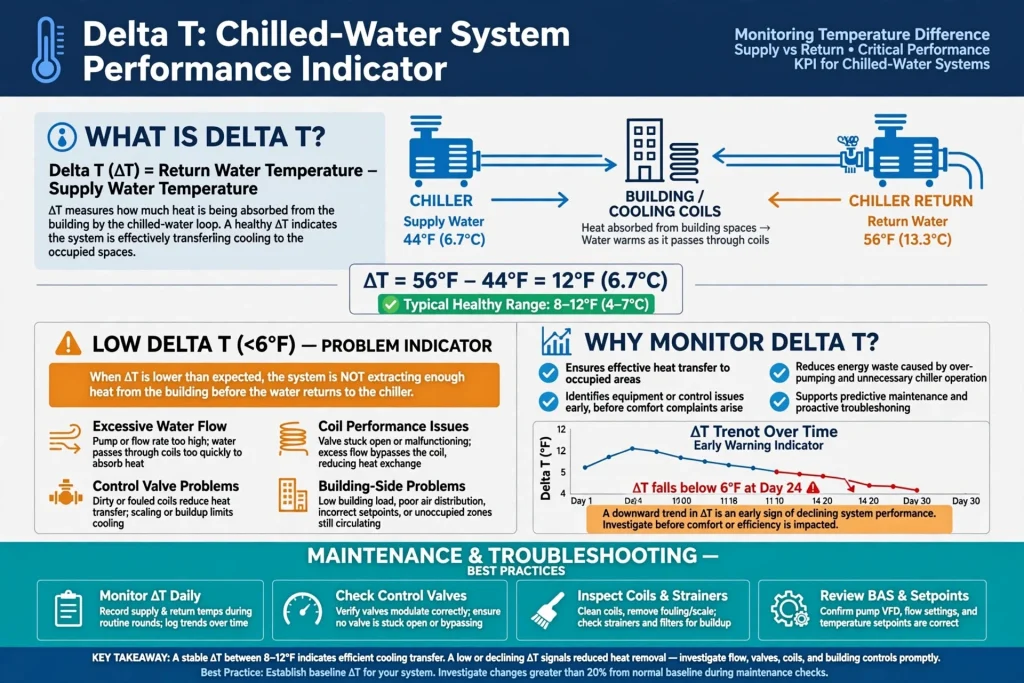
Delta T refers to the temperature difference between chilled-water supply and return. It is an important performance indicator in chilled-water systems.
When the temperature difference is lower than expected, the system may not be extracting enough heat from the building before the water returns to the chiller. Several issues can contribute to low Delta T, including excessive water flow, control valve problems, coil performance issues, incorrect settings, or building-side problems.
Monitoring Delta T during maintenance helps facility teams understand how effectively the chilled-water system is transferring cooling to occupied areas.
A change in Delta T over time can also provide an early indication that system performance needs investigation.
AHU and FCU Maintenance Improves Building Cooling
Chiller performance is closely connected to the condition of the air-side equipment. AHUs and FCUs distribute cooling to occupied spaces, so problems with these units can affect comfort even when the chiller is operating normally.
Dirty filters can restrict airflow, while blocked or contaminated coils can reduce heat transfer. Fan problems, damaged belts, faulty actuators, blocked drains, and incorrect control settings can also affect performance.
Regular inspection and cleaning of AHUs and FCUs can help maintain airflow and heat transfer. Filters should be replaced or cleaned according to their condition and manufacturer requirements.
This whole-system approach is important because improving the chiller while ignoring poorly performing air-side equipment may not deliver the expected improvement in building comfort.
Electrical Inspection Protects Chiller Components
Chillers contain electrical equipment that requires regular inspection. Motors, starters, contactors, control panels, terminals, sensors, and protective devices should be checked as part of an appropriate maintenance programme.
Loose electrical connections can generate heat and potentially damage components. Abnormal current draw may also indicate mechanical or electrical problems that need further investigation.
Maintenance teams can monitor electrical readings and compare them with expected equipment performance. Any abnormal readings should be investigated rather than ignored.
Electrical inspection is particularly important for large chillers because compressor motors and associated equipment can represent substantial electrical loads.
Refrigerant System Checks Are Essential
Depending on the chiller type, refrigerant performance is another important maintenance consideration. Refrigerant systems operate under specific pressure and temperature conditions, and abnormal readings can indicate problems with heat transfer, refrigerant charge, expansion devices, compressors, or other components.
Technicians should use appropriate diagnostic procedures and manufacturer specifications when assessing refrigerant circuits. Refrigerant work should be performed by suitably qualified professionals and in accordance with applicable requirements.
Early identification of refrigerant-related problems can help prevent reduced cooling capacity and excessive compressor operation.
Lubrication and Compressor Inspection
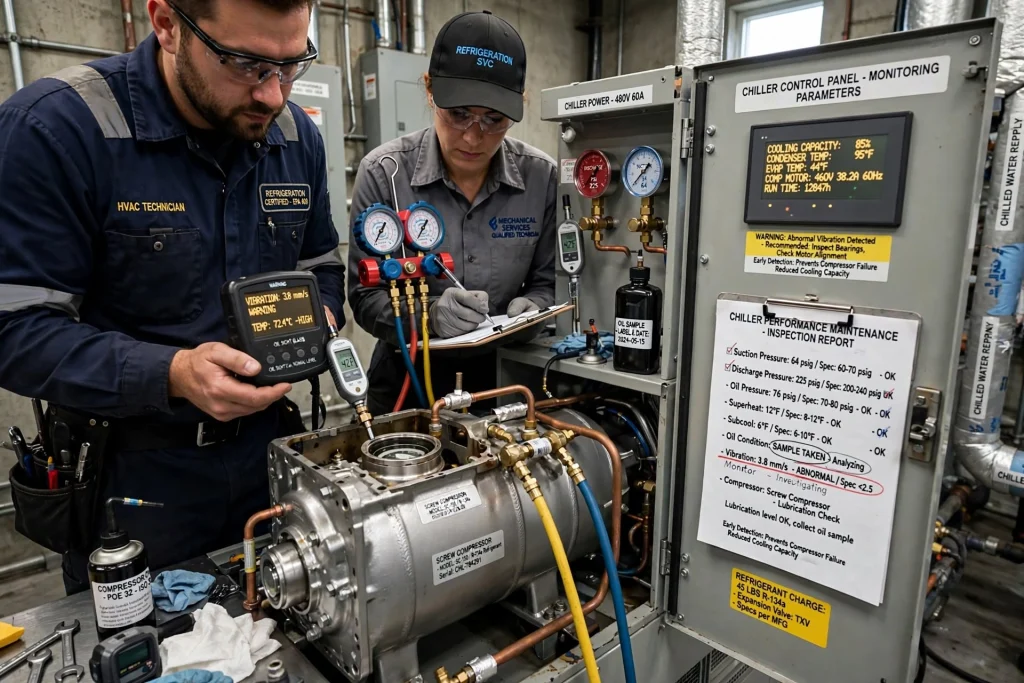
The compressor is one of the most important components in a mechanical refrigeration system. Depending on the chiller design, compressors may be centrifugal, screw, scroll, or reciprocating.
Compressor maintenance requirements vary by equipment type. Oil condition, vibration, operating temperatures, pressures, electrical performance, and control parameters may need to be monitored.
Abnormal vibration or temperature can indicate developing mechanical problems. Detecting such conditions early may allow corrective action before a major compressor failure occurs.
Because compressor replacement can be expensive and disruptive, preventive inspection can provide significant value for large commercial cooling systems.
BMS Monitoring Makes Maintenance More Effective
A Building Management System can provide facility managers with valuable information about HVAC operation. Modern BMS platforms can monitor chilled-water temperatures, condenser-water temperatures, pump status, valve positions, equipment alarms, operating schedules, and other system parameters.
Maintenance teams can use this information to identify unusual operating patterns. For example, an increase in condenser-water temperature or a change in chilled-water Delta T may indicate a condition that requires investigation.
BMS data can also help establish an equipment performance history. Comparing current readings with previous operating conditions makes it easier to identify gradual deterioration.
Regular Maintenance Can Improve Energy Efficiency
Energy efficiency is one of the strongest reasons to maintain commercial chillers properly. When heat-transfer surfaces are clean, water flow is appropriate, controls are correctly configured, and mechanical components are operating efficiently, the system has a better opportunity to deliver cooling without unnecessary energy consumption.
A poorly maintained chiller may continue producing cooling while consuming more electricity. Over long operating periods, this additional consumption can contribute significantly to building energy costs.
Maintenance alone does not guarantee a specific percentage of energy savings. Actual results depend on the existing condition of the equipment, operating schedule, cooling load, system design, and corrective actions performed.
Preventive Maintenance Reduces Unexpected Breakdowns
Unexpected chiller failure can have serious consequences for commercial properties. A major breakdown during a period of high cooling demand may affect offices, hotel rooms, retail areas, production spaces, or other occupied areas.
Emergency repairs can also be more expensive than planned maintenance because they may require urgent labour, spare parts, equipment shutdowns, or temporary cooling arrangements.
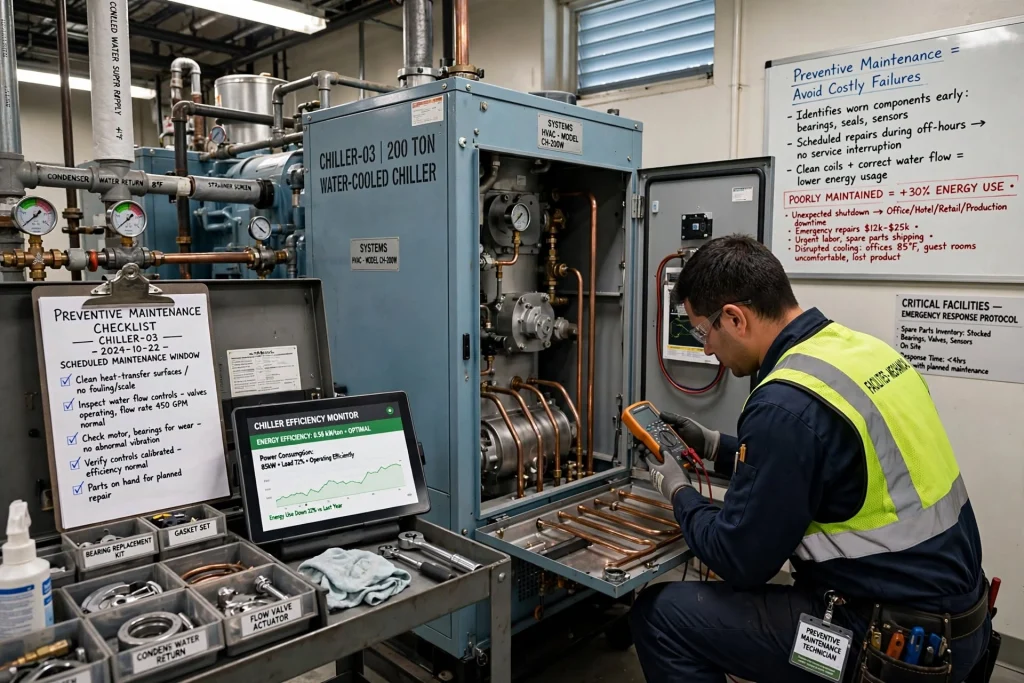
Preventive maintenance helps identify worn components and abnormal operating conditions before they develop into major failures. Planned repairs can then be scheduled during suitable maintenance windows.
For critical facilities, maintenance planning can also include emergency response procedures and spare-parts availability.
Chiller Maintenance Extends Equipment Service Life
Chillers represent a significant investment, particularly in large commercial and industrial buildings. Protecting that investment requires more than repairing components after failure.
Proper maintenance reduces the risk of prolonged operation under abnormal conditions. Keeping heat-transfer surfaces clean, maintaining appropriate lubrication, monitoring electrical components, and addressing vibration or control problems can help protect major equipment.
Longer equipment life can improve the financial return on the original HVAC investment. It may also give property owners more flexibility when deciding when to undertake a major refurbishment or chiller replacement.
Dubai Buildings Need Application-Specific Maintenance
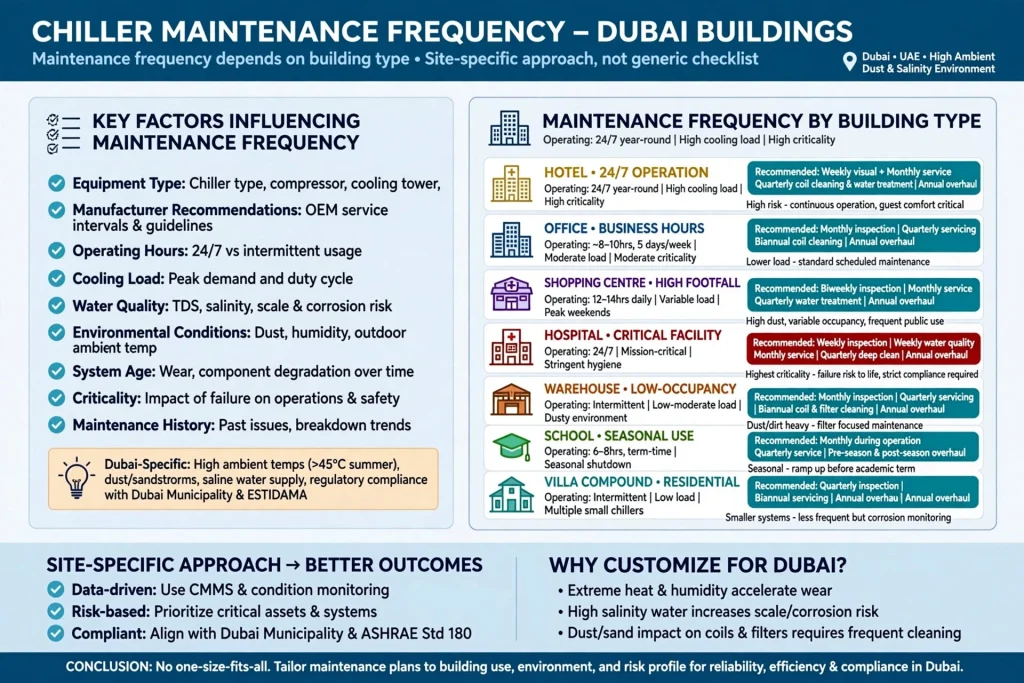
There is no single maintenance schedule that is suitable for every building in Dubai. A hotel operating around the clock has different cooling requirements from an office building that operates mainly during business hours.
Similarly, a shopping centre, hospital, warehouse, school, villa compound, or industrial facility may have different load profiles and equipment configurations.
Maintenance frequency should consider equipment type, manufacturer recommendations, operating hours, cooling load, water quality, environmental conditions, system age, criticality, and previous maintenance history.
This site-specific approach provides more value than following a generic checklist without considering actual equipment conditions.
Chiller Maintenance for Dubai Hotels
Hotels require reliable cooling because guest comfort directly affects the customer experience. Guest rooms, restaurants, kitchens, meeting spaces, lobbies, back-of-house areas, and other facilities can have different cooling requirements.
A chiller problem can affect multiple areas simultaneously, particularly in properties using a central plant. Preventive maintenance can help identify developing issues before they cause widespread comfort complaints.
Hotels in Downtown Dubai, Dubai Marina, Palm Jumeirah, Business Bay, and other high-density areas can benefit from structured HVAC maintenance programmes that consider occupancy patterns and continuous cooling requirements.
Chiller Maintenance for Offices and Commercial Buildings
Office towers and commercial buildings typically experience changing cooling demand throughout the day. Occupancy, meeting rooms, equipment loads, solar exposure, and operating schedules all affect cooling requirements.
Proper chiller maintenance combined with BMS scheduling can help match cooling production to actual demand. Maintaining AHUs, FCUs, pumps, and control valves is equally important for achieving consistent comfort across different floors and zones.
For large office developments, maintenance records can also help facility managers identify recurring problems and plan equipment upgrades.
Chiller Maintenance for Hospitals and Critical Facilities
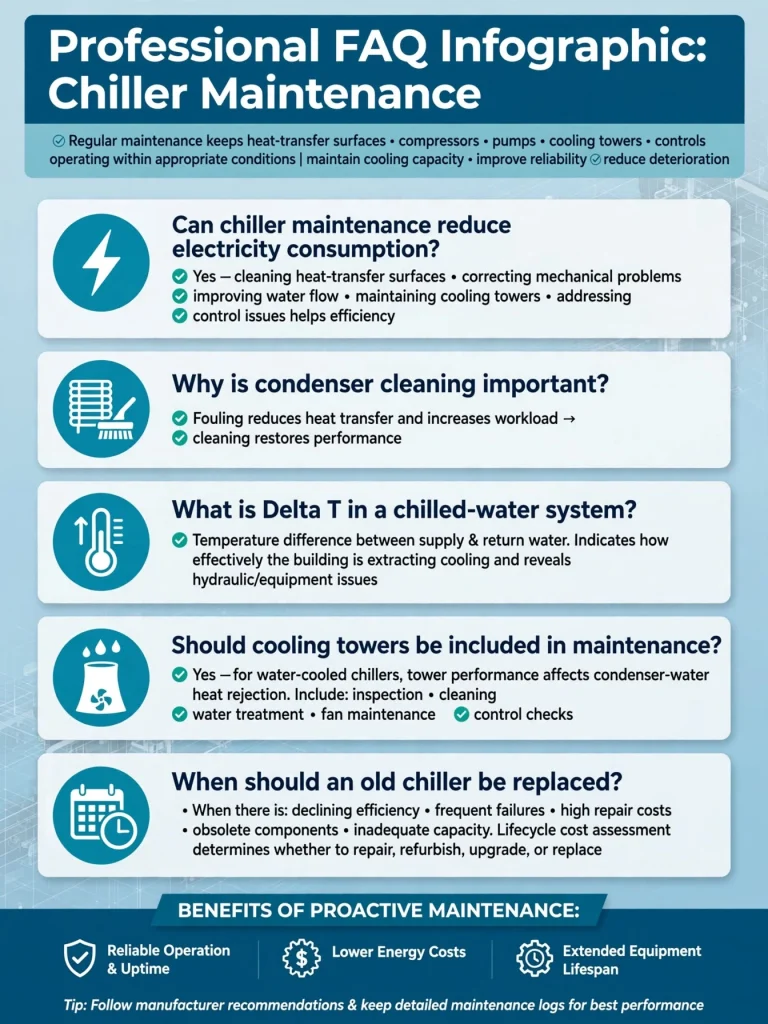
Healthcare facilities have particularly demanding HVAC requirements because temperature, ventilation, humidity, and indoor environmental conditions can be important to building operations.
Chiller maintenance programmes for hospitals and healthcare facilities should be carefully planned to minimise disruption. Critical cooling systems may require redundancy, monitoring, scheduled maintenance windows, and rapid response procedures.
The maintenance strategy should always follow the facility’s engineering requirements, equipment specifications, applicable regulations, and operational policies.
Chiller Maintenance Across the UAE
Although Dubai has particularly high cooling demand, the same principles apply to commercial properties throughout the UAE. Buildings in Abu Dhabi, Sharjah, Ajman, Ras Al Khaimah, and other Emirates also rely heavily on air conditioning.
Local environmental conditions, building design, occupancy, and HVAC configuration influence maintenance requirements. Coastal environments can introduce additional considerations for corrosion and equipment exposure, while dusty conditions can affect air-side equipment and heat-transfer surfaces.
A professional maintenance programme should therefore be adapted to the property’s location and operating environment.
How Often Should a Chiller Be Maintained?
The correct maintenance frequency depends on the chiller manufacturer, equipment type, operating hours, system condition, water quality, and application.
Many commercial facilities use a combination of routine inspections, preventive maintenance visits, seasonal checks, and more detailed annual service activities. Critical equipment may require more frequent monitoring.
Rather than relying only on a calendar, facility managers should combine scheduled maintenance with condition-based monitoring. Trends in temperature, pressure, vibration, electrical consumption, alarms, and cooling performance can indicate when additional attention is required.
What Is Included in Professional Chiller Maintenance?
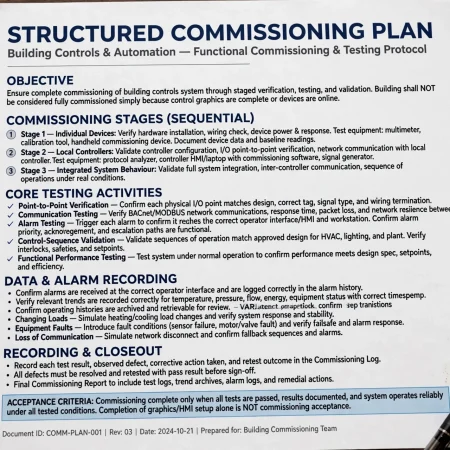
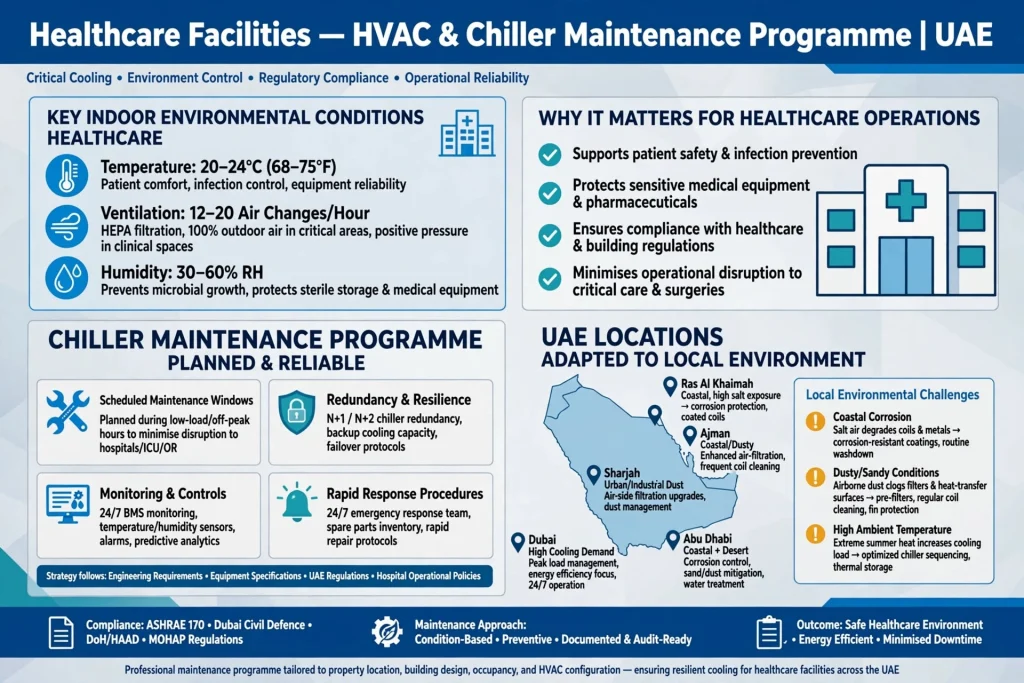
A professional maintenance programme may include inspection and testing of the refrigeration circuit, compressor, condenser, evaporator, electrical system, controls, pumps, cooling tower, sensors, valves, water flow, and safety devices.
The exact scope should be determined by the equipment manufacturer and site requirements. Maintenance may also include condenser tube cleaning, water-quality checks, filter maintenance, coil cleaning, electrical testing, vibration assessment, performance measurement, and BMS review.
A clear service report should document findings, completed work, abnormal conditions, recommended repairs, and follow-up requirements.
Signs That a Chiller Needs Maintenance
Several warning signs can indicate declining chiller performance. These may include insufficient cooling, unstable chilled-water temperature, unusual compressor noise, increased electrical consumption, frequent alarms, high condenser-water temperature, excessive vibration, water leakage, or repeated equipment shutdowns.
A rising electricity bill can also justify an HVAC performance investigation, particularly when occupancy and operating hours have remained relatively stable.
Ignoring these warning signs can allow a minor issue to develop into a more expensive repair. Early inspection is usually a better approach than waiting for complete equipment failure.
Frequently Asked Questions About Chiller Maintenance in Dubai
How does regular chiller maintenance improve cooling performance?
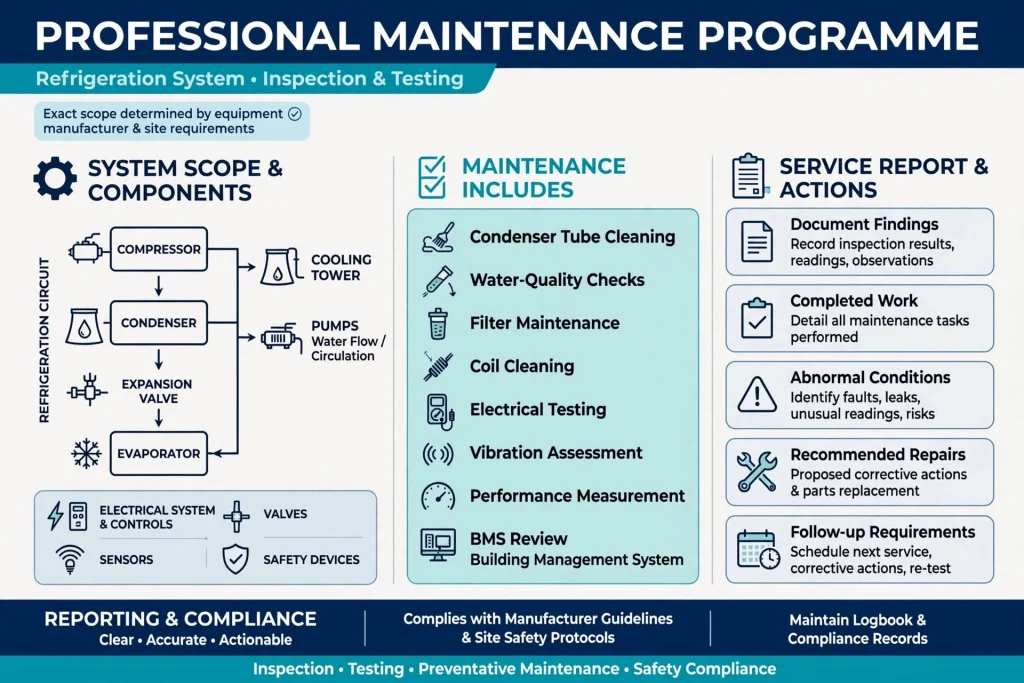
Regular maintenance helps keep heat-transfer surfaces, compressors, pumps, cooling towers, controls, and other components operating within appropriate conditions. This can help maintain cooling capacity, improve system reliability, and reduce performance deterioration.
Can chiller maintenance reduce electricity consumption?
It can. Cleaning heat-transfer surfaces, correcting mechanical problems, improving water flow, maintaining cooling towers, and addressing control issues can help the system operate more efficiently. Actual energy savings depend on the condition and design of the existing system.
Why is condenser cleaning important?
Condenser fouling reduces heat transfer and can increase the workload on the refrigeration system. Cleaning helps restore heat-transfer performance when deposits are present and can support more efficient chiller operation.
What is Delta T in a chilled-water system?
Delta T is the temperature difference between chilled-water supply and return. It helps indicate how effectively the building is extracting useful cooling from the chilled water and can reveal hydraulic or equipment performance issues.
Should cooling towers be included in chiller maintenance?
Yes. For water-cooled chillers, cooling tower performance directly affects condenser-water conditions and heat rejection. Cooling tower inspection, cleaning, water treatment, fan maintenance, and control checks are therefore important parts of the overall cooling system strategy.
When should an old chiller be replaced?
Replacement should be considered when an ageing chiller has declining efficiency, frequent failures, high repair costs, obsolete components, or inadequate cooling capacity. A lifecycle cost and performance assessment can help determine whether repair, refurbishment, controls upgrades, or replacement is the better option.
Conclusion
Regular chiller maintenance is an important part of maintaining reliable and efficient cooling systems in Dubai. The city’s demanding climate means central HVAC equipment often operates for long periods, making preventive maintenance essential for commercial, residential, hospitality, healthcare, and industrial properties.
Maintaining condensers, evaporators, compressors, pumps, cooling towers, AHUs, FCUs, electrical components, sensors, valves, and BMS controls can help maintain cooling performance and identify developing problems before they result in major failures.
For property owners and facility managers, the best strategy is to treat chiller maintenance as an ongoing performance programme rather than an emergency repair service. Combining preventive inspections, condition monitoring, energy analysis, proper water treatment, and timely corrective work can help extend equipment life, maintain occupant comfort, and support efficient HVAC operation across Dubai.