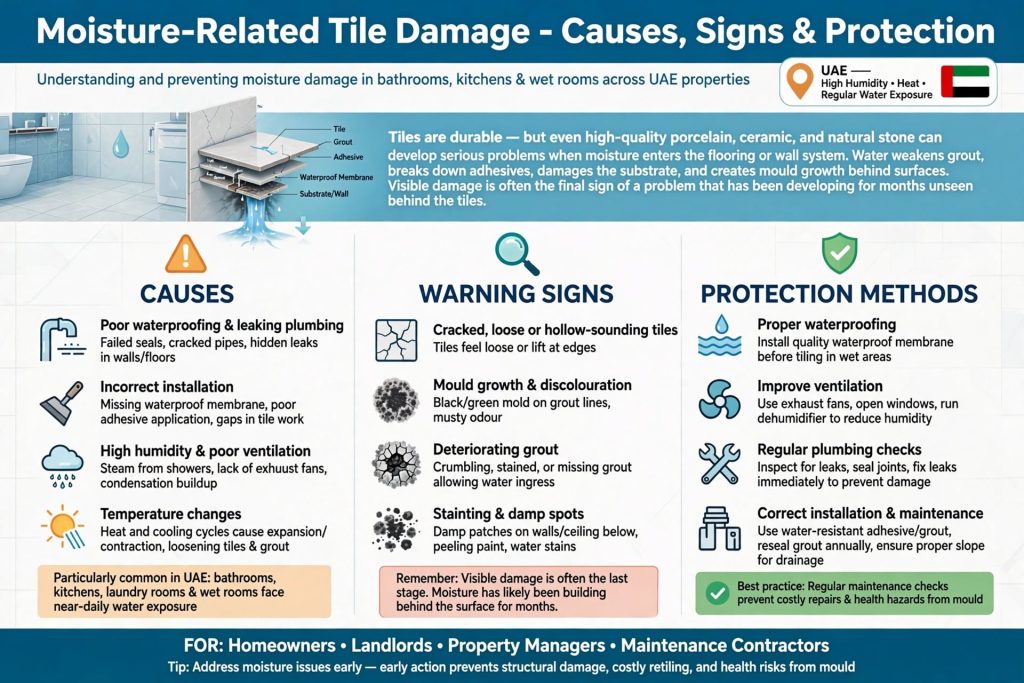
Tiles are widely used in bathrooms and kitchens because they are durable, easy to clean and available in a wide range of designs. However, even high-quality porcelain, ceramic and natural stone tiles can develop problems when moisture enters the flooring or wall system. Water may gradually weaken grout, affect tile adhesive, damage the substrate and create conditions for mould growth. In many cases, the visible damage is only the final sign of a problem that has been developing behind the tiled surface for months.
Moisture-related tile damage is particularly important in properties across the UAE, where bathrooms, kitchens, laundry areas and wet rooms experience regular water exposure. Poor waterproofing, leaking plumbing, incorrect tile installation and inadequate ventilation can all contribute to deterioration. High humidity and temperature changes can make existing problems more difficult to manage.
Understanding how moisture affects tiles helps homeowners, landlords, property managers and maintenance contractors identify problems early. This guide explains the causes of moisture-related tile damage, the warning signs to look for and the practical ways to protect tiled surfaces in bathrooms and kitchens.
Why Moisture Is a Major Cause of Tile Damage
Tiles are designed to provide a protective and decorative surface, but a tiled installation is made up of several layers. These can include the tile, grout, tile adhesive, waterproofing membrane and underlying substrate. Each layer has a different function, and failure in one area can affect the entire installation.
A common misunderstanding is that ceramic or porcelain tiles make a floor completely waterproof. Although many tiles have low water absorption, the joints between tiles, perimeter edges, movement joints and connections around plumbing fixtures can allow water to enter if they are not correctly detailed and maintained.
Once moisture passes through the tiled surface, it can remain trapped beneath the tiles. This may gradually affect the adhesive bond, damage cement-based materials or create conditions for mould and unpleasant odours. The problem can remain hidden until tiles become loose, grout deteriorates or damp patches appear.
How Water Enters Bathroom and Kitchen Tile Installations
Moisture can reach the layers beneath tiles through several routes. The source is not always obvious, particularly when the damage appears far away from the original leak.
Water Penetrating Through Damaged Grout
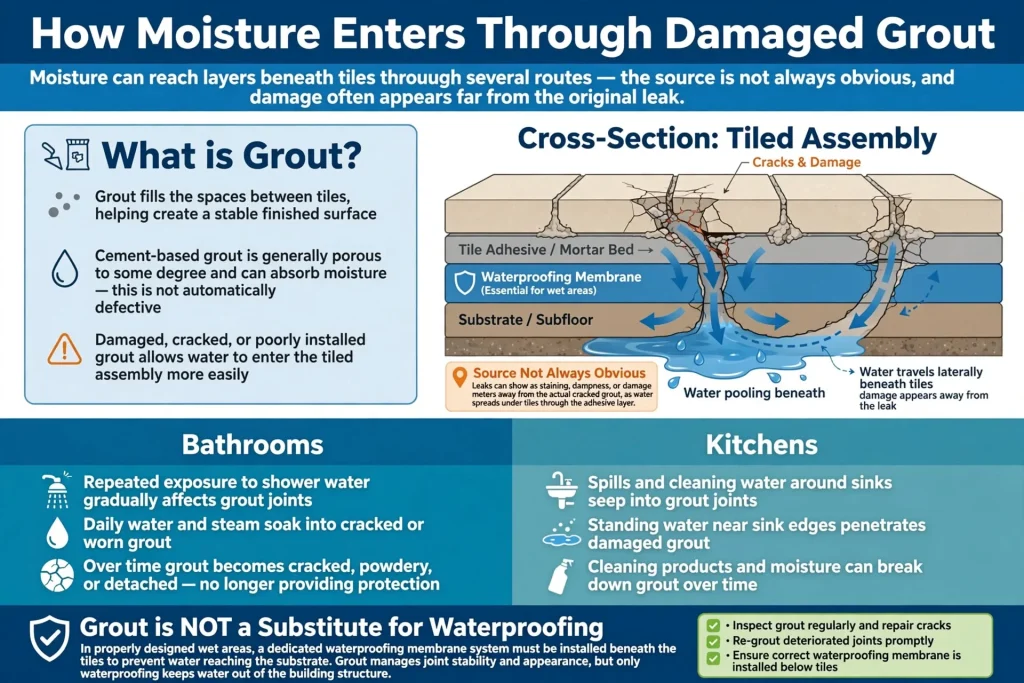
Grout fills the spaces between tiles and helps create a stable, finished surface. Cement-based grout is generally porous to some degree, meaning it can absorb moisture. This does not automatically make it defective, but damaged, cracked or poorly installed grout can allow water to enter the tiled assembly more easily.
In bathrooms, repeated exposure to shower water can gradually affect grout joints. In kitchens, spills, cleaning water and moisture around sinks can create similar conditions. If grout becomes cracked, powdery or detached, the joints may no longer provide the intended protection.
Grout should not be treated as a substitute for waterproofing. A properly designed wet-area installation needs an appropriate waterproofing system beneath the tiles.
Water Leaking Through Silicone and Sealant Joints
Silicone sealant is commonly used around bathtubs, shower trays, sinks, worktops and changes of plane. It helps accommodate small movements and prevents water from entering gaps between different materials.
Over time, silicone can lose adhesion, crack, shrink or develop mould. This may happen because of ageing, poor surface preparation, movement or incorrect sealant selection. When a sealant joint fails, water can reach areas that are not designed for regular wetting.
Inspect corners, shower enclosures, bathtub edges and kitchen sink connections regularly. Replacing deteriorated sealant is often a relatively simple maintenance task, but it will not solve a deeper waterproofing or plumbing defect.
Hidden Plumbing Leaks Behind Tiled Walls
Bathrooms and kitchens contain water supply pipes, drainage connections and plumbing fixtures. A leaking pipe concealed behind a tiled wall or beneath a tiled floor can expose the surrounding materials to moisture continuously.
Unlike occasional splashes, a concealed leak may remain active for long periods. It can weaken the substrate, damage the adhesive and create damp patches in adjacent rooms. Sometimes the first visible sign is a loose tile, discoloured grout or a persistent musty smell.
If moisture continues to return after cleaning and drying, the source should be investigated rather than simply covering the affected area with new grout or sealant.
How Moisture Damages Tile Adhesive
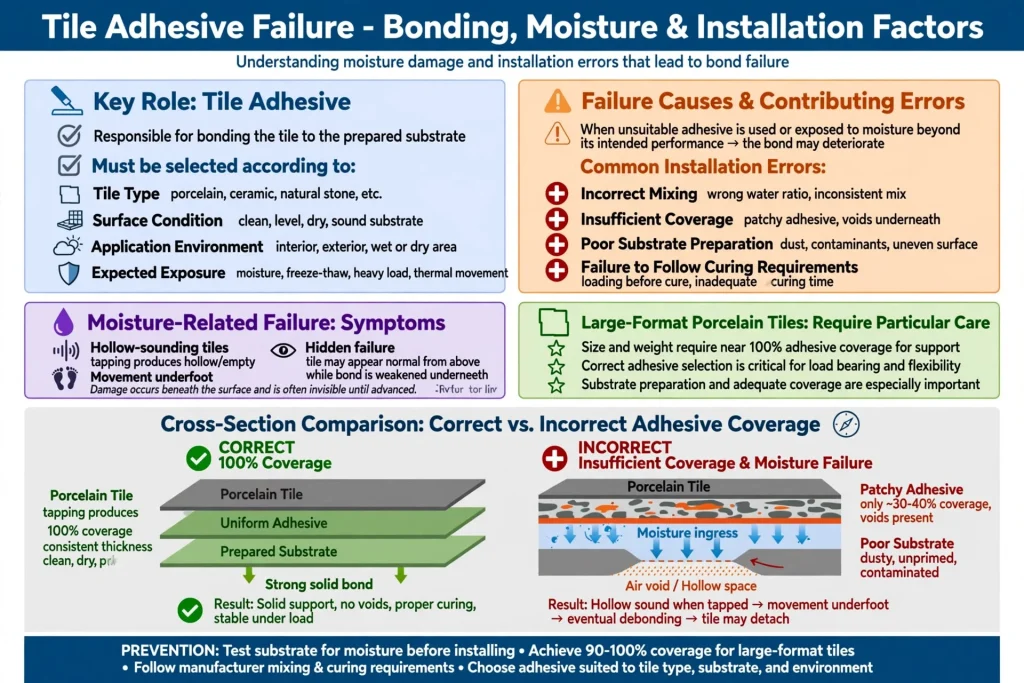
Tile adhesive is responsible for bonding the tile to the prepared substrate. The adhesive must be selected according to the tile type, surface condition, application environment and expected exposure.
When an unsuitable adhesive is used, or when the installation is exposed to moisture beyond its intended performance, the bond may deteriorate. Incorrect mixing, insufficient coverage, poor substrate preparation and failure to follow curing requirements can also contribute to problems.
Moisture-related adhesive failure can lead to hollow-sounding tiles, movement underfoot and eventual debonding. A tile may appear normal from above while its bond has already weakened underneath.
Large-format porcelain tiles require particular care during installation. Their size and weight make correct adhesive selection, substrate preparation and adequate adhesive coverage especially important. The installer must follow the adhesive manufacturer’s guidance rather than assuming that one product is suitable for every tile and wet-area application.
Why Tiles Become Loose or Lift from the Floor
Loose tiles are among the most noticeable signs of a failing tiled installation. Moisture can contribute to this problem by affecting the adhesive bond or damaging the substrate beneath the tile.
However, moisture is not the only possible cause. Poor adhesive coverage, movement in the substrate, inadequate curing, incorrect installation techniques and missing movement joints can also cause tiles to become detached.
In some cases, moisture enters the substrate and weakens the bond between the different installation layers. The tile may begin to sound hollow when tapped, move slightly under pressure or eventually lift from the surface.
Do not ignore loose tiles in a shower, bathroom or kitchen. Continued movement can allow more water to enter the installation and may create a trip hazard. The underlying cause should be identified before replacement tiles are installed.
Efflorescence: White Deposits on Tile and Grout
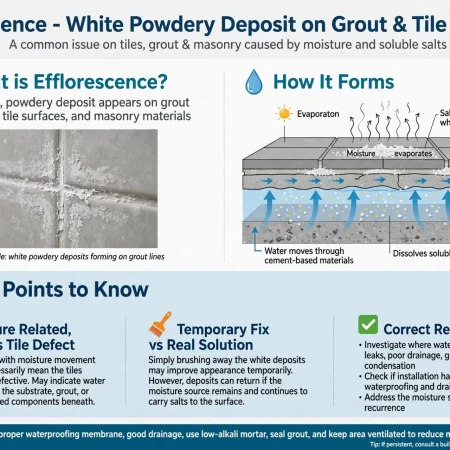
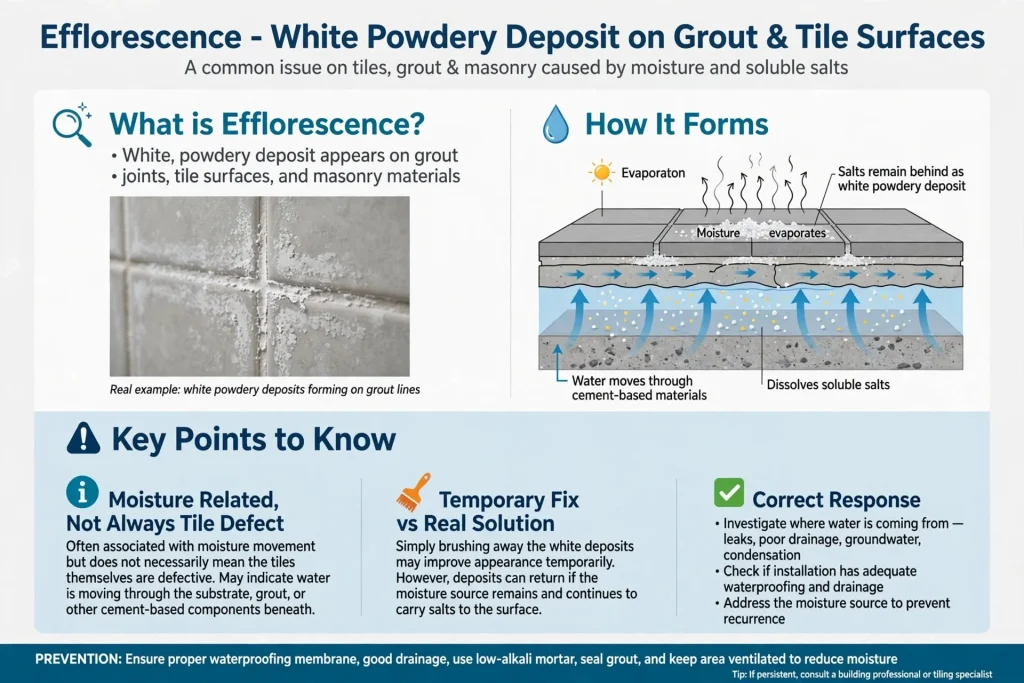
Efflorescence is a white, powdery deposit that can appear on grout joints, tile surfaces and masonry materials. It develops when water moves through cement-based materials, dissolves soluble salts and carries them towards the surface. As the moisture evaporates, the salts remain behind.
Efflorescence is often associated with moisture movement, but it does not necessarily mean that the tiles themselves are defective. It may indicate that water is moving through the substrate, grout or other cement-based components.
Simply brushing away the white deposits may improve the appearance temporarily, but the deposits can return if the moisture source remains. The correct response is to investigate where the water is coming from and whether the installation has adequate waterproofing and drainage.
Mould and Mildew Around Bathroom and Kitchen Tiles
Bathrooms are particularly vulnerable to mould because warm temperatures, regular showering and inadequate ventilation can create conditions that support fungal growth. Kitchens can also experience moisture accumulation around sinks, dishwashers, washing machines and poorly ventilated cooking areas.
Mould may appear as dark spots on silicone, grout joints, wall corners and areas behind appliances. It can also produce a persistent musty smell. Although mould may grow on surface contamination, recurring growth can indicate excessive moisture or inadequate ventilation.
Porcelain and ceramic tile faces are generally easier to clean than porous surrounding materials. However, grout, silicone, plasterboard and other adjacent materials may retain moisture and support mould growth.
Improving ventilation, fixing leaks and keeping wet surfaces dry can help reduce the conditions that allow mould to return. Extensive mould growth or suspected hidden contamination may require professional assessment.
Moisture Damage in Bathroom Floors and Shower Areas
Bathroom floors receive regular exposure to water from showers, baths, sinks and cleaning activities. Shower enclosures are especially demanding because water repeatedly reaches the floor, walls, corners and drainage connections.
A correctly installed shower area needs a suitable waterproofing system, properly formed falls towards the drain and correctly sealed connections. If the floor does not drain effectively, standing water can increase the time that surrounding materials remain wet.
Waterproofing details are particularly important around floor drains, pipe penetrations, shower niches, corners and wall-to-floor junctions. Small installation defects in these locations can allow water to enter concealed areas.
If water collects outside the shower enclosure, check the condition of the shower screen, door seals, drainage and floor slope. Repeated water exposure outside the designated wet area may eventually affect skirting, adjacent flooring and nearby walls.
How Moisture Damages Kitchen Tiles
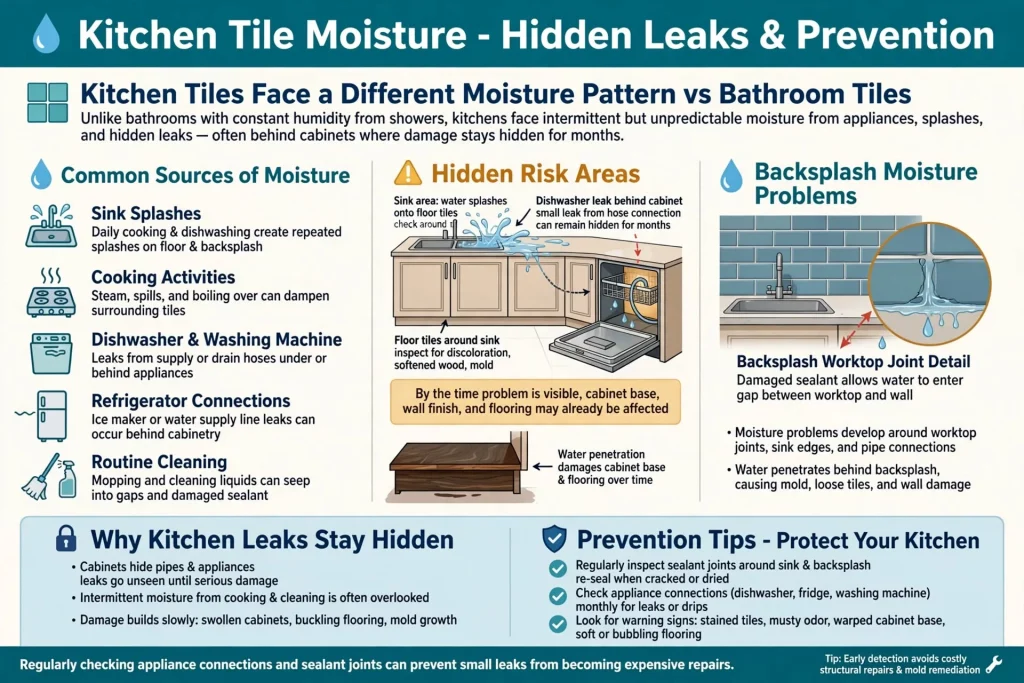
Kitchen tiles face a different pattern of moisture exposure from bathroom tiles. Water may come from sink splashes, cooking activities, dishwasher leaks, washing machines, refrigerator connections and routine cleaning.
Floor tiles around dishwashers and sinks should be checked for signs of water penetration. A small leak from an appliance connection can remain unnoticed behind cabinetry for a long time. By the time the problem becomes visible, the cabinet base, wall finish or flooring may already be affected.
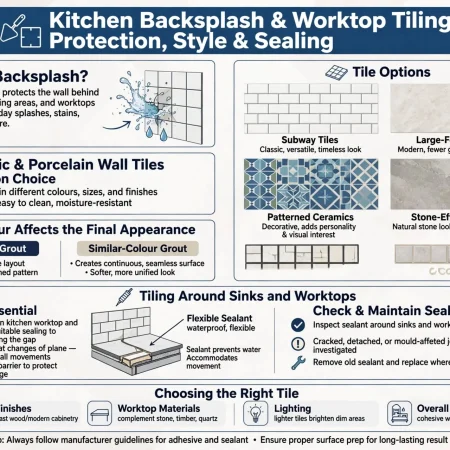
Kitchen backsplashes can also develop moisture-related problems around worktop joints, sink edges and pipe connections. If sealant becomes damaged, water may enter the gap between the worktop and wall.
Regularly checking appliance connections and sealant joints can help prevent small leaks from becoming expensive repair projects.
The Role of Waterproofing in Preventing Tile Damage
Waterproofing is one of the most important parts of a reliable bathroom and kitchen installation, particularly in areas exposed to regular water contact.
A waterproofing system is normally installed beneath the tile finish, creating a protective layer that helps prevent water from reaching the underlying substrate. Depending on the project, this may involve liquid-applied waterproofing membranes, sheet membranes, suitable primers, reinforcement tapes and compatible accessories.
The system must be installed according to the manufacturer’s instructions. Correct preparation, membrane thickness, drying times, corner treatment and sealing around penetrations all matter.
A waterproofing membrane should be compatible with the tile adhesive and the complete installation system. Using unrelated products without checking compatibility can lead to bonding problems or system failure.
For UAE properties, waterproofing is especially important in apartments, villas, hotels and commercial kitchens where water exposure is frequent. Professional installation and appropriate inspection can help reduce the risk of concealed moisture damage.
How UAE Climate Conditions Can Affect Tiled Areas
The UAE has a hot climate, and many properties rely on air conditioning throughout the year. While outdoor heat is not automatically a direct cause of tile failure, temperature differences between indoor and outdoor environments can influence building materials and moisture behaviour.
High outdoor humidity during certain periods can contribute to condensation on cooler surfaces, particularly where ventilation and air conditioning are not properly balanced. Bathrooms without effective exhaust ventilation may also retain humid air after showers.
In Dubai, Sharjah, Abu Dhabi and Ajman, property owners should pay attention to ventilation, plumbing maintenance and waterproofing in wet areas. Villas with multiple bathrooms, apartments with concealed plumbing and hotels with frequent guest turnover may experience different maintenance challenges, but the underlying principles remain the same.
Temperature changes can also cause building materials to expand and contract. If movement joints are missing or incorrectly installed, stress may develop within the tiled system. This can contribute to cracked grout, damaged sealant and loose tiles, particularly when combined with moisture exposure.
Warning Signs of Moisture-Related Tile Damage
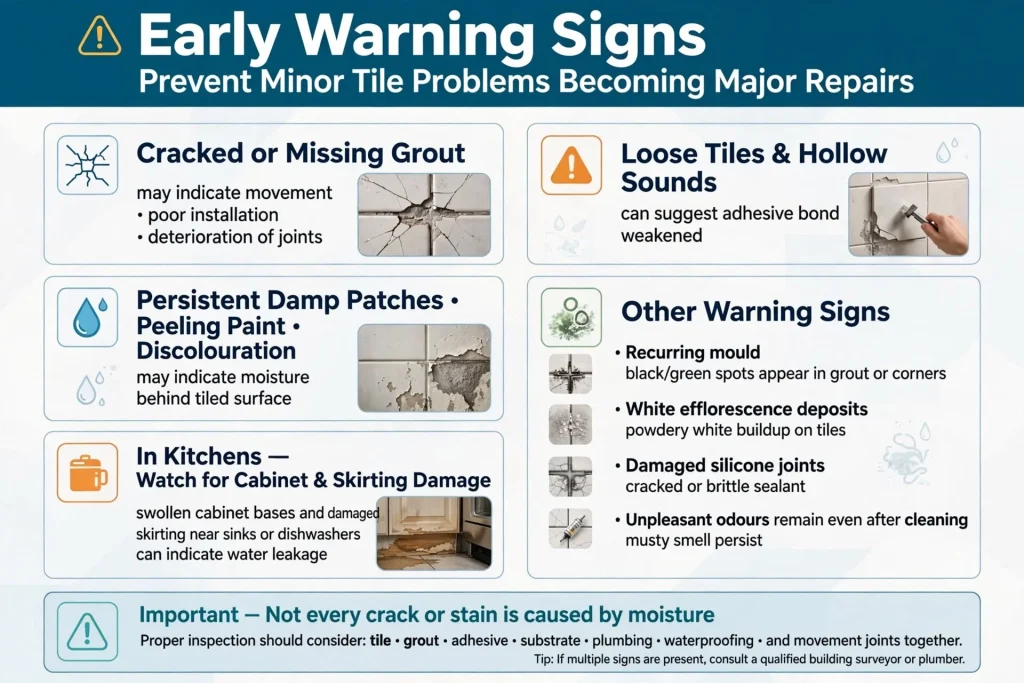
Recognising early warning signs can prevent minor problems from developing into major repairs.
Cracked or missing grout may indicate movement, poor installation or deterioration of the joints. Loose tiles and hollow sounds can suggest that the adhesive bond has weakened. Persistent damp patches, peeling paint and discolouration on nearby walls may indicate moisture behind the tiled surface.
Other warning signs include recurring mould, white efflorescence deposits, damaged silicone joints and unpleasant odours that remain even after cleaning. In kitchens, swollen cabinet bases and damaged skirting near sinks or dishwashers can also indicate water leakage.
Not every crack or stain is caused by moisture. A proper inspection should consider the tile, grout, adhesive, substrate, plumbing, waterproofing and movement joints together.
How to Repair Moisture-Damaged Tiles Properly
The correct repair method depends on the extent of damage and the original cause. Replacing a cracked tile without fixing a leaking pipe or failed waterproofing system may only provide a temporary improvement.
Identify and Stop the Moisture Source
Start by investigating the source of water. Check visible plumbing connections, shower fittings, taps, drains, appliance hoses, silicone joints and nearby surfaces.
If a concealed leak is suspected, a qualified plumber may need to carry out further investigation. Depending on the circumstances, this could involve pressure testing, moisture measurement or other suitable leak detection methods.
The affected area should not be retiled until the source of moisture has been addressed.
Remove Damaged Materials Where Necessary
If tiles have become loose or the adhesive has failed, affected materials may need to be removed. The substrate should then be examined for deterioration, contamination and moisture damage.
Damaged plasterboard, screed or other substrate materials may require repair or replacement. The surface must be suitable for the new installation before waterproofing or tiling work begins.
Restore Waterproofing and Tile Installation Layers
Where waterproofing has failed, the damaged section of the system must be repaired using compatible materials and the correct installation method. This may require removing a larger area of tiles to access the membrane and surrounding details.
The repaired waterproofing system should be allowed to cure as specified by its manufacturer. Any required testing should be completed before the tiles are installed.
Reinstall Tiles with Suitable Adhesive and Grout
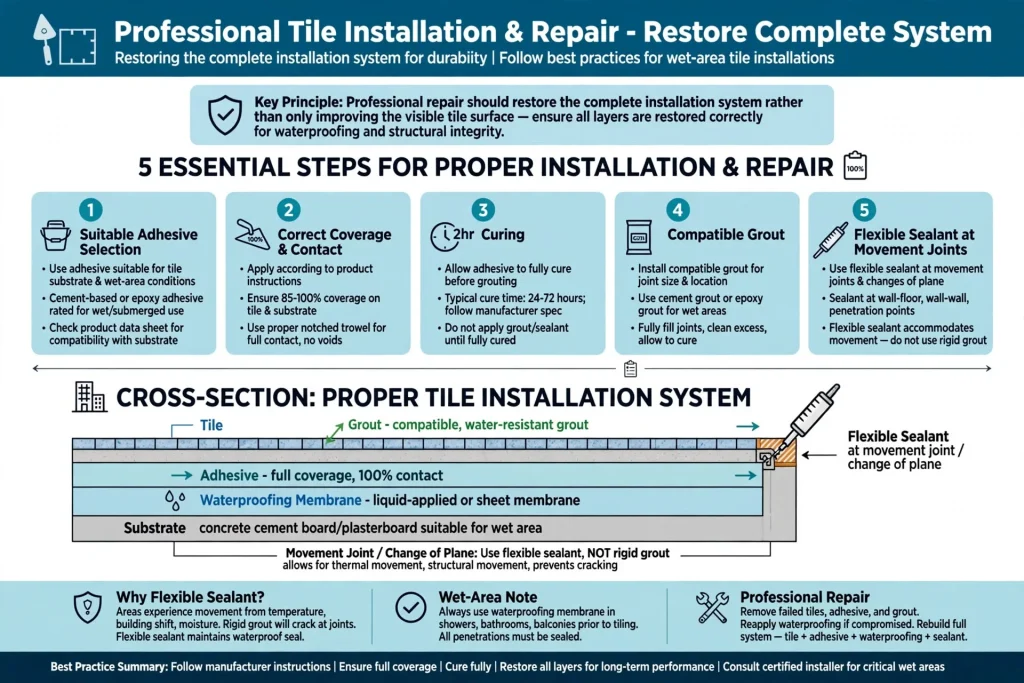
Use an adhesive suitable for the tile, substrate and wet-area conditions. Apply it according to the product instructions, ensuring the required coverage and contact.
Once the adhesive has cured, install compatible grout and suitable sealant at movement joints and changes of plane. Flexible sealant is generally used at appropriate junctions rather than rigid grout, because these areas may experience movement.
A professional repair should restore the complete installation system rather than only improving the visible tile surface.
How to Prevent Moisture Damage in Bathrooms and Kitchens
Prevention begins during the design and installation stages. Select tiles and installation materials suitable for the intended environment. Use an appropriate waterproofing system in wet areas, and make sure the substrate is properly prepared before tiling begins.
Ventilation is equally important. Bathroom exhaust fans should be suitable for the room and used during and after showering to remove humid air. Kitchen ventilation should also help control moisture produced by cooking and cleaning.
Inspect grout, silicone and plumbing connections regularly. Repair damaged joints before water has an opportunity to reach concealed areas. Clean up standing water, especially around sinks, shower screens, washing machines and dishwashers.
Avoid using harsh cleaning chemicals that may damage grout, sealant or natural stone. Different tile materials require different cleaning products, so follow the manufacturer’s care instructions.
For property managers, a routine maintenance schedule can help identify early signs of deterioration across multiple bathrooms and kitchens. This is particularly useful in rental apartments, hotels, restaurants and commercial buildings where tiled surfaces receive frequent use.
Choosing Professional Tile Repair and Maintenance Services
Moisture-related tile problems can involve several trades, including tiling, waterproofing, plumbing and building maintenance. Choosing a contractor who understands how these systems work together is important when the damage extends beyond the visible surface.
A professional inspection should consider the condition of the grout, tile adhesive, waterproofing membrane, substrate, drainage and nearby plumbing. The contractor should explain the suspected cause, recommended repair method and whether any concealed materials need replacement.
For homeowners and property managers looking for a reliable Tile Damage Solution Service, the priority should be identifying the source of moisture before carrying out cosmetic repairs. This approach helps prevent repeated tile failures and unnecessary maintenance costs.
In Dubai, Sharjah, Abu Dhabi and other UAE locations, experienced tile and waterproofing contractors can help assess bathroom floors, shower areas, kitchen walls and other moisture-exposed surfaces. The appropriate solution will depend on the property’s construction, the affected area and the condition of the existing installation.
Protecting Your Tiles from Long-Term Moisture Damage
Moisture can affect more than the visible tile surface. It can weaken grout, damage adhesive, deteriorate substrates and create conditions for mould growth. In bathrooms and kitchens, these problems often begin with small issues such as leaking plumbing, damaged silicone or poor waterproofing details.
The most effective approach is to identify moisture problems early, maintain ventilation, inspect joints and use suitable waterproofing and installation materials. When damage occurs, repairing the source of water is just as important as replacing the affected tiles.
With correct installation, regular maintenance and professional assessment when necessary, tiled bathrooms and kitchens can remain functional, hygienic and visually attractive for many years.