Proper tile levelling is one of the most important parts of achieving a professional-looking tiled surface. Whether the project involves a Dubai villa, apartment, hotel, office, retail shop or commercial building, tiles need to be installed on a properly prepared and sufficiently level surface. Even high-quality porcelain, ceramic or natural stone tiles can produce a poor result when the substrate, adhesive coverage or installation technique is inadequate.
Tile levelling is not simply about making individual tiles look straight. It involves controlling differences in height between adjacent tiles, maintaining consistent joints, achieving a suitable finished floor level and creating a surface that performs properly under everyday use.
In the UAE, where modern residential and commercial interiors frequently use large-format porcelain tiles, marble-look tiles and other premium finishes, accurate installation becomes even more important. Small installation errors can become highly visible across large surfaces.
What Is Tile Levelling?
Tile levelling refers to the process of installing tiles so that adjacent surfaces remain aligned and excessive height differences, commonly known as lippage, are minimized.
Levelling is different from simply checking whether a floor is horizontally level. A floor may have a planned slope for drainage while the individual tiles still need to meet evenly at their edges.
Professional tile installation therefore considers several factors, including substrate flatness, tile thickness, adhesive coverage, tile dimensions, joint width, surface transitions and the intended finished level.
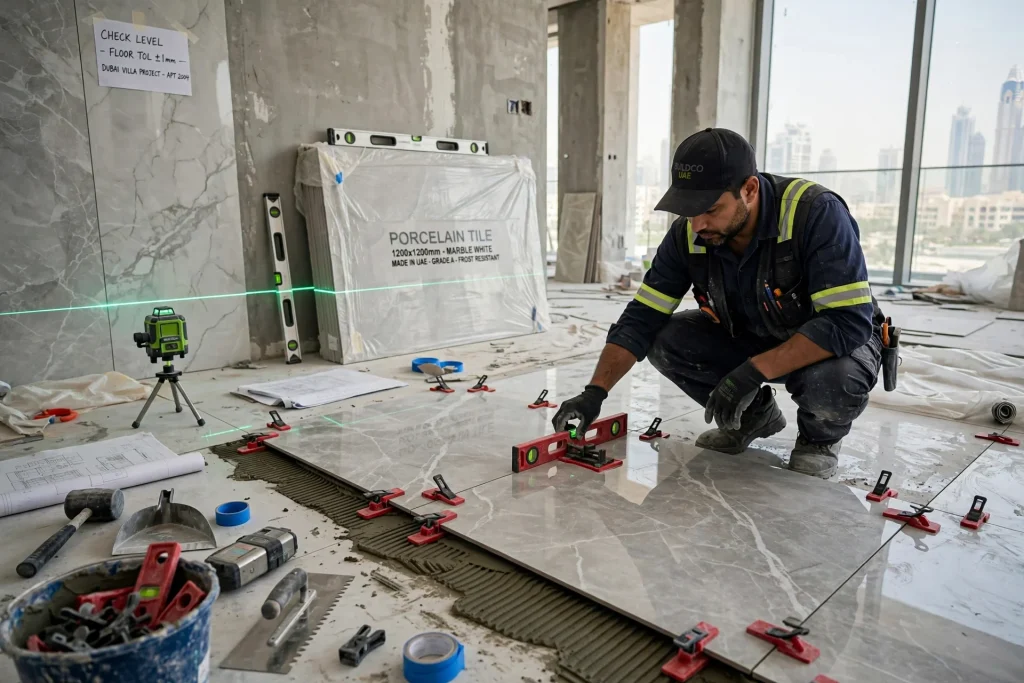
Tile levelling systems may use clips, wedges or other components to help hold neighbouring tiles in alignment while the adhesive cures.
Why Tile Levelling Is Important
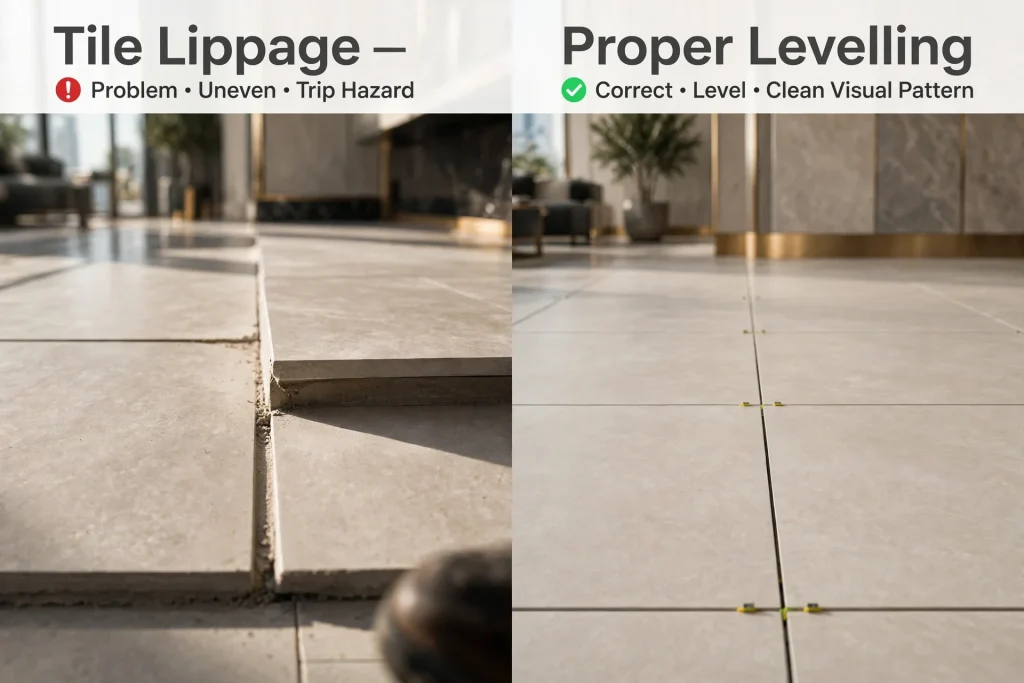
Poorly levelled tiles can create visible unevenness across a floor or wall. One tile may sit higher than the adjacent tile, creating an edge that catches light and becomes noticeable from different viewing angles.
This problem is often referred to as tile lippage. Excessive lippage can affect both appearance and usability. It can make a floor feel uneven underfoot and can become a trip hazard depending on the severity and location.
Proper levelling also helps create consistent grout lines and a cleaner visual pattern. This is particularly important when installing large-format tiles, where small variations can become more obvious across expansive surfaces.
Tile Lippage and Its Causes
Tile lippage occurs when adjacent tiles are not installed at the same plane. Several factors can contribute to it.
An uneven substrate is one of the most common causes. If the underlying concrete slab, screed or wall surface contains significant high and low areas, the installer may struggle to achieve consistent tile alignment.
Tile warpage can also contribute. Large ceramic and porcelain tiles may have manufacturing tolerances that need to be considered during installation.
Incorrect adhesive application, insufficient coverage, inconsistent pressure and unsuitable installation techniques can create additional height differences.
Professional installers assess these factors before beginning the installation rather than attempting to correct every problem after the tiles have been fixed.
Substrate Preparation Comes First
Tile levelling begins before the first tile is installed. The substrate must be assessed for flatness, cleanliness, strength and suitability.
Concrete floors may require surface preparation or screeding to address uneven areas. Existing surfaces may need cleaning, repair or removal of unsuitable materials.
Cracks should also be evaluated because movement in the substrate can affect the finished tile installation.
Moisture conditions may be relevant depending on the location and type of installation. Wet areas such as bathrooms, kitchens, balconies and terraces require appropriate waterproofing and detailing before tiles are installed.
Installing tiles over an unsuitable substrate can cause problems that no levelling system can fully resolve.
Large-Format Tiles Require Greater Accuracy
Large-format porcelain tiles are increasingly common in contemporary Dubai interiors. Their larger surface area creates a premium appearance with fewer grout lines, but it also increases the importance of substrate flatness and installation accuracy.
A small deviation in the substrate can create a noticeable height difference between large tiles.
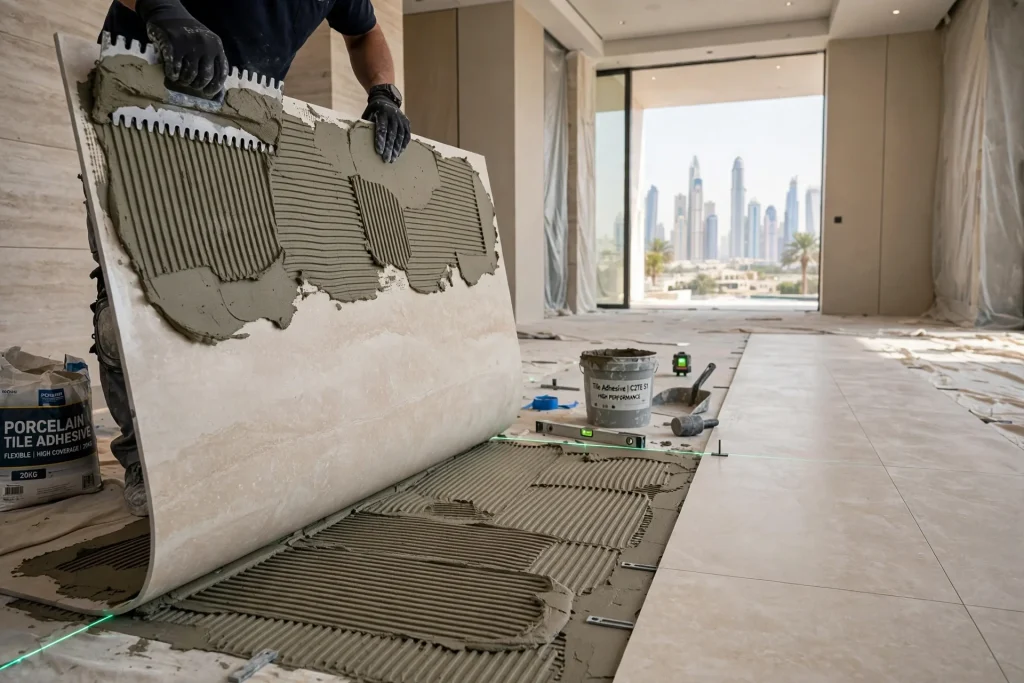
Large-format tile installation may require appropriate adhesive application methods, careful handling and sufficient mortar coverage. Depending on tile size and project requirements, installers may use techniques such as back-buttering in combination with the correct trowel application.
The objective is to create strong and consistent contact between the tile and substrate while maintaining the intended finished level.
Tile Adhesive Affects Levelling
Tile adhesive is not simply a bonding material. Its application can influence the final position of each tile.
The adhesive should be selected according to the tile type, substrate, installation location and manufacturer requirements. Different applications may require different adhesive characteristics.
Uneven adhesive thickness can result in tiles sitting at different heights. Applying excessive adhesive in an attempt to compensate for a significantly uneven substrate can also create problems.
Proper substrate preparation should therefore be completed before adhesive is used for final positioning.
How Tile Levelling Systems Work
Tile levelling systems are designed to help adjacent tiles remain aligned while the adhesive sets.
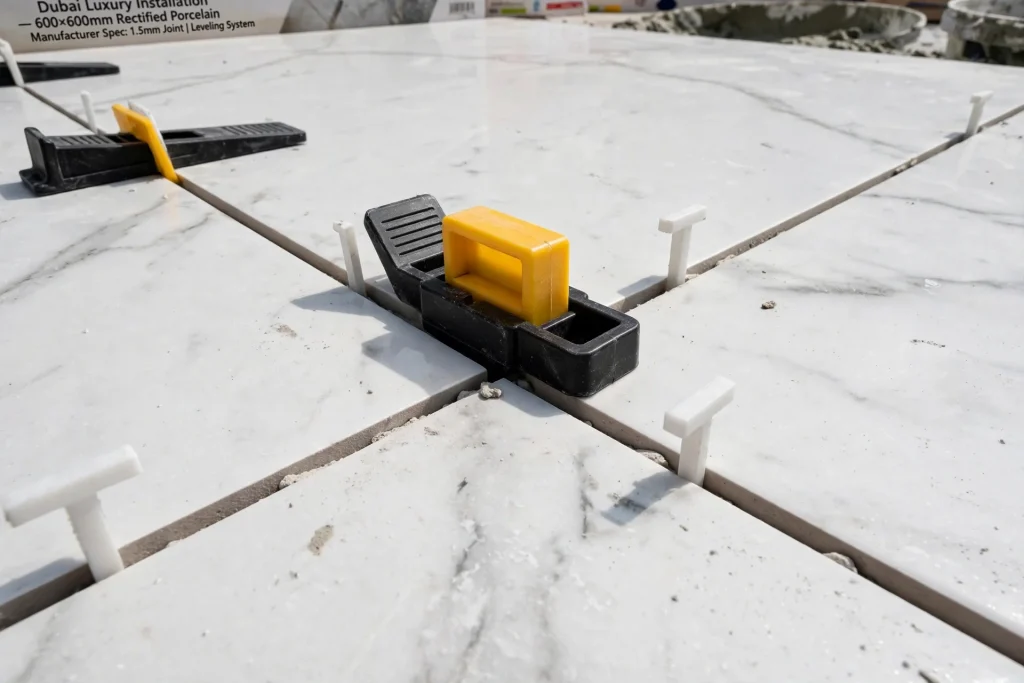
A common system consists of clips placed beneath or between tiles and wedges that apply controlled pressure across the tile edges.
The system helps reduce height differences between neighbouring tiles. However, it does not eliminate the need for proper installation techniques.
Levelling clips cannot compensate for a severely uneven substrate, incorrect adhesive selection or inappropriate tile installation. They are an installation aid rather than a substitute for professional preparation.
Consistent Grout Joints Matter
Proper levelling works together with consistent grout joints. The joint width should be determined according to the tile type, dimensions, design requirements and manufacturer recommendations.
Uneven joints can make a finished floor appear poorly installed even when the individual tiles are relatively flat.
Tile spacers or suitable levelling components can help maintain consistent spacing. The installer should also account for tile dimensional variation and the selected installation pattern.
Rectified porcelain tiles can create a particularly clean appearance, but their precise visual character means installation tolerances can become more noticeable.
Levelling in Bathrooms and Wet Areas
Bathrooms require careful coordination between tile installation, floor falls, waterproofing and drainage.
A shower floor, for example, may need a controlled slope toward the drain. The surface should not simply be made perfectly horizontal because water needs to flow toward the drainage point.
The objective is to achieve the required drainage slope while keeping individual tiles properly aligned and minimizing unwanted lippage.
Waterproofing membranes, floor drains, corners, penetrations and movement joints should also be considered as part of the complete wet-area installation.
Tile Levelling on Walls
Levelling is equally important for wall tiles. Uneven wall tiles can become particularly visible when artificial or natural light strikes the surface at an angle.
Large-format wall tiles require a sufficiently flat wall substrate. Bathrooms, kitchens, hotel bathrooms and feature walls may all require careful alignment.
Wall tiles also need appropriate support during installation, particularly where tile dimensions or weight make movement possible before the adhesive cures.
Why Levelling Matters for Natural Stone
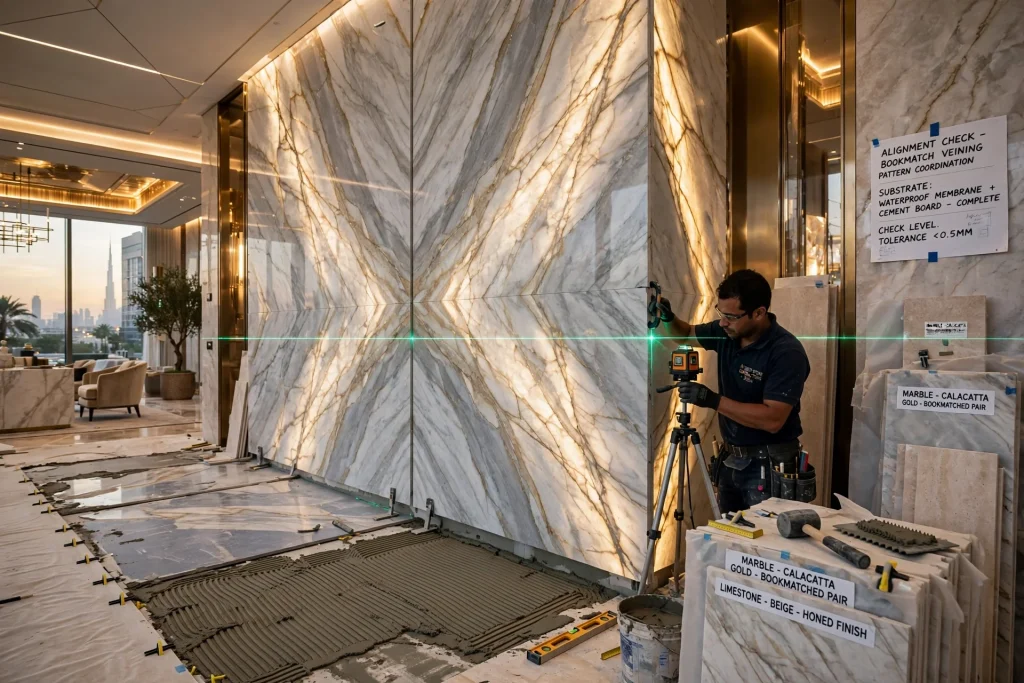
Natural stone materials such as marble, limestone and other stone products require careful installation because their appearance can vary according to veining, thickness and surface finish.
Stone tiles may require additional substrate preparation and installation considerations depending on the material.
In luxury Dubai villas, hotels and premium commercial interiors, even small alignment problems can be highly noticeable because large stone surfaces are often illuminated with architectural lighting.
The installer must therefore coordinate tile alignment with the overall design pattern rather than treating each tile as an isolated piece.
Tile Levelling and Floor Transitions
Transitions between different floor finishes require accurate planning. A tiled floor may meet vinyl, timber, carpet, stone or another flooring material.
If tile thickness, adhesive depth and substrate levels are not properly coordinated, the transition can create an unwanted step.
Doorways, bathrooms, kitchens and open-plan living areas are common locations where floor transitions need particular attention.
The finished floor level should be considered during the design and preparation stage, especially when multiple floor finishes are being installed.
Movement Joints Should Not Be Ignored
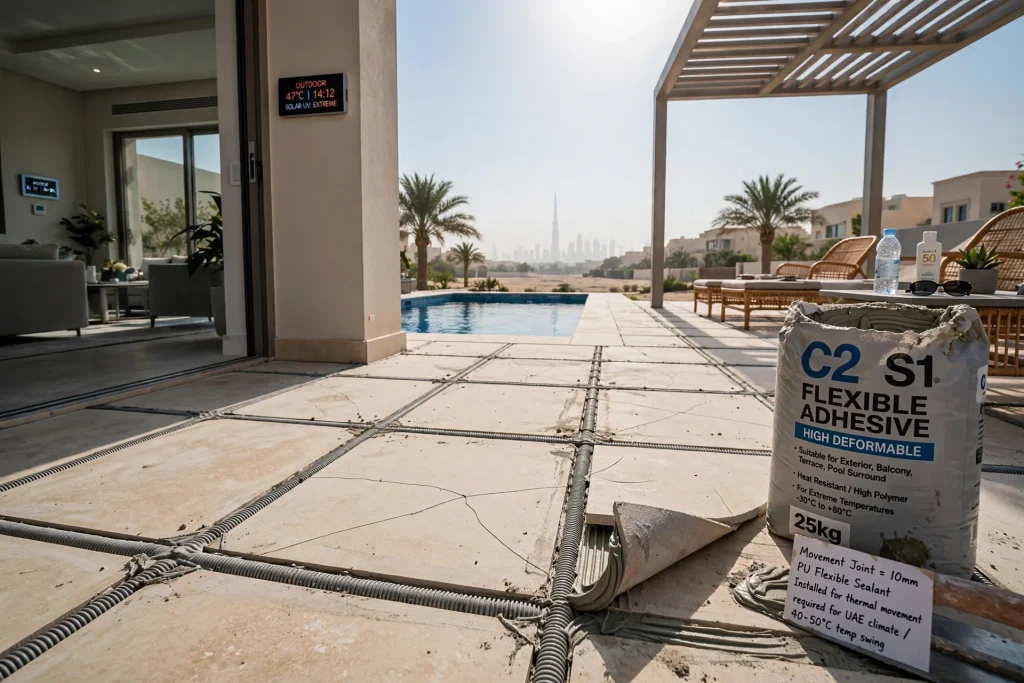
Large tiled surfaces can experience movement caused by temperature changes, structural movement and other factors.
Movement joints and perimeter joints allow controlled movement and can help reduce stress within the tiled installation.
The exact joint requirements depend on the substrate, environment, tile system and project specifications.
In large commercial spaces and expansive residential areas, movement planning should form part of the installation design rather than being treated as an afterthought.
Tile Levelling in Dubai’s Climate
The UAE’s climate creates demanding conditions for buildings and construction materials. High temperatures, strong solar exposure and significant temperature changes between indoor and outdoor environments can influence building materials.
Exterior tiled areas such as balconies, terraces, pool surrounds and outdoor entertainment spaces require appropriate material selection and installation methods.
Interior spaces also experience substantial differences between conditioned indoor environments and outdoor temperatures.
Proper substrate preparation, adhesive selection, movement detailing and installation practices are therefore important for long-term tile performance.
Tile Installation in Dubai Villas
Dubai villas often feature large tiled areas across living rooms, kitchens, bathrooms, entrances, terraces and outdoor spaces.
Large open-plan floors can make alignment highly visible because long grout lines extend across substantial areas.
In communities such as Palm Jumeirah, Jumeirah, Emirates Hills, Arabian Ranches and Dubai Hills Estate, premium residential interiors may use large-format porcelain, marble-look tiles or natural stone.
Accurate tile levelling helps these materials achieve the clean architectural appearance expected from high-end residential interiors.
Tile Levelling for Dubai Apartments
Apartments in Downtown Dubai, Dubai Marina, Business Bay and Jumeirah Lake Towers often have more limited floor areas, but that does not make levelling less important.
Compact rooms can actually make installation imperfections easier to notice because viewers are closer to walls and floor surfaces.
Bathrooms, kitchens, corridors and open-plan living areas all benefit from consistent tile alignment and properly planned transitions.
Tile Levelling in Commercial Properties
Commercial environments often experience significantly higher foot traffic than residential properties. Retail stores, offices, restaurants, hotels and public spaces require flooring that is both visually consistent and suitable for daily use.
Poorly installed tiles can become damaged or create maintenance issues when exposed to heavy traffic, furniture movement and cleaning equipment.
Commercial tile installation should therefore consider substrate preparation, adhesive selection, grout, movement joints, expansion conditions and maintenance requirements.
Areas such as Downtown Dubai, Business Bay, Dubai International Financial Centre (DIFC) and Dubai Design District contain many commercial interiors where flooring forms an important part of the overall architectural appearance.
Tile Levelling for Retail Shops
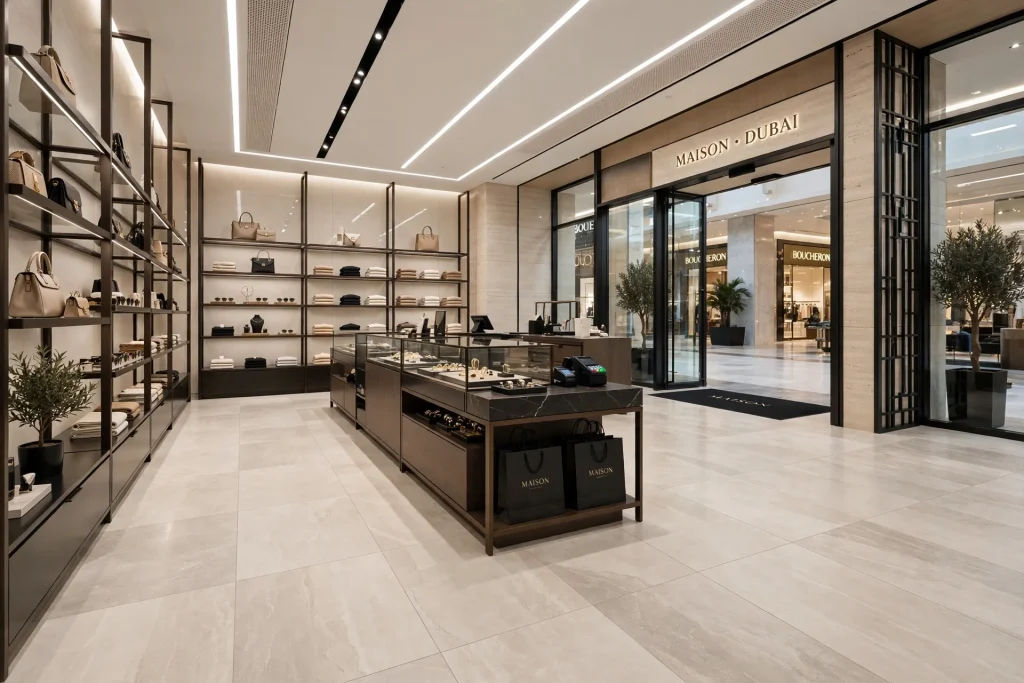
Retail shops require flooring that complements displays, lighting and customer movement.
Uneven tile surfaces can become more noticeable under strong retail lighting, particularly when linear or directional fixtures illuminate the floor.
Large-format tiles can create a seamless visual appearance, but their installation requires accurate alignment.
Retail floor layouts should also coordinate tile joints with shelving, counters, entrances and major architectural elements whenever possible.
Tile Levelling in Hotels and Hospitality Spaces
Hotels use tile extensively in lobbies, corridors, bathrooms, restaurants, kitchens and guest areas.
Because guests encounter these surfaces at close range, inconsistent grout lines and visible lippage can negatively affect the appearance of the interior.
Hospitality projects also require coordination between tile installation and other trades, including joinery, lighting, plumbing, waterproofing and HVAC systems.
Accurate setting-out before installation can reduce conflicts between tile patterns and architectural features.
Common Tile Levelling Mistakes
One of the most common mistakes is attempting to use tile adhesive to compensate for a severely uneven substrate.
Another is assuming that levelling clips can solve every installation problem. Levelling systems are useful tools, but they cannot correct poor substrate preparation.
Other mistakes include inconsistent grout joints, inadequate adhesive coverage, ignoring movement joints, installing tiles over unsuitable surfaces and failing to plan floor transitions.
Using inappropriate cleaning methods before adhesive application can also affect bonding.
How Professionals Check Tile Alignment
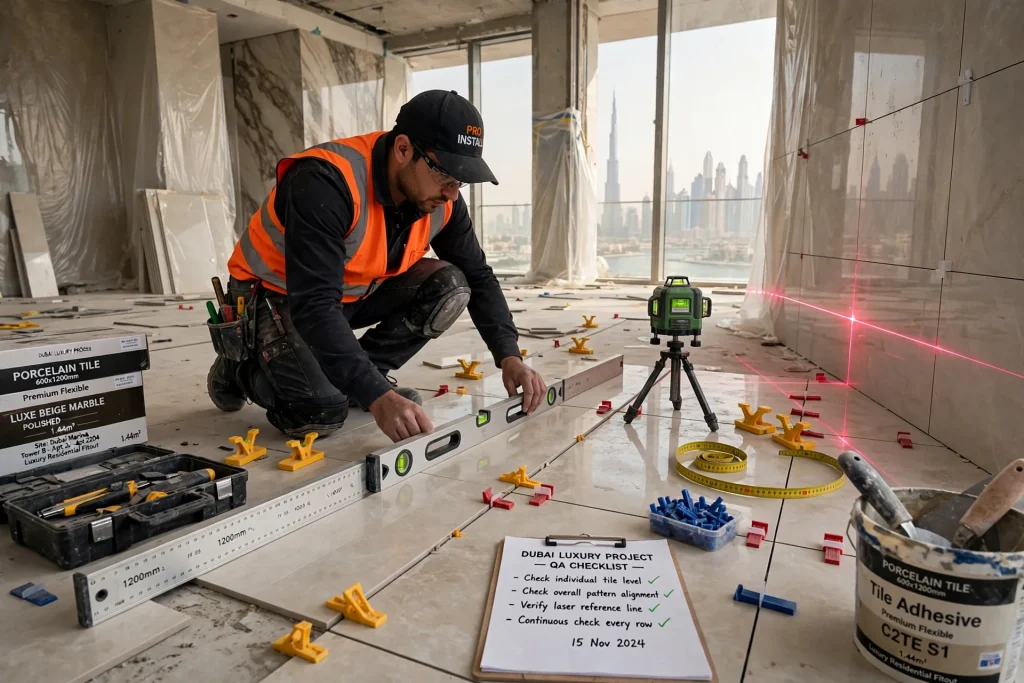
Professional installers use appropriate measuring and alignment tools during installation. Depending on the project, these may include spirit levels, straightedges, laser levels, measuring equipment, spacers and tile levelling systems.
The installer checks both individual tiles and the overall pattern.
Long straightedges can help identify height differences across several tiles, while laser levels can assist with establishing reference lines.
The process should be continuous rather than performed only after the entire floor has been installed.
Quality Control Before Grouting
Tiles should be checked before grout is applied. This is an important opportunity to identify alignment problems, damaged tiles, inconsistent joints or other installation defects.
Once grout has been applied and the installation is completed, correcting a serious problem becomes more difficult.
The installer should verify the tile pattern, joint consistency, surface alignment and transitions before proceeding with final finishing.
Professional Tile Installation Adds Long-Term Value
Professional tile installation is about more than achieving an attractive pattern. Proper preparation and levelling can contribute to durability, easier cleaning, consistent appearance and better integration with other building finishes.
For Dubai residential and commercial projects, working with an experienced Professional Tile Installation Service can help ensure that substrate preparation, tile adhesive, levelling, grout, waterproofing and finishing are considered together.
The exact installation method should always be selected according to the tile manufacturer’s recommendations and the specific requirements of the project.
Frequently Asked Questions
What is tile lippage?
Tile lippage is the height difference between adjacent tiles. Excessive lippage can affect appearance, cleaning and safe movement across a finished floor.
Can a tile levelling system fix an uneven floor?
No. Levelling systems can help align adjacent tiles, but they cannot replace proper substrate preparation. Significant high and low areas should be corrected before tile installation.
Are tile levelling clips necessary?
They are not required for every installation, but they can be useful for controlling height differences and maintaining alignment, particularly with large-format tiles.
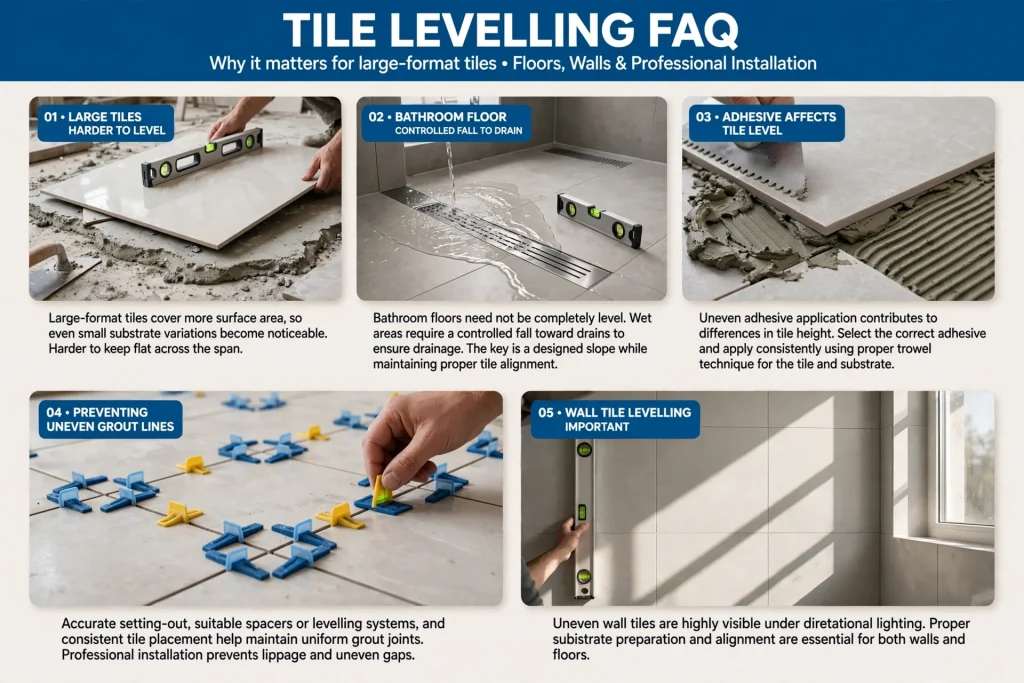
Why are large tiles harder to level?
Large-format tiles cover more surface area, so substrate variations can become more noticeable. They also require careful handling, adhesive coverage and alignment.
Should bathroom floors be completely level?
Not necessarily. Wet areas may require controlled falls toward drains. The important requirement is to achieve the designed drainage slope while maintaining proper tile alignment.
Does tile adhesive affect tile level?
Yes. Uneven adhesive application can contribute to differences in tile height. The correct adhesive and application method should be selected for the tile and substrate.
How can I prevent uneven grout lines?
Accurate setting-out, suitable spacers or levelling systems, consistent tile placement and professional installation can help maintain uniform grout joints.
Is tile levelling important for wall tiles?
Yes. Uneven wall tiles can be highly visible, particularly under directional lighting. Proper substrate preparation and alignment are important for both walls and floors.
Conclusion
Proper tile levelling is a fundamental part of professional tile installation. It helps control lippage, maintain consistent grout joints, improve visual alignment and create a finished surface that is comfortable and practical to use.
The process starts before the first tile is installed. Substrate preparation, waterproofing, adhesive selection, tile dimensions, movement joints, floor transitions and installation techniques all contribute to the final result.
For Dubai homes, apartments, hotels, offices, retail stores and commercial properties, accurate tile installation is particularly valuable where large-format porcelain, marble-look tiles and premium finishes are used. Whether a project is located in Downtown Dubai, Dubai Marina, Business Bay, Jumeirah, Dubai Hills Estate or Palm Jumeirah, proper planning and professional workmanship can make a significant difference to the finished surface.