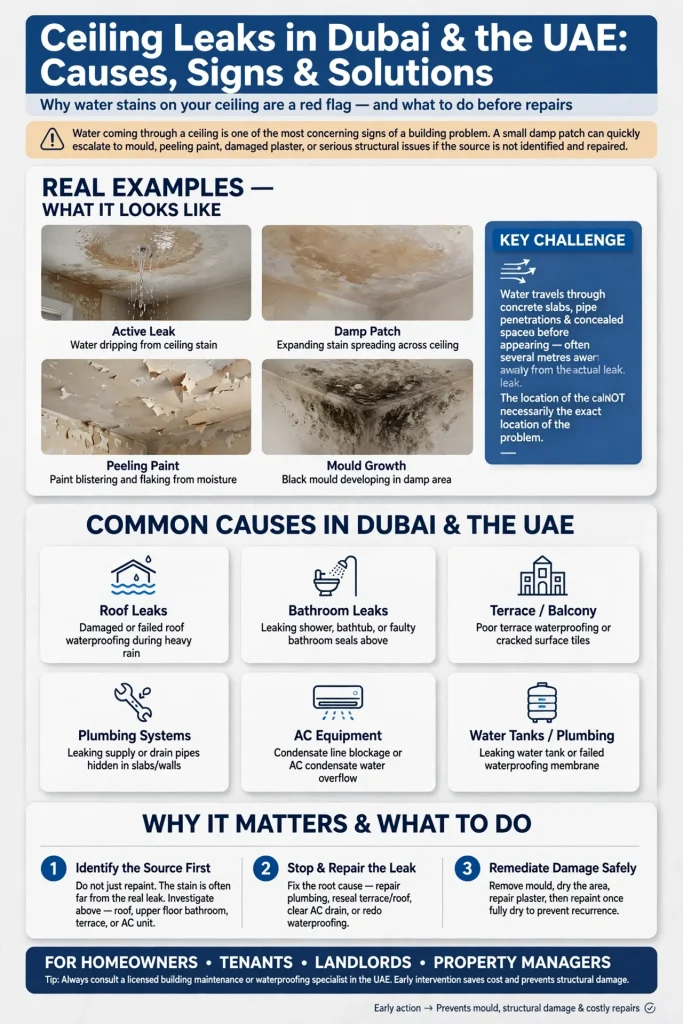
Water coming through a ceiling is one of the most concerning signs of a building problem. A small damp patch can quickly become a larger stain, peeling paint, damaged plaster, mould growth or even a serious structural issue if the source is not identified and repaired. In Dubai and across the UAE, ceiling leaks can originate from roofs, bathrooms, terraces, plumbing systems, air-conditioning equipment, water tanks or waterproofing failures.
Finding the source is not always straightforward. Water can travel through concrete slabs, pipe penetrations and concealed spaces before appearing several metres away from the original leak. This means the location of the ceiling stain is not necessarily the exact location of the problem.
For homeowners, tenants, landlords and property managers, understanding the common causes can help identify the right solution before cosmetic repairs are carried out.
What Does Water Coming Through the Ceiling Usually Mean?
Water appearing on a ceiling usually indicates that moisture has entered from an area above or from a concealed building system. The source may be directly above the affected area, but it can also come from an adjacent bathroom, terrace, roof, pipe or air-conditioning system.
The appearance of the damage can provide useful clues. A fresh wet patch may indicate an active leak, while a brown or yellow stain may suggest that water has entered repeatedly over time. Peeling paint, bubbling plaster and mould can indicate prolonged moisture exposure.
The first priority should always be identifying and stopping the source. Painting over a damp ceiling without fixing the underlying problem generally provides only a temporary cosmetic improvement.
Common Causes of Ceiling Water Leaks
There are several possible causes of ceiling water penetration in residential and commercial properties. The most common include plumbing leaks, failed waterproofing, bathroom drainage problems, roof or terrace leaks, air-conditioning condensate, water tank issues and cracks or construction defects.
The correct diagnosis depends on where the ceiling is located, whether the leak appears continuously or intermittently, and what building services are positioned above it.
In Dubai properties, air-conditioning-related moisture and waterproofing problems can be particularly important because buildings operate cooling systems for long periods and many properties include roof terraces, balconies, swimming pools and extensive wet areas.
Plumbing Pipe Leaks Above the Ceiling
A leaking water supply pipe is one of the most common explanations for unexplained ceiling moisture.
Concealed pipes may run through walls, floors and ceiling voids. A damaged joint, corroded fitting, cracked pipe or failed connection can allow water to escape into surrounding building materials.
The leak may become more noticeable when someone uses a bathroom, kitchen or washing machine above the affected room. In other cases, a pressurised water line may leak continuously.
Professional plumbers can use inspection methods to determine whether a concealed pipe is losing water. Pressure testing, moisture measurements and selective access can help narrow down the location without unnecessarily opening large sections of the ceiling.
Bathroom Leaks Through the Floor
Bathrooms are another major source of ceiling leaks, especially when the affected ceiling is directly below an upstairs bathroom.
Water can enter the floor assembly through damaged waterproofing, failed shower joints, cracks around floor drains, poorly sealed pipe penetrations or deteriorated grout and sealant.
A bathroom does not necessarily need a visible plumbing pipe failure for water to reach the ceiling below. Repeated exposure to water can gradually exploit weaknesses in waterproofing or joints.
If the ceiling below becomes damp after someone showers or uses a bathroom, the bathroom above should be inspected carefully.
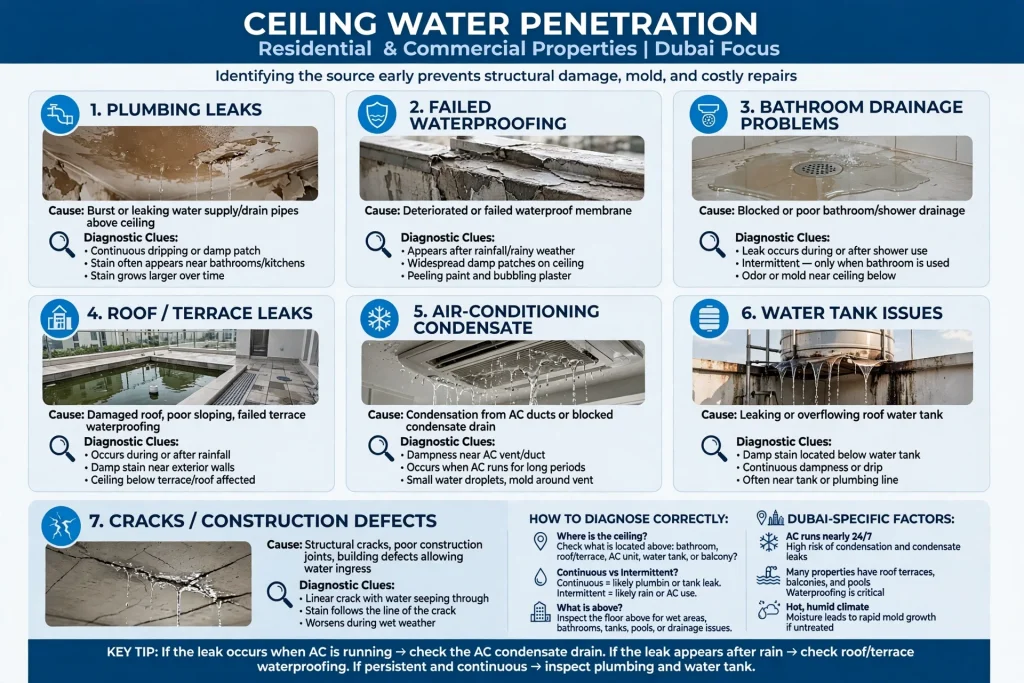
Failed Bathroom Waterproofing
Waterproofing is designed to prevent moisture from penetrating building elements. When a waterproofing system fails, water can move into the substrate and eventually appear on the ceiling below.
Common failure points include shower areas, floor-to-wall junctions, drainage points, pipe penetrations and corners.
Older bathrooms may also have waterproofing systems that have deteriorated after years of use or previous renovation work.
Repairing the visible ceiling without addressing the bathroom waterproofing will not solve the problem. The waterproofing layer, drainage details and surface finishes should be assessed to determine the appropriate repair.
Roof Waterproofing Problems
If the affected ceiling is on the top floor, the roof should be one of the first areas investigated.
Roof waterproofing protects the building from rainwater and other environmental exposure. When membranes, coatings, joints or flashing details deteriorate, water can enter the roof assembly.
Even though Dubai has a relatively dry climate compared with many regions, heavy rainfall can occur during certain periods. A roof with weak waterproofing may remain apparently problem-free for long periods and then leak during significant rainfall.
Water may also remain trapped within roof layers before eventually reaching an interior ceiling.
Terrace and Balcony Water Leakage
Balconies and terraces are exposed to weather and require proper drainage and waterproofing.
Water can enter through cracked tiles, deteriorated grout, failed movement joints, damaged waterproofing membranes or poorly sealed edges. Blocked floor drains can also cause water to accumulate rather than drain away efficiently.
A balcony leak may not appear directly underneath the balcony. Moisture can travel horizontally through concrete slabs and surrounding construction materials before becoming visible indoors.
For Dubai villas and apartments, terraces and balconies should therefore be inspected whenever unexplained ceiling moisture appears near external walls or doors.
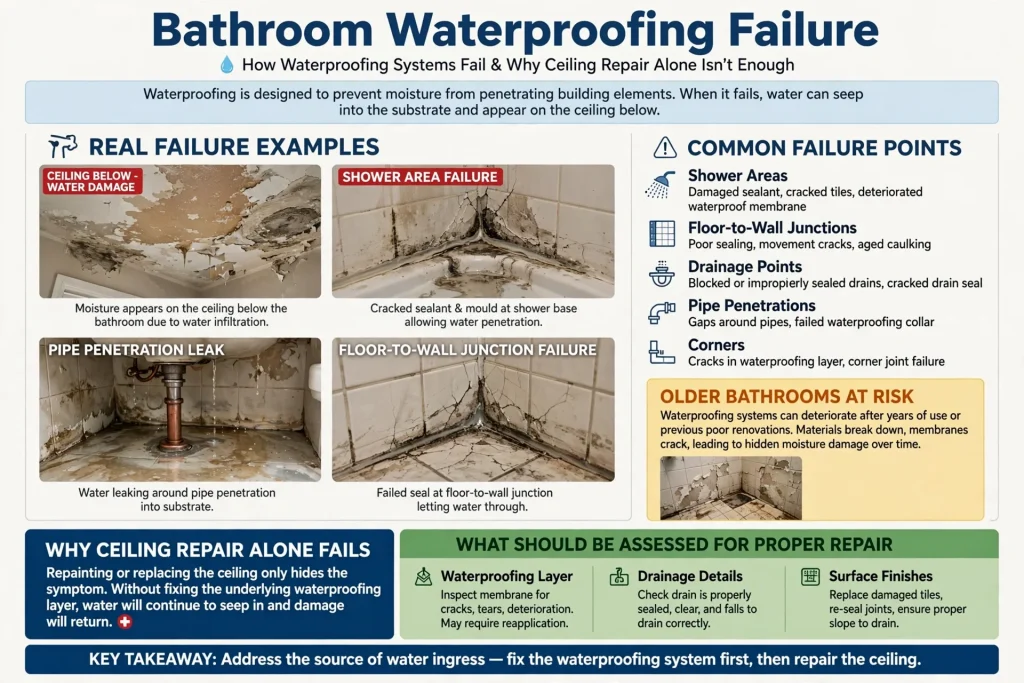
Air-Conditioning Condensate Leaks
Air-conditioning systems are another important source of ceiling moisture in Dubai.
During normal operation, air-conditioning equipment produces condensate as warm humid air passes over a cold cooling coil. This water should be collected and drained safely.
Problems can occur when a condensate drain becomes blocked, disconnected, damaged or incorrectly installed. A drain pan may also develop a problem, allowing water to overflow.
Ceiling leaks associated with air-conditioning often appear near indoor units, fan coil units, ductwork or concealed AC equipment.
Because air conditioning is used extensively in Dubai, an unexplained ceiling stain near an AC system should not automatically be assumed to be a waterproofing issue.
Water Tank Leaks
Water storage tanks can also contribute to water damage when located above occupied spaces.
A damaged tank, faulty connection, overflowing system or leaking pipe can release significant quantities of water. In some cases, the problem may become obvious very quickly.
Water tanks should be inspected as part of a broader building maintenance programme, particularly where tanks, pumps and associated pipework are installed on roofs or service areas.
Any leak involving a large water storage system should be addressed promptly because continuous water exposure can damage ceilings, walls, insulation and other building components.
Drainage Pipe and Wastewater Leaks
Wastewater pipes can develop leaks around joints, connections and damaged sections. Unlike clean water supply leaks, drainage problems may also produce unpleasant odours.
A ceiling stain near a bathroom, kitchen or utility area could therefore be associated with a drainage pipe rather than a water supply line.
Blocked drains can also increase pressure and cause water to escape through weak connections.
Professional inspection can help determine whether the problem involves a supply pipe, drainage pipe or another building system.
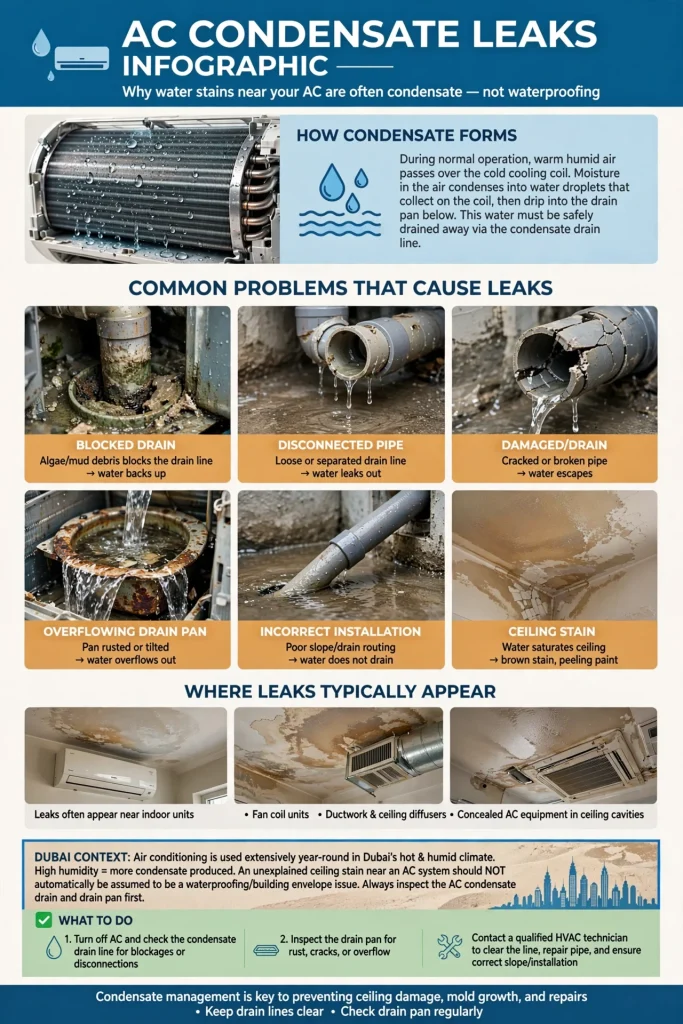
Cracks in Concrete Slabs
Concrete is strong, but cracking can occur for several reasons, including shrinkage, thermal movement, structural movement, settlement and construction-related factors.
Not every crack causes a leak. However, cracks can become pathways for water when they occur in exposed terraces, roofs, balconies or wet areas.
The width, location, pattern and movement of a crack should be assessed before deciding how it should be repaired.
Simply filling a visible crack from the interior may not prevent future water penetration if the source remains exposed above the slab.
Poorly Sealed Pipe Penetrations
Pipes frequently pass through floors, walls and slabs. These penetrations require proper sealing to prevent water from moving around the pipe.
Bathrooms, kitchens, balconies and roofs contain numerous penetrations for plumbing, drainage, electrical services and mechanical equipment.
If a penetration is inadequately sealed or the sealant has deteriorated, water can enter the surrounding construction.
These areas should receive particular attention during leak investigations.
Condensation and High Indoor Humidity
Not every ceiling moisture problem is caused by a water leak.
Condensation can form when warm humid air contacts a cooler surface. In air-conditioned spaces, poorly insulated pipes, ducts or building surfaces can become cold enough for moisture to accumulate.
Dubai’s hot climate means that indoor and outdoor temperature differences can be substantial. Poor insulation and ventilation can therefore contribute to condensation problems.
The pattern of moisture is important. Condensation may appear as widespread dampness or surface moisture rather than a concentrated water stain.
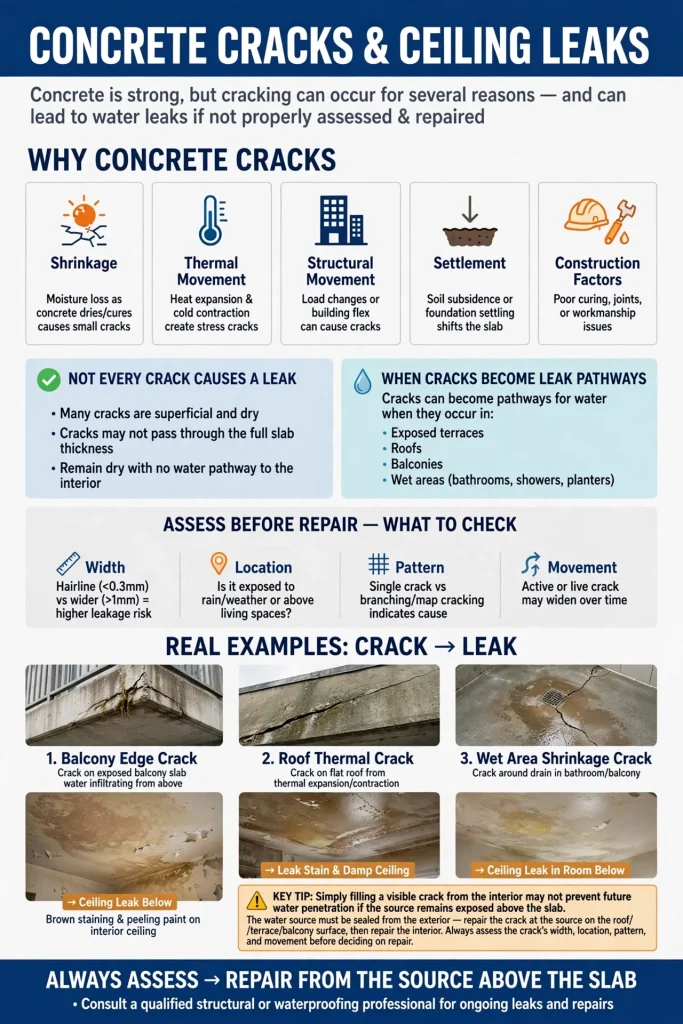
How to Identify Where the Leak Is Coming From
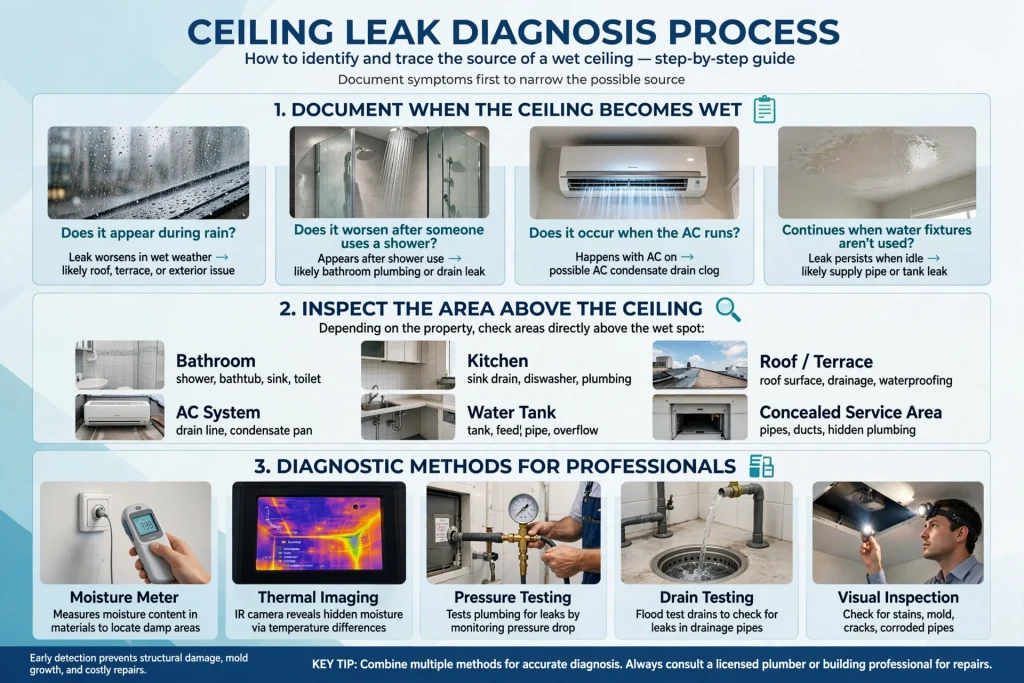
The first step is to document when the ceiling becomes wet.
Does the leak appear during rain? Does it become worse after someone uses a shower? Does it occur when the AC runs? Does it continue even when water fixtures are not being used?
These observations can help narrow the possible source.
The area above the ceiling should then be inspected. Depending on the property, this could include a bathroom, kitchen, roof, terrace, AC system, water tank or concealed service area.
Moisture meters, thermal imaging, pressure testing, drain testing and visual inspection can help professionals trace concealed moisture.
Why the Ceiling Leak Location Can Be Misleading
Water does not always travel vertically.
Concrete slabs and other building materials can allow water to move sideways before gravity eventually causes it to appear through the ceiling.
For example, a leak originating near a bathroom wall may travel along the slab before producing a stain several feet away.
This is why repairing only the area directly above the stain can result in repeated problems.
A proper diagnosis follows the moisture pathway rather than assuming the stain marks the exact source.
What Should You Do Immediately?
If water is actively entering the ceiling, protect furniture and electrical equipment below the affected area.
If water is close to a light fitting, electrical outlet or other electrical component, avoid touching the affected equipment and arrange appropriate professional assistance.
If the source is clearly associated with a fixture or appliance, stop using it where safe to do so.
For significant leaks, the relevant water supply may need to be isolated.
The affected ceiling should also be monitored for changes such as sagging, cracking, bubbling or increasing moisture.
Why You Should Not Simply Paint Over a Water Stain
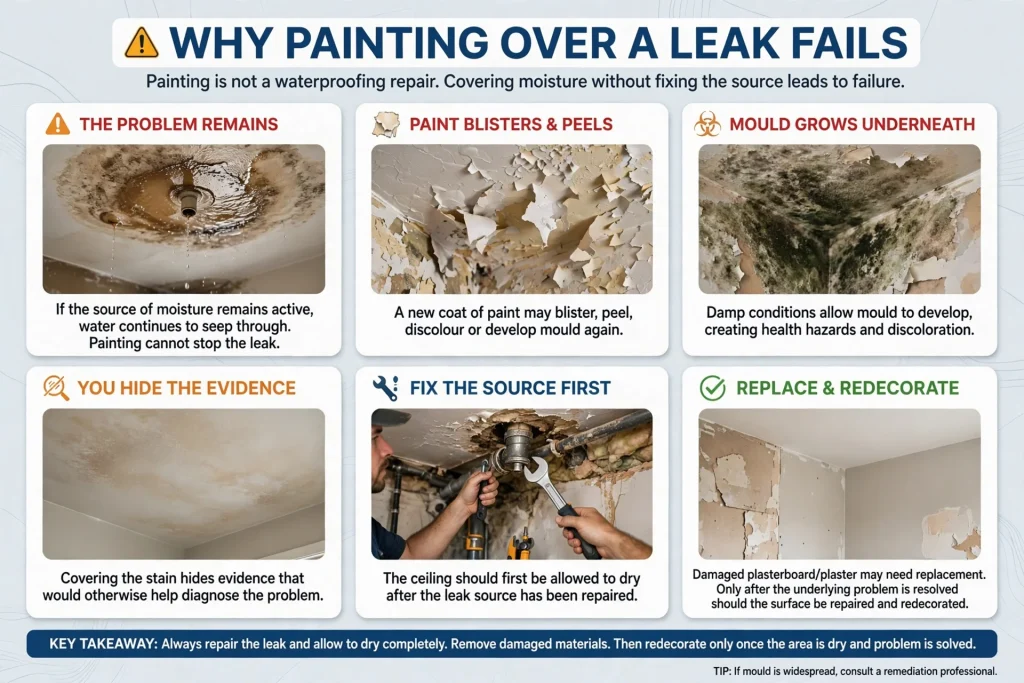
Painting is not a waterproofing repair.
If the source of moisture remains active, a new coat of paint may blister, peel, discolour or develop mould again.
More importantly, covering the stain can hide evidence that would otherwise help diagnose the problem.
The ceiling should first be allowed to dry after the leak source has been repaired. Damaged plasterboard, plaster or other materials may need replacement depending on the extent of water exposure.
Only after the underlying problem has been resolved should the surface be repaired and redecorated.
When Is Waterproofing the Right Solution?
Waterproofing is appropriate when moisture is entering through a roof, terrace, balcony, bathroom, wet area or another exposed surface because the protective waterproofing system has failed or is inadequate.
The solution may involve removing damaged finishes, preparing the substrate, repairing cracks, applying a suitable waterproofing system and restoring the final surface.
Different areas require different waterproofing approaches. A roof terrace may require a different system from a bathroom shower area.
A professional Main Waterproofing Service can assess the affected area and determine whether waterproofing repair, membrane replacement, joint treatment or another solution is appropriate.
Waterproofing Solutions for Dubai Properties
Dubai properties can contain a combination of flat roofs, terraces, balconies, swimming pools, wet rooms and external areas.
The right waterproofing system depends on the substrate, exposure, movement, drainage requirements and final finish.
Common technologies include liquid-applied waterproofing systems, cementitious waterproofing, bituminous membranes, polyurethane systems and other specialised membranes.
The system should be selected according to the application rather than using the same product everywhere.
Drainage is equally important. Even a high-quality waterproofing system can experience problems if water is allowed to remain ponded for long periods.
Ceiling Damage After a Leak
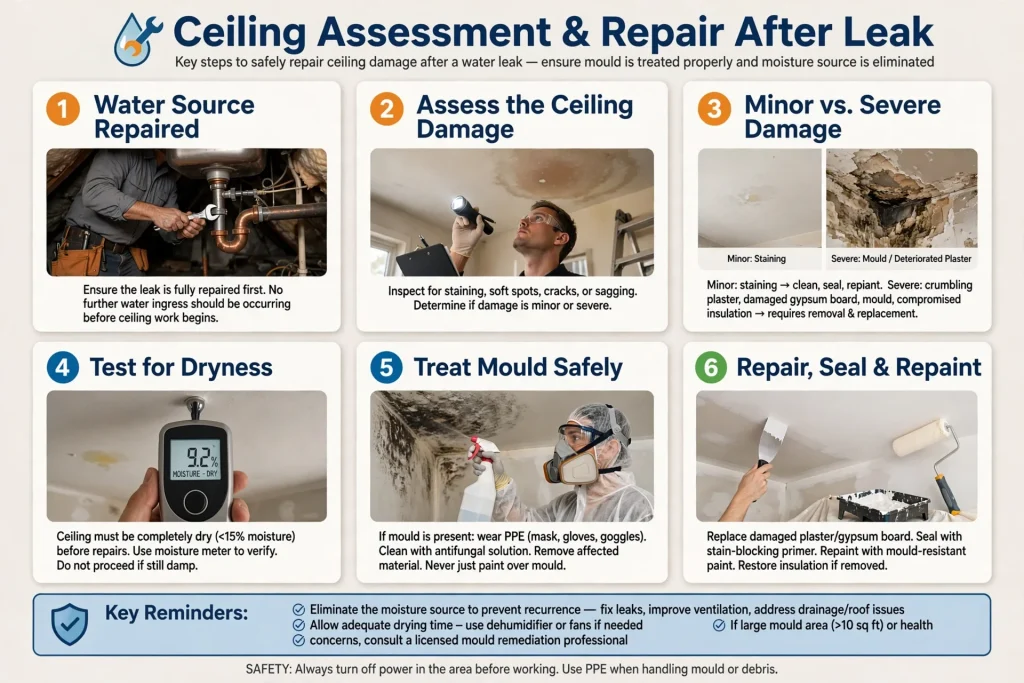
Once the water source has been repaired, the ceiling still needs to be assessed.
Minor staining may require cleaning, sealing and repainting. More severe damage can involve deteriorated plaster, damaged gypsum board, mould growth or compromised insulation.
The ceiling should be completely dry before finishing work begins.
If mould is present, it should be addressed appropriately rather than simply painted over. The source of moisture must also be eliminated to reduce the likelihood of recurrence.
Ceiling Leaks in Dubai Apartments
Apartment buildings introduce additional considerations because the source may be located in another unit or a shared building system.
A ceiling leak may originate from the apartment above, a common plumbing riser, AC equipment, a roof or another building service.
Tenants and owners should report persistent leaks to the relevant building management or maintenance team so that the source can be investigated.
In areas such as Downtown Dubai, Dubai Marina, Business Bay and Jumeirah Lake Towers, high-rise properties may involve complex shared mechanical and plumbing systems.
Ceiling Leaks in Dubai Villas
Villas can have multiple potential sources, including roof slabs, bathrooms, terraces, balconies, swimming pools, water tanks, external plumbing and AC equipment.
Properties in Dubai Hills Estate, Jumeirah, Arabian Ranches, Palm Jumeirah and Emirates Hills may have larger roof and outdoor areas that require regular waterproofing and drainage maintenance.
A preventive inspection can identify deteriorated sealants, blocked drains, cracks and other early warning signs before they develop into interior water damage.
Preventing Future Ceiling Water Damage
Preventive maintenance is usually less disruptive than emergency leak repair.
Roof and terrace drains should remain clear. Waterproofing membranes and exposed sealants should be inspected periodically. Bathroom joints should be checked for deterioration, while AC condensate drains should be maintained.
Water tanks, pumps and plumbing connections should also be inspected.
After heavy rainfall, homeowners and property managers should check roofs, terraces, balconies and ceilings for new signs of moisture.
Early detection can prevent a small waterproofing or plumbing issue from becoming a major interior repair.
How Often Should Waterproofing Be Inspected?
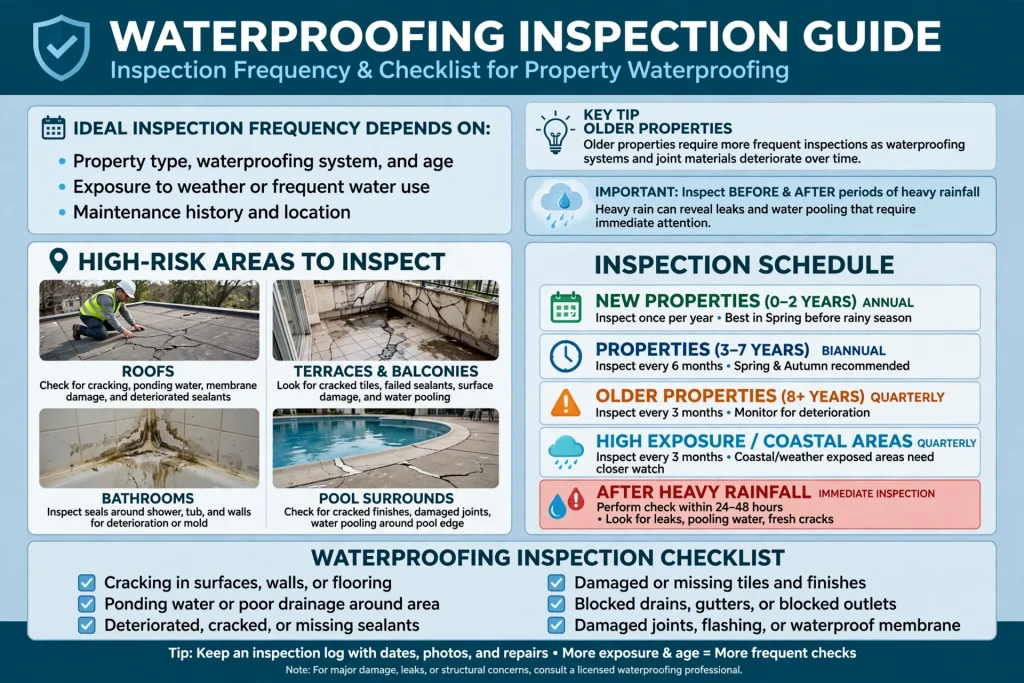
The ideal inspection frequency depends on the property, waterproofing system, age, exposure and maintenance history.
Areas exposed to weather or frequent water use generally deserve more attention. Roofs, terraces, balconies, bathrooms and swimming-pool surroundings should be checked for cracking, ponding water, deteriorated sealants and damaged finishes.
Older properties may require more frequent inspections because waterproofing systems and joint materials can deteriorate over time.
Regular inspection is particularly useful before and after periods of heavy rainfall.
Common Mistakes Homeowners Make
One of the most common mistakes is treating the visible ceiling stain as the problem rather than a symptom.
Another is repairing the ceiling before identifying the source. This can lead to repeated painting and plaster repairs without resolving the underlying moisture problem.
Using unsuitable sealants or waterproofing materials is another risk. A product that works in a small internal joint may not be appropriate for a roof or terrace exposed to movement and weather.
Ignoring small leaks is also risky. Minor moisture problems can gradually damage finishes and surrounding materials.
When Should You Call a Professional?
Professional assistance is recommended when the leak is persistent, concealed, recurring or associated with a roof, bathroom, plumbing system, AC unit or structural element.
You should also seek professional assessment if the ceiling is sagging, there is extensive staining, mould is present, water is near electrical fixtures or the source cannot be identified.
A professional inspection can reduce unnecessary demolition and help identify the correct repair method.
Frequently Asked Questions
Why is water coming through my ceiling?
Water can enter through leaking plumbing, failed bathroom waterproofing, roof or terrace damage, AC condensate drains, water tanks, drainage pipes, cracks or poorly sealed penetrations.
Why is my ceiling leaking when it has not rained?
A ceiling leak without rainfall may be associated with plumbing, bathroom drainage, AC condensate, water tanks or internal building services rather than the roof.
Can a bathroom upstairs cause a ceiling leak?
Yes. Failed waterproofing, damaged grout or sealant, leaking pipes, drainage problems and poorly sealed floor penetrations can allow bathroom water to reach the ceiling below.
Can AC cause water to leak through the ceiling?
Yes. A blocked or damaged condensate drain, overflowing drain pan or other AC drainage problem can cause water to enter the ceiling.
Does a ceiling stain always mean a serious structural problem?
Not necessarily. A stain can result from a relatively small plumbing or waterproofing leak. However, the source should be identified because prolonged moisture can damage building materials.
Should I paint over a water-damaged ceiling?
No. The moisture source should be repaired first, and the ceiling should be allowed to dry. Damaged materials should then be repaired or replaced before repainting.
How do I know whether a ceiling leak is from the roof?
Roof-related leaks often become more noticeable after rainfall and may appear on ceilings near the top floor. However, water can travel through slabs, so professional inspection may be necessary to confirm the source.
Is waterproofing enough to stop every ceiling leak?
No. Waterproofing is appropriate for water penetration through roofs, terraces, balconies and wet areas, but plumbing, drainage and AC-related leaks require different repairs.
Conclusion
Water coming through a ceiling should never be treated as a purely cosmetic problem. The visible stain is usually a symptom of another issue, and the actual source may be located above, beside or even some distance away from the damaged area.
In Dubai properties, common causes include plumbing leaks, bathroom waterproofing failures, roof and terrace problems, AC condensate drainage, water tanks, drainage pipes, balcony leakage and poorly sealed penetrations.
The most effective approach is to identify the source first, stop the water entry, allow affected materials to dry and then repair the ceiling. Where waterproofing has failed, the underlying system should be properly assessed rather than simply covering the visible damage.
For homeowners and property managers across Dubai, regular inspection of roofs, bathrooms, terraces, balconies, plumbing and AC drainage can help detect problems early and protect the property from costly water damage.