Interior design is about much more than creating visually appealing spaces. Every successful residential or commercial interior depends on a strong structural foundation that protects finishes, furnishings, and building materials from long-term damage. Elegant marble flooring, premium wooden finishes, decorative wall panels, gypsum ceilings, luxury wallpapers, custom cabinetry, and designer lighting can quickly lose their value if moisture penetrates the building structure. This is why professional waterproofing has become an essential part of every modern interior fit-out project.
In Dubai, waterproofing is particularly important because buildings experience extreme temperatures, coastal humidity, occasional heavy rainfall, and continuous thermal expansion throughout the year. These environmental conditions place significant stress on reinforced concrete structures, waterproof membranes, sealants, expansion joints, and finishing materials. Without an effective waterproofing system, moisture can gradually enter walls, ceilings, balconies, bathrooms, kitchens, and foundations, causing structural deterioration as well as expensive interior repairs.
Whether renovating a luxury villa in Palm Jumeirah, designing an apartment in Dubai Marina, fitting out an office in Business Bay, upgrading a hotel in Downtown Dubai, or completing a retail project in DIFC, interior designers should consider waterproofing as one of the earliest stages of construction rather than a final repair solution. Professional waterproofing protects the building envelope, preserves interior finishes, improves indoor air quality, and significantly extends the lifespan of the completed project.
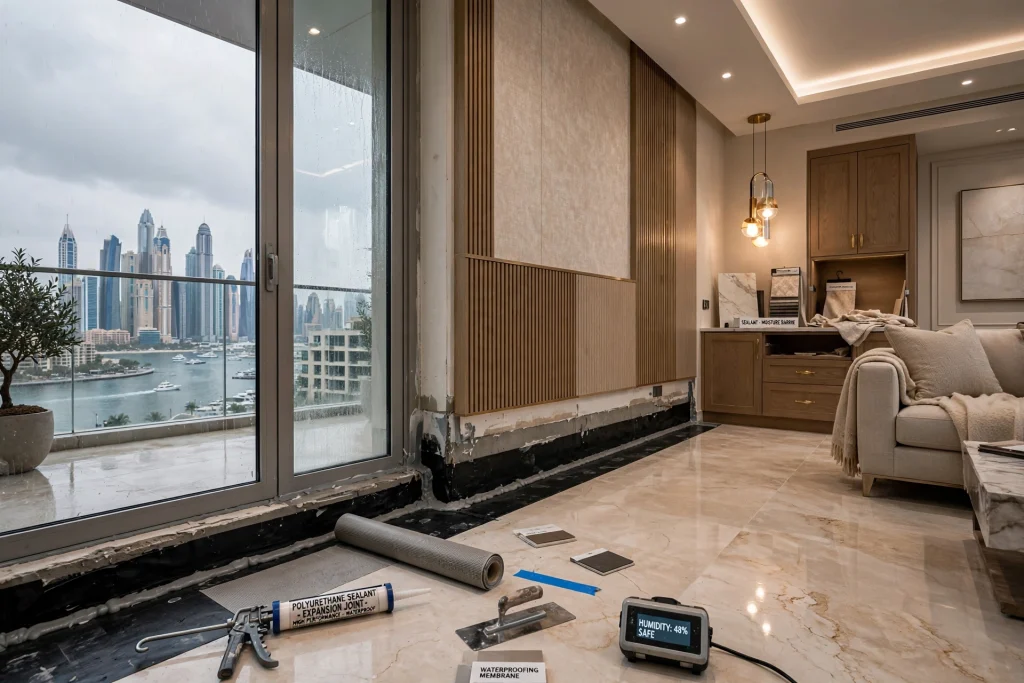
Interior Design Begins with Structural Protection
Many people believe interior design starts with furniture selection, colour palettes, flooring materials, and decorative finishes. In reality, successful interiors begin by ensuring the underlying structure is protected against moisture intrusion.
Concrete slabs, retaining walls, balconies, podium decks, bathrooms, kitchens, roofs, basements, and wet areas all require effective waterproofing before decorative finishes are installed. If water penetrates these structural elements, it can migrate beneath floor tiles, behind wall cladding, inside gypsum partitions, and through ceiling systems without immediately becoming visible.
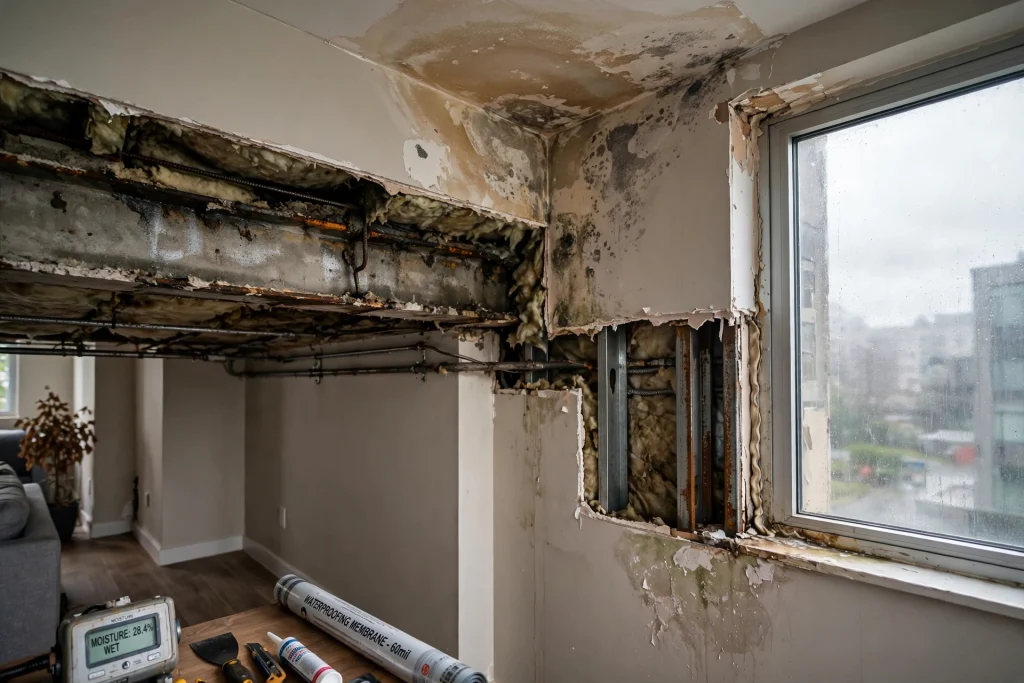
As moisture accumulates over time, property owners may begin noticing bubbling paint, cracked plaster, warped wooden flooring, damaged cabinetry, stained ceilings, loose ceramic tiles, peeling wallpaper, mould growth, and unpleasant indoor odours. These issues often require extensive demolition of completed interior work simply to access the underlying waterproofing failure.
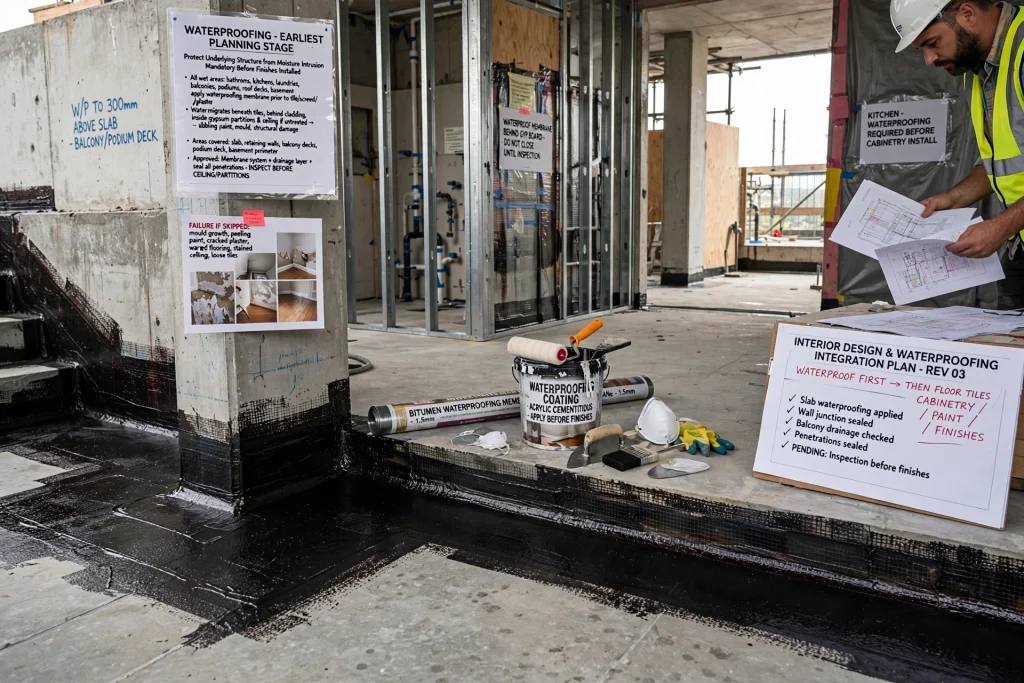
By integrating waterproofing into the earliest planning stages, interior designers help ensure that finished spaces remain attractive, functional, and durable for many years.
Dubai’s Climate Demands Advanced Waterproofing Systems
Dubai presents one of the most demanding environments for modern construction. Summer temperatures regularly expose roof surfaces, balconies, terraces, and exterior walls to intense solar radiation and ultraviolet exposure. Reinforced concrete expands during the day and contracts as temperatures decrease, creating continual movement within the building structure.
Properties located in Dubai Marina, Bluewaters Island, Palm Jumeirah, Jumeirah Beach Residence, and other coastal communities also experience elevated humidity and airborne salt particles that accelerate corrosion when moisture reaches embedded steel reinforcement.
Occasional periods of heavy rainfall further test the integrity of waterproofing systems. Even though rainfall is relatively limited throughout the year, poorly protected roofs, podium decks, expansion joints, window perimeters, and balconies may allow significant water ingress during storms.
Professional waterproofing systems are specifically designed to withstand these environmental conditions while maintaining long-term flexibility, adhesion, and durability despite continuous thermal movement.
Waterproofing Protects Interior Finishes
Interior finishes represent one of the largest investments within any residential or commercial fit-out project. High-quality marble, porcelain tiles, engineered wood flooring, luxury vinyl flooring, acoustic wall panels, decorative plaster, premium paints, feature ceilings, stone cladding, and bespoke joinery all depend on a dry and stable building environment.
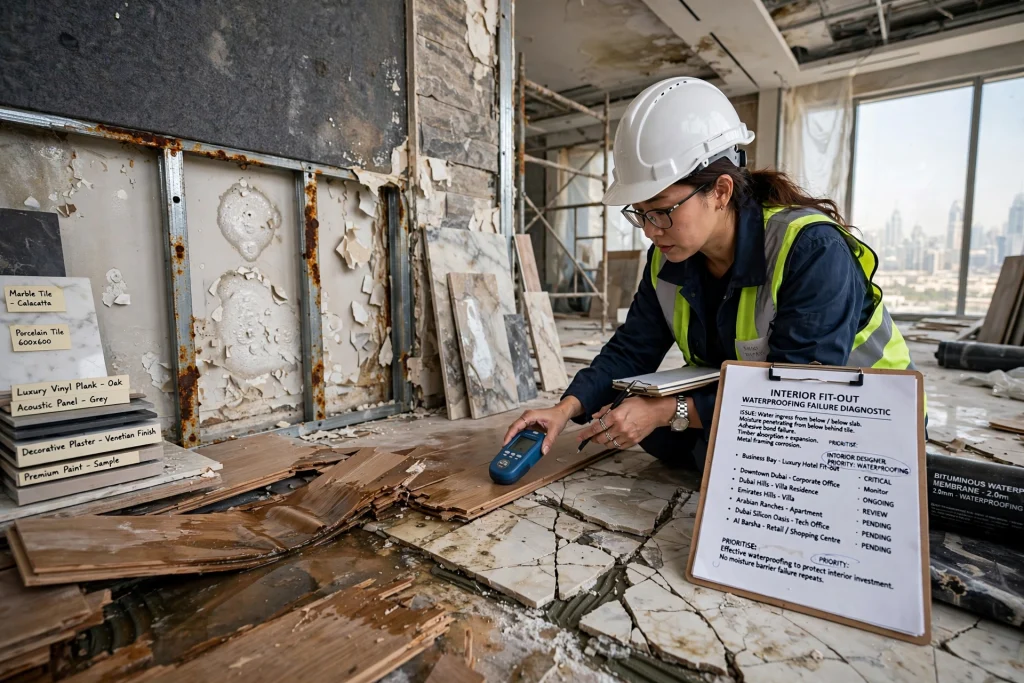
When waterproofing fails, moisture slowly penetrates these finishes from below or behind. Tile adhesive begins losing its bond, grout develops cracks, timber absorbs moisture and expands, decorative coatings blister, and metal framing systems become vulnerable to corrosion.
Luxury hotels, corporate offices, healthcare facilities, shopping centres, restaurants, villas, and apartment developments throughout Business Bay, Downtown Dubai, Dubai Hills, Emirates Hills, Arabian Ranches, Dubai Silicon Oasis, and Al Barsha all rely on effective waterproofing to protect their valuable interior investments.
Interior designers who prioritize waterproofing significantly reduce the likelihood of costly maintenance after project completion.
Wet Areas Require Special Attention
Bathrooms, kitchens, laundry rooms, spa facilities, changing rooms, and utility spaces are continuously exposed to water. These wet areas represent some of the highest-risk locations for moisture-related damage if waterproofing is neglected.
Professional waterproofing systems create a continuous moisture barrier beneath floor tiles and wall finishes before final decorative materials are installed. Particular attention is given to floor drains, plumbing penetrations, shower enclosures, construction joints, and wall-floor intersections because these locations are common sources of future leakage.
Modern waterproofing materials such as polyurethane waterproofing membranes, cementitious waterproofing coatings, liquid-applied membranes, and flexible sealants provide durable protection while accommodating slight structural movement without cracking.
By ensuring complete waterproof continuity throughout wet areas, interior designers help prevent concealed leaks that could otherwise affect neighbouring apartments or lower floors.
Choosing the Right Waterproofing Materials
No single waterproofing product is suitable for every part of a building. Different construction elements require specialized systems designed according to structural movement, environmental exposure, and intended use.
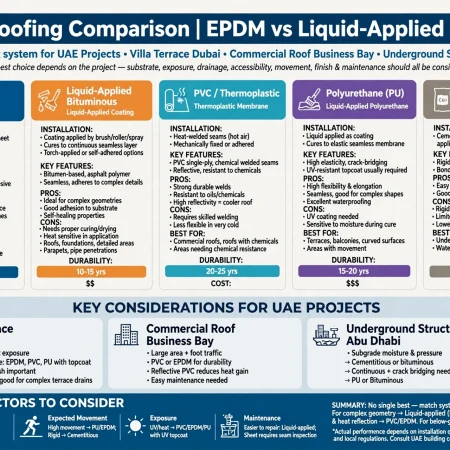
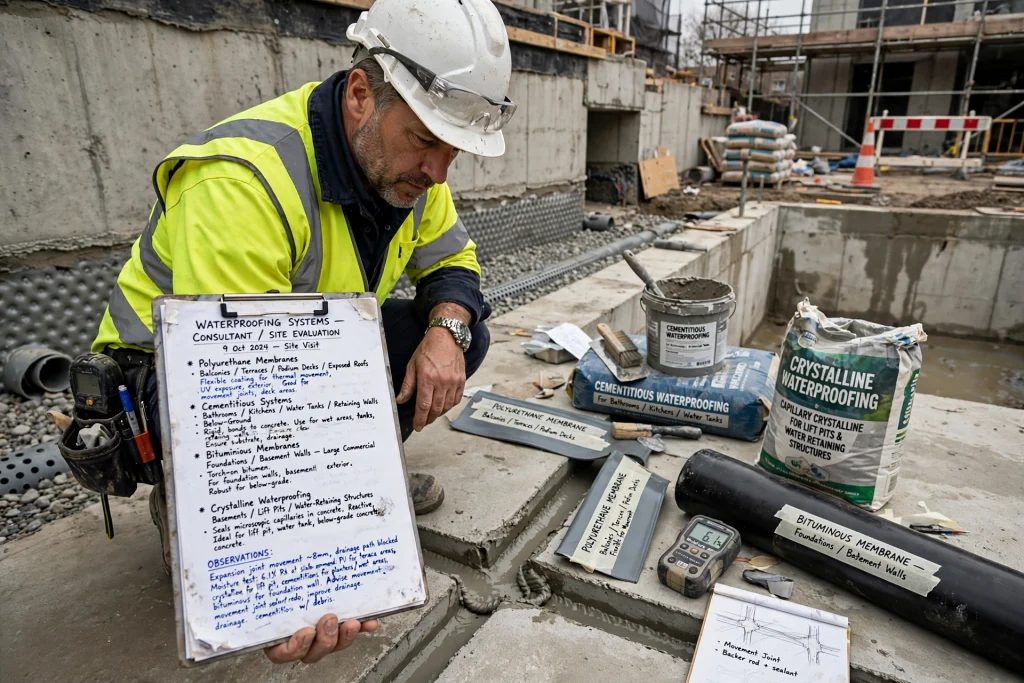
Polyurethane waterproofing membranes provide excellent flexibility for balconies, terraces, podium decks, and exposed roofs where thermal movement is significant. Cementitious waterproofing systems are widely used for bathrooms, kitchens, water tanks, retaining walls, and below-ground structures because they bond effectively with concrete substrates.
Bituminous membranes remain highly effective for foundation waterproofing, basement walls, and large commercial developments, while crystalline waterproofing permanently seals microscopic capillaries within reinforced concrete, making it particularly valuable for basements, lift pits, and water-retaining structures.
Experienced waterproofing consultants evaluate substrate condition, drainage design, expansion joints, movement joints, and environmental conditions before recommending the most appropriate waterproofing system for each application.
Waterproofing Improves Indoor Air Quality
One of the less visible benefits of waterproofing is its contribution to healthier indoor environments. Moisture trapped inside walls, ceilings, and flooring creates ideal conditions for mould, mildew, and microbial growth.
Over time, mould spores may affect indoor air quality while producing unpleasant odours and damaging decorative finishes. In commercial buildings such as offices, hotels, schools, healthcare facilities, and retail spaces, maintaining healthy indoor environments is particularly important because occupants spend extended periods inside these buildings.
Proper waterproofing prevents hidden moisture accumulation, helping maintain dry building materials and reducing the likelihood of mould-related deterioration. Combined with efficient HVAC systems, thermal insulation, and controlled ventilation, waterproofing contributes to healthier interior environments throughout the year.
Waterproofing Protects the Building Envelope Throughout Its Lifecycle
Every successful interior design project depends on the performance of the building envelope. While decorative finishes enhance aesthetics, the structural components behind those finishes provide the protection that allows interiors to remain beautiful for years. The building envelope includes roofs, exterior walls, foundations, balconies, podium decks, basements, expansion joints, windows, and structural concrete elements that work together to prevent water intrusion.
When waterproofing systems are neglected or improperly installed, moisture gradually penetrates these components before becoming visible inside the occupied spaces. Water infiltration may initially appear as a minor stain on a ceiling or a damp patch near a window, but beneath the surface it can already be affecting reinforced concrete, insulation materials, gypsum partitions, electrical conduits, and structural steel.
Professional waterproofing extends the service life of the building envelope while reducing maintenance requirements for interior designers, contractors, developers, and property owners. This proactive approach preserves both the appearance and structural stability of completed projects.
Waterproofing During Renovation and Interior Fit-Out Projects
Many renovation projects focus primarily on replacing flooring, repainting walls, upgrading ceilings, installing new lighting, and modernizing furniture layouts. However, renovating visible finishes without addressing existing waterproofing deficiencies often results in recurring moisture problems shortly after the project is completed.
Luxury villas in Palm Jumeirah, Emirates Hills, Dubai Hills, Arabian Ranches, and Jumeirah frequently undergo interior renovations to modernize living spaces. Commercial offices in Business Bay, Downtown Dubai, DIFC, and Dubai Internet City also require periodic fit-out upgrades to accommodate changing business requirements.
Before installing new finishes, experienced contractors inspect the condition of waterproof membranes, concrete slabs, bathrooms, balconies, roofs, plumbing penetrations, expansion joints, and wet areas. Where necessary, existing waterproofing systems are repaired or replaced using polyurethane membranes, cementitious coatings, liquid-applied waterproofing systems, injection grouting, flexible sealants, and other modern waterproofing technologies.
Addressing waterproofing during renovation ensures that newly completed interiors remain protected from future moisture damage.
Advanced Waterproofing Technologies for Modern Buildings
Waterproofing technology has advanced considerably in recent years. Modern systems provide greater durability, improved flexibility, and enhanced compatibility with contemporary construction methods.
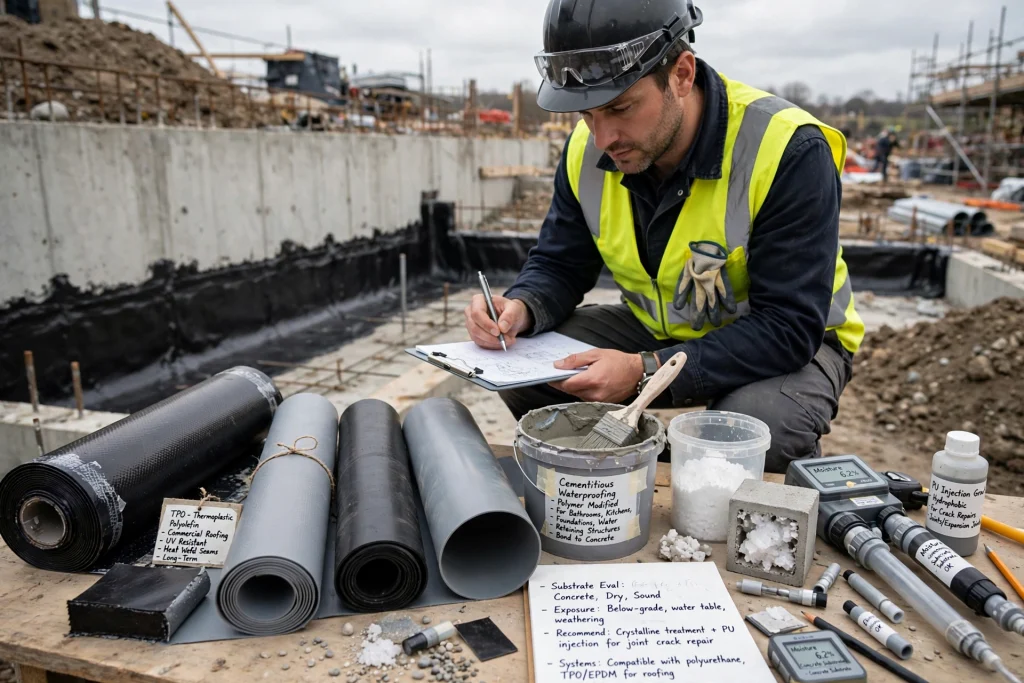
Polyurethane waterproofing membranes create seamless protective barriers capable of accommodating structural movement without cracking. Cementitious waterproofing systems bond directly with reinforced concrete, making them ideal for bathrooms, kitchens, foundations, and water-retaining structures. Bituminous membranes continue to provide dependable protection for basements, podium decks, retaining walls, and foundation slabs, while PVC, TPO, and EPDM membranes offer long-term waterproof performance for commercial roofing applications.
Crystalline waterproofing permanently seals microscopic pores within concrete by forming insoluble crystals that block water penetration from inside the structure. Injection grouting techniques using polyurethane or epoxy materials restore waterproof integrity around construction joints, expansion joints, and structural cracks without requiring extensive demolition.
Selecting the appropriate technology requires engineering knowledge, substrate evaluation, and careful consideration of environmental exposure.
Waterproofing Reduces Long-Term Maintenance Costs
One of the greatest advantages of professional waterproofing is its ability to reduce lifecycle maintenance expenses. Interior finishes represent a significant investment, particularly in premium residential developments, luxury hotels, healthcare facilities, retail centres, educational institutions, and commercial office towers.
When moisture damages flooring, decorative wall finishes, suspended ceilings, custom joinery, or electrical systems, repair costs often extend far beyond simply replacing damaged materials. Accessing concealed waterproofing failures may require demolition of completed interiors, temporary closure of occupied spaces, and disruption to building operations.
Preventive waterproofing minimizes these risks by protecting the structure before moisture damage develops. Regular inspections, maintenance of sealants, cleaning roof drainage systems, monitoring expansion joints, and repairing localized defects further extend waterproofing performance while reducing unexpected repair costs.
Why Experienced Waterproofing Specialists Make the Difference
The quality of a waterproofing system depends as much on workmanship as it does on the materials themselves. Even premium membranes cannot perform effectively if substrates are poorly prepared, joints are improperly detailed, drainage systems are inadequate, or installation procedures are not followed correctly.
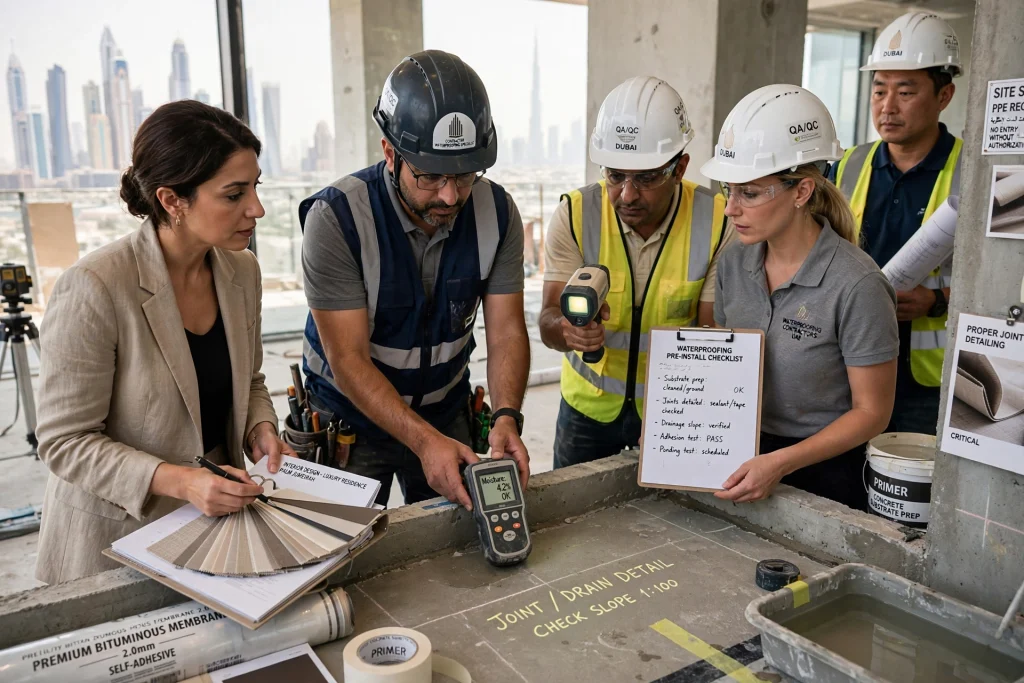
Experienced specialists evaluate substrate moisture content, concrete condition, structural movement, drainage requirements, thermal exposure, and compatibility between waterproofing products before beginning installation. They perform adhesion testing, flood testing, ponding tests, quality inspections, and detailed site evaluations to ensure the waterproofing system performs as intended.
Interior designers planning premium residential or commercial projects should collaborate with Professional Waterproofing Contractors in Dubai who understand both structural waterproofing principles and the specific requirements of luxury interior fit-out projects. This collaborative approach ensures that aesthetics and long-term building protection work together rather than independently.
Waterproofing Supports Sustainable Interior Design
Sustainability has become a central consideration for modern construction and interior design. Protecting buildings from premature deterioration reduces the need for repeated repairs, replacement materials, and unnecessary construction waste throughout the building’s lifecycle.
Effective waterproofing also contributes to improved thermal performance by protecting insulation systems and reducing moisture-related heat transfer through the building envelope. Dry construction materials maintain their intended performance, allowing HVAC systems to operate more efficiently while reducing overall energy consumption.
For developers pursuing environmentally responsible projects across Dubai, Abu Dhabi, Sharjah, and the wider UAE, integrating durable waterproofing solutions supports long-term sustainability objectives while preserving the value of the property.
Conclusion
Professional waterproofing is no longer an optional addition to interior design projects—it is a fundamental requirement for creating durable, healthy, and visually impressive spaces. Whether designing luxury villas, corporate offices, hotels, retail outlets, healthcare facilities, educational institutions, or commercial developments, protecting the building from moisture intrusion should always begin before decorative finishes are installed.
Dubai’s demanding climate, characterized by intense solar radiation, coastal humidity, occasional heavy rainfall, and continuous thermal expansion, places exceptional demands on waterproofing systems. High-performance solutions such as polyurethane waterproofing membranes, cementitious coatings, crystalline waterproofing, bituminous membranes, PVC roofing systems, EPDM membranes, TPO membranes, injection grouting, and advanced sealants provide long-term protection against water ingress while preserving structural integrity.
Across Dubai Marina, Business Bay, Downtown Dubai, Palm Jumeirah, Dubai Hills, Emirates Hills, Arabian Ranches, DIFC, Dubai Silicon Oasis, Al Barsha, Dubai South, Jebel Ali, Abu Dhabi, and Sharjah, successful interior design projects increasingly rely on integrated waterproofing strategies that safeguard both the building envelope and the finished interiors.
By involving experienced waterproofing specialists during the planning and construction stages, interior designers can protect valuable finishes, improve indoor air quality, reduce lifecycle maintenance costs, and deliver projects that continue to perform beautifully for many years. A carefully engineered waterproofing system is one of the most valuable investments any residential or commercial property can make, ensuring that exceptional interior design is supported by equally exceptional long-term building performance.