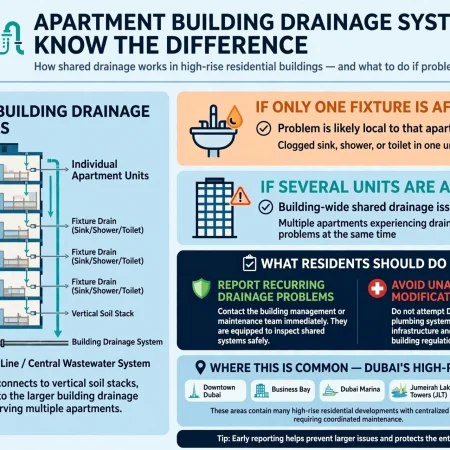
Screw chillers are widely used in commercial buildings, hotels, hospitals, shopping centres, industrial facilities and large residential developments because they can provide reliable chilled-water production for substantial cooling loads. Unlike smaller comfort-cooling systems, a screw chiller combines several mechanical, electrical, refrigeration and control components that must operate together.
When a screw chiller develops a fault, simply resetting the controller may restore operation temporarily without solving the underlying problem. A high discharge temperature, low suction pressure, abnormal vibration, oil-pressure alarm, condenser-water problem or compressor trip can have several possible causes. Professional diagnosis therefore requires technicians to examine the complete refrigeration and chilled-water system.
In the UAE, screw chiller maintenance is particularly important because air-conditioning systems operate for long periods under demanding outdoor conditions. Commercial properties in Dubai, Abu Dhabi, Sharjah and other emirates depend on reliable chilled-water systems to maintain indoor comfort and process temperatures.
What Is a Screw Chiller?
A screw chiller is a mechanical refrigeration system that uses a screw compressor to circulate refrigerant through the refrigeration cycle. The compressor normally contains rotating screw rotors that compress refrigerant before it moves toward the condenser.
Depending on the design, screw chillers can be air-cooled or water-cooled. Water-cooled systems commonly work with cooling towers, condenser-water pumps and heat exchangers, while air-cooled chillers reject heat through condenser coils and fans.
The main components may include the screw compressor, evaporator, condenser, expansion device, oil separator, oil circuit, refrigerant circuit, motors, sensors, control panel and safety controls.
The chilled-water side normally supplies cooled water to air-handling units (AHUs), fan coil units (FCUs) or other cooling equipment throughout the building.
Because all these components interact, technicians must diagnose the system as a complete machine rather than replacing whichever component triggered an alarm.
Why Screw Chillers Require Professional Diagnosis
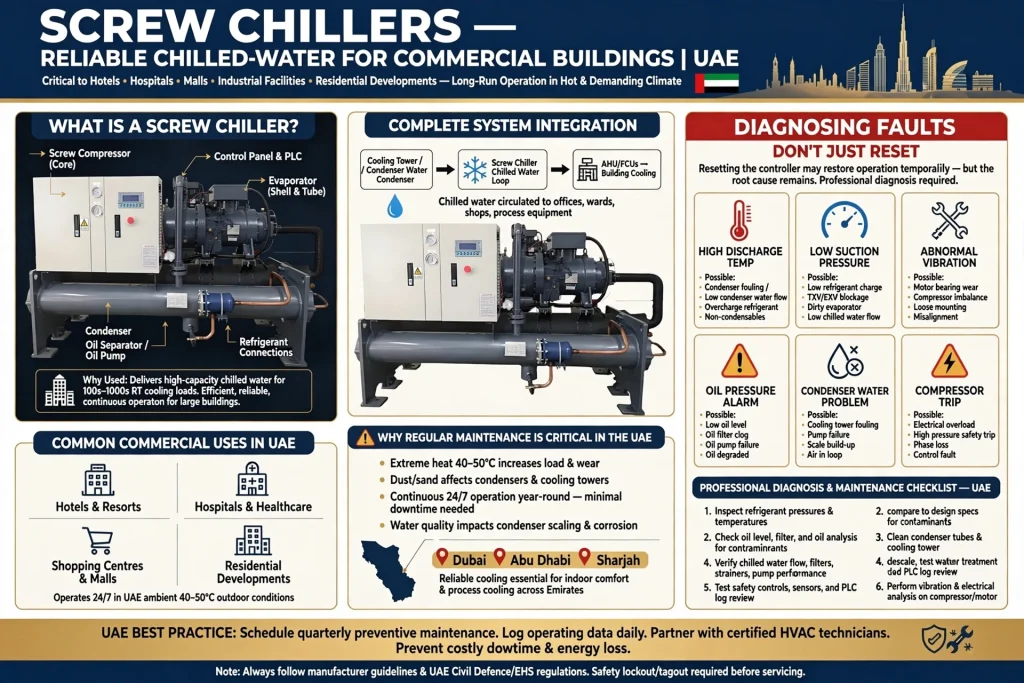
A chiller alarm often identifies a symptom rather than the exact root cause.
For example, a high discharge-temperature alarm could be related to insufficient condenser heat rejection, high condensing pressure, low refrigerant flow, incorrect operating conditions, oil-system problems or another mechanical issue.
Similarly, low suction pressure could be associated with low chilled-water flow, restricted refrigerant flow, low load, evaporator issues or refrigerant-related problems.
This is why professional screw chiller repair starts with collecting operating data and understanding the circumstances surrounding the failure.
Technicians may review controller history, operating pressures, temperatures, compressor current, oil pressure, chilled-water temperatures, condenser-water temperatures and previous maintenance records before deciding what repair is required.
Common Screw Compressor Failures
The screw compressor is one of the most important components in a screw chiller. Compressor problems can result from mechanical wear, lubrication issues, abnormal operating conditions, electrical faults or problems elsewhere in the refrigeration system.
Common symptoms include abnormal noise, vibration, high discharge temperature, excessive motor current, repeated trips or inability to achieve the required cooling capacity.
A technician may first determine whether the compressor is receiving the correct electrical supply and whether the control system is commanding it to operate.
Mechanical inspection may then focus on bearings, rotor condition, oil circulation and signs of overheating.
A compressor should not automatically be condemned because of one alarm. The technician needs to establish whether the compressor itself has failed or whether another system problem caused the compressor to operate outside its normal conditions.
High Discharge Temperature
High discharge temperature is a common concern in screw chillers. The discharge temperature represents the temperature of refrigerant leaving the compressor, and excessive values can indicate abnormal compression or inadequate heat rejection.
Possible causes may include high condensing pressure, insufficient condenser performance, incorrect refrigerant conditions, oil-related problems or restricted airflow in an air-cooled system.
For water-cooled chillers, technicians may inspect condenser-water flow, entering and leaving condenser-water temperatures, cooling tower performance and condenser cleanliness.
For air-cooled chillers, condenser coils and condenser fans should be checked for dirt, obstruction, fan faults and inadequate airflow.
The correct diagnosis depends on measured operating conditions rather than the alarm message alone.
Low Suction Pressure
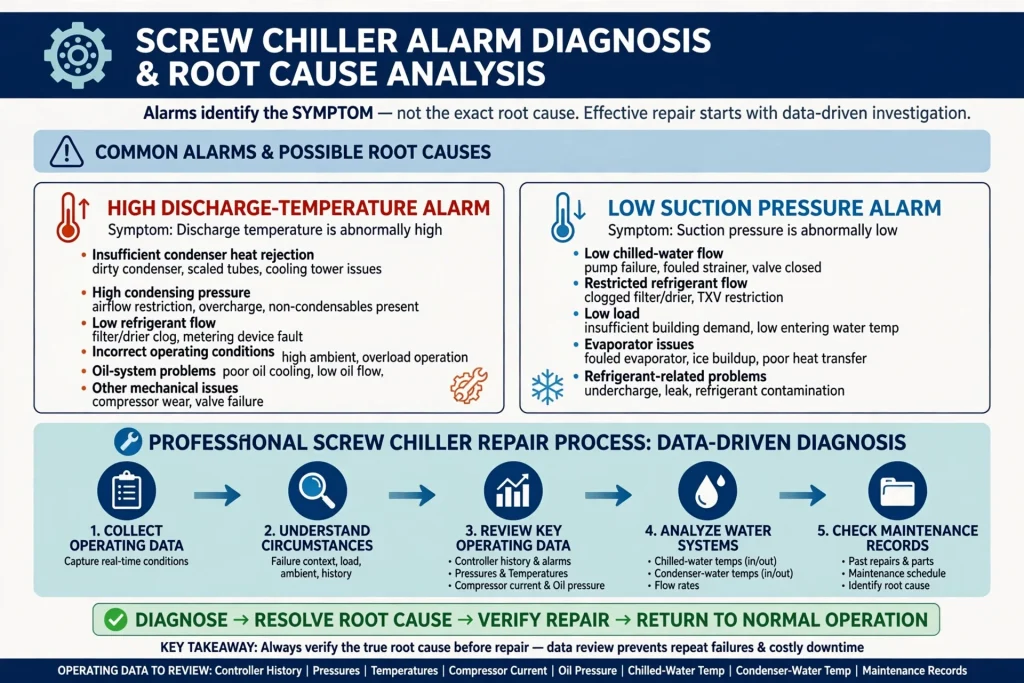
Low suction pressure can reduce cooling performance and may cause the compressor to operate outside its intended range.
Technicians may investigate chilled-water flow, evaporator temperatures, refrigerant conditions, expansion-device operation and building load.
A dirty filter or blocked water circuit elsewhere in the building can sometimes contribute to insufficient flow through the evaporator. Closed or incorrectly positioned valves may also affect chilled-water circulation.
Refrigerant-related problems should also be investigated when the operating data indicates a possible issue.
A technician may compare suction pressure, evaporator temperature, superheat-related readings, chilled-water temperatures and compressor operating conditions to establish what is actually happening.
High Condensing Pressure
High condensing pressure means the refrigeration system is having difficulty rejecting heat.
In a water-cooled screw chiller, the technician may check the condenser-water pump, cooling tower, condenser tubes, water temperature and flow rate.
Scale or fouling inside condenser tubes can reduce heat transfer. Cooling tower problems can also increase condenser-water temperature and place additional stress on the chiller.
In an air-cooled system, technicians may inspect condenser coils, fan motors, fan controls and airflow.
Dubai’s dusty environment can make condenser-coil cleanliness particularly important for outdoor air-cooled equipment. However, cleaning should be performed according to the manufacturer’s requirements and without damaging delicate coil fins.
Oil Pressure and Lubrication Problems
Oil is essential to many screw compressor designs because it supports lubrication, sealing and heat management.
An oil-pressure alarm can therefore be significant. Possible causes may include inadequate oil level, oil-filter restriction, oil-separator problems, sensor faults or abnormal compressor conditions.
Technicians may measure differential pressure across filters, verify oil levels where applicable, inspect the oil circuit and check sensor readings.
Oil problems should not be ignored because inadequate lubrication can contribute to mechanical wear and potentially severe compressor damage.
The correct oil type and servicing procedure should always follow the chiller manufacturer’s specifications.
Oil Filter and Oil Separator Problems
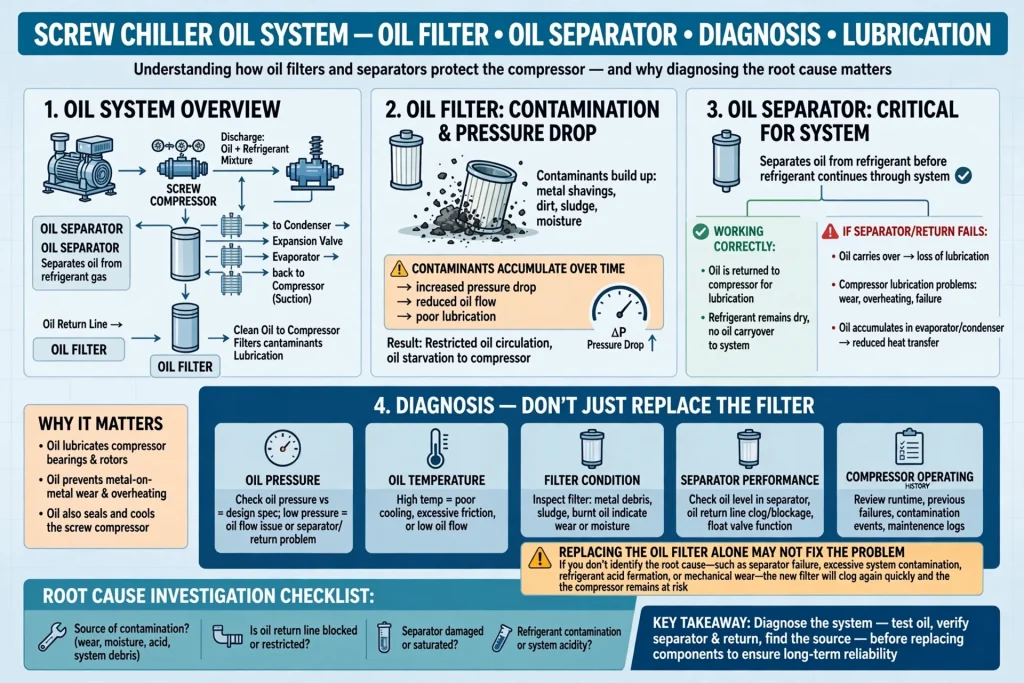
Oil filters can accumulate contaminants over time, increasing pressure drop and affecting oil circulation.
An oil separator is also important in screw refrigeration systems because it helps separate oil from refrigerant before the refrigerant continues through the system.
If oil separation or return is not functioning correctly, the compressor may experience lubrication problems while other parts of the refrigeration circuit may also be affected.
During diagnosis, technicians may review oil pressure, oil temperature, filter condition, separator performance and compressor operating history.
Replacing an oil filter without identifying why contamination or abnormal pressure drop occurred may not solve the underlying problem.
Refrigerant-Related Failures
Refrigerant problems can significantly affect screw chiller performance.
A system with insufficient refrigerant may show abnormal suction and discharge conditions and reduced cooling capacity. However, simply adding refrigerant without identifying the reason for the loss is not a complete repair.
Technicians may inspect for signs of leakage, review pressure and temperature measurements and evaluate system performance against manufacturer operating data.
Refrigerant overcharge can also create abnormal operating conditions, so refrigerant quantity should be handled according to the manufacturer’s specifications and appropriate service procedures.
Because refrigerants are regulated substances, recovery, charging and leak-related work should be carried out by appropriately qualified technicians using suitable equipment.
Evaporator Problems
The evaporator transfers heat from the chilled-water circuit to the refrigerant.
Poor evaporator performance can result from inadequate water flow, fouling, incorrect operating conditions or other refrigeration problems.
A technician may compare entering and leaving chilled-water temperatures and evaluate the temperature difference across the evaporator.
Water flow should also be investigated because a chiller cannot perform correctly if the required water circulation is not available.
Strainers, pumps, valves, flow switches and control signals can all influence evaporator-side performance.
For large commercial buildings, the technician may also consider whether the problem originates from the building’s chilled-water distribution system rather than the chiller itself.
Condenser Fouling and Water-Side Problems
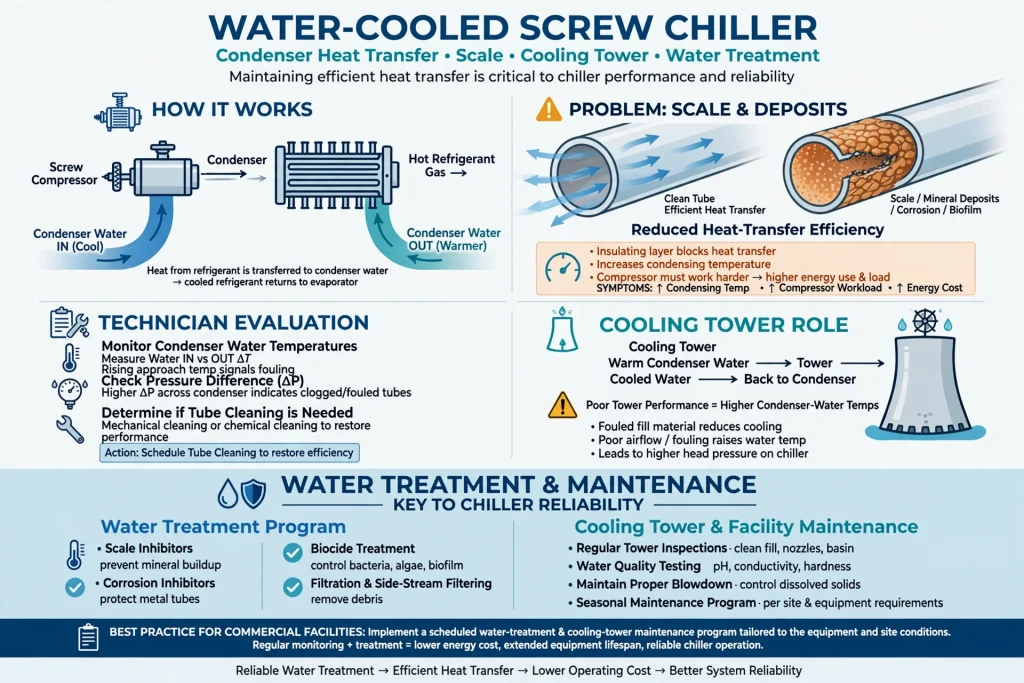
Water-cooled screw chillers depend on effective heat transfer through the condenser.
Over time, mineral scale, corrosion products or other deposits can reduce heat-transfer efficiency. This can increase condensing temperature and compressor workload.
Technicians may evaluate condenser-water temperatures and pressure differences and determine whether tube cleaning is required.
The cooling tower should also be considered because poor tower performance can raise condenser-water temperatures.
Water treatment is therefore closely connected with chiller reliability. Commercial facilities should maintain suitable water-treatment and cooling-tower maintenance programs according to the equipment and site requirements.
Expansion Device Problems
The expansion device controls refrigerant flow into the evaporator and contributes to maintaining the required refrigeration conditions.
A malfunctioning expansion valve or related control system can cause abnormal evaporator conditions, unstable operation or reduced cooling capacity.
Diagnosis may include checking temperature and pressure readings, control signals and refrigerant conditions.
Technicians should distinguish between an actual expansion-device fault and another problem that produces similar symptoms.
This is particularly important because unnecessary replacement of expensive refrigeration components can increase repair costs without addressing the real cause.
Electrical and Motor Problems
Screw chillers also contain significant electrical equipment.
Potential electrical issues can involve compressor motor protection, contactors, overload protection, power supply problems, loose connections, phase-related faults, control circuits or variable-frequency-drive systems where installed.
Technicians may measure voltage and current, review fault codes and inspect electrical connections.
Abnormal compressor current can be caused by electrical problems, but it can also result from high compression ratios, high condensing pressure or mechanical loading.
Therefore, electrical diagnosis should be combined with refrigeration and mechanical measurements.
Vibration and Unusual Noise
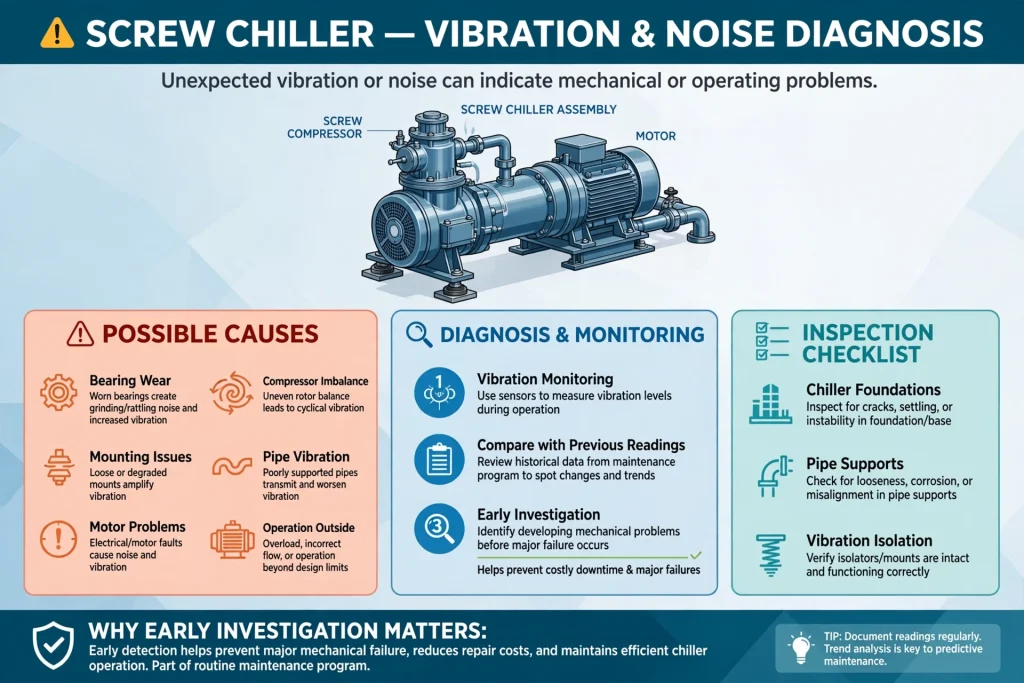
Unexpected vibration or noise can indicate mechanical or operating problems.
Possible causes include bearing wear, compressor imbalance, mounting issues, pipe vibration, motor problems or operation outside normal conditions.
Technicians can compare observed vibration with previous readings where vibration monitoring is part of the maintenance program.
Early investigation is useful because abnormal vibration can sometimes identify developing mechanical problems before a major failure occurs.
Chiller foundations, pipe supports and vibration isolation should also be inspected when appropriate.
Sensor and Control-System Failures
Modern screw chillers depend heavily on sensors and electronic controls.
Temperature, pressure, flow and other sensors provide information to the chiller controller, which uses this data to regulate compressor operation, capacity control and safety functions.
A faulty sensor can therefore create an apparent mechanical problem.
For example, an inaccurate temperature sensor may cause the control system to respond incorrectly even though the actual system condition is different.
Technicians may compare sensor readings with independent measurements and verify wiring, connections and controller inputs before replacing the sensor.
Chilled-Water Flow Problems
A screw chiller can operate correctly mechanically but still fail to deliver adequate cooling if chilled-water flow is insufficient.
Possible causes include pump problems, closed valves, clogged strainers, air in the system, control-valve problems or hydraulic imbalance.
Technicians may check differential pressure, pump operation, flow switches and entering and leaving water temperatures.
In buildings with multiple AHUs and FCUs, the distribution system can become complex. A problem in one part of the network may influence overall chiller performance.
This is why chiller technicians often need to investigate both the refrigeration machine and the connected hydronic system.
How Technicians Diagnose Screw Chiller Problems
A professional diagnosis normally begins by reviewing the complaint and operating history.
The technician may determine when the fault occurs, whether it happens during startup or high load, whether the chiller trips repeatedly and whether other equipment is affected.
The next stage involves checking controller alarms and historical data.
After that, technicians can collect operating measurements including:
- Suction and discharge pressures
- Refrigerant and water temperatures
- Chilled-water entering and leaving temperatures
- Condenser-water temperatures
- Oil pressure and temperature
- Compressor current
- Flow conditions
- Vibration or unusual noise
- Sensor and control readings
These measurements help create a clearer picture of the chiller’s operating condition.
Why Alarm Codes Are Not Enough
Modern chiller controllers provide valuable diagnostic information, but an alarm code should not automatically be treated as the final diagnosis.
For example, a high-pressure trip tells the technician that the system exceeded a pressure limit. It does not necessarily identify whether the cause was a dirty condenser, cooling-tower problem, inadequate airflow, water-flow issue or sensor problem.
A professional technician therefore combines alarm history with physical inspection and measured operating conditions.
This approach reduces unnecessary parts replacement and helps identify root causes.
Screw Chiller Repair in Dubai Commercial Buildings
Dubai has a large concentration of commercial properties that depend on chilled-water HVAC systems. Business Bay, Downtown Dubai, DIFC, Dubai Marina, JLT, Dubai Internet City, Dubai Media City and Dubai Healthcare City contain offices, hotels, retail spaces and other facilities with substantial cooling requirements.
A screw chiller failure in a commercial building can affect multiple AHUs and occupied areas. Fast diagnosis is therefore important, but speed should not replace proper troubleshooting.
A qualified technician should consider the complete chilled-water plant, including chillers, pumps, cooling towers, AHUs, controls and associated piping.
Screw Chiller Repair for Hotels and Hospitality Facilities
Hotels have particularly demanding cooling requirements because guest rooms, restaurants, kitchens, meeting rooms, lobbies and back-of-house spaces may operate under different load conditions.
A screw chiller problem can therefore create comfort complaints across several zones.
Technicians may need to investigate the chiller plant together with building controls and chilled-water distribution.
Preventive maintenance can help identify developing problems before they become major failures during periods of high occupancy.
Screw Chiller Repair for Hospitals and Healthcare Facilities
Healthcare facilities require careful HVAC management Services because cooling systems may serve patient areas, operating environments, laboratories, pharmacies and other specialized spaces.
A screw chiller fault can affect temperature and environmental control in multiple zones.
For healthcare facilities in Dubai and Abu Dhabi, maintenance teams should coordinate chiller repairs with facility-management procedures and the operational requirements of the affected areas.
Where redundancy exists, the facility may temporarily transfer cooling load to other equipment while repairs are completed.
Preventive Maintenance to Reduce Screw Chiller Failures
Preventive maintenance can reduce the likelihood of unexpected screw chiller failures.
Depending on the equipment and manufacturer’s requirements, maintenance may include compressor inspection, oil-system checks, refrigerant-system evaluation, condenser and evaporator inspection, electrical testing, sensor verification, water-flow checks and control-system review.
Water-cooled systems also require attention to cooling towers, condenser-water pumps and water treatment.
Air-cooled systems require appropriate condenser-coil and fan maintenance.
Maintenance records should document operating readings and recurring alarms. Trends can sometimes reveal developing problems before the chiller experiences a major shutdown.
When Should a Screw Chiller Be Repaired?
A screw chiller should be investigated when it repeatedly trips, produces abnormal noise, loses cooling capacity, operates at unusual pressures or temperatures, shows oil-related alarms or consumes significantly different electrical power under comparable conditions.
Repeatedly resetting a fault without identifying the cause can allow a relatively manageable issue to develop into a more expensive repair.
Early diagnosis can be especially valuable for older chillers where component wear, efficiency loss and refrigerant-system issues may gradually become more frequent.
Choosing a Screw Chiller Repair Company
Commercial property managers should look for a service provider with experience in screw compressors, refrigeration systems, chilled-water circuits, electrical controls and commercial HVAC equipment.
A professional provider should be able to explain the diagnostic process rather than simply provide a list of replacement parts.
Useful questions include whether the technician will check operating pressures and temperatures, inspect the oil circuit, evaluate chilled-water flow, investigate condenser performance and provide a written service report.
For large facilities, experience with BMS integration, cooling towers, pumps and multiple-chiller plants can also be valuable.
Frequently Asked Questions
What is the most common screw chiller problem?
There is no single failure that applies to every screw chiller. Common issues can involve condenser performance, chilled-water flow, refrigeration conditions, oil systems, sensors, electrical components and compressor operation.
Why does a screw chiller trip on high pressure?
High-pressure trips can result from inadequate heat rejection. Depending on the chiller type, technicians may investigate condenser fouling, cooling-tower performance, condenser-water flow, condenser airflow, fan operation and related controls.
Can a screw compressor be repaired?
Some compressor-related problems can be repaired or have individual components serviced, while severe mechanical damage may require major compressor work or replacement. The decision depends on the compressor design, condition and manufacturer’s recommendations.
How do technicians diagnose screw chiller faults?
Technicians generally combine alarm history, physical inspection and operating measurements. They may check pressures, temperatures, oil conditions, water flow, electrical readings, sensors, controls, vibration and system history.
How can screw chiller failures be prevented?
Preventive maintenance, proper water treatment, condenser and evaporator maintenance, filter and oil-system checks, electrical inspections, sensor verification and trend monitoring can help reduce unexpected failures.
Final Thoughts
Screw chillers are complex refrigeration machines, and their failures can originate from mechanical, electrical, refrigeration, hydronic or control-system problems. A high-pressure alarm, low suction pressure, high discharge temperature or oil fault is often a starting point for diagnosis rather than a complete explanation of the problem.
Effective screw chiller repair depends on understanding the complete system. Technicians need to examine the compressor, refrigerant circuit, evaporator, condenser, oil system, chilled-water circuit, electrical equipment and controls before determining the appropriate repair.
For commercial buildings across Dubai and the wider UAE, regular inspection and preventive maintenance can help identify abnormal operating conditions before they develop into major breakdowns. A structured approach to diagnosis also helps reduce unnecessary component replacement and supports more reliable chilled-water operation.