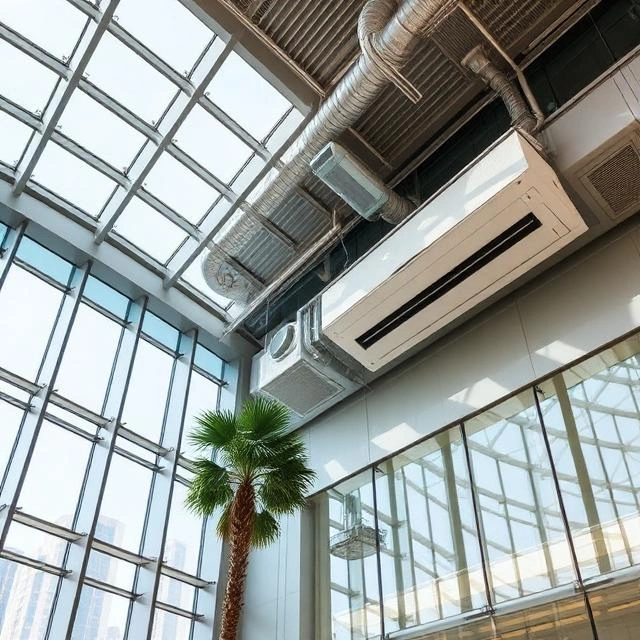
Why Indoor Air Quality Has Become a Priority for Commercial Buildings
Indoor air quality (IAQ) has become one of the most important factors influencing the health, comfort, productivity, and safety of people working in commercial buildings. Offices, hotels, shopping malls, hospitals, schools, warehouses, restaurants, and mixed-use developments rely on HVAC systems not only for cooling but also for supplying fresh air, controlling humidity, filtering airborne contaminants, and maintaining a healthy indoor environment.
In a city like Dubai, where buildings remain air-conditioned for most of the year, indoor air quality depends heavily on how efficiently the HVAC system operates. High outdoor temperatures, humidity from the Arabian Gulf, fine desert dust, construction activities, and continuous occupancy all place additional pressure on commercial HVAC systems. Without proper ventilation and preventive maintenance, pollutants can accumulate indoors, leading to poor air circulation, unpleasant odours, excessive humidity, and reduced occupant comfort.
Modern HVAC systems are designed to do much more than regulate temperature. They create balanced airflow, introduce filtered fresh air, remove airborne particles, control moisture levels, and support healthier indoor environments across commercial properties. Whether managing an office tower in Business Bay, a retail complex in Dubai Marina, a hotel on Palm Jumeirah, or an industrial warehouse in Dubai Investment Park, maintaining high indoor air quality is essential for long-term building performance.
This guide explains how HVAC systems improve indoor air quality, why professional maintenance matters, and the best practices commercial property owners should follow to create healthier and more energy-efficient buildings.
Understanding Indoor Air Quality in Commercial Buildings
Indoor Air Quality refers to the condition of the air inside occupied buildings. Good IAQ means occupants breathe clean, properly ventilated air that contains minimal pollutants, balanced humidity, and comfortable temperatures.
Commercial buildings continuously generate indoor contaminants through normal daily operations. Employees, customers, office equipment, cleaning products, furnishings, carpets, printers, kitchens, and mechanical systems all contribute particles and gases that can affect air quality. If ventilation is inadequate, these pollutants continue circulating throughout the building.
Common indoor air pollutants include:
- Fine dust particles
- PM2.5 and PM10 particulate matter
- Volatile Organic Compounds (VOCs)
- Carbon dioxide (CO₂)
- Carbon monoxide
- Bacteria
- Viruses
- Allergens
- Mold spores
- Smoke particles
- Construction dust
- Chemical vapours
- Excess moisture
Modern commercial HVAC systems continuously manage these pollutants using ventilation, filtration, humidity control, and air distribution systems.
Why Indoor Air Quality Matters for Businesses
Poor indoor air quality affects far more than occupant comfort. Numerous studies have shown that cleaner indoor environments improve workplace productivity, reduce employee sick leave, enhance customer experiences, and protect valuable building assets.
For commercial properties across Dubai, proper indoor air quality offers several benefits:
- Improved employee wellbeing
- Increased workplace productivity
- Reduced respiratory discomfort
- Better concentration
- Lower absenteeism
- Enhanced customer satisfaction
- Improved tenant retention
- Protection of sensitive equipment
- Better compliance with health and safety standards
- Lower long-term maintenance costs
Healthcare facilities, educational institutions, hotels, and corporate offices place especially high importance on indoor air quality because large numbers of occupants spend extended periods inside these environments every day.
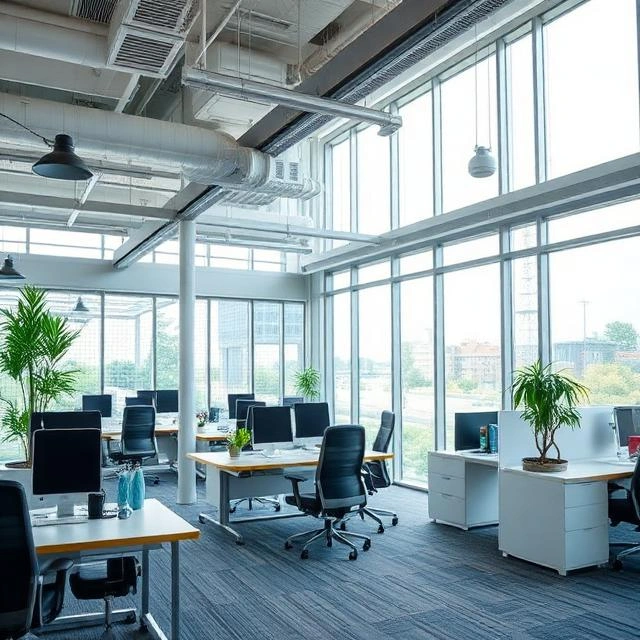
The HVAC System Is the Heart of Indoor Air Quality
Many people associate HVAC systems only with cooling. In reality, modern Heating, Ventilation and Air Conditioning systems perform several critical functions simultaneously.
A properly designed commercial HVAC system:
- Supplies fresh outdoor air
- Removes stale indoor air
- Filters airborne contaminants
- Controls indoor humidity
- Maintains comfortable temperatures
- Balances airflow throughout the building
- Prevents stagnant air zones
- Supports pressure control
- Reduces airborne pollutants
- Maintains consistent ventilation rates
Every component of the HVAC system contributes to cleaner indoor air.
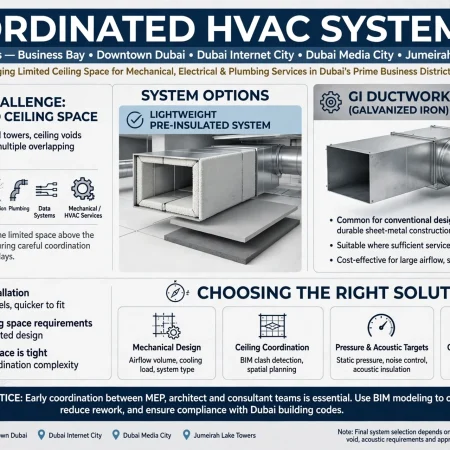
Air Handling Units (AHUs), Fan Coil Units (FCUs), Fresh Air Handling Units (FAHUs), ductwork, HEPA filters, MERV-rated filters, ventilation fans, chilled water systems, Variable Refrigerant Flow (VRF) systems, ducted split units, exhaust systems, and Building Management Systems (BMS) all work together to maintain healthy commercial environments.
When one component fails, the entire indoor air quality strategy is affected.
Ventilation Brings Fresh Air Into Commercial Buildings
Fresh air ventilation is one of the most important functions of any HVAC system.
Commercial buildings with inadequate ventilation often experience elevated carbon dioxide levels, stale air, unpleasant odours, excessive humidity, and reduced occupant comfort.
Modern ventilation systems continuously replace indoor air with filtered outdoor air while removing contaminants generated inside the building.
Proper ventilation helps reduce concentrations of:
- CO₂
- Airborne bacteria
- Viruses
- Dust
- Odours
- VOCs
- Chemical pollutants
- Moisture
Ventilation strategies vary depending on the building type.
For example:
- Office buildings require balanced ventilation for employee comfort.
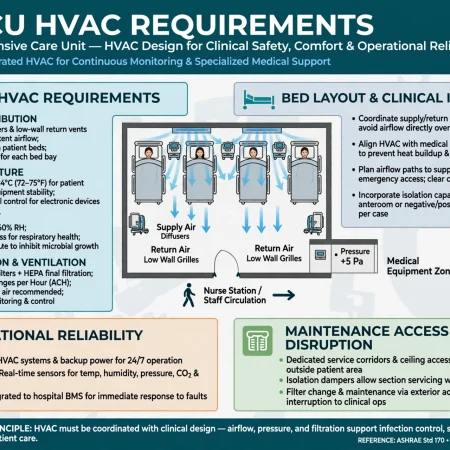
- Hospitals require pressure-controlled ventilation for infection prevention.
- Hotels require guest room ventilation with humidity management.
- Shopping malls require continuous fresh air because of high visitor traffic.
- Restaurants require dedicated kitchen exhaust and make-up air systems.
- Warehouses require industrial ventilation to remove heat and airborne particles.
Professional HVAC engineers carefully calculate fresh air requirements according to occupancy levels, floor area, equipment loads, and local regulations to ensure every occupied space receives sufficient ventilation.
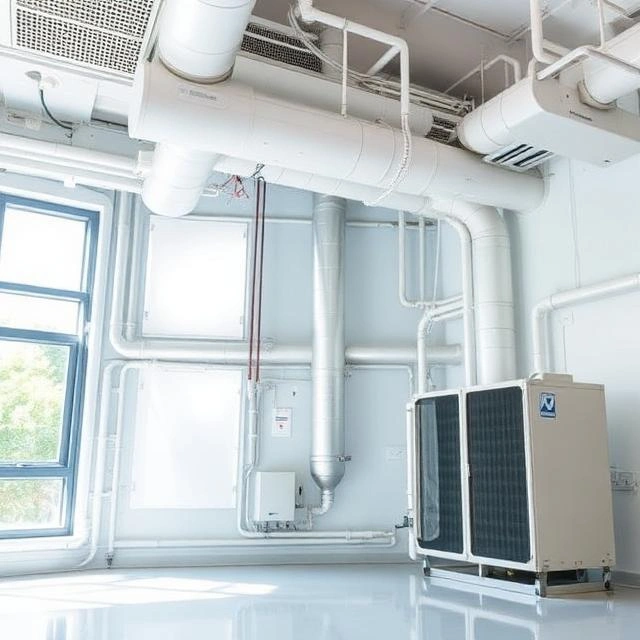
Humidity Control Creates a Healthier Indoor Environment
Temperature alone does not determine occupant comfort. Humidity plays an equally important role in maintaining healthy indoor environments.
Dubai’s climate combines extremely high summer temperatures with periods of elevated coastal humidity. If indoor humidity is not properly controlled, commercial buildings may experience condensation, mould growth, unpleasant odours, damaged interior finishes, and reduced occupant comfort.
Modern HVAC systems regulate humidity through cooling coils, fresh air systems, and dedicated dehumidification equipment. Maintaining balanced humidity offers several important benefits:
- Reduces mould and mildew growth
- Prevents condensation on ceilings and windows
- Protects furniture and finishes
- Improves occupant comfort
- Minimises bacterial growth
- Reduces dust mite activity
- Protects electronic equipment
Facilities such as hospitals, pharmaceutical laboratories, data centres, hotels, and museums require particularly precise humidity control because environmental stability directly affects operations and equipment performance.
Professional HVAC maintenance includes inspecting drain pans, condensate piping, cooling coils, and dehumidification systems to ensure moisture is effectively removed from conditioned air.
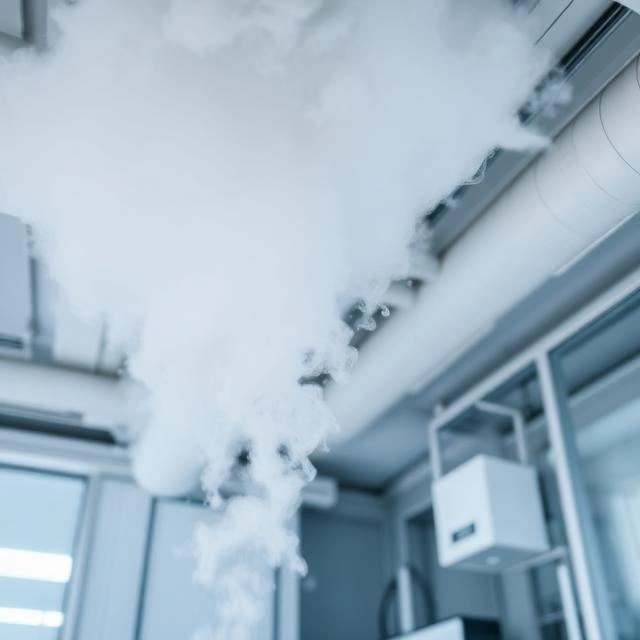
Clean Air Ducts Improve Air Distribution Throughout the Building
Even the most advanced HVAC equipment cannot maintain excellent indoor air quality if ductwork is contaminated.
Supply ducts, return ducts, and ventilation shafts gradually accumulate dust, construction debris, fibres, pollen, and microbial contaminants. Over time, these pollutants restrict airflow and become recirculated throughout occupied spaces.
Professional duct cleaning restores airflow while helping improve indoor air quality across the entire building.
Typical duct cleaning includes:
- Supply air ducts
- Return air ducts
- Air Handling Units (AHUs)
- Fresh Air Handling Units (FAHUs)
- Diffusers and grilles
- Fire dampers
- Volume control dampers
- Flexible duct connections
Commercial buildings undergoing renovation often require additional duct inspections because construction dust can spread throughout the ventilation network if protective measures are not implemented.
Regular duct cleaning also improves HVAC efficiency by reducing airflow resistance and lowering the workload on fans and air handling equipment.
Property managers responsible for office buildings in Downtown Dubai, hotels on Palm Jumeirah, retail centres in Dubai Festival City, and commercial towers along Sheikh Zayed Road increasingly include duct cleaning within their preventive maintenance programmes.
Air Balancing Ensures Every Space Receives Proper Airflow
An HVAC system may contain high-quality equipment, clean filters, and efficient cooling systems yet still perform poorly if airflow is not properly balanced.
Air balancing is the process of measuring and adjusting airflow so every room receives the correct amount of conditioned air. This improves both comfort and indoor air quality while reducing unnecessary energy consumption.
Proper air balancing helps eliminate:
- Hot spots
- Cold spots
- Poor ventilation
- Stagnant air
- Excessive humidity
- Pressure imbalances
- Uneven cooling
Professional testing and balancing engineers use specialised instruments to measure airflow through ducts, diffusers, and ventilation outlets before making adjustments to dampers, fan speeds, and air distribution systems.
Air balancing is particularly important for:
- Hospitals
- Hotels
- Shopping malls
- Educational institutions
- Corporate offices
- Data centres
- Laboratories
- Manufacturing facilities
When combined with preventive maintenance and proper HVAC design, balanced airflow significantly improves occupant comfort while extending equipment lifespan.
Smart HVAC Controls Continuously Monitor Indoor Air Quality
Today’s commercial buildings increasingly rely on intelligent Building Management Systems (BMS) to optimise HVAC performance.
Rather than operating at fixed settings throughout the day, smart HVAC systems continuously monitor environmental conditions and automatically adjust ventilation rates, airflow, humidity, and cooling output according to occupancy and indoor air quality.
Modern IAQ monitoring systems may include sensors for:
- Carbon dioxide (CO₂)
- Temperature
- Relative humidity
- Particulate matter (PM2.5)
- Volatile Organic Compounds (VOCs)
- Differential pressure
- Airflow
- Occupancy levels
When indoor air quality begins to decline, the Building Management System can automatically increase outdoor air intake, adjust fan speeds, activate additional filtration, or modify cooling capacity.
This intelligent approach improves occupant comfort while reducing unnecessary energy consumption.
For large commercial developments in Dubai Hills, Expo City Dubai, Dubai South, Abu Dhabi, and Sharjah, integrating HVAC equipment with smart building technologies has become an important strategy for improving operational efficiency, sustainability, and long-term building performance.
Preventive HVAC Maintenance Is Essential for Healthy Indoor Air
Even the most advanced HVAC installation cannot maintain good indoor air quality without regular maintenance. Over time, filters become clogged, coils collect dust, drain lines become blocked, fans lose efficiency, and sensors drift out of calibration. These issues reduce airflow, increase energy consumption, and negatively affect indoor air quality.
A structured preventive maintenance programme typically includes:
- Inspecting and replacing air filters
- Cleaning evaporator and condenser coils
- Checking refrigerant pressures
- Inspecting Air Handling Units (AHUs)
- Servicing Fan Coil Units (FCUs)
- Cleaning Fresh Air Handling Units (FAHUs)
- Inspecting ductwork
- Cleaning supply and return air grilles
- Verifying airflow rates
- Testing humidity levels
- Calibrating thermostats and sensors
- Checking ventilation fans
- Inspecting electrical components
- Testing Building Management System (BMS) controls
Routine maintenance helps identify potential issues before they develop into costly repairs, ensuring continuous airflow and maintaining healthy indoor conditions throughout the year.
Commercial property owners who invest in preventive maintenance often experience fewer system failures, lower energy costs, improved equipment lifespan, and better occupant satisfaction. Businesses looking for reliable maintenance solutions can benefit from professional Hvac Best service in Dubai town to keep ventilation systems operating at peak efficiency.
Energy Efficiency and Indoor Air Quality Work Together
Many building owners mistakenly believe that increasing ventilation always leads to higher energy costs. In reality, modern HVAC technologies allow commercial buildings to improve indoor air quality while simultaneously reducing energy consumption.
Energy-efficient HVAC systems achieve this through:
- Variable Refrigerant Flow (VRF) technology
- Inverter-driven compressors
- Energy recovery ventilation (ERV)
- Heat recovery systems
- Demand-controlled ventilation
- Smart occupancy sensors
- Variable Air Volume (VAV) systems
- High-efficiency EC fans
- Advanced building automation
These technologies continuously adjust system performance according to actual building demand rather than operating at full capacity all day. The result is improved indoor air quality, lower utility bills, and reduced environmental impact.
This approach aligns with sustainability initiatives adopted by many commercial developments across Dubai, Abu Dhabi, Sharjah, Dubai Silicon Oasis, Dubai South, and other rapidly growing business districts.
Common Signs of Poor Indoor Air Quality
Building owners and facility managers should recognise early warning signs indicating that the HVAC system may no longer be maintaining healthy indoor conditions.
Common indicators include:
- Persistent stuffy air
- Uneven temperatures
- Excess humidity
- Condensation on windows
- Dust accumulation around air diffusers
- Unpleasant odours
- Increased employee complaints
- Frequent allergy symptoms
- Headaches or fatigue among occupants
- Reduced airflow from vents
- Rising energy bills
- Mould growth near air conditioning units
Ignoring these symptoms can lead to reduced occupant comfort, increased maintenance costs, and declining HVAC performance. Regular inspections and timely corrective actions help maintain a safe and productive indoor environment while protecting the building’s mechanical systems.
The Future of Indoor Air Quality in Commercial Buildings
As commercial buildings become smarter and sustainability standards continue to evolve, indoor air quality management is becoming increasingly data-driven. Modern HVAC systems are no longer limited to cooling and ventilation—they are intelligent environmental management platforms capable of monitoring, analysing, and optimising indoor conditions in real time.
Emerging technologies include:
- Artificial Intelligence (AI)-powered HVAC optimisation
- Internet of Things (IoT) environmental sensors
- Predictive maintenance using real-time analytics
- Cloud-based Building Management Systems
- Demand-controlled ventilation
- Smart occupancy-based airflow control
- UV-C air disinfection systems
- Bipolar ionisation technologies (where appropriate)
- Digital twins for building performance monitoring
- Advanced indoor air quality dashboards
These innovations help facility managers make informed decisions, improve operational efficiency, reduce maintenance costs, and create healthier workplaces while supporting sustainability initiatives across the UAE.
With growing emphasis on green buildings, ESG objectives, and occupant wellness, indoor air quality will continue to be a defining feature of high-performing commercial properties.