Choosing the right Building Management System (BMS) contractor is an important decision for commercial property owners, facility managers, MEP consultants and project developers in Dubai. A properly designed BMS helps monitor and control essential building services, including air conditioning, ventilation, pumps, lighting controls and energy meters. It can also improve operational visibility, support preventive maintenance and help identify equipment problems before they cause major disruption.
However, not every BMS contractor offers the same level of technical expertise, integration capability or after-sales support. A contractor may install controllers and sensors correctly but still deliver a system that has poorly configured alarms, inaccurate readings or inefficient HVAC sequences. These issues can affect occupant comfort, energy consumption and maintenance costs.
Dubai’s commercial property market includes high-rise offices, hotels, shopping centres, warehouses, healthcare facilities and mixed-use developments. Each building has different automation requirements, making it important to evaluate a contractor’s experience, technical approach, commissioning procedures and long-term service capabilities before signing a contract.
What Does a BMS Contractor Do in a Commercial Building?
A Building Management System contractor designs, installs, programs, integrates and commissions the controls used to monitor and manage building services. Depending on the project scope, the contractor may supply Direct Digital Controllers (DDCs), temperature sensors, pressure sensors, control valves, actuators, communication gateways, control panels and BMS software.
The system collects information from building equipment and presents it through a central workstation or web-based interface. Facility teams can use this information to monitor equipment status, review alarms, adjust authorised settings and analyse operating trends.
For example, a commercial office in Business Bay may use a BMS to monitor air handling units, chilled water temperatures, pump operation and ventilation schedules. A warehouse in Jebel Ali may need greater visibility of ventilation systems, equipment operating hours and temperature conditions in selected areas.
The contractor’s responsibility should extend beyond installing hardware. It should include defining the control strategy, integrating compatible equipment, testing the complete system and providing the documentation and training required for daily operation.
1. Check the Contractor’s Experience With Similar Commercial Buildings
The first step is to evaluate whether the contractor has completed projects similar to yours. Experience with residential automation does not automatically demonstrate the ability to deliver a large commercial BMS installation with multiple HVAC systems, central plant equipment, energy meters and third-party integrations.
Ask potential contractors for references from office towers, hotels, shopping malls, industrial buildings or other properties relevant to your project. Request details about the installed systems, the number of monitored points, the equipment integrated and the contractor’s role during commissioning.
A contractor with experience in high-rise buildings in Downtown Dubai may understand the coordination challenges associated with multiple floors, plant rooms and centralised facilities management. A contractor working on logistics facilities in Dubai Industrial City or Jebel Ali may have stronger experience with industrial ventilation, pumps and operational monitoring.
Where possible, speak with an existing client or arrange a visit to a completed installation. Ask whether the system performs reliably, whether alarms are useful and whether the contractor responds promptly when faults occur. Verifiable project experience provides a stronger basis for evaluation than a general claim of expertise.
2. Verify Technical Expertise and Manufacturer Experience
Commercial BMS projects often involve specialised controllers, software platforms, sensors and communication networks. The contractor should demonstrate practical knowledge of the proposed equipment rather than simply offering a particular brand.
Ask which BMS platforms the team can design, program, troubleshoot and maintain. Depending on the project, relevant manufacturers may include Honeywell, Siemens, Schneider Electric, Johnson Controls and other established building automation suppliers.
Confirm whether the contractor has engineers experienced with the exact product family and software version proposed for your building. Also establish whether manufacturer technical support, replacement components and software updates will remain available throughout the expected service life.
Manufacturer authorisation or certification can be valuable where required, but it should be verified and considered alongside practical project experience. A contractor should be able to explain why its proposed platform suits your building, how it will integrate with existing equipment and what support will be available after handover.

3. Make Sure the BMS Integrates With Existing HVAC and MEP Systems
System integration is one of the most important factors when choosing a BMS contractor. Commercial buildings rarely use equipment from a single manufacturer. Chillers, pumps, air handling units, variable frequency drives, electrical meters and other devices may communicate through different protocols or require separate integration methods.
A capable contractor should assess the existing Mechanical, Electrical and Plumbing (MEP) infrastructure before recommending a solution. It should identify which equipment can communicate directly with the BMS, which devices require gateways and which functions need additional sensors or control interfaces.
Common communication protocols include BACnet and Modbus. BACnet is widely used in building automation, while Modbus is common in equipment such as energy meters, drives and certain plant controllers. KNX and DALI may also be relevant where lighting and other building controls need to interact with the wider automation strategy.
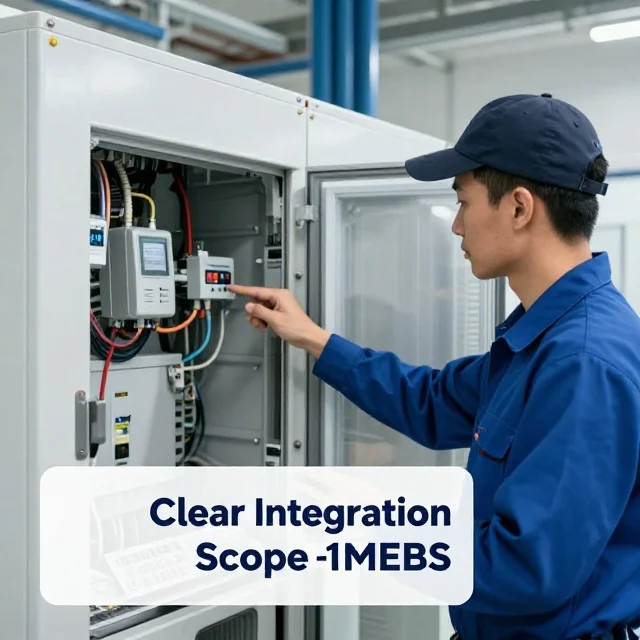
Ask the contractor to provide an integration schedule showing the equipment involved, the communication method, the data points available and the functions that will be monitored or controlled.
For example, integrating a chiller with the BMS may allow operators to monitor operating status, temperatures, alarms and selected performance values. It does not necessarily mean that every internal chiller function can be controlled through the BMS. The actual capabilities depend on the equipment, manufacturer permissions and approved interface.
A clear integration scope helps prevent disputes between the BMS contractor, HVAC contractor, electrical contractor and equipment suppliers.
4. Evaluate Open Protocols and Future Expansion Options
A BMS should be designed to support the building’s future operational needs. Commercial properties may undergo tenant fit-outs, equipment replacement, floor extensions or changes in how spaces are used. A system that is difficult to expand can increase future maintenance and upgrade costs.
Open communication protocols can help different compatible devices exchange information without requiring every component to come from the same manufacturer. However, using an open protocol does not automatically guarantee that all features are interchangeable. Device capabilities, software licences and integration restrictions still need to be checked.
Ask whether the proposed system supports BACnet, Modbus or other appropriate protocols. Request technical documentation for the relevant controllers and confirm which party will maintain the integration software.
You should also clarify ownership of controller programs, graphics, databases, engineering files and software licences. The building owner should receive the agreed documentation and access rights necessary to maintain the system or appoint another qualified service provider where the contract permits.
This is particularly important for commercial buildings in Dubai Marina, Business Bay and Dubai International Financial Centre, where operational requirements can change as tenants and building services evolve.
5. Assess the Contractor’s HVAC Control and Energy Management Knowledge
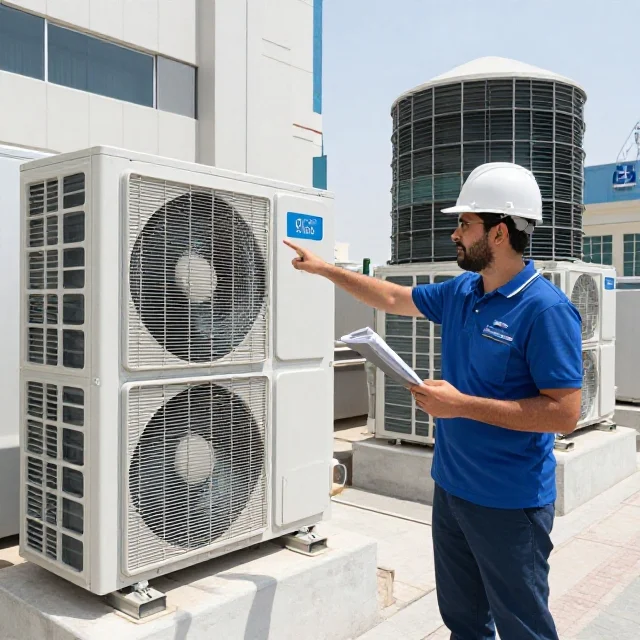
Air conditioning is often one of the most important building services managed through a BMS in Dubai. Commercial buildings rely on effective cooling and ventilation throughout much of the year, so control sequences must respond to occupancy, outdoor conditions, equipment performance and building schedules.
A contractor should understand how air handling units, fan coil units, chilled water pumps, cooling towers and chillers operate together. It should also know how to configure temperature setpoints, scheduling, alarms, valve control and other functions within the approved design.
Energy management should be based on measurable operating data rather than broad promises of savings. A BMS may help identify equipment operating outside scheduled hours, simultaneous heating and cooling, excessive pump operation or unstable temperature control. Whether these findings produce savings depends on the building, the original system condition and the corrective actions taken.
Ask whether the contractor can provide trend reports, operating-hour summaries, alarm histories and energy-meter data where those features are included in the scope.
For example, a building in Business Bay may have several air handling units operating according to different tenant schedules. Reviewing operating trends can help the facility team identify equipment that runs unnecessarily after normal office hours. The contractor can then recommend adjustments, subject to occupancy needs and approved control requirements.
Avoid accepting guaranteed energy savings without a documented baseline, agreed measurement method and clear explanation of the contractor’s responsibilities.
6. Review the Scope of Work Before Comparing Quotations
BMS quotations can look similar while covering different equipment, software licences, integration points and commissioning activities. Comparing only the final price can therefore lead to unexpected costs during installation.
Request a detailed scope of work from every shortlisted contractor. It should identify the controllers, sensors, actuators, panels, network components, software licences, graphics, communication gateways and third-party integrations included in the proposal.
The quotation should also clarify cable routing, containment, power supplies, control wiring, interface requirements and responsibilities for equipment supplied by other contractors.
A points schedule is particularly useful. It lists the signals that the BMS will monitor or control, such as temperature readings, fan status, valve commands, pump alarms and energy-meter values. A sequence of operations explains how the connected equipment should behave under normal operating conditions and during specified faults.
For example, two quotations for the same commercial building may both state that HVAC integration is included. One may cover monitoring only, while the other includes approved start-stop commands, control sequences, alarm configuration and functional testing. These are materially different deliverables.
Ask every bidder to price against the same approved requirements. Make exclusions, provisional sums, variations and responsibilities for third-party interfaces explicit before awarding the contract.
7. Confirm Commissioning and Functional Testing Procedures
Commissioning verifies that the installed BMS performs according to the approved design. It is not enough for a controller to communicate with the workstation; its readings, outputs, alarms and control sequences must also work correctly.
A professional contractor should provide a commissioning plan covering point-to-point checks, sensor verification, output testing, alarm testing, control-sequence validation and integration checks.
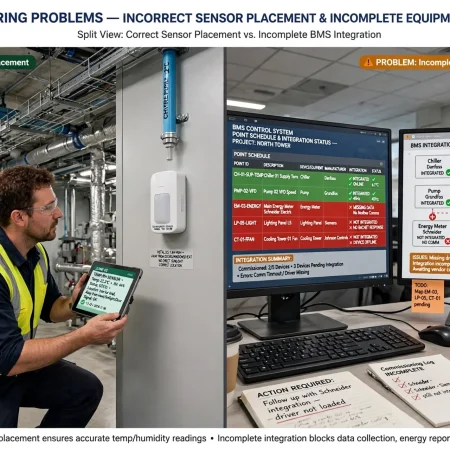
During point-to-point testing, the engineer confirms that each physical sensor or device is associated with the correct software point. A temperature sensor connected to the wrong input or a valve configured in the wrong direction can cause operational problems even when the BMS interface appears normal.
Functional testing should confirm that equipment responds as intended. For example, an air handling unit may need to follow an approved schedule, respond to authorised commands and generate the correct alarm when a monitored fault occurs.
Trend logs can help reveal problems that are not obvious during a short inspection. Repeated valve movement, unstable temperatures, unexpected equipment starts and unusual operating hours may indicate that further tuning is required.
Ask to see sample commissioning records and confirm who will witness testing, approve outstanding items and sign off the completed system. Seasonal testing may also be appropriate when operating conditions change significantly between cooler months and the UAE summer.
8. Check Local Support and Response Times in Dubai
A BMS is an operational system that may need troubleshooting long after installation. If a controller fails, a sensor produces incorrect readings or communication with a plant room is interrupted, the facility team needs a reliable process for getting technical support.
Choose a contractor with a clearly defined support arrangement for your location. Confirm where engineers are based, whether remote diagnostics are available and how urgent faults are prioritised.
The service agreement should state the response time, support hours, escalation process and whether emergency attendance is available. It should also distinguish between remote assistance, on-site diagnosis, corrective work and the supply of replacement parts.
A contractor serving properties in Deira, Al Quoz, Business Bay, Jumeirah and Dubai South should explain how it manages service coverage across those locations. If your building operates around the clock, confirm whether the support arrangement matches its operating hours.
Local availability is useful, but response promises should be written into the contract and supported by a realistic staffing and escalation plan.

9. Review Preventive Maintenance and Annual Maintenance Contracts
BMS maintenance should focus on keeping the system accurate, reliable and useful to building operators. Although a BMS contains fewer moving parts than some mechanical systems, its sensors, controllers, communication networks, software and control sequences still require attention.
A suitable Annual Maintenance Contract (AMC) may include routine inspections, alarm review, controller diagnostics, trend analysis, database backups, software checks and verification of selected sensors and control outputs. The exact activities should reflect the equipment and risks at the property.
Ask how frequently maintenance visits will take place and whether reports will include identified faults, completed actions, outstanding recommendations and system performance observations. Clarify whether replacement parts, software upgrades, new integrations and major reprogramming are included or charged separately.
A useful AMC also establishes responsibility for backups and recovery. If a controller or workstation fails, the contractor should know which files are required to restore operation and where those files are securely maintained.
For larger commercial properties, planned maintenance can be coordinated with the wider facility management schedule to reduce disruption and avoid unnecessary duplication of visits.
10. Verify Training, Documentation and Handover
The building’s facilities team should be able to use the BMS confidently after the contractor completes the installation. Without proper training and documentation, operators may rely on manual overrides or contact the contractor for routine tasks.
The handover package should include as-built drawings, the final points schedule, control sequences, equipment data sheets, network diagrams, operating instructions and commissioning records. It should also identify software licences, user permissions, warranty conditions and the agreed backup arrangements.
Training should cover everyday tasks such as viewing equipment status, acknowledging alarms, checking trends, using approved schedules and reporting faults. More advanced training may be required for engineers responsible for troubleshooting or making authorised configuration changes.
The contractor should explain how the facility team can identify critical alarms and distinguish them from routine maintenance notifications. Clear graphics, sensible alarm priorities and well-organised equipment naming can make the BMS easier to operate.
Before final acceptance, review the documentation and confirm that outstanding issues have been recorded with agreed completion dates. Handover should be treated as a defined project milestone, not an informal transfer of passwords.
11. Consider Cybersecurity and Remote Access
Modern BMS platforms may connect to building networks, remote service tools and energy-monitoring applications. These connections can improve maintenance and visibility, but they also require appropriate cybersecurity controls.
Ask how the contractor separates the BMS network from general business networks, manages user permissions and protects remote access. Individual accounts, strong authentication, secure remote connections and controlled software updates can help reduce risk.
The contractor should explain how configuration backups are protected and how access is removed when staff or service providers no longer require it. Unnecessary internet exposure and shared administrator credentials should be avoided.
Where the BMS connects with corporate IT infrastructure or other operational technology, involve the relevant IT and cybersecurity teams during design. Responsibilities for patching, access approval, incident response and ongoing monitoring should be agreed before the system is placed into service.
12. Understand the Total Cost of Ownership
The lowest initial quotation may not deliver the lowest lifetime cost. A BMS project includes more than controllers and installation labour. Software licences, integration work, commissioning, operator training, maintenance, spare parts and future expansion can all affect the total cost.
A contractor should explain which costs are included in the initial proposal and which may arise later. Ask whether the software requires recurring subscriptions, whether additional points incur licence fees and whether future modifications can be completed by another qualified integrator.
Consider the potential cost of downtime, inefficient HVAC operation and difficult fault diagnosis. A well-documented system with reliable support may be more valuable than a cheaper installation that requires repeated corrective work.
For an existing building, an initial condition survey can help determine whether the current BMS needs repair, expansion, reprogramming or full replacement. The best option depends on the condition of the controllers, compatibility of the existing equipment and the availability of technical support.
13. Questions to Ask Before Appointing a BMS Contractor
Before awarding a BMS contract, ask the contractor to explain its experience with comparable commercial buildings, the proposed control platform and the integration methods required for your equipment.
Confirm whether the scope includes a complete points schedule, approved sequences of operations, controller programming, graphics, commissioning, trend verification and operator training. Ask who is responsible when third-party equipment fails to communicate with the BMS.
Request details about warranty coverage, local service response times, software licences, backup ownership and ongoing maintenance. Ask for a sample handover package and evidence that the proposed team can support the system after project completion.
The contractor should be able to answer these questions clearly and provide written commitments. If important details remain vague before the contract is signed, they may become more difficult to resolve during installation or commissioning.
Choosing a BMS Contractor for Commercial Buildings in Dubai
The right contractor combines technical expertise, practical integration experience, transparent project documentation and dependable local support. Its proposal should explain how the BMS will work with the building’s HVAC and MEP systems, how performance will be tested and how the facility team will maintain the installation over time.
For commercial property owners and facility managers, selecting a BMS Contractor for Commercial buildings should involve a review of the complete project lifecycle, from the initial site survey and system design to commissioning, handover and ongoing maintenance.
This approach is relevant to office developments in Business Bay, commercial towers in Downtown Dubai, retail properties in Deira, logistics facilities in Jebel Ali and mixed-use buildings across Dubai. Each project requires a solution based on its equipment, operational priorities and future expansion plans.
Before making a final decision, compare proposals against the same technical requirements, verify references and document all responsibilities. A properly specified and commissioned BMS can give building operators better visibility of equipment performance, support more informed maintenance decisions and help manage energy use without compromising occupant comfort.

Frequently Asked Questions
What should I check before hiring a BMS contractor in Dubai?
Check comparable project experience, technical capability, manufacturer expertise, integration protocols, commissioning procedures, local support and maintenance services. Review the detailed scope, points schedule, warranty and handover documents before signing the contract.
Which systems can a commercial BMS control?
Depending on the design and available interfaces, a BMS can monitor and control HVAC equipment, air handling units, pumps, selected lighting controls, energy meters and other compatible building services. The exact functions depend on the equipment, integration method and approved control strategy.
Is BACnet important when selecting a BMS contractor?
BACnet is a widely used building automation communication protocol that can support integration between compatible controllers and supervisory systems. It can improve flexibility, but compatibility and supported functions must still be checked for the specific devices being proposed.
How much does a BMS installation cost in Dubai?
The cost depends on the number of control points, building size and complexity, equipment interfaces, software licences, installation requirements and commissioning scope. A site survey and detailed technical specification provide a more meaningful basis for a quotation than floor area alone.
Can an existing BMS be upgraded instead of replaced?
Yes. Depending on the condition of the existing controllers, software, wiring and communication network, a contractor may be able to upgrade selected components, integrate additional equipment or improve the control strategy. A technical survey should establish compatibility and identify any limitations before work begins.
Why is BMS commissioning important?
Commissioning verifies that sensors, controllers, alarms, communication links and control sequences operate as intended. It helps identify wiring errors, incorrect readings and configuration problems before the building relies on the system for daily operations.
Does a BMS automatically reduce energy consumption?
Not automatically. A BMS provides monitoring and control capabilities that can help identify waste and improve operating schedules. Actual savings depend on the original system, correct commissioning, suitable settings, equipment condition and ongoing optimisation.