Introduction
Understanding Smart HVAC Systems
A smart HVAC system is an advanced climate control solution that combines traditional heating, ventilation, and air conditioning equipment with intelligent software, automation controls, connected sensors, and cloud-based monitoring platforms. Instead of operating continuously at fixed settings, these systems collect and analyze data to make automatic adjustments that improve efficiency without compromising indoor comfort.
Unlike conventional HVAC systems, smart solutions continuously monitor variables such as indoor temperature, humidity, carbon dioxide (CO₂) levels, occupancy, outdoor weather conditions, equipment performance, airflow, and energy usage. This data is processed through Building Management Systems (BMS) or Building Automation Systems (BAS), enabling the HVAC equipment to operate only when necessary.
The result is a more responsive system that minimizes unnecessary energy consumption while maintaining consistent indoor conditions.
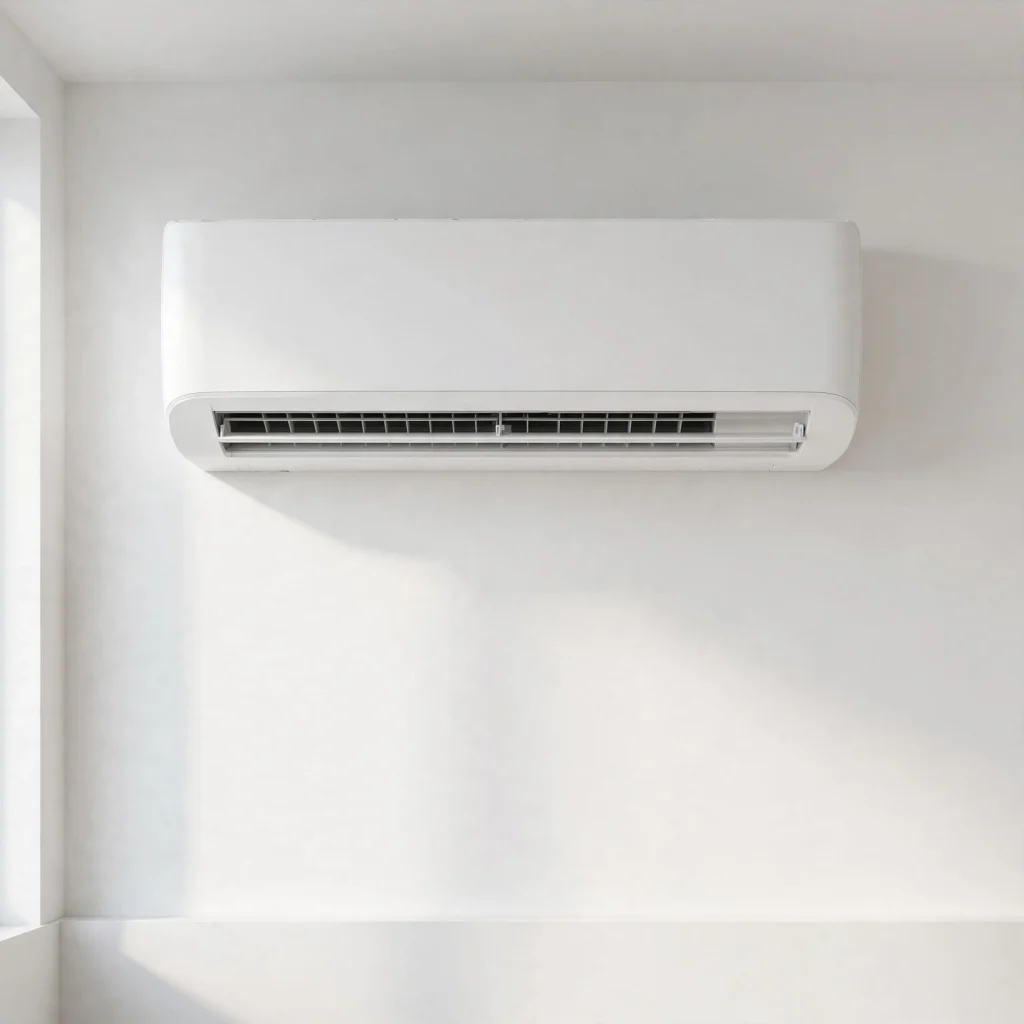
Why Energy Consumption Is So High in UAE Buildings
The UAE’s desert climate creates one of the world’s most demanding operating environments for HVAC systems. Air conditioning is not simply a luxury; it is essential for residential comfort, workplace productivity, healthcare facilities, educational institutions, hotels, shopping malls, and industrial operations.
Several factors contribute to high HVAC energy consumption across Dubai and other Emirates:
- Extremely high outdoor temperatures for much of the year.
- Continuous operation of air conditioning systems.
- Large glass façades that increase solar heat gain.
- High humidity during coastal summer months.
- Large commercial developments requiring centralized cooling.
- Population growth and expanding infrastructure.
- Mixed-use developments operating 24 hours a day.
Major business districts such as DIFC, Downtown Dubai, Dubai Internet City, Dubai Silicon Oasis, Business Bay, Expo City Dubai, and Abu Dhabi’s Al Maryah Island rely heavily on efficient HVAC systems to maintain comfortable indoor environments while controlling operational costs.
Because cooling demand remains high throughout the year, even small improvements in HVAC efficiency can translate into substantial energy savings over time.
Key Components of a Smart HVAC System
Modern smart HVAC systems integrate multiple technologies that work together to maximize efficiency. Rather than relying on manual controls, every component communicates through a centralized management platform to deliver optimal performance.
Building Management System (BMS)
A Building Management System is the central intelligence of many commercial HVAC installations. It monitors and controls HVAC equipment, lighting systems, electrical infrastructure, water pumps, fire safety systems, and other building services from a single interface.
The BMS continuously evaluates operating conditions and automatically adjusts cooling output to match the building’s actual requirements. Instead of running equipment at full capacity throughout the day, it optimizes performance based on occupancy schedules, weather conditions, and energy demand.
For commercial buildings in Dubai Marina, Business Bay, Jumeirah Lake Towers (JLT), and Sheikh Zayed Road, a BMS plays a critical role in reducing operational expenses while maintaining occupant comfort.
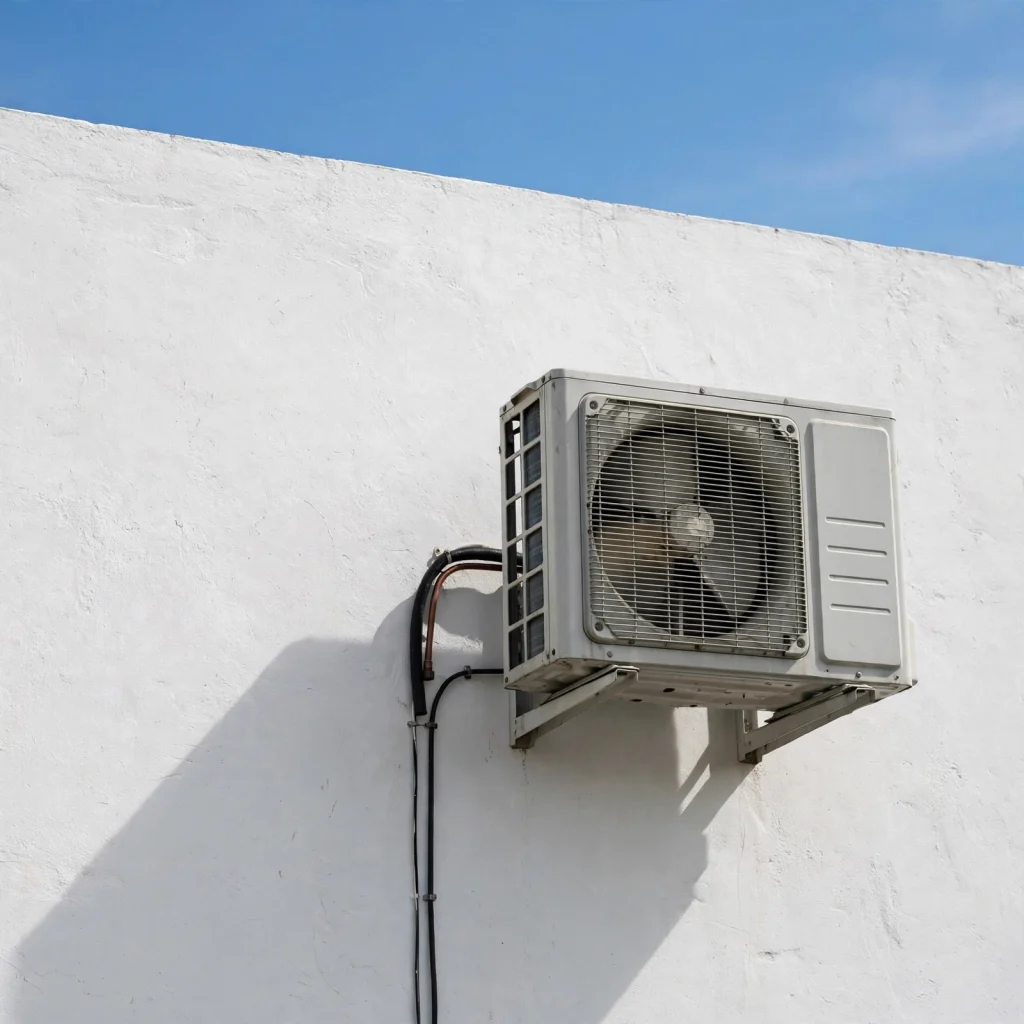
Building Automation System (BAS)
A Building Automation System works alongside the BMS by automating HVAC operations without requiring constant manual intervention. Sensors installed throughout the building collect real-time environmental data, allowing the BAS to adjust temperature settings, airflow rates, and ventilation automatically.
For example, conference rooms, meeting spaces, hotel banquet halls, and classrooms do not require maximum cooling when unoccupied. A BAS detects occupancy changes and reduces HVAC output accordingly, preventing unnecessary electricity consumption.
This intelligent automation significantly improves energy efficiency compared to traditional timer-based systems.
Internet of Things (IoT) Sensors Improve HVAC Intelligence
One of the biggest advancements in HVAC technology is the integration of Internet of Things (IoT) sensors. These smart devices continuously collect information about indoor conditions and communicate with HVAC controllers through wireless networks.
Common IoT sensors include:
- Temperature sensors
- Humidity sensors
- Carbon dioxide (CO₂) sensors
- Occupancy sensors
- Motion detectors
- Air quality sensors
- Pressure sensors
- Airflow sensors
Instead of relying on fixed assumptions, the HVAC system reacts to actual building conditions.
For instance, if a meeting room in a Business Bay office becomes fully occupied, the occupancy sensor immediately detects increased activity. The HVAC system automatically increases fresh air ventilation and cooling output only for that specific area. Once occupants leave, cooling is reduced to conserve electricity.
This intelligent control strategy ensures that energy is never wasted cooling empty spaces while maintaining exceptional comfort for occupants.
Smart Thermostats Provide Intelligent Temperature Control
Smart thermostats have transformed how residential and commercial properties manage indoor temperatures. Unlike traditional thermostats that only allow manual temperature adjustments, smart thermostats learn user preferences, monitor environmental conditions, and automatically optimize cooling schedules.
Modern smart thermostats can connect with:
- Mobile applications
- Cloud-based HVAC platforms
- IoT sensors
- Smart home systems
- Voice assistants
- Building automation networks
A homeowner in Dubai Hills Estate or Arabian Ranches can remotely monitor and control their home’s cooling system through a smartphone. If the property is empty during working hours, the thermostat can automatically adjust temperature settings to reduce unnecessary AC operation.
Smart thermostats also analyze usage patterns. Over time, they understand when residents usually arrive home, sleep, or leave for work, creating efficient cooling schedules without requiring constant manual adjustments.
For villas, apartments, and offices throughout Dubai and Abu Dhabi, smart temperature management can significantly reduce electricity consumption while maintaining indoor comfort.
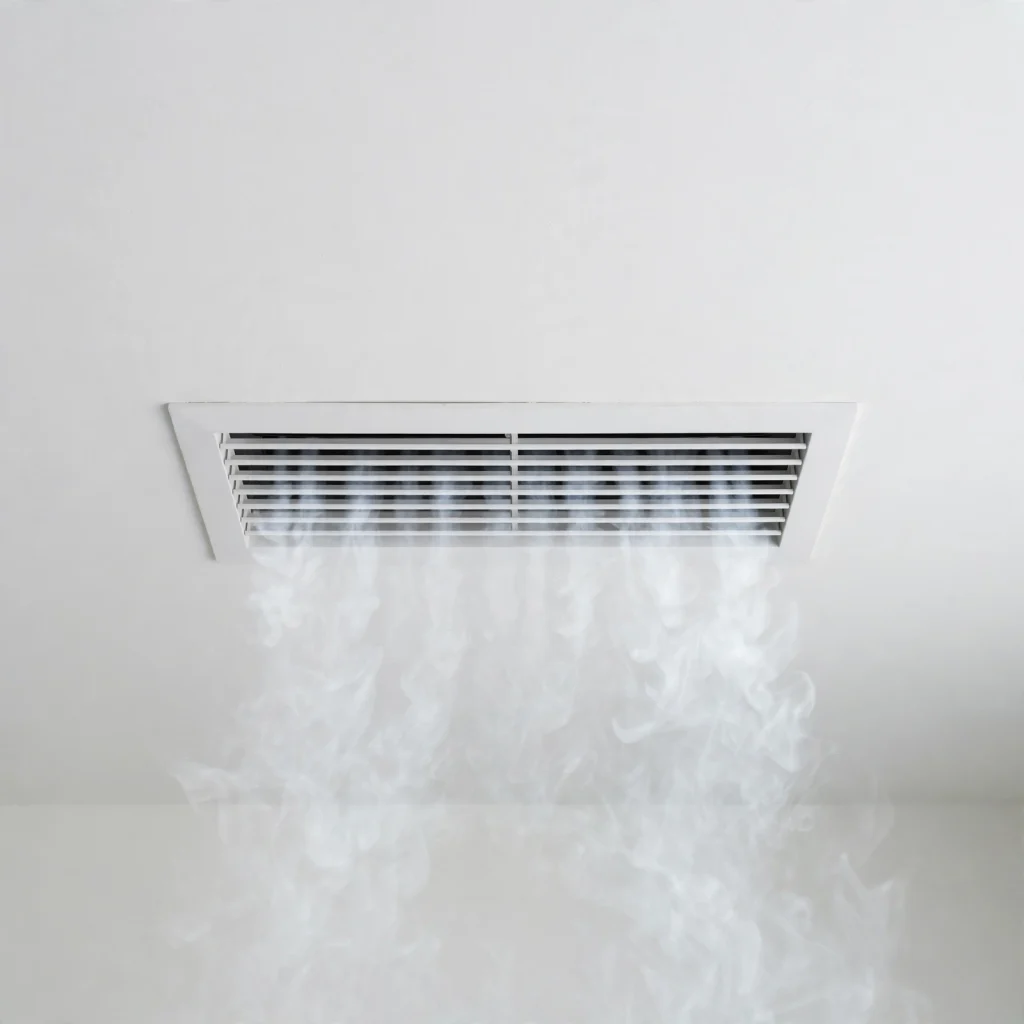
Air Handling Units (AHUs) Become More Efficient Through Automation
Air Handling Units (AHUs) are essential components of central HVAC systems. They regulate and distribute conditioned air throughout large buildings by controlling temperature, humidity, filtration, and ventilation.
In conventional HVAC systems, AHUs often operate according to fixed settings. However, smart HVAC solutions allow AHUs to communicate with sensors and automation platforms to adjust performance according to real-time requirements.
Smart AHU systems can control:
- Fan speed
- Cooling coil operation
- Fresh air intake
- Air filtration
- Humidity levels
- Air pressure
For example, an office building in DIFC may experience high occupancy during business hours but significantly lower occupancy after working hours. A smart AHU system reduces airflow during low-demand periods while increasing ventilation when occupancy rises.
This demand-based operation reduces energy waste and improves indoor air quality simultaneously.
Fan Coil Units (FCUs) Improve Zone-Based Cooling Efficiency
Fan Coil Units (FCUs) are commonly used in residential buildings, hotels, offices, and apartments across Dubai. These units provide localized temperature control for individual rooms or zones.
Smart FCU systems allow different areas of a building to operate independently. Instead of cooling an entire property at the same level, each zone receives only the amount of cooling it requires.
For example:
- Hotel rooms can reduce cooling when guests leave.
- Office meeting rooms can operate only during scheduled use.
- Apartment bedrooms can maintain different temperatures from living areas.
- Retail spaces can adjust cooling based on customer traffic.
This zoning capability prevents energy loss and improves occupant comfort.
In luxury developments such as Palm Jumeirah residences, Downtown Dubai apartments, and Dubai Marina towers, smart FCU controls help property owners maintain premium comfort while managing electricity costs.
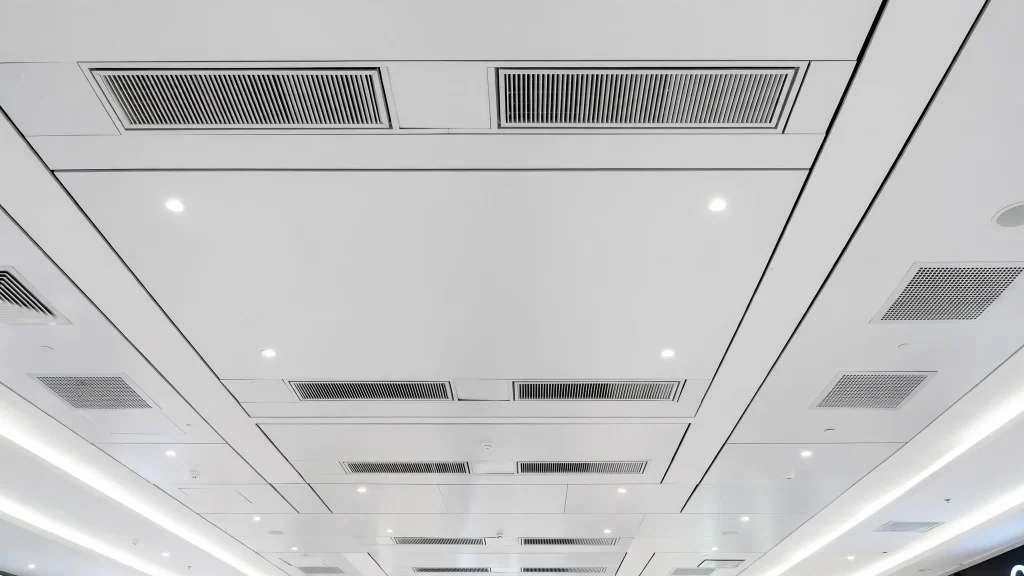
Variable Air Volume (VAV) Systems Reduce Unnecessary Cooling
Variable Air Volume (VAV) systems are another important technology used in energy-efficient HVAC designs. Instead of delivering a constant amount of conditioned air, VAV systems adjust airflow according to the cooling requirements of each space.
A traditional system may supply the same airflow whether a room is occupied by ten people or completely empty. A smart VAV system continuously monitors conditions and adjusts air volume accordingly.
VAV controllers use information from:
- Temperature sensors
- Occupancy sensors
- CO₂ sensors
- Building automation systems
to determine the required airflow.
This approach is particularly valuable in:
- Corporate offices
- Universities
- Government buildings
- Airports
- Hotels
- Shopping centres
Large UAE developments such as Dubai International Financial Centre (DIFC), Dubai World Trade Centre, and Abu Dhabi business districts benefit from VAV technology because it reduces cooling demand while maintaining comfortable indoor environments.
VRF Systems Deliver High Energy Efficiency for Modern Buildings
Variable Refrigerant Flow (VRF) systems have become increasingly popular in UAE residential and commercial projects due to their flexibility and energy efficiency.
Unlike traditional HVAC systems that provide the same cooling output throughout a building, VRF technology adjusts refrigerant flow based on individual zone requirements.
A VRF system consists of:
- Outdoor condensing units
- Indoor fan coil units
- Refrigerant piping networks
- Smart controllers
- Advanced sensors
The system can simultaneously provide different temperature settings in separate areas.
For example, a luxury villa in Emirates Hills may require stronger cooling in living spaces during the afternoon while bedrooms remain at lower capacity. A VRF system automatically distributes cooling where it is needed instead of operating all units at maximum output.
This makes VRF systems an excellent solution for villas, hotels, offices, and mixed-use buildings across Dubai, Sharjah, and Abu Dhabi.
Energy Recovery Ventilators Improve Fresh Air Efficiency
Fresh air ventilation is essential for maintaining healthy indoor environments, but bringing outdoor air into buildings creates additional cooling demand, especially in the UAE climate.
Energy Recovery Ventilators (ERVs) solve this challenge by transferring energy between incoming and outgoing air streams. Before fresh outdoor air enters the building, the ERV system preconditions it using energy from the exhausted indoor air.
This reduces the workload on:
- Chillers
- Air conditioning compressors
- Cooling coils
- AHUs
The result is improved ventilation with lower energy consumption.
ERV systems are particularly useful in:
- Schools
- Hospitals
- Offices
- Hotels
- High-rise residential buildings
where maintaining indoor air quality is essential.
Smart Chiller Plants Reduce Cooling Costs in Large Buildings
Many large UAE developments depend on centralized chilled water systems. A chiller plant includes major components such as:
- Chillers
- Cooling towers
- Condensers
- Evaporators
- Chilled water pumps
- Primary and secondary pumps
- Heat exchangers
Smart chiller plant automation uses sensors, analytics, and advanced controls to optimize cooling production.
The system monitors:
- Cooling demand
- Water temperature
- Pressure levels
- Equipment efficiency
- Outdoor temperature
- Operating hours
Instead of running multiple chillers unnecessarily, smart controls activate only the required equipment based on demand.
This approach is widely used in commercial towers, hotels, and district cooling networks throughout Dubai.
Predictive Maintenance Prevents Energy Waste
Another major advantage of smart HVAC technology is predictive maintenance. Traditional maintenance schedules are based on fixed timelines, but they may overlook developing problems.
Smart HVAC systems use sensors and analytics to detect early warning signs such as:
- Reduced airflow
- Rising energy consumption
- Compressor problems
- Filter blockage
- Pump inefficiency
- Temperature fluctuations
By identifying issues before equipment failure occurs, building owners can maintain optimal performance and avoid costly repairs.
For UAE properties where HVAC systems operate almost every day of the year, predictive maintenance plays an important role in reducing downtime and controlling operational expenses.
Smart HVAC Solutions Improve Energy Efficiency in Dubai Villas
Large villas typically have extensive HVAC networks covering multiple bedrooms, living areas, kitchens, outdoor spaces, and entertainment rooms. Traditional cooling systems often waste energy because every area receives similar cooling levels regardless of actual usage.
Smart HVAC automation introduces zone-based climate control, allowing homeowners to manage different areas independently.
For example:
- Bedrooms can maintain personalized temperatures during nighttime.
- Guest rooms can reduce cooling when unused.
- Living rooms can increase cooling during family gatherings.
- Outdoor areas can operate according to scheduled requirements.
Luxury communities such as:
- Dubai Hills Estate
- Arabian Ranches
- Palm Jumeirah
- Jumeirah Islands
- Emirates Hills
- The Springs
benefit significantly from smart HVAC solutions because these properties often include large floor areas and multiple cooling zones.
By reducing unnecessary operation, smart systems lower energy consumption while improving overall comfort.
Smart HVAC Systems Support Better Indoor Air Quality (IAQ)
Energy efficiency is not only about reducing electricity usage; it is also about creating healthier indoor environments. Modern smart HVAC systems combine energy management with Indoor Air Quality (IAQ) monitoring.
Advanced systems measure:
- Carbon dioxide (CO₂) levels
- Humidity percentage
- Airborne particles
- Temperature fluctuations
- Ventilation performance
When indoor air quality decreases, the HVAC system can automatically increase fresh air ventilation.
This is particularly important in UAE buildings because residents and employees spend significant time indoors due to extreme outdoor temperatures.
Smart ventilation solutions help maintain healthier environments in:
- Residential buildings
- Offices
- Schools
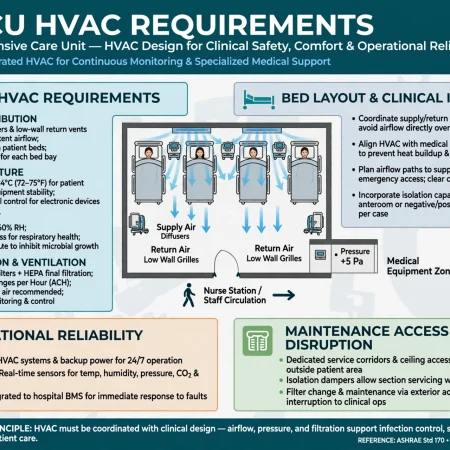
- Healthcare facilities
- Hotels
- Retail spaces
By controlling ventilation intelligently, buildings receive enough fresh air without wasting excessive cooling energy.
Commercial Buildings Achieve Greater Savings Through HVAC Automation
Commercial properties in Dubai operate under different challenges compared to residential buildings. Offices, shopping centres, hotels, and industrial facilities often have thousands of occupants with constantly changing cooling requirements.
Without intelligent HVAC control, these buildings may waste significant energy by cooling empty spaces or operating equipment at unnecessary capacity.
Smart HVAC systems help commercial facilities optimize:
- Chiller operation
- Airflow distribution
- Temperature settings
- Equipment scheduling
- Energy monitoring
For example, an office tower in Business Bay may require maximum cooling during working hours but significantly less capacity after employees leave. Smart automation automatically adjusts the system based on occupancy schedules.
Similarly, hotels in areas such as Dubai Marina, Downtown Dubai, and Palm Jumeirah can optimize guest room cooling through smart FCU controls and occupancy detection.
The Role of Professional HVAC Experts in Smart System Installation
Although smart HVAC technology provides advanced automation capabilities, proper design, installation, and commissioning are essential for achieving maximum energy savings.
Incorrect HVAC sizing, poor duct design, inefficient controls, or improper sensor placement can reduce system performance.
Professional HVAC specialists evaluate:
- Building layout
- Cooling requirements
- Existing HVAC infrastructure
- Air distribution patterns
- Energy consumption data
- Automation requirements
Working with experienced specialists ensures that smart HVAC solutions are correctly integrated with existing systems.
Property owners searching for reliable expertise can consult Professional HVAC contractors in Dubai marina for advanced HVAC installation, automation integration, maintenance, and energy optimization solutions designed according to UAE climate conditions.
Smart HVAC Applications in Dubai Commercial Areas
Dubai has become one of the world’s leading cities for smart buildings and sustainable development. Many commercial districts are adopting intelligent HVAC technologies to improve efficiency and reduce environmental impact.
Dubai Marina
Dubai Marina contains residential towers, hotels, restaurants, and commercial spaces where HVAC efficiency is critical due to high occupancy levels.
Smart HVAC systems help these buildings manage cooling demand by controlling individual zones, monitoring equipment performance, and reducing unnecessary operation.
Business Bay
Business Bay is one of Dubai’s largest commercial hubs, containing office towers and mixed-use developments.
Smart HVAC automation helps facility managers control large centralized cooling systems, optimize chiller performance, and monitor energy consumption through Building Management Systems.
Downtown Dubai
High-profile developments around Downtown Dubai require advanced climate control solutions to maintain comfort for residents, visitors, and businesses.
Smart HVAC technologies help manage cooling requirements in:
- Luxury residences
- Hotels
- Retail spaces
- Restaurants
- Corporate offices
Dubai Silicon Oasis
Technology-focused communities such as Dubai Silicon Oasis benefit from intelligent building solutions that combine automation, energy monitoring, and efficient HVAC management.
Smart HVAC Systems and UAE Sustainability Goals
The UAE continues to focus on sustainable development through initiatives such as:
- UAE Net Zero 2050 Strategy
- Dubai Clean Energy Strategy 2050
- Dubai Green Building Regulations
- Estidama Sustainability Framework
Buildings represent a major opportunity for reducing energy consumption because cooling demand remains high throughout the year.
Smart HVAC systems contribute to sustainability by:
- Reducing electricity consumption
- Lowering carbon emissions
- Improving equipment efficiency
- Minimizing wasted cooling
- Supporting green building certifications
Modern developments increasingly consider HVAC automation as a fundamental part of sustainable building design rather than an optional upgrade.
How Smart HVAC Analytics Help Building Owners Make Better Decisions
One of the biggest advantages of intelligent HVAC systems is access to real-time data.
Traditional systems only show whether equipment is operating. Smart HVAC platforms provide detailed information about:
- Energy consumption trends
- Equipment performance
- Cooling demand patterns
- Maintenance requirements
- Operational efficiency
Facility managers can use this information to identify energy waste and improve building performance.
For example, if analytics show that a chiller consumes excessive electricity during specific hours, managers can investigate possible causes such as incorrect scheduling, equipment inefficiency, or maintenance issues.
Data-driven decisions allow UAE property owners to achieve long-term energy savings.
Cloud-Based HVAC Monitoring Improves Building Management
Modern smart HVAC systems are no longer limited to local control panels. Cloud-based platforms allow property owners and facility managers to monitor HVAC performance from anywhere through computers, tablets, and smartphones.
Cloud HVAC management provides access to:
- Real-time energy monitoring
- Remote system control
- Equipment alerts
- Performance reports
- Maintenance notifications
- Historical energy data
For facility managers responsible for multiple properties across Dubai, Sharjah, or Abu Dhabi, cloud monitoring provides better visibility and faster decision-making.
A building operator managing properties in areas such as Dubai Marina, Jumeirah Lake Towers (JLT), Al Barsha, and Sheikh Zayed Road can monitor HVAC performance remotely and identify problems before they become expensive failures.
Smart HVAC Integration With Renewable Energy Systems
As renewable energy adoption increases across the UAE, smart HVAC systems are becoming an important part of sustainable building strategies.
Many modern buildings are integrating HVAC automation with:
- Solar photovoltaic (PV) systems
- Battery energy storage
- Smart electrical grids
- Energy management platforms
For example, solar energy generated during daylight hours can support HVAC operation while smart controls adjust cooling loads based on available renewable energy.
This integration helps reduce dependence on traditional electricity sources and supports the UAE’s long-term sustainability goals.
Buildings equipped with smart HVAC systems can intelligently balance comfort requirements with energy availability, creating more efficient and environmentally responsible operations.
Smart HVAC Systems Improve Chiller Plant Efficiency
Large buildings throughout Dubai rely on centralized chilled water systems for cooling. These systems are commonly found in:
- Hotels
- Shopping malls
- Commercial towers
- Hospitals
- Industrial facilities
A chiller plant consists of multiple components, including:
- Water-cooled chillers
- Air-cooled chillers
- Cooling towers
- Condensers
- Evaporators
- Chilled water pumps
- Heat exchangers
- Control systems
Smart HVAC automation improves chiller plant efficiency by continuously analyzing cooling demand and adjusting equipment operation.
For example, during periods of lower occupancy, the system may reduce the number of active chillers instead of running all machines at full capacity.
This reduces:
- Electricity consumption
- Equipment stress
- Maintenance costs
- Carbon emissions
Advanced chiller optimization is especially valuable for large developments in Dubai Downtown, Business Bay, Dubai International Financial Centre (DIFC), and Dubai Internet City.
The Importance of Regular HVAC Maintenance in Smart Systems
Although smart HVAC systems use advanced technology, regular maintenance remains essential. Sensors, controllers, filters, coils, and mechanical components must operate correctly to achieve maximum efficiency.
Common maintenance requirements include:
- Air filter replacement
- Coil cleaning
- Duct inspection
- Sensor calibration
- Refrigerant level checks
- Electrical inspections
- Software updates
- Control system testing
A poorly maintained smart HVAC system may provide incorrect data, resulting in inefficient operation.
Regular maintenance ensures that automation systems continue delivering accurate information and making effective energy-saving decisions.
Smart HVAC Systems for Hotels and Hospitality Industry in UAE
The UAE hospitality sector depends heavily on HVAC performance because guest comfort directly affects customer satisfaction.
Hotels in locations such as:
- Dubai Marina
- Palm Jumeirah
- Downtown Dubai
- Jumeirah Beach Residence (JBR)
- Abu Dhabi Corniche
require precise climate control throughout guest rooms, restaurants, conference halls, and recreational areas.
Smart HVAC systems allow hotels to:
- Reduce cooling in vacant rooms
- Maintain personalized guest temperatures
- Optimize restaurant ventilation
- Monitor energy consumption
- Improve operational efficiency
Occupancy-based controls are particularly valuable because hotel rooms are not continuously occupied. Smart systems ensure energy is used only when required.
Smart HVAC Solutions for Industrial and Warehouse Facilities
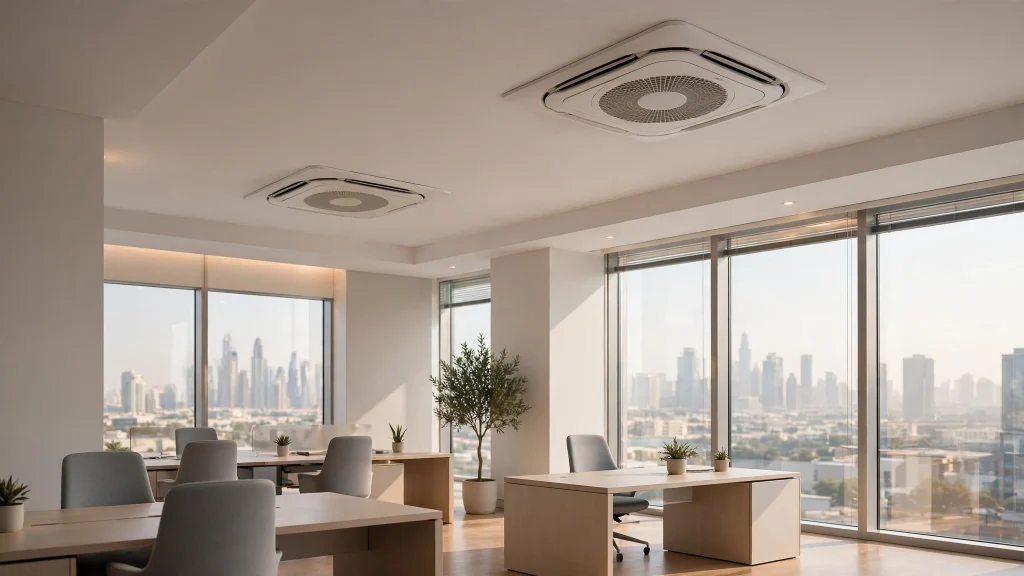
Industrial facilities in areas such as Jebel Ali Industrial Area, Al Quoz Industrial Area, Dubai Industrial City, and Ras Al Khor require reliable HVAC systems for workers, equipment, and production processes.
Smart HVAC technology helps industrial facilities manage:
- Large ventilation requirements
- Temperature-sensitive environments
- Energy-intensive cooling operations
- Indoor air quality standards
By monitoring environmental conditions and adjusting ventilation automatically, smart HVAC systems help industries maintain safe working conditions while controlling energy expenses.
Future of Smart HVAC Systems in UAE Smart Buildings
The next generation of buildings will rely on fully connected ecosystems where HVAC systems communicate with lighting, security, elevators, and energy management platforms.
Future HVAC developments will include:
Advanced Machine Learning
AI systems will continuously learn building behavior and improve energy optimization without human intervention.
Digital Twin Technology
Digital twins create virtual models of buildings that allow engineers to simulate HVAC performance and identify improvement opportunities.
Advanced Indoor Air Quality Monitoring
Future systems will provide detailed analysis of:
- Air pollutants
- CO₂ levels
- Humidity conditions
- Ventilation effectiveness
Autonomous HVAC Operation
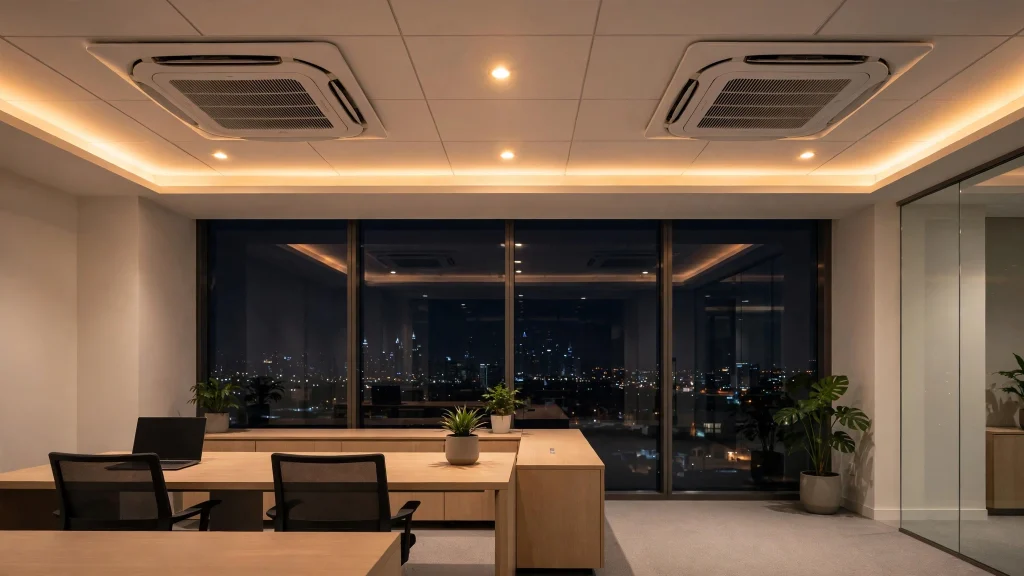
Buildings will increasingly use self-adjusting systems that automatically balance energy efficiency and occupant comfort.
Frequently Asked Questions About Smart HVAC Systems
Do smart HVAC systems reduce electricity bills in UAE homes?
Yes, smart HVAC systems can reduce electricity consumption by optimizing cooling schedules, controlling temperatures automatically, improving airflow management, and reducing unnecessary operation.
The actual savings depend on building size, HVAC condition, usage patterns, and system design.
Are smart HVAC systems suitable for existing buildings?
Yes, many smart HVAC technologies can be integrated into existing properties. Solutions such as smart thermostats, IoT sensors, BMS upgrades, and energy monitoring systems can improve older HVAC installations without complete replacement.
Can smart HVAC systems improve indoor air quality?
Yes. Smart HVAC systems monitor ventilation, humidity, and air quality conditions. They can automatically adjust fresh air supply and filtration levels to maintain healthier indoor environments.
Are smart HVAC systems useful for commercial buildings?
Absolutely. Commercial buildings often achieve the greatest benefits because they have larger cooling requirements. Offices, hotels, shopping malls, and industrial facilities can significantly reduce energy waste through HVAC automation.
Conclusion: Smart HVAC Technology Is the Future of Energy-Efficient Cooling in UAE
Smart HVAC systems have changed the way buildings manage cooling, ventilation, and energy consumption. In the UAE’s challenging climate, where air conditioning operates throughout most of the year, intelligent HVAC solutions provide an effective way to reduce electricity usage while maintaining superior indoor comfort.
Technologies such as Building Management Systems (BMS), IoT sensors, Variable Frequency Drives (VFD), smart thermostats, VRF systems, Variable Air Volume (VAV) controls, Energy Recovery Ventilators (ERV), and AI-powered analytics work together to create efficient and sustainable buildings.
From residential communities such as Dubai Hills Estate and Arabian Ranches to commercial districts including Dubai Marina, Business Bay, and Downtown Dubai, smart HVAC systems are becoming essential for modern properties.
By investing in intelligent HVAC design, professional installation, and regular maintenance, UAE property owners can achieve lower operating costs, improved indoor air quality, extended equipment life, and stronger sustainability performance.
As buildings become smarter and energy regulations continue evolving, smart HVAC systems will remain one of the most important technologies shaping the future of comfortable, efficient, and environmentally responsible spaces across the United Arab Emirates.