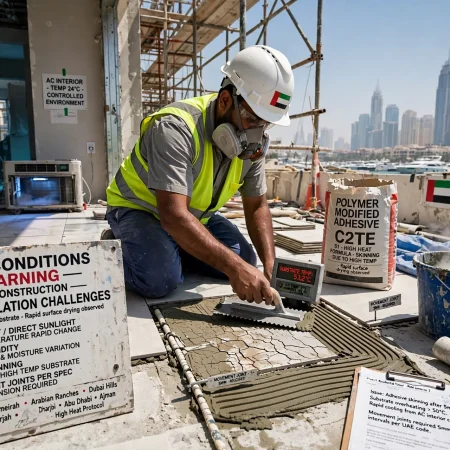
Bathroom grout is often overlooked until it starts turning dark, cracking, crumbling, or allowing moisture to reach areas behind the tiles. Although grout is designed to protect tile joints and create a finished surface, it does not last forever. How often bathroom grout should be replaced depends on the type of grout, moisture exposure, cleaning routine, installation quality, ventilation, and the condition of the underlying tile installation.
In Dubai homes and commercial properties, bathrooms can experience frequent temperature changes, high humidity, intensive cleaning, and continuous air-conditioning. These conditions can affect grout performance over time. Knowing when grout needs cleaning, repair, resealing, or complete replacement can help prevent more expensive tile and waterproofing problems.
How Long Does Bathroom Grout Usually Last?
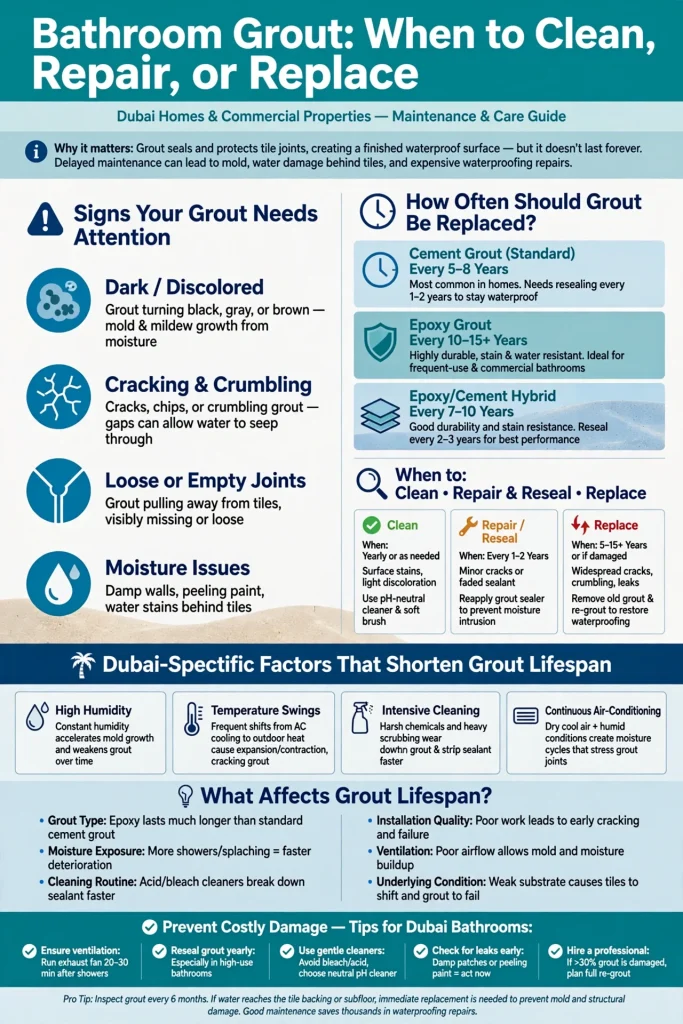
Bathroom grout can commonly last around 8 to 15 years when it has been correctly installed, properly maintained, and exposed to normal bathroom conditions. However, there is no universal replacement schedule. Some grout may need attention much sooner if it was poorly mixed, incorrectly installed, repeatedly exposed to standing water, or affected by movement in the tiled surface.
Cement-based grout is generally more porous than epoxy grout and may require more maintenance. Epoxy grout is highly resistant to water, stains, and many household chemicals, which can make it suitable for demanding wet areas. However, even durable grout can deteriorate when the substrate moves, joints are incorrectly designed, or water gets behind the tiled system.
For this reason, homeowners should inspect grout based on its condition rather than replacing it simply because a certain number of years have passed.
What Are the Signs That Bathroom Grout Needs Replacement?
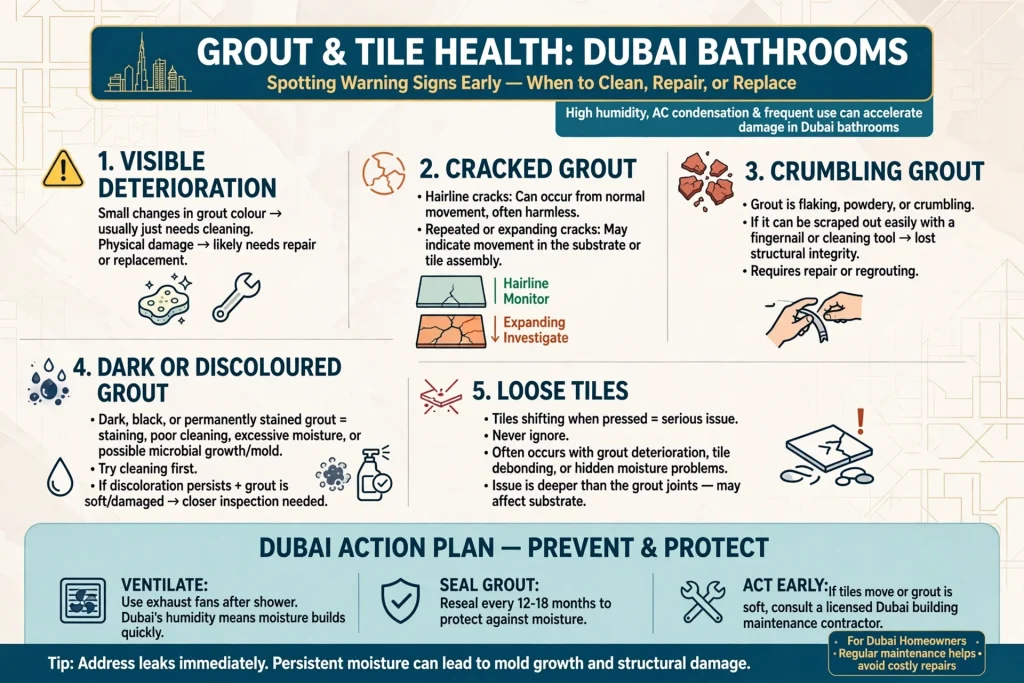
The most obvious indication is visible deterioration. Small changes in grout colour may only require cleaning, while physical damage usually requires repair or replacement.
Cracked grout is one of the most common warning signs. Hairline cracks can sometimes develop from normal movement, but repeated or expanding cracks may indicate movement in the substrate or tile assembly.
Crumbling grout is another important warning sign. If the material can easily be scraped out with a fingernail or cleaning tool, it may have lost its structural integrity.
Dark or permanently discoloured grout can indicate staining, poor cleaning, excessive moisture, or possible microbial growth. Cleaning should be attempted first, but persistent discoloration combined with soft or damaged grout deserves closer inspection.
Loose tiles should never be ignored. Grout deterioration can sometimes occur alongside tile debonding or moisture problems. If tiles move when pressed, the issue may be deeper than the grout joints.
Cracked Grout: Does It Always Need to Be Replaced?
Not every crack means the entire bathroom needs new grout. The location, size, and cause of the crack matter.
A small isolated crack may develop because of minor movement or an impact. In such cases, the damaged section can sometimes be removed and regrouted.
However, widespread cracking across multiple tile joints can indicate substrate movement, inadequate adhesive coverage, structural movement, or missing movement joints. Simply applying new grout over the existing cracks may only provide a temporary cosmetic improvement.
Bathroom floors are particularly important because repeated foot traffic and movement can expose weaknesses in the tile installation. A professional inspection can determine whether the problem is limited to grout or involves the tile adhesive and substrate.
Why Does Bathroom Grout Turn Black?
Black grout is often associated with dirt or mould, but several conditions can cause darkening.
Bathrooms naturally have high moisture levels. Poor ventilation allows humidity to remain on walls, ceilings, grout joints, and other surfaces for longer periods. Persistent moisture can contribute to staining and microbial growth.
Silicone sealant around shower areas can also become discoloured. It should not be confused with cement grout because silicone movement joints serve a different purpose.
If dark grout can be restored through proper cleaning, replacement may not be necessary. If the grout remains discoloured, soft, cracked, or deteriorated after cleaning, removing the damaged material may be more appropriate.
In Dubai apartments and villas, bathroom ventilation is particularly important because air-conditioning does not automatically provide adequate bathroom moisture extraction.
How Often Should Shower Grout Be Replaced?
Shower grout generally experiences more moisture exposure than grout in a dry bathroom area. As a result, shower joints may require more frequent inspection.
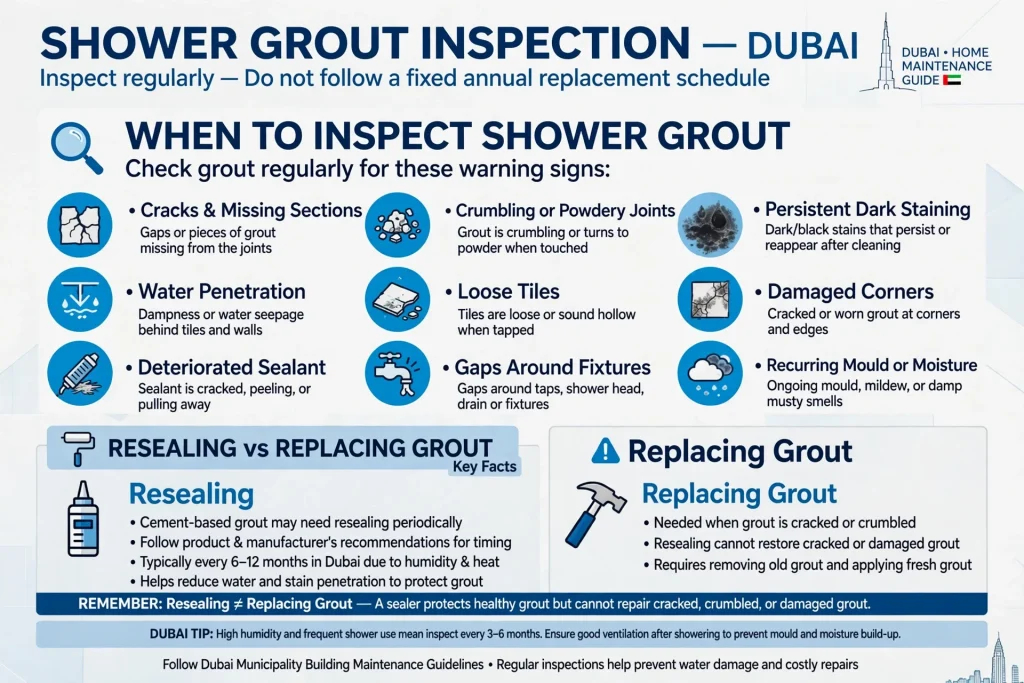
Instead of following a fixed annual replacement schedule, inspect shower grout regularly for:
- Cracks and missing sections
- Crumbling or powdery joints
- Persistent dark staining
- Water penetration
- Loose tiles
- Damaged corners
- Deteriorated sealant
- Gaps around fixtures
- Recurring mould or moisture problems
Cement-based shower grout may need resealing periodically depending on the product and manufacturer’s recommendations. Resealing is not the same as replacing grout. A sealer can help reduce water and stain penetration, but it cannot restore grout that has already cracked or crumbled.
Does Bathroom Grout Need to Be Sealed?
Many cementitious grouts benefit from sealing because cement-based grout is porous. A suitable grout sealer can reduce the penetration of moisture, stains, and contaminants.
However, sealing does not make a poor installation waterproof. The waterproofing system behind the tiles is responsible for protecting the substrate from water penetration. Grout and tile surfaces form part of the visible finish, while the waterproofing membrane and correctly detailed joints provide deeper moisture protection.
Epoxy grout generally has different maintenance requirements because it is much less porous than traditional cement-based grout. Product-specific instructions should always be followed.
A common mistake is applying a new sealer over severely damaged grout. If the grout is already cracked, missing, or powdery, replacement should be considered before sealing.
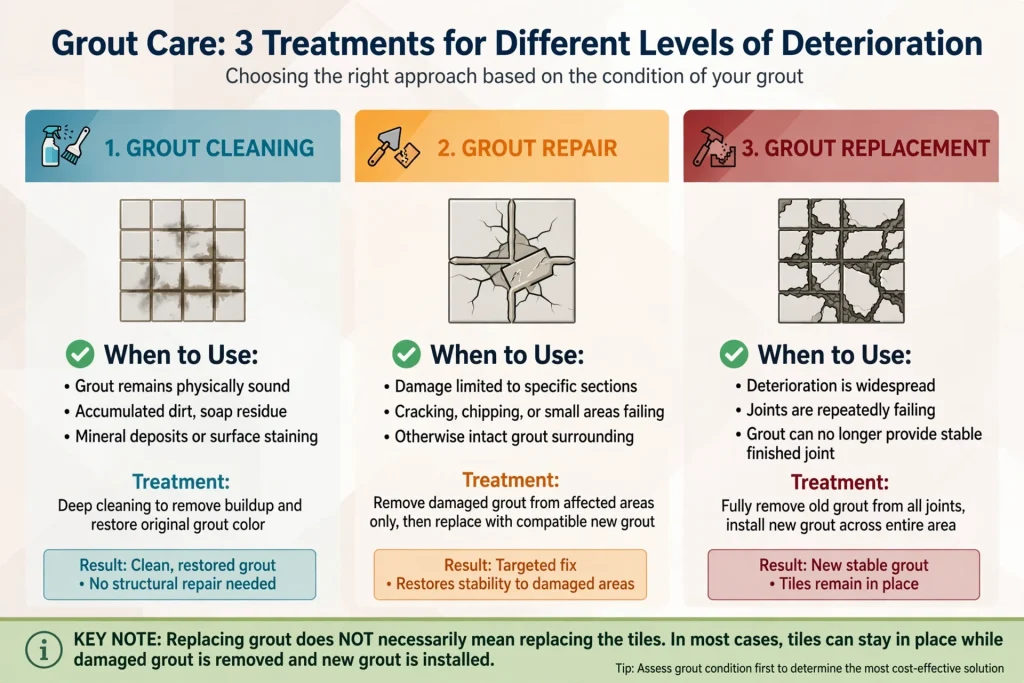
What Is the Difference Between Grout Cleaning, Repair and Replacement?
These three treatments address different levels of deterioration.
Grout cleaning is suitable when the grout remains physically sound but has accumulated dirt, soap residue, mineral deposits, or surface staining.
Grout repair is appropriate when damage is limited to specific sections. The damaged material can be carefully removed and replaced with compatible grout.
Grout replacement becomes more appropriate when deterioration is widespread, joints are repeatedly failing, or the existing grout can no longer provide a stable finished joint.
Replacing grout does not necessarily mean replacing the tiles. In many cases, tiles can remain in place while damaged grout is removed and new grout is installed.
Can You Regrout a Bathroom Without Removing the Tiles?
Yes. Regrouting is one of the advantages of tiled bathroom surfaces. If the tiles themselves are properly bonded and remain in good condition, the existing grout can often be removed from the joints and replaced without removing the tiles.
The process usually involves inspecting the tile installation, removing deteriorated grout, cleaning the joints, checking for moisture or substrate problems, applying compatible new grout, and allowing it to cure correctly.
The depth of grout removal matters. Simply applying a thin layer over old deteriorated grout may result in poor adhesion and premature failure.
Special attention should also be given to corners and changes of plane. These areas may require an appropriate flexible sealant rather than rigid grout because different surfaces can move independently.
How Does Poor Ventilation Affect Bathroom Grout?
Ventilation has a direct effect on bathroom moisture levels.
After a shower, warm humid air can remain inside the bathroom. If the exhaust fan is weak or absent, moisture may condense on walls, ceilings, mirrors, tiles, and grout joints.
Over time, repeated moisture exposure can contribute to staining and deterioration, particularly when combined with poor cleaning and inadequate drying.
Dubai properties such as apartments in Downtown Dubai, Business Bay, Dubai Marina, Jumeirah Lake Towers, and Dubai Hills Estate can have very different bathroom layouts and ventilation arrangements. Regardless of property type, effective exhaust ventilation and allowing wet surfaces to dry can help extend the service life of grout.
Can Bathroom Grout Failure Cause Water Damage?
Damaged grout alone does not automatically mean that water has entered the structure. However, damaged joints can make it easier for moisture to reach vulnerable areas, particularly when other parts of the wet-area system are also defective.
Water damage may become more likely when grout deterioration occurs alongside cracked tiles, failed sealant, damaged waterproofing, loose tiles, or poorly sealed penetrations.
Warning signs include dampness outside the shower area, swollen cabinetry, peeling paint on adjacent walls, persistent musty odours, staining on ceilings below bathrooms, or moisture appearing in adjoining rooms.
In these situations, simply regrouting the visible surface may not solve the underlying problem. The source of moisture should be identified before cosmetic repairs are completed.
Bathroom Grout and Waterproofing: What Is the Connection?
Grout should not be considered the primary waterproofing layer of a bathroom.
A properly constructed wet area typically includes several components, including the structural substrate, waterproofing system, tile adhesive, tiles, grout, and flexible sealant at appropriate movement or change-of-plane locations.
The waterproofing layer is particularly important because water can potentially travel behind tiles through cracks, joints, penetrations, or defective details.
When bathroom grout is replaced, it is therefore useful to inspect the surrounding tile system rather than treating grout as an isolated component.
This approach is especially important in luxury villas, apartments, hotels, gyms, spas, and other high-use properties across Dubai.

Should You Use Cement Grout or Epoxy Grout?
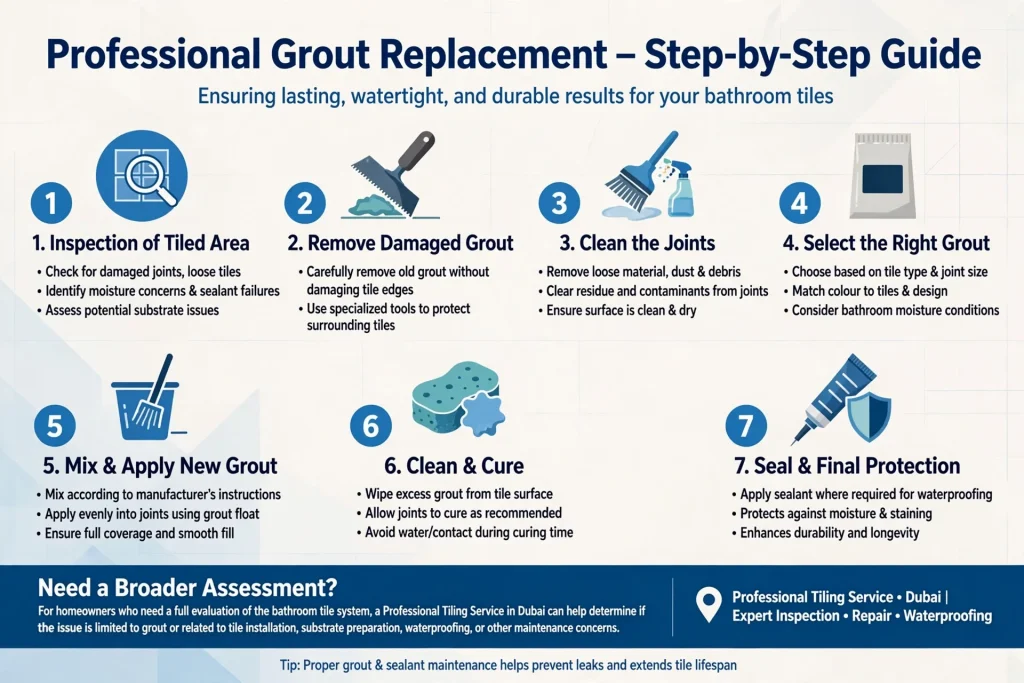
The right grout depends on the application, tile type, joint size, expected exposure, appearance, maintenance requirements, and installation conditions.
Cement-based grout is widely used and available in many colours and formulations. It can be practical for many residential applications but is generally more porous than epoxy grout.
Epoxy grout contains resin and hardener and provides high resistance to water, stains, and many chemicals. It can be particularly useful in areas that experience heavy use or require easier cleaning.
However, epoxy grout requires careful installation because mixing, application, working time, and cleaning are different from traditional cement grout.
The best choice should be based on the complete bathroom specification rather than choosing a grout simply because it is marketed as more durable.
How Dubai’s Climate Can Affect Bathroom Grout
Dubai’s hot climate and high humidity can influence building materials, although indoor bathroom conditions vary significantly depending on air-conditioning, ventilation, occupancy, and building design.
Temperature changes can contribute to expansion and contraction of building materials. This is one reason appropriate movement joints and flexible sealants are important in tiled installations.
Humidity also makes bathroom ventilation important. A bathroom that remains damp for long periods can experience faster surface staining and deterioration than a well-ventilated bathroom that dries efficiently.
Properties in Palm Jumeirah, Emirates Hills, Arabian Ranches, Jumeirah, Dubai Marina, and Downtown Dubai may have different construction systems, but the fundamental principle remains the same: moisture management and correct installation are critical to long-term tile performance.
How Often Should Bathroom Grout Be Inspected?
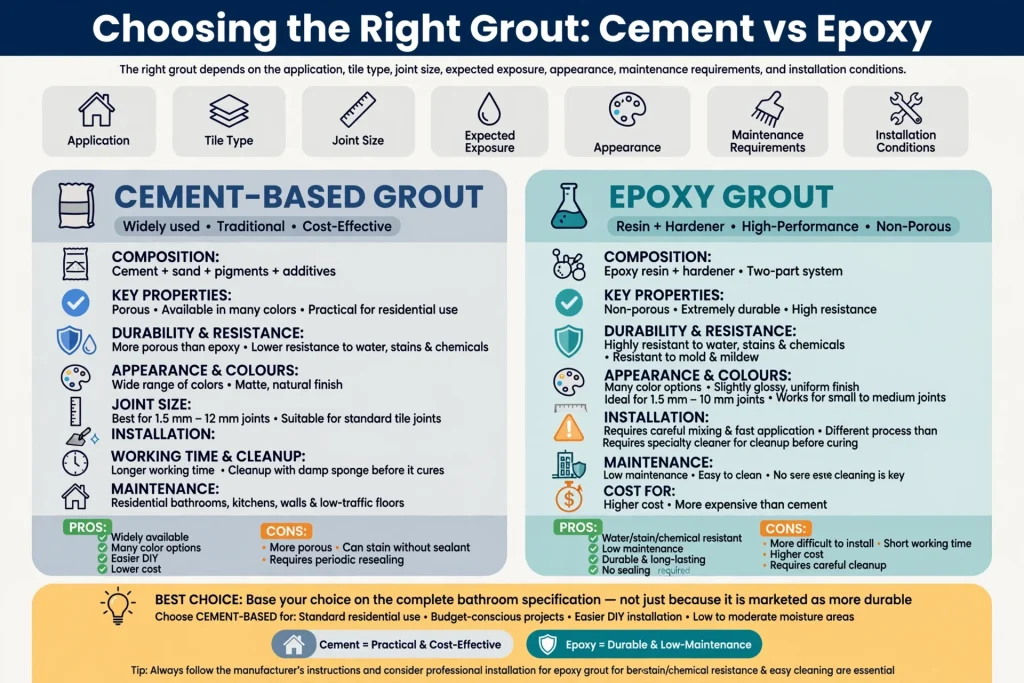
A visual inspection every few months is a practical approach for homeowners. High-use bathrooms should be checked more frequently, especially in large households or properties with frequent guests.
Look closely at shower corners, floor-to-wall junctions, areas around drains, grout surrounding fixtures, and sections that remain wet after the rest of the bathroom has dried.
For commercial properties, hotels, restaurants, gyms, spas, and office facilities, inspection should form part of routine property maintenance because bathrooms receive considerably more use than most residential bathrooms.
Early detection can prevent a small grout problem from developing into a larger tile or moisture issue.
Common Bathroom Grout Problems Homeowners Make Worse
Some maintenance practices can shorten grout life rather than extending it.
Using excessively aggressive chemicals can damage grout or surrounding sealants. Abrasive tools can also wear away the surface.
Another common mistake is ignoring small cracks because they appear cosmetic. A crack may remain harmless, but recurring cracks should be investigated.
Applying new grout directly over loose or contaminated material is another problem. The new grout needs a clean and suitably prepared joint to achieve reliable adhesion.
Homeowners should also avoid treating silicone sealant as if it were ordinary grout. Flexible sealant is commonly required at corners, changes of plane, and movement-sensitive joints.
How Is Bathroom Grout Professionally Replaced?
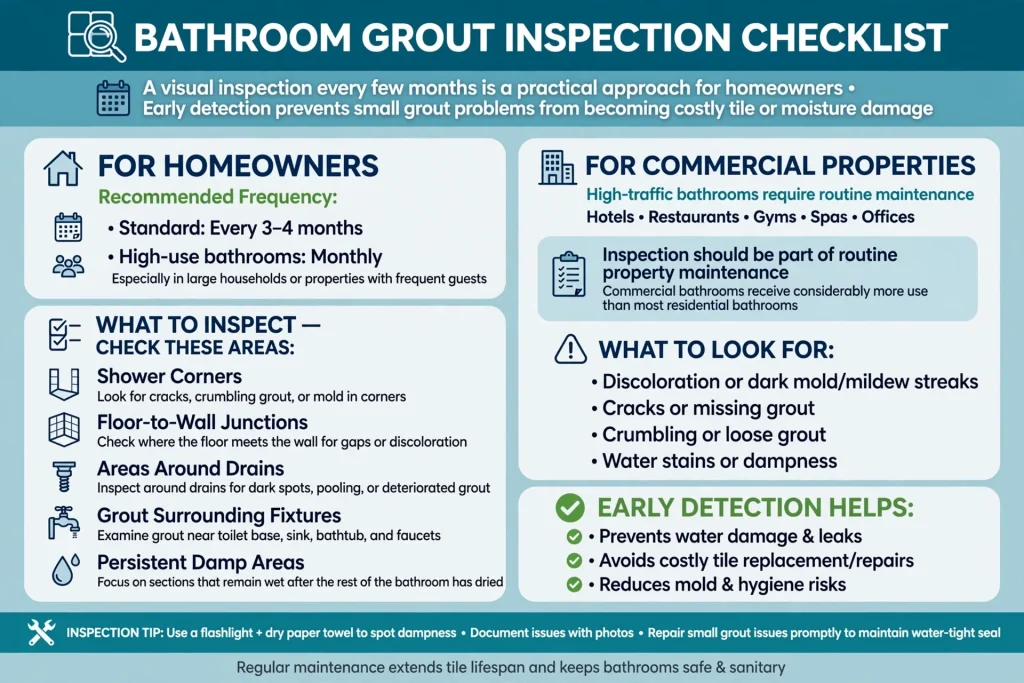
A professional grout replacement typically begins with an inspection of the tiled area. The technician identifies damaged joints, loose tiles, moisture concerns, sealant failures, and potential substrate issues.
Damaged grout is then removed carefully without damaging the tile edges. The joints are cleaned to remove loose material, dust, residue, and contaminants.
New grout is selected according to the tile type, joint size, colour, bathroom conditions, and project requirements. It is then mixed and applied according to the manufacturer’s instructions.
After application, excess grout is cleaned from the tile surface and the joints are allowed to cure. Appropriate sealant can then be applied where required.
For homeowners who need a broader assessment of the bathroom tile system, a Professional Tiling Service in Dubai can help identify whether the problem is limited to grout or connected to tile installation, substrate preparation, waterproofing, or other maintenance issues.
How Can You Make Bathroom Grout Last Longer?
Good maintenance can significantly extend grout performance.
Keep bathroom surfaces reasonably dry after showering and use the exhaust fan during and after bathing. Clean grout regularly using products appropriate for the grout type.
Avoid allowing soap residue, mineral deposits, and standing water to accumulate for long periods.
Check silicone joints periodically and replace deteriorated sealant before moisture problems develop.
Where cement-based grout is used, follow the grout manufacturer’s recommendations regarding sealing and resealing.
Most importantly, address damaged tiles and grout early. A small repair is usually easier to manage than widespread deterioration.
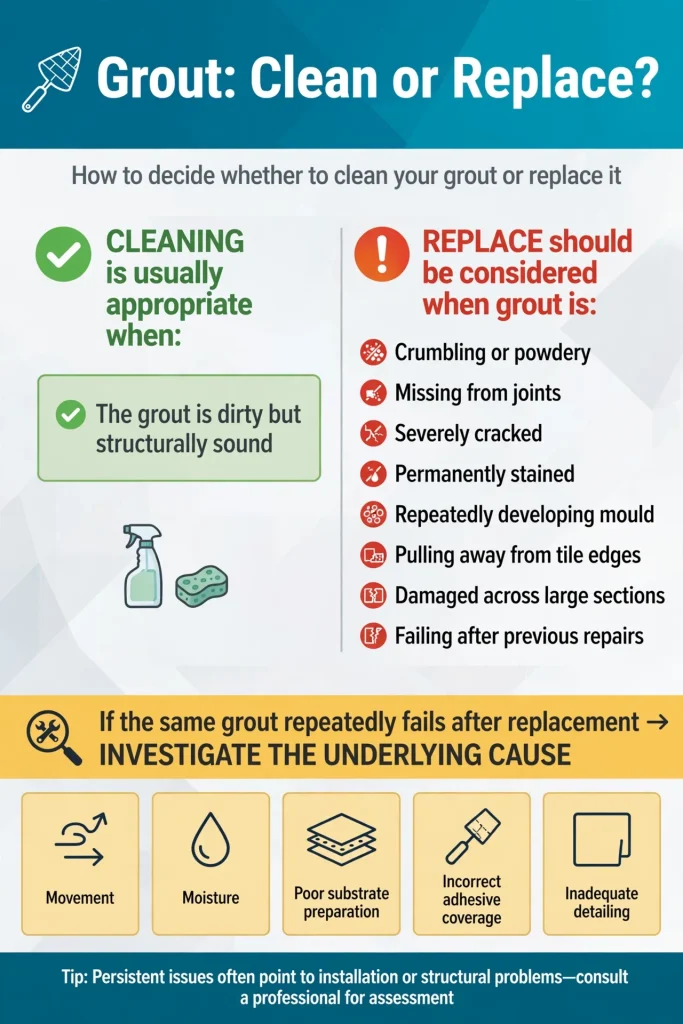
When Should You Replace Grout Instead of Cleaning It?
Cleaning is usually appropriate when the grout is dirty but structurally sound.
Replacement should be considered when grout is:
- Crumbling or powdery
- Missing from joints
- Severely cracked
- Permanently stained
- Repeatedly developing mould
- Pulling away from tile edges
- Damaged across large sections
- Failing after previous repairs
If the same grout repeatedly fails after replacement, investigate the underlying cause. Movement, moisture, poor substrate preparation, incorrect adhesive coverage, and inadequate detailing can all contribute to repeated problems.
Bathroom Grout Replacement for Dubai Villas and Apartments
Dubai’s residential properties range from compact apartments to large villas with multiple bathrooms. Each property can have different tile materials, joint widths, ventilation systems, and maintenance requirements.
Apartments in areas such as Business Bay, Downtown Dubai, Dubai Marina, JLT, and Dubai Hills Estate may have compact bathrooms where moisture can accumulate quickly if ventilation is inadequate.
Larger villas in Jumeirah, Arabian Ranches, Emirates Hills, and Palm Jumeirah may contain several bathrooms, guest washrooms, outdoor facilities, and wet areas requiring different maintenance schedules.
Rather than applying one replacement interval to every bathroom, homeowners should assess each wet area according to usage, moisture exposure, grout condition, and installation quality.
How Much Does Bathroom Grout Replacement Cost?
The cost depends on the size of the bathroom, amount of grout requiring removal, tile size, joint width, grout type, accessibility, surface condition, and whether additional repairs are required.
A small bathroom with limited grout damage may require only localized repairs. A large bathroom with widespread deterioration may require extensive grout removal and replacement.
Costs can also increase when loose tiles, waterproofing problems, damaged substrate, or failed silicone joints are discovered.
For this reason, comparing prices without comparing the scope of work can be misleading. A proper quotation should clearly explain what will be removed, what material will be installed, which areas are included, and whether preparation or additional repairs are required.
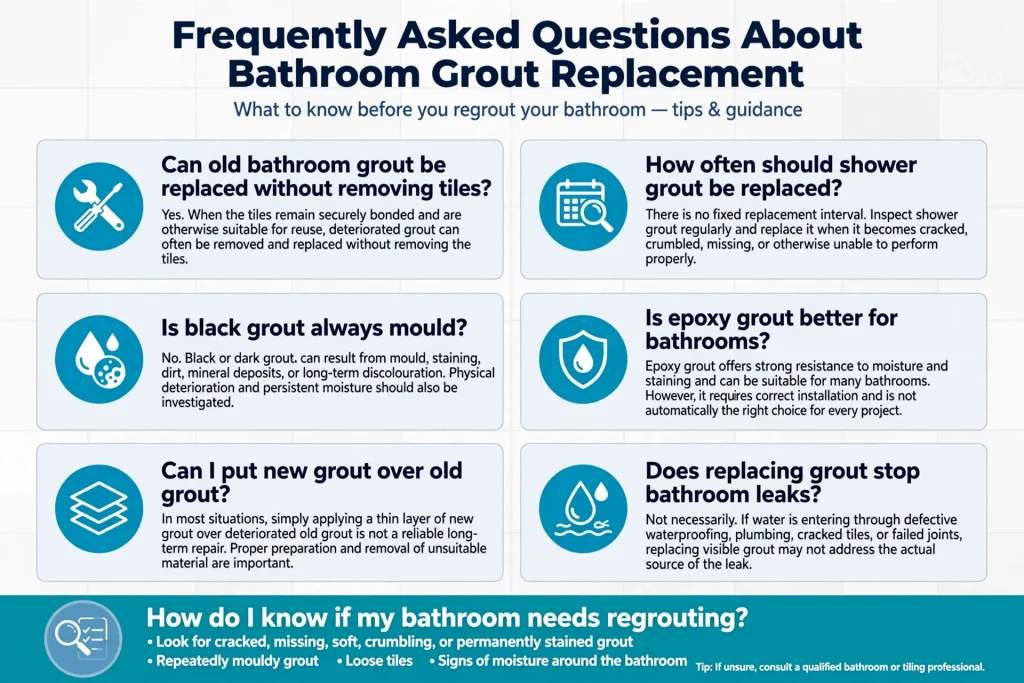
Frequently Asked Questions About Bathroom Grout Replacement
Can old bathroom grout be replaced without removing tiles?
Yes. When the tiles remain securely bonded and are otherwise suitable for reuse, deteriorated grout can often be removed and replaced without removing the tiles.
How often should shower grout be replaced?
There is no fixed replacement interval. Inspect shower grout regularly and replace it when it becomes cracked, crumbled, missing, or otherwise unable to perform properly.
Is black grout always mould?
No. Black or dark grout can result from mould, staining, dirt, mineral deposits, or long-term discolouration. Physical deterioration and persistent moisture should also be investigated.
Is epoxy grout better for bathrooms?
Epoxy grout offers strong resistance to moisture and staining and can be suitable for many bathrooms. However, it requires correct installation and is not automatically the right choice for every project.
Can I put new grout over old grout?
In most situations, simply applying a thin layer of new grout over deteriorated old grout is not a reliable long-term repair. Proper preparation and removal of unsuitable material are important.
Does replacing grout stop bathroom leaks?
Not necessarily. If water is entering through defective waterproofing, plumbing, cracked tiles, or failed joints, replacing visible grout may not address the actual source of the leak.
How do I know if my bathroom needs regrouting?
Look for cracked, missing, soft, crumbling, permanently stained, or repeatedly mouldy grout. Also check for loose tiles and signs of moisture around the bathroom.
Final Thoughts
Bathroom grout does not have to be replaced according to a strict calendar. A well-installed bathroom can retain sound grout for many years, while poorly installed or heavily used areas may require repairs much sooner.
The most useful approach is regular inspection. Watch for cracking, crumbling, missing grout, persistent staining, mould, loose tiles, deteriorated sealant, and signs of moisture. Cleaning may solve superficial staining, while localized repairs can address isolated damage. Widespread deterioration may require complete regrouting.
In Dubai, proper ventilation, moisture control, suitable grout selection, correct tile installation, movement accommodation, and routine maintenance all contribute to longer-lasting bathroom surfaces. Addressing grout problems early can also help protect the wider tiled system and reduce the risk of more complicated repairs later.