Understanding Dubai’s Climate and Its Impact on Roof Waterproofing Systems
Dubai is known for its modern skyline, luxurious residential communities, and world-class commercial developments, but it is equally recognised for one of the harshest climates in the Middle East. Buildings throughout Dubai are continuously exposed to intense solar radiation, extreme summer temperatures, coastal humidity, airborne sand, dust storms, and occasional heavy rainfall. These environmental conditions place constant stress on roof waterproofing systems, making professional waterproofing an essential part of long-term building maintenance rather than an optional upgrade.
A roof waterproofing system serves as the building’s first line of defence against moisture penetration. It protects the reinforced concrete roof slab, insulation layers, structural steel, interior ceilings, and electrical systems from water damage. When waterproofing materials deteriorate due to weather exposure, water begins to penetrate through cracks, joints, membrane failures, or drainage defects. Without timely inspection and maintenance, these small defects can develop into significant structural problems that require expensive repairs.
Whether a property is located in Dubai Hills Estate, Business Bay, Palm Jumeirah, Downtown Dubai, Dubai Marina, or Dubai South, understanding how local weather affects waterproofing performance helps property owners make informed maintenance decisions that extend the life of their buildings.
Why Roof Waterproofing Is More Important in Dubai Than Many Other Cities
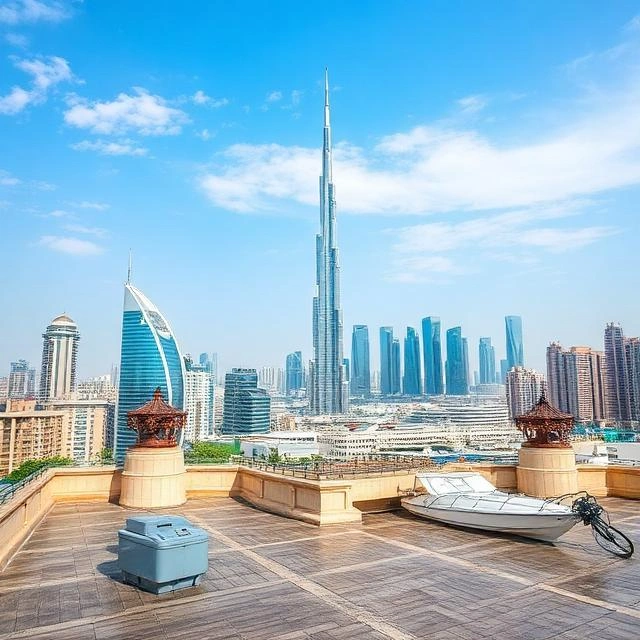
Many countries experience frequent rainfall but relatively mild temperatures. Dubai presents the opposite challenge. Rainfall is limited, yet extremely high temperatures and intense ultraviolet (UV) radiation continuously attack waterproofing materials throughout the year. These environmental conditions accelerate material ageing and reduce the lifespan of many waterproofing systems if they are not properly selected and maintained.
Concrete roofs absorb significant amounts of solar heat during the day. Surface temperatures often become much higher than the surrounding air temperature, causing the concrete slab and waterproof membranes to expand. During the evening, these materials cool and contract. This daily cycle of thermal expansion and thermal contraction places repeated stress on waterproof coatings, sealants, expansion joints, and waterproof membranes.
Over time, continuous movement may result in:
- Hairline cracks in concrete
- Membrane separation
- Joint failure
- Protective coating deterioration
- Water seepage during rainfall
- Reduced waterproofing efficiency
Professional waterproofing systems designed specifically for Dubai’s climate use flexible materials capable of accommodating structural movement while maintaining strong adhesion to the roof substrate.
Extreme Summer Heat Accelerates Waterproofing Material Ageing
Summer temperatures in Dubai regularly exceed 45°C, while roof surfaces exposed to direct sunlight can become significantly hotter. Continuous heat exposure is one of the primary reasons waterproofing systems require regular inspection and maintenance.
Many waterproofing products gradually lose elasticity after years of UV exposure. As materials become harder and more brittle, they become less capable of handling structural movement. Small cracks begin to develop, allowing moisture to penetrate beneath the protective layer.
Heat also affects various waterproofing materials differently:
- Bituminous membranes may experience gradual oxidation.
- Acrylic coatings can lose flexibility if maintenance is neglected.
- Polyurethane systems require correct installation to resist UV degradation.
- Sealants around expansion joints may shrink over time.
This is why selecting weather-resistant waterproofing products is essential for long-term roof protection in Dubai.
Buildings located in open communities such as Arabian Ranches, Emirates Hills, Jumeirah, and Dubai Hills Estate experience continuous direct sunlight throughout the day, making roof maintenance especially important for preserving waterproofing performance.
Thermal Expansion and Structural Movement Affect Roof Waterproofing
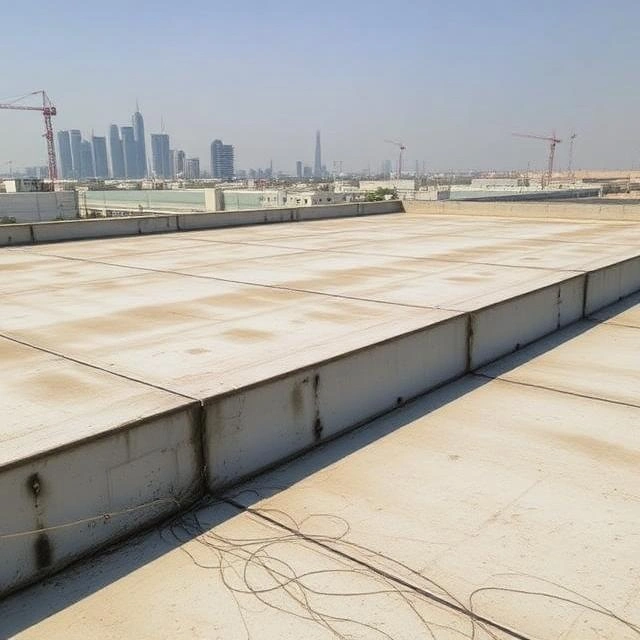
Every building experiences natural structural movement caused by temperature changes. During hot daylight hours, concrete, steel reinforcement, waterproof membranes, and roof finishes expand. As temperatures decrease during the evening, these materials contract again.
Although this movement is completely normal, repeated expansion and contraction gradually place stress on the building envelope. Waterproof membranes installed without sufficient flexibility may eventually crack or separate from the roof slab.
Expansion joints are specifically designed to absorb this movement, but if sealants become damaged or waterproofing around joints deteriorates, these areas often become the first locations where water enters the building.
Common signs of thermal movement affecting waterproofing include:
- Fine roof surface cracks
- Membrane lifting
- Joint separation
- Cracked sealants
- Water stains below roof joints
- Localised moisture penetration
Professional waterproofing inspections include evaluating expansion joints, membrane flexibility, and concrete movement to identify early signs of weather-related deterioration before leakage occurs.
UV Radiation and Sunlight Reduce Waterproofing Performance
Ultraviolet radiation is another major environmental factor affecting roof waterproofing systems across Dubai. Continuous exposure to intense sunlight gradually changes the chemical properties of many waterproofing materials, reducing their ability to resist moisture.
Over several years, UV exposure may cause:
- Surface cracking
- Colour fading
- Loss of elasticity
- Protective coating breakdown
- Reduced waterproof membrane lifespan
- Increased moisture penetration risk
Modern waterproofing systems designed for UAE conditions often incorporate UV-resistant technologies that help maintain flexibility and weather resistance. Reflective roof coatings are also becoming increasingly popular because they reduce heat absorption while protecting waterproof layers beneath.
Commercial buildings in Business Bay, DIFC, and Downtown Dubai often use specialised waterproof coatings capable of withstanding prolonged solar exposure while supporting energy-efficient building performance.
Sandstorms and Dust Reduce Roof Waterproofing Efficiency
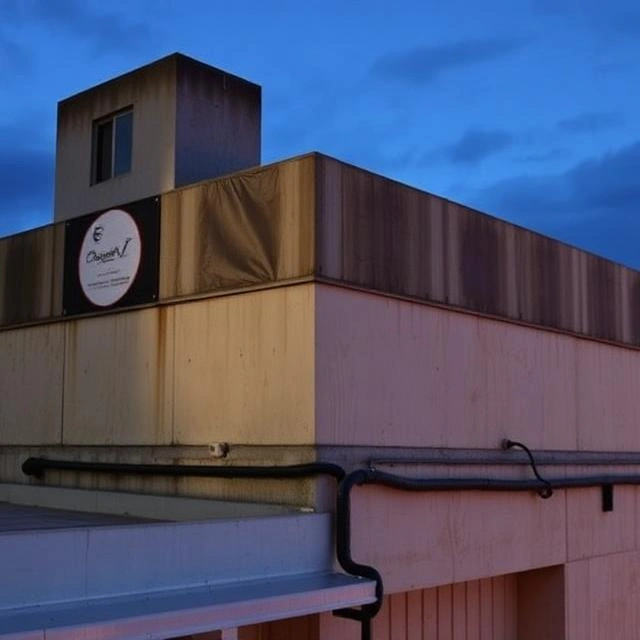
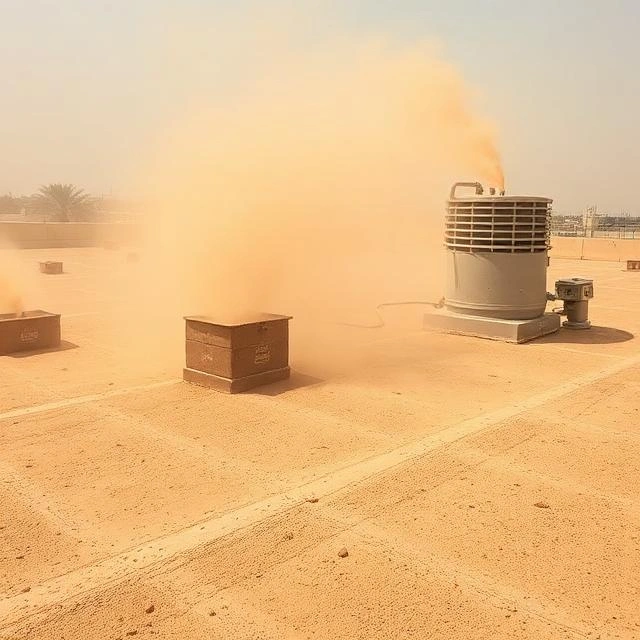
Dubai regularly experiences dust storms and airborne sand carried by desert winds. While many people associate sandstorms with reduced visibility, they also have a significant impact on roof waterproofing systems.
Dust gradually accumulates across roof surfaces, drainage channels, waterproof membranes, gutters, and rainwater outlets. Over time, this build-up restricts water flow during rainfall, causing water to remain on the roof for longer than intended.
Fine sand particles can also act as abrasive materials. Continuous wind movement slowly wears protective roof coatings and membrane surfaces, particularly around exposed edges and rooftop equipment.
Common problems caused by dust accumulation include:
- Blocked drainage outlets
- Reduced water flow
- Standing water after rainfall
- Accelerated membrane wear
- Damage to protective coatings
- Increased roof maintenance requirements
Regular roof cleaning forms an essential part of waterproofing maintenance in Dubai. Removing dust, sand, and debris allows drainage systems to function correctly while reducing unnecessary stress on waterproof membranes.
Properties in Dubai South, Dubai Silicon Oasis, Jebel Ali, Al Quoz, and Dubai Investment Park are particularly exposed to airborne dust because of their proximity to open land and industrial areas.
Heavy Rainfall Can Reveal Hidden Waterproofing Problems
Although annual rainfall in Dubai is relatively low, recent years have demonstrated that sudden storms can produce intense rainfall within a short period. Buildings with ageing waterproofing systems often remain problem-free during dry months but quickly develop leakage when heavy rain arrives.
Rainwater naturally seeks the weakest point in a roof system. If cracks, damaged membranes, failed sealants, or blocked drains are present, water will penetrate beneath the surface and travel through the concrete structure.
Many building owners mistakenly assume rainfall caused the leakage. In reality, rain simply exposes waterproofing defects that already existed.
Heavy rainfall commonly reveals problems such as:
- Membrane punctures
- Concrete cracks
- Failed expansion joints
- Damaged parapet wall waterproofing
- Poor roof drainage
- Blocked outlets
- Defective flashing around rooftop structures
Professional waterproofing inspections before the rainy season help identify vulnerable areas before they become emergency repairs.
Standing Water Places Continuous Pressure on Waterproof Membranes
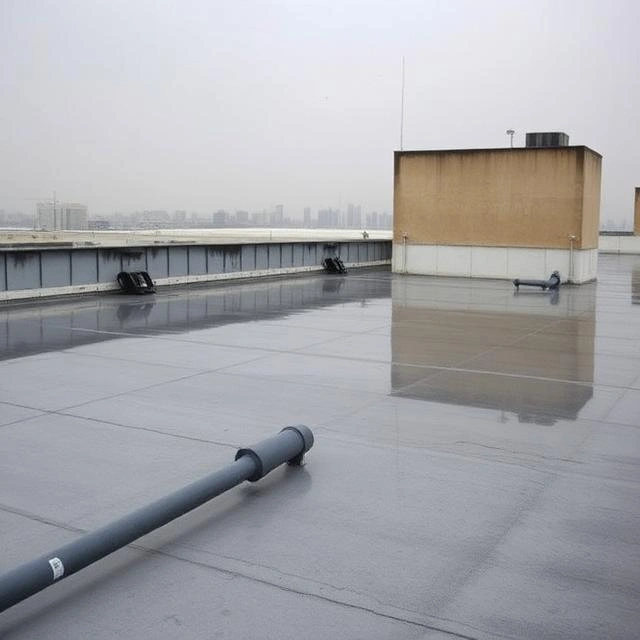
One of the most overlooked consequences of Dubai’s weather is the formation of standing water, also known as ponding water. After heavy rainfall, roofs with inadequate drainage may retain water for many hours or even days.
Standing water significantly increases hydrostatic pressure on waterproof membranes. Areas already weakened by age, thermal movement, or poor workmanship become more vulnerable to leakage.
Long-term ponding water may cause:
- Waterproof membrane blistering
- Adhesive failure
- Surface deterioration
- Water seepage into concrete
- Accelerated roof ageing
- Increased maintenance costs
Professional waterproofing contractors always assess roof slope, drainage design, outlet capacity, and water flow patterns before recommending waterproofing repairs.
Correcting drainage problems often improves roof performance as much as replacing the waterproof membrane itself.
How Dubai’s Climate Affects Different Waterproofing Materials
Not every waterproofing material performs the same under Dubai’s environmental conditions. Selecting the appropriate system requires understanding the building’s exposure level, roof design, maintenance requirements, and expected lifespan.
Bituminous Waterproof Membranes
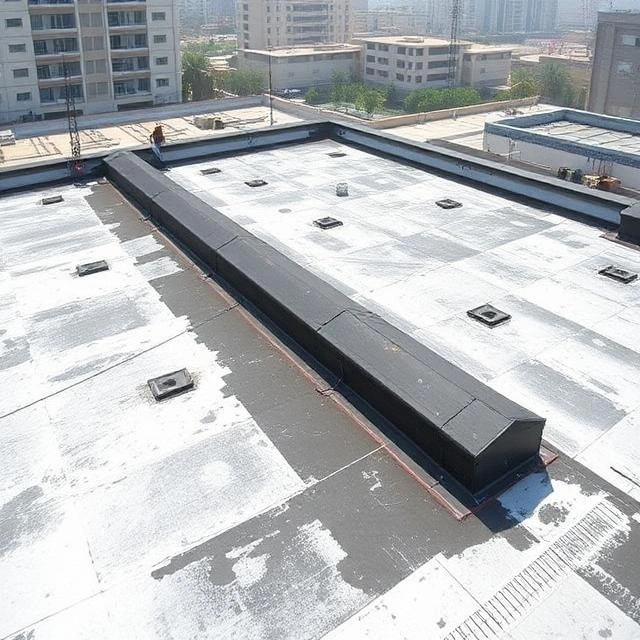
Bituminous membranes remain widely used because they provide excellent water resistance and mechanical durability. Modern modified bitumen systems offer improved flexibility and weather resistance compared to older materials.
Polyurethane Waterproofing
Polyurethane coatings are highly flexible and perform well on roofs experiencing thermal expansion. Their seamless application reduces the number of joints where leakage may occur.
Cementitious Waterproofing
Cement-based waterproofing systems provide strong adhesion to concrete surfaces and are frequently used for roof slabs, water tanks, balconies, and wet areas.
Acrylic Waterproof Coatings
Acrylic coatings provide UV resistance and reflective properties that reduce heat absorption. They are commonly used for roof maintenance and recoating projects.
Elastomeric Roof Coatings
Elastomeric coatings remain flexible under varying temperatures, making them suitable for roofs exposed to continuous expansion and contraction.
Professional contractors evaluate each building individually before selecting the most suitable waterproofing solution. Material choice should always match environmental exposure rather than relying solely on initial installation cost.
Why Waterproofing Maintenance Is Essential Throughout the Year
Many property owners schedule waterproofing inspections only after visible leakage appears. However, Dubai’s climate affects roofs every day, regardless of whether rainfall occurs.
A structured maintenance programme includes regular inspections, preventive repairs, drainage cleaning, membrane assessment, and protective coating evaluation.
Routine maintenance helps identify:
- Early membrane ageing
- Surface cracking
- Joint deterioration
- UV damage
- Drainage blockages
- Sealant failure
- Moisture accumulation
By correcting these issues early, property owners significantly reduce future repair costs while extending the service life of the waterproofing system.
Professional maintenance also improves overall building performance by protecting structural concrete, insulation layers, ceilings, electrical systems, and interior finishes from moisture-related damage.
Choosing the Right Waterproofing System for Dubai’s Climate
Selecting a waterproofing system should never be based solely on product price. Every building has different structural characteristics, environmental exposure, and maintenance requirements. A professional assessment ensures the chosen waterproofing solution matches the building’s long-term needs.
Factors considered during waterproofing selection include:
- Roof design
- Concrete condition
- Building movement
- UV exposure
- Drainage efficiency
- Rooftop equipment
- Foot traffic
- Expected service life
Professional contractors may recommend different waterproofing systems for villas, commercial towers, industrial facilities, podium decks, balconies, or roof gardens because each application experiences different environmental conditions.
For homeowners seeking reliable long-term protection, working with an experienced waterproofing contractor dubai Hills ensures the selected materials and installation methods are appropriate for Dubai’s demanding climate while protecting the property against future weather-related damage.
Common Signs That Weather Has Damaged Your Roof Waterproofing
Weather-related deterioration often appears gradually, making early identification extremely important. Property owners should monitor their roofs for visible signs that indicate waterproofing performance may be declining.
Common warning signs include:
- Water stains on ceilings
- Damp patches on upper floors
- Cracks in roof surfaces
- Peeling paint
- Bubbling waterproof coatings
- Standing water after rainfall
- Mould growth
- Damaged sealants
- Concrete deterioration
Ignoring these symptoms allows moisture to spread deeper into the structure, increasing repair costs and potentially affecting structural safety.
Professional waterproofing inspections can determine whether simple maintenance, localised repairs, or complete waterproofing replacement is required.
Sustainable Waterproofing Solutions for Modern Dubai Buildings
Dubai continues to promote sustainable construction through green building initiatives and improved building standards. Modern waterproofing systems now contribute not only to moisture protection but also to environmental performance.
Many advanced waterproofing products offer:
- Lower VOC emissions
- Improved UV resistance
- Longer service life
- Better solar reflectivity
- Reduced maintenance requirements
- Compatibility with energy-efficient roof systems
Sustainable waterproofing helps reduce waste because longer-lasting materials require fewer replacements throughout the building lifecycle. Combined with reflective roof technologies and improved insulation, modern waterproofing systems support lower energy consumption while protecting valuable building assets.
As new developments continue across Dubai South, Expo City Dubai, Dubai Creek Harbour, and other growing communities, sustainable waterproofing solutions are becoming an increasingly important part of high-quality construction and long-term facility management.