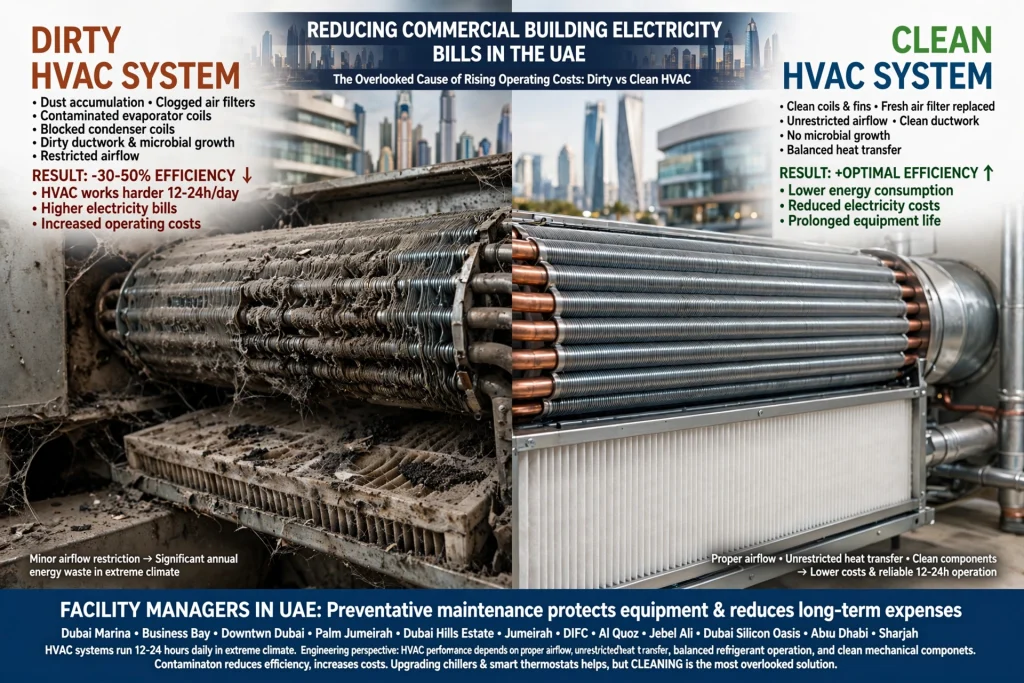
Many building owners focus on reducing electricity bills by upgrading chillers, installing smart thermostats, or replacing aging HVAC equipment. While these improvements certainly help, one of the most overlooked causes of rising operating costs is a dirty HVAC system. Dust accumulation, clogged air filters, contaminated evaporator coils, blocked condenser coils, dirty ductwork, microbial growth, and restricted airflow gradually reduce system efficiency, forcing HVAC equipment to work harder to deliver the same level of cooling.
In commercial buildings across Dubai Marina, Business Bay, Downtown Dubai, Palm Jumeirah, Dubai Hills Estate, Jumeirah, DIFC, Al Quoz, Jebel Ali, Dubai Silicon Oasis, Abu Dhabi, and Sharjah, HVAC systems often operate for 12 to 24 hours every day because of the region’s extreme climate. Even minor airflow restrictions can translate into significant increases in electricity consumption over an entire year.
From an engineering perspective, HVAC performance depends on proper airflow, unrestricted heat transfer, balanced refrigerant operation, and clean mechanical components. When contamination affects any part of the system, efficiency declines while operating costs increase. Understanding these relationships helps facility managers make maintenance decisions that protect equipment while reducing long-term expenses.
Why Clean HVAC Systems Operate More Efficiently
Every HVAC system follows the same engineering principle: transfer unwanted heat from inside the building to the outside environment.
To achieve this efficiently, several components must work together.
Air filters remove airborne particles.
Supply fans move conditioned air.
Evaporator coils absorb indoor heat.
Refrigerant transports thermal energy.
Compressors increase refrigerant pressure.
Condenser coils reject heat outdoors.
Expansion valves regulate refrigerant flow.
When these components remain clean, airflow stays within design specifications, heat exchange occurs efficiently, and compressors operate under normal load conditions.
As contamination increases, airflow resistance rises, heat transfer decreases, and every mechanical component begins working harder.
This additional workload directly increases electricity consumption while reducing equipment lifespan.
Dirty Air Filters Increase Fan Energy Consumption
Air filters represent the first line of defense against airborne contaminants entering HVAC equipment.
Over time, filters capture dust, pollen, construction debris, textile fibers, fine particulate matter (PM2.5), sand particles, and other airborne pollutants.
As these contaminants accumulate, pressure drop across the filter increases.
From an engineering standpoint, higher static pressure forces supply fans to consume more electrical energy in order to maintain required airflow measured in Cubic Feet per Minute (CFM).
If airflow decreases below design values, cooling performance declines throughout the building.
Occupants often respond by lowering thermostat settings, believing additional cooling is required.
The HVAC system therefore operates longer while delivering reduced performance.
This unnecessary runtime significantly increases electricity costs.
Routine filter inspection and replacement remains one of the simplest and most cost-effective maintenance procedures for improving overall HVAC efficiency.
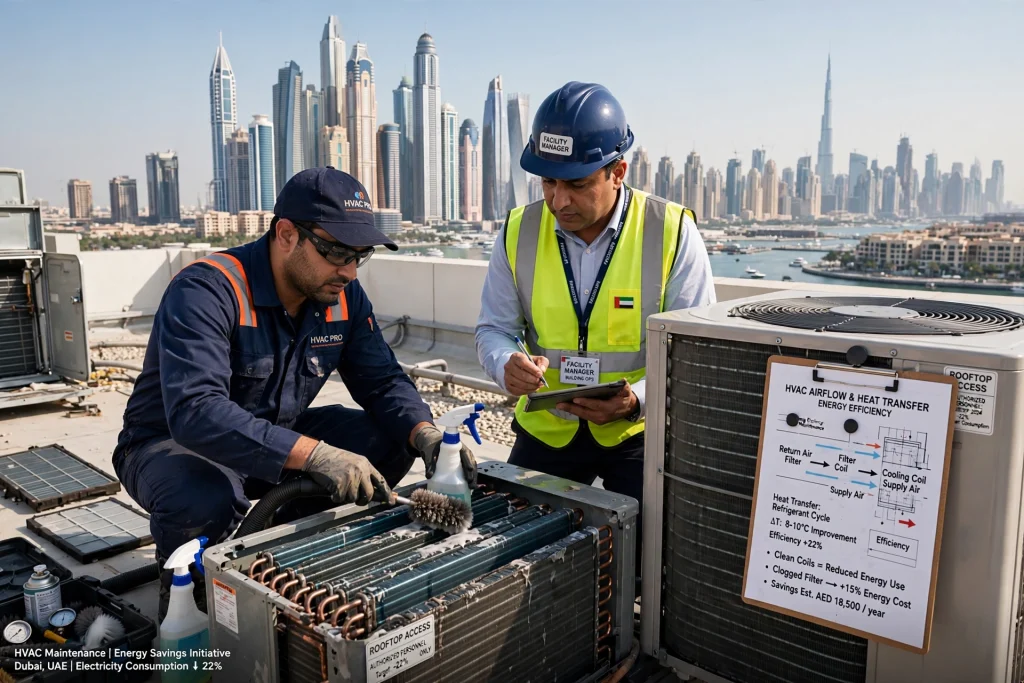
Dirty Evaporator Coils Reduce Heat Transfer Efficiency
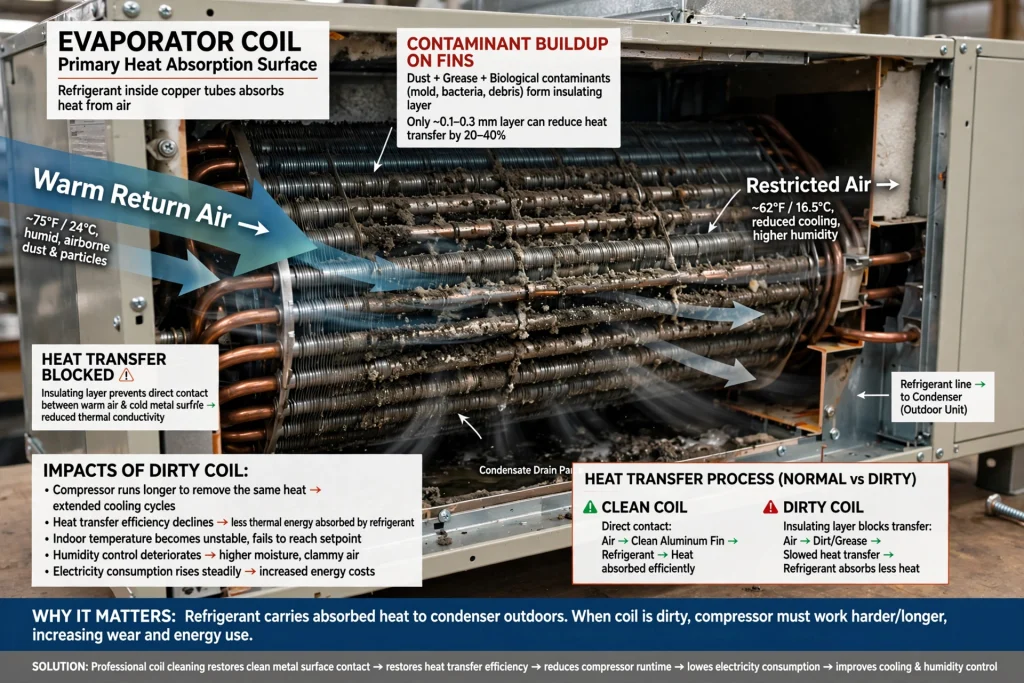
The evaporator coil serves as the primary heat absorption surface within the indoor HVAC system.
As warm return air passes across the coil, refrigerant absorbs thermal energy before transporting it toward the condenser.
When dust, grease, biological contaminants, and airborne particles coat the aluminum fins, an insulating layer develops between the air and the refrigerant.
Heat transfer efficiency immediately declines.
The compressor must continue operating for longer periods to remove the same amount of indoor heat.
Indoor temperatures become less stable.
Humidity control deteriorates.
Cooling cycles extend.
Electricity consumption rises steadily.
Even a relatively thin layer of contamination can significantly reduce coil performance because thermal conductivity depends on direct contact between moving air and clean metal surfaces.
Professional coil cleaning restores heat transfer efficiency while reducing unnecessary compressor operation.
Condenser Coil Contamination Forces Compressors to Work Harder
The condenser coil releases indoor heat into the outdoor environment.
In the UAE, outdoor HVAC equipment regularly operates under ambient temperatures exceeding 45°C during summer months.
These demanding conditions already place substantial stress on refrigeration systems.
When condenser coils become covered with dust, sand, airborne pollution, grease, cottonwood fibers, or construction debris, heat rejection becomes increasingly difficult.
Refrigerant condensing temperatures rise.
Head pressure increases.
The compressor consumes more electrical energy.
Motor windings experience greater thermal stress.
Lubricating oil deteriorates more rapidly.
Mechanical wear accelerates.
This sequence often develops gradually over several months, making increased electricity consumption difficult to notice until energy bills become significantly higher.
Routine condenser cleaning helps maintain proper refrigerant pressures while improving overall system efficiency.
Restricted Airflow Creates Building Comfort Problems
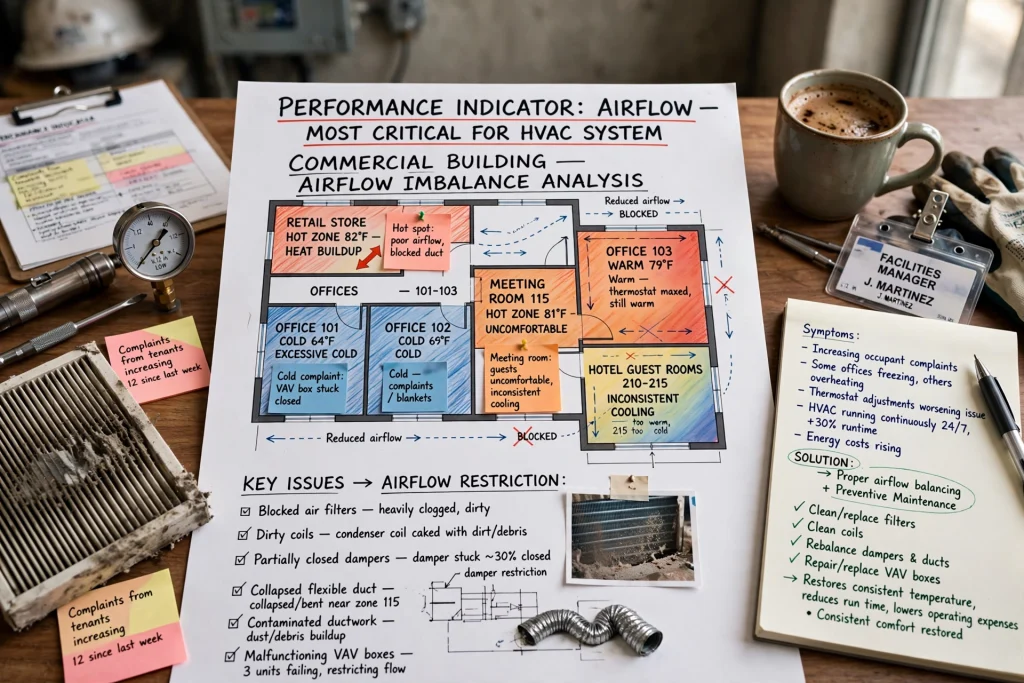
Airflow represents one of the most important performance indicators within any HVAC system.
Blocked filters, dirty coils, partially closed dampers, collapsed flexible ducts, contaminated ductwork, or malfunctioning Variable Air Volume (VAV) boxes all contribute to airflow restriction.
Reduced airflow creates uneven temperature distribution throughout commercial buildings.
Some offices become excessively cold.
Others remain consistently warm.
Meeting rooms feel uncomfortable during occupancy.
Retail stores develop hot zones.
Hotel guest rooms experience inconsistent cooling.
Facility managers often receive increasing occupant complaints despite HVAC equipment operating continuously.
Rather than solving the underlying airflow issue, thermostat adjustments frequently make the problem worse by increasing equipment runtime.
Proper airflow balancing combined with preventive maintenance restores consistent comfort while reducing unnecessary operating expenses.
Dirty Ductwork Affects Air Distribution
Supply ducts and return ducts gradually accumulate fine dust, construction debris, textile particles, insulation fibers, and microbial contamination.
Although contamination inside ductwork may appear harmless initially, it eventually affects overall air distribution.
Dust accumulation alters airflow characteristics.
Diffusers become partially obstructed.
Return air pathways become less efficient.
Fan systems compensate by operating at higher speeds where Variable Frequency Drives (VFDs) are installed.
This additional fan energy contributes to higher electricity consumption throughout the building.
In sensitive environments including hospitals, healthcare facilities, laboratories, educational institutions, hotels, and commercial offices, clean ductwork also supports improved Indoor Air Quality (IAQ).
Building owners who invest in regular Dirty HVAC Systems Cleaning service often experience lower operating costs, improved airflow, better occupant comfort, and more reliable long-term equipment performance.
Indoor Air Quality Directly Influences Building Performance
Dirty HVAC systems affect far more than energy efficiency.
As contaminants circulate throughout occupied spaces, indoor environmental quality begins to decline.
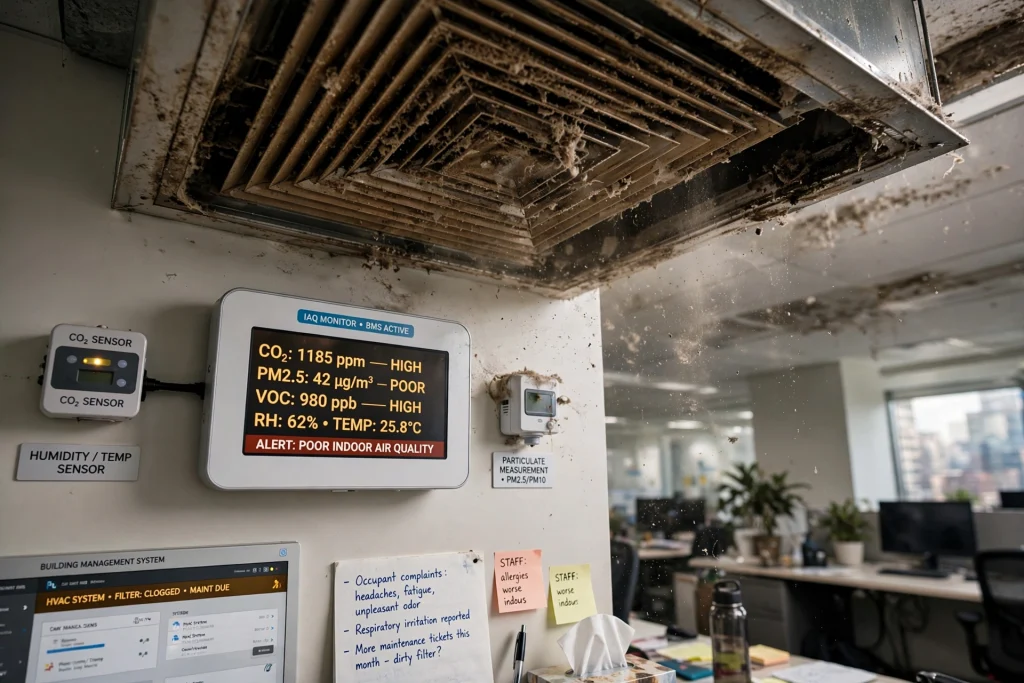
Dust particles, mold spores, bacteria, volatile organic compounds (VOCs), allergens, and airborne pollutants remain suspended within conditioned air.
Poor Indoor Air Quality contributes to occupant discomfort, respiratory irritation, reduced workplace productivity, unpleasant odors, and increased maintenance complaints.
Modern commercial buildings increasingly monitor Indoor Air Quality through Building Management Systems (BMS), carbon dioxide sensors, humidity sensors, temperature monitoring, and particulate measurement devices.
Maintaining clean HVAC equipment supports healthier indoor environments while reducing the operational burden placed on mechanical systems.
Dirty HVAC Systems Increase Equipment Wear and Premature Failure
One of the most expensive consequences of neglected HVAC maintenance is accelerated equipment deterioration. While higher electricity bills are usually the first noticeable symptom, mechanical damage often develops long before complete system failure occurs.
Every HVAC component is designed to operate within specific engineering parameters. Compressors depend on proper refrigerant pressure, motors require unrestricted airflow for cooling, bearings need adequate lubrication, and heat exchangers rely on efficient thermal transfer.
When contamination restricts airflow or reduces heat exchange, these components begin operating outside their intended design conditions.
Compressors experience higher discharge temperatures.
Fan motors draw additional electrical current.
Bearings operate under greater mechanical load.
Belts wear faster because of increased resistance.
Expansion valves struggle to regulate refrigerant flow accurately.
Eventually, small efficiency losses become expensive repairs.
Replacing a compressor, condenser fan motor, evaporator coil, or Variable Frequency Drive (VFD) costs significantly more than routine preventive cleaning.
Experienced HVAC engineers recognize that cleaning is not simply a maintenance task—it is an investment in protecting valuable mechanical assets.
High Energy Bills Often Indicate Hidden HVAC Problems
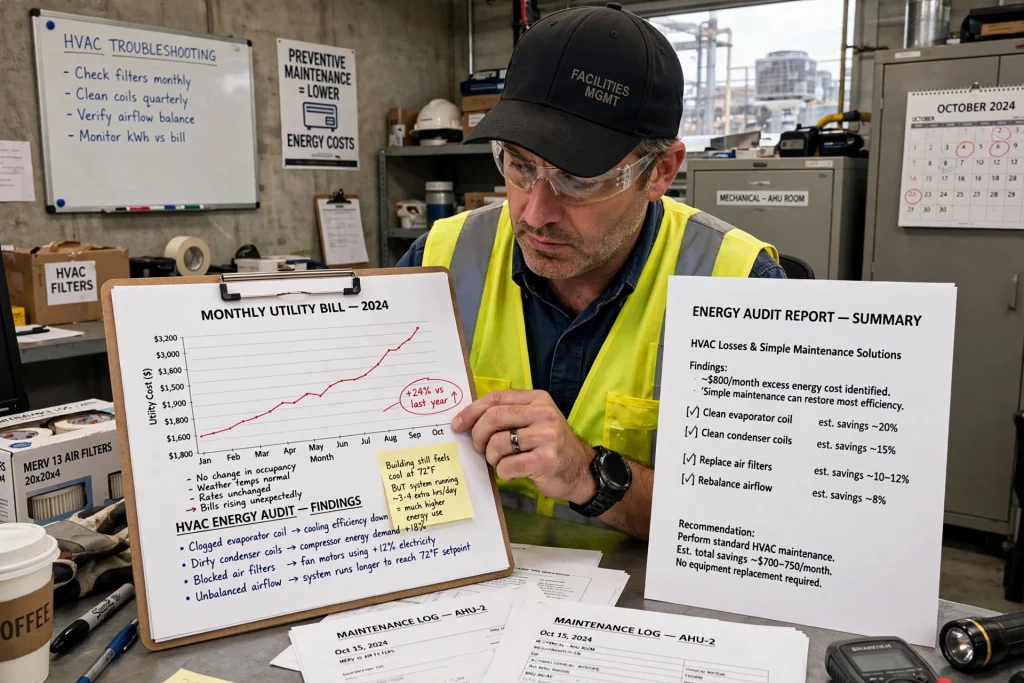
Many facility managers first notice HVAC problems when monthly utility bills begin increasing without any obvious explanation.
Although electricity prices, occupancy levels, and weather conditions influence consumption, dirty HVAC equipment frequently becomes the hidden cause of excessive operating costs.
For example, a clogged evaporator coil may reduce cooling efficiency by more than 20%.
Dirty condenser coils increase compressor energy demand.
Blocked filters force fans to consume additional electricity.
Unbalanced airflow causes systems to operate longer to achieve thermostat settings.
These efficiency losses occur simultaneously.
The building still feels cooled, but the HVAC system consumes considerably more energy to achieve identical results.
Energy audits often reveal that relatively simple maintenance procedures restore significant portions of lost efficiency without requiring major equipment replacement.
Humidity Control Becomes Less Effective
Cooling alone does not determine indoor comfort.
Humidity control plays an equally important role, particularly in coastal cities such as Dubai, Abu Dhabi, and Sharjah where outdoor humidity levels can become extremely high during certain months.
A properly operating evaporator coil removes both sensible heat and latent heat from indoor air.
When coils become dirty, moisture removal declines.
Indoor humidity begins increasing.
Occupants experience sticky conditions despite acceptable air temperatures.
Condensation may develop around diffusers, glazing systems, or ceiling surfaces.
Higher humidity also encourages mold growth, microbial contamination, and unpleasant odors inside HVAC equipment and occupied spaces.
Maintaining clean coils allows systems to remove moisture efficiently while improving indoor comfort and reducing unnecessary compressor runtime.
Building Automation Systems Cannot Compensate for Dirty Equipment
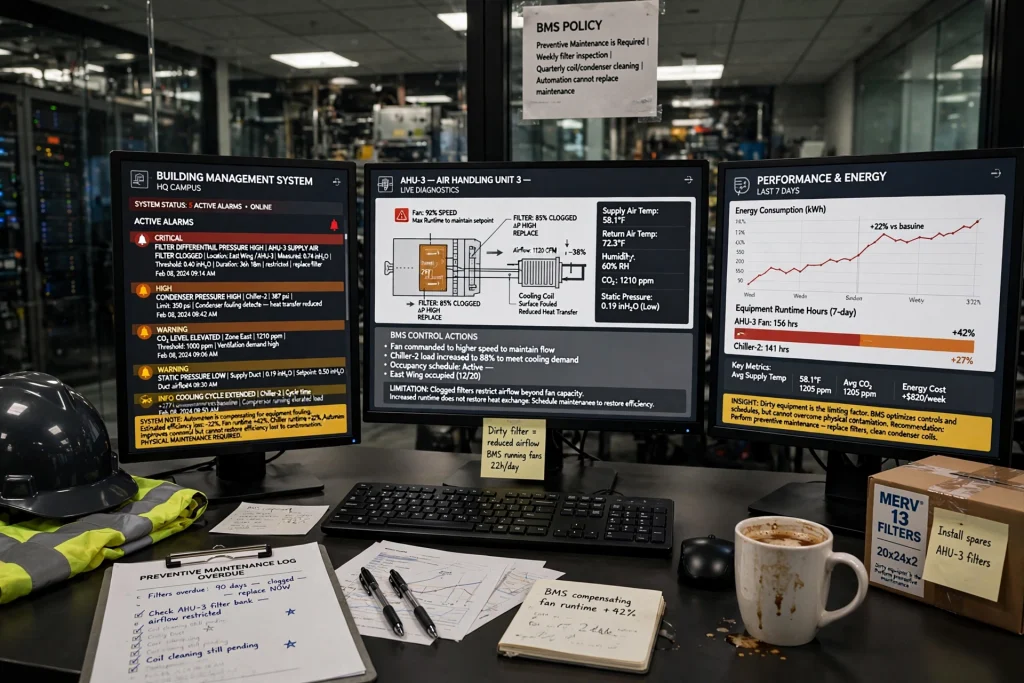
Modern commercial buildings increasingly rely on sophisticated Building Management Systems (BMS) to optimize HVAC performance.
These systems monitor:
- Temperature
- Humidity
- Static pressure
- Airflow
- Carbon dioxide levels
- Energy consumption
- Equipment operating status
- Alarm conditions
- Occupancy schedules
However, even the most advanced automation platform cannot overcome the physical limitations created by dirty equipment.
If airflow remains restricted because filters are clogged, the BMS simply commands fans to operate longer.
If condenser efficiency declines, compressors continue running under elevated pressure.
If heat transfer decreases, cooling cycles extend automatically.
Automation improves control, but it cannot restore efficiency lost through contamination.
Preventive maintenance remains essential regardless of how advanced the building automation system becomes.
Preventive Maintenance Costs Less Than Reactive Repairs
One of the biggest financial mistakes organizations make is postponing HVAC maintenance until equipment failures occur.
Reactive maintenance often creates multiple costs simultaneously.
Emergency service callouts.
Replacement parts.
Equipment downtime.
Occupant disruption.
Temporary cooling solutions.
Business interruption.
Higher electricity consumption before failure.
In contrast, preventive maintenance focuses on identifying minor issues before they become major mechanical problems.
Routine inspections include:
Air filter replacement.
Coil cleaning.
Drain pan sanitation.
Condensate line flushing.
Electrical connection testing.
Refrigerant pressure verification.
Fan alignment.
Belt inspection.
Bearing lubrication.
Motor performance analysis.
Thermographic electrical inspection.
These procedures significantly reduce unexpected failures while extending overall equipment life.
Different Buildings Experience Different Levels of HVAC Contamination
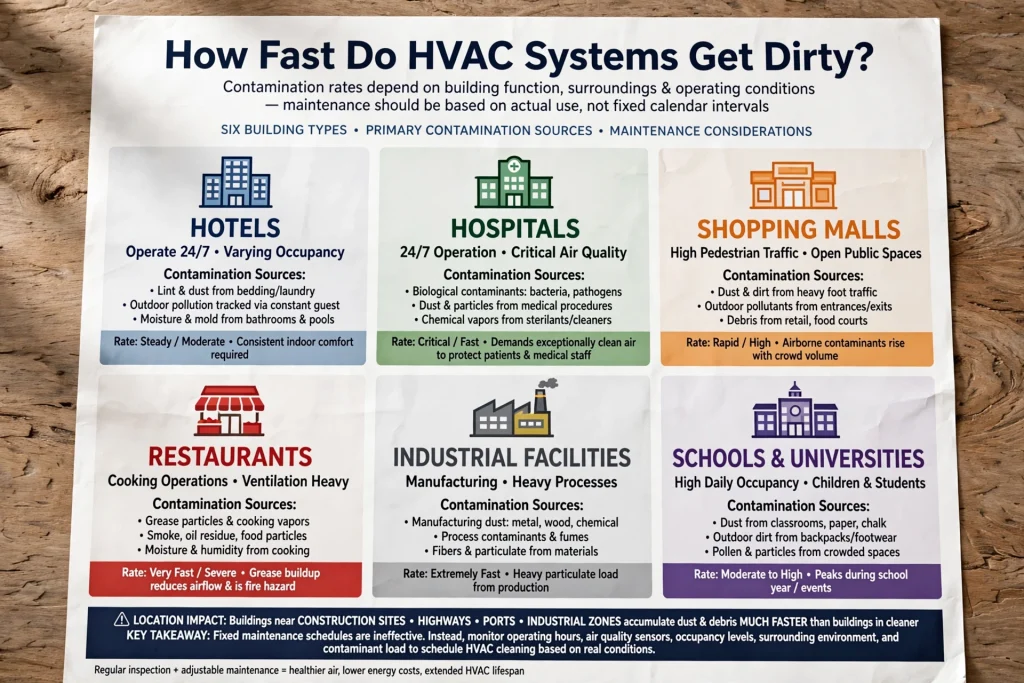
The rate at which HVAC systems become dirty depends on the building’s function and surrounding environment.
Hotels operate continuously with varying occupancy and require consistent indoor comfort.
Hospitals demand exceptionally clean air to protect patients and medical staff.
Shopping malls experience heavy pedestrian traffic that introduces dust and airborne contaminants.
Restaurants expose HVAC systems to grease particles, cooking vapors, and moisture.
Industrial facilities generate manufacturing dust and process contaminants.
Schools and universities experience high daily occupancy, increasing airborne particulate levels.
Buildings located near construction sites, highways, ports, or industrial zones often accumulate dust much faster than buildings in cleaner environments.
Because of these differences, maintenance schedules should always be based on operating conditions rather than fixed calendar intervals.
Sustainability and Energy Efficiency Begin with Clean HVAC Systems
Sustainability initiatives often emphasize renewable energy, efficient lighting, and smart building technologies.
However, maintaining clean HVAC equipment remains one of the simplest methods for reducing a building’s environmental impact.
Efficient systems consume less electricity.
Lower energy consumption reduces greenhouse gas emissions associated with power generation.
Clean equipment lasts longer, reducing manufacturing demand for replacement components.
Well-maintained systems also require fewer emergency repairs, decreasing material waste and transportation-related emissions.
For organizations pursuing LEED certification, Estidama requirements, WELL Building Standard objectives, or broader Environmental, Social, and Governance (ESG) goals, HVAC maintenance contributes directly to improved building performance.
Conclusion
Dirty HVAC systems quietly increase operating costs by reducing airflow, restricting heat transfer, increasing compressor workload, elevating fan energy consumption, and accelerating mechanical wear. While these problems often develop gradually, their financial impact can become substantial over time through higher electricity bills, more frequent equipment failures, declining indoor air quality, and reduced occupant comfort.
Commercial buildings throughout Dubai Marina, Downtown Dubai, Business Bay, Palm Jumeirah, Dubai Hills Estate, DIFC, Jebel Ali, Al Quoz, Dubai Silicon Oasis, Abu Dhabi, and Sharjah depend heavily on reliable HVAC performance due to the region’s demanding climate. Even small reductions in system efficiency can result in significant annual operating expenses when cooling systems run for extended periods.
Regular inspection, cleaning, airflow balancing, and preventive maintenance help preserve equipment efficiency, improve indoor environmental quality, extend component lifespan, and reduce lifecycle costs. Rather than viewing HVAC cleaning as an optional expense, experienced facility managers recognize it as a strategic investment that protects critical building infrastructure, lowers energy consumption, enhances occupant comfort, and ensures long-term operational reliability.