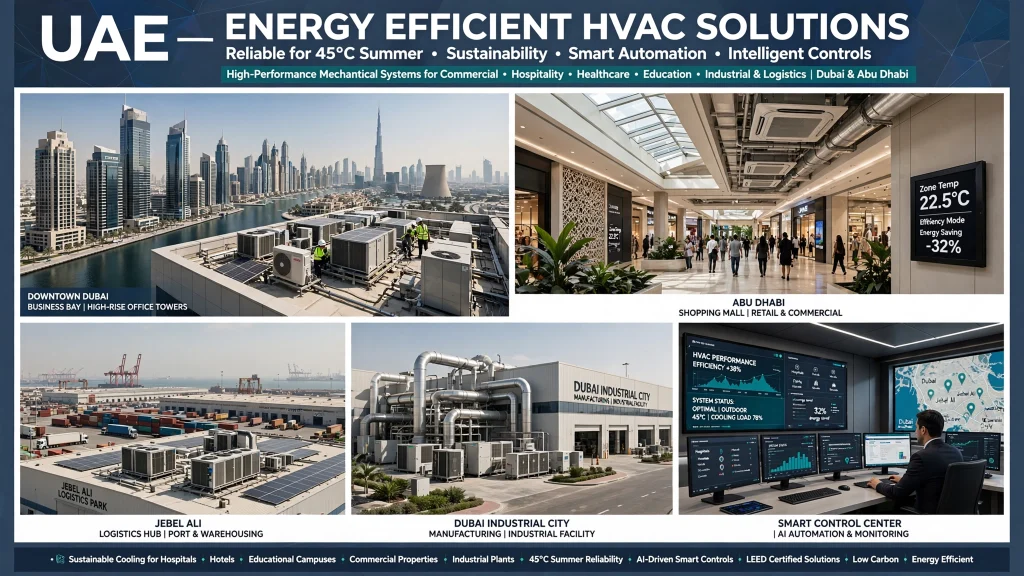
The United Arab Emirates is home to one of the world’s fastest-growing commercial construction markets. From high-rise office towers in Downtown Dubai and Business Bay to shopping malls in Abu Dhabi, logistics hubs in Jebel Ali, and manufacturing facilities in Dubai Industrial City, every commercial building depends on a reliable Heating, Ventilation, and Air Conditioning (HVAC) system. With temperatures regularly exceeding 45°C during summer, cooling systems account for a significant portion of a building’s electricity consumption.
As sustainability becomes a priority across the UAE, businesses are actively investing in energy-efficient HVAC solutions to reduce operating costs, improve indoor comfort, and comply with environmental regulations. Modern HVAC technologies not only minimise electricity consumption but also improve equipment reliability, indoor air quality, and occupant productivity.
Energy-efficient HVAC systems combine intelligent engineering, advanced controls, smart automation, and high-performance mechanical equipment to deliver optimal cooling while reducing energy waste. Commercial property owners, facility managers, hotels, hospitals, educational institutions, and industrial facilities are increasingly adopting these technologies to improve long-term operational performance.
Why Energy Efficiency Matters for Commercial Buildings
Commercial buildings consume a considerable amount of electricity throughout the year, with HVAC systems representing one of the largest energy loads. Office towers, hotels, shopping centres, airports, healthcare facilities, and educational campuses require continuous cooling to maintain comfortable indoor environments.
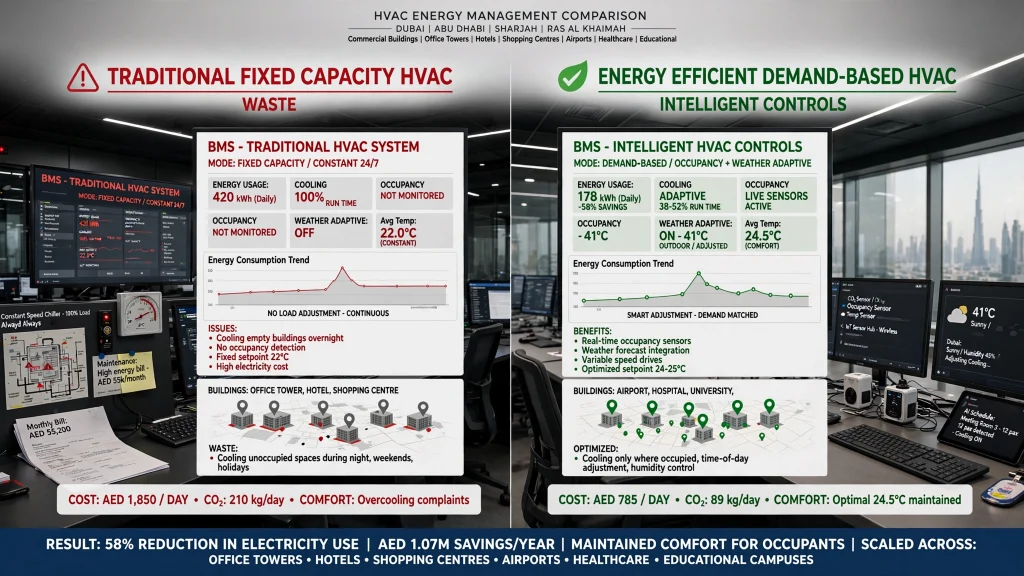
Traditional HVAC systems often operate at fixed capacities regardless of occupancy levels or weather conditions. This results in unnecessary energy consumption and higher operational expenses.
Energy-efficient HVAC solutions continuously adjust cooling performance based on actual building demand. By using intelligent controls, advanced sensors, and high-efficiency mechanical equipment, commercial buildings can significantly reduce electricity usage without compromising comfort.
Modern developments throughout Dubai, Abu Dhabi, Sharjah, and Ras Al Khaimah increasingly integrate energy-efficient HVAC systems during construction to support sustainability goals and reduce lifecycle costs.
Components of an Energy-Efficient HVAC System
A modern commercial HVAC system consists of several interconnected components that work together to maintain indoor comfort while maximising efficiency.
Key components include:
- Chiller Plant
- Air Handling Units (AHUs)
- Fan Coil Units (FCUs)
- Variable Refrigerant Flow (VRF) Systems
- Variable Refrigerant Volume (VRV) Systems
- Chilled Water Pumps
- Cooling Towers
- Compressors
- Condensers
- Evaporators
- Heat Exchangers
- Fresh Air Handling Units (FAHU)
- Energy Recovery Ventilators (ERV)
- Heat Recovery Ventilators (HRV)
- Building Management Systems (BMS)
- Variable Frequency Drives (VFDs)
- Smart Thermostats
- CO₂ Sensors
- Humidity Sensors
Each component plays a critical role in reducing energy consumption while maintaining stable indoor temperatures.
High-Efficiency Chiller Plants
Chiller plants form the heart of large commercial cooling systems.
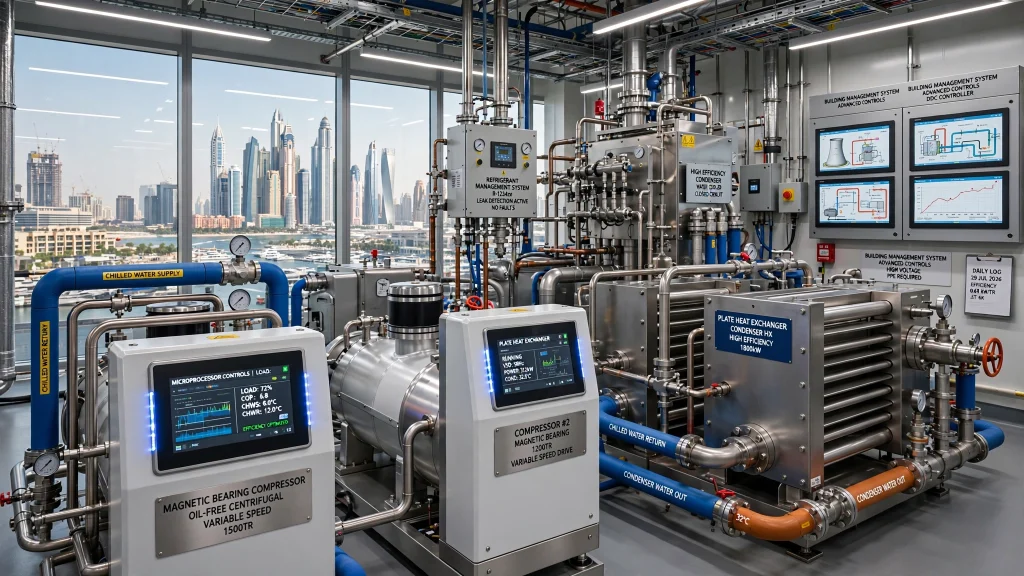
Modern water-cooled chillers and air-cooled chillers are significantly more efficient than older equipment due to advancements in compressor technology, heat exchanger design, refrigerant management, and intelligent controls.
Energy-efficient chillers operate using:
- Magnetic bearing compressors
- Variable speed compressors
- Oil-free centrifugal compressors
- Advanced microprocessor controls
- High-efficiency condensers
- Plate heat exchangers
These technologies reduce electricity consumption while improving cooling performance.
Commercial buildings in Business Bay, Downtown Dubai, DIFC, and Dubai Marina increasingly utilise high-efficiency chiller plants to reduce operating costs across office towers, hotels, and mixed-use developments.
Variable Frequency Drives Reduce Energy Consumption
Variable Frequency Drives (VFDs) have become one of the most effective energy-saving technologies in commercial HVAC systems.
Rather than operating pumps and fans at constant speed, VFDs automatically adjust motor speed according to cooling demand.
Applications include:
- Chilled water pumps
- Condenser water pumps
- Cooling tower fans
- AHU supply fans
- Exhaust fans
- Fresh air fans
Reducing motor speed by even a small percentage can produce significant energy savings because power consumption decreases exponentially with speed reduction.
VFDs also reduce mechanical wear, extend motor lifespan, minimise maintenance costs, and improve operational reliability.
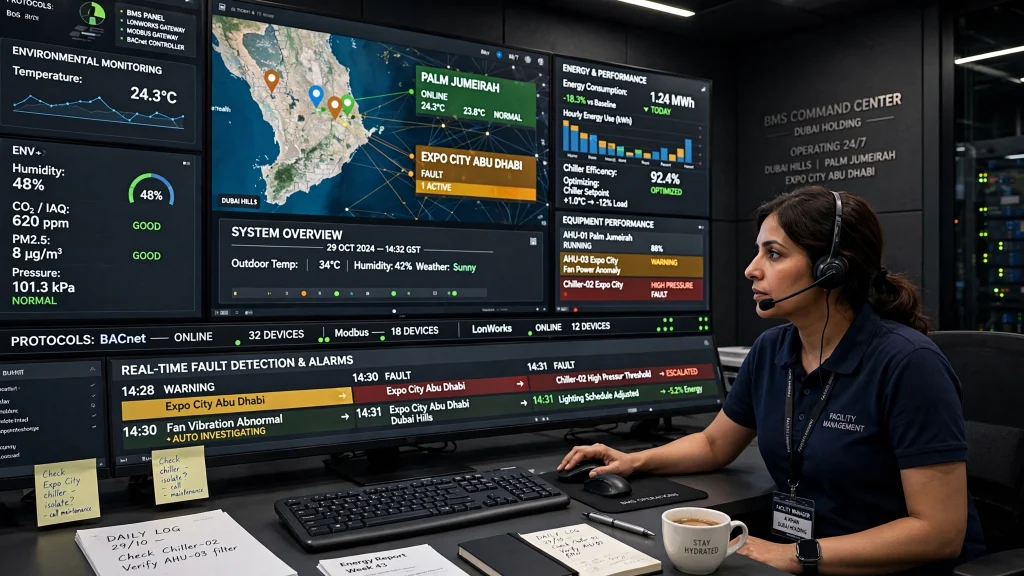
Smart Building Management Systems
Building Management Systems (BMS) provide centralised control of HVAC operations.
Modern BMS platforms monitor:
- Temperature
- Humidity
- Occupancy
- Pressure
- Equipment performance
- Energy consumption
- Alarm conditions
- Indoor air quality
Communication protocols such as BACnet, Modbus, and LonWorks allow HVAC equipment to exchange information with automation systems.
Facility managers can monitor equipment performance in real time, identify faults before failures occur, and optimise energy consumption throughout the building.
Large developments in Dubai Hills, Palm Jumeirah, Expo City Dubai, and Abu Dhabi increasingly integrate intelligent BMS platforms into commercial infrastructure.
Variable Refrigerant Flow (VRF) Technology
VRF systems have become increasingly popular for medium-sized commercial buildings due to their excellent energy efficiency.
Unlike conventional HVAC systems, VRF technology continuously adjusts refrigerant flow according to the cooling requirements of individual zones.
Benefits include:
- Independent temperature control
- Lower electricity consumption
- Reduced refrigerant losses
- Quiet operation
- Flexible installation
- Improved occupant comfort
Hotels, educational facilities, healthcare centres, and commercial offices frequently utilise VRF systems because they provide excellent zoning flexibility while reducing operating costs.
Improving Indoor Air Quality
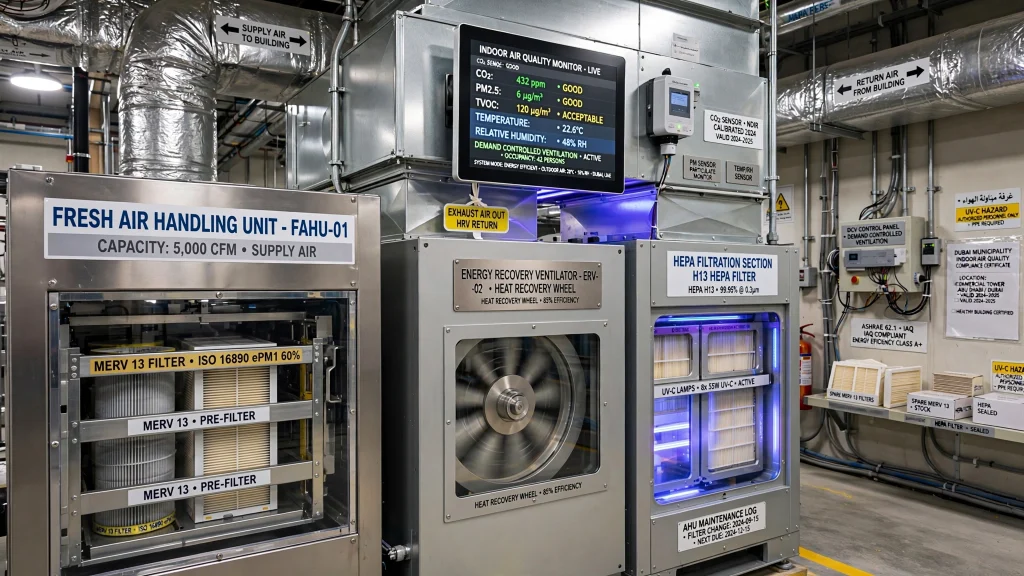
Energy efficiency should never compromise indoor air quality.
Modern HVAC systems integrate ventilation strategies that maintain healthy indoor environments while minimising unnecessary energy consumption.
Key technologies include:
- Fresh Air Handling Units
- CO₂ sensors
- HEPA filtration
- MERV filters
- UV-C air purification
- Energy Recovery Ventilators
- Heat Recovery Ventilators
- Demand Controlled Ventilation
These systems continuously monitor indoor conditions and adjust ventilation rates based on occupancy and air quality.
Commercial offices, hospitals, schools, airports, and hotels across Dubai and Abu Dhabi increasingly prioritise indoor air quality because it improves employee wellbeing, customer comfort, and productivity.
Energy Recovery Systems
Energy Recovery Ventilators (ERVs) and Heat Recovery Ventilators (HRVs) improve HVAC efficiency by transferring energy between outgoing and incoming air streams.
Instead of wasting conditioned air, these systems recover cooling energy before exhausting indoor air.
Recovered energy reduces the workload placed on chillers and air handling units, resulting in:
- Lower electricity consumption
- Reduced cooling loads
- Improved ventilation efficiency
- Better humidity management
Energy recovery technologies are becoming standard in sustainable commercial developments throughout the UAE.
Importance of Proper HVAC Design
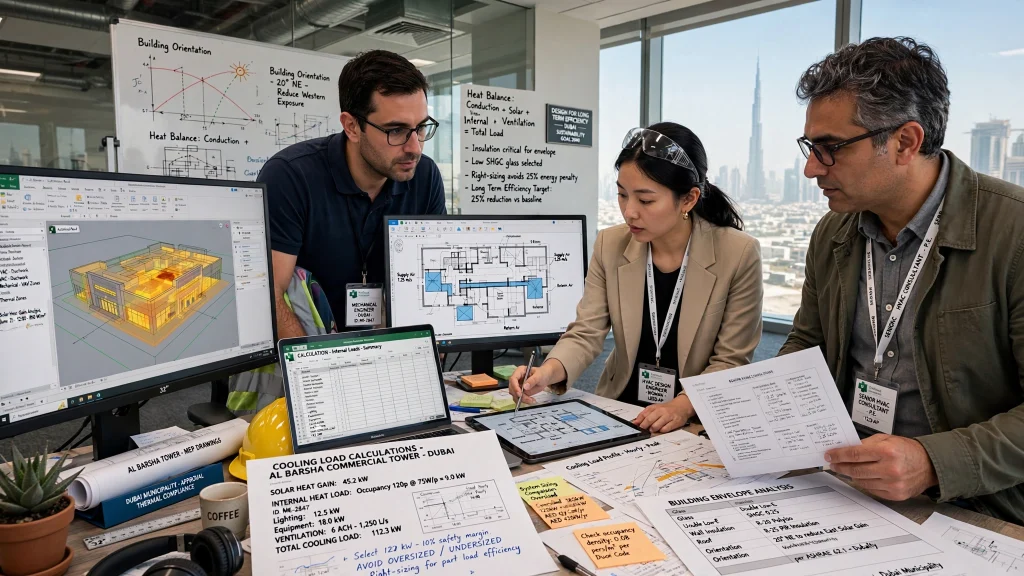
Even the most advanced equipment cannot achieve maximum efficiency without proper system design.
HVAC engineers carefully evaluate:
- Building orientation
- Solar heat gain
- Occupancy density
- Internal heat loads
- Ventilation requirements
- Building envelope performance
- Glass specifications
- Insulation levels
Accurate cooling load calculations ensure HVAC systems are correctly sized.
Oversized equipment wastes energy through frequent cycling, while undersized systems struggle to maintain comfortable temperatures.
Professional engineering design therefore plays a critical role in long-term HVAC efficiency.
Preventive Maintenance Protects System Performance
Energy-efficient HVAC systems require regular maintenance to maintain optimal performance.
Preventive maintenance typically includes:
- Air filter replacement
- Coil cleaning
- Refrigerant inspections
- Motor lubrication
- Belt adjustments
- Pump inspections
- Cooling tower maintenance
- Sensor calibration
- Thermostat verification
- Duct inspections
Regular maintenance prevents efficiency losses while reducing unexpected equipment failures.
Businesses seeking reliable HVAC Ceaning Service Dubai can significantly improve HVAC efficiency by ensuring air ducts, filters, evaporator coils, condensers, and ventilation systems remain clean and unobstructed, allowing equipment to operate at peak performance.
Energy Efficiency Across UAE Commercial Sectors
Every commercial sector benefits from energy-efficient HVAC technology.
Office towers require intelligent zoning and occupancy-based cooling.
Hotels demand continuous climate control while reducing operational expenses.
Shopping malls rely on advanced ventilation systems that maintain customer comfort despite varying occupancy.
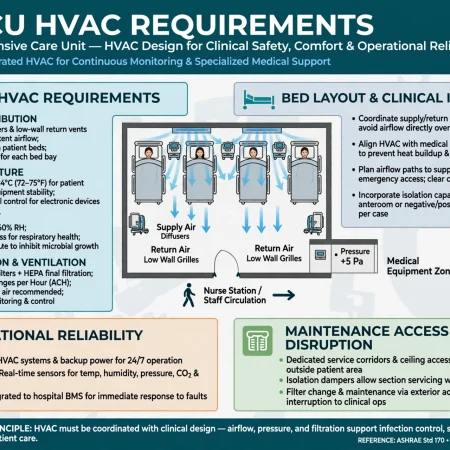
Hospitals require precise temperature, humidity, filtration, and infection control standards.
Educational institutions prioritise indoor air quality while controlling operating costs.
Industrial facilities require reliable ventilation and process cooling systems.
Commercial developments across Sheikh Zayed Road, Dubai Silicon Oasis, Dubai South, Jebel Ali, Al Quoz, Abu Dhabi, Sharjah, Ajman, Fujairah, and Ras Al Khaimah continue investing in energy-efficient HVAC solutions to improve sustainability while reducing long-term operating costs.
Sustainable Refrigerants Support Environmental Goals
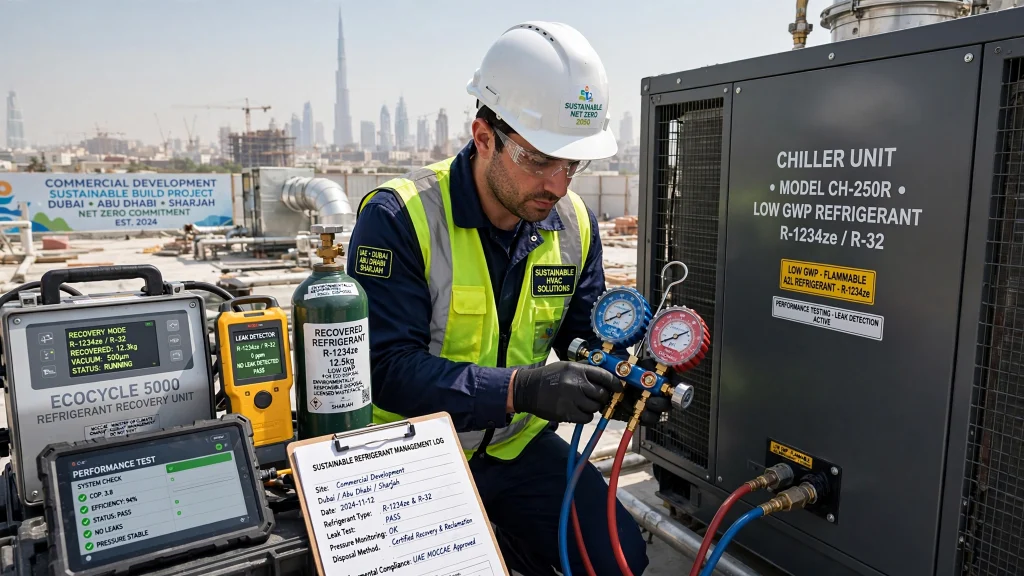
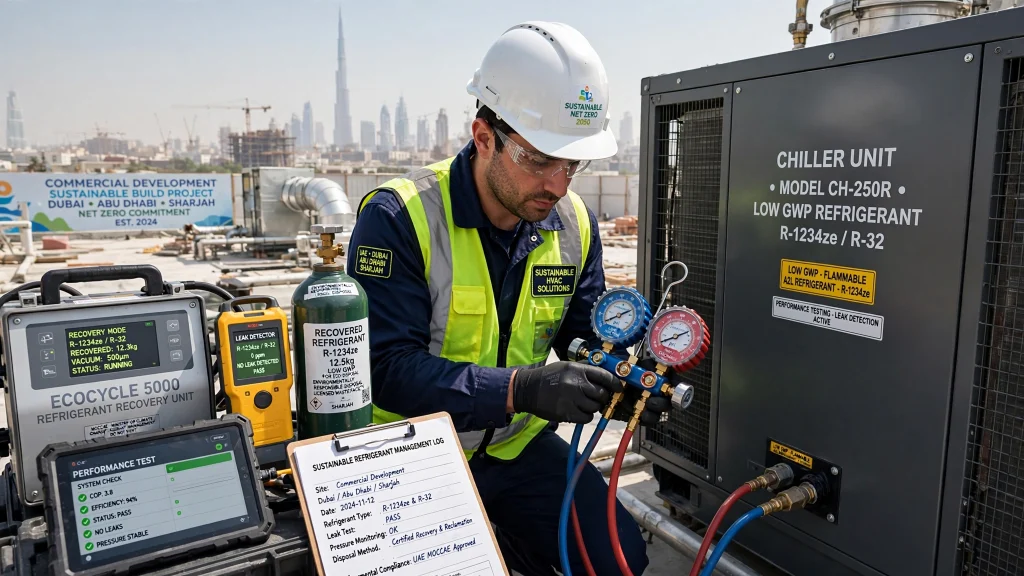
The HVAC industry is gradually transitioning towards environmentally friendly refrigerants with lower Global Warming Potential (GWP).
Modern commercial cooling systems increasingly utilise refrigerants that provide improved energy efficiency while reducing environmental impact.
Proper refrigerant management includes:
- Leak detection systems
- Refrigerant recovery procedures
- Scheduled inspections
- Pressure monitoring
- Performance testing
- Environmentally responsible disposal
Well-maintained refrigerant systems improve compressor efficiency, maintain cooling capacity, and reduce unnecessary energy consumption.
Many commercial developments throughout Dubai, Abu Dhabi, and Sharjah now specify sustainable HVAC equipment as part of their environmental commitments.
Proper Ductwork Design Improves HVAC Efficiency
Ductwork plays an essential role in distributing conditioned air throughout commercial buildings.
Poorly designed or poorly insulated duct systems can waste a considerable amount of cooling energy through air leakage and pressure losses.
Professional HVAC engineers design duct systems that minimise resistance while ensuring balanced airflow throughout every occupied space.
Energy-efficient duct systems include:
- Proper insulation
- Airtight duct joints
- Low-pressure-loss fittings
- Balanced airflow distribution
- Acoustic insulation
- Fire-rated duct sections
- Efficient diffuser placement
Buildings in Business Bay, Downtown Dubai, Dubai Hills, and Palm Jumeirah increasingly prioritise high-performance duct systems because they improve occupant comfort while lowering energy costs.
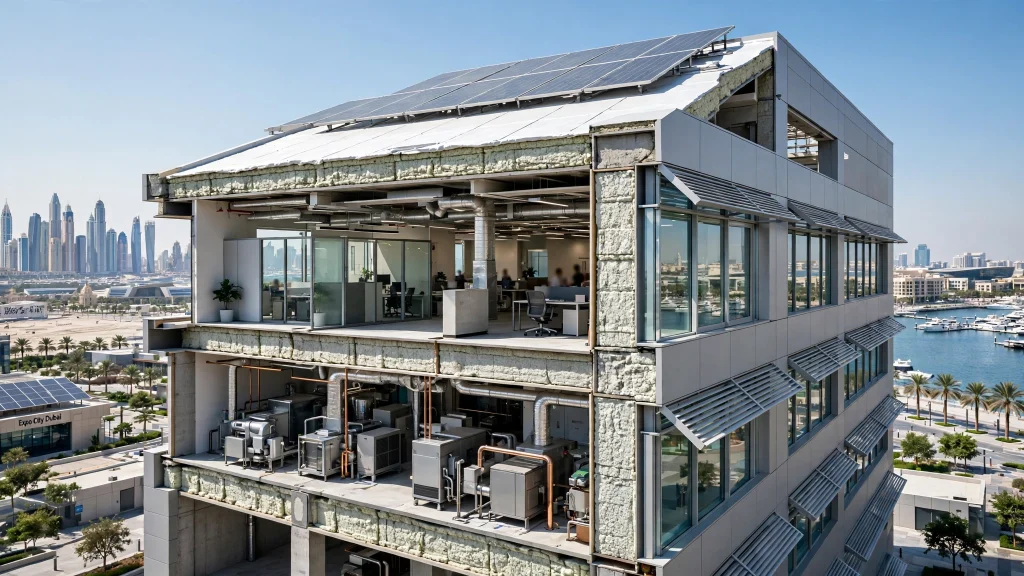
Importance of Thermal Insulation
Building insulation significantly influences HVAC performance.
Even the most advanced cooling system cannot operate efficiently if excessive heat enters the building through walls, roofs, windows, or poorly insulated building envelopes.
Commercial buildings improve HVAC efficiency by using:
- High-performance insulation
- Double-glazed windows
- Low-E glass
- Reflective roofing materials
- Thermal wall insulation
- Solar shading devices
- High-performance façade systems
Reducing heat gain lowers cooling demand, allowing HVAC equipment to operate more efficiently throughout the year.
Many modern developments in Expo City Dubai, Dubai Creek Harbour, Yas Island, and Masdar City combine efficient building envelopes with intelligent HVAC systems to maximise sustainability.
Preventive Maintenance Supports Long-Term Efficiency
Installing energy-efficient equipment is only the first step. Regular maintenance ensures HVAC systems continue performing at their designed efficiency.
Preventive maintenance programmes typically include:
- Cleaning evaporator and condenser coils
- Inspecting compressors
- Testing electrical connections
- Calibrating sensors
- Checking refrigerant pressures
- Inspecting pumps and valves
- Cleaning air filters
- Balancing airflow
- Verifying thermostat operation
- Inspecting VFD performance
Routine maintenance helps identify small problems before they become costly failures.
Commercial property owners who follow scheduled maintenance programmes often experience lower repair costs, fewer emergency breakdowns, and longer equipment service life.
Energy Monitoring and Performance Analytics
Modern commercial buildings increasingly rely on energy monitoring software to evaluate HVAC performance.
Building operators can monitor:
- Electricity consumption
- Chiller efficiency
- Pump performance
- Fan energy usage
- Temperature trends
- Occupancy data
- Equipment runtime
- Peak demand
- Carbon emissions
Performance analytics allow facility managers to identify inefficiencies and optimise building operation continuously.
Artificial intelligence and cloud-based monitoring platforms are making HVAC management more predictive rather than reactive.
HVAC Solutions for Different Commercial Sectors
Every commercial facility has unique cooling requirements.
Office Buildings
Office environments require efficient zoning, stable temperatures, low noise levels, and healthy indoor air quality to improve employee productivity.
Hotels and Hospitality
Hotels require 24-hour cooling across guest rooms, restaurants, conference halls, spas, gyms, kitchens, and public areas while maintaining exceptional guest comfort.
Healthcare Facilities
Hospitals demand highly controlled environments with strict temperature regulation, humidity management, HEPA filtration, infection control measures, and reliable ventilation systems.
Educational Institutions
Schools and universities benefit from energy-efficient HVAC systems that improve learning environments while reducing operational costs.
Shopping Centres
Retail malls experience changing occupancy throughout the day, making demand-controlled cooling and intelligent ventilation essential for maintaining customer comfort.
Industrial Facilities
Factories, warehouses, logistics centres, and production facilities require process cooling, ventilation, heat extraction, and equipment protection under demanding operating conditions.
UAE Regulations Supporting Energy Efficiency
Government initiatives continue encouraging sustainable building practices throughout the UAE.
Commercial buildings increasingly follow internationally recognised standards and local regulations, including:
- ASHRAE Standards
- Dubai Municipality regulations
- Dubai Civil Defence requirements
- Emirates Green Building Council guidelines
- LEED Certification
- Estidama Pearl Rating System
- Dubai Green Building Regulations
These standards promote efficient HVAC design, improved indoor environmental quality, reduced carbon emissions, and sustainable construction practices.
Compliance not only supports environmental goals but also improves long-term building performance.
Emerging Technologies Transforming HVAC Systems
Innovation continues reshaping commercial HVAC systems.
New technologies include:
- Artificial Intelligence (AI)
- Machine Learning
- Digital Twins
- Internet of Things (IoT)
- Predictive Maintenance
- Cloud-Based Building Management
- Smart Energy Metering
- Wireless HVAC Sensors
- Occupancy Analytics
- Automated Fault Detection
These technologies continuously optimise HVAC operation by analysing building data in real time and automatically adjusting system performance.
Future commercial buildings throughout Dubai South, Dubai Silicon Oasis, Abu Dhabi Global Market, and Masdar City will increasingly depend on intelligent HVAC ecosystems capable of reducing energy consumption while improving occupant comfort.
Financial Benefits of Energy-Efficient HVAC Systems
Although high-efficiency HVAC systems require greater initial investment, they provide substantial financial returns over their operating life.
Benefits include:
- Lower electricity bills
- Reduced maintenance expenses
- Longer equipment lifespan
- Improved occupant productivity
- Higher property value
- Lower carbon footprint
- Reduced equipment downtime
- Better sustainability ratings
For commercial property owners, these savings often outweigh the initial installation costs, making energy-efficient HVAC systems a strategic long-term investment.
Choosing the Right HVAC Partner
Achieving maximum energy efficiency requires more than installing modern equipment. Success depends on proper engineering design, equipment selection, professional installation, system commissioning, regular maintenance, and continuous performance optimisation.
Experienced HVAC engineers evaluate building loads, occupancy patterns, climate conditions, ventilation requirements, and future expansion plans before recommending the most appropriate solution.
A professional approach ensures every HVAC component operates as an integrated system, delivering reliable cooling while minimising energy consumption.
The Future of Energy-Efficient HVAC in the UAE
As commercial developments continue expanding across Dubai, Abu Dhabi, Sharjah, Ajman, Ras Al Khaimah, Fujairah, and Umm Al Quwain, demand for sustainable HVAC systems will continue growing.
Future buildings will integrate renewable energy, solar-assisted cooling, intelligent automation, advanced analytics, and environmentally friendly refrigerants to create highly efficient indoor environments.
Commercial property developers are increasingly recognising that energy-efficient HVAC systems not only reduce operating costs but also improve tenant satisfaction, support ESG initiatives, and contribute to national sustainability objectives.
Conclusion
Energy-efficient HVAC solutions have become an essential investment for commercial buildings across the UAE. By combining advanced technologies such as high-efficiency chillers, Variable Frequency Drives, Building Management Systems, VRF systems, Energy Recovery Ventilators, smart sensors, and predictive maintenance, businesses can significantly reduce energy consumption while improving indoor comfort and operational reliability.
Whether serving an office tower in Business Bay, a luxury hotel on Palm Jumeirah, a healthcare facility in Abu Dhabi, a shopping mall in Dubai Marina, or an industrial plant in Jebel Ali, modern HVAC systems provide measurable improvements in efficiency, sustainability, and long-term performance.
As the UAE continues to lead regional development in smart cities and sustainable infrastructure, energy-efficient HVAC technologies will remain at the forefront of creating healthier, more productive, and environmentally responsible commercial buildings.