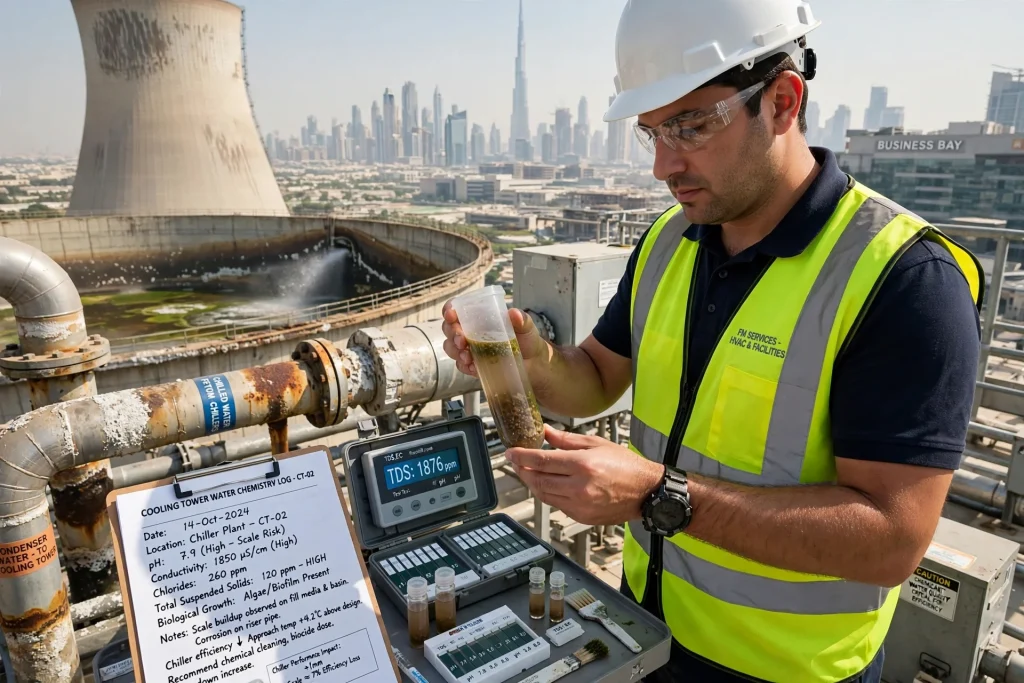
Cooling tower water quality has a direct impact on chiller efficiency, heat rejection, energy consumption, equipment reliability, and maintenance costs. In commercial buildings across Dubai and the wider UAE, water-cooled chillers depend on cooling towers to remove heat from the refrigeration cycle. When cooling water contains excessive scale-forming minerals, suspended solids, corrosive substances, or biological growth, heat transfer becomes less effective and the entire chilled-water system can lose performance.
High ambient temperatures, dust, evaporation, and demanding cooling loads make cooling tower water treatment particularly important in the UAE. Buildings in Business Bay, Downtown Dubai, Dubai Marina, and other commercial districts often depend on reliable HVAC systems to maintain indoor comfort throughout the year. Poor cooling tower water management can increase condenser temperatures, raise compressor energy consumption, trigger equipment alarms, and shorten the service life of critical components.
Understanding the relationship between cooling tower water chemistry and chiller performance helps facility managers, building owners, and HVAC maintenance teams identify problems before they become expensive breakdowns. This guide explains the main water quality parameters, how they affect chiller efficiency, and the practical steps required to maintain a reliable cooling system.
Understanding the Relationship Between Cooling Towers and Chillers
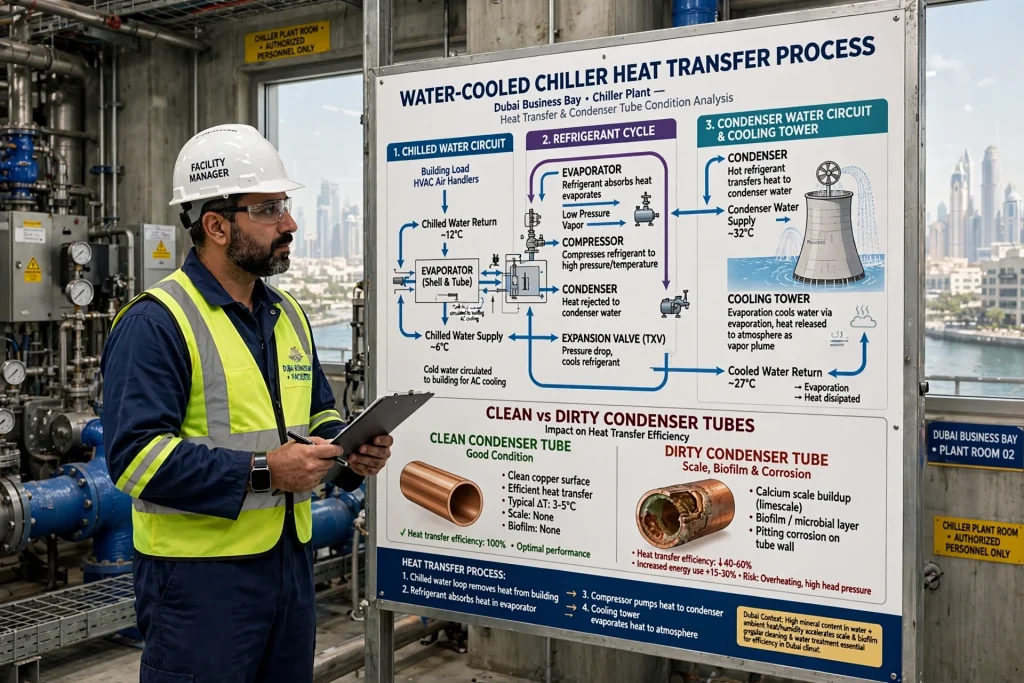
A water-cooled chiller removes heat from a building’s chilled-water circuit and transfers it to the refrigerant. The refrigerant releases that heat into condenser water, which circulates between the chiller condenser and the cooling tower. The cooling tower then rejects the heat into the atmosphere, primarily through evaporation.
This process depends on effective heat transfer across the condenser tubes and within the cooling tower fill. Clean surfaces, suitable water chemistry, adequate water circulation, and effective airflow help the system operate as designed.
When cooling tower water quality deteriorates, deposits and contaminants can accumulate on heat-transfer surfaces. Scale acts as an insulating layer, corrosion can damage metal components, and biological growth can restrict water flow. These problems reduce the system’s ability to reject heat.
As condenser water temperature rises, the chiller generally needs to work harder to maintain the required chilled-water supply temperature. Depending on the chiller design and operating conditions, this can increase compressor power consumption, reduce available cooling capacity, and contribute to high-pressure alarms or protective shutdowns.
For facilities operating large centrifugal, screw, or other water-cooled chillers, maintaining the cooling tower water circuit is therefore an important part of overall HVAC performance management.
Why Cooling Tower Water Quality Matters in Dubai and the UAE
Cooling towers operate under challenging conditions in the UAE. High outdoor temperatures increase cooling demand, while evaporation continuously removes water from the cooling tower basin. Minerals and other non-volatile contaminants remain in the circulating water, causing their concentrations to rise.
Dust and airborne particles can also enter the cooling tower, particularly in exposed rooftop installations. These contaminants can combine with minerals and biological material to form deposits or sludge in the basin, strainers, pipes, and heat exchangers.
Water quality also varies according to the source of make-up water and the treatment programme. Parameters such as hardness, alkalinity, conductivity, chloride concentration, and silica levels influence the appropriate treatment strategy.
Commercial facilities in Dubai, Sharjah, Abu Dhabi, and Ajman may have different operating conditions, water sources, equipment specifications, and maintenance requirements. A treatment programme suitable for one building should not automatically be applied to another.
Effective cooling tower management therefore requires routine water testing, controlled chemical treatment, appropriate filtration, and regular inspection of both the cooling tower and chiller condenser.
How Cooling Tower Water Quality Affects Chiller Efficiency
1. Scale Formation Reduces Heat Transfer
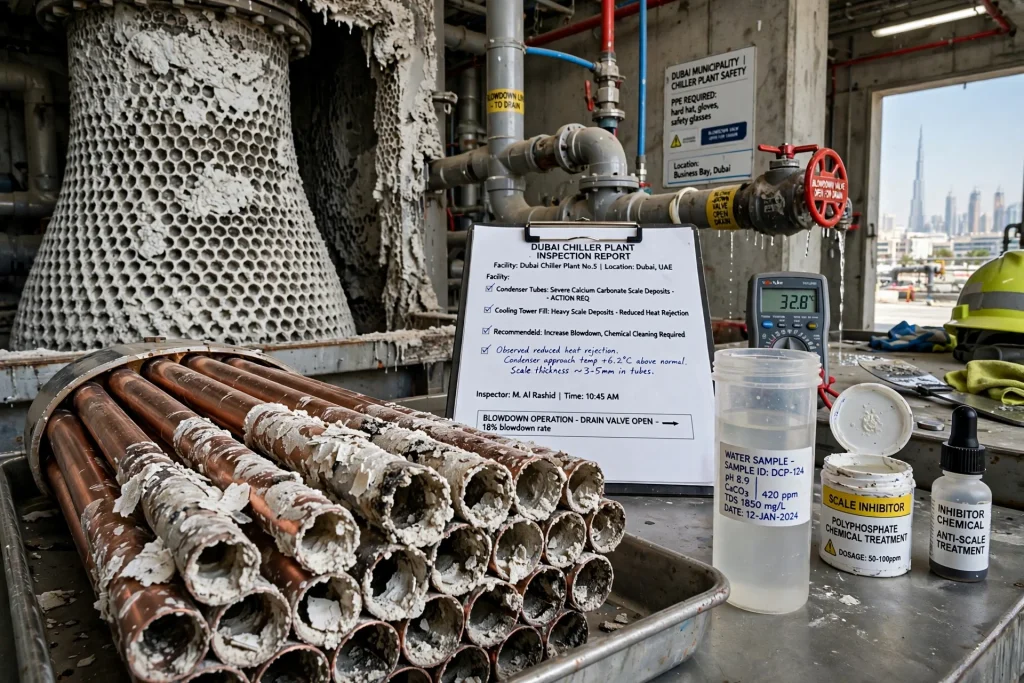
Scale is one of the most common water-related causes of reduced condenser performance. It forms when dissolved minerals precipitate from the circulating water and attach to heat-transfer surfaces.
Calcium carbonate scale is a common example, particularly when water hardness, alkalinity, pH, temperature, and concentration cycles create favourable conditions for precipitation. Other deposits may involve calcium sulphate or silica, depending on the water chemistry.
When scale builds up inside condenser tubes, it creates a barrier between the metal surface and the circulating water. The chiller must then operate with a higher temperature difference to transfer the same amount of heat.
This can increase refrigerant condensing pressure and compressor power consumption. In severe cases, the system may struggle to maintain the required chilled-water temperature during periods of high cooling demand.
Scale can also develop on cooling tower fill, reducing effective contact between water and air. This weakens heat rejection and can increase the temperature of water returning to the chiller condenser.
A suitable scale-control programme combines water analysis, chemical treatment, controlled blowdown, and periodic inspection. If deposits have already accumulated, the correct cleaning method should be selected according to the deposit composition and equipment manufacturer’s recommendations.
2. Corrosion Damages Condenser Tubes and Water-Circuit Components
Corrosion occurs when water chemistry and operating conditions promote the deterioration of metal surfaces. Depending on the system design, susceptible components may include condenser tubes, pipework, heat exchangers, pumps, cooling tower basins, and associated fittings.
Factors that can contribute to corrosion include unsuitable pH, elevated chloride levels, dissolved oxygen, deposits, incompatible metals, and inadequate corrosion-inhibitor control.
Corrosion is not simply a cosmetic issue. Pitting and wall thinning can eventually cause leaks, tube failures, contamination, and unplanned equipment shutdowns. Corrosion products can also enter the circulating water and contribute to fouling elsewhere in the system.
In mixed-metal systems, galvanic corrosion may occur when dissimilar metals are electrically connected in a suitable electrolyte. Deposits can also create localised conditions that encourage under-deposit corrosion.
Preventive water treatment should be based on the materials used in the cooling tower, condenser, and associated pipework. Chemical concentrations must be controlled within the treatment supplier’s and equipment manufacturer’s specified limits.
Regular inspections, corrosion monitoring, and review of water test results help identify developing problems before they lead to costly repairs.
3. Biological Growth Restricts Water Flow and Heat Rejection
Cooling towers provide warm, moist conditions that can support the growth of algae, bacteria, and other microorganisms when control measures are inadequate.
Algae commonly develop in areas exposed to sunlight, while biofilm can form on wet surfaces, inside pipes, and on heat-transfer equipment. Biofilm is a layer of microorganisms and associated material that adheres to surfaces.
This growth can restrict water flow, increase fouling, interfere with heat transfer, and encourage under-deposit corrosion. Organic matter may also accumulate in the basin and strainers, increasing cleaning requirements.
Biological control typically involves an appropriate biocide programme, regular basin cleaning, control of stagnant areas, and removal of accumulated debris. Treatment should be designed and monitored by qualified personnel because the correct approach depends on the system, water chemistry, materials, and applicable safety requirements.
Legionella risk also requires specific attention. Cooling towers can generate aerosols that may expose people to Legionella bacteria if the system is contaminated and poorly managed. Water treatment alone is not a substitute for a comprehensive cooling tower water management and risk-control programme.
Facility managers should follow applicable UAE requirements and recognised guidance for cooling tower hygiene, sampling, cleaning, disinfection, and recordkeeping. Biological monitoring and corrective actions should be based on the site’s risk assessment and applicable regulations.
4. Suspended Solids and Dust Cause Fouling
Cooling towers are exposed to outdoor air, allowing dust, sand, leaves, and other airborne particles to enter the water circuit. Construction activity and nearby roads can increase the amount of particulate matter reaching rooftop equipment.
These contaminants may settle in the cooling tower basin, collect in strainers, or accumulate on condenser surfaces. When suspended solids combine with scale or biological growth, deposits can become more difficult to remove.
Fouling reduces the effective heat-transfer area and may restrict water circulation. It can also increase the pressure drop across strainers and filters, affecting pump operation and maintenance requirements.
Side-stream filtration can help remove suspended particles from the circulating water. Its suitability depends on the system’s contamination load, flow arrangement, particle characteristics, and operating requirements.
Regular basin cleaning, appropriate screening, and inspection of strainers help control the problem. Filters should be selected and maintained according to the system design rather than installed without considering flow and pressure requirements.
For rooftop cooling towers in dusty environments across Dubai and Sharjah, controlling airborne debris and sediment can be an important part of maintaining stable condenser performance.
Key Cooling Tower Water Quality Parameters
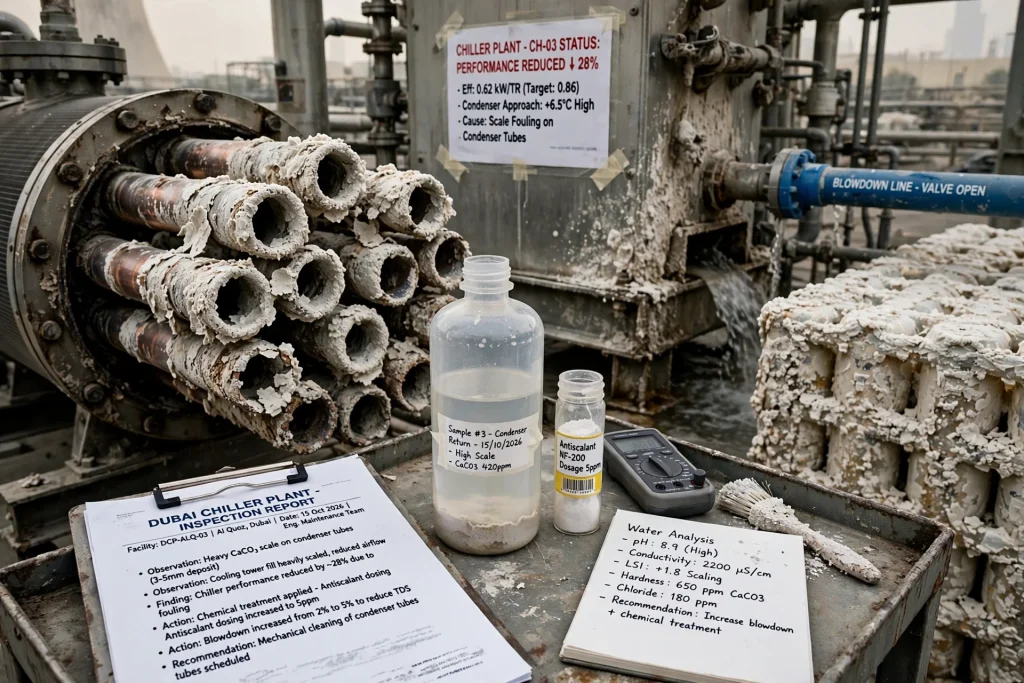
Effective water treatment requires more than adding chemicals on a fixed schedule. The circulating water should be tested against the system’s treatment plan, water source, materials, and operating conditions.
The most important parameters include the following.
pH
pH indicates how acidic or alkaline the water is. A pH outside the treatment programme’s acceptable range can affect corrosion rates, scale formation, and the effectiveness of some treatment chemicals.
There is no single pH target suitable for every cooling tower. The acceptable range depends on factors such as metallurgy, inhibitor chemistry, make-up water, and the manufacturer’s requirements.
Conductivity and Total Dissolved Solids
Electrical conductivity provides a practical indication of the concentration of dissolved ions in water. As evaporation removes water from the cooling tower, dissolved substances become more concentrated.
Conductivity is commonly used to help control blowdown, which removes a portion of the circulating water and allows fresh make-up water to enter the system. Conductivity is useful for operational control, but it does not identify every individual contaminant or replace full water analysis.
Water Hardness and Alkalinity
Calcium and magnesium contribute to water hardness, while alkalinity describes the water’s capacity to neutralise acids. These parameters influence the risk of mineral scale formation.
High hardness does not automatically mean scale will form, because temperature, pH, alkalinity, concentration cycles, and treatment chemistry also matter. Monitoring these factors helps the water treatment specialist establish appropriate operating limits.
Chloride and Silica
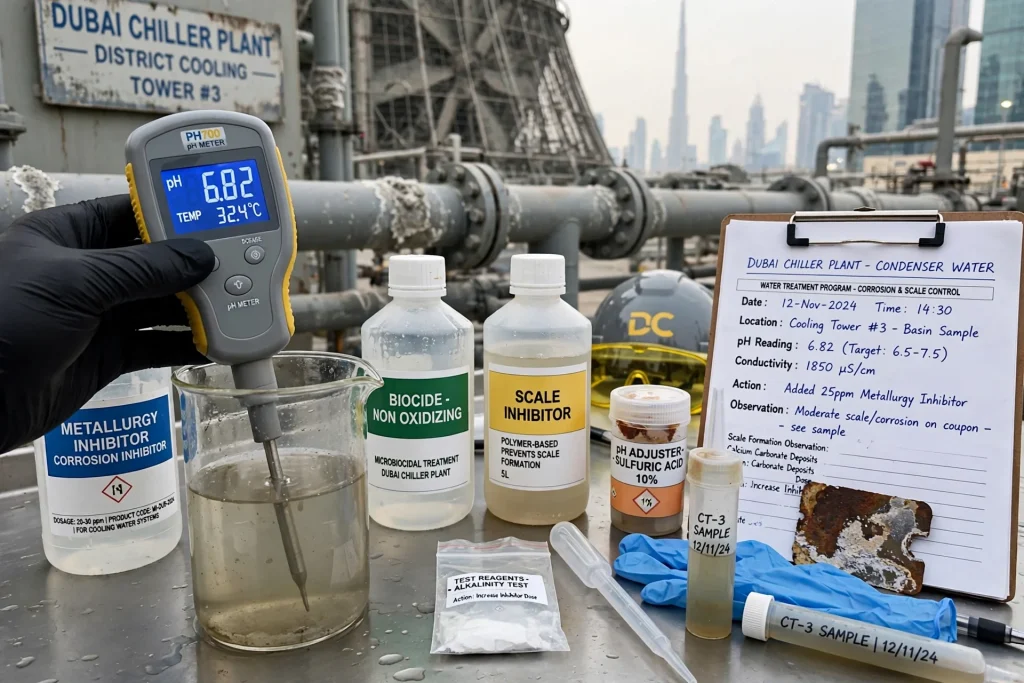
Chloride concentration is important because elevated levels can increase corrosion risk for certain metals, particularly under unfavourable conditions. Silica can form difficult deposits when its concentration exceeds the limits appropriate for the system and treatment method.
Both parameters should be considered when determining permissible concentration cycles and selecting treatment chemicals.
Temperature and Microbiological Conditions
Water temperature influences mineral solubility, chemical reactions, and biological growth. Microbiological conditions should be assessed through an appropriate water management programme, including cleaning, disinfection, inspection, and sampling where required.
The combined results provide a more reliable picture of system condition than any single reading.
What Are Cooling Tower Cycles of Concentration?
Cycles of concentration describe how concentrated dissolved substances in the circulating cooling tower water become compared with the make-up water. Evaporation removes relatively pure water, leaving most dissolved minerals behind. Blowdown removes some of these accumulated substances.
For example, if a suitable dissolved constituent measures approximately 200 mg/L in the make-up water and 800 mg/L in the circulating water, the approximate concentration ratio is four, provided the constituent is conservative and the measurements are comparable.
Higher cycles of concentration can reduce water consumption because less make-up water is needed relative to evaporation. However, operating at excessively high cycles can increase the risk of scaling, corrosion, and other water quality problems.
The appropriate operating level depends on make-up water quality, treatment technology, equipment materials, operating temperatures, and system design.
A water treatment specialist should determine suitable limits and ensure that conductivity-based blowdown controls are calibrated and functioning correctly. Maximising cycles without considering chemistry is not a reliable water-saving strategy.
How Poor Water Quality Increases Chiller Energy Consumption
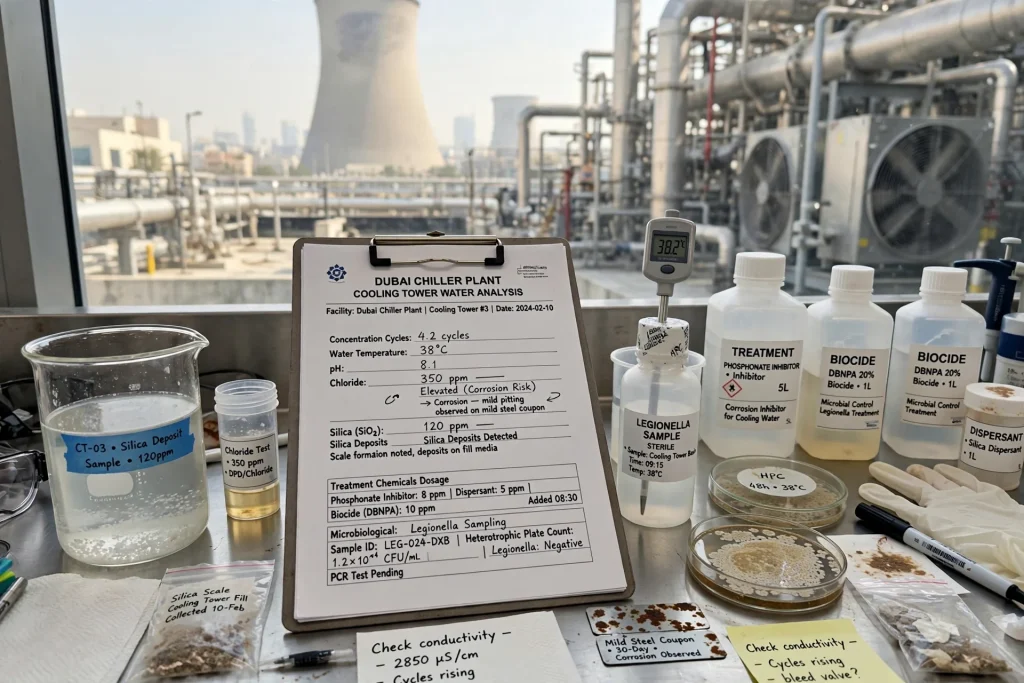
A chiller transfers heat through its evaporator and condenser. When cooling tower water quality causes scale, fouling, or reduced water flow, the condenser may reject heat less effectively.
The resulting increase in condensing temperature or pressure can increase compressor lift, meaning the compressor must work across a greater pressure difference. In many operating conditions, this raises the electrical power required to deliver the same cooling output.
Poor water quality can also affect cooling tower performance directly. Fouled fill, blocked distribution nozzles, dirty strainers, and insufficient airflow may prevent the tower from achieving its intended leaving-water temperature.
The combined effect can be particularly noticeable during Dubai’s hot summer conditions, when buildings may already be operating close to their peak cooling demand.
Facility teams should review condenser-water inlet and outlet temperatures, chilled-water supply and return temperatures, chiller power consumption, cooling load, and relevant alarm history. Comparing these readings under similar operating conditions helps distinguish water-related performance deterioration from changes caused by weather, load, or equipment operation.
A rise in energy use does not prove that water quality is the only cause. Refrigerant charge, condenser-tube cleanliness, flow rates, sensor accuracy, and cooling tower airflow should also be assessed during troubleshooting.
How to Establish an Effective Cooling Tower Water Treatment Programme
A structured water treatment programme combines testing, chemical control, mechanical maintenance, and documented operating procedures.
First, establish a baseline by testing make-up water and circulating water. The analysis should consider pH, conductivity, hardness, alkalinity, chloride, silica, suspended solids, and any additional parameters relevant to the equipment and treatment programme.
Next, select treatment methods appropriate for the system. These may include corrosion inhibitors, scale-control chemicals, biocides, filtration, and automated conductivity-based blowdown. Chemical selection and dosing should be based on professional assessment rather than generic recommendations.
Automatic dosing equipment can improve consistency, but sensors, pumps, chemical storage, and dosing lines require regular inspection and calibration. A control system cannot maintain water quality reliably if its readings are inaccurate or its chemical supply is interrupted.
Testing frequency should reflect system risk, operating conditions, treatment requirements, and applicable guidance. High-load facilities or systems experiencing unstable water chemistry may require more frequent monitoring than systems with stable operating conditions.
Maintain records of test results, chemical consumption, blowdown operation, cleaning, inspections, microbiological monitoring, and corrective actions. These records help facility managers recognise recurring problems and demonstrate that the system is being managed systematically.
Cooling Tower Maintenance Checklist for Facility Managers
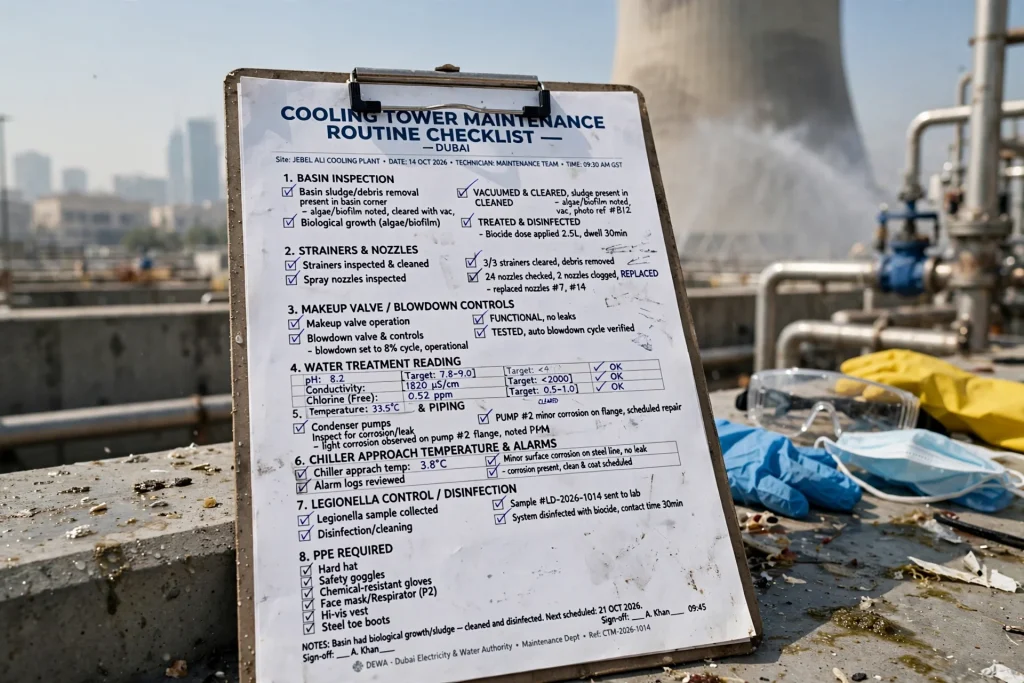
A practical maintenance routine should cover water chemistry, mechanical condition, heat-transfer performance, and hygiene.
During routine inspections, check the cooling tower basin for sludge, debris, unusual colour, or visible biological growth. Inspect strainers, water distribution nozzles, make-up valves, and blowdown controls to identify blockages or abnormal operation.
Review water treatment readings against the agreed operating limits. Investigate unexplained changes in conductivity, pH, chemical residuals, or microbiological results rather than adjusting dosing without understanding the cause.
Inspect condenser-water pumps, piping, valves, and accessible heat exchangers for leaks, vibration, corrosion, or flow restrictions. Review chiller condenser approach temperatures and operating alarms to identify potential heat-transfer deterioration.
Cleaning and disinfection should be carried out according to the maintenance plan and applicable health and safety requirements. Cooling towers must be managed to control Legionella risk, including appropriate precautions for work that may generate aerosols.
If condenser fouling is suspected, arrange an inspection and determine whether mechanical cleaning, chemical cleaning, or another corrective action is appropriate. Cleaning methods must be compatible with the condenser tube materials and manufacturer recommendations.
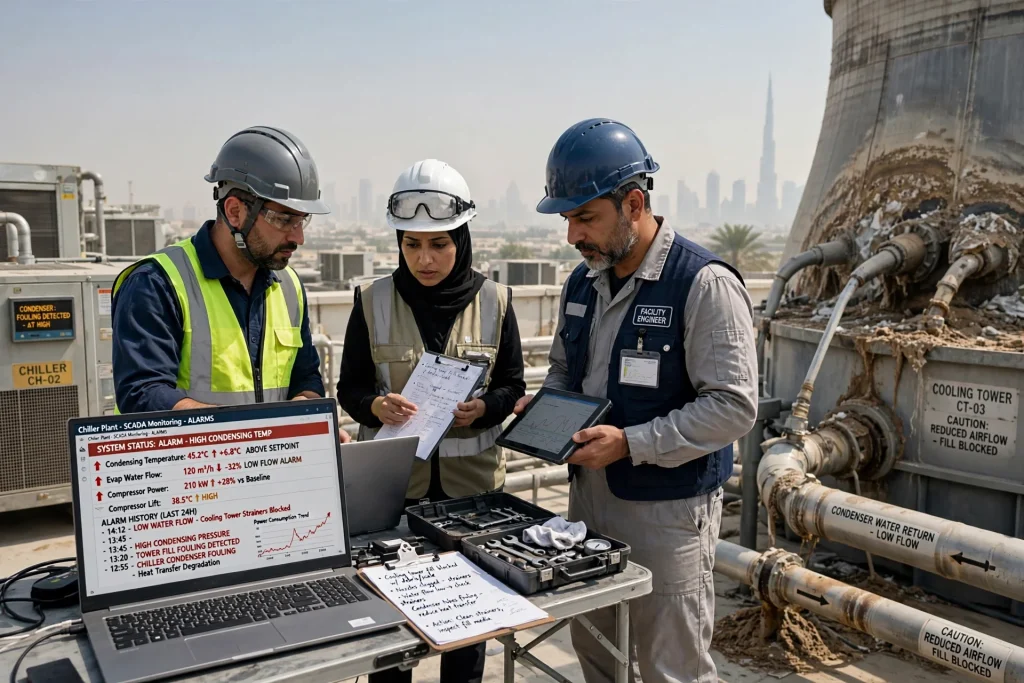
Signs That Cooling Tower Water Quality May Be Affecting Chiller Performance
Several operational symptoms can indicate a water quality problem, although each requires investigation before a cause is confirmed.
One common sign is a gradual increase in condenser-water temperature difference or condenser approach temperature under comparable operating conditions. Other warning signs include rising compressor power, higher condensing pressure, reduced cooling capacity, repeated high-pressure alarms, visible scale, blocked strainers, and unusual sediment in the basin.
A sudden deterioration may point to a pump, fan, control, water distribution, or dosing failure. Gradual deterioration may be associated with scale accumulation, biological fouling, corrosion products, or changes in water chemistry.
Facility managers should avoid treating every high-pressure alarm as a chemical-treatment issue. A proper diagnosis should check water flow, cooling tower fan operation, condenser-tube cleanliness, temperature sensors, refrigerant-side conditions, and actual cooling load.
Trend data is particularly useful. Reviewing operating conditions over several weeks can help identify whether the problem is recurring, seasonal, or associated with a specific maintenance event.
The Role of Cooling Tower Services in Chiller Reliability
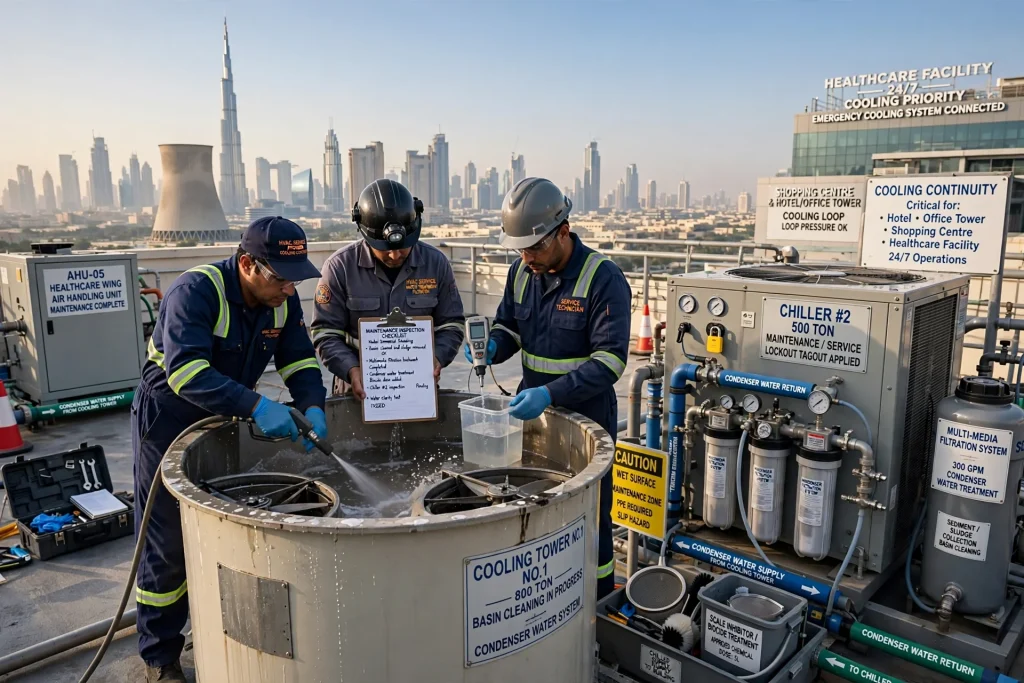
Cooling tower maintenance and water treatment should be coordinated with the chiller maintenance programme. A clean condenser cannot remain efficient indefinitely if the circulating water is poorly controlled, and a well-treated cooling tower cannot compensate for every mechanical fault.
Professional service support may include water quality testing, chemical dosing checks, basin cleaning, filtration assessment, inspection of water distribution, condenser performance evaluation, and troubleshooting of recurring alarms. The actual scope should reflect the building’s equipment, operating conditions, and maintenance requirements.
For commercial facilities in Dubai, selecting a qualified HVAC service provider helps coordinate cooling tower condition with chiller performance, chilled-water delivery, and building cooling demand. Businesses can explore Cooling Tower Services when assessing maintenance and support requirements for their cooling systems.
A coordinated maintenance approach is especially valuable for hotels, office towers, shopping centres, healthcare facilities, and industrial buildings where cooling interruptions can affect occupants, operations, and business continuity.
Cooling Tower Water Quality and UAE Energy Efficiency Goals
Improving water quality can support more efficient HVAC operation by helping the condenser and cooling tower maintain their intended heat-transfer performance. Reducing avoidable fouling and improving water management can also help limit unnecessary maintenance and extend equipment service life.
Water efficiency should be considered alongside energy performance. Poorly controlled blowdown wastes water, while excessive concentration cycles can increase scaling or corrosion risk. A balanced treatment programme aims to maintain acceptable water chemistry while using water and chemicals responsibly.
For facilities operating across Dubai, Abu Dhabi, and Sharjah, these measures can form part of wider energy and maintenance initiatives. Monitoring chiller performance, cooling tower water use, chemical consumption, and maintenance history helps facility teams evaluate improvements using operational data.
Energy savings should be measured rather than assumed. Weather, occupancy, cooling demand, chiller loading, and equipment condition all affect consumption. Comparing normalised performance before and after corrective work provides a more reliable assessment of the results.
Conclusion
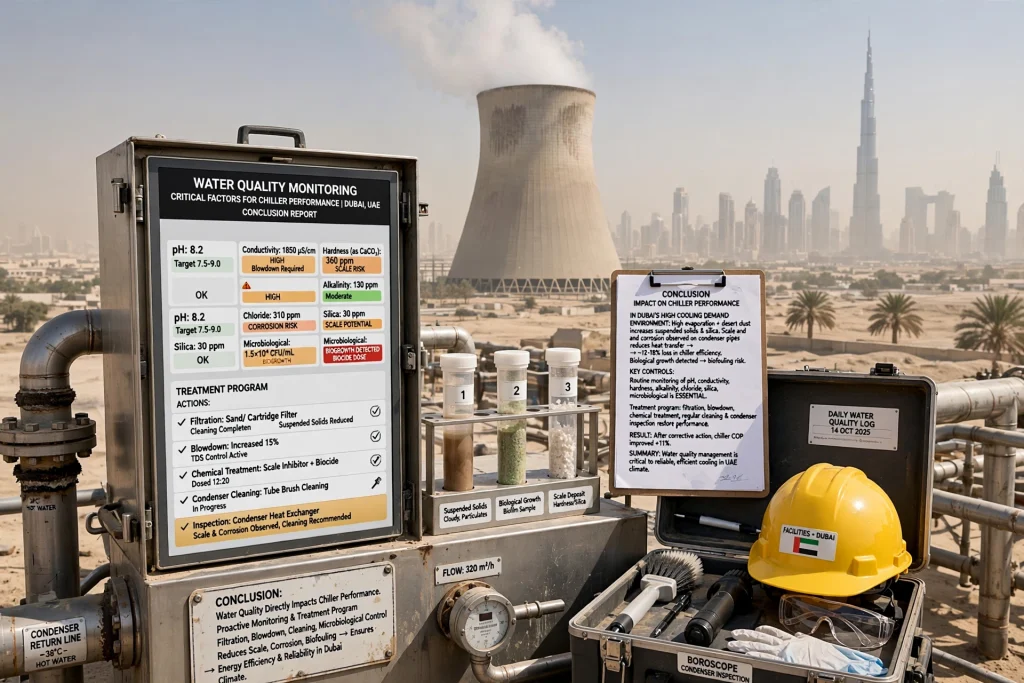
Cooling tower water quality is a critical factor in the performance and reliability of water-cooled chillers. Scale reduces heat transfer, corrosion threatens equipment integrity, biological growth creates fouling and hygiene risks, and suspended solids can restrict water circulation.
In Dubai and the wider UAE, evaporation, high cooling demand, and airborne dust make consistent water treatment and maintenance particularly important. Monitoring pH, conductivity, hardness, alkalinity, chloride, silica, and microbiological conditions helps facility teams maintain water chemistry within the limits appropriate for their equipment.
The most effective strategy combines a properly designed treatment programme with filtration where appropriate, controlled blowdown, routine cleaning, condenser inspections, and performance monitoring. When cooling tower and chiller maintenance are managed together, building operators are better positioned to protect cooling capacity, manage energy consumption, and reduce avoidable downtime.
Frequently Asked Questions
How does cooling tower water quality affect chiller efficiency?
Poor water quality can cause scale, corrosion, biological fouling, and sediment accumulation. These problems reduce heat transfer or restrict water flow, potentially increasing condenser temperature and compressor energy consumption while reducing cooling capacity.
What water quality parameters should be monitored in a cooling tower?
Common parameters include pH, conductivity, calcium hardness, alkalinity, chloride, silica, suspended solids, and relevant treatment chemical residuals. Microbiological conditions should also be managed through a suitable cooling tower water management programme.
How often should cooling tower water be tested?
Testing frequency depends on the system, water source, chemical treatment programme, operating conditions, and applicable requirements. Automated controls should be supported by regular verification and laboratory or field testing appropriate to the site’s risk and treatment plan.
Can cooling tower water treatment reduce chiller electricity consumption?
Effective treatment can help prevent scale and fouling that increase condenser temperature and compressor workload. Actual savings depend on the initial condition of the equipment, the severity of deposits, operating hours, cooling load, and other system factors.
What causes high condenser pressure in a water-cooled chiller?
Potential causes include elevated condenser-water temperature, insufficient cooling tower airflow, poor condenser-water flow, fouled condenser tubes, refrigerant-side problems, or inaccurate sensors. Water quality is one possible cause and should be investigated alongside mechanical and control issues.
Why are cooling tower cycles of concentration important?
Cycles of concentration indicate how much dissolved material has accumulated in circulating water relative to make-up water. Appropriate control helps balance water conservation with the need to prevent scale, corrosion, and other water quality problems.
Does cooling tower cleaning prevent Legionella?
Cleaning is an important part of cooling tower hygiene, but cleaning alone does not guarantee Legionella control. A comprehensive programme should include appropriate water treatment, risk assessment, monitoring, maintenance, disinfection, and compliance with applicable requirements.