Choosing the right tiles for a Dubai home involves more than selecting a colour or pattern that matches the interior design. The UAE’s hot climate, frequent air-conditioning use, sandy outdoor conditions and different property styles all influence how flooring and wall finishes perform over time. A tile that works well in a bedroom may not be the best choice for a villa entrance, kitchen, bathroom or outdoor terrace.
Dubai homeowners can choose from several materials, including porcelain, ceramic, natural marble, granite, travertine, terrazzo and modern large-format tiles. Each option has different characteristics in terms of durability, water absorption, maintenance, appearance and installation cost.
For apartments in Dubai Marina and Downtown Dubai, the priorities may include easy cleaning, contemporary finishes and efficient installation. Villas in Arabian Ranches, Jumeirah, Dubai Hills Estate and Palm Jumeirah may require a combination of indoor flooring, bathroom tiles, outdoor paving and poolside finishes.
Understanding these differences helps homeowners make informed decisions and avoid common problems such as cracked tiles, slippery surfaces, grout discolouration and water penetration.
Why Choosing the Right Tiles Matters in Dubai
Dubai properties experience different environmental conditions depending on their location, building design and intended use. Indoor spaces are generally air-conditioned, while balconies, gardens, terraces and outdoor entrances may experience direct sunlight, high temperatures, dust and humidity.
These conditions affect tile selection in different ways. Outdoor tiles need suitable resistance to temperature changes and weather exposure, while indoor flooring should provide durability, comfort and straightforward maintenance.
Water resistance is particularly important in bathrooms, kitchens, laundry areas and other wet spaces. However, a tile being described as water-resistant does not automatically mean the entire floor is waterproof. Proper waterproofing, substrate preparation, grout selection and installation are equally important.
The right tile also contributes to the appearance and resale appeal of a property. Natural stone can create a luxurious atmosphere, while porcelain and ceramic offer a wide range of designs suitable for contemporary apartments and family homes.
1. Porcelain Tiles: A Practical Choice for Dubai Homes
<AsyncImage query=”modern Dubai luxury apartment interior large format porcelain floor tiles neutral beige” aspectRatio=”16:9″ width=”100%”/>
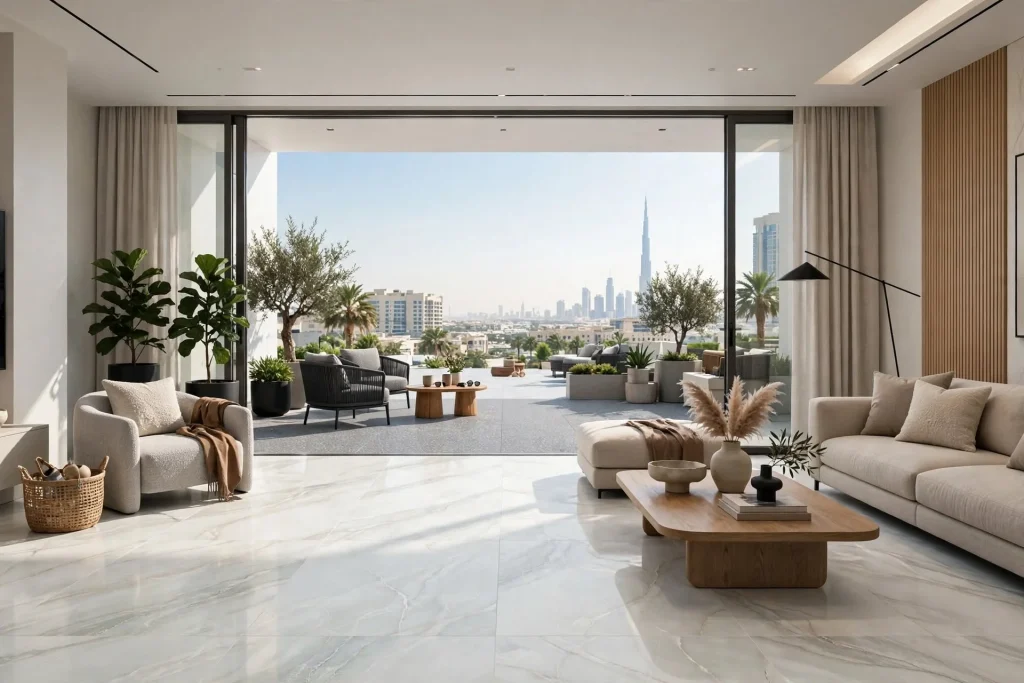
Porcelain tiles are among the most versatile flooring materials for residential properties. They are manufactured using refined clay and other minerals, which are pressed and fired at high temperatures. This production process creates a dense tile with low water absorption.
Porcelain is available in a wide variety of finishes, including polished, matt, satin, textured, stone-effect, concrete-effect and wood-effect designs.
Why Porcelain Works Well
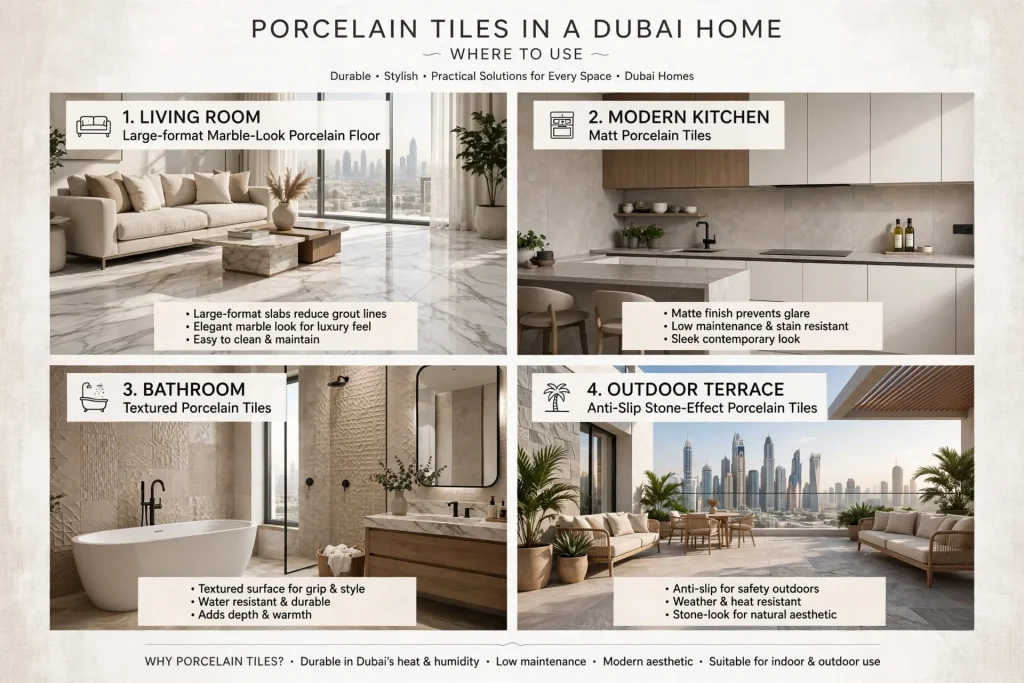
Porcelain is suitable for many high-traffic areas because of its density and durability. It is commonly used in living rooms, kitchens, corridors, bathrooms and entrance areas.
Its low water absorption makes it a practical option for areas exposed to regular moisture, provided the correct installation system is used. Porcelain also offers design flexibility, allowing homeowners to achieve the appearance of natural stone or timber without using those materials.
Large-format porcelain slabs can create a seamless contemporary appearance with fewer grout lines. This is especially popular in open-plan living spaces in Dubai villas and modern apartments.
Where to Use Porcelain Tiles
Porcelain works well in living rooms, dining areas, kitchens, bathrooms and selected outdoor spaces. However, outdoor porcelain should have an appropriate slip-resistant finish and be specifically rated for exterior use.
For Dubai homes with open-plan layouts, matching porcelain flooring across connected spaces can create visual continuity.
2. Ceramic Tiles: Affordable and Versatile
<AsyncImage query=”modern ceramic wall tiles bathroom kitchen interior neutral white beige” aspectRatio=”16:9″ width=”100%”/>
Ceramic tiles are manufactured from clay-based materials and fired in a kiln. They are available in many colours, patterns, sizes and finishes, making them a popular choice for residential renovation projects.
Compared with many porcelain products, standard ceramic tiles are generally less dense and may have higher water absorption. Their suitability depends on the specific product rating and intended installation area.
Benefits of Ceramic Tiles
Ceramic tiles are often more affordable than premium porcelain or natural stone. They are relatively easy to clean and are available in decorative styles suitable for kitchens, bathrooms and feature walls.
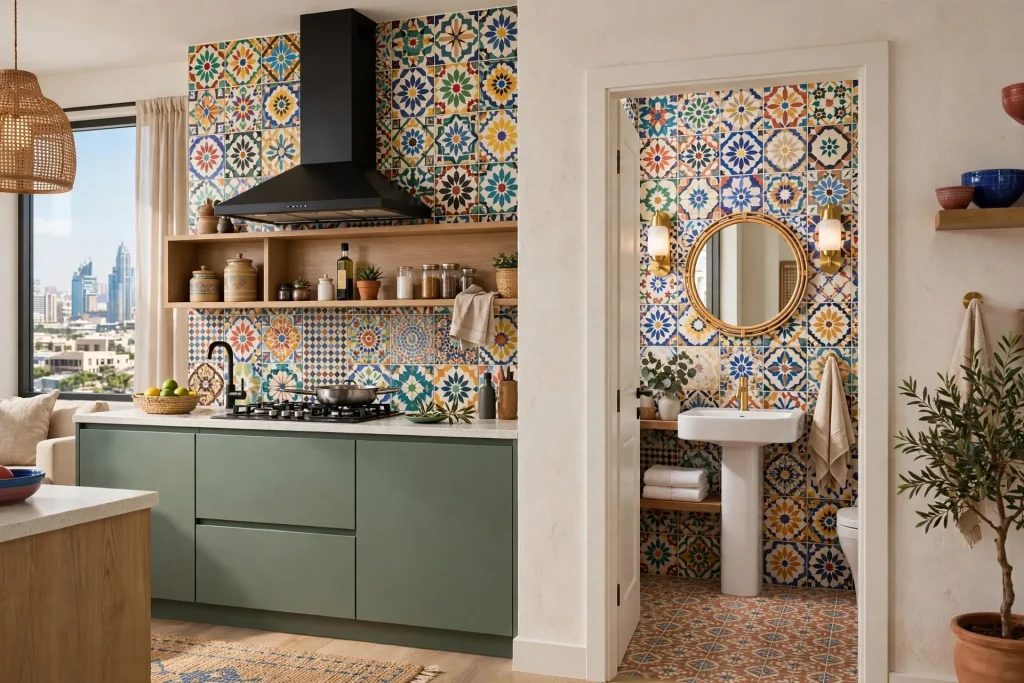
Their design flexibility makes them useful for homeowners who want to introduce colour, texture or patterned surfaces without investing in expensive natural materials.
Best Applications
Ceramic tiles are commonly used for kitchen backsplashes, bathroom walls, utility rooms and selected indoor floors.
For heavily used flooring, homeowners should check the tile’s intended floor-use rating, wear resistance and durability rather than assuming that every ceramic tile is suitable for high-traffic areas.
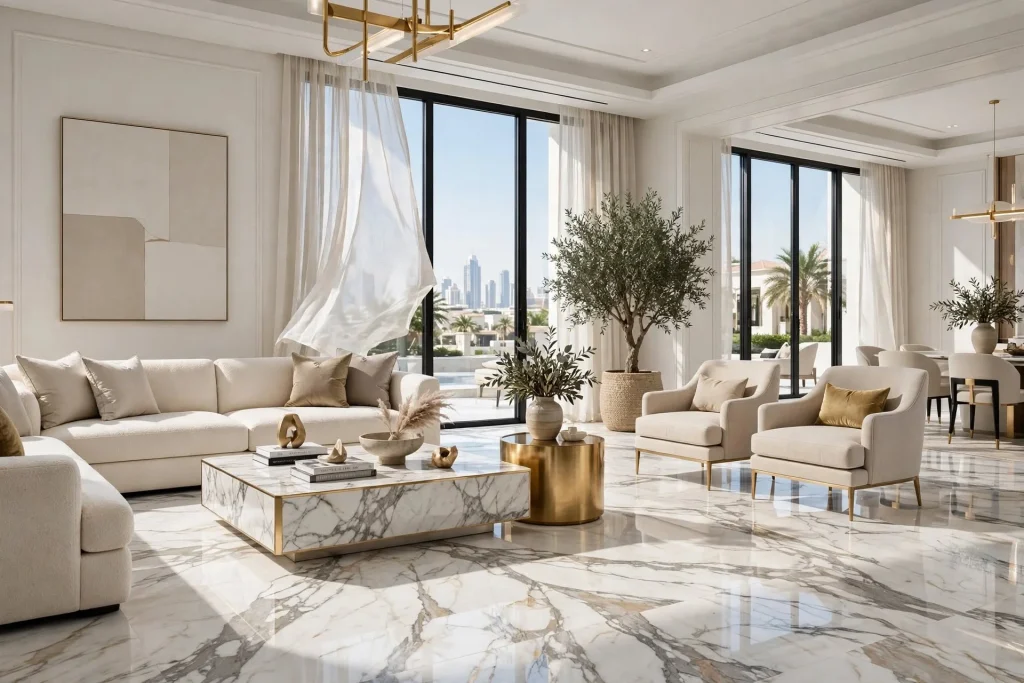
3. Marble Tiles: Natural Luxury for Villas and Apartments
<AsyncImage query=”luxury white natural marble flooring interior Dubai villa elegant veining” aspectRatio=”16:9″ width=”100%”/>
Marble is a natural stone valued for its distinctive veining, elegant appearance and timeless character. Each slab has its own natural pattern, which makes marble flooring different from manufactured tiles.
It is frequently used in luxury villas, hotel-inspired bathrooms, entrance halls, staircases and premium living areas.
Advantages of Marble
Natural marble offers a premium finish that can complement contemporary and traditional interiors. Light-coloured marble can make a room feel brighter, while darker varieties create a more dramatic appearance.
Large marble slabs can reduce the visual interruption caused by grout joints and create an elegant floor surface.
What Dubai Homeowners Should Consider
Marble is more porous and chemically sensitive than many porcelain tiles. It can absorb certain liquids and may be affected by acidic substances such as lemon juice, vinegar and some cleaning products.
Regular sealing may be recommended depending on the stone and its use. Homeowners should also use pH-neutral stone cleaners rather than aggressive acidic cleaning solutions.
Marble can become slippery when polished and wet. For bathrooms and other wet areas, the finish and slip resistance should be carefully evaluated.
4. Granite Tiles: Strength and Natural Durability
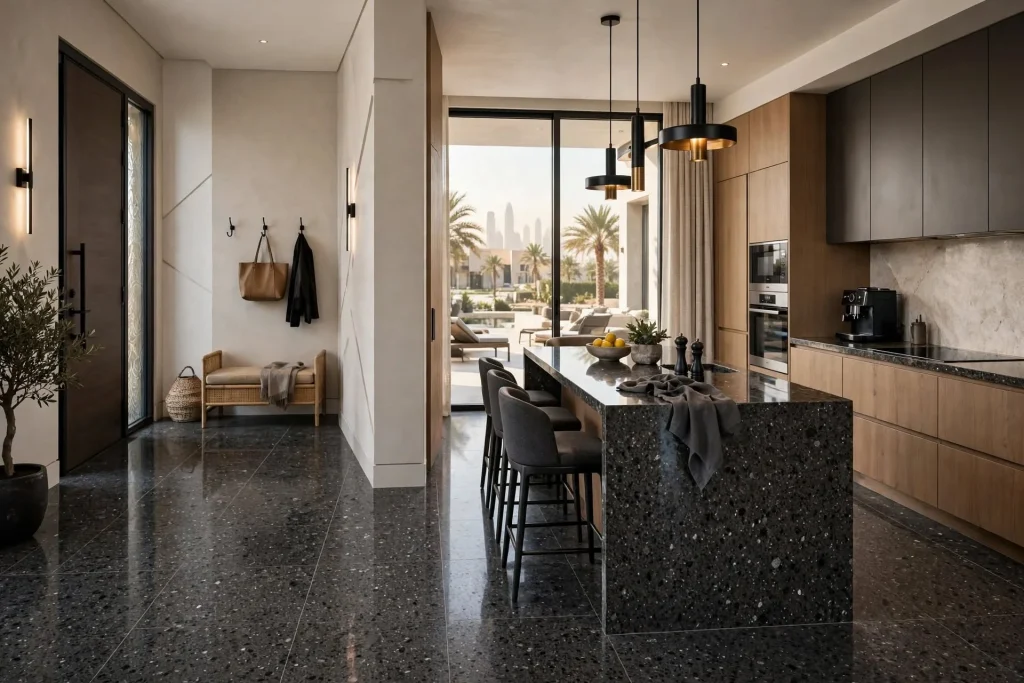
<AsyncImage query=”granite natural stone tile flooring polished grey granite interior” aspectRatio=”16:9″ width=”100%”/>
Granite is a natural igneous stone known for its hardness and resistance to everyday wear. Its appearance varies according to mineral composition, with colours ranging from grey and black to beige, brown and speckled combinations.
Granite can be suitable for kitchen floors, entrances, countertops and other areas where durability is important.
Benefits of Granite
Compared with softer natural stones, granite generally offers good resistance to scratching and abrasion. It is also available in polished, honed and flamed finishes.
Its natural variation creates a distinctive appearance, while darker granite surfaces can complement modern kitchen designs.
Suitable Applications
Granite may be used in kitchens, entrance areas, staircases and selected outdoor applications. For exterior use, the surface finish, stone specification and installation method should be appropriate for the exposure conditions.
Like other natural stones, granite may require sealing and suitable maintenance depending on its porosity and finish.
5. Travertine Tiles: Warm Natural Stone Finishes
<AsyncImage query=”beige travertine stone tiles Mediterranean villa interior flooring” aspectRatio=”16:9″ width=”100%”/>
Travertine is a natural limestone formed through mineral deposits, often featuring small pores and distinctive patterns. Its warm beige, cream and ivory tones make it popular for Mediterranean-inspired interiors and luxury villa designs.
In Dubai, travertine can work well in selected living spaces, patios and outdoor areas when the stone is properly specified.
What Makes Travertine Different?
Travertine has a softer, more textured appearance than many polished marble and granite surfaces. It can be supplied in filled, unfilled, honed, polished and tumbled finishes.
The natural pores are usually filled for certain indoor applications to create a smoother surface. Unfilled or textured finishes may be selected for decorative or outdoor purposes.
Travertine requires appropriate sealing and maintenance. Because it is a natural stone, acidic cleaners can damage its surface.
6. Terrazzo Tiles: Modern Design with a Distinctive Appearance
<AsyncImage query=”modern terrazzo flooring white base colourful stone chips contemporary interior” aspectRatio=”16:9″ width=”100%”/>
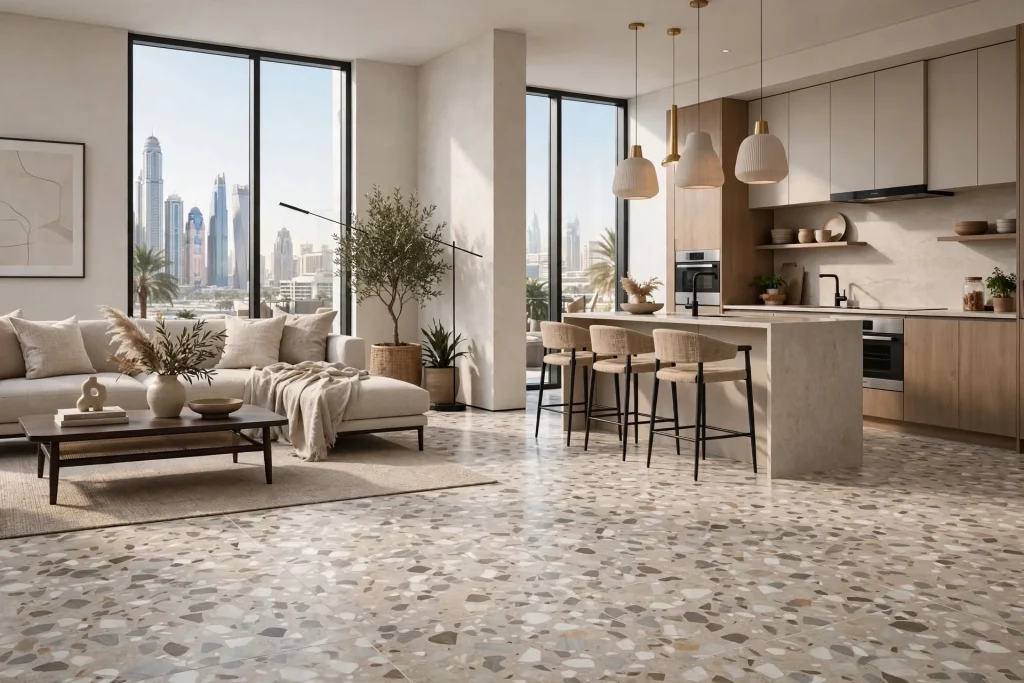
Terrazzo has become popular in contemporary residential and commercial interiors. Traditional terrazzo is produced using chips of marble, granite, quartz or other aggregates set in a cement or resin binder and polished to create a decorative surface.
Modern terrazzo-look porcelain tiles offer a similar appearance with different maintenance and installation requirements.
Why Homeowners Choose Terrazzo
Terrazzo creates a distinctive pattern that can add character to living rooms, kitchens, bathrooms and entrance areas. Its appearance can range from subtle neutral chips to bold decorative combinations.
It works particularly well in modern interiors where homeowners want something different from plain stone-effect or concrete-effect flooring.
When choosing terrazzo, it is important to distinguish between genuine terrazzo and printed terrazzo-effect porcelain. Their maintenance, repair and installation requirements are not identical.
Porcelain vs Ceramic vs Marble: Which Is Better?
The best material depends on the room, budget, maintenance expectations and design requirements.
| Feature | Porcelain | Ceramic | Marble |
|---|---|---|---|
| Material | Dense manufactured ceramic | Clay-based manufactured tile | Natural stone |
| Water absorption | Generally very low | Generally higher than porcelain | Varies by stone |
| Durability | High for suitable products | Varies by product | Requires more careful maintenance |
| Maintenance | Generally straightforward | Generally straightforward | Regular stone care may be needed |
| Design | Wide range of finishes | Wide range of designs | Unique natural patterns |
| Typical cost | Mid-range to premium | Often budget-friendly | Usually premium |
| Common uses | Floors, walls and selected outdoor areas | Walls and suitable indoor floors | Luxury interiors and selected exterior uses |
For many Dubai households, porcelain provides a practical balance between appearance, maintenance and durability. Ceramic is useful for budget-conscious renovations and wall applications, while marble is attractive for homeowners who prioritise natural stone aesthetics and are comfortable with its maintenance requirements.
Best Tiles for Different Rooms in Dubai Homes
Selecting tiles room by room helps ensure that the material performs properly in its intended environment.
Living Rooms and Dining Areas
Living rooms often benefit from porcelain or suitable natural stone flooring. Large-format tiles can make open-plan spaces appear more spacious, especially when the grout colour closely matches the tile.
In villas across Dubai Hills Estate, Arabian Ranches and Jumeirah, homeowners may choose beige marble-effect porcelain, natural stone or contemporary concrete-effect finishes.
For family homes, matt or lightly textured finishes can be easier to manage than highly polished surfaces.
Kitchen Floors and Walls
Kitchen floors experience regular foot traffic, food spills, water splashes and frequent cleaning. Porcelain is a common choice because of its low water absorption and wide availability.
Ceramic tiles are also useful for kitchen backsplashes because they are easy to clean and available in decorative designs.
For kitchen flooring, choose a product with appropriate wear resistance and a finish that provides suitable slip performance.
Bathroom Tiles
Bathrooms require careful attention to water management and slip resistance. Porcelain is often selected for bathroom floors because of its low water absorption, while ceramic tiles are widely used on walls.
Smaller floor tiles can provide more grout joints, which may help create additional traction depending on the tile and grout system. However, grout alone does not guarantee slip resistance.
For shower floors, consider tiles specifically recommended for wet-area flooring. Waterproofing beneath the tile installation is essential because grout and tile joints are not a substitute for a waterproofing membrane.
Bedroom Flooring
Bedrooms generally have lower moisture exposure than kitchens and bathrooms. Porcelain, ceramic floor tiles and suitable natural stone can all be considered.
Wood-effect porcelain is particularly popular for homeowners who want the appearance of timber with the maintenance characteristics of a ceramic tile.
Soft rugs can also be added to make tiled bedrooms feel warmer and more comfortable.
Balconies, Terraces and Outdoor Areas
Outdoor tiles in Dubai need to withstand direct sunlight, dust, moisture and temperature changes. A tile designed for indoor use should not automatically be installed outside.
Choose exterior-rated porcelain or another suitable paving material with an appropriate slip-resistant surface. Check water absorption, thermal performance, installation recommendations and compatibility with the outdoor substrate.
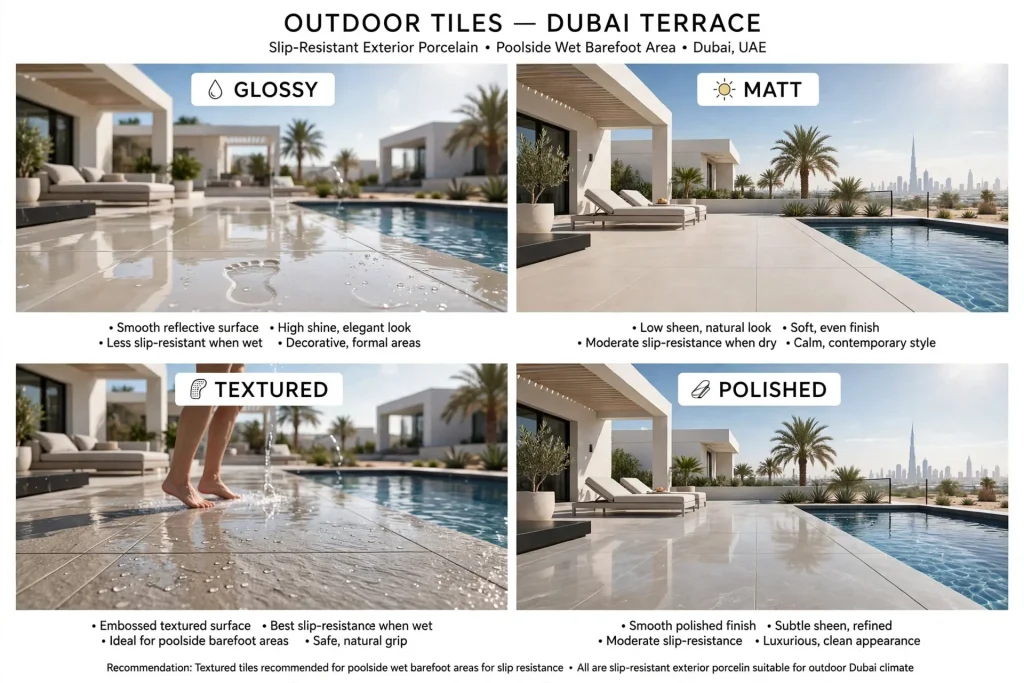
For pool surrounds, select products specifically recommended for wet barefoot areas and evaluate their slip resistance under the relevant test standard.
Understanding Tile Finishes: Glossy, Matt, Textured and Polished
Tile finish influences appearance, cleaning and everyday safety.
Glossy tiles reflect light and can make smaller rooms feel brighter. They are commonly used for decorative walls and selected indoor floors. However, polished surfaces may become slippery when wet and can show footprints or water marks.
Matt tiles offer a softer appearance and are often selected for kitchens, living areas and bathrooms. Their suitability for wet environments depends on the actual slip-resistance rating.
Textured tiles provide a more tactile surface and may be useful for outdoor flooring and selected wet areas. They can, however, require more effort to clean because dirt may collect in surface irregularities.
Polished natural stone creates a luxurious finish but requires suitable maintenance and careful consideration of slip performance.
Tile Size and Layout: What Works Best in Dubai Interiors?
Tile size influences the visual appearance of a room. Large-format tiles, such as 600 × 1200 mm and other larger formats, are frequently used in contemporary interiors because they create fewer grout joints.
Smaller tiles can be useful for shower floors, decorative borders, backsplashes and intricate patterns.
The correct tile size also depends on the room dimensions, substrate condition and installation requirements. Large tiles need a sufficiently flat substrate and appropriate adhesive coverage to reduce the risk of lippage and hollow spots.
Popular layouts include straight grid patterns, brick-bond arrangements, herringbone designs and diagonal installations. The layout should be planned before installation so that cuts are balanced around doorways, corners and visible focal points.
Why Professional Tile Installation Matters
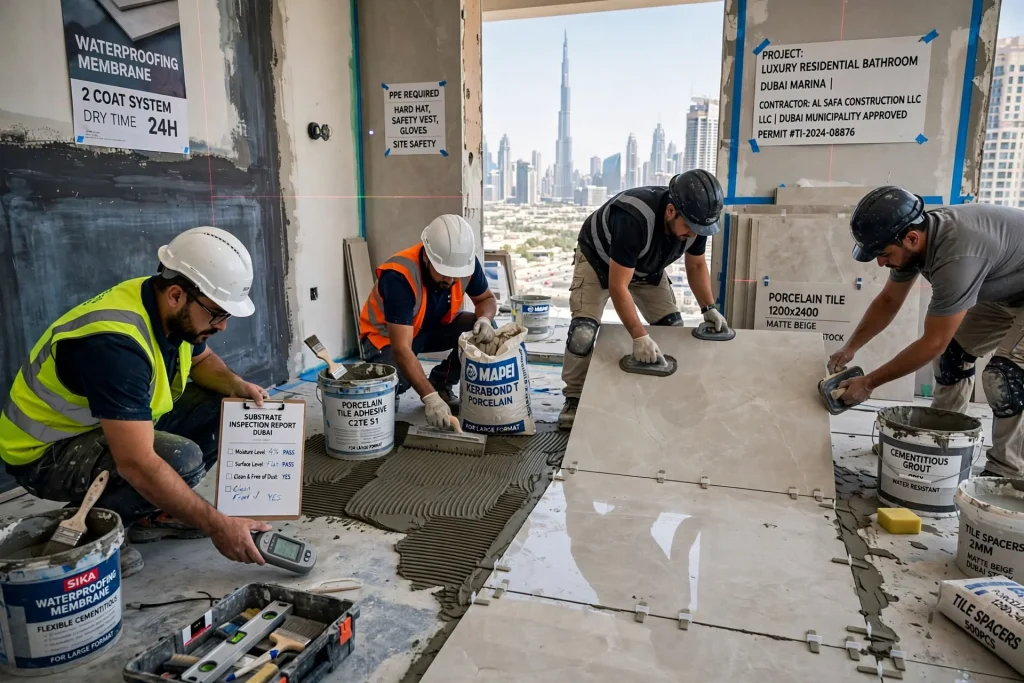
Even high-quality tiles can fail when the installation process is poor. Problems such as uneven surfaces, cracked tiles, loose sections and grout deterioration often result from inadequate preparation or unsuitable installation materials.
A professional installation process begins with inspecting the existing substrate. The installer checks floor level, surface stability, moisture conditions and any cracks that require attention.
The correct tile adhesive must then be selected. Porcelain, natural stone and large-format tiles may require different adhesive specifications. Adhesive coverage is especially important for larger tiles and areas exposed to moisture.
Tile spacers help maintain consistent joint widths, while appropriate cutting equipment provides cleaner edges around corners, drains and door frames.
Grouting should be completed only after the adhesive has reached the required stage. The grout type and colour should match the tile, joint width and expected conditions.
In wet areas, waterproofing should be designed and installed before tiling. A correctly installed waterproofing membrane, suitable drainage falls and properly sealed movement joints help reduce the risk of water-related damage.
Common Tile Problems in Dubai Homes and How to Avoid Them
Tile problems can occur when material selection, surface preparation or installation is inadequate.
Cracked tiles may result from substrate movement, insufficient adhesive coverage, impact or missing movement joints. A stable substrate and correct installation system help reduce the risk.
Hollow-sounding tiles can indicate inadequate adhesive contact or installation problems. Not every hollow sound means immediate failure, but widespread hollow areas should be inspected.
Discoloured grout can develop through dirt accumulation, moisture and unsuitable cleaning products. Regular cleaning and selecting an appropriate grout system can help maintain its appearance.
Slippery flooring is a concern in bathrooms, kitchens and outdoor areas. Choose a tile with a suitable tested slip rating rather than relying only on whether its surface feels rough.
Water seepage may occur when waterproofing, drainage or joint detailing is inadequate. Tiling alone cannot prevent water penetration.
How Much Do Tiles Cost in Dubai?
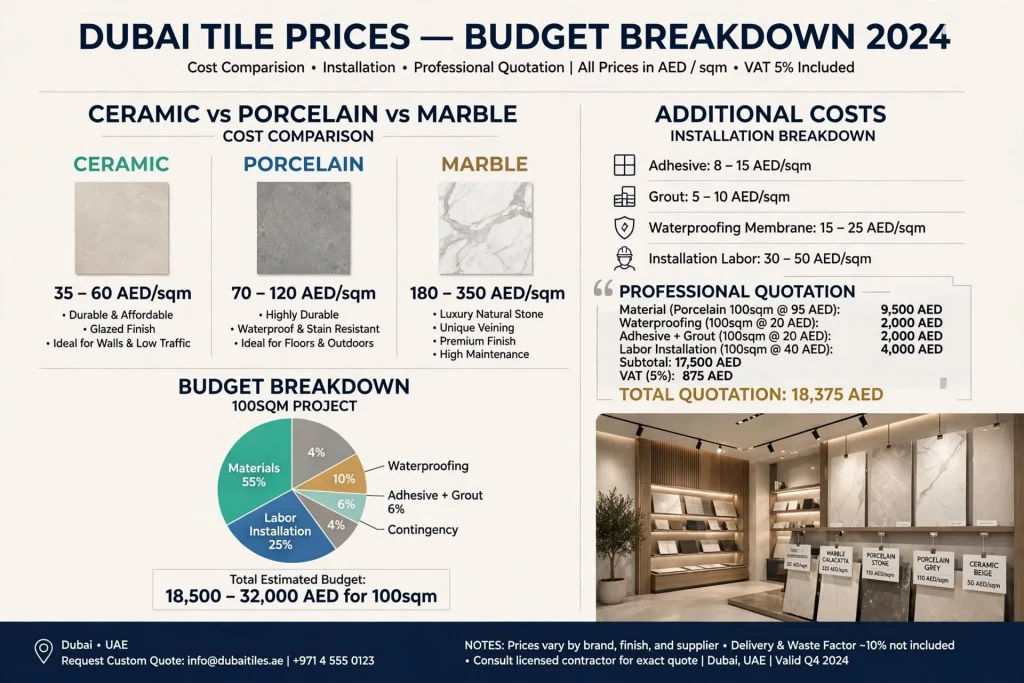
Tile prices in Dubai vary considerably according to material, brand, size, finish, country of origin and product quality.
Ceramic tiles are often among the more affordable options, while premium porcelain, imported marble and specialised natural stones can cost significantly more.
However, the purchase price is only one part of the renovation budget. Homeowners should also account for adhesive, grout, waterproofing, substrate preparation, cutting, installation labour, skirting and waste.
Large-format tiles may require additional handling and installation expertise. Natural stone can also involve sealing, polishing and specialist maintenance.
For an accurate budget, obtain a site-based quotation that identifies the tile specification, measured area, preparation work, installation method and finishing requirements.
Choosing the Right Tile Services for Your Dubai Property
Selecting a suitable tile is only the first step. The condition of the existing floor, installation method, waterproofing requirements and finishing quality all influence the final result.
Homeowners planning a renovation, replacement project or new flooring installation should consider professional assessment before purchasing materials. This helps identify issues such as uneven substrates, damaged screed, moisture problems and unsuitable existing finishes.
For property owners looking for professional assistance with residential tiling, Tiles for Dubai Homes Service can be used as a starting point for exploring suitable tile installation and related home improvement requirements.
A well-planned project should include accurate measurements, tile selection, substrate preparation, suitable adhesives, grout specification, movement joints and final inspection.
Frequently Asked Questions
Which tiles are best for Dubai homes?
Porcelain is a practical option for many Dubai homes because it offers low water absorption, durability and a wide range of finishes. Ceramic, marble, granite and travertine may also be suitable depending on the room and maintenance requirements.
Are porcelain tiles better than ceramic tiles?
Porcelain generally has lower water absorption and higher density than standard ceramic tiles. It is often preferred for high-traffic floors and moisture-prone areas, while ceramic is frequently used for wall finishes and suitable indoor floors.
Are marble tiles suitable for Dubai villas?
Yes. Marble is used in luxury villas for living rooms, entrance areas, staircases and bathrooms. However, it requires suitable sealing, careful cleaning and attention to slip resistance.
Which tiles are best for Dubai bathrooms?
Porcelain is a popular choice for bathroom flooring, while ceramic and porcelain are both commonly used on walls. Bathroom floors should have a suitable slip-resistant finish, and the underlying floor must be properly waterproofed.
Are glossy tiles suitable for kitchen floors?
Glossy tiles can be used in some kitchens, but their slip performance should be checked, especially where water or cooking oils may reach the floor. Matt or textured finishes may be more practical in certain kitchen environments.
What tiles are best for outdoor areas in Dubai?
Exterior-rated porcelain and suitable natural stone can work well in outdoor areas. Select materials according to slip resistance, water absorption, sunlight exposure and the manufacturer’s exterior installation recommendations.
How often should natural stone tiles be sealed?
There is no universal sealing schedule. The requirement depends on the stone type, finish, porosity, sealer and level of use. Follow the stone supplier’s guidance and check whether water or other liquids are being absorbed.
Can new tiles be installed over existing tiles?
In some situations, new tiles can be installed over existing tiles if the original surface is stable, properly bonded, sufficiently level and compatible with the new installation system. A professional assessment is necessary before proceeding.
Making the Right Tile Choice for Your Dubai Home
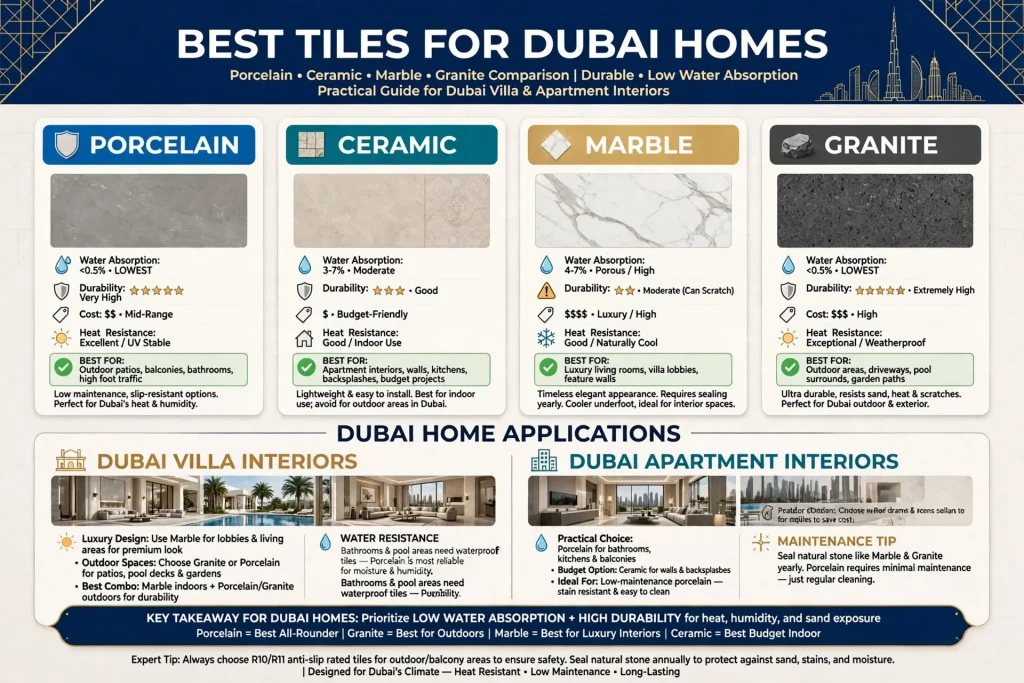
The best tiles for a Dubai home depend on how each space is used, the environmental conditions and the level of maintenance the homeowner is prepared to undertake. Porcelain offers versatility for everyday flooring, ceramic provides an accessible option for many walls and selected floors, and natural stone brings distinctive character to premium interiors.
For bathrooms and kitchens, water management and slip resistance deserve particular attention. Outdoor terraces and balconies require materials specifically suited to exterior conditions, while large-format tiles need careful substrate preparation and professional installation.
By comparing materials, finishes, technical specifications and installation requirements before starting a renovation, homeowners can create attractive spaces with flooring and wall surfaces that perform reliably over time.