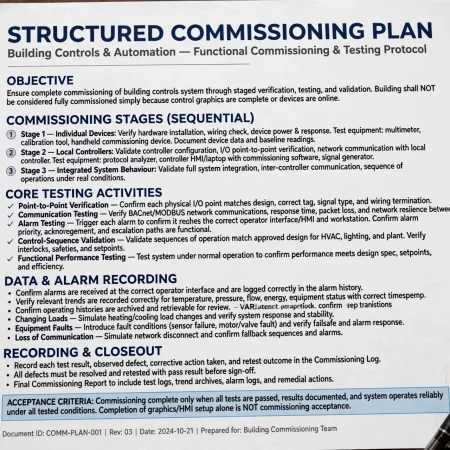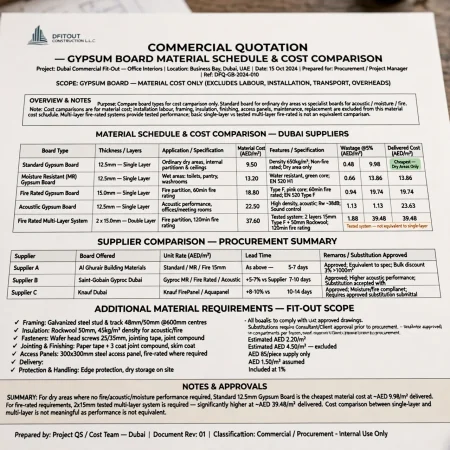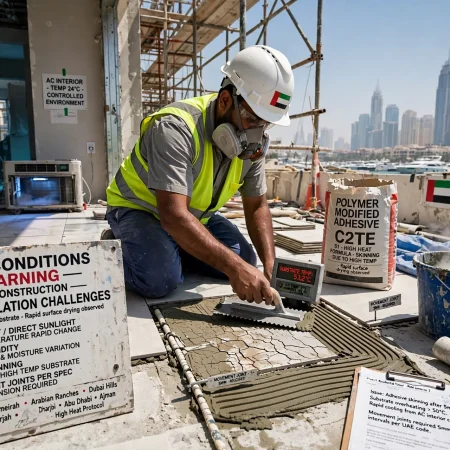
Cracked floor tiles are a common problem in apartments, villas, offices, retail shops, restaurants, hotels, and commercial properties across Dubai and the UAE. A crack may look like a simple cosmetic issue, but it can sometimes indicate movement underneath the tile, incorrect installation, moisture problems, poor-quality materials, or excessive structural stress.
Understanding why floor tiles crack helps property owners decide whether a tile can be repaired, should be replaced, or requires investigation of the underlying floor. The cause is particularly important because replacing a damaged tile without addressing the original problem can result in another crack appearing later.
This guide explains the common causes of cracked floor tiles, how to identify the source, practical repair options, and ways to prevent future tile damage.
Why Do Floor Tiles Crack?
Floor tiles can crack because of impact, substrate movement, incorrect installation, inadequate adhesive coverage, thermal expansion, moisture, heavy loads, or natural material characteristics. Ceramic and porcelain tiles are hard and durable, but they are not completely immune to stress.
A tile generally performs as part of a complete flooring system. The tile, adhesive, grout, screed, concrete slab, joints, and surrounding structure all interact. If movement or stress occurs beneath the tile and the installation cannot accommodate it, the tile may crack.
The location and pattern of a crack can provide useful clues. A single impact crack may have a different cause from a long straight crack extending across several tiles.
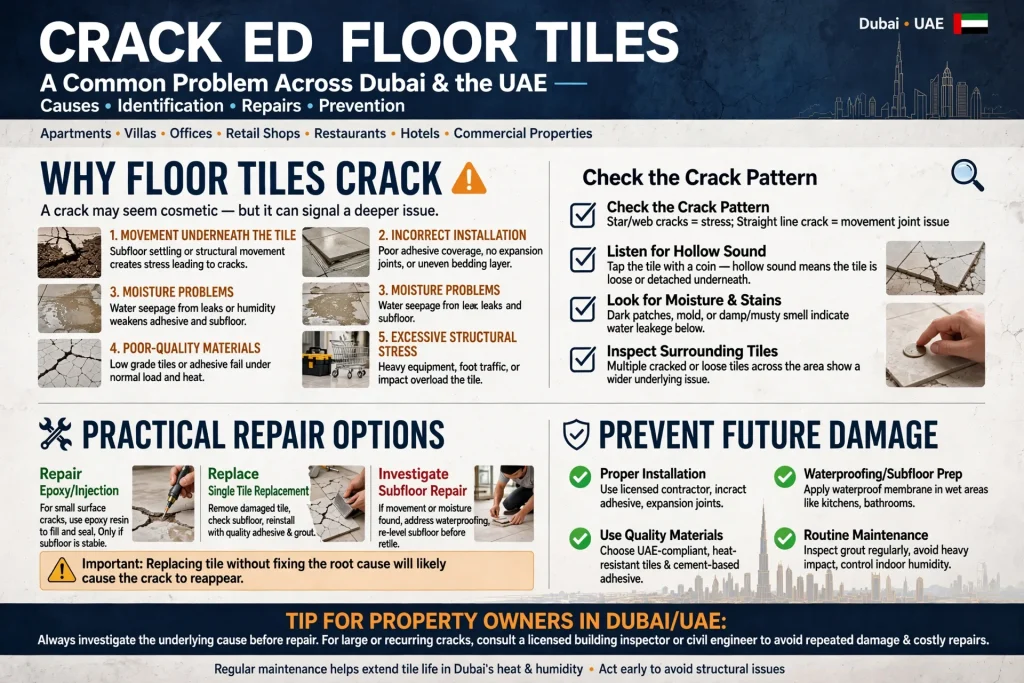
Impact and Heavy Objects
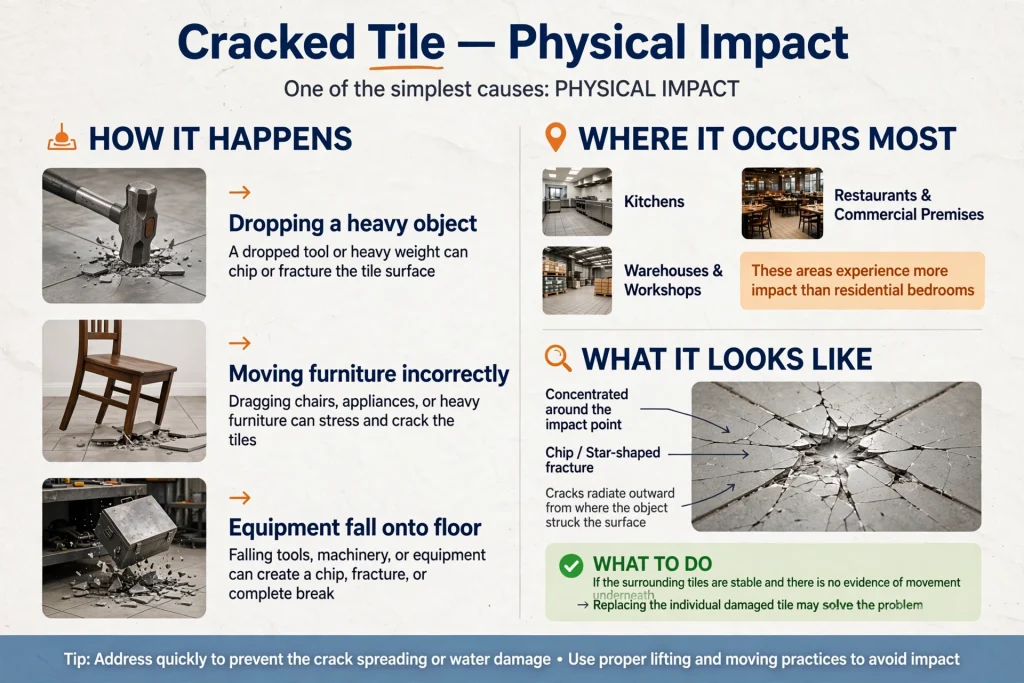
One of the simplest causes of a cracked tile is physical impact. Dropping a heavy object, moving furniture incorrectly, or allowing equipment to fall onto the floor can create a chip, fracture, or complete break.
Tiles installed in kitchens, warehouses, workshops, restaurants, and commercial premises may experience more impact than tiles in residential bedrooms.
A crack caused by impact is often concentrated around a particular point. You may see a chip or star-shaped fracture where the object struck the surface.
If the surrounding tiles are stable and there is no evidence of movement underneath, replacing the individual damaged tile may solve the problem.
Incorrect Tile Installation
Poor installation is one of the most important causes of recurring tile cracks. Even a high-quality porcelain or ceramic tile can fail when it is installed over an unsuitable or poorly prepared substrate.
The installer needs to ensure that the floor is clean, level, stable, and appropriate for the selected adhesive and tile. Uneven areas, dust, contamination, weak screed, or inadequate preparation can prevent proper bonding.
Correct adhesive selection also matters. Different environments and tile types may require different tile adhesives and installation methods.
Insufficient Adhesive Coverage
A tile should have appropriate contact with the adhesive beneath it. Voids underneath the tile can create unsupported areas.
When someone walks over the tile or places a heavy load on it, stress can become concentrated around these unsupported sections. Over time, the tile may crack, sound hollow, become loose, or break under impact.
This is particularly important for large-format porcelain tiles because their size and installation requirements can make proper adhesive coverage more critical.
A hollow-sounding tile does not automatically mean it will fail, but widespread hollow areas combined with movement, loose tiles, or cracks should be inspected.
Subfloor Movement
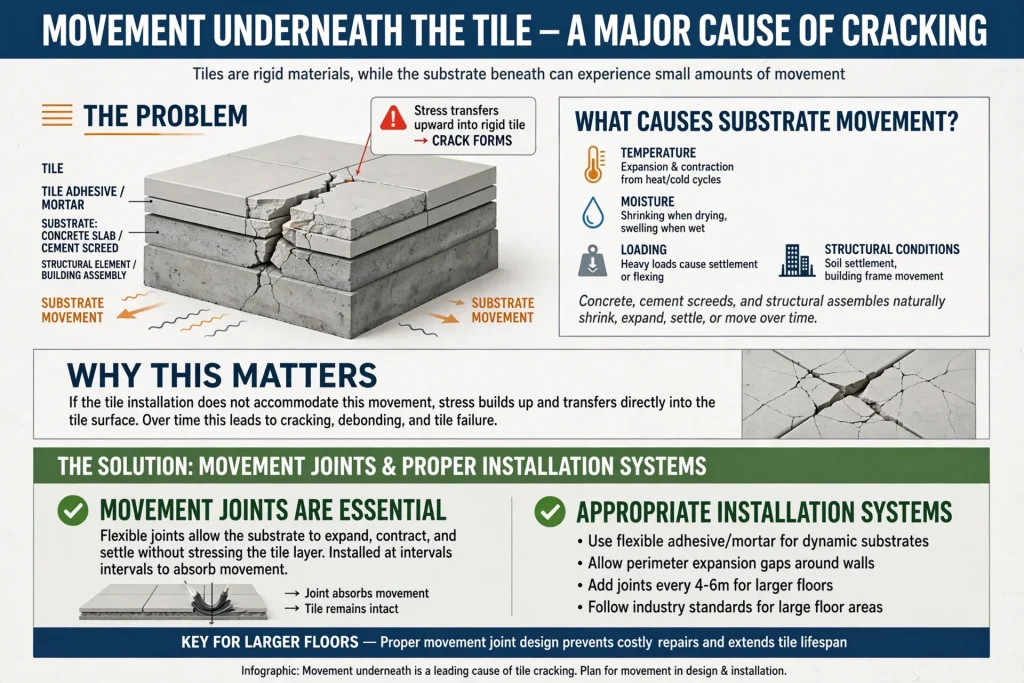
Movement underneath the tile is another major cause of cracking. Tiles are rigid materials, while the substrate beneath them can experience small amounts of movement.
Concrete slabs, cement screeds, structural elements, and building assemblies can shrink, expand, settle, or move due to temperature, moisture, loading, or structural conditions.
If the tile installation does not accommodate this movement, stress can transfer into the tile surface.
This is why movement joints and appropriate installation systems are important in larger floors.
Cracks in the Concrete or Screed
Sometimes the tile is not the original source of the problem. A crack in the concrete slab or screed beneath the tile can transfer upward and eventually appear through the finished flooring.
This type of cracking is sometimes referred to as reflective cracking because movement or cracking in the substrate becomes visible through the surface finish.
If several tiles follow a similar straight crack line, particularly across a large floor, the underlying substrate should be investigated instead of simply replacing individual tiles.
Thermal Expansion and Temperature Changes
Materials expand and contract as temperature changes. Although indoor environments in Dubai are generally controlled by air conditioning, floors can still experience temperature differences between internal and external areas.
External terraces, balconies, entrances, warehouses, parking-related spaces, and areas exposed to direct sunlight can experience larger temperature fluctuations.
When a large tiled area does not have appropriate movement joints, expansion and contraction can create stresses that contribute to cracking, tenting, or debonding.
Moisture and Water Problems
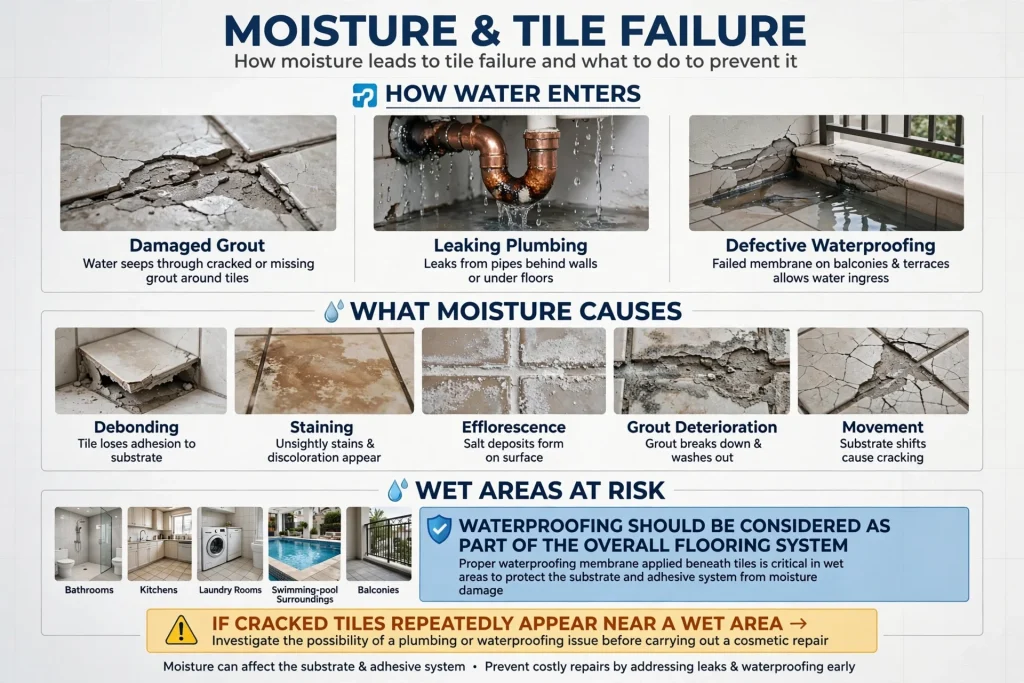
Moisture can also contribute to tile failure. Water may enter through damaged grout, leaking plumbing, bathrooms, balconies, terraces, or defective waterproofing.
Moisture can affect the substrate and adhesive system and may contribute to debonding, staining, efflorescence, grout deterioration, or movement.
In wet areas such as bathrooms, kitchens, laundry rooms, swimming-pool surroundings, and balconies, waterproofing should be considered as part of the overall flooring system.
If cracked tiles repeatedly appear near a wet area, investigate the possibility of a plumbing or waterproofing issue before carrying out a cosmetic repair.
Poor-Quality or Unsuitable Tiles
Tile quality and suitability also matter. Not every tile is designed for every application.
A tile selected for a low-traffic residential room may not be appropriate for a high-traffic commercial entrance. Similarly, indoor wall tiles should not automatically be used as floor tiles.
When selecting floor tiles, consider:
- Intended application
- Traffic level
- Tile thickness
- Porcelain or ceramic composition
- Surface finish
- Slip resistance
- Load requirements
- Indoor or outdoor exposure
- Manufacturer recommendations
For commercial properties in Business Bay, Downtown Dubai, Dubai Marina, Jumeirah, and Dubai Silicon Oasis, flooring specifications should be selected according to the actual use of the space.
Large-Format Tiles and Cracking
Large-format porcelain tiles have become increasingly popular in modern villas, apartments, hotels, offices, and commercial interiors. They can create a clean appearance with fewer grout lines, but installation requires careful planning.
Large tiles need a suitably prepared substrate and proper adhesive coverage. Handling, levelling, cutting, and movement considerations also become more important as tile dimensions increase.
A large-format tile that bridges an uneven area or contains unsupported sections may be more vulnerable to cracking under load.
Cracked Grout vs Cracked Tile
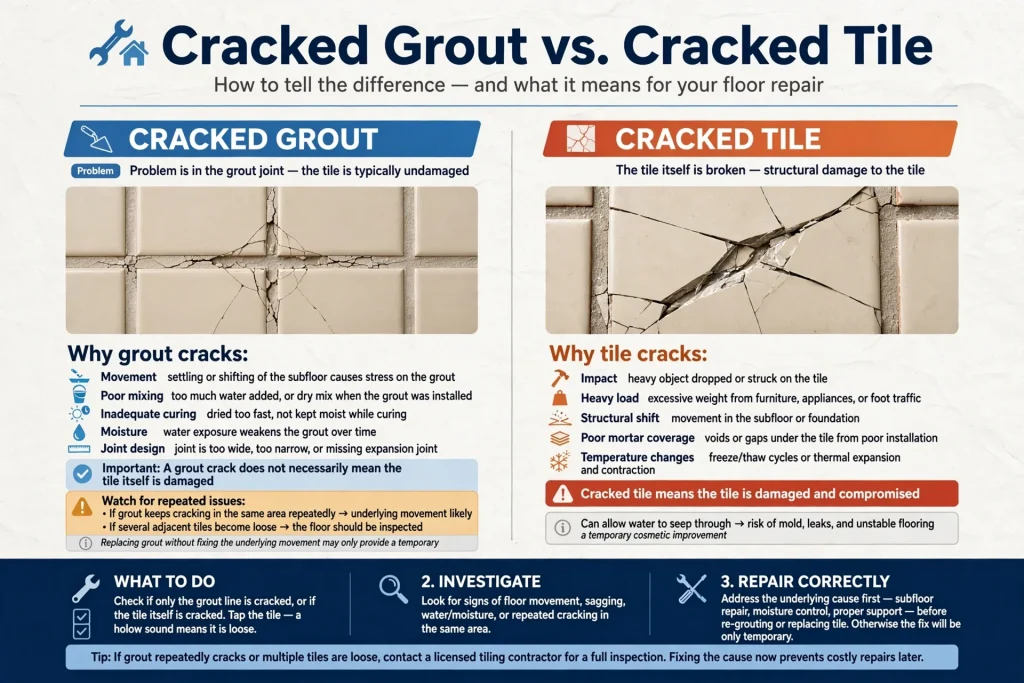
It is important to distinguish between cracked grout and a cracked tile.
Grout can crack because of movement, poor mixing, inadequate curing, moisture, or joint design. A grout crack does not necessarily mean the tile itself is damaged.
However, if grout repeatedly cracks in the same area or several adjacent tiles become loose, the floor should be inspected.
Replacing grout without addressing underlying movement may only provide a temporary cosmetic improvement.
How to Tell What Caused a Cracked Tile
Start by examining the crack pattern and surrounding floor.
A single crack with an obvious impact point may indicate physical damage. A crack that runs in a straight line across several tiles may suggest substrate movement. Cracking around tile corners can sometimes be associated with installation stress or unsupported areas.
Other warning signs include:
- Hollow sounds when tapping tiles
- Loose or rocking tiles
- Cracked grout
- Raised tiles
- Water stains
- Dampness
- Multiple cracked tiles
- Cracks following a straight line
- Repeated cracking after replacement
The presence of several symptoms is more useful than looking at the crack alone.
Can a Cracked Floor Tile Be Repaired?
Minor surface damage may sometimes be repaired using suitable tile repair products, particularly when the damage is cosmetic. However, a tile that is structurally cracked is generally better replaced than patched.
Repair may be considered when:
- The damage is small
- The tile remains firmly bonded
- Appearance is the main concern
- Replacement is difficult
- The manufacturer-approved repair method is suitable
For significant cracks, replacing the tile usually provides a more reliable finish.
How Is a Cracked Tile Replaced?
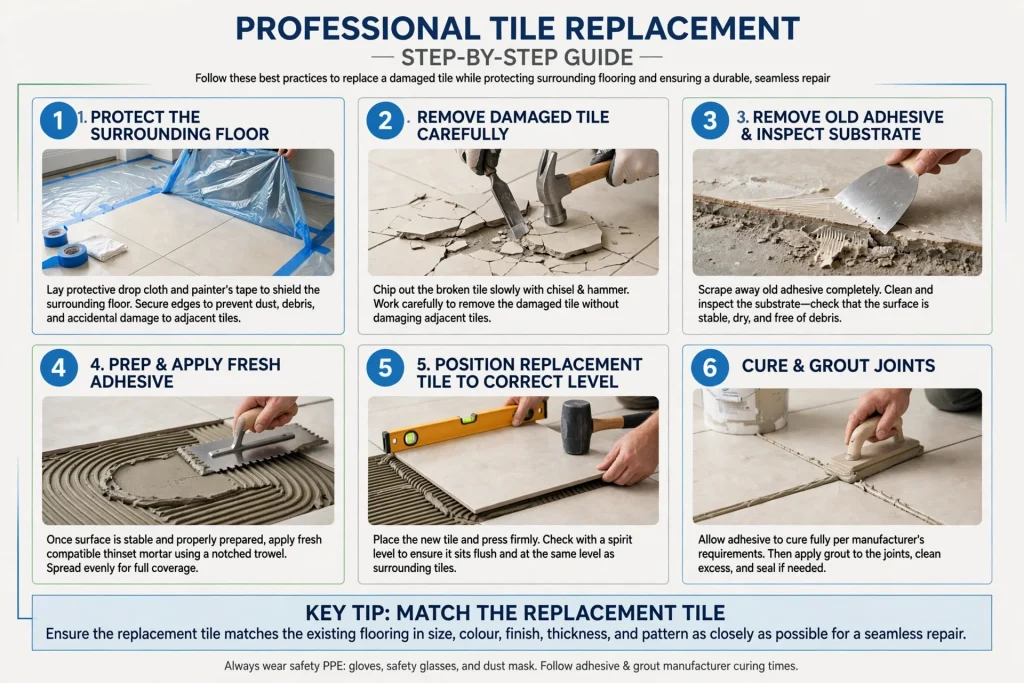
A professional tile replacement normally starts by protecting the surrounding floor and removing the damaged tile carefully.
The broken tile is removed without unnecessarily damaging adjacent tiles. Old adhesive is then removed and the substrate is inspected.
If the underlying surface is stable and properly prepared, fresh compatible adhesive can be applied and the replacement tile positioned at the correct level.
After the adhesive has cured according to the manufacturer’s requirements, the surrounding joints can be grouted.
The replacement tile should match the existing flooring in size, colour, finish, thickness, and pattern as closely as possible.
What If the Same Tile Keeps Cracking?
Repeated cracking is a warning sign that the underlying problem has not been solved.
If a replacement tile cracks again in the same location, investigate the substrate, adhesive coverage, movement joints, moisture, plumbing, or structural movement.
Replacing the same tile repeatedly without identifying the cause can increase maintenance costs while leaving the actual problem unresolved.
For larger commercial floors, an inspection can help determine whether the issue is isolated or part of a wider flooring failure.
Tile Cracks in Bathrooms
Bathroom floors face additional moisture and temperature-related conditions. Cracked tiles should therefore be inspected together with grout, waterproofing, drainage, and plumbing.
Water should not be allowed to remain beneath a tiled system. If there is persistent dampness, loose flooring, mould, staining, or water leakage, the underlying cause should be addressed before replacing the tile.
Proper bathroom waterproofing and compatible tile installation are important for long-term performance.
Tile Cracks in Kitchens
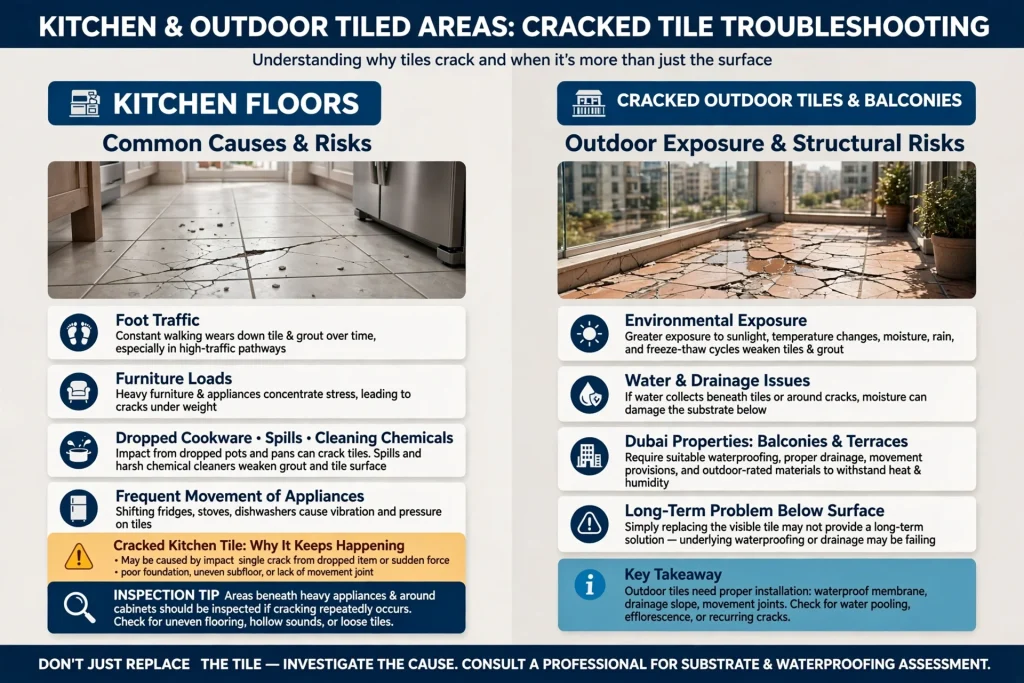
Kitchen floors experience foot traffic, furniture loads, dropped cookware, spills, cleaning chemicals, and frequent movement of appliances.
A cracked kitchen tile may be caused by impact, but recurring cracks can indicate an installation or substrate issue.
Areas beneath heavy appliances and around cabinets should be inspected if cracking repeatedly occurs.
Cracked Outdoor Tiles and Balconies
Outdoor tiled areas experience greater exposure to sunlight, temperature changes, moisture, and environmental conditions.
Balconies and terraces in Dubai properties should have suitable waterproofing, drainage, movement provisions, and outdoor-rated materials.
If water collects beneath tiles or around cracks, the problem may extend beyond the tile itself. In these situations, simply replacing the visible tile may not provide a long-term solution.
Commercial Flooring and Heavy Traffic
Commercial properties have different flooring requirements from residential homes. Shopping areas, restaurants, offices, hotels, clinics, warehouses, and retail stores may experience high foot traffic and concentrated loads.
Businesses in DIFC, Business Bay, Downtown Dubai, Jumeirah Lakes Towers (JLT), Dubai Marina, and Dubai Internet City often require flooring solutions that can withstand daily operational demands.
When repeated tile failures occur in a commercial property, the maintenance team should examine traffic patterns, furniture loads, cleaning practices, substrate conditions, and installation quality.
In areas where a seamless, hard-wearing floor is more appropriate, businesses may also consider alternative flooring systems such as Epoxy Flooring Service Dubai depending on the property’s use and substrate requirements.
Tile Repair or Complete Replacement?
Not every cracked tile requires an entire floor replacement.
An isolated damaged tile can often be replaced when the surrounding floor is stable and matching material is available. A larger replacement may become necessary when multiple tiles are cracked, loose, hollow, or affected by substrate movement.
Complete replacement may also be considered during major renovation projects when the existing tile system has reached the end of its useful service life.
The correct approach depends on the extent and cause of the damage.
How to Prevent Floor Tiles From Cracking
Preventing tile failure starts before installation.
Use tiles appropriate for the intended application, prepare the substrate correctly, select a compatible adhesive, achieve appropriate adhesive coverage, follow manufacturer installation requirements, and provide movement joints where required.
Professional installation is particularly important for large-format porcelain, commercial floors, balconies, terraces, and high-traffic environments.
After installation, avoid dragging heavy furniture across the floor and address plumbing leaks or moisture problems quickly.
Routine inspection can also identify loose tiles, damaged grout, or movement before more serious cracking develops.
When Should You Call a Professional?
Professional inspection is recommended when:
- Several tiles are cracked
- Cracks continue after replacement
- Tiles are lifting or tenting
- The floor sounds hollow across a large area
- Cracks follow a straight line
- There is visible moisture
- The substrate appears damaged
- Cracking occurs in a commercial or high-traffic area
- Waterproofing or plumbing may be involved
A qualified flooring professional can assess the tile, adhesive, substrate, grout, moisture conditions, and surrounding construction before recommending a repair.
Final Thoughts
Floor tiles crack for many different reasons, from accidental impact and heavy loads to poor installation, inadequate adhesive coverage, substrate movement, moisture, thermal expansion, and unsuitable material selection. Identifying the actual cause is more important than simply replacing the visible damaged tile.
For properties across Dubai, Abu Dhabi, Sharjah, and the wider UAE, professional installation and appropriate material selection can significantly reduce recurring tile problems. Whether the solution is a single-tile replacement, grout repair, substrate correction, waterproofing work, or a completely different flooring system, the right approach begins with understanding what caused the original failure.