Chiller tube cleaning is an important part of maintaining water-cooled HVAC and refrigeration systems. Chillers are widely used in commercial buildings, hotels, hospitals, shopping centres, industrial facilities, residential towers, and district cooling applications across Dubai and the UAE. Over time, condenser and evaporator tubes can accumulate scale, corrosion deposits, sludge, biological growth, and other contaminants that interfere with heat transfer.
When tubes become fouled, the chiller may consume more electricity while producing the same amount of cooling. In severe cases, poor heat transfer can contribute to high operating pressure, reduced cooling capacity, compressor stress, nuisance alarms, and unplanned shutdowns.
Regular tube inspection and cleaning help maintain the heat exchanger’s performance and support reliable operation throughout the cooling season. Understanding why chiller tube cleaning matters can help facility managers develop a more effective preventive maintenance strategy.
What Are Chiller Tubes?
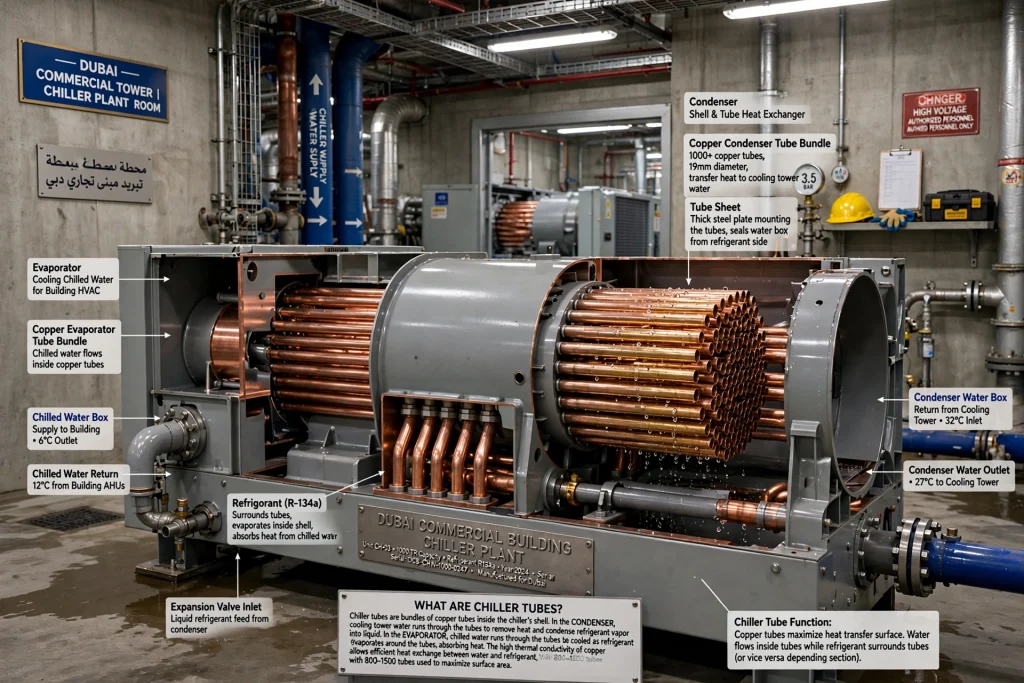
Chiller tubes are part of the heat exchangers responsible for transferring heat between water and refrigerant. In a typical water-cooled chiller, the condenser contains tubes through which condenser water circulates, while refrigerant releases heat on the other side of the heat-transfer surface.
The evaporator performs the opposite role from the building’s cooling perspective. Chilled water passes through the evaporator while the refrigerant absorbs heat from the water, allowing the system to produce the chilled water required by AHUs, FCUs, and other air-conditioning equipment.
A typical chiller plant may contain a compressor, condenser, evaporator, cooling tower, condenser-water pumps, chilled-water pumps, expansion device, control panel, sensors, valves, VFDs, and BMS. Maintaining the heat-transfer surfaces is therefore essential to the performance of the wider HVAC system.
Why Chiller Tube Cleaning Is Necessary
The primary reason for cleaning chiller tubes is to maintain efficient heat transfer. Heat must move effectively through the tube surfaces for the refrigeration cycle to operate under appropriate conditions.
Deposits on the inside or outside of tubes create additional thermal resistance. This makes it more difficult for heat to move between the refrigerant and water. As fouling becomes heavier, the chiller can require greater compressor effort to maintain the desired cooling conditions.
A system may continue running despite fouling, which can make the problem easy to overlook. However, gradual increases in energy consumption and operating temperatures may indicate declining heat-transfer performance.
Regular cleaning helps remove accumulated deposits and restores the heat exchanger to a condition more suitable for efficient operation.
What Causes Chiller Tube Fouling?
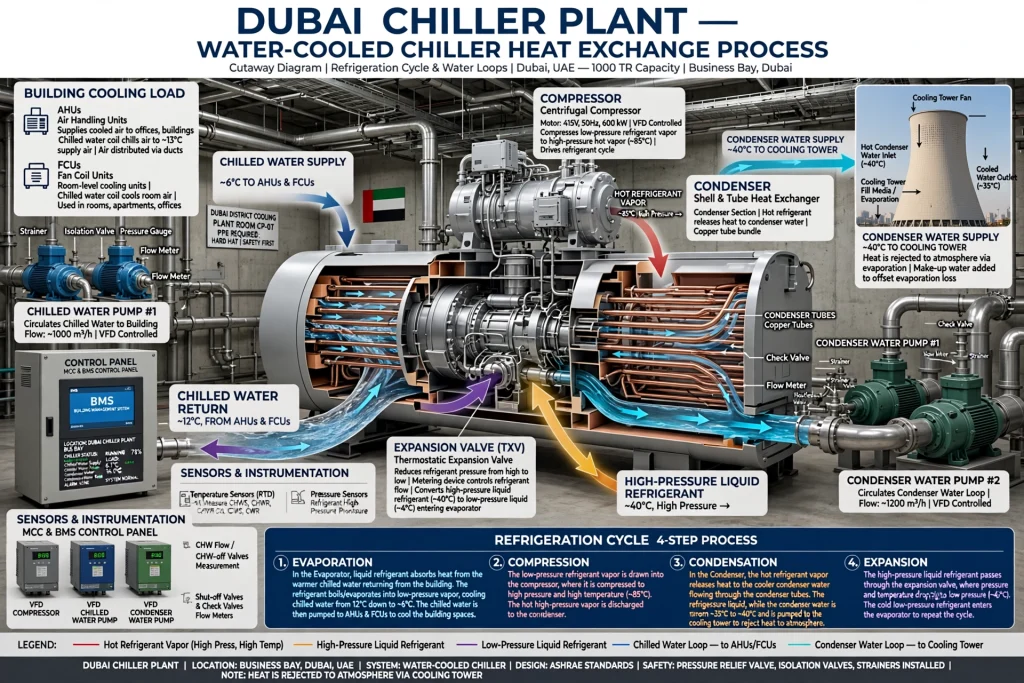
Chiller tubes can become contaminated for several reasons. The type of fouling depends on whether the affected heat exchanger is part of the condenser-water circuit or chilled-water circuit.
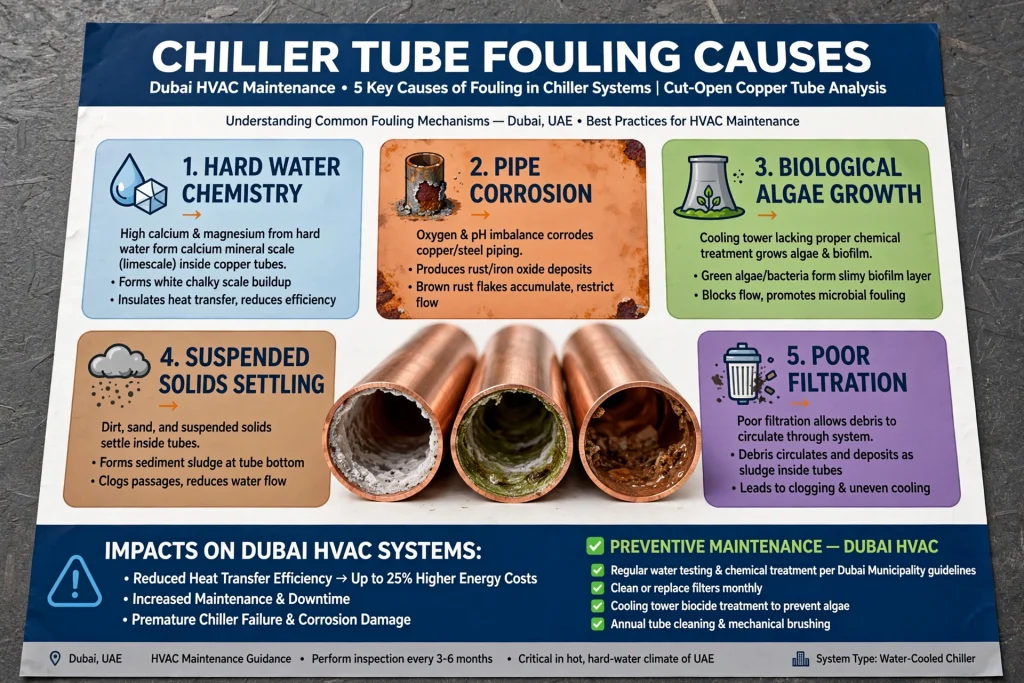
Common sources include:
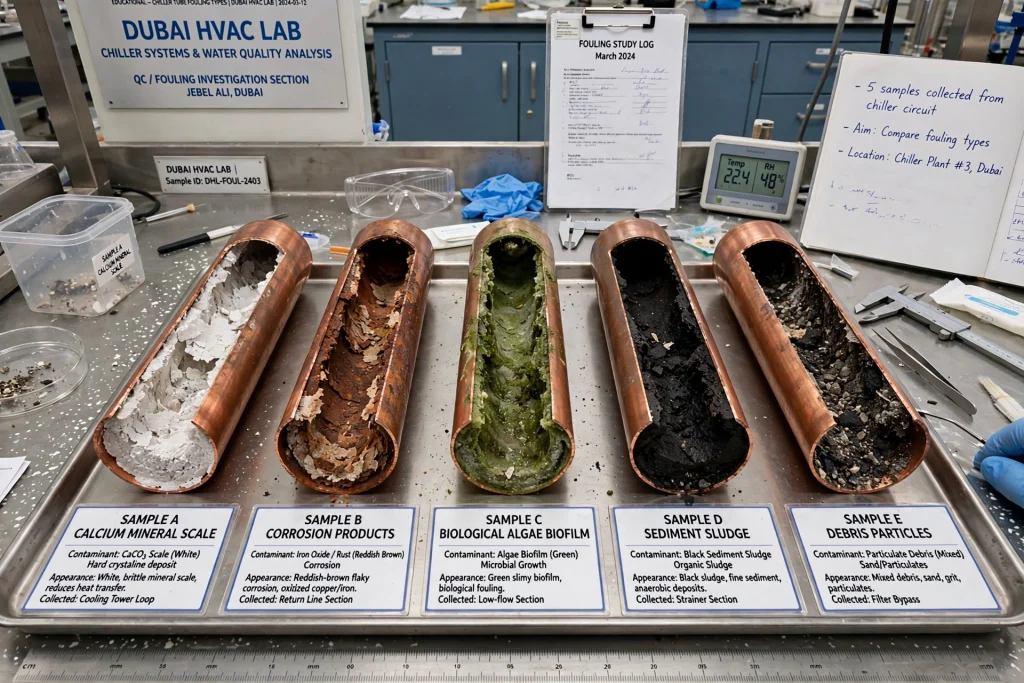
Mineral scale: Calcium and other dissolved minerals can precipitate onto tube surfaces when water chemistry and operating conditions encourage scale formation.
Corrosion products: Corrosion within the water circuit can produce deposits that accumulate on heat-transfer surfaces.
Biological growth: Cooling towers and open condenser-water systems can support biological activity when water treatment is inadequate.
Sediment and sludge: Suspended solids can enter water circuits and settle inside heat exchangers or associated components.
Debris: Poor filtration or inadequate system cleanliness can allow particles to circulate through the water loop.
Understanding the source of fouling is important because cleaning alone does not always solve the underlying problem. Water treatment, filtration, cooling-tower maintenance, and system operating conditions may also need attention.
Condenser Tube Cleaning in Water-Cooled Chillers
Condenser tube cleaning is particularly important in water-cooled chiller plants because condenser water is connected to a cooling tower and is exposed to the surrounding environment.
The cooling tower continuously rejects heat and loses some water through evaporation. As water evaporates, dissolved minerals can become more concentrated in the remaining water. Without suitable water treatment and blowdown control, these minerals can contribute to scale formation.
Dust, suspended particles, biological matter, and corrosion products can also enter the condenser-water circuit.
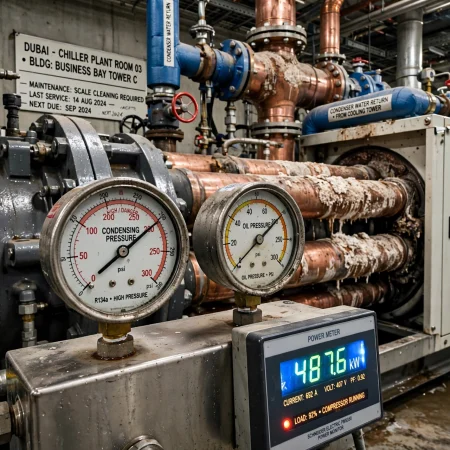
As deposits accumulate, the condenser becomes less effective at transferring heat from the refrigerant to the condenser water. This can increase condensing temperature and pressure, forcing the compressor to consume more power.
Evaporator Tube Cleaning
Although condenser fouling receives considerable attention, evaporator tube cleanliness is also important.
The evaporator transfers heat from the chilled-water circuit to the refrigerant. Deposits or contamination on the heat-transfer surfaces can reduce the effectiveness of this process.
Poor evaporator performance can affect chilled-water temperatures and overall cooling capacity. Depending on the system, problems may also contribute to reduced flow, inefficient heat exchange, or abnormal operating conditions.
Evaporator cleaning should therefore be considered when diagnosing declining chiller performance, particularly where water quality, system contamination, or unusual temperature differences indicate possible fouling.
How Dirty Tubes Affect Chiller Efficiency
The refrigeration cycle depends on efficient heat transfer. When tubes become dirty, the heat exchanger requires a greater temperature difference to transfer the same amount of heat.
In a condenser, this can result in higher refrigerant condensing temperatures and pressures. The compressor then has to work harder to move refrigerant through the cycle.
In practical terms, a fouled heat exchanger can cause the chiller to consume more electricity for the same cooling output.
For large facilities operating several chillers continuously, even a relatively modest efficiency reduction can translate into substantial additional energy costs over months of operation.
This is why tube cleaning should be considered an energy-efficiency measure as well as a maintenance task.
Higher Condensing Pressure and Compressor Stress
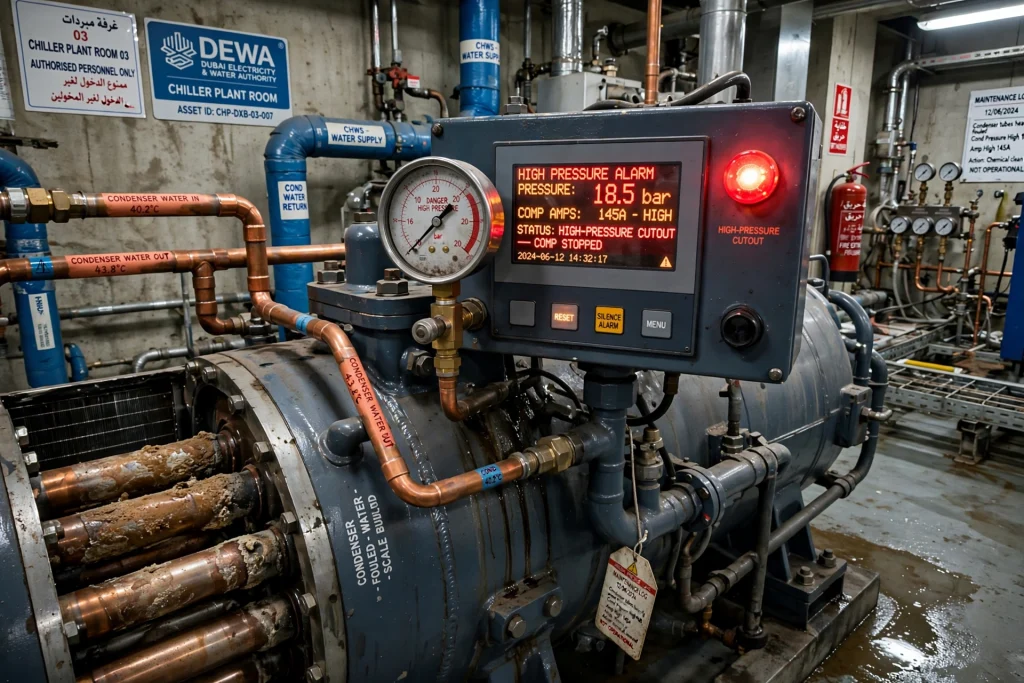
One of the most important effects of dirty condenser tubes is increased condensing pressure.
The compressor needs to discharge refrigerant at a pressure that allows the condenser to reject heat. If the condenser heat-transfer surfaces are fouled, heat rejection becomes more difficult.
The compressor may therefore operate against a higher pressure differential. This can increase electrical demand and mechanical stress.
If the condition becomes severe, the chiller may activate high-pressure protection or experience repeated shutdowns. Continuing to operate under unfavorable conditions can also contribute to premature wear of major components.
Cleaning condenser tubes can help restore heat-transfer conditions when fouling is responsible for the high-pressure problem.
Reduced Cooling Capacity
Tube fouling can also reduce cooling capacity.
A chiller operating under heavy load needs efficient heat transfer to maintain the required chilled-water supply temperature. When heat exchangers become fouled, the refrigeration system may struggle to meet the design cooling demand.
This can become especially noticeable during periods of high cooling demand in Dubai and other UAE locations.
Commercial towers in Downtown Dubai, Business Bay, Dubai Marina, Jumeirah, Palm Jumeirah, Al Barsha, and Jebel Ali, as well as facilities in Abu Dhabi and Sharjah, can have substantial cooling requirements. A decline in chiller performance during peak demand can affect occupant comfort and building operations.
Chiller Tube Cleaning and Energy Savings
Cleaning tubes does not automatically guarantee a specific percentage of energy savings because the result depends on the severity and type of fouling, chiller design, load conditions, water temperature, flow rates, and other factors.
However, when fouling is causing poor heat transfer, restoring clean surfaces can reduce the additional compressor work required to reject or absorb heat.
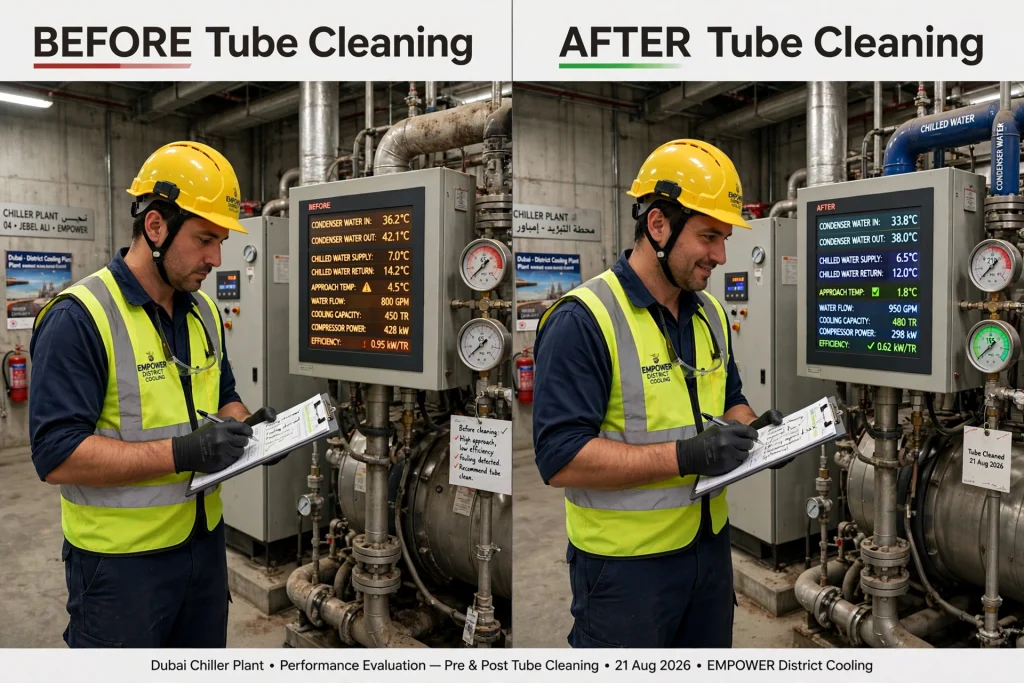
Facility managers can evaluate the effect by comparing operating conditions before and after cleaning. Useful parameters include:
- Condenser-water temperatures
- Chilled-water supply and return temperatures
- Refrigerant pressure
- Compressor power
- Condenser approach temperature
- Evaporator approach temperature
- Water flow
- Cooling capacity
- Chiller efficiency
This data-driven approach helps establish whether cleaning has improved the equipment’s actual operating performance.
What Is Chiller Approach Temperature?
Approach temperature is a useful indicator when evaluating heat-exchanger performance.
For a condenser, the approach generally represents the difference between refrigerant condensing temperature and leaving condenser-water temperature. For an evaporator, it can describe the difference between refrigerant evaporating temperature and leaving chilled-water temperature.
An increasing approach can indicate deteriorating heat transfer, although it does not automatically prove that tubes are dirty.
Water flow, refrigerant conditions, sensor accuracy, load, and other operating variables should also be considered.
Trend analysis is particularly useful. If approach temperature gradually increases while other operating conditions remain similar, the heat exchanger may require inspection.
Mechanical Chiller Tube Cleaning
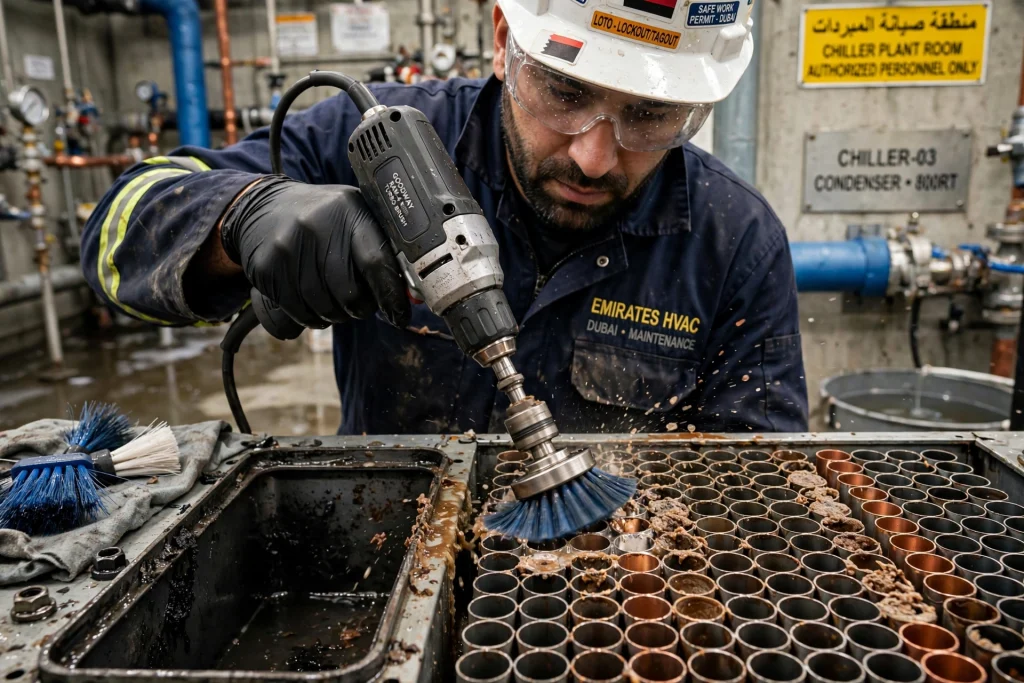
Mechanical cleaning is one method used to remove deposits from heat-exchanger tubes.
Depending on the equipment and tube construction, specialized brushes, rotating cleaning tools, or other approved mechanical methods may be used. The objective is to remove deposits without damaging the tube surface.
Mechanical cleaning can be useful for removing scale, sludge, and other physical deposits. However, the method must be selected carefully according to the manufacturer’s recommendations and the condition of the tubes.
After cleaning, technicians should inspect the system and verify water flow and operating performance.
Chemical Tube Cleaning
Chemical cleaning may be considered where deposits are difficult to remove mechanically.
Chemical solutions can be formulated to target specific types of scale or deposits. However, chemical cleaning requires careful control because inappropriate chemicals or concentrations can damage tubes, gaskets, coatings, or other components.
The correct chemical process depends on tube material, deposit composition, system condition, and manufacturer recommendations.
Professional assessment should be performed before chemical cleaning. The system may also require neutralization, flushing, and appropriate disposal procedures after treatment.
Eddy Current Testing and Tube Inspection
Tube inspection can provide more information than visual examination alone.
Eddy current testing is a non-destructive inspection method that can identify certain forms of tube deterioration, including wall-thickness changes, corrosion, pitting, and other defects.
It can be useful for large or critical chiller systems where tube condition needs to be evaluated without removing the heat exchanger from service.
Inspection results can help facility managers determine whether tubes require cleaning, repair, plugging, replacement, or continued monitoring.
For high-value chiller plants, combining cleaning with periodic tube-condition assessment can provide a more comprehensive maintenance strategy.
Cooling Tower Maintenance and Tube Cleanliness
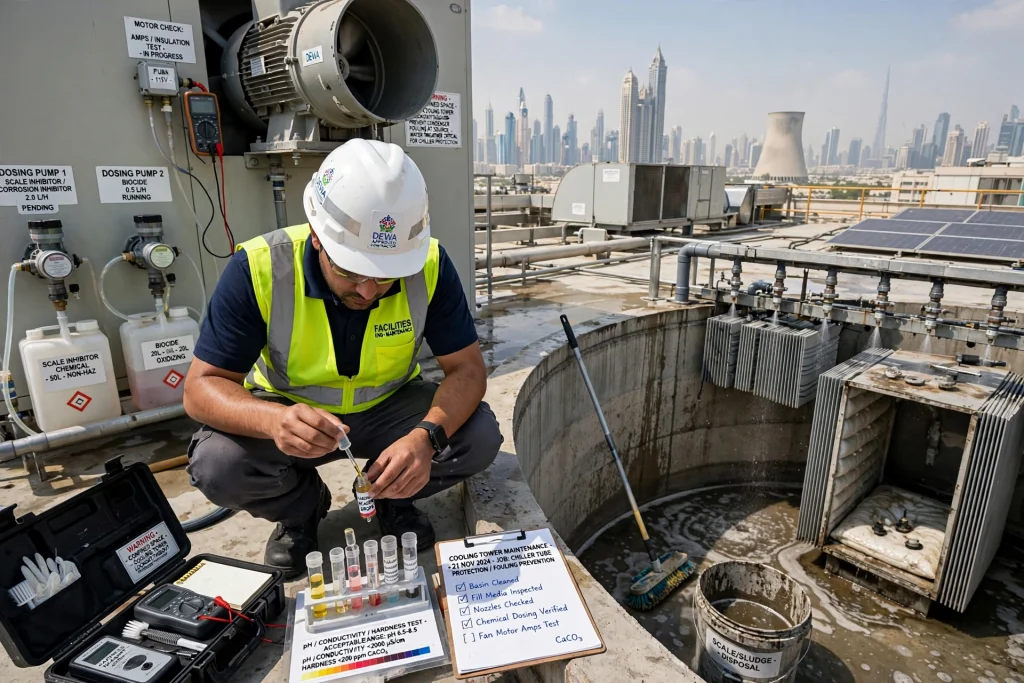
The condition of a cooling tower directly affects condenser-water quality.
A cooling tower with poor water treatment, excessive sediment, biological growth, or inadequate cleaning can contribute to recurring condenser fouling.
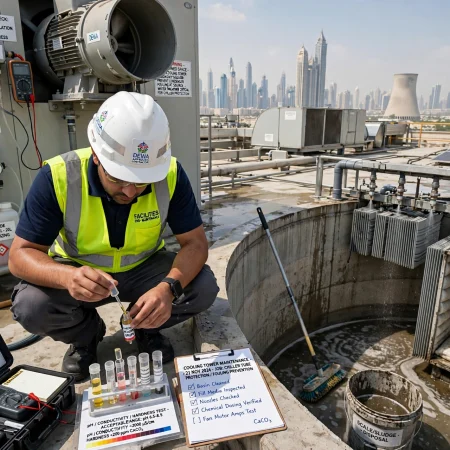
Important cooling-tower maintenance activities can include basin cleaning, water treatment, blowdown management, fill inspection, drift-eliminator inspection, fan and motor checks, and water-distribution assessment.
The objective is not simply to clean the condenser tubes after they become dirty. The long-term goal is to reduce the conditions that cause deposits to form in the first place.
Water Treatment for Chiller Tube Protection
Water treatment is a major part of preventing tube fouling.
A cooling-water management program may monitor parameters such as pH, conductivity, hardness, chemical concentrations, corrosion indicators, and microbiological conditions.
The exact treatment approach should be designed according to the site’s water quality, equipment materials, cooling-tower design, operating conditions, and applicable requirements.
Effective water treatment can help reduce scale, corrosion, and biological contamination. It can also reduce the frequency at which severe tube fouling occurs.
If a chiller repeatedly requires cleaning, facility managers should investigate the water-treatment program rather than treating tube cleaning as the only solution.
Signs That a Chiller May Need Tube Cleaning
Several performance changes can indicate that a heat exchanger should be inspected.
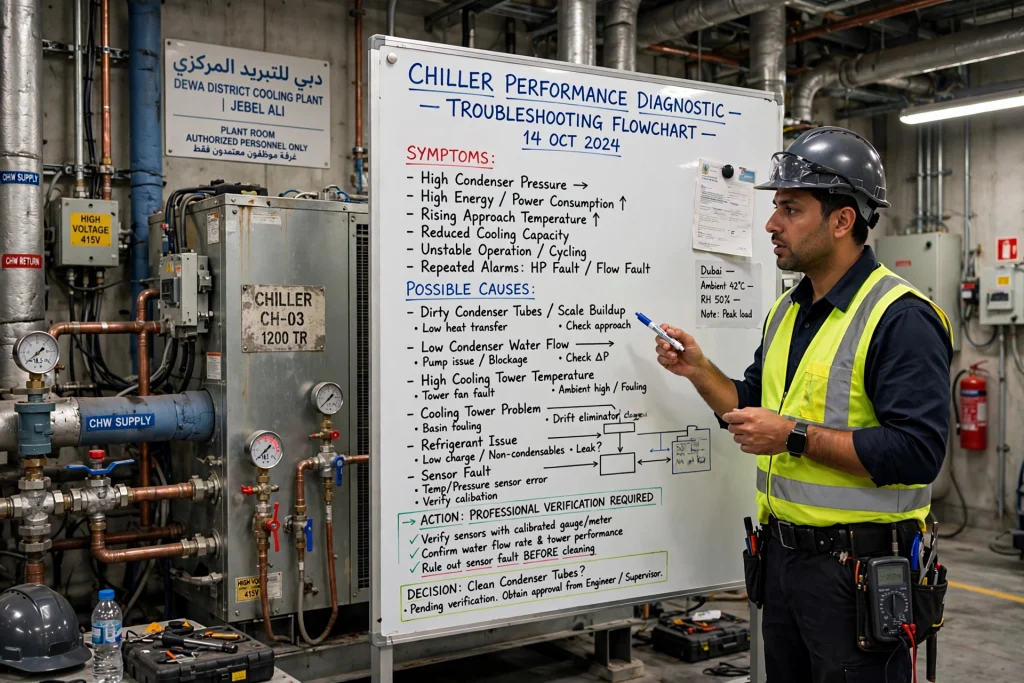
These can include higher condenser pressure, increasing energy consumption, rising approach temperature, reduced cooling capacity, unusual temperature differences, unstable operation, and repeated high-pressure alarms.
However, these symptoms can have multiple causes.
For example, high condenser pressure can result from dirty condenser tubes, inadequate condenser-water flow, high cooling-tower water temperature, cooling-tower problems, refrigerant issues, or sensor faults.
Professional troubleshooting should therefore verify the operating conditions before deciding that tube cleaning is necessary.
How Often Should Chiller Tubes Be Cleaned?
There is no single cleaning interval suitable for every chiller.
Cleaning frequency depends on water quality, cooling-tower operation, system design, operating hours, filtration, environmental conditions, previous fouling rates, and manufacturer recommendations.
Some systems may require more frequent inspection because of challenging water conditions, while others can operate longer between cleaning activities when water treatment and filtration are well controlled.
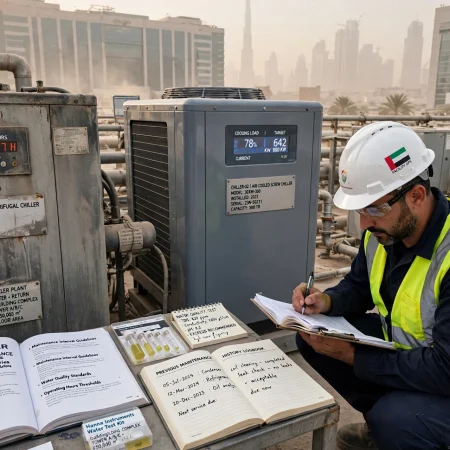
Instead of relying only on a fixed calendar interval, facility managers can combine scheduled inspection with performance monitoring. This approach allows cleaning to be planned based on actual equipment condition.
Chiller Tube Cleaning in Dubai and the UAE
Chiller maintenance is particularly important in the UAE because cooling systems often operate under demanding ambient conditions.
Dubai’s commercial buildings, hotels, hospitals, shopping centres, residential towers, warehouses, and industrial facilities can have substantial cooling loads. High outdoor temperatures can increase the amount of heat that the condenser must reject.
Locations such as Dubai International City, Deira, Bur Dubai, Sheikh Zayed Road, Dubai Healthcare City, Dubai Investment Park, and Jumeirah Lake Towers contain a wide range of buildings where centralized cooling systems may be important to daily operations.
Across the wider UAE, facilities in Abu Dhabi, Sharjah, Ajman, Ras Al Khaimah, and Fujairah can also benefit from structured chiller maintenance and heat-exchanger inspection.
Local environmental conditions, water quality, operating schedules, and building usage should all be considered when developing a maintenance plan.
Why Professional Chiller Maintenance Is Important
Chillers are complex systems involving refrigeration, mechanical, electrical, hydraulic, and control components. Improper cleaning can damage heat-transfer surfaces or fail to remove the actual cause of poor performance.
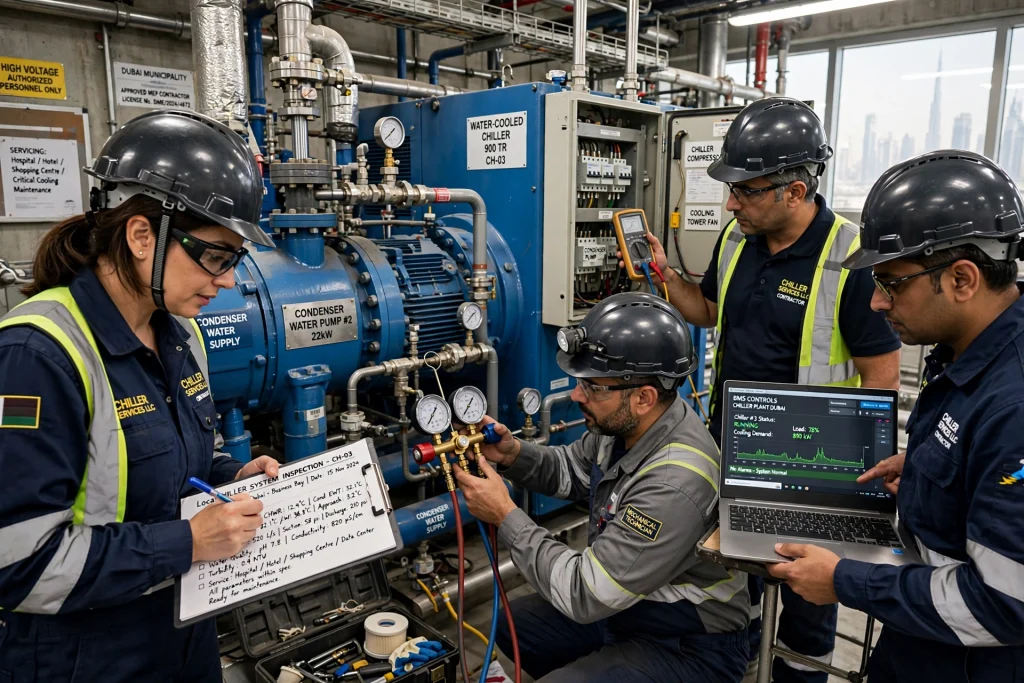
Professional technicians can evaluate operating pressures, temperatures, flow rates, water quality, approach temperatures, and equipment condition before recommending a cleaning method.
Working with an experienced Chillar Contractor in Dubai can help facility managers coordinate tube cleaning with cooling-tower maintenance, water treatment, pump inspection, refrigerant checks, and overall chiller servicing.
A complete approach is particularly important for hospitals, hotels, shopping centres, data-sensitive facilities, industrial plants, and other properties where cooling reliability is critical.
Chiller Tube Cleaning as Preventive Maintenance
Tube cleaning should be part of a broader preventive maintenance strategy rather than an isolated activity.
A complete chiller maintenance program may include:
Heat exchanger inspection: Monitoring tube condition and heat-transfer performance.
Water treatment: Managing scale, corrosion, and biological growth.
Cooling tower maintenance: Keeping the heat-rejection system clean and functional.
Pump inspection: Verifying condenser-water and chilled-water flow.
Electrical checks: Inspecting motors, starters, panels, and control systems.
Refrigeration checks: Monitoring refrigerant pressures, temperatures, and compressor performance.
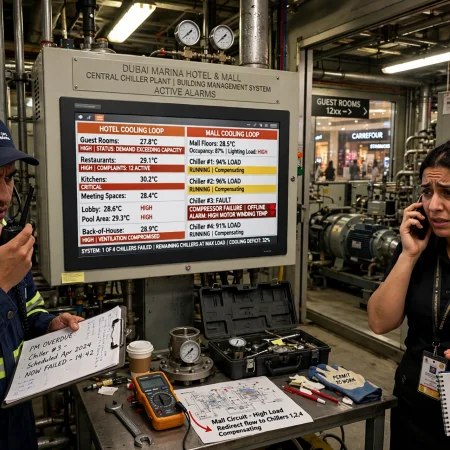
BMS monitoring: Reviewing alarms, trends, temperatures, and energy data.
Together, these activities can provide a more reliable picture of chiller health.
Benefits of Regular Chiller Tube Cleaning
When performed according to equipment condition and manufacturer recommendations, regular tube cleaning can provide several operational benefits.
It can help maintain heat-transfer efficiency, support stable cooling capacity, reduce unnecessary compressor workload, improve chiller reliability, and reduce the likelihood of performance-related shutdowns.
Clean heat-transfer surfaces can also make it easier for technicians to diagnose other problems because poor heat transfer caused by fouling is less likely to obscure the system’s actual operating condition.
For facility managers, planned cleaning can also be easier to budget and schedule than emergency repairs caused by severe fouling.
Frequently Asked Questions About Chiller Tube Cleaning
Why does a chiller need tube cleaning?
Chiller tubes can accumulate scale, corrosion products, sludge, biological growth, and other deposits. These contaminants reduce heat-transfer efficiency and can increase energy consumption and operating pressure.
Does tube cleaning improve chiller performance?
If fouling is affecting heat transfer, cleaning can restore heat-exchanger performance. The actual improvement depends on the severity of fouling and the condition of the rest of the chiller system.
Should condenser and evaporator tubes both be cleaned?
Both heat exchangers can require cleaning, but the appropriate maintenance depends on water quality, system design, fouling conditions, and inspection results.
Can dirty tubes damage a chiller?
Severe fouling can contribute to high operating pressures, increased compressor workload, reduced cooling capacity, and repeated protective shutdowns. Continued operation under unfavorable conditions can increase equipment stress.
Is chemical cleaning safe?
Chemical cleaning can be effective when the correct process is selected and professionally controlled. The chemical solution must be compatible with the tube material and type of deposit.
How can tube fouling be prevented?
Water treatment, cooling-tower maintenance, filtration, proper blowdown, regular inspection, and performance monitoring can help reduce recurring fouling.
Conclusion
Chiller tube cleaning is an important component of reliable HVAC and cooling-system maintenance. Condenser and evaporator tubes are responsible for transferring heat within the refrigeration cycle, and their performance can deteriorate when scale, corrosion, sludge, biological growth, or other deposits accumulate.
Dirty tubes can increase thermal resistance, raise operating pressures, increase compressor energy consumption, reduce cooling capacity, and contribute to unreliable chiller operation. In large commercial and industrial buildings, these problems can translate into higher operating costs and reduced occupant comfort.
For properties in Dubai and across the UAE, regular inspection is especially valuable because chillers often operate for extended periods under high cooling demand. Cleaning frequency should be based on equipment condition, water quality, manufacturer recommendations, operating data, and fouling history rather than relying on one fixed schedule for every installation.
A comprehensive strategy combines chiller tube cleaning, cooling tower maintenance, water treatment, pump inspection, refrigeration checks, BMS monitoring, and preventive maintenance. This approach helps facility managers protect expensive equipment, maintain heat-transfer performance, and support dependable cooling throughout the year.