Introduction
Modern office buildings are designed to promote productivity, collaboration, and employee well-being. While architecture, lighting, and office layout contribute to an efficient workplace, one of the most influential yet often overlooked elements is the HVAC system. Heating, Ventilation, and Air Conditioning systems regulate indoor temperature, humidity, ventilation, and air quality, creating an environment where employees can work comfortably throughout the day.
In the UAE, where outdoor temperatures frequently exceed 40°C during summer, commercial offices depend heavily on advanced HVAC technology to maintain comfortable indoor conditions. From high-rise corporate towers in Downtown Dubai and Business Bay to office developments in Dubai Marina, Dubai Hills, Dubai Internet City, Dubai Media City, Jumeirah Lake Towers (JLT), Sheikh Zayed Road, Expo City Dubai, Abu Dhabi, and Sharjah, every workplace requires reliable climate control to support daily operations.
An efficient office HVAC system not only keeps employees comfortable but also improves indoor air quality, protects office equipment, reduces operational costs, and supports sustainability goals. As businesses continue investing in healthier and more energy-efficient work environments, professionally engineered HVAC systems have become an essential component of modern commercial buildings.
Why HVAC Systems Are Essential for Office Buildings
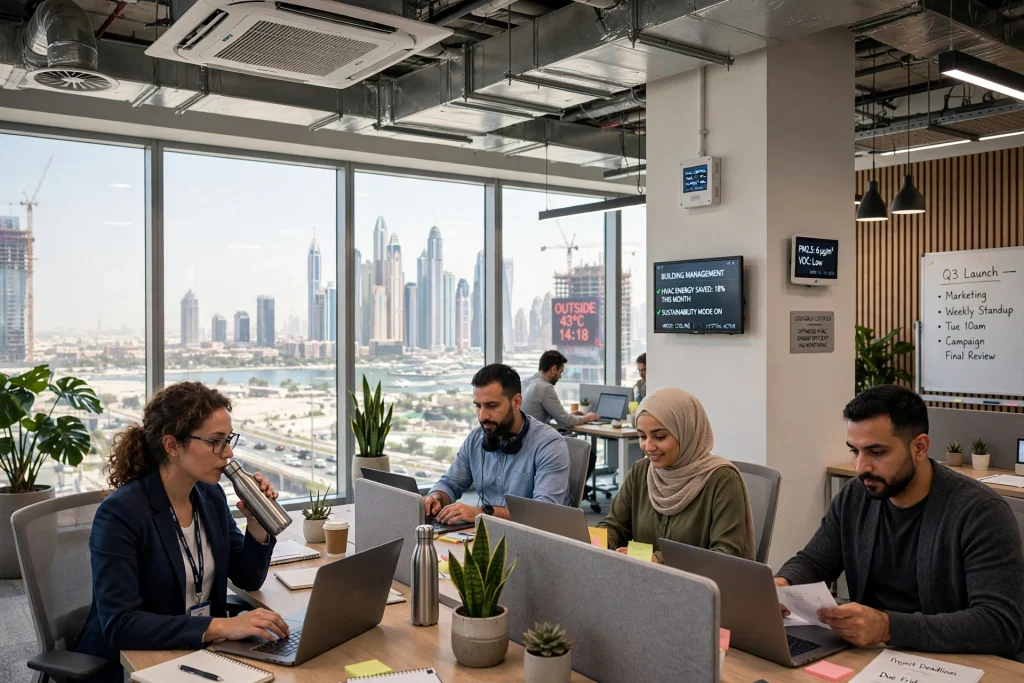
Employees spend a significant portion of their day inside office buildings. Poor indoor environmental conditions can lead to discomfort, reduced concentration, fatigue, headaches, and lower workplace productivity. Maintaining stable indoor temperatures and proper ventilation helps employees remain comfortable, focused, and productive throughout working hours.
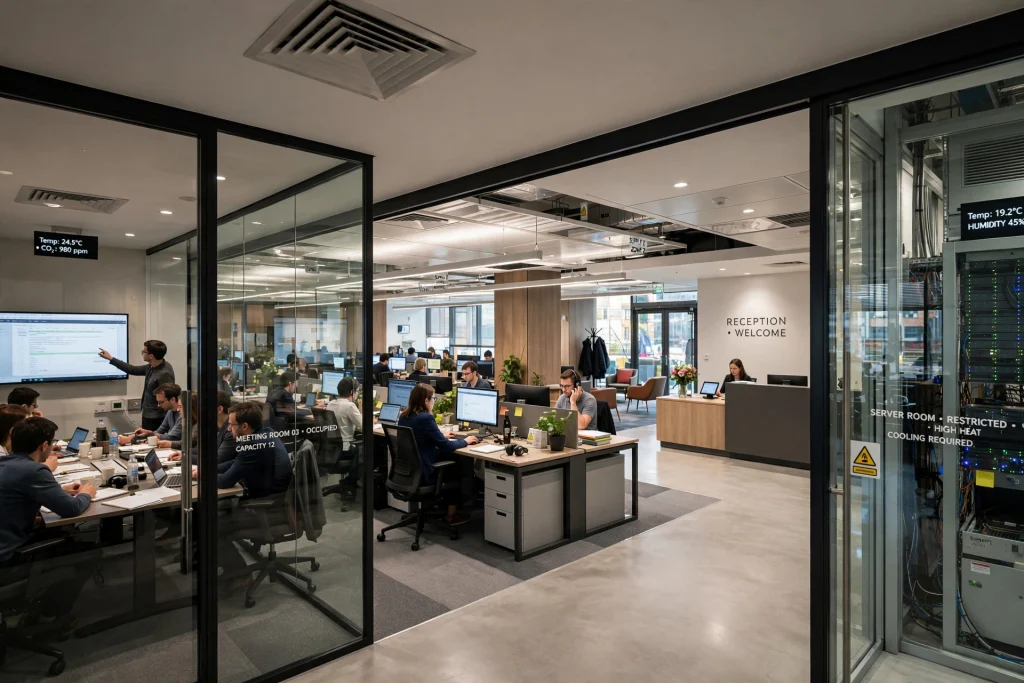
Unlike residential properties, office buildings experience continuously changing occupancy levels. Meeting rooms may become crowded during conferences, open-plan workspaces require balanced airflow, reception areas experience frequent movement, and server rooms generate additional heat from IT equipment.
A commercial HVAC system must respond to these varying conditions while maintaining consistent thermal comfort across different zones of the building. Proper system design ensures that every workspace receives adequate cooling, fresh air, and humidity control regardless of occupancy changes.
Modern HVAC engineering considers building orientation, solar heat gain, glass façades, internal equipment loads, lighting systems, and employee density when calculating cooling requirements.
Central Chiller Systems for Large Office Complexes
Large office developments commonly use central chiller plants because they provide efficient cooling for multiple floors and large occupied spaces.
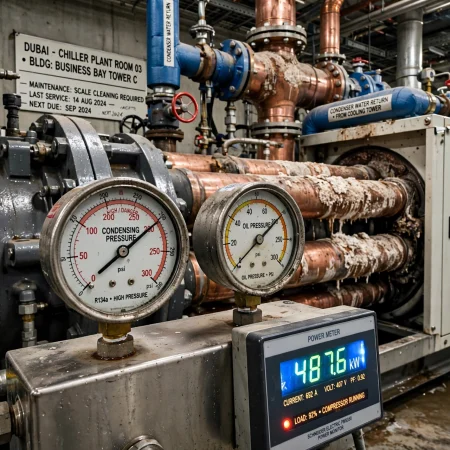
A typical chiller plant consists of water-cooled or air-cooled chillers, compressors, condensers, evaporators, chilled water pumps, cooling towers, expansion tanks, and sophisticated control systems. Chilled water is circulated throughout the building to Air Handling Units (AHUs) and Fan Coil Units (FCUs), where heat is removed from indoor spaces before the cooled air is redistributed.
Water-cooled chillers are widely used in major commercial towers because they offer excellent efficiency and stable performance under continuous operation. Air-cooled chillers are often selected for medium-sized office buildings where water availability or space limitations influence equipment selection.
Proper chiller sizing is critical. Oversized systems waste energy through excessive cycling, while undersized systems struggle to maintain comfortable temperatures during peak occupancy. Professional HVAC engineers perform detailed cooling load calculations before selecting equipment suitable for the building’s operational requirements.
Air Handling Units and Indoor Air Distribution
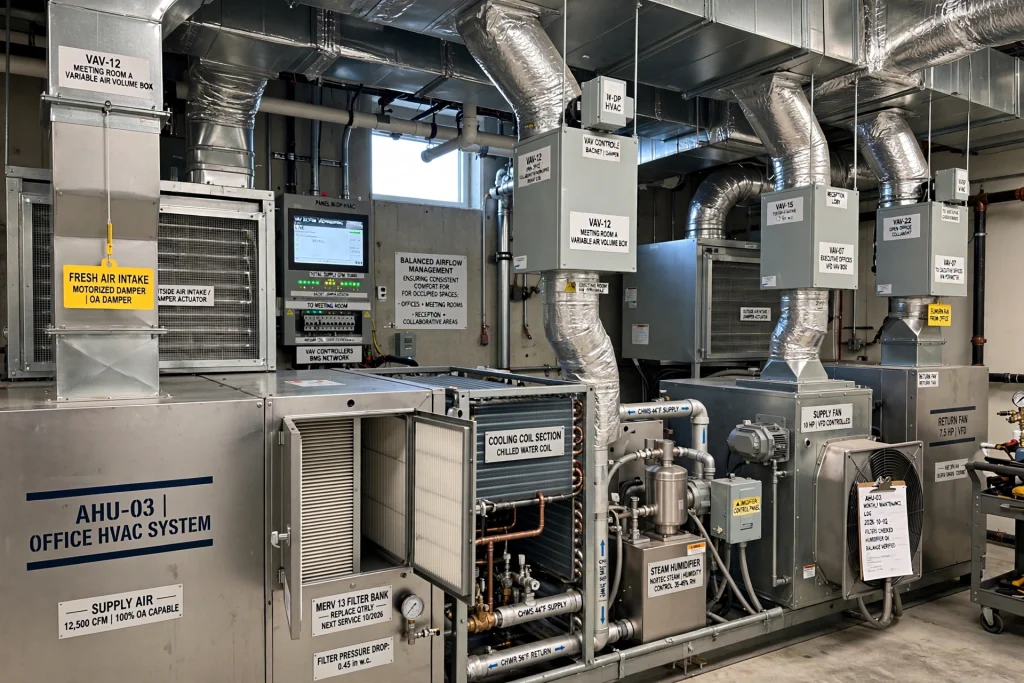
Air Handling Units serve as the heart of an office HVAC system by conditioning and distributing air throughout occupied areas.
An AHU combines several essential components, including cooling coils, supply fans, return fans, air filters, dampers, humidification equipment, and fresh air intake sections. Together, these components maintain stable temperatures while delivering clean, filtered air to workspaces.
Proper air distribution is equally important. Employees seated near windows, meeting rooms, reception areas, executive offices, and collaborative workspaces all require balanced airflow to maintain consistent comfort.
Modern office buildings use carefully designed ductwork and Variable Air Volume (VAV) systems to distribute conditioned air efficiently. VAV technology automatically adjusts airflow according to occupancy and cooling demand, improving both comfort and energy efficiency.
Balanced airflow also prevents common office complaints such as hot spots, cold drafts, and uneven temperatures between departments.
Indoor Air Quality and Employee Well-Being
Temperature alone does not determine workplace comfort. Indoor Air Quality (IAQ) has become one of the most important aspects of modern office HVAC design.
Office buildings contain numerous indoor pollutants including dust, volatile organic compounds (VOCs), paper particles, cleaning chemicals, outdoor pollutants, and carbon dioxide generated by occupants. Without adequate ventilation and filtration, these contaminants accumulate over time and negatively affect employee health.
High-efficiency MERV filters capture fine airborne particles before they circulate through the workplace. Fresh Air Handling Units introduce conditioned outdoor air while exhausting stale indoor air, maintaining healthy oxygen levels throughout occupied spaces.
Carbon dioxide sensors continuously monitor indoor air quality and automatically increase ventilation when occupancy rises. This intelligent ventilation strategy improves employee concentration while reducing symptoms associated with poor indoor air quality.
For premium office developments in DIFC, Business Bay, Downtown Dubai, Dubai Internet City, and Dubai Media City, maintaining superior IAQ has become a key feature of sustainable workplace design.
VRF and VRV Systems for Flexible Office Spaces
Variable Refrigerant Flow (VRF) and Variable Refrigerant Volume (VRV) systems have become increasingly popular for office buildings because they provide highly flexible zoning and excellent energy performance.
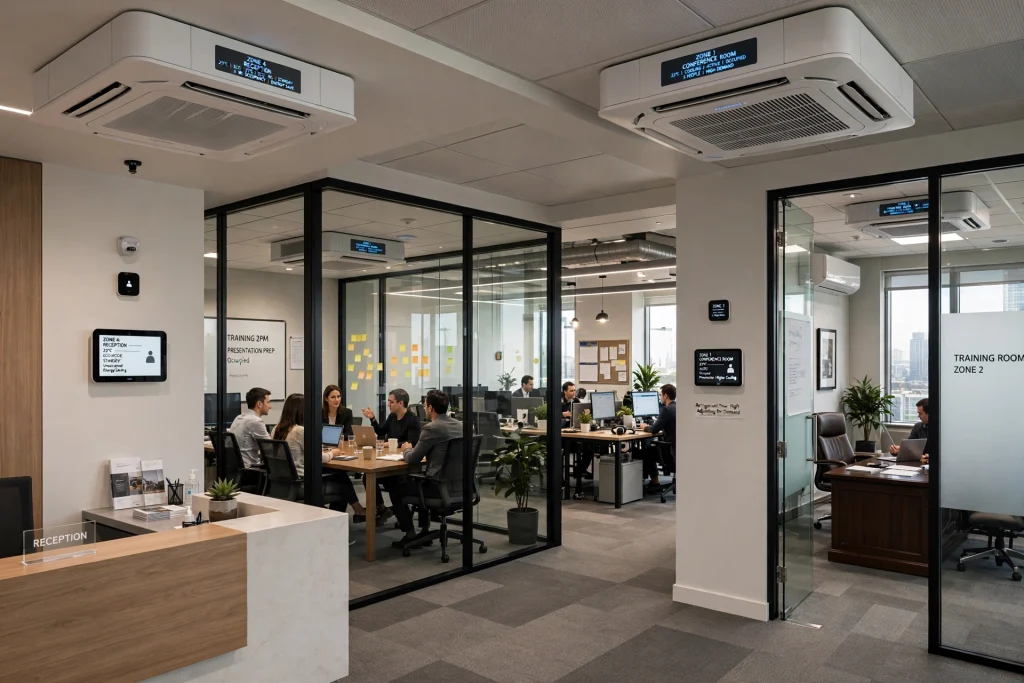
Unlike conventional systems that deliver the same cooling output to every area, VRF technology adjusts refrigerant flow based on the cooling requirements of each individual zone. Conference rooms, executive offices, training rooms, reception areas, and open workspaces can therefore operate independently.
This flexibility is especially valuable for office buildings where occupancy changes throughout the day. Meeting rooms may require additional cooling during presentations, while unused offices can automatically reduce energy consumption.
VRF systems also support quiet operation, making them suitable for professional working environments where excessive equipment noise can become a distraction.
Combined with intelligent thermostats and occupancy sensors, VRF systems help businesses improve comfort while lowering long-term operating costs.
Building Management Systems Improve HVAC Performance
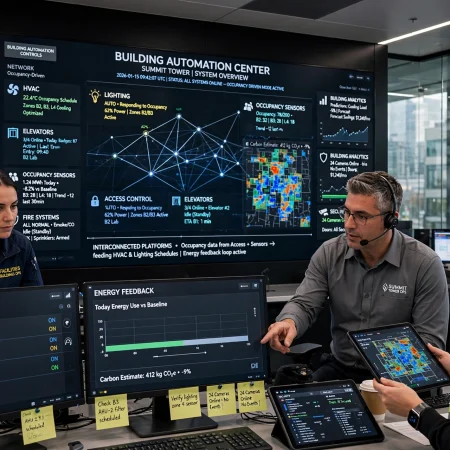
Modern commercial office buildings increasingly rely on Building Management Systems (BMS) to coordinate HVAC operations across the entire facility.
A BMS connects chillers, AHUs, FCUs, VAV systems, pumps, Variable Frequency Drives (VFDs), thermostats, sensors, and ventilation equipment into one centralized monitoring platform.
Facility managers can monitor indoor temperatures, humidity levels, equipment performance, energy consumption, air quality, and maintenance alerts in real time. The system automatically adjusts cooling output based on occupancy schedules, weather conditions, and building demand.
For example, office floors with low occupancy after business hours can reduce cooling automatically, while conference areas scheduled for meetings receive increased airflow before occupants arrive.
Smart HVAC automation improves energy efficiency, extends equipment life, reduces operating costs, and ensures employees enjoy consistent indoor comfort throughout the working day.
Energy Efficiency Reduces Office Operating Costs
Energy efficiency has become one of the highest priorities for commercial office buildings because HVAC systems account for a large percentage of total electricity consumption. As businesses seek to reduce operational expenses while meeting sustainability objectives, modern HVAC technologies play a major role in improving building performance.
Office buildings operating in Downtown Dubai, Business Bay, DIFC, Dubai Marina, Dubai Internet City, Jumeirah Lake Towers (JLT), Dubai Hills, and Expo City Dubai require HVAC systems capable of maintaining comfortable indoor conditions despite the UAE’s demanding climate. High outdoor temperatures, extensive glass façades, and continuous occupancy place significant demands on cooling equipment throughout the year.
Modern commercial HVAC systems improve efficiency through high-performance chillers, Variable Frequency Drives (VFDs), smart thermostats, Variable Air Volume (VAV) systems, Energy Recovery Ventilators (ERVs), and intelligent Building Management Systems. Rather than operating continuously at full capacity, these technologies automatically adjust airflow, chilled water circulation, and compressor performance according to real-time cooling demand.
Professional HVAC engineers also improve efficiency by selecting correctly sized equipment. Oversized systems cycle excessively and waste energy, while undersized systems operate continuously under heavy load, increasing electricity consumption and reducing equipment lifespan.
An energy-efficient HVAC design lowers utility costs, improves sustainability, and creates a more comfortable working environment for employees.
Humidity Control and Workplace Comfort
Maintaining the correct indoor humidity level is just as important as controlling temperature.
Dubai’s climate often combines high temperatures with elevated humidity, particularly during the summer season. Without effective humidity management, office spaces may feel uncomfortable even when air temperatures appear acceptable.
Excessive humidity can create condensation on glass surfaces, encourage mould growth, damage interior finishes, and reduce employee comfort. It may also affect sensitive office equipment, computer servers, documents, and electronic devices.
Commercial HVAC systems use cooling coils, humidity sensors, dehumidification processes, and Fresh Air Handling Units to maintain balanced moisture levels throughout the building.
Smart Building Management Systems continuously monitor indoor humidity and automatically adjust HVAC performance whenever environmental conditions change.
Proper humidity control contributes to healthier indoor environments while protecting valuable office assets and improving occupant satisfaction.
Preventive HVAC Maintenance Ensures Reliable Office Operations
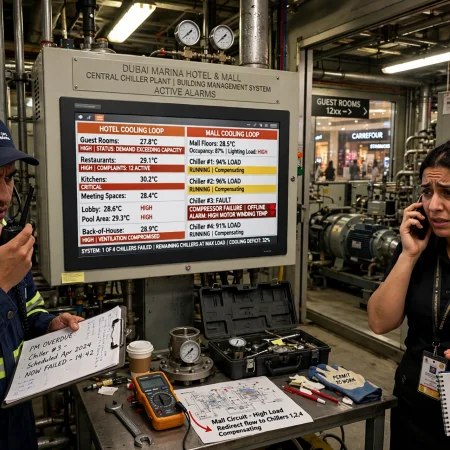
Unexpected HVAC failures can interrupt business activities, reduce employee productivity, and create uncomfortable working conditions. Preventive maintenance is therefore one of the most important investments for commercial property owners and facility managers.
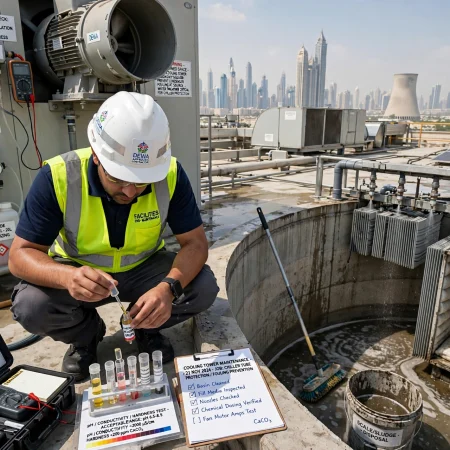
Routine maintenance includes inspecting and servicing chillers, compressors, condensers, evaporators, cooling towers, Air Handling Units, Fan Coil Units, pumps, filters, ductwork, ventilation systems, thermostats, electrical controls, refrigerant circuits, and Variable Frequency Drives.
Air filters require regular replacement to maintain indoor air quality and ensure unrestricted airflow. Dirty filters reduce cooling performance while forcing fans and compressors to consume more energy.
Cooling coils should also be cleaned periodically because dust accumulation reduces heat transfer efficiency and increases operating costs.
Preventive maintenance programs identify worn components before they fail, helping businesses avoid emergency repairs and unexpected downtime while extending equipment lifespan.
HVAC Commissioning and Air Balancing
Even the highest-quality HVAC equipment cannot perform efficiently if it has not been properly commissioned.
HVAC commissioning is a systematic process that verifies every component of the mechanical system has been installed, tested, calibrated, and adjusted according to engineering specifications.
During commissioning, HVAC specialists evaluate airflow rates, chilled water circulation, temperature control, pressure levels, equipment sequencing, Building Management System integration, and energy performance.
Air balancing is another essential process for office buildings. Technicians measure airflow throughout different zones and adjust dampers to ensure each office, meeting room, reception area, and workspace receives the correct amount of conditioned air.
Proper commissioning and balancing eliminate hot and cold spots, improve occupant comfort, increase equipment efficiency, and reduce unnecessary energy consumption.
These procedures are particularly important for newly constructed office towers and major refurbishment projects throughout Dubai and Abu Dhabi.
Supporting Sustainable Office Buildings
Sustainability has become a key objective for commercial real estate developers and corporate organizations.
Modern office buildings increasingly pursue environmentally responsible designs that reduce carbon emissions while improving operational efficiency. HVAC systems contribute significantly to these goals through efficient equipment selection, optimized ventilation strategies, energy recovery systems, and intelligent automation.
Technologies such as Energy Recovery Ventilators recover energy from exhaust air before introducing fresh outdoor air, reducing the cooling load placed on the HVAC system.
Low Global Warming Potential (GWP) refrigerants, high-efficiency chillers, smart occupancy sensors, daylight integration, and advanced Building Management Systems further improve environmental performance.
These sustainable HVAC solutions help office buildings comply with international standards while creating healthier workplaces for employees.
Choosing an Experienced Commercial HVAC Contractor
Commercial office HVAC projects require specialized engineering knowledge because office buildings contain multiple occupancy zones, extensive mechanical infrastructure, complex ventilation systems, and demanding operational schedules.
A qualified HVAC contractor evaluates cooling loads, building orientation, occupancy density, indoor air quality requirements, fresh air ventilation, equipment performance, and future expansion plans before designing the system.
Professional services typically include HVAC design, equipment selection, installation, testing, commissioning, preventive maintenance, energy optimization, and emergency support.
Businesses looking for dependable Office HVAC Service in Dubai downtown should work with experienced HVAC specialists capable of delivering complete commercial climate control solutions tailored to modern office environments. Proper engineering and ongoing maintenance ensure reliable cooling performance, healthier indoor air, and long-term operational efficiency.
Future Trends in Office HVAC Technology
Office HVAC systems continue to evolve with advances in automation, artificial intelligence, and smart building technology.
IoT sensors now collect real-time performance data from chillers, pumps, AHUs, FCUs, and ventilation systems. Predictive maintenance software analyzes this information to identify potential equipment failures before they occur.
Artificial intelligence can optimize cooling schedules based on occupancy trends, weather forecasts, and historical energy usage. Cloud-based Building Management Systems allow facility managers to monitor HVAC performance remotely while responding quickly to operational issues.
Future office developments across Dubai, Abu Dhabi, and the wider UAE will increasingly adopt intelligent HVAC technologies that improve occupant comfort while reducing environmental impact.
Conclusion
A well-designed HVAC system is essential for creating productive, comfortable, and healthy office environments. Beyond providing cooling, commercial HVAC systems regulate indoor air quality, humidity, ventilation, and thermal comfort while supporting energy efficiency and sustainable building operations.
From central chiller plants and Air Handling Units to VRF systems, Variable Air Volume controls, Building Management Systems, and advanced ventilation technologies, every component contributes to a better workplace experience.
Across Downtown Dubai, Business Bay, DIFC, Dubai Marina, Dubai Internet City, Dubai Media City, Jumeirah Lake Towers, Dubai Hills, Sheikh Zayed Road, Expo City Dubai, Abu Dhabi, and Sharjah, professionally engineered HVAC systems help businesses reduce operating costs, improve employee well-being, protect office equipment, and maintain consistent indoor comfort throughout the year.
Investing in modern HVAC solutions, regular preventive maintenance, and expert engineering ensures long-term reliability, higher energy efficiency, and workspaces where employees can perform at their best.