RAC & CAC Air Conditional Services
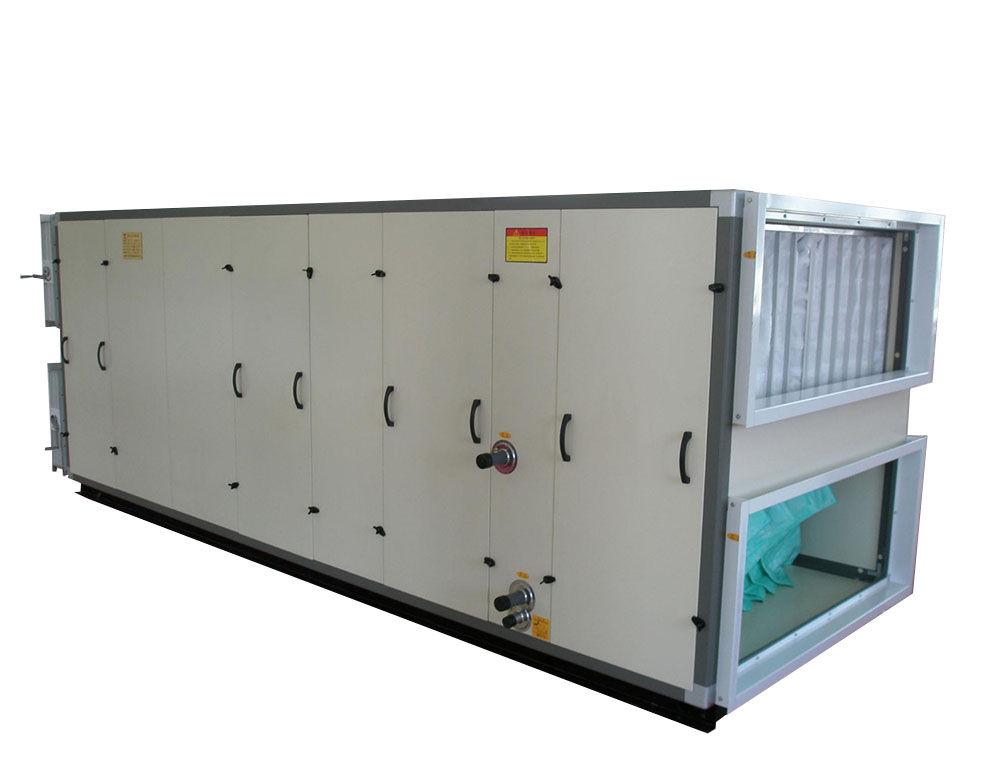
A fresh air handling unit, or FAHU, plays a vital role in maintaining healthy indoor air quality by introducing and conditioning 100 percent fresh outdoor air into buildings. At Tri Circle Technical Services, we design, supply, install and maintain FAHUs that filter, cool or heat air before distributing it across different zones, ensuring comfort and ventilation while minimizing energy waste.
For modern buildings in the UAE, where air quality and efficiency are priorities, our FAHU installations provide a dependable ventilation solution that complements existing HVAC systems.
An air handling unit (AHU) system is a central HVAC component that circulates, filters and conditions air to maintain comfortable indoor temperature and air quality in commercial and industrial buildings, and we install and service both AHU and FAHU systems as part of a coordinated ventilation strategy.
Contact our team today for a site assessment and quotation for your fresh air handling unit project.
A fresh air handling unit is a system designed to supply filtered and temperature controlled outdoor air into enclosed spaces. Unlike recirculating systems, it processes entirely fresh air, ensuring that pollutants and indoor contaminants are diluted and expelled.
The main function of a fresh air handling unit is to improve ventilation, remove stale air and maintain a balanced indoor environment. Whether installed in commercial towers, hospitals, schools or residential complexes, it supports both comfort and health.
By combining advanced filters, fans and heat exchangers, the system effectively enhances indoor air quality and complies with modern ventilation standards, and our engineers specify each of these components to match the building’s actual occupancy and use.
Each FAHU we install consists of several key parts, carefully specified to deliver optimal performance.
Air intake louvers allow the entry of outdoor air while preventing debris and rainwater from entering. Filters trap dust, pollen and airborne contaminants for cleaner air. Cooling and heating coils regulate air temperature for comfort. Fans and blowers maintain steady air movement through the system. A heat recovery wheel recovers energy from exhaust air to pre-condition incoming air, improving efficiency. And the control system automates operation, monitoring air temperature, humidity and flow rate.
We frequently specify a fresh air handling unit with a heat recovery wheel, which helps reduce energy consumption by transferring thermal energy between outgoing and incoming air streams.
For detailed product configurations and performance data, our engineers work from manufacturer catalogues listing capacity ranges, efficiency ratings and customization options, so every recommendation is backed by verified specifications rather than a rough estimate.
The working principle of a fresh air handling unit is straightforward but highly efficient. It draws outside air through intake dampers and passes it through filters that remove dust and contaminants. The filtered air then moves across the cooling or heating coil to reach the desired temperature before being distributed through the duct network.
If the FAHU includes a heat recovery wheel, the exhaust air transfers part of its thermal energy to the incoming air. This reduces the load on chillers or heaters and ensures a balanced temperature indoors.
This process keeps air fresh, clean and comfortable while maintaining low energy costs, a key advantage in hot and humid climates like Dubai.
Choosing the right FAHU capacity depends on several design factors, including occupancy, building type and ventilation requirements, and our engineers walk through each one before proposing a specification.
Fresh air handling unit calculations typically consider air changes per hour based on room use, occupancy load or the number of people in the space, airflow rate per person as per ASHRAE or local standards, and thermal load from outdoor air conditions.
Accurate sizing ensures balanced airflow and energy efficiency. Undersized units struggle to maintain air quality, while oversized ones increase operational costs. We use specialized software alongside manufacturer catalogues to guide every selection, so clients get a system sized to their building, not a generic default.
The benefits of using a FAHU extend far beyond comfort. They support long term building health, energy savings and compliance with ventilation codes.
Enhanced indoor air quality comes from the constant introduction of fresh air, which reduces CO2 levels and odors. Energy efficiency follows from systems with heat recovery wheels that minimize energy waste. Compliance with standards means the system meets ventilation and health guidelines. Improved comfort comes from maintaining consistent air temperature and humidity. And system longevity follows because a properly sized FAHU reduces strain on main HVAC units.
We install and maintain FAHUs across hospitals and healthcare facilities, educational institutions, shopping malls and commercial offices, hotels, restaurants and entertainment venues, and residential complexes and mixed use buildings.
For businesses in the UAE, working with a fresh air handling unit supplier in Dubai ensures local expertise, quick servicing and compliance with regional regulations, and that is exactly the role Tri Circle plays for our commercial clients.
When choosing a FAHU for your project, it is essential to focus on efficiency, reliability and maintenance needs. Our team helps clients evaluate airflow capacity and pressure requirements, type of heat recovery system such as rotary wheel or plate exchanger, filter class and maintenance accessibility, noise level and vibration control, and energy consumption and automation compatibility.
We work through manufacturer catalogues for model comparisons and provide certified performance data with every quotation. As a trusted fresh air handling unit supplier in Dubai, we guarantee proper installation and after sales support from the same team that designed the system.
Routine maintenance keeps a FAHU running efficiently. Dust and dirt buildup can reduce airflow and increase energy use, so timely cleaning and inspection are vital.
Our recommended maintenance tasks include replacing filters at regular intervals, cleaning the heat recovery wheel and coils, checking fan alignment and motor bearings, and testing control systems for accurate operation.
Proper maintenance extends system life and ensures that occupants always enjoy fresh, clean air. Many clients bundle FAHU servicing into a broader annual maintenance contract for predictable, documented care across their whole facility.
What is the main function of a fresh air handling unit?
It introduces and conditions outdoor air to improve ventilation, comfort and air quality indoors.
How does a heat recovery wheel improve efficiency?
It captures energy from exhaust air and transfers it to incoming air, reducing cooling and heating loads.
What factors affect FAHU sizing?
Airflow rate, occupancy and ventilation standards are key sizing factors, determined through fresh air handling unit calculations.
How often should FAHUs be serviced?
Ideally every three to six months, depending on environmental conditions and building usage.
Can FAHUs work with central HVAC systems?
Yes, FAHUs integrate easily with chillers and air conditioning systems to enhance ventilation.
If you are looking to install or upgrade a fresh air handling unit, our team can help you choose the right model, design and setup for your project. We supply customized FAHU systems across Dubai and the UAE, built for durability, performance and energy efficiency.
Contact us today to schedule a consultation or request a detailed product catalogue.